
Your garage’s air quality matters more than you realize because fumes, dust, and chemicals can harm your health over time. Poor ventilation causes dangerous buildup of vehicle emissions, VOCs, and mold spores, leading to headaches, respiratory issues, and long-term health risks. Keeping the air clean with proper ventilation, organization, and air purifiers can make a big difference. Want to discover simple ways to improve your garage’s air quality and stay safer? Keep going to find out how.
Key Takeaways
- Poor garage air quality can lead to health issues like headaches, respiratory problems, and long-term toxin exposure.
- Ventilation prevents dangerous buildup of vehicle fumes, chemicals, and mold spores, ensuring safer indoor air.
- Detecting odors, dust, or mold early helps address air quality issues before they cause health risks.
- Proper storage and regular cleaning reduce dust, chemical exposure, and improve overall air safety.
- Using exhaust fans and air purifiers enhances airflow and removes airborne pollutants effectively.
garage air purifier with VOC filter
As an affiliate, we earn on qualifying purchases.
As an affiliate, we earn on qualifying purchases.
Why Garage Air Quality Matters for Your Health
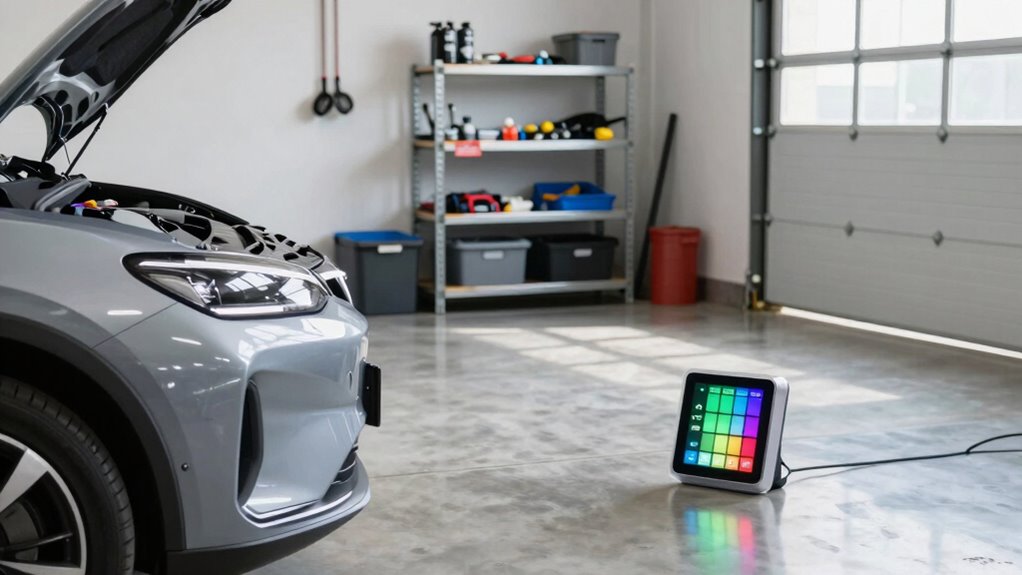
Your garage might seem like a simple storage space, but it can considerably impact your health if the air quality isn’t good. Proper garage ventilation is essential to keep harmful fumes and airborne pollutants at bay. Without good airflow, chemicals from paints, solvents, or automotive products can accumulate, increasing health risks. Chemical detection systems can help identify dangerous substances before they become a problem, alerting you to potential hazards. Ensuring your garage is well-ventilated reduces the concentration of airborne toxins and improves overall air quality. Early detection of hazards can prevent long-term health issues like respiratory problems or allergies. Regularly monitoring and maintaining good ventilation and chemical detection measures are simple steps that protect your health while you work or store items in your garage.
As an affiliate, we earn on qualifying purchases.
Common Pollutants in Your Garage and Their Risks
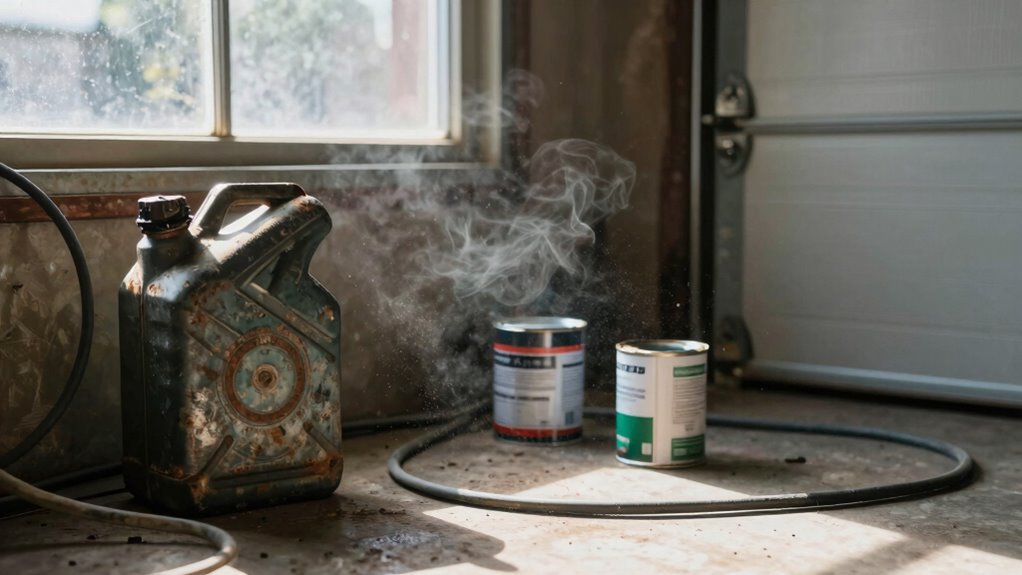
Many common pollutants in garages pose serious health risks if not properly managed. Poor garage organization and inadequate storage solutions often lead to clutter that traps dust, mold, and chemicals. Volatile organic compounds (VOCs) from paints, solvents, and automotive products can evaporate into the air, causing headaches, dizziness, or respiratory issues. Dust and mold spores thrive in damp, unorganized spaces, aggravating allergies and asthma. Gasoline fumes and other vehicle emissions can linger if ventilation isn’t sufficient, exposing you to toxic substances. By improving garage organization and using effective storage solutions, you can reduce dust buildup and isolate hazardous materials, minimizing exposure. Using DIY tools properly and safely can also help maintain a cleaner environment and prevent accidents. Recognizing these pollutants and managing them properly helps guarantee your garage remains a safe environment for you and your family. Additionally, understanding the importance of proper ventilation can significantly reduce the concentration of airborne toxins, further enhancing safety. Being aware of how indoor air quality impacts overall health emphasizes the need for effective pollutant management in your garage. Regularly checking for and controlling microplastics in dust can also prevent inhalation of tiny particles that might pose health risks. Implementing air filtration systems can further improve air quality by capturing smaller particles and reducing pollutant concentrations.
As an affiliate, we earn on qualifying purchases.
How Vehicle Fumes and Chemicals Affect Indoor Air
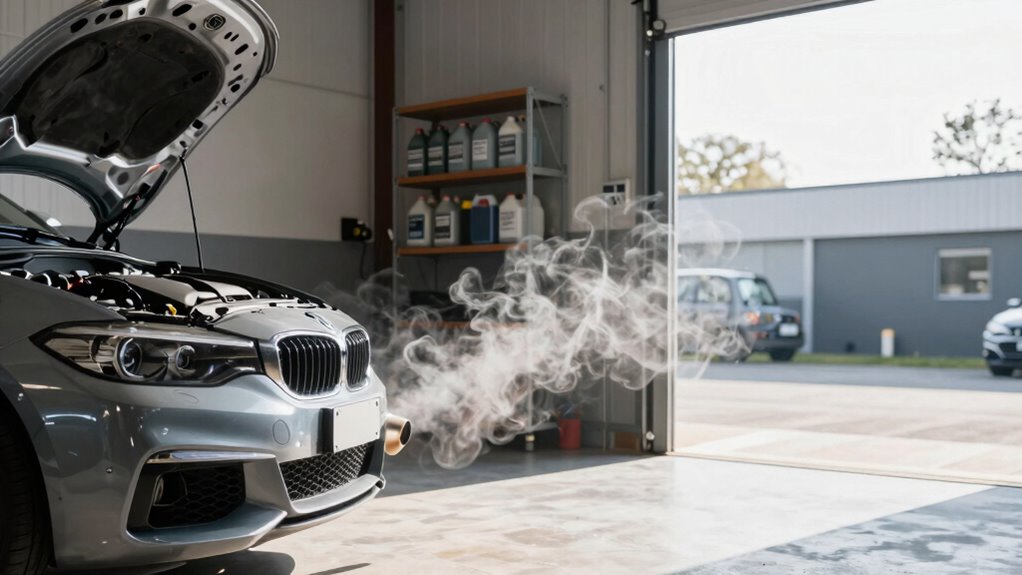
Vehicle fumes release different types of harmful gases that can linger in your garage, especially if it’s poorly ventilated. Chemicals off-gas from vehicles and stored items, adding to indoor pollution over time. Breathing in these emissions can pose serious health risks, from respiratory issues to long-term illnesses. Electric bikes and vehicles, such as electric dirt bikes, produce no tailpipe emissions, which can significantly reduce indoor air pollution when used or stored properly. Proper ventilation and choosing cleaner transportation options can also help mitigate these risks and improve overall indoor air quality. Additionally, understanding the contrast ratio of your garage’s ventilation system can help optimize airflow and reduce pollutant buildup. Regularly monitoring indoor air pollution levels can further ensure a healthier environment inside your garage.
Types of Vehicle Fumes
When a car is running in an enclosed garage, fumes and chemicals from the vehicle can quickly build up and compromise indoor air quality. Vehicle exhaust is the primary source of these fumes, containing pollutants like carbon monoxide, nitrogen oxides, and particulate matter. These fumes exposure risks can cause headaches, dizziness, and even more severe health issues with prolonged inhalation. You may not realize that even short periods of running your engine indoors can lead to dangerous air contamination. Gasoline fumes and diesel exhaust are especially potent, lingering in the confined space. Understanding the types of vehicle fumes helps you recognize the importance of proper ventilation. Without adequate airflow, these fumes can accumulate rapidly, putting you and others at risk of harmful health effects. Proper ventilation and awareness of air quality concerns are essential to maintaining a safe environment in your garage.
Chemical Off-Gassing Effects
Have you ever considered how fumes and chemicals from your vehicle can off-gas into your garage air? When your car emits fumes, chemical reactions occur between these substances and the garage environment, causing off gassing sources to release volatile compounds. These emissions come from various sources, such as fuel residues, engine oils, and plastics in your vehicle. Over time, these chemicals vaporize and accumulate in the air, increasing indoor pollution. The off gassing process is influenced by temperature, humidity, and the materials stored in your garage. Without proper ventilation, these chemical emissions can linger, creating a constant source of indoor air contamination. Recognizing these off gassing sources helps you understand the importance of managing chemical reactions to improve your garage’s air quality. Additionally, VPS Hosting Discount Codes can help fund better ventilation systems or air filtration solutions for your garage. Implementing ventilation strategies can significantly reduce the buildup of harmful fumes and ensure a safer environment. Proper storage and the use of chemical-resistant materials can also minimize chemical off-gassing from stored items. Understanding the chemical off-gassing effects involved allows you to take targeted steps to mitigate these emissions more effectively. Exploring indoor air pollution sources can further enhance your strategies to maintain a healthier garage environment.
Health Risks From Emissions
Ever wonder how fumes and chemicals in your garage can impact your health? Poor garage organization and inadequate storage solutions can lead to increased exposure to vehicle fumes, paints, and chemicals. These emissions contain volatile organic compounds (VOCs) and other pollutants that can cause headaches, respiratory issues, and even long-term health problems. When chemicals are stored haphazardly, fumes can linger and accumulate, especially in poorly ventilated spaces. Proper storage solutions help contain and isolate hazardous materials, reducing airborne toxins. Ventilation is also vital in dispersing harmful emissions. By maintaining a tidy, well-organized garage, you minimize the risk of inhaling dangerous fumes and chemicals, safeguarding your health and ensuring a safer environment for you and your family.
chemical detection system for garage
As an affiliate, we earn on qualifying purchases.
As an affiliate, we earn on qualifying purchases.
How to Tell If Your Garage Air Is Unhealthy
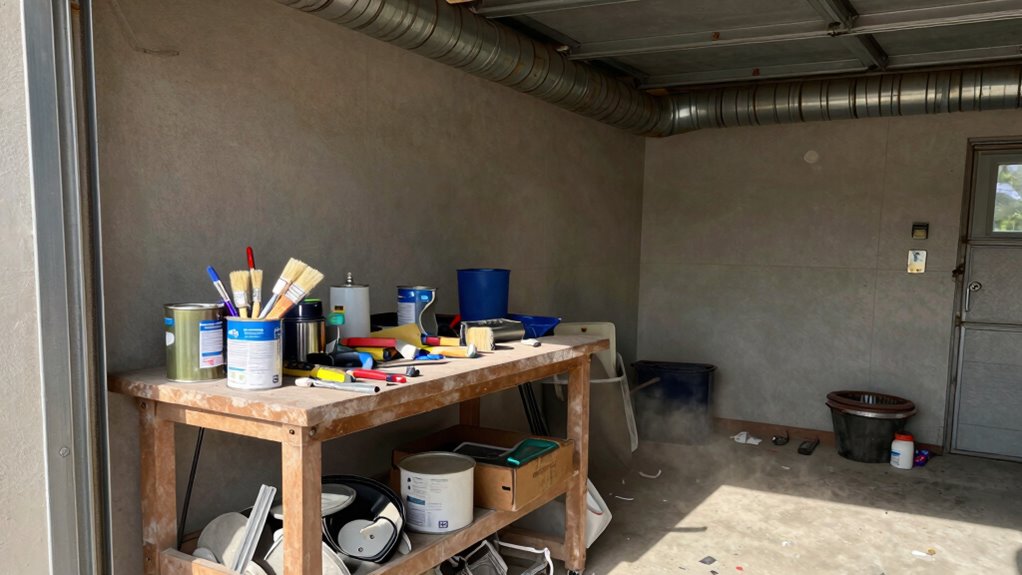
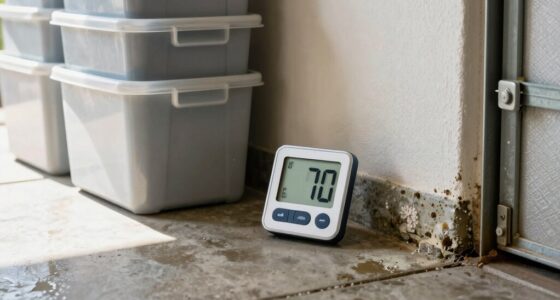
Detecting unhealthy air in your garage is essential for guaranteeing a safe environment, especially if you spend a lot of time working or storing items there. Poor garage organization and cluttered storage solutions can trap dust, mold, or fumes, making it harder to notice warning signs. If you notice persistent odors, excessive dust, or mold growth, these are clear indicators of poor air quality. Headaches, dizziness, or respiratory irritation after garage work also suggest unhealthy air. Be mindful of any strange smells or visible mold on stored items or walls. Regularly check ventilation points and make certain that fumes from gasoline or chemicals aren’t lingering. Staying alert to these signs helps you identify when your garage air may be compromised and needs attention. Additionally, understanding air circulation and ventilation can significantly improve indoor air quality and reduce the buildup of harmful pollutants. Proper ventilation systems can help remove pollutants and improve overall air quality in your garage.
Simple Ways to Ventilate Your Garage Effectively
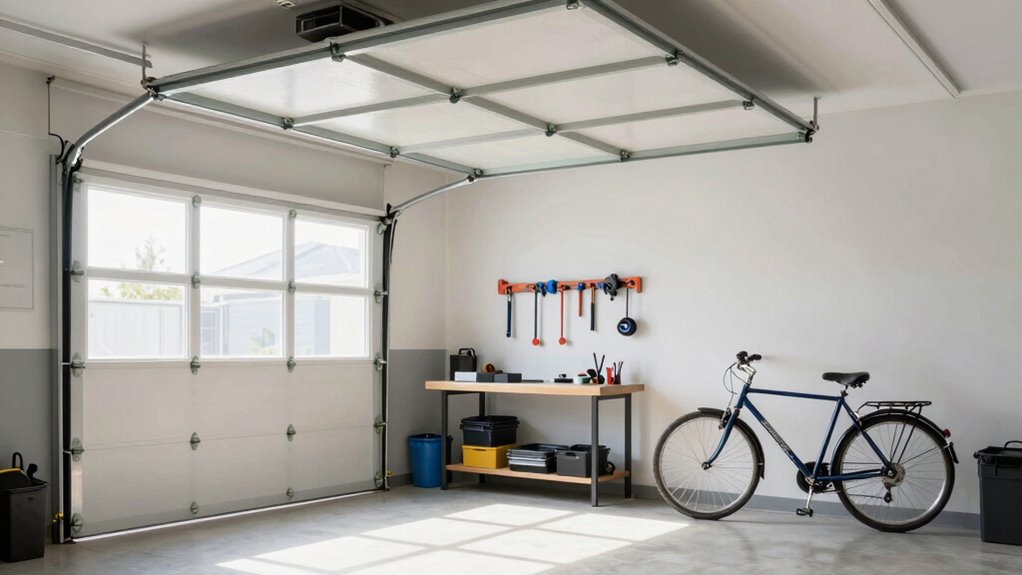
Using exhaust fans can quickly remove harmful fumes and improve air circulation in your garage. Keeping your garage doors open whenever possible also allows fresh air to flow in and stale air to escape. Incorporating outdoor elements can further enhance ventilation by facilitating natural airflow. Ensuring proper air exchange is essential for maintaining healthy indoor air quality, especially in enclosed spaces like garages. Together, these simple steps can make a noticeable difference in maintaining healthy air quality. Ensuring your ventilation setup includes proper filtration can further protect your space from airborne contaminants. Additionally, understanding cybersecurity strategies for connected smart garage systems can help safeguard your home’s network from potential risks. Regularly inspecting and maintaining your ventilation equipment ensures it operates efficiently and continues to improve air quality over time.
Use Exhaust Fans
Have you considered how exhaust fans can instantly improve your garage’s air quality? Installing an exhaust fan is a straightforward way to remove fumes, odors, and excess humidity. Start with exhaust fan installation, choosing a unit suited for your garage size and ventilation needs. Proper installation ensures maximum efficiency and safety. After installing, perform garage air testing to assess the air quality and confirm the fan effectively reduces pollutants. Regular testing helps you identify any lingering issues and determine if additional ventilation measures are needed. Using exhaust fans creates continuous airflow, preventing dangerous buildup of fumes from vehicles, chemicals, and other sources. An understanding of ventilation systems can help you select the most effective setup. Additionally, selecting the right air exchange rate ensures your garage maintains optimal air quality at all times. It’s a simple, proactive step to keep your garage safer, healthier, and more comfortable.
Keep Garage Doors Open
Keeping your garage doors open is one of the simplest and most effective ways to improve airflow and ventilation. It helps reduce the buildup of fumes, mustiness, and indoor pollutants, creating a healthier environment. When your garage is well-ventilated, it also supports better garage organization, as fresh air prevents mold and dampness that can damage stored items. Additionally, keeping doors open discourages pests from settling inside, since they prefer dark, stagnant spaces. If you regularly open your garage doors, you’ll notice improved air quality and fewer pest problems over time. Just make certain you do this when weather permits, and consider using screens to keep insects out. Proper ventilation through open doors is a straightforward step toward maintaining a cleaner, safer garage space.
Tips to Reduce Chemicals and Dust in Your Garage
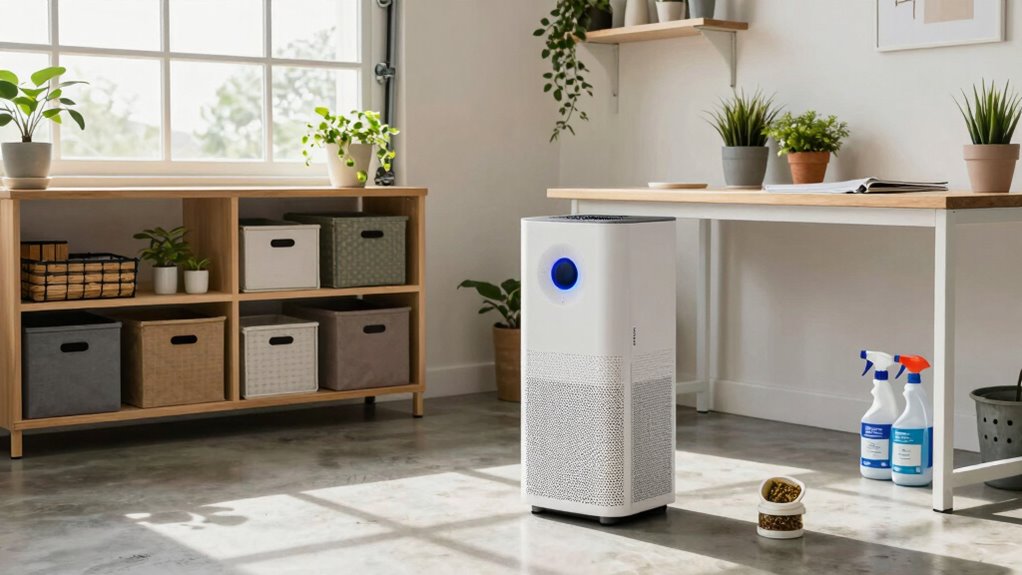
To effectively reduce chemicals and dust in your garage, start by organizing and storing hazardous materials properly. Use storage solutions like labeled containers and dedicated shelves to keep chemicals sealed and separate from dust-prone areas. Regularly clean surfaces to prevent dust buildup and avoid clutter that traps dirt. Good garage organization minimizes dust circulation and keeps hazardous substances contained. Consider sealing cracks and vents to prevent outside dust from entering. Here’s a helpful table to guide your storage:
| Item Type | Best Storage Solution | Tips |
|---|---|---|
| Paints & Solvents | Airtight containers | Store away from heat |
| Automotive fluids | Elevated shelves | Keep out of reach |
| Power tools | Storage bins with lids | Clean after use |
| Dust prone items | Covered storage or cabinets | Regularly dust and clean |
How Air Purifiers Can Improve Your Garage’s Air Quality
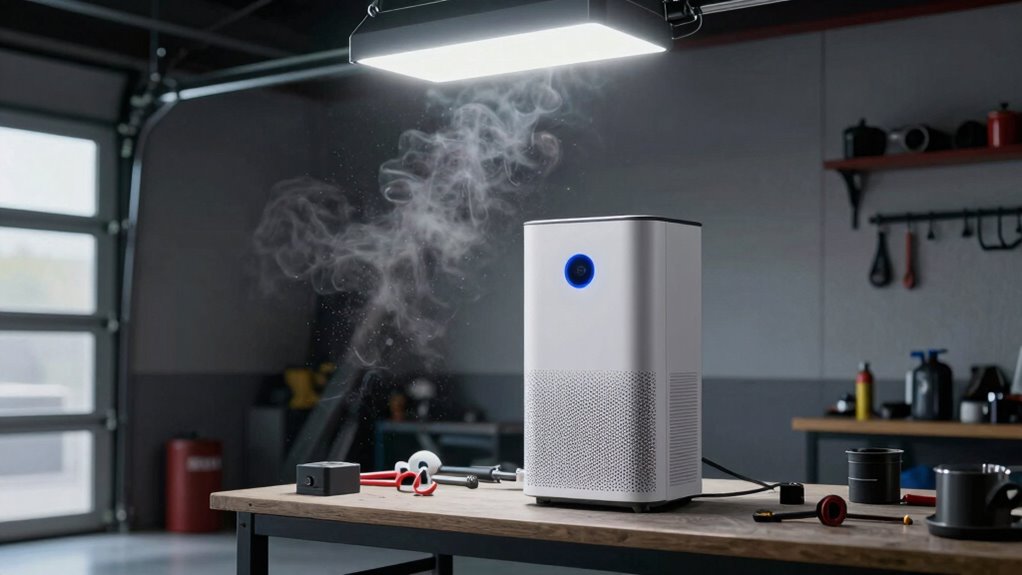
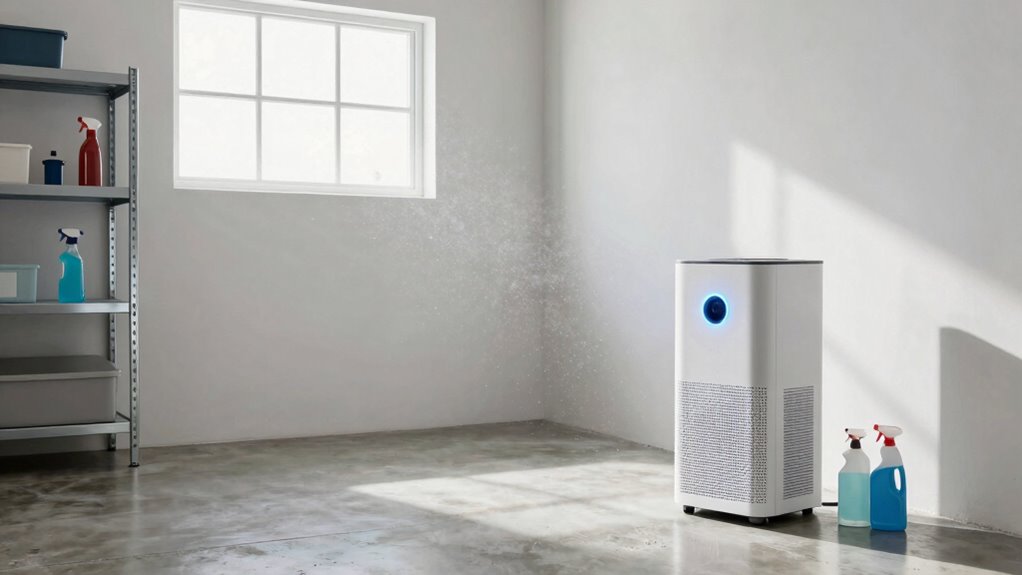
Proper storage and regular cleaning are essential steps in maintaining good air quality in your garage, but they might not be enough to eliminate airborne pollutants entirely. That’s where an air purifier can make a difference. It helps remove dust, fumes, and chemicals that cleaning alone can’t eliminate. To keep it effective, you need to perform regular air purifier maintenance, including timely filter replacement. Dirty filters reduce filtration efficiency and can circulate contaminants back into your garage air. Choose a purifier with a HEPA filter for maximum removal of particulates, and verify you follow the manufacturer’s instructions for filter replacement. This simple step keeps your air purifier working at peak performance, providing cleaner, safer air for your garage environment.
Maintaining and Monitoring Your Garage’s Air Safety
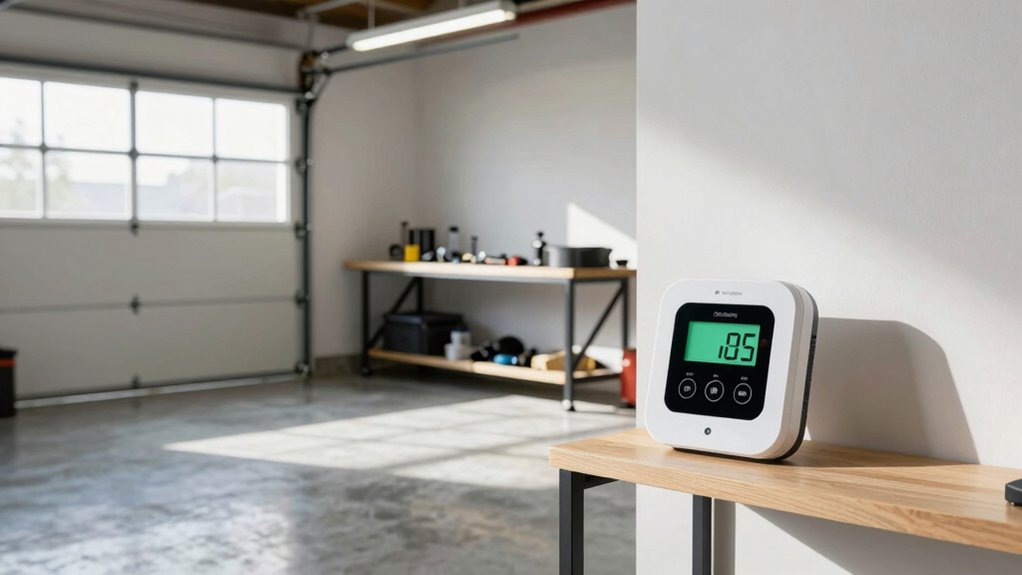
Regularly monitoring your garage’s air quality is crucial to guarantee it remains safe and healthy. Keep your garage well-organized to reduce clutter that can trap dust, mold, or pests, which can negatively impact air safety. Effective garage organization also makes it easier to spot leaks, mold growth, or signs of pest activity early. Pest control is essential because pests can introduce allergens or contaminants into the air, compromising your health. Use simple tools like air quality monitors to track levels of pollutants or VOCs, and check for odors that signal mold or other issues. Regularly cleaning surfaces, ensuring proper ventilation, and maintaining pest control measures help keep your garage’s air safe and prevent long-term health problems.
When to Call a Professional for Garage Air Issues
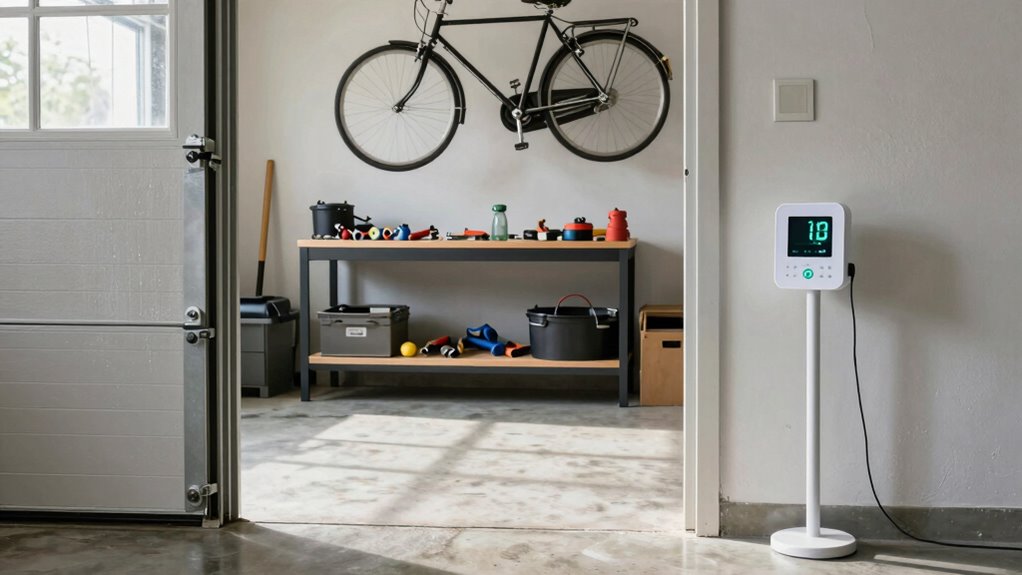
While monitoring your garage’s air quality helps catch many issues early, there are times when problems require professional intervention. If you notice persistent odors, mold growth, or unexplained health symptoms, it’s time to call in an expert. Poor garage insulation can trap moisture, leading to mold and air quality decline, so a professional can assess and improve insulation. Additionally, if your storage organization isn’t properly ventilated, harmful fumes from chemicals or paints can accumulate. Here are situations to seek professional help:
- Persistent mold or musty smells despite cleaning.
- Signs of moisture buildup or water leaks.
- Ineffective ventilation or compromised garage insulation affecting air quality.
Addressing these issues promptly ensures a healthier, safer garage environment.
Frequently Asked Questions
Can Garage Air Quality Affect Indoor Air in the Rest of My Home?
Yes, garage air quality can affect your home’s indoor air. Poor garage ventilation allows pollutants from sources like paints, chemicals, or vehicles to seep into your living space. These pollutants can linger and impact your health. To prevent this, make certain proper ventilation in your garage, use exhaust fans, and keep pollutant sources contained. Good ventilation reduces the risk of harmful fumes migrating into the rest of your home.
Are There Specific Air Purifier Models Best Suited for Garages?
Yes, certain air purifier types are best suited for garages, especially those with activated carbon filters and HEPA filters that target fumes, dust, and pollutants. You should also consider garage ventilation systems to improve airflow and reduce contaminants. Combining a high-quality air purifier with proper garage ventilation guarantees cleaner air, removing chemicals, odors, and particulates effectively, making your garage safer and healthier for you and your family.
How Often Should I Test My Garage’s Air Quality?
Did you know that indoor air can be up to five times more polluted than outdoor air? You should test your garage’s air quality at least every three to six months, especially if you use it for work or storage. Follow safety guidelines to make sure your environment stays safe. Regular air quality testing helps you spot issues early and keeps your garage a healthy space for you and your family.
Do Natural Remedies Improve Garage Air Safety?
Natural remedies can help improve your garage’s air safety, but they aren’t a complete solution. Using plants like spider plants or peace lilies can filter some toxins, and natural ventilation methods help reduce indoor pollutants. However, relying solely on natural remedies may not eliminate harmful fumes from chemicals or fumes from vehicles. For ideal air safety, combine natural remedies with proper ventilation, regular testing, and air purifiers.
What Are the Legal Standards for Garage Air Emissions?
Ever wondered if your garage complies with regulations? You’re likely bound by legal regulations that set specific emission standards for indoor air quality. These standards aim to limit harmful fumes from paints, solvents, and vehicle emissions. It’s essential to stay informed because non-compliance can lead to health risks or legal penalties. Regularly check local codes and guarantee your garage’s ventilation systems meet or exceed these emission standards for a safer space.
Conclusion
Did you know that your garage can have air quality levels five times worse than outside? Poor ventilation can expose you to harmful pollutants, threatening your health. By regularly checking your garage’s air, ventilating properly, and using air purifiers, you can reduce risks. Taking these simple steps can make your garage a safer space for you and your family, ensuring you breathe cleaner, healthier air every day.