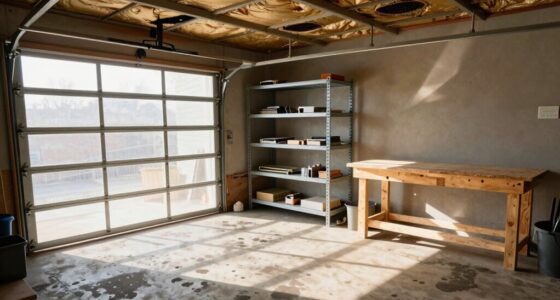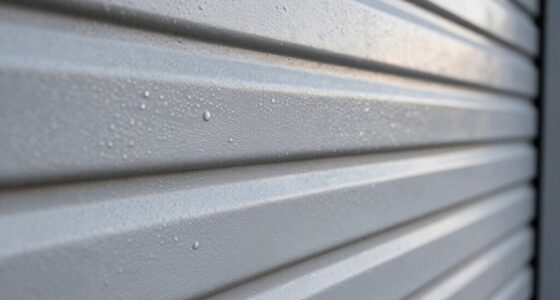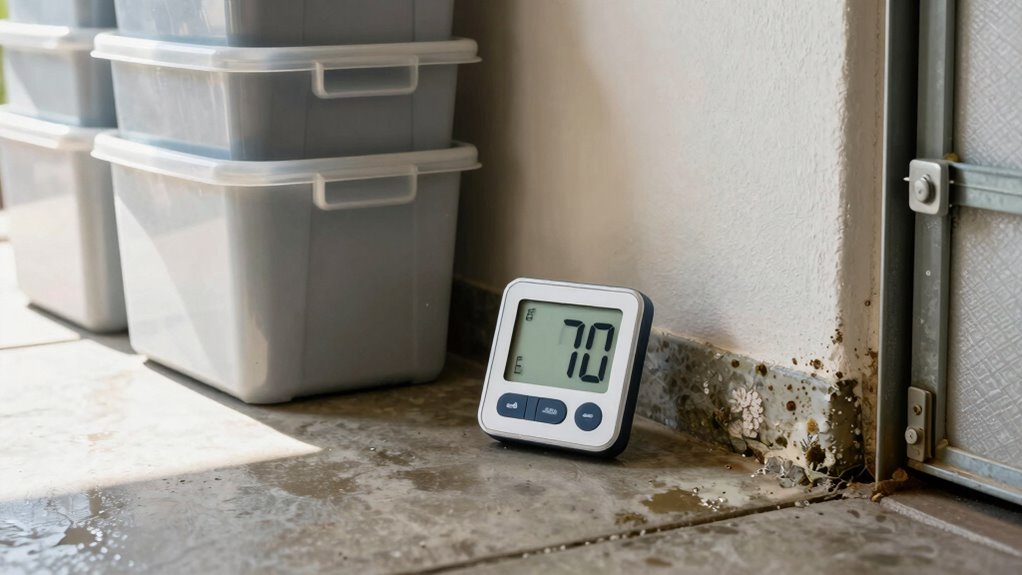
To prevent mold in your garage, keep an eye on humidity sources like leaks, poor ventilation, and clutter that traps moisture. Properly seal cracks, install vents or exhaust fans, and use dehumidifiers to control moisture levels. Regularly check for leaks and address them promptly. Maintain good airflow by organizing stored items off the ground. Continuing with these tips will help you uncover even more effective ways to keep mold at bay.

Get home appliances delivered free with Prime
- Fast, free delivery on millions of items
- Prime Video, Amazon Music and more included
- Member-only deals all year
Key Takeaways
- Monitor and control indoor humidity levels with dehumidifiers to prevent moisture buildup that promotes mold growth.
- Seal doors, windows, and cracks to prevent external moisture intrusion and reduce humidity fluctuations.
- Ensure proper ventilation by installing vents or exhaust fans to maintain airflow and reduce moisture accumulation.
- Avoid cluttered storage that traps moisture and restricts air circulation, promoting mold prevention.
- Regularly inspect for leaks and address any sources of water intrusion promptly to keep the garage damp-free.
As an affiliate, we earn on qualifying purchases.
Why Mold Forms in Garages and How to Prevent It
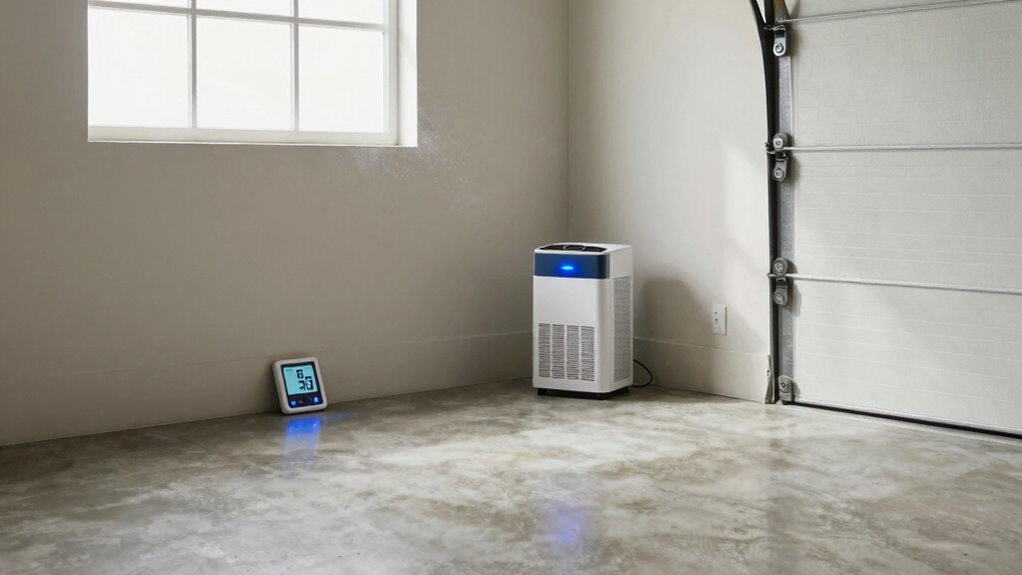
Mold tends to form in garages because these spaces often have high humidity levels and poor ventilation, creating ideal conditions for mold spores to grow. Poor garage organization can trap moisture and clutter, making it harder to spot leaks or damp areas. To prevent mold, focus on proper insulation techniques, which help regulate temperature and reduce condensation buildup. Insulating walls, ceilings, and garage doors minimizes temperature fluctuations that cause moisture to settle. Keeping your garage organized ensures better airflow and easy access to areas needing maintenance. Regularly check for leaks, and use dehumidifiers if necessary. Combining effective garage organization with proper insulation not only reduces humidity but also makes it easier to maintain a clean, mold-resistant environment.
As an affiliate, we earn on qualifying purchases.
Common Causes of Garage Humidity and Mold Risk
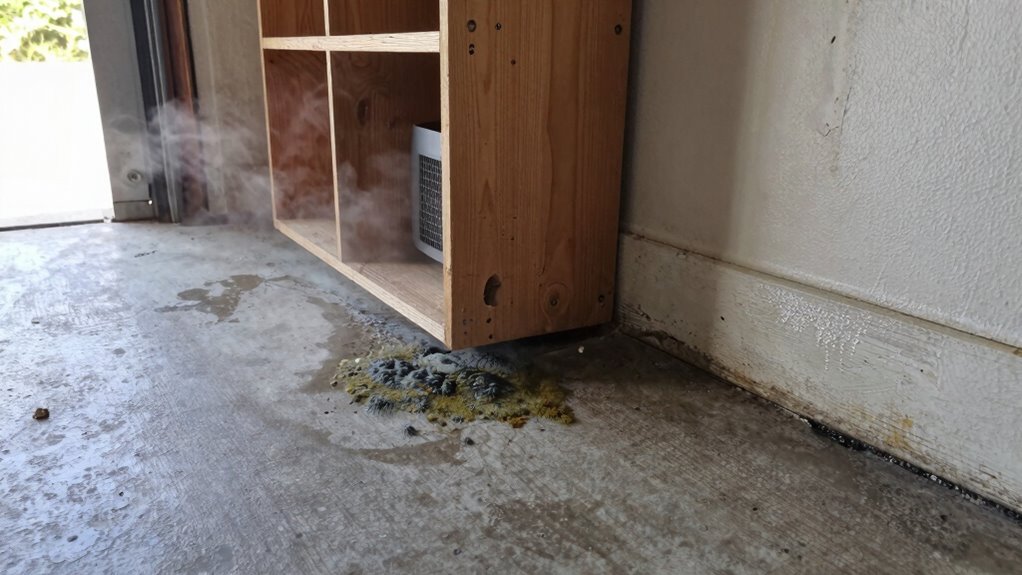
High humidity levels in your garage often come from external weather conditions, such as rain or high moisture in the air, which can seep in through gaps or poorly sealed doors. Poor garage insulation allows moisture to penetrate walls and ceilings, increasing humidity and mold risk. Additionally, cluttered storage organization can trap moisture, creating damp spots that encourage mold growth. When boxes, tools, or equipment are piled tightly, airflow is restricted, and moisture accumulates. Without proper ventilation or insulation, these conditions worsen, making your garage a prime environment for mold. To reduce this risk, guarantee your garage is well-insulated and keep storage organized to promote air circulation. Incorporating environmentally friendly craft ideas, such as using sustainable storage containers or eco-conscious materials, can also help improve overall air quality. Ensuring proper ventilation techniques are in place is essential for maintaining a dry, mold-free space. Proper airflow management is crucial for preventing moisture buildup and controlling humidity levels. Regularly checking for external moisture sources such as leaks or drainage issues can also significantly impact mold prevention. Addressing these causes helps maintain a dry, mold-free space.
As an affiliate, we earn on qualifying purchases.
How to Fix Garage Leaks That Raise Moisture Levels
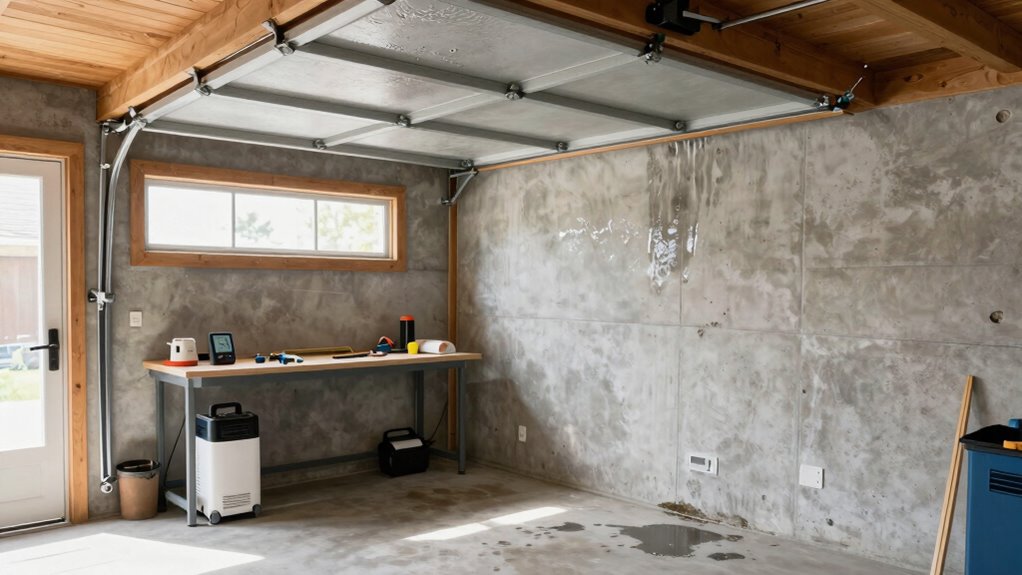
Leaks are a common source of moisture problems in your garage, and fixing them promptly can substantially reduce mold risk. Start by inspecting your roof drainage system for clogs or damage that could cause leaks. Check garage insulation for gaps or dampness, which signals water intrusion. Seal cracks in walls and floors with appropriate waterproofing materials. Improving roof drainage prevents water from pooling and seeping inside. Properly installed garage insulation helps block moisture entry. Additionally, addressing moisture transfer through proper sealing can further protect your space from mold growth.
As an affiliate, we earn on qualifying purchases.
Tips to Improve Garage Ventilation and Keep Mold Away
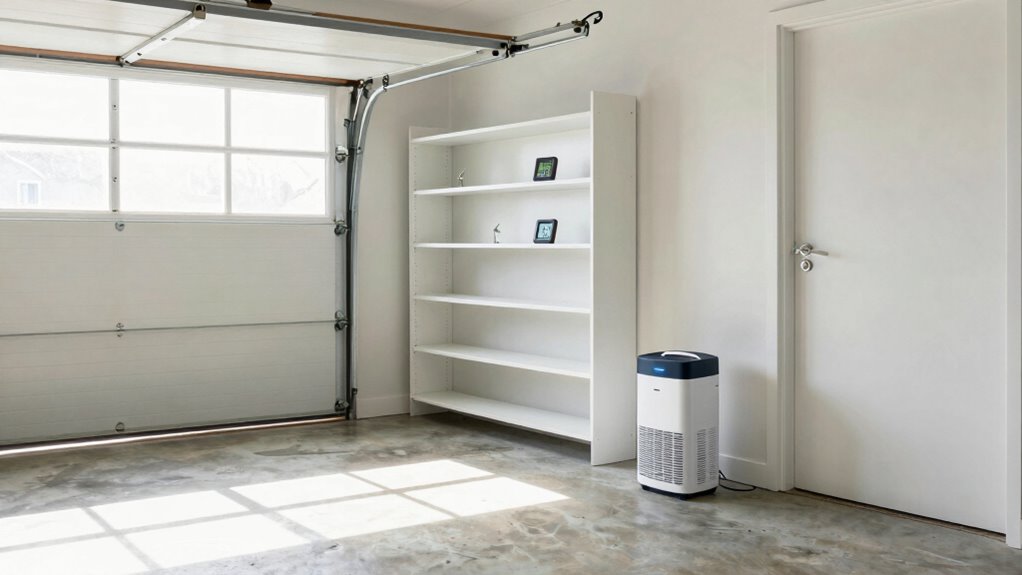
Improving your garage’s ventilation is essential for preventing mold growth, especially in spaces prone to moisture buildup. Good airflow keeps humidity levels low, discouraging mold spores from settling. To boost ventilation, consider installing vents or exhaust fans, and keep garage doors open when possible. Proper garage organization helps prevent clutter that traps moisture and promotes pest control, reducing unwanted pests that can carry mold spores. Additionally, understanding the history of women’s golf can inspire you to maintain a space that reflects tradition and excellence. Store items off the floor for better airflow, seal cracks to prevent pests and moisture intrusion, and ensure that any painting or sealing projects are done with proper airless paint spraying techniques to avoid excess moisture and humidity. Regularly inspecting and maintaining your garage’s ventilation system can further ensure optimal airflow and moisture control. Being aware of climate factors in your area can also help you anticipate and respond to humidity fluctuations that might lead to mold development. Incorporating smart ventilation devices can help automate humidity control and improve overall home safety.
Using Dehumidifiers and Moisture Barriers to Control Humidity
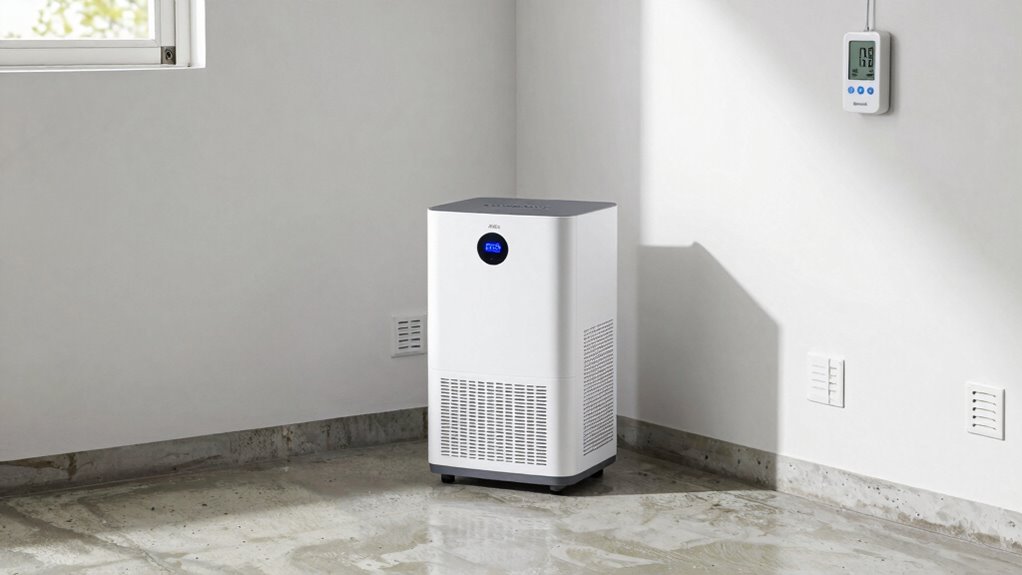
Using dehumidifiers and moisture barriers is an effective way to control humidity levels in your garage and prevent mold growth. Proper dehumidifier placement is key; position it in central areas away from walls and clutter to maximize airflow and efficiency. Regularly empty or maintain the dehumidifier to keep it working effectively. Moisture barrier installation is also essential—seal the garage floor and walls with a high-quality vapor barrier to prevent moisture seepage from concrete and soil. This creates a physical barrier that reduces humidity and condensation. Additionally, choosing the right safety precautions for portable oil radiators can prevent fire hazards related to excess humidity and temperature fluctuations. Maintaining optimal humidity levels can significantly reduce the risk of mold development. Together, these methods help maintain a stable environment, limiting mold-friendly conditions. By strategically placing your dehumidifier and installing moisture barriers, you’ll notably lower moisture levels and protect your garage from mold growth.
Routine Maintenance Tips to Prevent Garage Mold
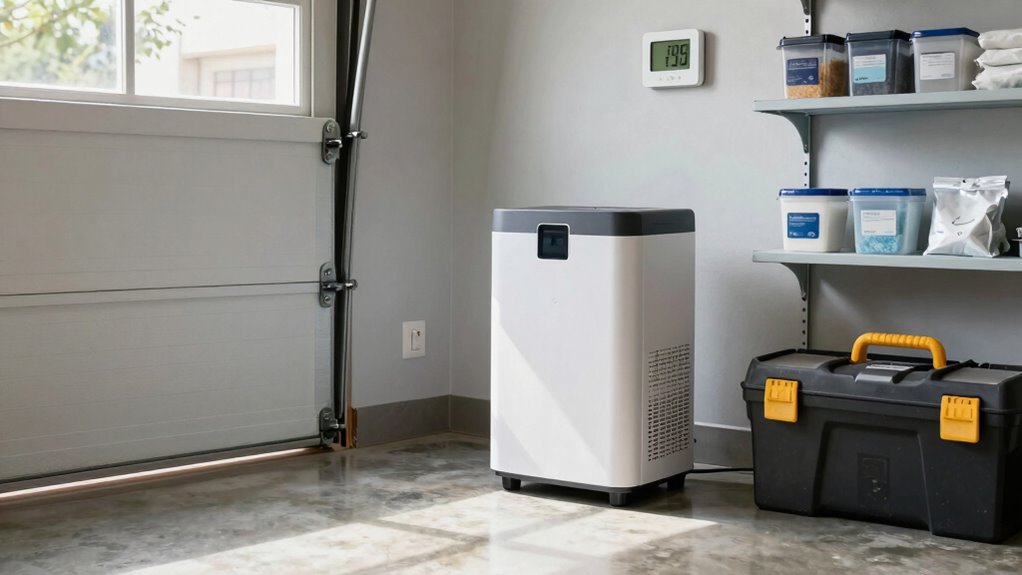
Regularly inspecting your garage and keeping it clean are essential steps in preventing mold growth. Proper garage organization helps you spot leaks, damp areas, or signs of mold early. Maintain your paint by checking for cracks or peeling—these can trap moisture and encourage mold. Regularly clean surfaces with mold-inhibiting cleaners, and guarantee your vents and drainage systems are clear. Here are some key tips:
- Keep clutter to improve air circulation
- Fix leaks and water intrusion immediately
- Repaint damaged areas to seal out moisture
- Store items on shelves to prevent contact with damp floors
- Schedule routine checks to catch problems early
- Using the right gear and tools can make your maintenance efforts more effective. Incorporating ventilation strategies can also help regulate humidity levels and reduce condensation. Proper humidity control is crucial in preventing mold, especially in areas prone to moisture buildup. Additionally, monitoring for microplastics in dust can help identify hidden sources of indoor pollutants that may contribute to a less healthy environment. Regularly assessing your garage environment for moisture levels can further help you stay ahead of potential mold issues.
Frequently Asked Questions
Can Mold Grow Behind Garage Walls Without Visible Signs?
Yes, mold can grow behind garage walls without visible signs. Hidden moisture from leaks or poor ventilation creates the perfect environment for mold to develop unnoticed. Over time, this moisture causes wall damage, such as warping, staining, or peeling paint, signaling there’s an issue. If you suspect hidden moisture, it’s essential to inspect behind the walls and address any leaks or ventilation problems promptly to prevent mold growth and damage.
How Does Outdoor Weather Influence Garage Humidity Levels?
Outdoor weather, including temperature fluctuations and seasonal patterns, directly impacts your garage’s humidity levels. When outdoor temperatures rise and fall, moisture can seep inside, increasing humidity. Seasonal weather changes, like rain or snow, also add moisture, creating a perfect environment for mold growth. To keep humidity in check, use dehumidifiers and guarantee proper ventilation, especially during damp or fluctuating weather conditions, to prevent mold from thriving.
Are Certain Garage Materials More Prone to Mold Development?
Certain garage materials are more prone to mold development, especially those that retain moisture or lack proper ventilation. For example, wood, drywall, and carpet are highly susceptible to mold, while concrete or metal resist mold growth better. You can reduce mold susceptibility by choosing moisture-resistant materials, sealing gaps, and maintaining low humidity levels. Regular cleaning and good ventilation also help prevent mold from taking hold on vulnerable surfaces.
What Is the Ideal Humidity Level to Prevent Mold in Garages?
You should keep your garage’s humidity level below 60%, ideally around 50%. To do this, use ventilation techniques like exhaust fans or open windows to improve airflow. Installing moisture barriers on floors and walls helps prevent moisture buildup. Regularly monitor humidity levels with a hygrometer, and use dehumidifiers if necessary. These steps help reduce moisture, making it harder for mold to grow and keeping your garage dry and healthy.
How Often Should I Inspect My Garage for Mold Risk?
Like a vigilant lighthouse keeper, you should inspect your garage monthly for mold risk. Check for musty odors, discoloration, or condensation on walls and ceilings. Improve ventilation and install moisture barriers if needed, especially after storms or heavy rains. Regular inspections allow you to catch issues early, reducing mold growth. Keeping an eye on humidity triggers and maintaining proper airflow is key to preventing mold buildup over time.
Conclusion
By mastering moisture management, you’ll minimize mold’s menace and maintain a clean, comfortable garage. Regularly repair leaks, reinforce ventilation, and utilize dehumidifiers to disrupt dampness’s danger. Diligent daily diligence and decisive debris removal diminish moisture’s menace, making mold’s mischief much more manageable. With consistent care and clever controls, you can confidently conquer condensation, curb clutter, and create a mold-free zone that’s safe, sanitary, and serene.
Cold & flu season Picks
humidifiers
As an affiliate, we earn on qualifying purchases.