
To remove oil, paint, and musty odors from your garage, start by thoroughly cleaning spills and properly disposing of leftover chemicals. Increase ventilation by opening windows, using fans, and running exhaust vents. Use natural absorbers like baking soda or activated charcoal to trap smells, and consider cleaning walls and stored items with vinegar or mold remover. Regularly maintain your space and address moisture issues early. For more effective tips on keeping your garage smelling fresh, keep exploring.

Get home appliances delivered free with Prime
- Fast, free delivery on millions of items
- Prime Video, Amazon Music and more included
- Member-only deals all year
Key Takeaways
- Clean spills and leaks promptly, using degreasers and vinegar to eliminate oil and paint odors.
- Improve ventilation with windows, fans, and exhaust systems to disperse lingering fumes and musty smells.
- Use activated charcoal, baking soda, or commercial odor absorbers to neutralize persistent garage odors.
- Organize storage in airtight containers and remove clutter to reduce mold and dampness that cause mustiness.
- Address moisture issues and repair leaks to prevent mold growth and recurring musty odors.
Products Worth Considering

Levoit Core 400S-P Smart Air Purifier for Large Rooms

LEVOIT Vital 200S-P Smart Air Purifier for Large Rooms

Coway Airmega 250 Air Purifier for Large Rooms
As an affiliate, we earn on qualifying purchases.
What Causes Oil, Paint, and Musty Odors in Your Garage?
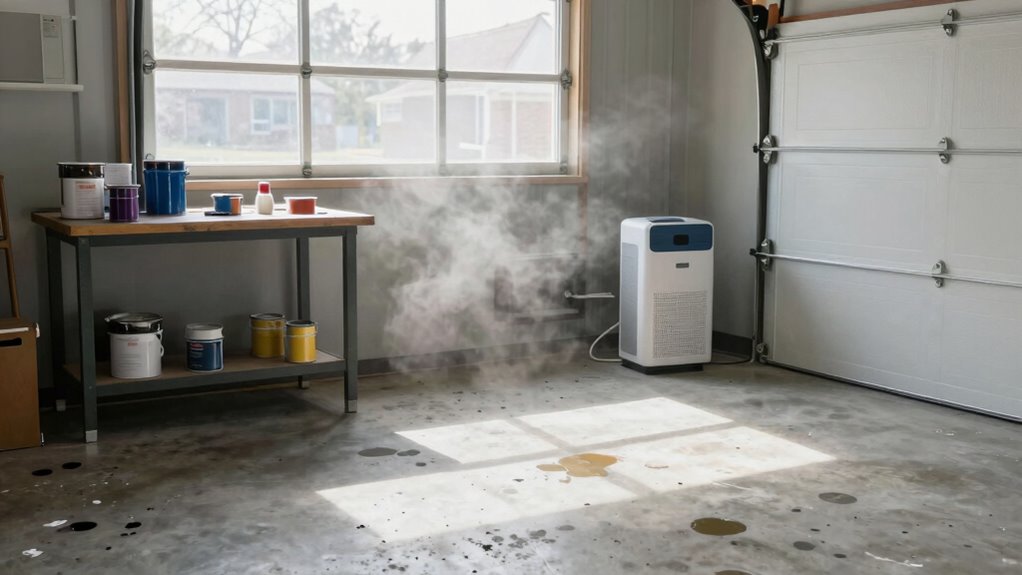
Oil, paint, and musty odors in your garage often stem from everyday activities and stored items. Poor garage organization allows spills and leaks from oil cans or paint containers to seep onto floors and shelves, releasing strong odors. Over time, these smells can become persistent if not cleaned properly. Musty odors usually come from dampness caused by humidity or leaks, leading to mold and mildew growth. Pest control issues also contribute, as rodents and insects can introduce additional smells and leave behind droppings or nests that worsen the odor problem. Keeping your garage tidy, sealing leaks, and managing moisture are essential steps. Regularly inspecting for pests and cleaning spills promptly will help prevent these odors from becoming a long-term problem. Additionally, using electric tools and bikes can reduce the release of fumes and odors associated with gas-powered equipment. Proper ventilation and dehumidifiers can further improve air quality and diminish musty smells. Employing moisture control strategies can also help minimize dampness and reduce mold growth, further combating odors.
How to Identify Common Sources of Garage Odors
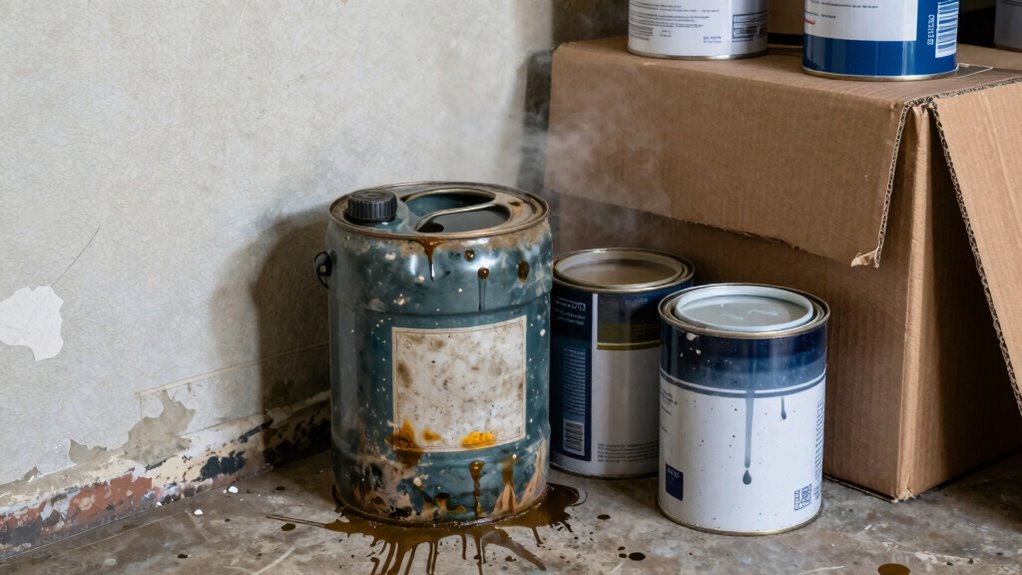
To eliminate garage odors, you need to identify their sources. Look for common culprits like spilled liquids, mold, or clutter that traps smells. Sometimes, hidden odors come from less obvious places, so keep an eye out for those as well. Incorporating advanced surveillance techniques can help detect hidden sources of odors that are not immediately visible. Additionally, using digital tools can assist in pinpointing areas where odors may be lingering beyond what the eye can see. Understanding garage odor sources can further aid in implementing effective removal strategies. Conducting regular cleaning routines can also prevent the buildup of odor-causing agents and maintain a fresh environment. Ensuring proper cable safety practices, such as avoiding heat buildup and using safe wiring techniques, helps prevent additional hazards that could contribute to persistent odors or unsafe conditions.
Common Odor Sources
Garages often develop unpleasant odors because of the various items stored inside and the activities that take place there. Poor garage organization can lead to clutter, making it harder to spot and address odor sources early. Common culprits include oil spills from vehicle maintenance, paint fumes from projects, and dampness causing mustiness. Spills and leaks from chemicals or car fluids often emit strong, persistent smells. Dust and mold can also build up, especially if cleaning routines are inconsistent. Additionally, stored items like old rags, garbage, or forgotten food can contribute to odors. Regularly organizing your garage, cleaning spills promptly, and maintaining good airflow help prevent these common odor sources from taking over your space. Recognizing these items makes odor control much easier. Proper ventilation and routine cleaning are essential for reducing lingering smells and maintaining a fresh environment. Keeping an eye on moisture levels can also help prevent mold and mustiness from developing over time. Sometimes, dehumidifiers can be a helpful addition to control excess humidity and reduce musty odors. Monitoring humidity control methods can further enhance odor prevention efforts.
Detecting Hidden Smells
Detecting hidden smells in your garage can be tricky, especially because some odors linger out of sight or are masked by stronger scents. You might notice a persistent mustiness or faint chemical odors that don’t seem to go away. To identify their sources, pay close attention to areas like corners, behind stored items, and hidden crevices. Use your nose as a guide—if a smell persists despite cleaning, it’s time for odor neutralization methods. Scent masking might temporarily hide odors, but true removal requires pinpointing the source. Below is a helpful table to evoke emotion and guide your detection process:
| Hidden Source | Common Odor | Tip for Detection |
|---|---|---|
| Old paint cans | Chemical, acrid smell | Check storage areas, use a flashlight |
| Oil spills | Greasy, burnt scent | Inspect garage floors and drains |
| Mold in corners | Musty, damp odor | Feel for moisture and look for discoloration |
| Stored fabrics | Stale, dusty smell | Smell stored boxes and curtains |
Additionally, ventilation techniques can help to temporarily clear out lingering odors while you locate the source.
Effective Ways to Remove Oil and Paint Smells
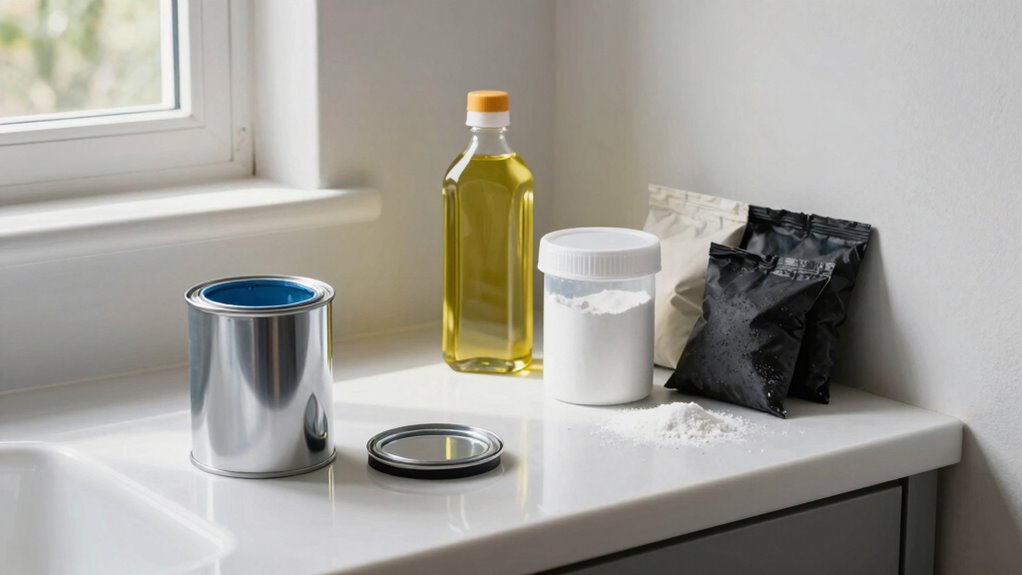
Removing oil and paint smells from your garage can be challenging, but with the right techniques, you can substantially reduce or eliminate these odors. Start with thorough garage cleaning, focusing on areas where spills or drips may have occurred. Proper paint disposal is essential—dispose of leftover paint and rags safely to prevent lingering fumes. Ventilate the space by opening windows and using fans to circulate fresh air. Consider using activated charcoal, which absorbs odors effectively, or baking soda sprinkled on surfaces to neutralize smells. Cleaning oily spots with degreasers and washing surfaces with vinegar can also help. Regularly removing trash and ensuring proper storage of paints and chemicals will prevent future odor buildup. Consistent maintenance is key to keeping your garage smelling fresh, and choosing the right outdoor gear can make cleaning and airing out easier during seasonal changes. Additionally, understanding odor absorption techniques can enhance your odor removal efforts. Incorporating proper chemical storage practices is also vital for maintaining a safe and odor-free environment. Using air purifiers equipped with HEPA filters can further improve air quality and help eliminate stubborn odors. A well-ventilated garage with adequate airflow can significantly speed up the odor removal process.
How to Eliminate Musty Odors From Garage Walls and Storage
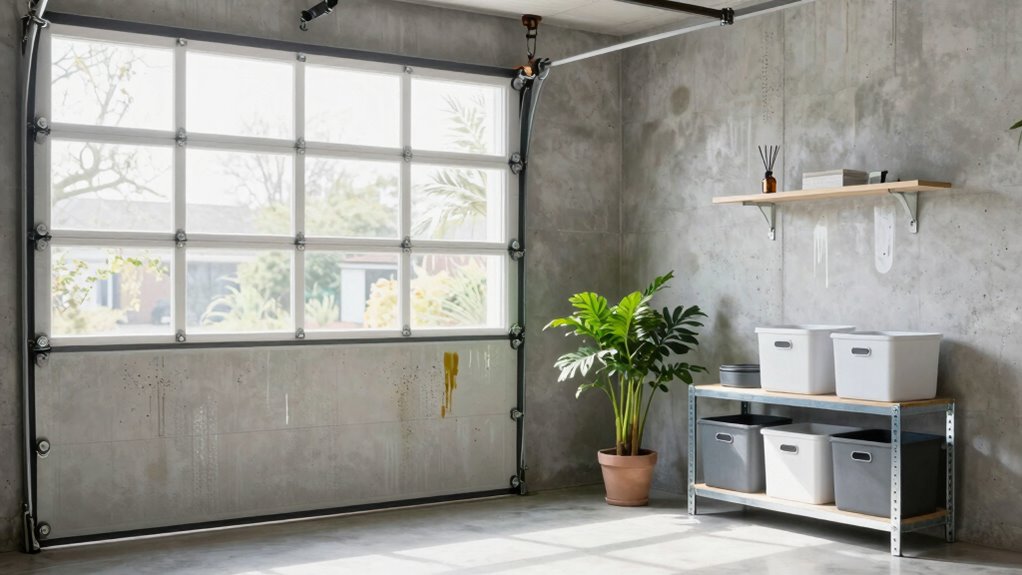
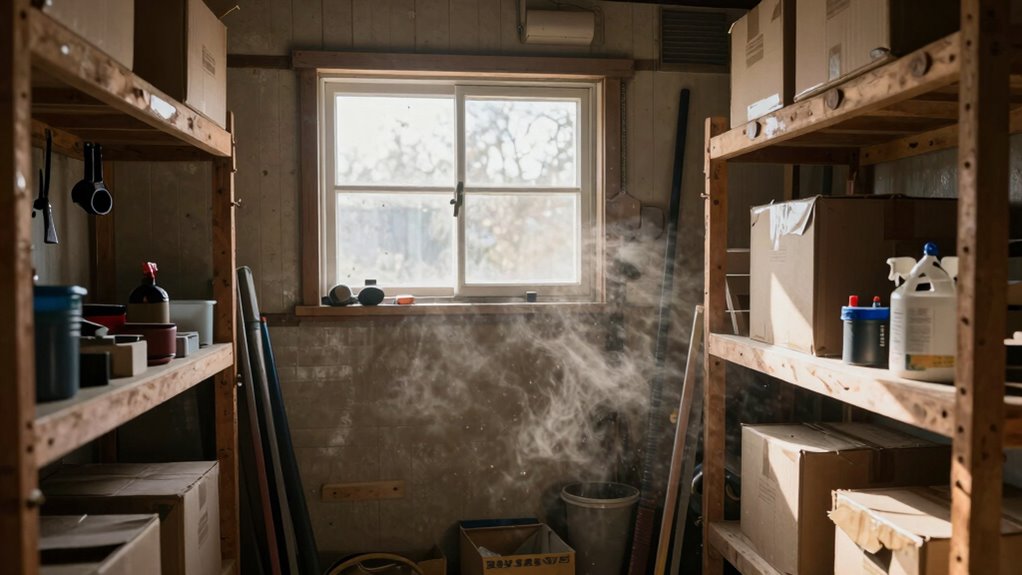
Musty odors often cling to garage walls and stored items, especially in damp conditions. To eliminate these smells, start with thorough garage cleaning, focusing on removing mold and mildew from walls using a mixture of vinegar and water or a commercial mold remover. Make certain you dry all surfaces completely. Organize your storage by decluttering and using airtight containers to prevent moisture buildup. Consider adding moisture absorbers like silica gel packs or activated charcoal in storage areas to keep humidity in check. Regularly inspect for leaks or water intrusion and repair promptly. Proper storage organization improves airflow and reduces dampness, making it harder for musty smells to return. Incorporating kitchen and household cleaning tips can also help in effectively removing stubborn odors. Additionally, optimizing your studio setup with proper ventilation and dehumidifiers can significantly improve air quality and odor control. Using dehumidification techniques tailored for garage spaces can further enhance your odor elimination efforts. Ensuring your garage has adequate ventilation systems can also help in maintaining a fresh environment and preventing odor buildup. Incorporating air circulation practices can improve overall airflow and help keep odors at bay.
Ventilation Tips to Keep Your Garage Fresh
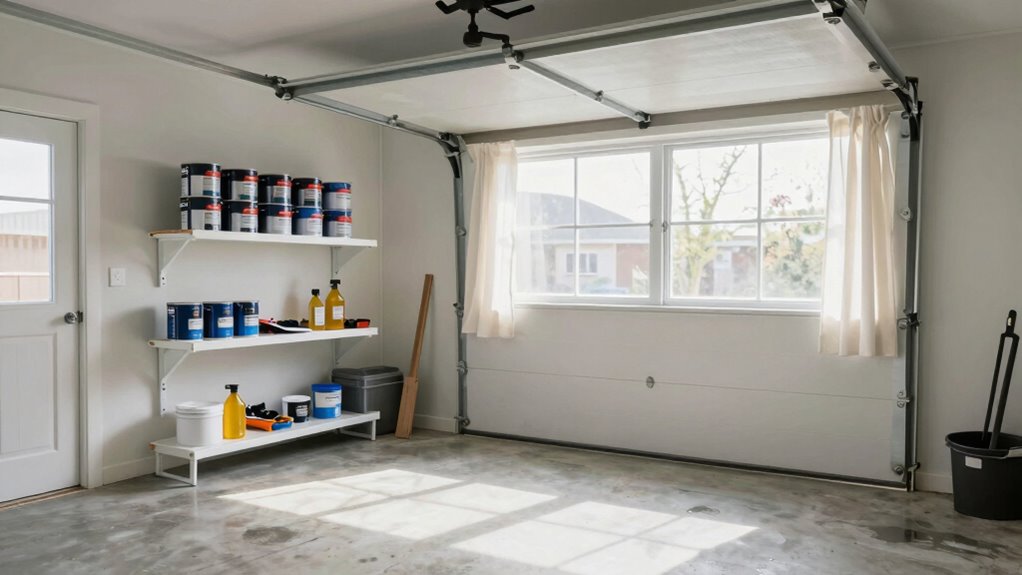
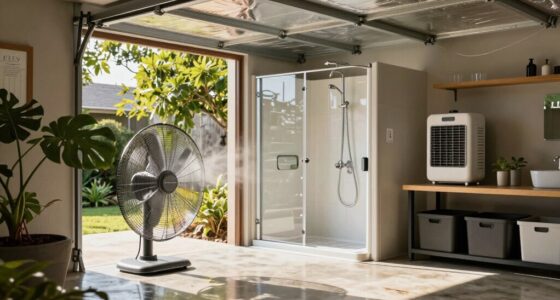
To keep your garage smelling fresh, you should maximize natural airflow by opening doors and windows whenever possible. Installing exhaust fans can help remove stale air and odors more efficiently. Regularly keeping your garage doors open also promotes better circulation and fresh air intake. Incorporating landscaping around your garage can also aid in improving air quality and reducing odors. Additionally, ensuring proper air circulation within the space by using fans can prevent the buildup of mustiness and lingering smells.
Maximize Natural Airflow
Maximizing natural airflow is one of the easiest ways to keep your garage smelling fresh. Effective airflow optimization relies on simple ventilation strategies that promote fresh air exchange and reduce trapped odors. To enhance airflow, open windows and doors on opposite sides, creating a cross-breeze. Consider adding vents or louvers for continuous ventilation. Use the table below to understand key airflow tactics:
| Strategy | Benefits | Implementation Tips |
|---|---|---|
| Cross-ventilation | Removes stale air quickly | Open windows on opposite walls |
| Door Positioning | Boosts airflow flow | Keep garage door slightly open |
| Vent Placement | Improves air circulation | Install vents near the ceiling or floor |
| Natural Airflow Enhancers | Maximizes fresh air intake | Use adjustable vents or window fans |
These strategies help maintain a fresh environment without relying on mechanical systems.
Use Exhaust Fans
Have you considered installing exhaust fans to boost your garage’s ventilation? Exhaust fans help remove stale air, fumes, and odors quickly, keeping your space fresh. Pairing an exhaust fan with an air purifier can enhance airflow and trap lingering particles, such as paint fumes or oil smells. An odor neutralizer can also be integrated into your ventilation system or used separately to eliminate stubborn mustiness. Proper airflow prevents the buildup of unpleasant scents and reduces the risk of fumes lingering, making your garage safer and more comfortable. Regularly running exhaust fans during and after projects ensures continuous fresh air circulation. This simple step greatly improves your garage environment, helping to maintain a clean, odor-free space for all your DIY activities.
Keep Garage Doors Open
Keeping your garage doors open is an easy way to promote better airflow and reduce odors naturally. Regular garage door maintenance guarantees the doors operate smoothly, making it easier to keep them open for ventilation. Weather impact plays a role too—on mild days, leaving the doors open helps air circulate and disperse musty or oily smells. However, in extreme weather, like rain or high winds, keep the doors closed to prevent moisture and debris from entering. Consistently opening your garage door when weather permits improves ventilation, preventing odors from lingering. Just remember to close them during harsh conditions to protect your space, and check the garage door’s hardware periodically to guarantee smooth operation. Proper garage door maintenance combined with strategic open-door times keeps your garage fresh.
Best Natural and Commercial Odor Absorbers for Garages
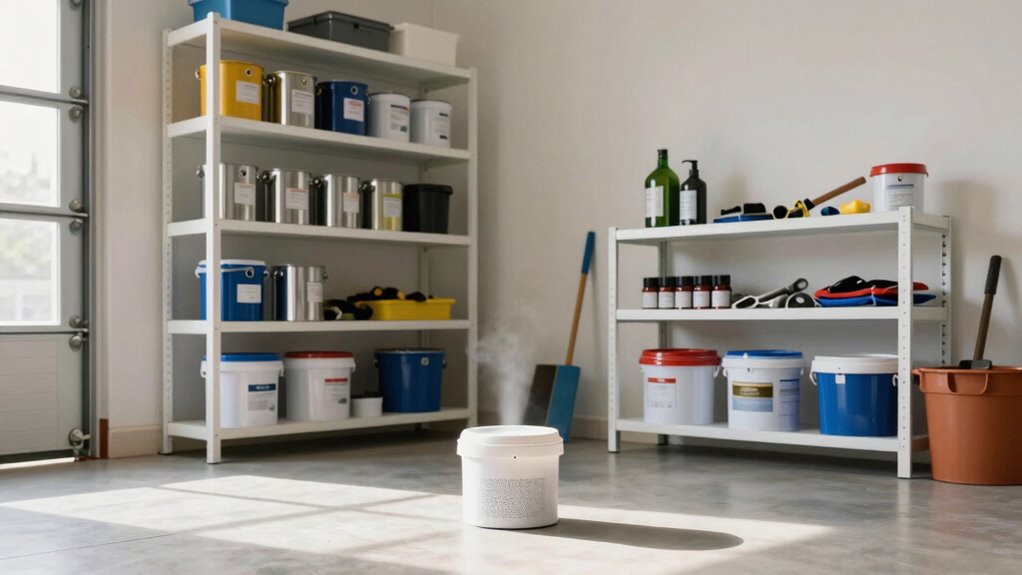
When it comes to tackling garage odors, choosing the right absorbers can make all the difference. Natural options like activated charcoal or baking soda are effective at neutralizing smells without harsh chemicals. You can place open boxes of baking soda or bowls of charcoal in areas prone to odors, especially near cluttered zones that hinder garage organization. Commercial odor absorbers, such as odor-neutralizing gels or sprays, offer quick relief and are easy to use. These products often contain enzymes that break down odor molecules, making your garage smell fresher. Additionally, some commercial products also help repel pests, contributing to pest prevention. Regular use of these absorbers, combined with good organization, keeps your garage smelling clean and minimizes unwanted critters.
Long-Term Tips to Keep Your Garage Odor-Free
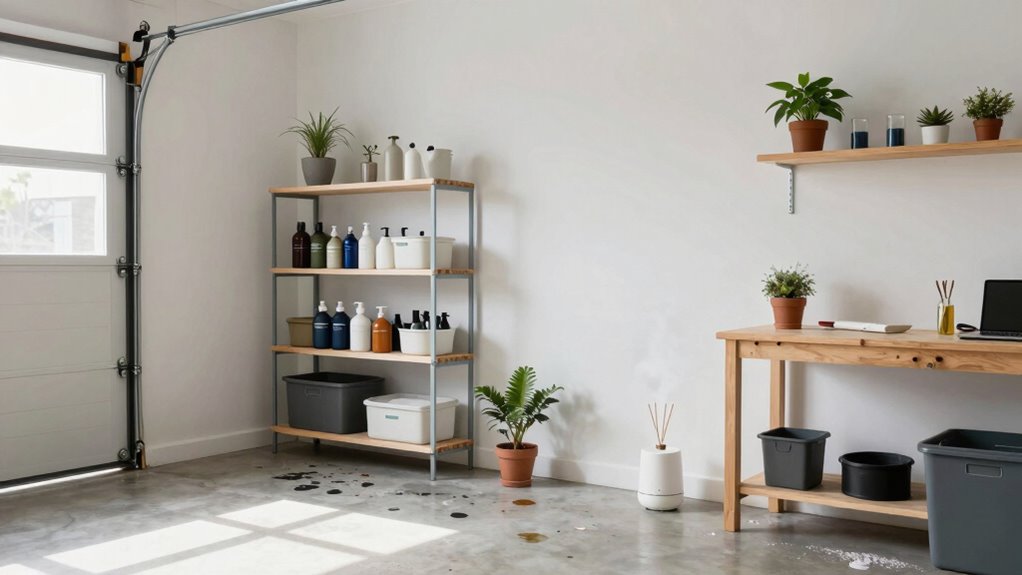
Maintaining a consistently fresh garage environment requires more than just occasional odor absorbers; it depends on establishing long-term habits. Regular garage cleaning helps remove dirt, dust, and potential odor sources before they become problematic. To prevent odors, always store paint and oils properly, sealing containers tightly. Ventilation is essential—keep doors and windows open when possible and use exhaust fans. Incorporate the following principles:
| Consistent Garage Cleaning | Proper Storage | Ventilation & Airflow |
|---|---|---|
| Regularly sweep and dust | Seal containers tightly | Use exhaust fans or open windows |
| Remove trash promptly | Organize items for easy access | Allow fresh air to circulate |
| Check for leaks or spills | Label storage clearly | Use dehumidifiers if needed |
These habits ensure long-term odor prevention and a fresher garage environment.
When to Call a Professional for Garage Odor Removal
Sometimes, persistent garage odors resist even your best cleaning efforts, signaling that professional intervention may be necessary. If odors like oil, paint, or mustiness linger despite thorough garage cleaning, it’s time to call in experts. Professionals can identify hidden sources of smell, such as mold or hidden pest infestations, that you might miss. They often use specialized equipment and treatments to eliminate stubborn odors effectively. Additionally, if you notice signs of pest control issues—like droppings, nests, or pests themselves—addressing these promptly can prevent odors from worsening. Waiting too long can lead to bigger problems, like structural damage or health risks. Recognizing when to seek professional help guarantees your garage is thoroughly cleaned, pest-free, and odor-free.
Frequently Asked Questions
Can Garage Odors Affect Indoor Air Quality?
Yes, garage odors can affect your indoor air quality. When odors linger in your garage, they can seep into your home through poor air circulation or open doors. These smells often result from odor absorption by surfaces or materials, making them harder to eliminate. Improving air circulation and cleaning surfaces can help reduce odors, preventing them from negatively impacting the air you breathe indoors.
Are There Eco-Friendly Ways to Remove Garage Smells?
Yes, you can eliminate garage odors with eco-friendly cleaning methods. Imagine breathing fresh air after using natural odor absorbers like baking soda, activated charcoal, or vinegar—powerful yet gentle options that trap and neutralize smells without harsh chemicals. These natural solutions not only remove oil, paint, and mustiness but also keep your environment safe and sustainable. You’ll be surprised how effectively eco-friendly methods restore freshness, leaving your garage smelling clean and inviting.
How Often Should I Clean to Prevent Odors?
You should clean your garage at least once a month to effectively prevent odors. Regular cleaning, including sweeping and wiping down surfaces, helps remove dust, oil, and paint residues that cause smells. Focus on areas where spills or leaks occur, and guarantee proper ventilation during cleaning. Consistent cleaning frequency is key to odor prevention, keeping your garage fresh and free from mustiness and chemical odors over time.
Do Garage Odors Pose Health Risks?
Think of garage odors as invisible clouds of airborne toxins drifting through your space. These fumes can pose health risks, especially to your respiratory health, if inhaled regularly. While a quick sniff might not harm you immediately, prolonged exposure can cause irritation or more serious issues. To protect yourself, make sure proper ventilation and clean regularly, reducing these odors and keeping your garage a safe environment.
Can Weather Changes Worsen Garage Odors?
Yes, weather fluctuations can worsen garage odors. Changes in temperature and humidity typically lead to odor amplification, making smells from oil, paint, and mustiness more intense. When it gets warmer or more humid, these odors become more noticeable because moisture helps release and spread the smell particles. To keep your garage smelling fresh, consider improving ventilation and sealing any leaks that might trap or amplify these odors during weather changes.
Conclusion
Maintaining a fresh garage isn’t just about cleanliness—it’s about safety too. Did you know that indoor odors can signal hidden mold or chemical leaks? Regularly ventilate, clean spills promptly, and use natural odor absorbers to keep your space inviting. By staying proactive, you can reduce odors by up to 80%, ensuring your garage remains a safe, pleasant environment for years to come. Don’t wait—address odors early and enjoy a fresher, healthier space!