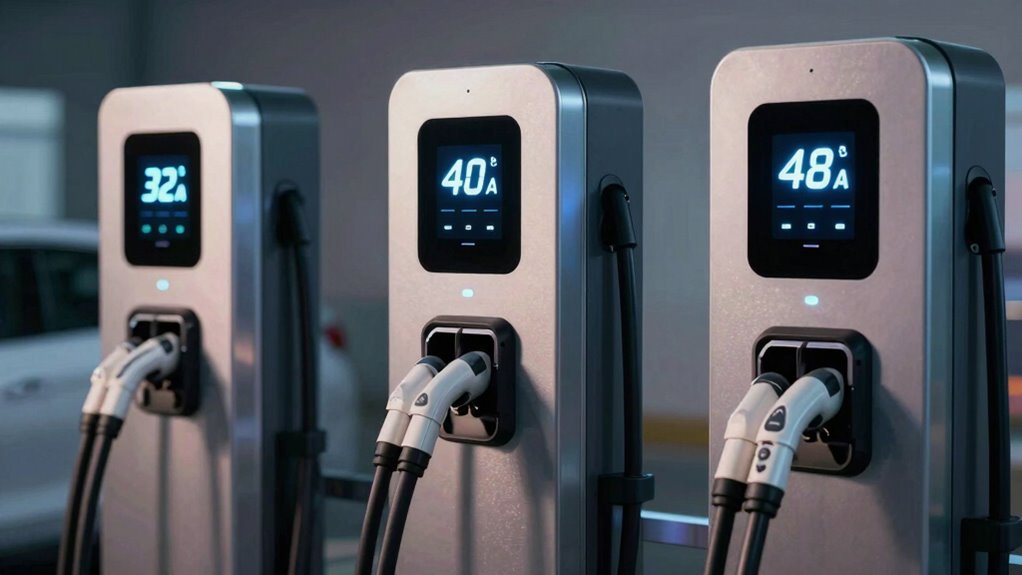

EV charger amps like 32A, 40A, and 48A indicate how much current the charger can deliver, affecting charging speed. Higher amps mean faster charging times, but they also require a stronger electrical system and proper installation. Not all vehicles can handle higher amperages, so compatibility matters. To get the best performance and safety, you need to match your charger’s amps with your vehicle and home electrical capacity. Keep exploring to understand how to choose the right setup for you.
Key Takeaways
- Higher amps (40A, 48A) deliver faster charging speeds compared to 32A, reducing charging times for compatible vehicles.
- Compatibility depends on your vehicle’s onboard charger capacity and your home’s electrical system capacity.
- Upgrading to higher amperage chargers may require electrical system upgrades, circuit breakers, and professional installation.
- 32A chargers are simpler and safer to install but provide slower charging, suitable for standard home setups.
- Matching charger amps with vehicle and home capacity ensures safety, efficiency, and optimal charging performance.
As an affiliate, we earn on qualifying purchases.
What Do EV Charger Amp Ratings Like 32A, 40A, and 48A Mean?
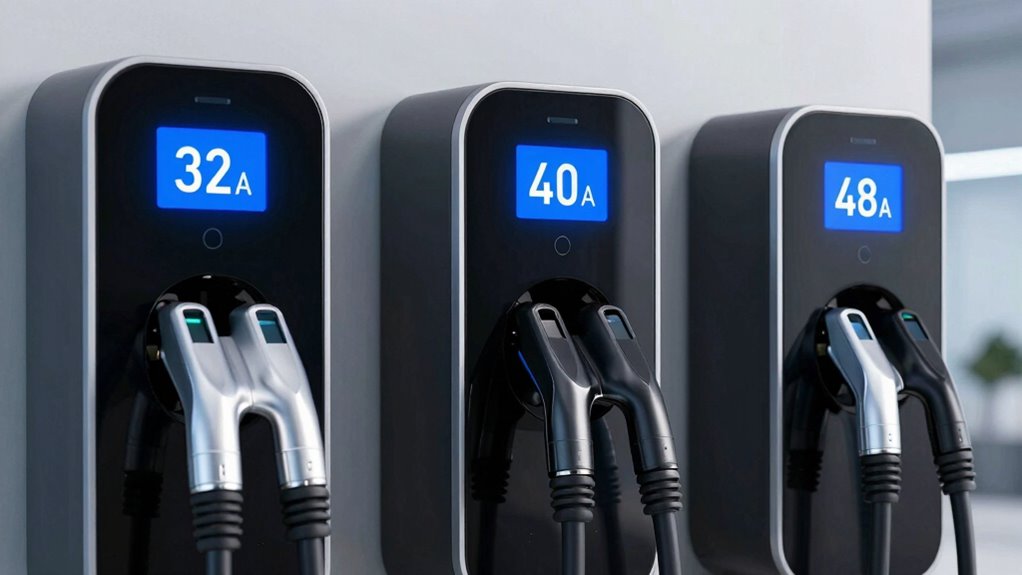
Have you ever wondered what the numbers like 32A, 40A, and 48A mean when it comes to EV chargers? These ratings indicate the charging station’s power capacity, which determines how much current it can deliver to your vehicle. A higher amp rating means the charger can supply more power, allowing for faster charging times. For example, a 48A charger provides more current than a 32A, making it suitable for quicker top-ups. The amp rating directly influences the overall efficiency of your charging station, ensuring your EV gets the necessary energy without overloading the system. Proper electrical wiring is essential to safely support higher amperage chargers and prevent electrical issues. Understanding these numbers helps you choose a charger that matches your vehicle’s needs and your home’s electrical capacity, especially considering electrical system capacity and compatibility.
As an affiliate, we earn on qualifying purchases.
How Does Amperage Impact Charging Speed?
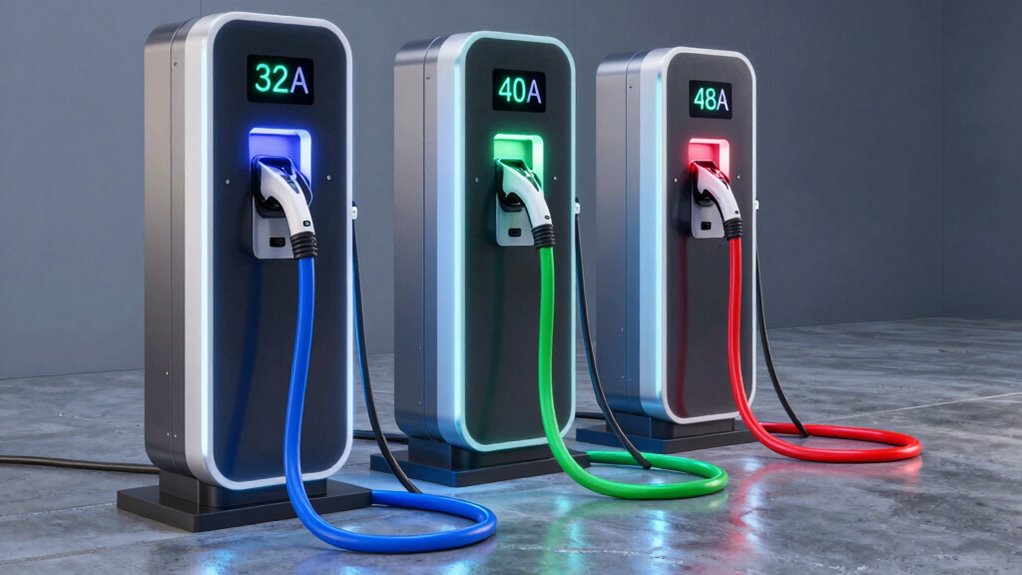
Higher amperage chargers deliver power faster, reducing your charging time markedly. However, the vehicle’s compatibility limits how much power it can handle at once, affecting overall speed. Understanding these factors helps you choose the right charger to meet your needs efficiently. Additionally, drone insights can help you better understand how different charging options impact overall performance and safety. Knowing the amperage limits of your vehicle ensures you select a charger that optimizes charging efficiency without risking damage. Being aware of electrical system capacities can also prevent overloads and ensure a safe charging process. Recognizing your vehicle’s power handling capabilities ensures you select a charger that aligns with its electrical design. Considering the holistic approach to electrical safety can further enhance your overall charging experience and protect your equipment.
Power Delivery Rate
The amount of amperage delivered by an EV charger directly influences how quickly your vehicle charges. Higher amperage means a faster power delivery rate, which can greatly reduce charging times. As battery technology advances, chargers with higher amps can optimize the charging process even further. Consider these key points:
- Increased Amp Ratings: Higher amps deliver more power, speeding up charge times.
- Battery Compatibility: Some batteries handle higher charging rates better, improving efficiency.
- Charging Infrastructure: Proper wiring and electrical systems are essential to support higher amps safely. Safe electrical setup is crucial when upgrading to higher amperage chargers. Additionally, understanding the role of AI in cybersecurity can help protect your charging station from potential digital threats.
- Overall Charging Speed: The combined effect of amperage and infrastructure determines how fast your vehicle charges, emphasizing the importance of holistic SEO strategies to ensure your content reaches the right audience.
- Supporting Sustainable Practices: Utilizing appropriately rated chargers can also help promote eco-friendly natural pools and other sustainable backyard upgrades by reducing energy waste.
Charging Time Variations
Amperage directly impacts how quickly your EV charges, with higher current levels considerably reducing charging times. A charging station designed for higher amps, like 40A or 48A, delivers more power faster, meaning you spend less time plugged in. This efficiency depends on proper battery management, which optimizes how your vehicle handles increased power flow. A well-designed charging station ensures that higher amps don’t overwhelm the system, maintaining safety and stability. The key is that increased amperage shortens the overall charging duration, especially during the initial bulk charge phase. Additionally, Victorian Steampunk Roleplay aesthetics emphasize both form and function, highlighting the importance of well-designed and safe technological innovations. However, the actual time savings depend on your vehicle’s capacity and battery management system. Fundamentally, higher amperage generally means quicker charging, provided the station and vehicle are compatible and properly configured.
Vehicle Compatibility Limits
Your vehicle’s onboard charging system determines how effectively it can handle increased amperage, directly impacting charging speed. Not all vehicles are compatible with higher amperage chargers, which affects how quickly you can charge. To maximize efficiency, consider these key points:
- Charging station aesthetics: Choose stations that match your vehicle’s style and location.
- Vehicle charging port compatibility: Ensure your vehicle’s port supports the charger’s amperage.
- Maximum onboard charging capacity: Check your vehicle’s limits to avoid overloading.
- Power delivery adjustments: Some vehicles automatically adjust to different amperages for safety. Understanding your vehicle’s compatibility limits can help prevent potential damage and ensure optimal performance. Additionally, being aware of charger compatibility ensures you select the right setup for your vehicle’s capabilities. Recognizing charging speed factors can help optimize your overall charging experience and efficiency. Staying informed about market trends and advancements in charging technology can further enhance your charging strategy. Moreover, understanding amperage standards can assist in selecting appropriate chargers for different vehicles.
As an affiliate, we earn on qualifying purchases.
Pros and Cons of Different Charger Amperages for Home Use
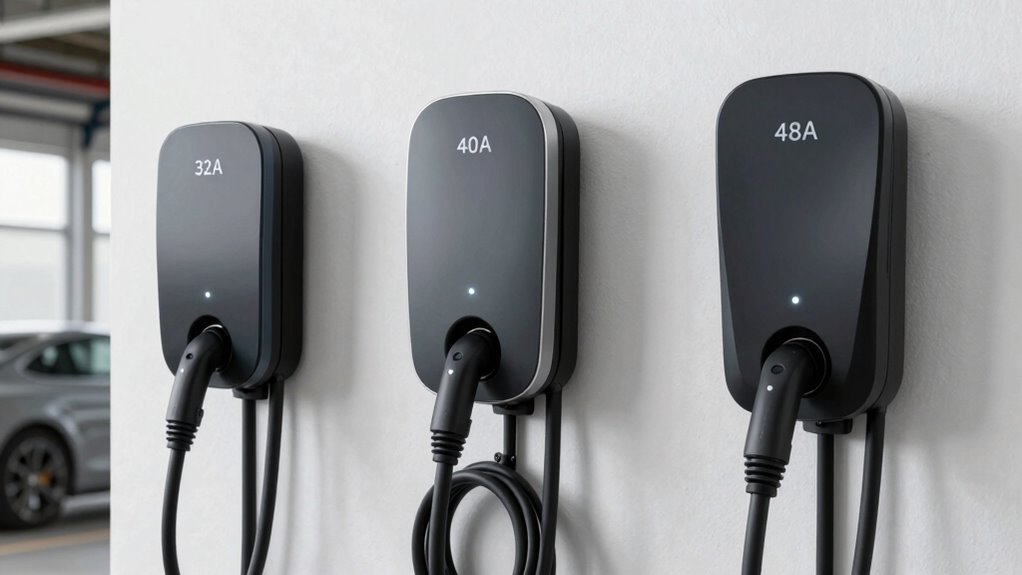
Choosing the right charger amperage for your home involves balancing charging speed with safety and cost. Higher amperages like 40A or 48A charge faster but may require upgrades and increase installation costs. Lower amperages like 32A are safer and easier to install but take longer to charge. Consider how the charging station’s aesthetics and user interface features align with your preferences, as these impact daily convenience.
| Amperage | Pros | Cons |
|---|---|---|
| 32A | Cost-effective, easier installation, good safety | Slower charging speed |
| 40A | Faster charging, balanced installation needs | Slightly higher cost, moderate safety considerations |
| 48A | Fastest charging, future-proof | Higher cost, complex installation |
As an affiliate, we earn on qualifying purchases.
How to Choose the Right Amperage for Your EV and Home
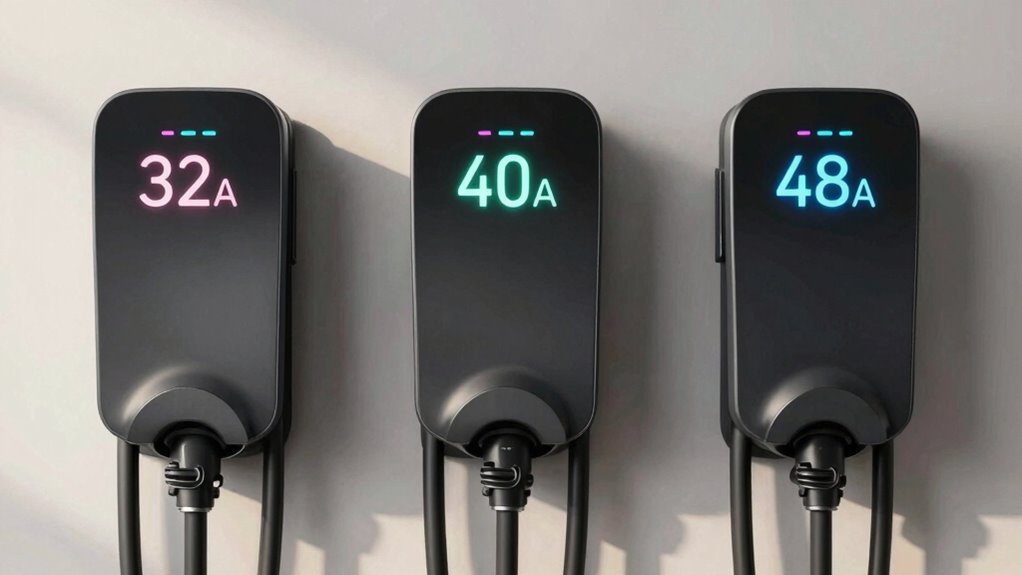
Selecting the appropriate charger amperage depends on balancing your vehicle’s charging needs with your home’s electrical capacity and budget. To do this effectively, consider these key factors:
- Evaluate your daily driving habits — do you need faster charging or are slow charges sufficient?
- Check your home’s electrical system capacity to avoid costly upgrades.
- Prioritize energy efficiency considerations to minimize power waste.
- Design your charging station with future upgrades in mind, ensuring compatibility with higher amperages if needed. Planning for electrical system upgrades can save time and money later.
- Be aware of electrical safety concerns and consult a professional to ensure your setup meets safety standards.
Can Your Home Electrical System Support Higher-Amperage Chargers?
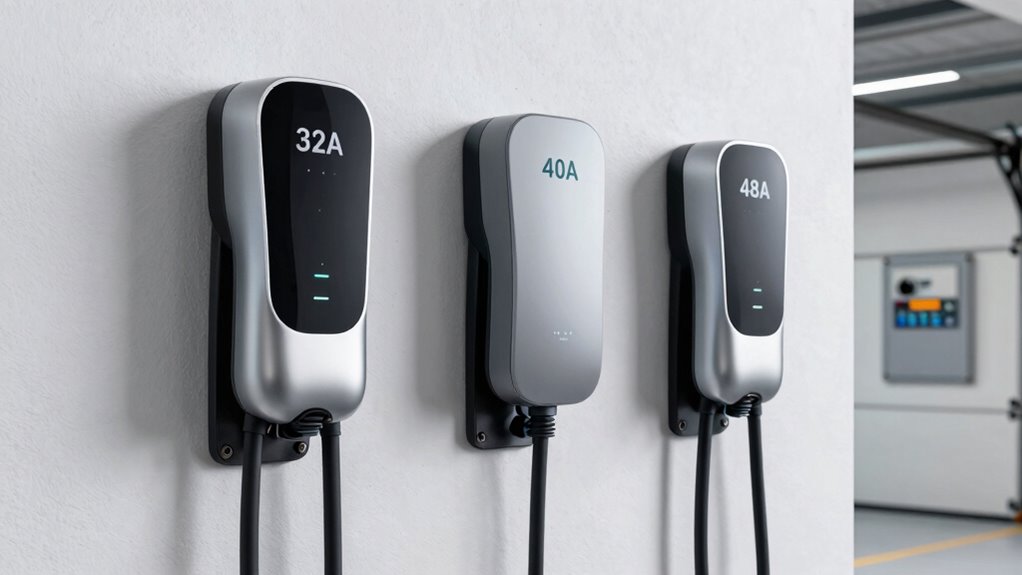
Before committing to a higher-amperage charger, it’s important to assess whether your home’s electrical system can handle the increased load. Upgrading to a 40A or 48A charger may require a more robust electrical panel and wiring. Modern battery technology and charging infrastructure demand higher power levels, but your home’s capacity varies. Check your main breaker’s amperage and consult an electrician to confirm your system can support the additional draw without overloading. Upgrading may involve installing a new circuit breaker or wiring upgrades. If your home’s electrical system isn’t sufficient, you might need to improve your electrical infrastructure before installing a high-amperage charger. Proper evaluation prevents potential hazards and ensures your EV charging setup is safe and effective. Copper wiring can also be a beneficial upgrade for better conductivity and safety when supporting higher amperage chargers. Additionally, understanding your home electrical system capacity is crucial to determine if it can accommodate the increased load safely. Conducting a comprehensive electrical assessment can help identify necessary upgrades to support higher amperage.
Safety Tips for Installing Higher-Amperage EV Chargers
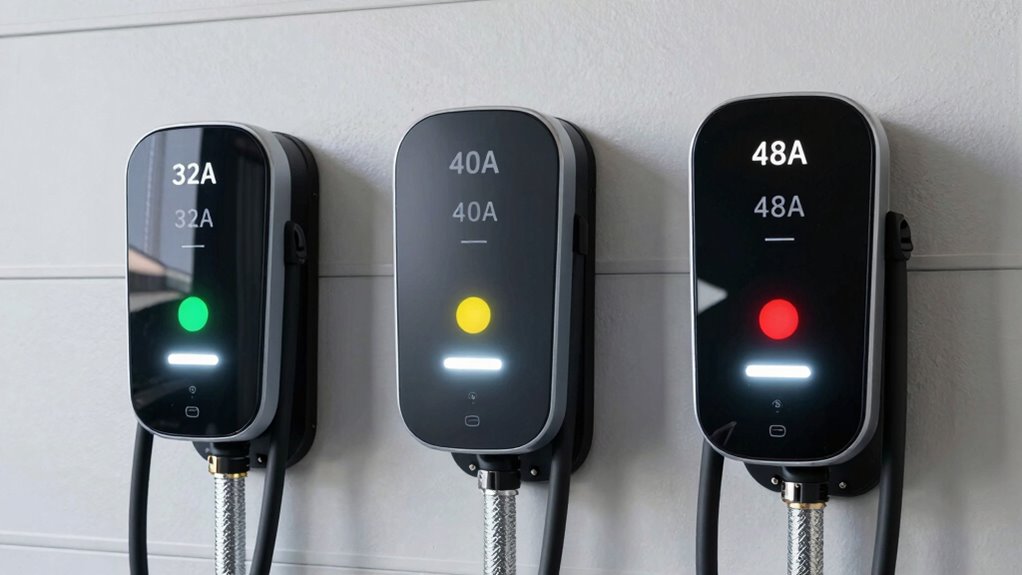
When installing higher-amperage EV chargers, you need to guarantee proper wiring practices to prevent electrical issues. Make sure your circuit breaker is compatible and can handle the increased load safely. It’s best to hire a professional installer who can follow these safety tips and ensure everything is up to code. Additionally, understanding essential camping gear can help ensure your electrical setup is adequate for outdoor installations. Proper backup power systems can provide additional safety and reliability during outages or outdoor events.
Proper Wiring Practices
Installing higher-amperage EV chargers requires careful attention to wiring practices to guarantee safety and compliance. To support advancements in battery technology and charging infrastructure, proper wiring ensures efficiency and safety. Here are key tips:
- Use gauge wiring rated for the charger’s amperage—larger gauges handle higher currents safely.
- Ensure all connections are tight and secure to prevent overheating.
- Install dedicated circuits to avoid overloads and protect your system.
- Follow local electrical codes and manufacturer instructions to maintain compliance.
- Understanding the amperage levels of your charger helps ensure the wiring capacity matches the current demands.
Proper wiring not only safeguards your installation but also optimizes charging performance. It’s essential to understand the demands of higher-amperage chargers to avoid hazards and future-proof your setup. Always consult a licensed electrician for installations involving increased current loads.
Circuit Breaker Compatibility
Ensuring your circuit breaker can handle the increased amperage of your charging station is essential for safe operation. If your EV charger requires a higher electrical load, such as a 40A or 48A circuit, you need a compatible breaker designed for that current. An undersized breaker won’t trip during overloads, risking overheating and potential fire hazards. Confirm that your breaker matches the charger’s amperage and that your panel can support the load. Upgrading to a higher-amperage charging station without verifying breaker compatibility can compromise safety and violate electrical codes. Always check the manufacturer’s specifications and consult your breaker’s rating to ensure proper compatibility. This step helps prevent electrical issues and guarantees your charging station operates safely and efficiently.
Professional Installation Recommended
Because higher-amperage EV chargers carry increased electrical loads, professional installation is essential to guarantee safety and compliance with electrical codes. A qualified electrician ensures your charging station is correctly wired and safe to use. To maximize safety, consider these key points:
- Verify your electrical wiring can handle the amperage.
- Use a dedicated circuit breaker compatible with your charger.
- Follow local electrical codes and manufacturer guidelines.
- Ensure proper grounding and secure connections.
Skipping professional installation can lead to fire hazards or damage to your electrical system. An expert assesses your home’s wiring capacity and installs the charging station properly, providing peace of mind and reliable charging. Always prioritize safety when dealing with high-amperage electrical loads to protect your home and vehicle.
Will Upgrading Your Charger Save You Time and Money?
Upgrading your EV charger’s amperage can seem like a straightforward way to save time and money, but it’s important to weigh the actual benefits. A higher-amperage charging station can reduce your charging time, especially if you have a larger battery capacity. However, the energy efficiency of your charging setup plays a vital role. If your current system is optimized, upgrading might not considerably improve efficiency or save you much in the long run. Additionally, higher amperage chargers may require more expensive wiring and installation costs. Before deciding, consider whether your vehicle’s charging capacity and your daily driving habits justify the upgrade. Sometimes, a properly maintained, lower-amperage charger can be just as effective without the added expense.
How to Install and Maintain Your EV Charger Safely
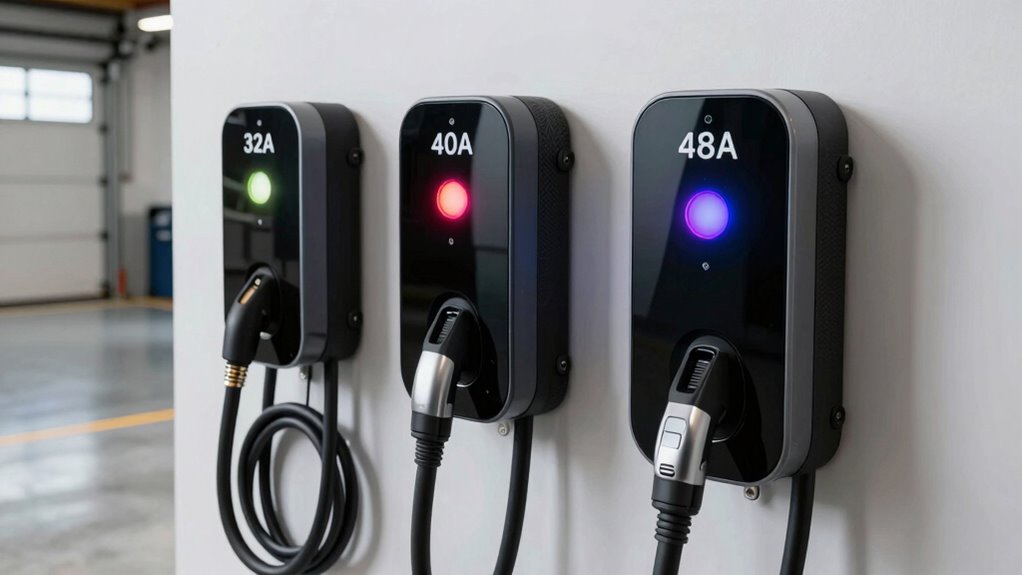
Installing and maintaining your EV charger safely is key to ensuring reliable and secure charging. Start by choosing a location that balances accessibility with charging station aesthetics, blending seamlessly with your home’s design. Next, follow these crucial steps:
- Ensure your electrical system can handle the charger’s amperage, like 32A, 40A, or 48A.
- Use a professional for proper installation, verifying wiring and grounding.
- Regularly inspect the charger for wear, damage, or loose connections.
- Keep the user interface features clean and accessible, making sure buttons and displays are clear and responsive.
Proper installation and upkeep protect your investment and improve the user experience, ensuring safe, efficient, and visually pleasing charging every time.
Frequently Asked Questions About EV Charger Amperage
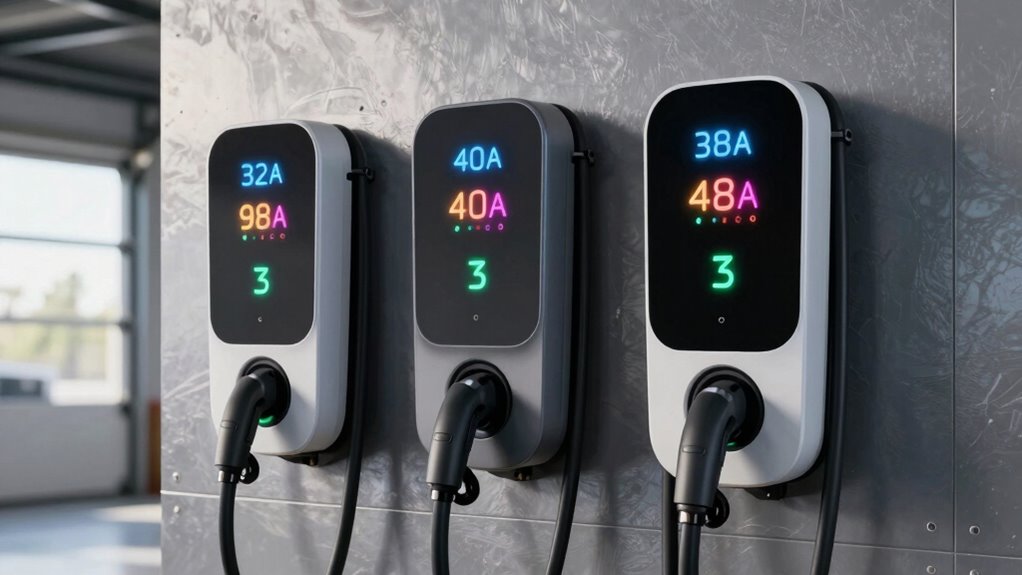
Understanding the appropriate amperage for your EV charger is essential to safe and efficient charging. Many questions arise about charging infrastructure and how amperage impacts charging speed and safety. Higher amperage chargers, like 40A or 48A, can charge your vehicle faster but require a more robust electrical system. Your vehicle’s battery technology also plays a role in determining the ideal amperage; some batteries handle higher currents better than others. It’s important to consult with a professional to guarantee your home wiring and circuit breaker can support your chosen amperage. Using an incorrect amperage can pose safety risks and affect your battery’s longevity. Always prioritize matching your charger’s amperage with your vehicle’s specifications and your home’s electrical capacity.
Frequently Asked Questions
How Do I Know if My Vehicle Supports Higher Amperage Chargers?
You can check your vehicle’s manual or contact the manufacturer to determine if it supports higher amperage chargers. Look for details on charging speed and power compatibility, as these indicate whether your vehicle can handle faster charging. If your car is compatible with higher amps, you’ll see quicker charging times. Always guarantee your charging station matches your vehicle’s specifications to optimize charging efficiency and avoid potential damage.
Can I Upgrade My Existing Charger to a Higher Amperage Model?
Yes, you can upgrade your existing charger to a higher amperage model, but first, check your charger’s compatibility and your home’s power supply capacity. Make sure your electrical system can handle increased power demands without overloading. Consult a licensed electrician to assess your setup, verify wiring and circuit breaker ratings, and confirm that your vehicle supports higher amps. Proper compatibility and a sufficient power supply are essential for a safe, effective upgrade.
What Are the Long-Term Cost Implications of Higher Amperage Chargers?
Upgrading to a higher amperage charger can increase your energy consumption, leading to higher utility bills over time. While these chargers might have a longer lifespan due to better components, they could also experience more wear and tear from higher usage. Consider your long-term costs carefully—if your vehicle’s charging needs justify it, the investment may pay off, but be mindful of potential increases in energy and maintenance expenses.
Are There Government Incentives for Installing Higher-Capacity EV Chargers?
Yes, there are government incentives for installing higher-capacity EV chargers. You can often access rebates and tax credits that reduce your overall installation costs. These incentives aim to promote cleaner energy solutions and support home charging infrastructure. Check your local or federal programs, as eligibility varies. Taking advantage of these rebates can make installing a 40A or 48A charger more affordable, helping you save money long-term.
How Does Ambient Temperature Affect Charger Performance at Different Amperages?
Temperature effects can influence charger efficiency, especially at higher amperages. When ambient temperatures are too hot or cold, your charger might not perform ideally, leading to slower charging times or potential overheating. At 32A, the impact is less noticeable, but at 48A, temperature effects can greatly affect performance. To guarantee consistent charging, keep your charger in a well-ventilated, temperature-controlled space, especially during extreme weather conditions.
Conclusion
So, now you’re armed with the thrilling knowledge of EV charger amps—your ticket to faster charging and potentially sparking a home electrical rebellion. Whether you opt for 32A, 40A, or 48A, just remember, upgrading your charger might turn your garage into a racetrack pit stop. Keep safety in mind, and don’t forget, a little electrical drama is okay, but a house fire isn’t exactly the homecoming you want. Drive smart, charge faster!