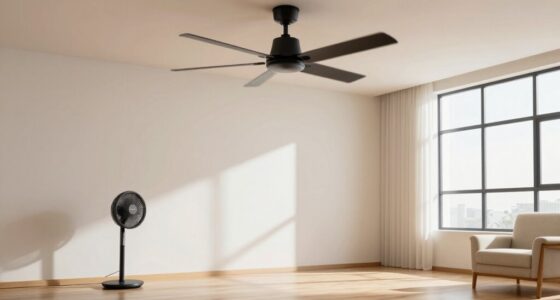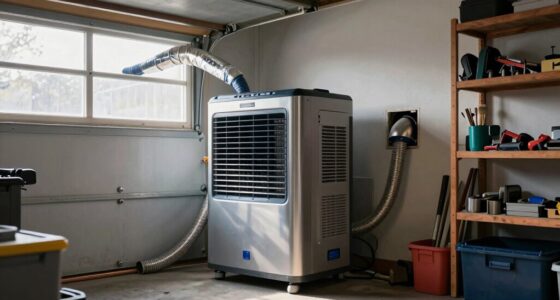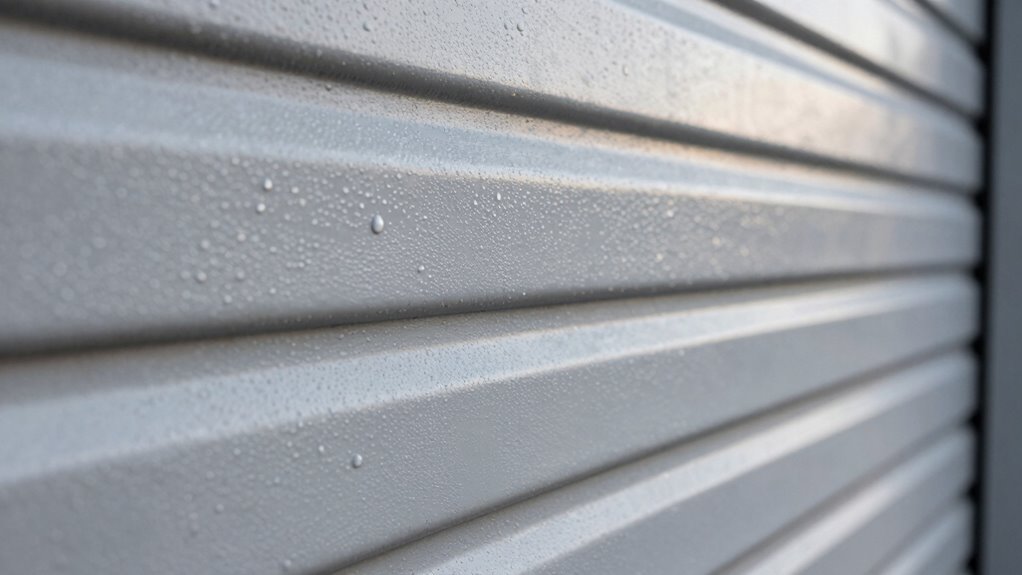

To fix condensation on your garage door, start by improving ventilation with vents, exhaust fans, or dehumidifiers to lower humidity. Seal gaps and cracks around the door to prevent moisture entry. Insulate with foam board, spray foam, or reflective barriers to even out temperature differences. Ensuring proper sealing and insulation helps reduce cold spots and moisture buildup. If persistent issues remain, there are expert solutions that can make a real difference—you’ll discover more tips to keep your garage dry.

Get home appliances delivered free with Prime
- Fast, free delivery on millions of items
- Prime Video, Amazon Music and more included
- Member-only deals all year
Key Takeaways
- Improve garage ventilation with vents, exhaust fans, or dehumidifiers to reduce humidity levels.
- Seal gaps, cracks, and door seals to prevent outside moisture from entering.
- Insulate the garage door with foam board, spray foam, or reflective insulation to maintain consistent temperatures.
- Use moisture barriers and ensure proper installation to prevent cold spots and condensation.
- Regularly inspect and address persistent moisture issues promptly to protect the garage door from damage.
As an affiliate, we earn on qualifying purchases.
What Causes Garage Door Condensation?
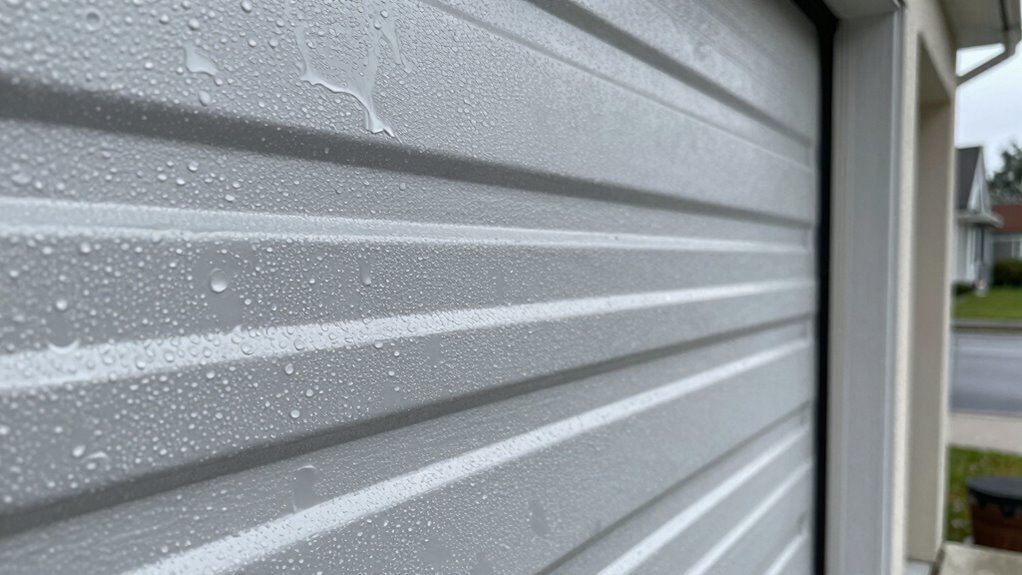
Have you ever noticed water droplets forming on your garage door, especially during humid days? That’s condensation, and it often comes down to your garage door material and temperature fluctuations. Different materials, like metal or wood, respond differently to temperature changes. Metal doors, for example, quickly transfer outside heat or cold, creating a surface that’s often cooler than the surrounding air. When warm, moist air hits this cold surface, water vapor condenses into droplets. Temperature fluctuations, especially when cold air enters a warm garage or vice versa, intensify this process. Understanding how your garage door material reacts to environmental factors helps you grasp why condensation forms and points to ways you might control it. Material properties also influence how quickly your garage door responds to environmental changes. Additionally, proper ventilation can help reduce humidity levels and prevent condensation buildup, especially if insulation or humidity control methods are used effectively. Ensuring good air circulation within your garage can further minimize moisture accumulation and condensation issues.
As an affiliate, we earn on qualifying purchases.
How Can You Reduce Moisture in Your Garage Easily?
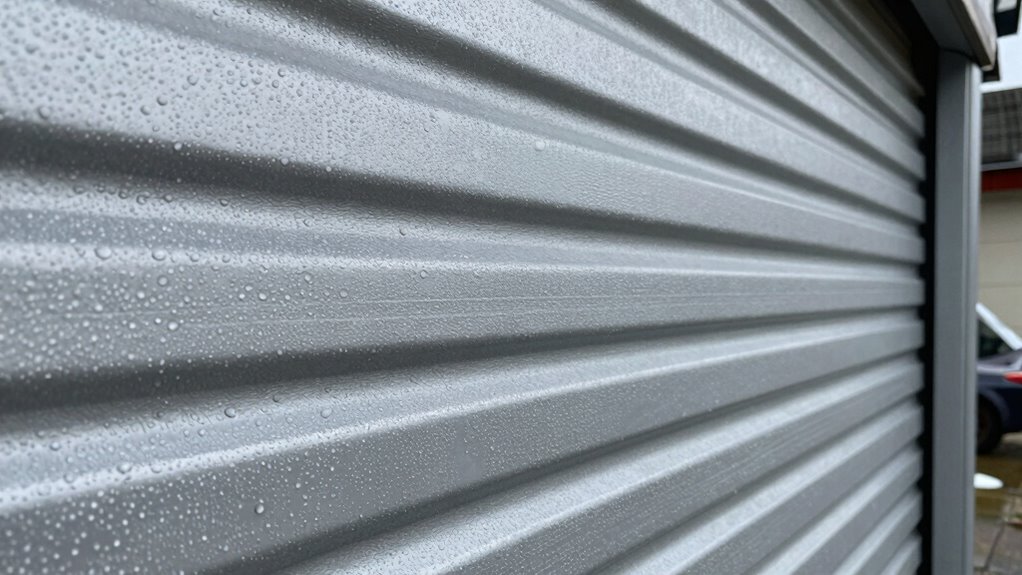
To keep moisture levels down in your garage, start by improving ventilation. Proper airflow helps reduce humidity and prevents condensation buildup on your garage door. You can achieve this by installing vents or using exhaust fans, especially during humid days. Additionally, consider applying a high-quality garage door paint, which can act as a moisture barrier, reducing water seepage. Keep the door’s sealant in good condition, as its effectiveness directly impacts moisture infiltration. Regularly inspect and reseal any gaps or cracks to maintain a tight barrier against humidity. Using these simple steps, you’ll lower moisture levels easily, minimizing condensation issues. Good ventilation combined with effective sealing helps keep your garage dry and protects your belongings from excess moisture. Implementing building management strategies for your building management can further enhance moisture control solutions and help you identify other moisture sources in your garage. Incorporating ventilation techniques can further optimize airflow and moisture reduction.
As an affiliate, we earn on qualifying purchases.
What Are the Best Insulation Methods to Prevent Condensation?
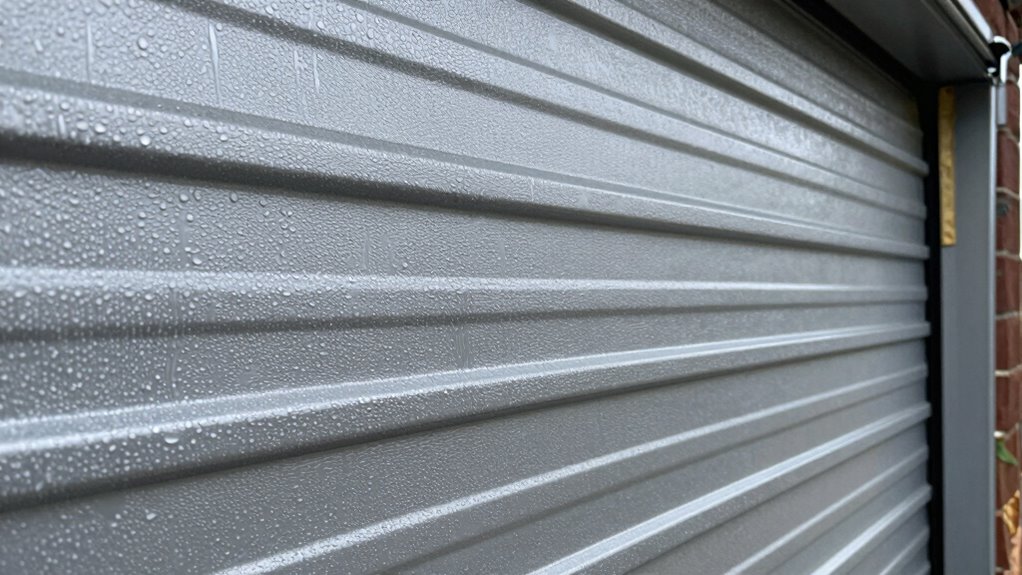
When it comes to preventing condensation on your garage door, choosing the right insulation method is essential. You want insulation materials that effectively block moisture transfer and maintain consistent temperatures. Foam board insulation offers excellent thermal resistance and easy installation, while spray foam creates a seamless barrier—ideal for hard-to-reach spots. Reflective or foil-backed insulation reflects heat and reduces moisture buildup. Proper installation techniques, like sealing gaps and ensuring snug fits, are critical to prevent cold spots that cause condensation. Additionally, household guides can provide helpful tips on proper sealing and maintenance practices. Here’s a quick comparison:
| Insulation Material | Installation Techniques |
|---|---|
| Foam Board | Cut to size, seal edges with tape or foam sealant |
| Spray Foam | Apply evenly, fill gaps, trim excess |
| Reflective Foil | Attach securely, cover all areas for maximum reflection |
| Fiberglass Batts | Fit tightly between framing, seal edges with tape |
| Rigid Insulation | Cut, fit snugly, seal with weatherproof tape |
For optimal results, ensure proper ventilation and consider moisture control strategies to further reduce condensation risks. Incorporating proper insulation techniques can significantly enhance the effectiveness of your moisture prevention efforts. Additionally, selecting insulation materials with high thermal resistance will help maintain consistent temperatures and reduce the likelihood of condensation forming. Using the right insulation techniques can also help prevent cold spots that lead to moisture buildup.
As an affiliate, we earn on qualifying purchases.
How Do Ventilation Strategies Help Keep Your Garage Dry?
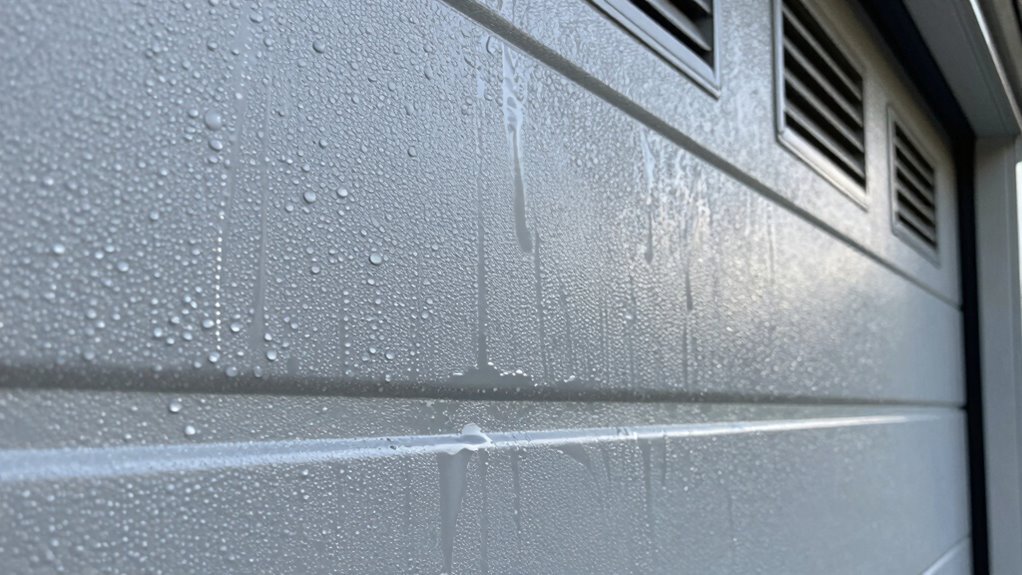
Proper ventilation plays a key role in keeping moisture levels in your garage under control. Good ventilation efficiency helps remove excess humidity, preventing condensation buildup on your garage door and walls. By circulating fresh air and reducing stagnant, moist air, you improve moisture control. Installing vents, exhaust fans, or using dehumidifiers can notably enhance airflow. When moisture escapes, it prevents the air from becoming saturated, which is essential in humid conditions or when working with wet tools and materials. Regularly opening windows or using mechanical ventilation ensures continuous air exchange. Effective ventilation not only reduces the risk of condensation but also discourages mold growth and keeps your garage environment dry and safe. Incorporating smart ventilation systems can optimize airflow and moisture management automatically. Additionally, understanding humidity levels can help you determine when extra measures are necessary to maintain a dry space. Monitoring air circulation patterns can also identify areas where stagnant air might lead to moisture buildup, allowing you to address potential issues proactively. Ensuring proper ventilation design tailored to your garage’s layout can further enhance moisture control and prevent condensation issues. Prioritizing good airflow is a simple yet powerful step toward moisture control.
When Should You Call a Professional for Moisture Problems?
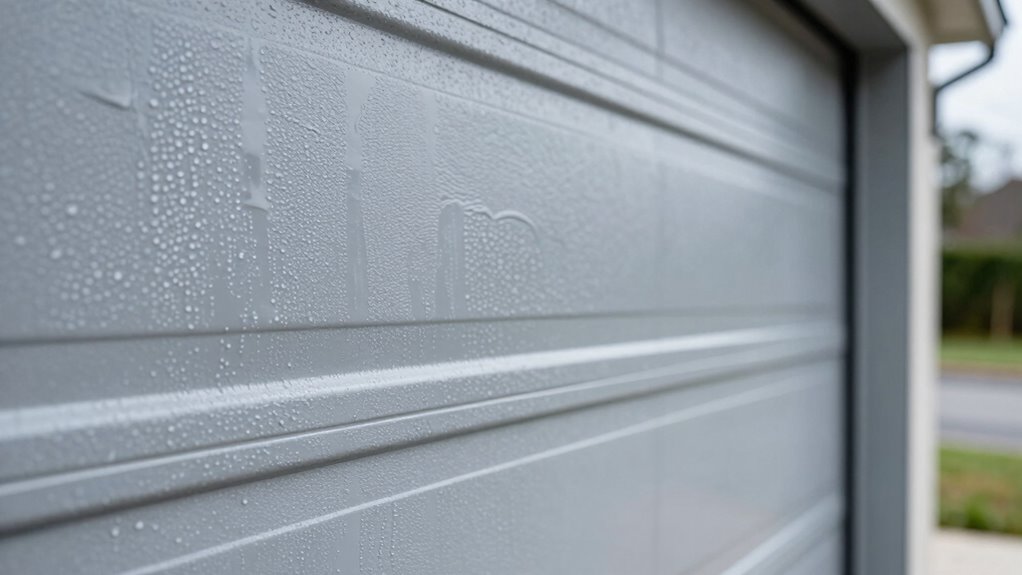
Moisture problems in your garage can quickly escalate beyond what simple ventilation can fix, signaling the need to bring in a professional. If you notice persistent condensation despite proper garage door maintenance, it’s time to seek expert help. Consider calling a professional when:
- You see ongoing moisture buildup that doesn’t respond to ventilation or dehumidifiers.
- Your garage door shows signs of rust or warping caused by excess moisture.
- You want to explore effective moisture barrier options that require specialized installation.
- You’re unsure about sealing or insulating your garage to prevent future condensation issues. Proper insulation techniques can significantly improve moisture control.
- Monitoring for market trends and insights, such as unusual activity or price spikes, can also help anticipate and address potential moisture-related problems early. Additionally, understanding climate control strategies can help you maintain a dry environment more effectively. Implementing proper ventilation methods is also crucial in managing humidity levels and preventing condensation build-up. Incorporating moisture barriers can be an effective way to block moisture intrusion from the ground or outside air, further protecting your garage.
A professional can assess the root cause, recommend the right moisture barrier options, and ensure your garage stays dry. Don’t delay if problems persist—proper maintenance saves money and hassle long-term.
Frequently Asked Questions
Can Garage Door Material Affect Condensation Levels?
Yes, the garage door material can affect condensation levels. If you choose a door with good garage insulation, it helps maintain an even temperature inside, reducing condensation. An exterior coating that’s moisture-resistant also prevents moisture buildup. You should consider these features when selecting your garage door, as they work together to minimize condensation, keeping your garage dry and preventing potential damage caused by excess moisture.
Are There Specific Paints That Prevent Condensation on Garage Doors?
Yes, certain garage door coatings can help prevent condensation. Look for paints with high paint resistance, specifically designed to reduce moisture buildup. These coatings create a barrier that minimizes temperature fluctuations and moisture contact, which can lead to condensation. When choosing a paint, opt for those labeled as moisture-resistant or designed for exterior use, ensuring your garage door stays dry and protected from potential damage caused by condensation.
How Often Should I Check for Condensation Buildup?
You should check for condensation buildup at least once a month, especially during humid or temperature-changing seasons. Regular inspections help you catch issues early. To prevent it, improve ventilation in your garage and consider insulation techniques to regulate temperature and humidity. By maintaining a routine, you can reduce condensation, protect your garage door, and keep your space dry and comfortable.
Does Garage Door Size Influence Condensation Risk?
Like a trusty steed, your garage door size does influence condensation risk. Larger doors have more surface area, increasing chances of moisture buildup. Proper garage insulation and door sealing are essential to combat this. When you size up your door, consider these factors to prevent condensation. Ensuring good insulation and sealing helps maintain temperature and humidity levels, reducing moisture issues regardless of door size.
Can Humidity Levels Inside the House Impact Garage Door Condensation?
Yes, indoor humidity can impact garage door condensation. When indoor humidity levels are high, moisture escapes into the garage, increasing the risk of condensation on the door. To prevent this, you should improve ventilation inside your house, allowing moist air to escape and reducing humidity. Using exhaust fans or dehumidifiers helps maintain ideal humidity levels, keeping your garage door dry and preventing ongoing condensation issues.
Conclusion
Dealing with garage door condensation is like tending a delicate plant—you need the right care and attention. By understanding the causes, reducing moisture, insulating properly, and ensuring good ventilation, you can keep your garage dry and comfortable. Remember, if moisture problems persist like an uninvited guest, it’s best to call in a professional. Taking these simple steps is your shield against dampness, helping your garage stay as dry as a desert even in the rain.
Fall Picks
fall essentials
As an affiliate, we earn on qualifying purchases.