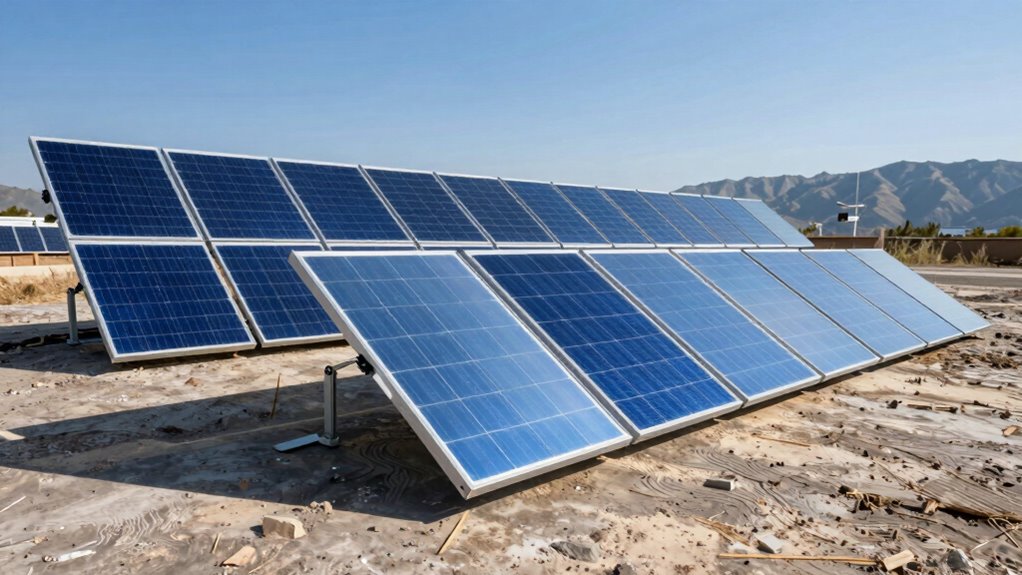
Shopping for solar panels for a portable power station comes down to three questions: how fast do you need to recharge, how much weight are you willing to carry, and does the panel actually pair cleanly with your station’s input? My top overall pick is the SOKIOVOLA 200W, which balances high output, IP68 weather resistance, and 25% cell efficiency better than anything else in this lineup. If you want serious charging on a tighter budget, the E-POWO 110W punches above its class, while the ApowKing 40W is the lightest option for hikers and minimalist kits. The main tradeoff in this category is raw wattage versus portability — 200W panels refill big stations quickly but weigh and fold down like a suitcase, while 30–60W panels slip into a backpack but may take days to top off a large unit. Keep reading for the full breakdown of all 14 panels.

Get home appliances delivered free — and shop member deals
- Fast, free delivery on millions of items
- Access to Prime Big Deal Days deals on October 6–7
- Prime Video, Amazon Music and more included
Complete the kit


Key Takeaways
- The 200W tier (SOKIOVOLA and Twelseavan) is where charging speed stops being a bottleneck — these panels can realistically refill a mid-size power station in a single sunny day, unlike 40–60W options.
- Wattage ratings are optimistic: real-world output typically runs 70–80% of the label, so the SOKIOVOLA’s higher-efficiency 25% cells gave it a measurable edge over similarly rated 200W competitors.
- The 60W category is crowded with near-duplicates (three FlexSolar/LUMOPAL variants); the differentiators came down to connector selection, water-resistance rating, and folded thickness rather than charging speed.
- Several budget panels (ZeroKor 30W, Powkey 40W) include DC/USB-C/USB-A outputs that let them charge phones and laptops directly, which the larger station-focused panels often lack.
- The DOKIO 100W is really a 12V battery panel pressed into power-station duty — fine for charging, but its connector kit and design priorities favor RV and marine buyers.
| FlexSolar 60W Portable Solar Panel Charger, IP65 Waterproof | 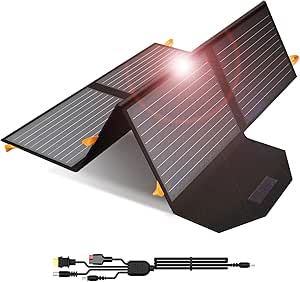 | Best for Device Charging on the Go | Maximum Power: 60 watts | Efficiency: 24% | Cell Type: Monocrystalline Silicon (A+, ETFE-coated) | VIEW ON AMAZON | See Our Full Breakdown |
| 60W Foldable Portable Solar Panel Charger with USB-C, USB-A, and DC Outputs |  | Best Budget Ultralight Pick | Power: 60 watts | Conversion Efficiency: 23% | Output Ports: 1x DC (5A max), 1x USB-C, 1x USB-A | VIEW ON AMAZON | See Our Full Breakdown |
| ZOUPW 100W Portable Solar Panel, Foldable Monocrystalline Charger for Power Stations |  | Best Overall for Power Station Charging | Power Output: 100 watts | Cell Type: Grade A+ Monocrystalline | Conversion Efficiency: 23.5% | VIEW ON AMAZON | See Our Full Breakdown |
| 100W Portable Foldable Solar Panel with USB-A, USB-C, and DC Outputs |  | Best Positioning Flexibility | Maximum Power: 100 watts | Cell Type: Monocrystalline silicon | Conversion Efficiency: Up to 24% | VIEW ON AMAZON | See Our Full Breakdown |
| FlexSolar 100W Foldable Portable Solar Panel Charger |  | Best Lightweight 100W Pick | Power Output: 100 watts | Cell Type: Monocrystalline silicon | Conversion Efficiency: 23%+ | VIEW ON AMAZON | See Our Full Breakdown |
| SOKIOVOLA 200W Foldable Portable Solar Panel |  | Best High-Output Workhorse | Maximum Power: 200 watts | Conversion Efficiency: Up to 25% | Connector Type: MC4 | VIEW ON AMAZON | See Our Full Breakdown |
| Twelseavan 200W Foldable Portable Solar Panel |  | Best for Charging Everything at Once | Maximum Output: 200W | Conversion Efficiency: 24% | Ports: USB-C PD 60W, QC3.0 USB 18W, USB 5V/3A | VIEW ON AMAZON | See Our Full Breakdown |
| ApowKing 40W Foldable Portable Solar Panel Charger |  | Best Budget Top-Up Panel | Power: 40W | Conversion Efficiency: Up to 22% | Outputs: 18V DC, USB QC3.0, USB-C | VIEW ON AMAZON | See Our Full Breakdown |
| FlexSolar 60W Foldable Portable Solar Panel Charger |  | Best Ultralight Traveler | Maximum Output: 60W | Conversion Efficiency: Up to 24% | USB-C Output: PD3.0, up to 40W | VIEW ON AMAZON | See Our Full Breakdown |
| Powkey 40W Portable Solar Panel for 100W-200W Portable Power Stations |  | Best for Small-Station Owners | Maximum Power: 40 watts | Conversion Efficiency: 22% | Output Ports: 1x DC 5521 (15V/2.6A), 1x USB QC (5V/3A, 9V/2A, 12V/1.5A) | VIEW ON AMAZON | See Our Full Breakdown |
| E-POWO 110W Portable Foldable Solar Panel for Power Stations |  | Best for Power Station Compatibility | Power Output: 110W | Solar Cell Type: Monocrystalline | Conversion Efficiency: Up to 23.5% | VIEW ON AMAZON | See Our Full Breakdown |
| LUMOPAL 60W Foldable Portable Solar Panel Charger |  | Best for Direct Device Charging | Max Output: 60W | USB-C PD Output: 60W max | USB-A QC3.0 Ports: 2 x 22W max | VIEW ON AMAZON | See Our Full Breakdown |
| DOKIO 100W Portable Foldable Solar Panel Kit for 12V Battery Charging |  | Best Dual-Purpose Pick | Power: 100W | System Voltage: 12V | Controller: Standalone PWM | VIEW ON AMAZON | See Our Full Breakdown |
| ZeroKor 30W Portable Foldable Solar Panel Charger |  | Best Ultra-Light Emergency Panel | Power: 30W | DC Output: 18V/1.67A (DC 5521) | USB-C Output: 5V3A / 9V3A / 12V2.5A / 15V2A | VIEW ON AMAZON | See Our Full Breakdown |
| solar panels for portable power station | Weight | Conversion Efficiency | Water Resistance | Folded Dimensions |
|---|---|---|---|---|
| FlexSolar 60W Portable Solar P | 6.4 lbs | — | IP65 (junction box not waterproof) | 13.8 x 9.1 x 2.2 inches |
| 60W Foldable Portable Solar Pa | 4.4 lbs (2 kg) | 23% | IP67 (junction box not waterproof) | 9.76 x 13.97 x 1 in |
| ZOUPW 100W Portable Solar Pane | 9.48 lbs | 23.5% | IP67 | — |
| 100W Portable Foldable Solar P | 6 lbs (2.75 kg) | Up to 24% | — | 16.34 x 11.42 x 3.54 inches |
| FlexSolar 100W Foldable Portab | 4.1 lbs (1.85 kg) | 23%+ | IP67 | 12.99 x 10.43 x 2.17 inches |
| SOKIOVOLA 200W Foldable Portab | 16.3 pounds | Up to 25% | IP68 | — |
| Twelseavan 200W Foldable Porta | 15.7 lbs | 24% | IP65 | — |
| ApowKing 40W Foldable Portable | Lightweight foldable design | Up to 22% | IPX4 (junction box not waterproof) | — |
| FlexSolar 60W Foldable Portabl | 2.6 lbs (1.2 kg) | Up to 24% | IP65 (junction box not waterproof) | 9.8 × 12 × 1 inches |
| Powkey 40W Portable Solar Pane | 4.2 lbs (1.9 kg) | 22% | IPX4 | 13.6 × 9.8 × 2.4 inches |
| E-POWO 110W Portable Foldable | 9.74 lbs (4.42 kg) | Up to 23.5% | — | — |
| LUMOPAL 60W Foldable Portable | 3.42 lb | 23.5% | — | — |
| DOKIO 100W Portable Foldable S | 6 lb | — | — | 19 x 26 x 0.5 in |
| ZeroKor 30W Portable Foldable | 1.53 lbs | — | — | — |
More Details on Our Top Picks
FlexSolar 60W Portable Solar Panel Charger, IP65 Waterproof
Most budget panels in this roundup treat USB charging as an afterthought, but the FlexSolar 60W puts a 60W PD3.0 USB-C port front and center — enough to fast-charge a laptop directly from sunlight. That makes it a different animal from the 60W generic folder (Product 2’s sibling in this list), which tops out at slower USB speeds and focuses on small electronics. The six-fold design collapses to roughly the size of a laptop bag, tighter than most 100W options like the ZOUPW, so it slips into a backpack rather than dominating it. Where it falls short for power station owners is scale: 60W is a trickle if you’re trying to refill a 500Wh battery, and the non-waterproof junction box means you can’t leave it out in the rain unattended. Output also sags to 30–40W under clouds, so plan around weather.
Pros:- 60W USB-C PD3.0 port can fast-charge laptops directly, not just phones
- Smart chip auto-matches output to each device with a clear LED status indicator
- Six-fold design folds smaller than most 60W and all 100W rivals
- ETFE-coated A+ monocrystalline cells rated for 5–10 years of outdoor use
Cons:- Junction box is not waterproof, limiting true set-and-forget outdoor use
- Output drops to 30–40W in cloudy conditions
- Solar controller not included for lead-acid battery charging
Best for: Campers and road-trippers who mainly want to keep phones, tablets, cameras, and laptops charged directly from the panel
Not ideal for: Anyone recharging a large power station quickly — 60W is slow for big batteries, and no solar controller is included for lead-acid setups
- Maximum Power:60 watts
- Efficiency:24%
- Cell Type:Monocrystalline Silicon (A+, ETFE-coated)
- Ports:3x USB (QC2.0 15W, QC3.0 18W, PD3.0 USB-C 60W), 1x DC (20–28V, 60W max)
- Weight:6.4 lbs
- Folded Dimensions:13.8 x 9.1 x 2.2 inches
- Water Resistance:IP65 (junction box not waterproof)
Our verdict“This pick makes the most sense for travelers who want a compact panel that charges gadgets directly and fast, not for bulk power station refills.”
60W Foldable Portable Solar Panel Charger with USB-C, USB-A, and DC Outputs
At 4.4 lbs and just under an inch thick folded, this no-name 60W folder undercuts the FlexSolar 60W on weight and bulk while covering the same three output types: USB-C, USB-A, and DC. The two built-in kickstands are a practical touch the FlexSolar’s flat panel lacks, letting you prop it at an angle toward the sun without scavenging for rocks. What you give up versus the FlexSolar is USB speed — there’s no 60W PD output here, so laptop charging is off the table — and the IP67 rating on the panel itself is undermined by a non-waterproof junction box, a common corner-cut at this price. Like every panel in this roundup, it can’t store energy, so it’s purely a sunlight-to-device conduit. Think of it as the value play for occasional campers rather than a serious power station companion.
Pros:- Featherweight 4.4 lb build folds to under an inch thick
- Three output types (DC, USB-C, USB-A) cover a wide range of small electronics
- Two built-in kickstands make sun positioning simple
- IP67-rated panel surface handles rain and dust exposure
Cons:- Junction box is not waterproof despite the IP67 panel rating
- No high-wattage USB-C output for fast laptop charging
- Cannot store electricity, so output stops the moment clouds pass over
Best for: Budget-conscious day campers and hikers who want the lightest possible 60W panel for phones, cameras, and small power banks
Not ideal for: Anyone charging a power station on a schedule — 60W DC output recharges small stations slowly, and USB speeds won’t fast-charge laptops
- Power:60 watts
- Conversion Efficiency:23%
- Output Ports:1x DC (5A max), 1x USB-C, 1x USB-A
- Weight:4.4 lbs (2 kg)
- Folded Dimensions:9.76 x 13.97 x 1 in
- Water Resistance:IP67 (junction box not waterproof)
- Included Accessories:Solar connector, 2-in-1 USB cable, 2 carabiners
Our verdict“A sensible low-cost choice if portability matters more than raw charging speed or power station capacity.”
ZOUPW 100W Portable Solar Panel, Foldable Monocrystalline Charger for Power Stations
This is the panel I’d point most power station owners toward first. The 5-in-1 connector cable covers Jackery, EcoFlow, Anker, and Bluetti ports out of the box — a genuine advantage over the 100W six-kickstand model, which leans on a DC5521-centric kit that fits many but not all stations without adapters. Its 23.5% efficiency cells hold up better in low light than the 23% panels elsewhere here, and the ETFE lamination plus full IP67 rating (junction box included) make it the most weather-trustworthy 100W option in this batch. The tradeoff is heft: at 9.48 lbs, it’s more than double the FlexSolar 100W’s 4.1 lbs, so backpackers will feel it. Also note that your charging ceiling is set by the power station’s input limit, not the panel — pairing 100W with a station that caps at 60W input wastes panel capacity.
Pros:- 5-in-1 cable fits roughly 99% of power stations without buying adapters
- Fully IP67 waterproof with ETFE coating, safe in rain and marine environments
- 23.5% efficiency cells keep output respectable in low light
- Built-in USB-C and USB-A ports allow direct device charging
Cons:- At 9.48 lbs, it’s noticeably heavier than competing 100W folders
- Actual charge speed is capped by the power station’s max solar input rating
Best for: Owners of mainstream power stations (Jackery, EcoFlow, Anker, Bluetti) who want broad compatibility and durable all-weather performance
Not ideal for: Backpackers and ounce-counters — at 9.48 lbs it’s the heaviest 100W option here, and overkill for small 100–200Wh stations with limited input
- Power Output:100 watts
- Cell Type:Grade A+ Monocrystalline
- Conversion Efficiency:23.5%
- Coating:ETFE lamination
- Direct Charging Ports:1x USB-C (PD 15V/3A), 2x USB-A (QC3.0 12V/1.5A)
- Cable Length:10 ft
- Weight:9.48 lbs
- Water Resistance:IP67
- Warranty:12 months
Our verdict“The most complete 100W package for power station owners who value compatibility and weatherproofing over minimum weight.”
100W Portable Foldable Solar Panel with USB-A, USB-C, and DC Outputs
Where most panels in this roundup give you two kickstands or none, this one ships with six adjustable kickstands, letting you shape the array around shadows or tilt each section independently as the sun moves — a real advantage at a campsite where trees block half the sky. At 6 lbs, it splits the difference between the 4.1 lb FlexSolar 100W and the 9.48 lb ZOUPW, and the included 3-meter extension cable means your power station can sit in the shade while the panel bakes in full sun, which protects the battery from heat. The catches: the waterproofing rating is unspecified, a real step down from the ZOUPW’s IP67 if you expect rain, and its USB-C tops out at 45W versus the FlexSolar 60W’s stronger direct-charging performance.
Pros:- Six adjustable kickstands allow section-by-section sun tracking
- 3-meter extension cable lets the power station stay shaded while the panel works
- Included XT60 and Anderson adapters fit a wide range of power stations
- Lighter than the ZOUPW at 6 lbs while matching its 100W output
Cons:- Waterproofing level is not specified by the manufacturer
- USB-C limited to 45W, weaker than some rivals for direct laptop charging
Best for: Campers and RV users dealing with partial shade who need flexible panel positioning and a long cable to keep their station cool
Not ideal for: Anyone expecting exposure to rain or marine conditions — the unspecified water resistance is a gamble compared with IP67-rated rivals
- Maximum Power:100 watts
- Cell Type:Monocrystalline silicon
- Conversion Efficiency:Up to 24%
- Outputs:USB-A QC3.0 up to 24W, USB-C PD3.0 up to 45W, 20V DC (5A)
- Weight:6 lbs (2.75 kg)
- Folded Dimensions:16.34 x 11.42 x 3.54 inches
- Included Accessories:3m DC5521 cable, DC5521-to-XT60 and Anderson cable, DC connectors
- Warranty:12 months
Our verdict“The right choice if angling around shade matters more to you than certified weatherproofing.”
FlexSolar 100W Foldable Portable Solar Panel Charger
At 4.1 lbs, this FlexSolar delivers full 100W output at less than half the weight of the ZOUPW and folds to about the size of a hardcover book stack — the most packable 100W panel in this batch. The 4-in-1 cable (DC5521, DC7909, Anderson, XT60) covers the big power station brands directly, though it’s slightly less universal than the ZOUPW’s 5-in-1, so buyers with niche stations should check their input port first. Unlike the six-kickstand 100W model, there are no stands included, so you’ll prop it against a pack or rock — the price of that featherweight frame. The IP67 rating holds across the whole unit, not just the cells, and the 45W USB-C port handles laptops directly. Just expect realistic output dips on heavily overcast days, as with any monocrystalline panel.
Pros:- Class-leading 4.1 lb weight for a 100W panel, with a carry bag included
- IP67 waterproof and dustproof across the whole unit
- 4-in-1 cable covers DC5521, DC7909, Anderson, and XT60 station ports
- 45W USB-C PD output charges laptops directly from sunlight
Cons:- No built-in kickstands, so positioning requires improvisation
- DC compatibility depends on the four included adapters matching your station
- Output drops noticeably on heavily overcast days
Best for: Hikers, kayakers, and ounce-counting campers who want 100W of charging power without the bulk of typical solar suitcases
Not ideal for: Buyers with uncommon power station brands — the DC output relies on the four included adapters fitting, and there are no kickstands for hands-free positioning
- Power Output:100 watts
- Cell Type:Monocrystalline silicon
- Conversion Efficiency:23%+
- Outputs:PD3.0 45W USB-C, 18W USB-A, 100W DC
- Weight:4.1 lbs (1.85 kg)
- Folded Dimensions:12.99 x 10.43 x 2.17 inches
- Water Resistance:IP67
- Included Accessories:4-in-1 charging cable (DC5521, DC7909, Anderson, XT60), carry bag
Our verdict“The obvious pick when maximum watts per pound is the goal and your power station uses a standard connector.”
SOKIOVOLA 200W Foldable Portable Solar Panel
This option stands out for pairing 200 watts of output with a 25% conversion efficiency, the highest in this batch, which means more harvested watt-hours per hour of midday sun — the difference between topping off a station once or twice a day. The ETFE coating and IP68 rating also beat the Twelseavan’s IP65 and the ApowKing’s IPX4, making this the pick to leave out through passing rain. Compared with the Twelseavan, you trade the USB-C and quick-charge ports for a purer MC4 power feed, so phones can’t charge directly. RV attachment holes and a magnetic handle add genuine mounting flexibility. The catch: at 16.3 pounds, this is basecamp gear, not trail gear, and a power station with low solar input will cap the real-world harvest.
Pros:- Up to 25% conversion efficiency, the highest in this batch
- IP68-rated ETFE coating tolerates rain and dust better than IP65 and IPX4 rivals
- RV attachment holes and magnetic carry handle for flexible mounting
- 5-in-1 cable supports Jackery, EcoFlow, Bluetti, Anker, Goal Zero and more
Cons:- Heavy at 16.3 pounds — not portable for foot travel
- No USB ports, so devices can only charge through a power station
- Actual output limited by the connected station’s maximum solar input
Best for: RV owners and basecamp campers with mid-to-large power stations who want maximum daily solar harvest
Not ideal for: Backpackers and hikers — at 16.3 pounds folded, this panel belongs in a vehicle, not a pack
- Maximum Power:200 watts
- Conversion Efficiency:Up to 25%
- Connector Type:MC4
- Compatibility:Jackery, EcoFlow, Bluetti, FlashFish, Goal Zero, Anker and more
- Weight:16.3 pounds
- Folded Size:21 × 23 inches
- Water Resistance:IP68
- Included Accessories:5-in-1 solar extension cable and carrying bag
- Warranty:12 months
Our verdict“Buy this if you need serious daily wattage for a large power station and can transport it by vehicle; skip it if you’re charging on foot.”
Twelseavan 200W Foldable Portable Solar Panel
Where the SOKIOVOLA goes all-in on raw panel performance, the Twelseavan splits its attention: 200W of MC4 output for your power station plus USB-C PD at 60W, QC3.0, and standard USB ports for phones and tablets directly. That makes it the better choice for campsites where some devices never touch the station. Four adjustable kickstands make it easier to angle toward the sun than fixed-position panels, and the 9.8-foot cable gives more placement freedom than most. The tradeoffs are real, though — IP65 water resistance is a step down from the SOKIOVOLA’s IP68, and the 24% efficiency claim sits slightly behind it too. Like any 200W panel here, 15.7 pounds rules out backpacking, and output collapses under weak sun.
Pros:- Three USB outputs alongside 200W of DC power for stations
- Four adjustable kickstands for precise sun angling
- Long 9.8-foot cable offers flexible panel placement
- 5-in-1 MC4 cable and 3 DC adapters for broad station compatibility
Cons:- IP65 rating is less rugged than the SOKIOVOLA’s IP68
- Heavy at 15.7 pounds for anyone traveling on foot
- Output drops sharply without direct, ample sunlight
Best for: Campers and van-lifers who want to charge a power station and phones or laptops from the same panel
Not ideal for: Anyone needing to carry gear on foot, or those in rainy climates who need full-submersion-grade sealing
- Maximum Output:200W
- Conversion Efficiency:24%
- Ports:USB-C PD 60W, QC3.0 USB 18W, USB 5V/3A
- Connector:MC4 with 5-in-1 cable and 3 DC adapters
- Weight:15.7 lbs
- Kickstands:4 adjustable
- Cable Length:9.8 ft
- Water Resistance:IP65
- Warranty:24 months
Our verdict“This pick makes the most sense for campers who value direct device charging alongside station power and can accept slightly weaker weather sealing.”
ApowKing 40W Foldable Portable Solar Panel Charger
This model is better suited to keeping small stations and devices topped off than recharging them from empty — 40W is a trickle compared with the 200W SOKIOVOLA, but it folds to roughly a third the size and costs far less to carry into the equation. The 10-in-1 connector kit is the highlight here, matching the Powkey S40’s compatibility reach so it works with a wide range of stations, while the DC, USB-A, and USB-C outputs let you skip the station entirely for phones and tablets. Adjustable kickstands help squeeze out real watts. The weak point is weather: IPX4 on the panel itself, with a junction box that must stay dry — noticeably less forgiving than the FlexSolar 60W’s IP65 body. Expect real-world output below 40W unless conditions are ideal.
Pros:- Very affordable entry point into solar charging
- 10-in-1 connector kit fits a wide range of devices and stations
- DC, USB-A, and USB-C outputs for direct device charging
- Adjustable kickstands and compact folding design
Cons:- Junction box is not waterproof at all
- Real output often falls below the 40W rating without perfect sun
- 40W is too slow to meaningfully recharge larger stations
Best for: Budget-minded campers who need a lightweight panel to slow-drain or top off a small power station
Not ideal for: Anyone recharging large stations or leaving panels out in rain — the unprotected junction box can’t get wet
- Power:40W
- Conversion Efficiency:Up to 22%
- Outputs:18V DC, USB QC3.0, USB-C
- Weight:Lightweight foldable design
- Folded Size:12.6 × 9.1 inches
- Water Resistance:IPX4 (junction box not waterproof)
- Included Accessories:5 ft DC charging cable, 10-in-1 connector kit
Our verdict“A sensible low-cost top-up panel for small stations and gadgets, as long as you keep it out of the rain and manage expectations on speed.”
FlexSolar 60W Foldable Portable Solar Panel Charger
At 2.6 pounds folding down to 9.8 × 12 inches, this six-panel design is the true carry-anywhere option in this batch — the SOKIOVOLA weighs more than six times as much. Compared with the ApowKing 40W, you get more wattage, a higher IP65 rating on the body, and a 40W USB-C PD port that charges a laptop straight from sunlight. The built-in chip that adjusts output current per device is a nice safety touch for mixed charging. The tradeoffs for that featherweight build: no kickstand included, so you’re propping it against rocks or packs and losing efficiency to imperfect angles, and the junction box isn’t waterproof despite the IP65 panel. A separate solar controller is needed if you ever want to charge lead-acid batteries. Output drops noticeably in clouds, as with any panel this size.
Pros:- Featherweight at 2.6 pounds with a tiny folded footprint
- USB-C PD up to 40W can charge laptops directly
- USB-A, USB-C, and DC outputs cover nearly every small device
- Smart chip adjusts output current for connected devices
Cons:- No kickstand or solar controller included
- Junction box is not waterproof despite the IP65 rating
- Output drops sharply in cloudy conditions
Best for: Backpackers, day hikers, and emergency-kit builders who prioritize weight and packed size over raw wattage
Not ideal for: Anyone charging large power stations — 60W is slow, and the missing kickstand makes peak-angle setup awkward
- Maximum Output:60W
- Conversion Efficiency:Up to 24%
- USB-C Output:PD3.0, up to 40W
- USB-A Output:QC3.0, up to 18W
- DC Output:Up to 60W at 20V–28V
- Weight:2.6 lbs (1.2 kg)
- Folded Dimensions:9.8 × 12 × 1 inches
- Water Resistance:IP65 (junction box not waterproof)
Our verdict“If every ounce counts and you’re charging phones, battery banks, or small generators, this is the panel to strap to a pack; larger-station owners should look elsewhere.”
Powkey 40W Portable Solar Panel for 100W-200W Portable Power Stations
This pick makes the most sense for a specific buyer: someone who owns a compact 100W–200W class power station and wants a matched solar panel rather than an oversized one. Unlike the FlexSolar 60W, the Powkey S40 includes an adjustable kickstand, so you can actually chase peak sun angles instead of improvising with rocks, and its 10-in-1 connector kit covers most small stations’ barrel-jack inputs. Its 22% efficiency holds up reasonably in low light — better than you’d expect at this price tier — though the spec sheet is honest that you need bright conditions (above 40,000 lux) for rated output. Compared with the ApowKing 40W, you get a slightly cleaner accessory bundle and DC 5521 output purpose-built for small stations, but the same IPX4 splash resistance means it can’t live outside in bad weather. And 40W recharges bigger stations slowly.
Pros:- Well-matched output for small 100W–200W power stations
- Adjustable kickstand for chasing optimal sun angles
- 10-in-1 connector cable fits most small-station inputs
- Light 4.2-pound build with a compact folded size
Cons:- Needs bright conditions above 40,000 lux for rated output
- 40W is slow for anything beyond small stations
- IPX4 rating only handles light splashes, not rain exposure
Best for: Owners of small 100W–200W power stations who want a properly matched, kickstand-equipped solar companion
Not ideal for: Owners of 500W-plus stations — 40W input means multi-day recharge times — and anyone needing rain-proof sealing
- Maximum Power:40 watts
- Conversion Efficiency:22%
- Output Ports:1x DC 5521 (15V/2.6A), 1x USB QC (5V/3A, 9V/2A, 12V/1.5A)
- Panel Type:Monocrystalline silicon
- Weight:4.2 lbs (1.9 kg)
- Folded Dimensions:13.6 × 9.8 × 2.4 inches
- Water Resistance:IPX4
- Included Components:DC-to-DC cable, 10-in-1 connector cable
Our verdict“A well-paired, easy-to-position panel for small power stations, provided you use it in good sun and keep it dry.”
E-POWO 110W Portable Foldable Solar Panel for Power Stations
What makes this E-POWO 110W panel stand out in a crowded field is its 7-in-1 adapter kit, which covers DC5521, Anderson, and XT60 connections — the three connectors that cover the vast majority of portable power stations on the market. Where the DOKIO 100W kit assumes you’re working with a 12V battery system, E-POWO treats the power station as the primary target, and it shows in the design. The three-position kickstand (40°/50°/60°) is a genuinely useful touch, letting you dial in sun angle through the day instead of propping it against a rock like you would with the ZeroKor 30W. The ETFE-coated monocrystalline cells hitting 23.5% efficiency match the LUMOPAL 60W on conversion, but at nearly double the wattage.
The tradeoff: 110W is still a mid-range figure. If you’re running a 1000Wh-plus station and need fast recovery, the SOKIOVOLA 200W in this roundup will close that gap far quicker.
Pros:- 7-in-1 adapter set covers DC5521, Anderson, and XT60 for near-universal power station fit
- Three-position adjustable kickstands make sun-angle tuning simple without DIY props
- IP67 waterproofing with ETFE coating is more robust than the IP65 ratings on the LUMOPAL and ZeroKor
- 23.5% monocrystalline efficiency matches panels costing far more per watt
Cons:- 110W output is modest for quickly recharging large power stations
- Real-world output drops noticeably under cloud cover or partial shading
Best for: Campers and van-lifers who own a mid-size power station (300–600Wh) and want one panel that connects to nearly anything without buying extra adapters
Not ideal for: Owners of large-capacity power stations — 110W will feel slow when you’re trying to recover 1000Wh or more between cloudy windows
- Power Output:110W
- Solar Cell Type:Monocrystalline
- Conversion Efficiency:Up to 23.5%
- Charging Ports:USB-A, USB-C, USB QC3.0
- Included Adapters:7-in-1 (DC5521/35135/5525/7909/8028, Anderson, XT60)
- Kickstand Angles:40°/50°/60° adjustable
- Weight:9.74 lbs (4.42 kg)
- Warranty:18 months
Our verdict“This pick makes the most sense for buyers who want guaranteed connector compatibility with their power station and hands-free positioning, without paying for 200W of panel they can’t fully use.”
LUMOPAL 60W Foldable Portable Solar Panel Charger
The LUMOPAL 60W earns its spot by being the rare solar panel that’s genuinely good at charging devices directly, not just feeding a power station. Its 60W USB-C PD output is the headline — enough to charge a laptop straight from sunlight, something the ZeroKor 30W simply can’t manage at full speed and the E-POWO 110W doesn’t clearly specify. Compared with the FlexSolar 60W elsewhere in this roundup, LUMOPAL packs similar wattage into a 3.42 lb package that folds down remarkably small. The 176 lb compression resistance means it survives being sat on in a packed car — a real-world durability point most spec sheets ignore.
The tradeoff is capacity versus portability. At 60W, recharging even a mid-size power station takes most of a sunny day, so this is a device-first panel. Also note the junction ports aren’t waterproof, so you’ll want to keep the connection end shaded and dry in rain, unlike the fully sealed E-POWO.
Pros:- 60W USB-C PD output can charge laptops directly without a power station in between
- Dual QC3.0 USB-A ports plus DC output handle phones, tablets, and stations simultaneously
- At 3.42 lb it’s one of the lightest full-featured panels in this lineup
- 176 lb compression resistance and ETFE lamination survive rough packing
Cons:- Junction ports are not waterproof, limiting true all-weather use
- 60W ceiling makes power station recharging slow compared with 100W+ options
Best for: Day-hikers, photographers, and remote workers who want to charge laptops, cameras, and phones directly off-grid and only top up a small power station occasionally
Not ideal for: Anyone whose main goal is recharging a 500Wh+ power station — 60W means multi-day recovery times
- Max Output:60W
- USB-C PD Output:60W max
- USB-A QC3.0 Ports:2 x 22W max
- DC Output:18-20V (5.5×2.1mm)
- Solar Cell Type:Monocrystalline silicon
- Conversion Efficiency:23.5%
- Compression Resistance:176 lb
- Weight:3.42 lb
Our verdict“Buy this if your priority is charging gadgets straight from the sun; skip it if your power station is the main event.”
DOKIO 100W Portable Foldable Solar Panel Kit for 12V Battery Charging
The DOKIO 100W kit is the hybrid of this batch: it’s built around 12V battery charging with a bundled standalone PWM controller, but it’s light enough at 6 lb to travel. That controller is the differentiator — the E-POWO 110W and LUMOPAL 60W are dumb panels that rely on your power station’s built-in charge circuitry, while DOKIO lets you safely trickle-charge a car, RV, or marine battery with reverse polarity, overcharge, and short-circuit protection included. The 9.84 ft cable also beats everything else here for placement flexibility — park your rig in shade, chase the sun with the panel. Its folded footprint is larger than the LUMOPAL’s, so it’s a car-camping tool rather than a backpacking one.
The catch for this roundup’s audience: many power stations cap their solar input below the panel’s full 100W, and the PWM controller (versus MPPT) wastes some harvested energy. If you’re station-only, E-POWO’s plug-and-play adapter approach is simpler.
Pros:- Included PWM controller adds battery-charging safety protections most panels here lack
- 9.84 ft cable allows panel-in-sun, gear-in-shade placement
- 6 lb weight with fold-flat design travels well for its class
- USB ports let you run small devices off a charged 12V battery
Cons:- Power station input limits may throttle the panel below its 100W rating
- PWM controller is less efficient than MPPT alternatives
- USB output current can be inconsistent without a battery in the loop
Best for: RV owners and van-dwellers who want one panel that maintains a 12V house battery AND tops up a portable power station
Not ideal for: Backpackers and minimalists — the controller, longer cable, and larger folded size add bulk the LUMOPAL and ZeroKor avoid
- Power:100W
- System Voltage:12V
- Controller:Standalone PWM
- Cable Length:9.84 ft (3 m)
- Weight:6 lb
- Folded Dimensions:19 x 26 x 0.5 in
- USB Ports:Available
Our verdict“This is the right pick if your setup includes a 12V battery alongside a power station; pure power-station users should lean toward the E-POWO instead.”
ZeroKor 30W Portable Foldable Solar Panel Charger
At 1.53 lbs folded to book size, the ZeroKor 30W is the featherweight of this entire roundup — less than half the weight of the LUMOPAL 60W and a quarter of the E-POWO 110W. That changes who it’s for. This isn’t a panel for recharging a power station in any meaningful timeframe; it’s a survival-tier trickle charger for keeping phones, GPS units, power banks, and very small stations alive when the grid is gone. The three-port output (DC, USB-C up to 15V/2A, USB-A QC3.0) is surprisingly complete for the size, and the DC 5521 connector matches most compact stations’ input jacks. Compared with the ApowKing 40W elsewhere in this guide, ZeroKor trades a little wattage for a meaningfully smaller packed footprint.
Be realistic about the limits: 30W is patience-testing even for a 300Wh station, and the non-waterproof connector box plus the explicit warning against all-day outdoor exposure means this is a deploy-and-monitor panel, not a set-and-forget roof.
Pros:- 1.53 lb book-sized folding design fits in a backpack side pocket
- DC, USB-C, and USB-A QC3.0 outputs cover phones, laptops, and small stations
- IP65 panel surface handles rain splashes and dust
- DC 5521 connector matches most compact power station inputs directly
Cons:- 30W output is too slow for practical power station recharging
- Connector box is not waterproof and the panel isn’t rated for all-day outdoor exposure
Best for: Backpackers, bug-out bag builders, and anyone who wants a grab-and-go solar backup for phones and small power banks weighing under two pounds
Not ideal for: Anyone expecting meaningful power station recharging — 30W adds only a trickle to anything over 200Wh
- Power:30W
- DC Output:18V/1.67A (DC 5521)
- USB-C Output:5V3A / 9V3A / 12V2.5A / 15V2A
- USB-A Output:QC3.0 — 5V/3A, 9V/2A, 12V/1.5A
- Folded Size:10.3 x 8.3 x 1.18 in
- Unfolded Size:25.12 x 10.3 x 0.098 in
- Weight:1.53 lbs
Our verdict“Buy this for ultralight emergency preparedness and gadget charging, not for powering a serious off-grid station.”

How We Picked
I evaluated each panel through the lens of power station charging performance first: rated wattage, cell efficiency, and how cleanly each panel’s DC output and included connectors matched common station inputs from brands like Jackery, EcoFlow, and Bluetti. A 200W panel that ships without the right adapter or controller compatibility is less useful than a 100W panel that plugs straight in, so fit mattered as much as raw specs. I also weighed portability — folded size, weight, and whether the panel has a carry handle or kickstand — because these panels live in cars, campsites, and backpacks.
The second tier of criteria covered durability and weather resistance. IP68 panels like the SOKIOVOLA can survive rain exposure that would sideline an unrated or IP65 panel, which matters when weather changes mid-charge. Finally, I judged value relative to intended use: a 30W panel isn’t a worse product than a 200W panel — it’s a different tool. Rankings reflect how well each panel serves its buyer, not just its wattage, which is why smaller panels for hikers and tinkerers appear alongside high-output flagship options.
Factors to Consider When Choosing Solar Panels For Portable Power Station
Before picking a panel from the list above, it helps to understand how the details of solar charging shape real-world performance. These are the factors that most often make or break a purchase.Match Wattage to Your Power Station’s Capacity
The most common mistake buyers make is pairing a huge power station with a tiny panel. As a rough rule, you want panel wattage at least one-quarter of your station’s capacity in watt-hours if you hope to recharge within a day of decent sun — a 500Wh station really wants 150–200W of panel, not 40W. The 200W options in this roundup can top off mid-size stations daily, while the 30–60W panels are better suited to keeping phones, laptops, and small 100–200W stations alive. Also check your station’s maximum solar input wattage: many small stations cap input at 60–120W, so buying a 200W panel for one wastes money and panel capacity. Conversely, oversized input caps mean you could chain two smaller panels for redundancy.
Connector Compatibility Is Non-Negotiable
A panel that can’t physically connect to your station is a paperweight. Most third-party panels use standard 5.5×2.1mm DC connectors or MC4 adapters, and the quality of the included adapter kit varies widely — some ship with five connector sizes, others with one. Before buying, check your station’s input port type and voltage range (usually 12–30V for small stations, higher for large ones). Panels with multiple outputs — USB-C, USB-A, and DC, like the ZeroKor and 60W foldables here — add flexibility to charge devices directly without draining your station at all. That versatility is underrated for campers who only occasionally need the big battery.
Cell Type and Real-World Efficiency
Nearly every panel here uses monocrystalline cells, which is the right choice — they outperform polycrystalline in low light and pack more output into less surface area. But efficiency ratings differ: most budget panels sit around 21–23%, while the SOKIOVOLA claims 25%. That gap translates directly into faster charging from the same footprint, or the same charging from a smaller, lighter panel. Beware of marketing wattage, too: panels are rated under ideal lab conditions, and factors like heat, angle, haze, and partial shading routinely cut output by 20–30%. Plan your charging schedule around realistic expectations, not the number on the box.
Weather Resistance and Build Quality
Outdoor charging means exposure, and the difference between IP65 and IP68 matters more than it sounds. IP65 handles light rain and dust; IP68 panels tolerate submersion and sustained wet conditions, which is meaningful if you leave a panel deployed through changing weather. Also examine the stitching on the fabric casing, the robustness of the output housing, and whether cables are reinforced where they exit the panel — cable strain points are the most common failure location on folding panels. Kickstands deserve attention too: a panel you can angle toward the sun easily will outperform a better panel lying flat on the ground.
Weight, Folded Size, and How You Actually Travel
Be honest about how the panel will travel. A 200W folder is fantastic at a base camp or in a car trunk, but at roughly 15–20 pounds and suitcase-sized when folded, it’s not coming on a hike. The 30–60W panels in this list slip into a backpack and work for kayak trips, bikepacking, or emergency kits. There’s also a middle path: two 100W panels give you similar total output to one 200W with more placement flexibility and easier packing, at the cost of managing two sets of cables. Weight isn’t just comfort — heavier panels are harder to reposition as the sun moves, which cuts into daily harvest.
When to Pay More (and When Not To)
Paying more makes sense when you’re buying durability and connector completeness — a panel with a full adapter kit, IP68 rating, and reinforced construction will survive years of outdoor abuse that kills cheap panels in a season. It also makes sense at the high-wattage end, where better cells genuinely reduce charging time. It makes less sense for occasional-use buyers: if you only deploy a panel during a handful of power outages or camping trips per year, a modest 60–100W panel does the job without the premium price. What I’d never skimp on is connector compatibility — an inexpensive panel with the right adapters beats an expensive one that needs aftermarket cabling.
Frequently Asked Questions
Can I use a higher-wattage solar panel than my power station’s input limit?
Generally yes, but with a caveat. Most modern power stations regulate incoming solar and will simply refuse to draw more than their maximum input, so a 200W panel connected to a station capped at 120W won’t damage anything — you’ll just leave capacity on the table. The bigger risk is voltage rather than wattage: exceeding the station’s input voltage range can trigger protective shutdowns or, in rare cases with poorly designed hardware, cause damage. Check the open-circuit voltage (Voc) on the panel’s spec sheet against your station’s limit before connecting. The upside of oversizing is performance in imperfect light — a 200W panel delivering 60% output still feeds a 120W-capped station at full speed on cloudy days.
Do these third-party panels work with Jackery, EcoFlow, or Bluetti stations?
Mostly yes, because the industry has converged on a few standard connectors — primarily 5.5×2.1mm DC plugs and MC4-to-adapter cables. Panels like the ZOUPW 100W and E-POWO 110W in this roundup ship with multi-piece adapter kits specifically to cover the major station brands. The details to verify are your station’s input voltage range and the panel’s working voltage: small stations typically accept 12–30V, and most 100–200W foldable panels fall inside that window. If your station uses a proprietary input (some smaller Jackery units do), you may need a third-party adapter cable, which are inexpensive and widely available. Reading the connector list in the product specs before ordering saves a return trip.
Is a 100W panel enough for camping trips, or do I need 200W?
It depends entirely on what you’re powering. For weekend camping — charging phones, a laptop, running lights, and a small cooler occasionally — a quality 100W panel feeding a 300–500Wh station is usually enough to stay topped up with a few hours of good sun daily. Where 100W falls short is sustained loads: running a 12V fridge around the clock, powering a CPAP machine nightly, or running power tools. Those scenarios drain 500Wh+ per day, and with real-world losses you need 150–200W of panel to break even. A practical middle path: start with 100W, and if your station sits below 50% by evening, add a second panel rather than replacing the first — most stations accept parallel input or you can rotate panels.
How much does cloud cover and panel angle actually reduce charging speed?
More than most buyers expect. Even high-efficiency monocrystalline panels like the SOKIOVOLA drop to 10–30% of rated output under heavy overcast, and thin clouds can halve output. Angle matters nearly as much: a panel lying flat when the sun is low in the morning or evening may produce half of what a tilted, sun-facing panel does. That’s why kickstand-equipped panels consistently outperform identical panels set on the ground across a full day. The practical takeaway is to reposition your panel two or three times daily if you can, keep it out of any shade (even one shaded cell on a panel can disproportionately cut output), and budget for 4–6 peak-sun hours of realistic charging rather than the full daylight window.
Are the USB ports on these panels good for charging devices directly?
They can be genuinely useful, but treat them as a bonus rather than a primary feature. Panels with built-in USB-A and USB-C outputs — like the ZeroKor 30W, ApowKing 40W, and the 60W foldables here — let you charge phones, headlamps, and power banks without touching your station’s stored energy, which is smart energy management at camp. The limitation is inconsistency: without a battery buffer, USB output fluctuates with cloud cover, and some devices pause charging when the current dips. Charging works best in steady, direct sun. For laptops, look for panels with a 60W-plus USB-C PD output — smaller panels often max out at 18–30W over USB, which is phone-speed charging only.
Conclusion
Matching the right panel to your setup matters more than buying the biggest wattage on the list. For best overall, the SOKIOVOLA 200W stands out with its high-efficiency cells, IP68 build, and enough output to keep mid-size stations topped up daily — the Twelseavan 200W is the pick if you prefer its folded format. For best value, the E-POWO 110W delivers near-flagship charging speed at a mid-tier price point, with the ZOUPW 100W close behind. Beginners should start with the Powkey 40W or ApowKing 40W — small, forgiving, and cheap enough to learn on before committing to a bigger system. For specific needs: hikers and minimalists get the ZeroKor 30W, direct device charging favors the USB-equipped 60W foldables, and RV or 12V battery owners should look at the DOKIO 100W kit. Whatever you choose, verify connector compatibility with your station first — it’s the one detail that no amount of wattage can fix.
Halloween Picks
halloween
As an affiliate, we earn on qualifying purchases.