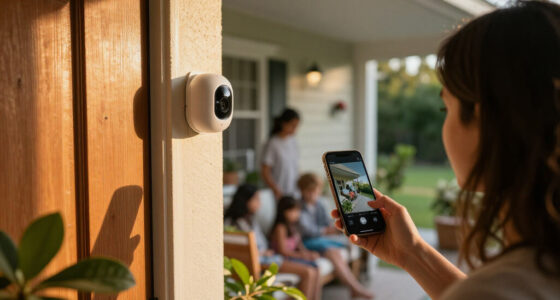

Choosing a smart security camera is less about picking the most feature-packed model than deciding how you want it powered and connected. Wired cameras are often the stronger fit for fixed, high-priority coverage: they can run continuously and, depending on the system, send video over a dedicated cable. Wireless cameras are simpler to install and move, making them attractive for renters, quick setups, and locations where running cable is impractical.

Get home appliances delivered free with Prime
- Fast, free delivery on millions of items
- Prime Video, Amazon Music and more included
- Member-only deals all year

Blink Outdoor 4 Wireless Smart Security Camera System (5 Cameras)
- ✔ Camera count: 5
- ✔ Camera resolution: 1080p HD
- ✔ Field of view: 143° diagonal
Blink Outdoor 4 Wireless Smart Security Camera System, 3 Cameras, 2-Year Battery Life
- ✔ Camera count: 3
- ✔ Video resolution: 1080p HD
- ✔ Battery life: Up to 2 years, depending on use
Blink Outdoor 4 Wireless Smart Security Camera System (2 Cameras, Sync Module Core)
- ✔ Camera count: 2
- ✔ Video resolution: 1080p HD
- ✔ Battery life: Up to 2 years, depending on use
That convenience comes with tradeoffs. Battery-powered wireless cameras may miss activity while waking from sleep or need periodic charging, while Wi-Fi models depend on the strength and stability of the network. Wired systems can avoid some of those constraints, but installation may require drilling, cable routing, or professional help. The comparison below focuses on power and connection, reliability, installation, placement, recording, privacy, and cost so you can decide whether permanence or flexibility matters more.
At a Glance
| Criteria | Wired smart security cameras | Wireless smart security cameras | Winner |
|---|---|---|---|
| Power and uptime | Usually continuous power; some systems also carry data over cable | Battery models need charging; plug-in models need a nearby outlet | A |
| Connection reliability | Can use wired networking, which is less affected by Wi-Fi congestion | Typically relies on Wi-Fi, so performance depends on signal and network conditions | A |
| Installation | More involved; cable routing may take time or professional labor | Usually quicker, with less cabling and fewer permanent changes | B |
| Placement flexibility | Best at fixed locations where cable can reach | Easy to reposition; battery models do not need an outlet at the camera | B |
| Recording and storage | Often supports continuous recording, depending on model and storage plan | Often records event clips; continuous recording and local storage vary by model | A |
| Privacy and security | May keep video traffic on a local wired network, but still needs secure account and device settings | Wireless convenience increases the importance of strong Wi-Fi and account security | Depends |
| Long-term value | Higher setup cost can pay off for permanent, always-on coverage | Lower installation burden, but batteries, subscriptions, or replacements can add cost | Depends |
Blink Outdoor 4 Wireless Smart Security Camera System (5 Cameras)
For homes with several doors, side paths, or detached areas to monitor, this is the most complete bundle in the group. Five cameras in one kit make it easier to plan coverage across a larger footprint than with the two- or three-camera packages, while the shared Outdoor 4 features keep the system straightforward: 1080p live view, infrared night vision, two-way audio, and enhanced motion detection. Alexa compatibility also gives households already using Alexa a familiar way to access camera controls.The larger camera count is its defining advantage, not a more advanced image pipeline. It has the same 1080p specification and basic operating approach as the smaller bundles, so buyers should not choose it expecting sharper footage or different core detection features. Instead, we would choose it when the extra viewpoints are genuinely useful. A camera on every likely approach can make a system more practical than concentrating multiple views around one entrance.There are costs in complexity as well as coverage. Five cameras mean more mounting decisions and more battery-powered devices to manage. The included Sync Module Core does not provide local storage, while cloud storage and person alerts involve trial or subscription terms. The batteries are non-rechargeable AA lithium cells, so the advertised up-to-two-year life is a convenience target rather than a promise that removes upkeep. Compared with the three-camera kit, this one is better for larger properties but excessive for a small apartment.
Pros:
- Five cameras support broader coverage from one bundle.
- 1080p live view, infrared night vision, and two-way audio.
- Stated battery life of up to two years helps limit routine battery changes.
- Compatible with Alexa and includes mounting kits for installation.
Cons:
- Sync Module Core does not include local storage.
- Person alerts require an optional subscription, and cloud storage terms should be checked.
- Non-rechargeable batteries and five separate mounting points add ongoing upkeep.
Best for: Households with several exterior access points or outdoor zones to monitor, especially those already using Alexa.
Not ideal for: Small homes, renters with only one or two useful mounting locations, or buyers who require included local storage.
Bottom line: We recommend the five-camera system when broad coverage matters more than keeping the installation compact or minimizing the number of devices to maintain.
“We recommend the five-camera system when broad coverage matters more than keeping the installation compact or minimizing the number of devices to maintain.”
Blink Outdoor 4 Wireless Smart Security Camera System, 3 Cameras, 2-Year Battery Life
The three-camera kit is the natural middle choice for buyers who want to monitor more than a single entrance but do not need five viewpoints. It keeps the same 1080p video, infrared night vision, and two-way audio found in the other Outdoor 4 bundles, and its camera count can serve a common layout: a front approach, a rear entrance, and one additional area such as a garage or side path. That makes it more flexible than the two-camera package without committing to the largest installation.We place it behind the five-camera system because it cannot cover as many separate approaches from the outset. The distinction is practical rather than technical: there is no supplied evidence that the three-camera version improves image quality or motion detection. Compared with the two-camera bundle, the third camera gives a meaningful extra placement option, but buyers should still map their blind spots before deciding whether three is enough.As with its siblings, local storage is not included with the Sync Module Core, person detection depends on an optional subscription, and the claimed two-year battery life can vary with activity and settings. The supplied details list six AA lithium batteries, while the system description identifies three cameras; check the full package contents before installation to confirm the intended battery allocation. This option is the most sensible compromise when coverage needs are moderate and the larger kit would leave cameras unused.
Pros:
- Three cameras provide a flexible middle ground between the two- and five-camera kits.
- 1080p live view, infrared night vision, and two-way audio.
- Wireless installation avoids routing power cables to each camera.
- Alexa compatibility and a Sync Module Core are included.
Cons:
- Local storage is not included with the Sync Module Core.
- Person detection requires an optional subscription.
- Three cameras may not cover larger properties with multiple entrances.
Best for: Owners or renters who want to watch three distinct areas, such as front and back entrances plus a driveway or side passage.
Not ideal for: Buyers who need to cover many separate approaches immediately or those who want built-in local recording without extra accessories.
Bottom line: We see this as the best-balanced bundle for typical homes that need three useful views but do not need the five-camera system’s wider coverage.
“We see this as the best-balanced bundle for typical homes that need three useful views but do not need the five-camera system’s wider coverage.”
Blink Outdoor 4 Wireless Smart Security Camera System (2 Cameras, Sync Module Core)
This two-camera bundle is the easiest entry point for a focused setup. It is well suited to monitoring two high-priority locations—often a main entrance and a back door—without taking on the larger installation of the three- or five-camera kits. The cameras retain the same 1080p live view, infrared night vision, two-way audio, and Alexa compatibility, so stepping down in count does not mean giving up the shared core features.Its advantage is simplicity, but that simplicity also defines the limit. Compared with the three-camera system, it has less flexibility if the property includes a garage, side gate, or driveway worth watching. Compared with the five-camera option, it asks for fewer placements and less battery upkeep, which can be preferable for an apartment or a first-time setup. Buyers should choose it based on two clear coverage priorities, not on the assumption that two cameras will secure every side of a home.The system still has the storage and subscription caveats shared across this lineup. The Sync Module Core does not include local storage, local recording needs an optional accessory, and person alerts require a subscription plan. Its stated battery life is up to two years, but real-world duration depends on use. For a buyer who wants to start small and values wireless installation, this is the most approachable option; anyone already identifying three or more important views should move up to the middle kit.
Pros:
- Two cameras make for a focused, relatively simple first installation.
- Shares the lineup’s 1080p live view and infrared night vision.
- Wireless operation and the stated up-to-two-year battery life reduce dependence on nearby power outlets.
- Works with Alexa and includes a Sync Module Core.
Cons:
- Two viewpoints may leave blind spots around larger homes.
- Local storage requires an optional accessory.
- Person alerts require an optional subscription plan.
Best for: First-time camera buyers, apartment residents, and smaller households with two clear areas to monitor.
Not ideal for: Homes with three or more important exterior viewpoints or buyers who expect local recording to be included.
Bottom line: Choose the two-camera kit for a small home and two high-priority locations; otherwise, the three-camera bundle offers more room to grow.
“Choose the two-camera kit for a small home and two high-priority locations; otherwise, the three-camera bundle offers more room to grow.”
As an Amazon Associate we earn from qualifying purchases.
Key Differences
The biggest practical gap is uptime. A wired camera with steady power can monitor continuously, and a wired network connection can reduce dependence on Wi-Fi. That matters at a front door, driveway, or other spot where missing a short event would defeat the purpose. Wireless is more adaptable, but battery models may sleep between events, need recharging, or record only when motion triggers them. A plug-in wireless camera avoids battery charging but still depends on an outlet and generally uses Wi-Fi.
Installation and placement pull in the opposite direction. Wireless cameras are easier to mount and move, which can make them the sensible choice for renters or for testing a location before committing. Wired cameras take more planning and labor, but their permanent setup can support continuous recording and reduce battery chores. Storage, subscription fees, and security features vary by model rather than by connection type alone, so check the exact camera’s recording modes, local-storage support, encryption, and account protections before buying.
Detailed Comparison
Power and uptime (Wired smart security cameras wins — moderate)
Wired wins by a moderate margin for consistent monitoring. A powered wired camera does not need battery charging, so it is better suited to recording around the clock when its model and storage system support continuous capture. Battery-powered wireless cameras conserve power and often record event-triggered clips instead; that can leave gaps, particularly if activity happens outside their detection or wake-up window. Plug-in wireless models narrow the power gap, but they still need a convenient outlet.
Connection reliability (Wired smart security cameras wins — moderate)
Wired usually wins, with a moderate gap. A camera connected to the network by cable is less exposed to weak Wi-Fi, interference, and congestion. A wired power connection alone does not mean the camera uses wired data, however, so check the specifications. Wireless cameras can perform well on a strong, stable network, but a weak signal at the mounting point may delay alerts or interrupt viewing. For an outdoor camera far from the router, that difference can outweigh convenience.
Installation (Wireless smart security cameras wins — major)
Wireless wins clearly for ease. Many wireless models need only a mount, Wi-Fi setup, and either a charged battery or nearby outlet. A wired installation may call for drilling, routing cable through walls or eaves, and planning how to power and connect the camera. The gap is major if you rent, lack tools, or want a working camera quickly. It shrinks when the home already has suitable cabling or when professional installation is part of the budget.
Placement flexibility (Wireless smart security cameras wins — moderate)
Wireless wins by a moderate margin. A battery camera can be placed in locations with no outlet or data cable, then moved as household needs change. That is useful for temporary monitoring or for finding the best view before settling on a permanent position. Wireless placement is not limitless: the camera still needs dependable Wi-Fi, and a plug-in model must reach an outlet. Wired models are constrained by cable routes, but once installed they can provide steady coverage at chosen entry points.
Recording and storage (Wired smart security cameras wins — moderate)
Wired has an advantage for continuous recording, but the result depends on the model. Constant power makes non-stop capture more practical, and some wired systems include local recorders or network storage. Many wireless cameras are designed around motion-triggered clips, which can save storage and make setup simpler but may not preserve a continuous timeline. Some wireless models offer local storage or continuous recording when plugged in. Compare retention length, subscription requirements, and outage behavior rather than assuming every wired camera records locally.
Privacy and security (minor difference)
Neither connection type wins outright. Wired networking can reduce reliance on Wi-Fi for video traffic, but a wired camera connected to cloud services still depends on online accounts and the maker’s security practices. Wireless devices add Wi-Fi as a point to secure, while strong encryption, a unique password, multi-factor authentication, and prompt software updates help reduce risk. Local storage may limit cloud exposure on either type. This is a model-and-configuration decision, not a reason to assume one category is automatically private.
Long-term value (moderate difference)
The better value depends on installation and ongoing costs. Wireless can cost less to get running because it avoids cable work, but batteries need charging and some models require a recurring subscription for useful history or detection features. Wired equipment may cost more upfront, especially with professional installation, yet can make more sense for multiple fixed cameras and continuous recording. Compare the full cost over several years, including storage, power, batteries, labor, and replacement—not just the camera’s listed price.
Wired smart security cameras: Pros and Cons
Pros:
- Steady power supports always-on use without routine battery charging.
- Wired data connections can be more dependable than Wi-Fi in challenging locations.
- Often a better fit for continuous recording and permanent coverage.
Cons:
- Cable routing makes installation slower and less flexible.
- May require drilling, tools, or paid installation.
- Moving a camera later can mean reworking the cable route.
Wireless smart security cameras: Pros and Cons
Pros:
- Usually faster and simpler to install.
- Battery models can go where outlets and data cables are unavailable.
- Easy to reposition or take along when moving.
Cons:
- Battery models need periodic charging and may prioritize event clips over continuous recording.
- Wi-Fi signal quality can affect alerts and live viewing.
- Subscriptions, batteries, and replacement costs can reduce savings over time.
Who Should Choose What
Choose Wired smart security cameras if:
- You want dependable, permanent coverage at key entry points.
- Continuous recording matters more than a quick, cable-free setup.
- The camera is far from reliable Wi-Fi, or you can use a wired network connection.
- You plan to install several fixed cameras and can absorb the initial cabling cost.
Choose Wireless smart security cameras if:
- You rent or want to avoid drilling and permanent cable runs.
- You need to monitor a temporary location or expect to move the camera.
- The mounting location has strong Wi-Fi and you are comfortable charging batteries or using an outlet.
- Ease of setup matters more than continuous recording.
Skip both if: Neither type is a good fit if the camera cannot get a dependable connection or power source at the intended location, or if its subscription and storage terms exceed your budget. Consider improving Wi-Fi or choosing a local-storage system before buying.
Value for Money
Paying more for a wired system is worth it when you need fixed, reliable coverage, especially across several cameras or where continuous recording matters. The upfront premium can buy less battery maintenance and, with a suitable system, fewer interruptions from Wi-Fi problems. It is poor value if you only need an occasional event clip or would have to pay heavily to route cable to a difficult spot.
Wireless is often the better value for a one- or two-camera setup, renters, and locations where installation labor would dominate the budget. But compare ongoing costs: battery charging is a time cost, while cloud subscriptions can become a cash cost. A plug-in wireless model may avoid charging without requiring full cable installation. Before choosing, check what footage is available without a subscription and whether storage is local, cloud-based, or both.
Final Verdict
For permanent home protection, wired cameras are the stronger default when you can install them without excessive cost. Their steady power and potential for a wired data connection make them better suited to dependable, continuous coverage. Choose wireless if a fast installation, flexible placement, or avoiding permanent changes matters more than a complete recording timeline. The deciding factor is whether your priority is reliable uptime or easy placement—not simply whether a camera is labeled smart. Pay extra for wired coverage when those reliability benefits will be used; otherwise, a well-placed wireless camera is the more sensible buy.
Frequently Asked Questions
Are wired security cameras more reliable than wireless cameras?
Usually, particularly when the wired model uses a cable for data as well as power. It is less dependent on Wi-Fi signal strength. A wired camera that still sends video over Wi-Fi does not get that full connection advantage, and any camera can be affected by power or internet outages.
Do wireless security cameras record all the time?
Many battery-powered models record short clips after motion is detected to conserve power. Some plug-in wireless cameras support continuous recording, but capabilities and storage terms vary. Check the recording modes and any subscription requirements before buying.
Is a wired camera worth the installation cost?
It can be if you need continuous monitoring, permanent placement, or stable coverage in a weak-Wi-Fi area. For a rental, a temporary view, or occasional event clips, installation labor may outweigh the benefits. Include any professional work and storage fees in the comparison.
Which type is better for renters?
Wireless cameras are usually the more practical choice because they are easier to install and remove without permanent cable runs. Confirm that the device can be mounted in a way your lease permits, and check Wi-Fi coverage and battery life at the planned location.
Columbus Day / Indigenous Peoples' Day Picks
long weekend sales
As an affiliate, we earn on qualifying purchases.