TL;DR
ESPHome 2026.11 adds experimental OpenThread Border Router support on compatible ESP32 hardware, alongside USB Audio Class hosting and Sendspin audio-source streaming. The release may let users build local Thread network infrastructure and connect physical audio devices with relatively low-cost boards, but border routing is still experimental and lacks some standard features.
ESPHome 2026.11 adds experimental OpenThread Border Router support for compatible ESP32 boards, while also enabling USB audio hosting and Sendspin source streaming. The update gives do-it-yourself smart-home builders new ways to run Thread networking and connect audio equipment using open software, though the border-router implementation is not yet feature-complete.

Get home appliances delivered free with Prime
- Fast, free delivery on millions of items
- Prime Video, Amazon Music and more included
- Member-only deals all year
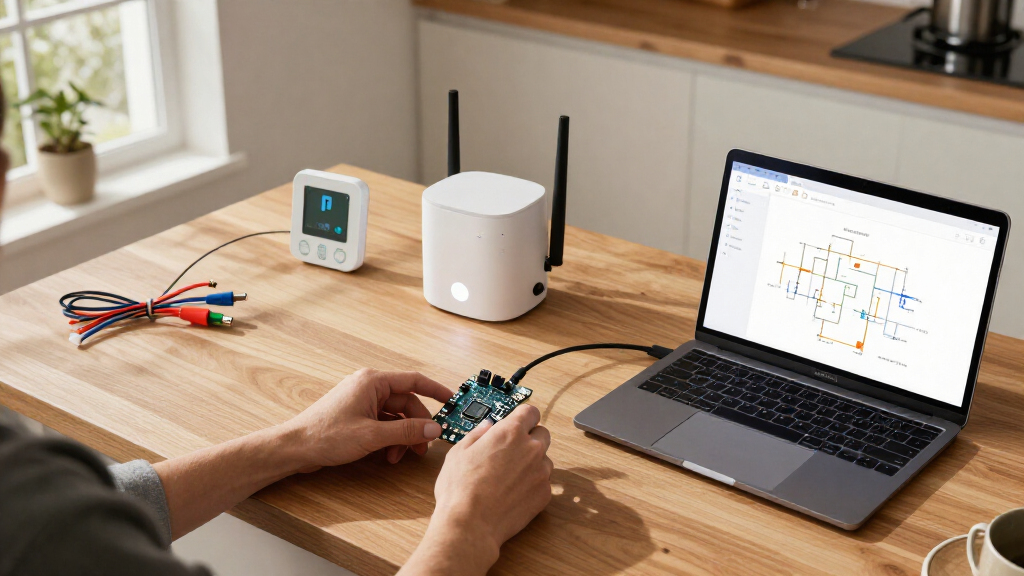
The new border-router component runs on ESP-IDF 5.5.5 or newer with IPv6 enabled. Users can build a single-chip setup with an ESP32-C5 or ESP32-C6, or pair a host such as an ESP32-S3 over UART with a separate OpenThread radio co-processor. Supported co-processor options include ESP32-H2, Nordic nRF and Silicon Labs chips. Ethernet, Wi-Fi and wired-backhaul prioritization are supported.
The release also introduces a USB Audio Class host for ESP32 chips with USB OTG: ESP32-S2, ESP32-S3, ESP32-S31, ESP32-P4 and ESP32-H4. It can work with standard USB sound cards, DACs, microphones and capture devices, including hot-plugging. Separately, Sendspin gains a source role, allowing an ESPHome device to send captured audio to a Music Assistant server.
Used together, USB audio and Sendspin can connect equipment such as a turntable or CD player to a synchronized multi-room audio setup. The release notes describe these as open-standard capabilities; actual performance will depend on the selected board, radio arrangement and audio equipment.
Thread and audio on affordable boards
ESPHome 2026.11 adds experimental Thread border routing, USB audio hosting and Sendspin streaming. These open software capabilities could help builders connect local networks and existing audio gear.
Build a local Thread route
Compatible boards can connect a Thread network to a home IP network.
Use an ESP32-C5 or C6, or pair an ESP32-S3 host with a separate radio co-processor.
Run ESP-IDF 5.5.5 or newer with IPv6 enabled.
Border routing is experimental and lacks credential sharing, a REST API and a web console.
Connect physical audio
USB capture and Sendspin can bring existing players into a networked audio setup.
Host audio gear
Supported ESP32 chips with USB OTG can work with sound cards, DACs, microphones and capture devices.
Stream a source
An ESPHome device can send captured audio to a Music Assistant server.
What builders should weigh
- Run local Thread infrastructure without relying solely on a commercial hub.
- Connect a turntable or CD player to synchronized multi-room audio.
- Performance varies with board, radio arrangement and audio equipment.
- Single-board 2.4GHz Wi-Fi and Thread may share an antenna.
Lower-Cost Routes to Thread and Audio
For smart-home users, the change creates another route to running a local Thread border router without relying solely on a commercial hub. ESPHome describes the feature as usable independently of Home Assistant, and the provided account says compatible devices can also be added to other ecosystems, including Google Home, using transferred Thread credentials. That is a practical possibility, not a guarantee that every board or ecosystem configuration will work without additional setup.
On audio, the combination of USB capture and Sendspin could help bring existing physical players into a networked system instead of requiring users to replace them with equipment tied to a particular brand. Together, the additions extend ESPHome’s role from controlling smart-home devices toward supporting the underlying network and audio links. The feature’s experimental status and missing functions mean it is better understood as an emerging option than a finished replacement for established hubs.
Products Worth Considering

LG OLED evo C4 55-Inch 4K Smart OLED TV (OLED55C4PUA) with 144Hz Refresh Rate, HDMI Cable, 24-Month Protection Plan, and Streaming Bundle

Google Nest Learning Thermostat (4th Gen, 2024) with Nest Temperature Sensor, Polished Gold

Shark PowerPro Reveal Plus Cordless Stick Vacuum, Charcoal (IZ376H)
As an affiliate, we earn on qualifying purchases.
ESPHome’s Open Protocol Work
ESPHome has previously supported OpenThread connectivity and over-the-air updates. The 2026.11 change adds the border-router role, which connects a Thread network to an IP network such as a home LAN. Thread is used by connected-home devices, including products built around open interoperability standards.
The update is part of a broader open-source approach associated with the Open Home Foundation, which supports Home Assistant, ESPHome and Sendspin. The stated focus is local control, privacy and interoperability rather than requiring a single proprietary hub or cloud service. The release is available to users through ESPHome’s firmware-building tools.
According to the account accompanying the release, hands-on tests used an ESP32-C6 development board and an ESP32-S3 paired with an ESP32-H2. Both ran the new component and passed additional diagnostic information to Home Assistant through the ESPHome integration. Demonstration configurations were made available on GitHub; these reported tests do not establish results for every supported board or setup.
“The OpenThread Border Router support is experimental.”
— ESPHome release details
Experimental Support Has Gaps
The border-router component currently lacks some standard OTBR features, including a REST API and web console. Thread credential sharing is also missing from ESPHome at this stage. The release information does not give a timeline for adding these functions or specify which will be addressed in a later update.
Hardware choice may affect wireless performance. The accompanying account cautions that a single-board setup using 2.4GHz Wi-Fi and Thread can face a compromise because both use the same antenna. It identifies 5GHz Wi-Fi on an ESP32-C5 or Ethernet as ways to avoid that particular constraint, but does not provide comparative measurements. It is also not yet clear how performance varies across board designs, audio peripherals or larger Thread networks.
Testing and Feature Development
Users can try the release by updating their ESPHome firmware builder and selecting compatible hardware. Those testing border routing should account for its experimental status, check the board and radio configuration, and confirm that their intended ecosystem can receive or use the required Thread credentials.
The available information gives no date for a follow-up release or for credential sharing, REST API support or a web console. Further development and community testing will show how widely the feature works across supported hardware and whether the missing functions are added. The release is available now; its longer-term capabilities remain under development.
Source: rss
Key Questions
What are the main additions in ESPHome 2026.11?
The update adds experimental OpenThread Border Router support for compatible ESP32 setups, a USB Audio Class host for supported chips with USB OTG, and a Sendspin source role for streaming captured audio to Music Assistant.
Which boards can run the new Thread border-router feature?
The release supports a single-chip setup using an ESP32-C5 or ESP32-C6, or a host such as an ESP32-S3 paired over UART with an external radio co-processor. The feature requires ESP-IDF 5.5.5 or newer and IPv6 enabled.
Is the border-router support ready for all users?
No. ESPHome labels it experimental. The current implementation lacks features such as a REST API, a web console and ESPHome-based Thread credential sharing.
Can ESPHome connect a turntable or CD player to multi-room audio?
The USB audio host and Sendspin source role are intended to support setups that capture audio from USB-connected equipment and stream it to Music Assistant. The release information does not promise compatibility with every device or provide performance results for every configuration.
Source: matteralpha.com