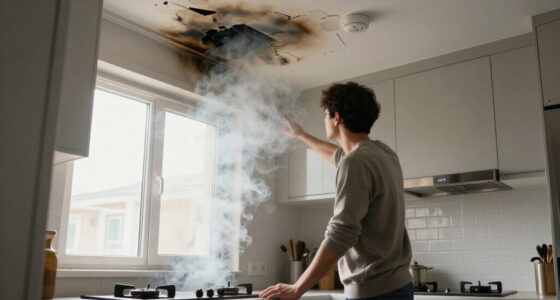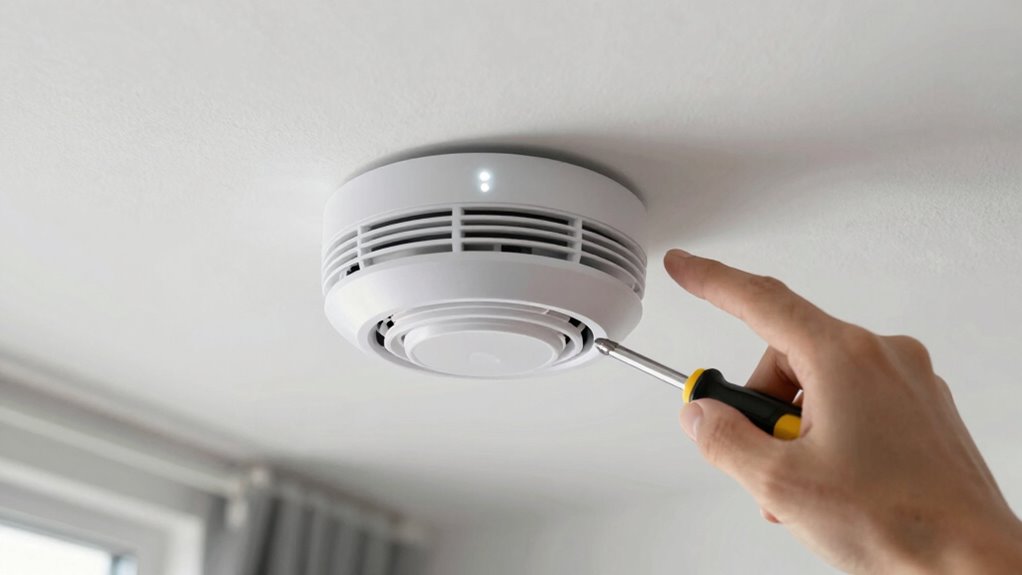

If your smoke alarm keeps beeping, start by checking and replacing the batteries, as low power is a common cause. Clean the alarm to remove dust or debris that may trigger false alarms. Make sure it’s properly placed away from kitchens and bathrooms, and confirm the wiring if it’s hardwired. If it still beeps after these steps, it might need resetting or replacing. Keep in mind, knowing more about troubleshooting can help keep your home safe and quiet.

Get home appliances delivered free with Prime
- Fast, free delivery on millions of items
- Prime Video, Amazon Music and more included
- Member-only deals all year
Key Takeaways
- Check and replace the batteries with high-quality, fresh batteries, then test the alarm.
- Clean the alarm and vents with a soft brush or compressed air to remove dust and debris.
- Ensure proper placement away from kitchens, bathrooms, vents, and windows, and reposition if false alarms occur.
- Inspect wiring connections in hardwired alarms, reset circuit breakers, and confirm power supply stability.
- Reset the alarm after maintenance or battery replacement and replace the unit if issues persist.
smoke alarm batteries replacement
As an affiliate, we earn on qualifying purchases.
As an affiliate, we earn on qualifying purchases.
Why Does My Smoke Alarm Keep Beeping? Common Causes Explained
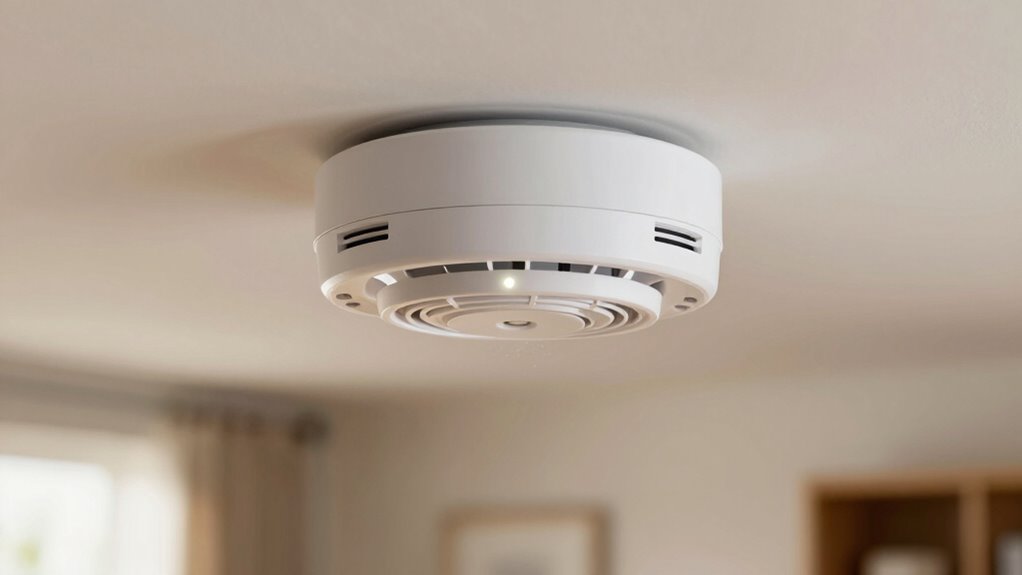
If your smoke alarm keeps beeping, it’s usually a sign that something needs your attention. One common cause is improper smoke detector placement, such as installing it too close to the kitchen or bathroom, which can cause false alarms. Another reason could be dust or debris inside the sensor, triggering the beeps. Additionally, low batteries often cause periodic chirping, signaling you to replace them. Sometimes, a malfunction or outdated alarm can be the culprit. To guarantee safety, check that your smoke alarms are correctly positioned near fire escape routes, ideally on every level and outside sleeping areas. Proper placement helps prevent false alarms and ensures you’re alerted quickly during an emergency. Addressing these issues should help stop the beeping. Regularly cleaning your smoke detectors can also prevent dust buildup and maintain their proper function. Ensuring your smoke alarm is up to date and functioning correctly is crucial for safety, especially when considering sensor sensitivity and maintenance. Understanding device lifespan can help you know when it’s time to replace your smoke alarm entirely. Regular testing and understanding the recommended replacement period ensure your alarms remain reliable over time. Being aware of alarm malfunctions can help you troubleshoot and avoid dangerous gaps in safety.
hardwired smoke detector reset kit
As an affiliate, we earn on qualifying purchases.
As an affiliate, we earn on qualifying purchases.
How to Check and Change Your Smoke Alarm Batteries

To guarantee your smoke alarm functions properly, checking and changing the batteries regularly is essential. Start by locating your alarm, confirming it’s placed correctly for maximum fire safety and alarm placement. Remove the alarm from its mounting bracket, and open the battery compartment. If your alarm uses disposable batteries, replace them with fresh, high-quality batteries of the same size. If it has a rechargeable battery, follow the manufacturer’s instructions for recharging or replacing it. Before reinstalling, press the test button to confirm the alarm sounds properly. Regularly inspecting and changing batteries helps prevent false alarms and maintains the device works during an emergency. Proper alarm placement and maintenance are key to keeping your home safe from fire hazards, including ensuring that household safety measures are properly implemented. Additionally, maintaining clear access to the alarm ensures easy maintenance and testing when needed. Regularly monitoring your alarm’s performance can further enhance safety and reliability. Incorporating preventive maintenance practices can help identify potential issues early and ensure your alarm remains fully operational, contributing to overall fire safety in your home.
compressed air for smoke detector cleaning
As an affiliate, we earn on qualifying purchases.
As an affiliate, we earn on qualifying purchases.
Dust and Debris in Smoke Alarms: How to Clean Them
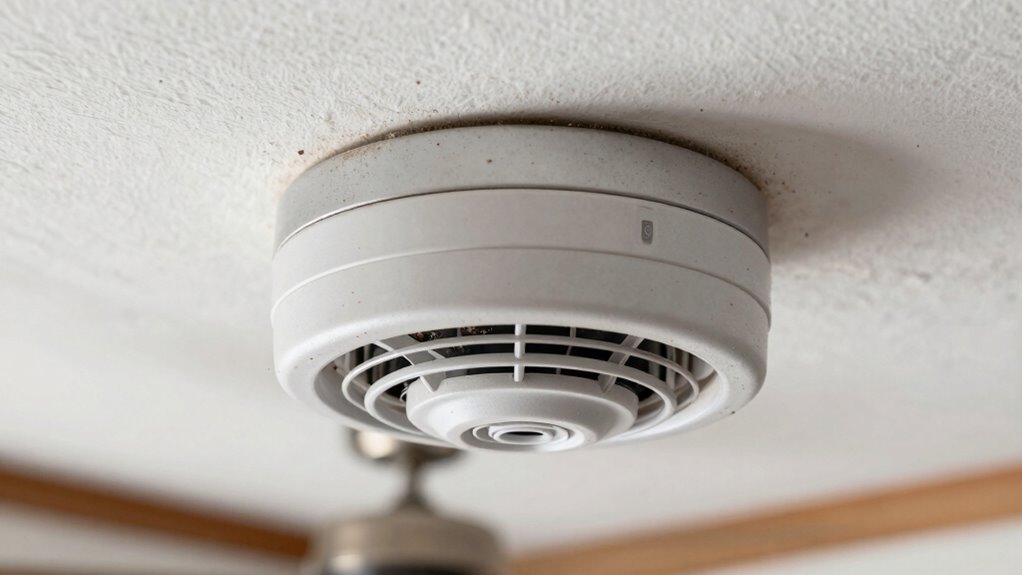
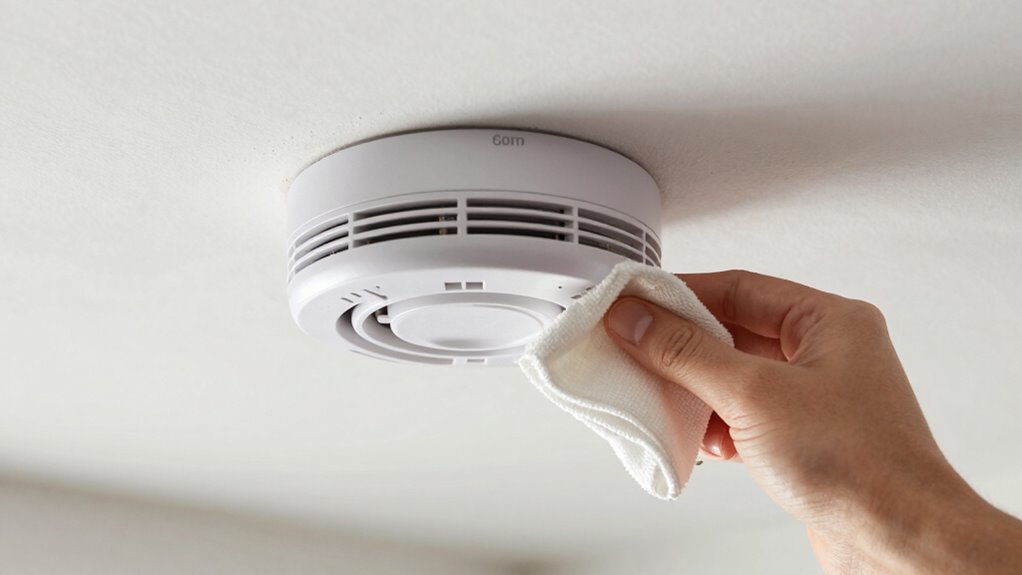
After replacing the batteries and testing your smoke alarm, it’s a good idea to check for dust and debris that may affect its performance. Dust accumulation can interfere with the sensor, causing false alarms or missed detections. Since indoor air often contains dust particles, use a soft brush or a vacuum with a brush attachment to gently clean the exterior and vents of the alarm. Be cautious not to damage the unit or dislodge any components. If accessible, remove the cover and carefully wipe away dust inside with a dry cloth or compressed air. Regular cleaning helps maintain testing accuracy and prevents dust buildup from hindering the alarm’s ability to detect smoke effectively. Proper maintenance of your smoke alarm is essential for reliable safety. Keeping your alarm free of dust and debris is part of home safety routines that help ensure it functions properly when needed. To enhance overall safety, consider using indoor air quality gear like HEPA filters to reduce airborne dust particles that can accumulate in alarms. Using air purifiers can also significantly lower dust levels in your home, further protecting your smoke alarms. Keep your smoke alarm clean for ideal safety.
best smoke alarm for false alarms
As an affiliate, we earn on qualifying purchases.
As an affiliate, we earn on qualifying purchases.
What If My Smoke Alarm Still Beeps After Cleaning? Troubleshooting Tips
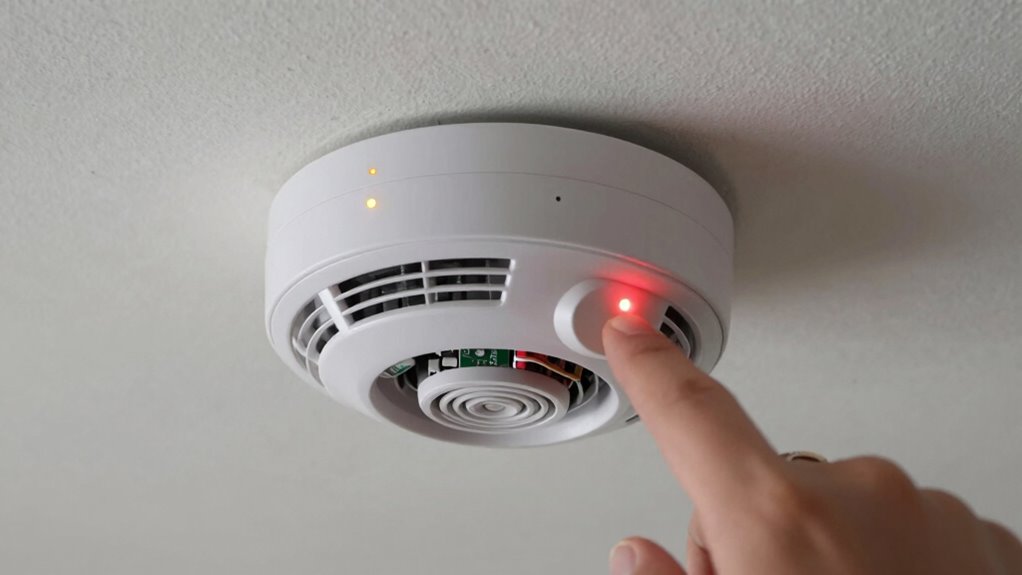
Sometimes, even after cleaning your smoke alarm, it continues to beep unexpectedly. If that happens, check the type of smoke alarm you have—photoelectric or ionization—as troubleshooting steps vary. Confirm your fire escape routes are clear, so you’re prepared if the alarm signals a real emergency. If your smoke alarm still beeps, it could be a sign of a malfunction or low battery, even if you’ve replaced it. For hardwired models, verify the wiring connections; for battery-powered alarms, try replacing the battery again. Some alarms have reset buttons—press and hold them to reset the device. If issues persist, consult the manufacturer’s instructions or consider replacing the unit altogether. Persistent beeping indicates it’s time to take extra precautions and ensure your safety. Additionally, understanding smoke alarm features and maintenance can help prevent security issues in your home or office. Regular testing and cleaning are essential to keep your alarms functioning properly and avoid false alarms. Remember that battery life can vary, so keeping track of replacement schedules can help prevent unexpected beeping. Checking the alarm placement can also prevent false alarms and ensure proper operation.
Troubleshoot Power Problems in Hardwired Smoke Alarms
If your hardwired smoke alarm keeps beeping, start by checking the power source connections to make certain they’re secure. Next, reset the circuit breaker to confirm the system is getting power, and then inspect the wiring for any damage or loose wires. Addressing these issues can often resolve power-related beeping problems quickly. Additionally, verifying the electrical connections ensures the alarm is properly integrated into your home’s electrical system. Keep in mind that family photoshoot fails can sometimes lead to unexpected disturbances during installation, so it’s important to ensure everything is correctly set up to avoid false alarms. Regularly inspecting your smoke alarm and understanding protective styling benefits can help maintain its proper functioning and safety. Also, ensuring the wiring adheres to heat management tips can prevent overheating issues that might cause false alerts or damage. Proper maintenance and awareness of common electrical issues can further help in preventing future malfunctions.
Check Power Source Connections
Hardwired smoke alarms rely on a continuous power supply through the wiring in your home, so ensuring these connections are secure is essential when troubleshooting a beeping alarm. Start by inspecting the wiring to confirm it’s firmly connected and free of damage. If the alarm uses a backup battery, check its battery life—an old or weak battery can cause false beeps. Remember, a recent power outage might have disrupted the alarm’s connection or reset it to a default state, leading to persistent beeping. If you notice loose wires or corroded terminals, tighten or clean them. Replacing the backup battery can also resolve issues caused by power fluctuations or outages, ensuring the alarm functions correctly and stops unnecessary beeping.
Reset Circuit Breaker
When your smoke alarm keeps beeping despite checking the power connections, resetting the circuit breaker can often resolve the issue. Locate your home’s main electrical panel and find the circuit breaker controlling the smoke alarm circuit. Flip the breaker switch to the off position, then wait a few seconds before turning it back on. This power reset can clear any electrical glitches causing the alarm to beep. Make sure you listen for a click to confirm the breaker is fully reset. If the alarm continues to beep after the reset, double-check that the breaker is properly engaged and that there’s no other electrical issue. Resetting the circuit breaker is a quick step that can restore proper power flow to your hardwired smoke alarm.
Inspect Wiring Integrity
After resetting the circuit breaker, it’s important to guarantee the wiring within your smoke alarm system is secure and intact. Begin with a thorough wiring inspection, checking for loose or damaged connections. Confirm all wires are firmly connected to the alarm and the power source. Conduct connection testing by gently tugging on wires to confirm they’re secure and haven’t come loose. Look for signs of corrosion or corrosion-resistant terminals, which can interfere with proper power flow. If you notice any frayed or damaged wiring, replace or repair it before proceeding. Proper wiring integrity is essential for the alarm’s reliable operation. Taking these steps helps prevent false alarms caused by power issues and ensures your smoke alarm functions correctly when needed.
Fix Sensor Failures and False Alarms in Smoke Alarms
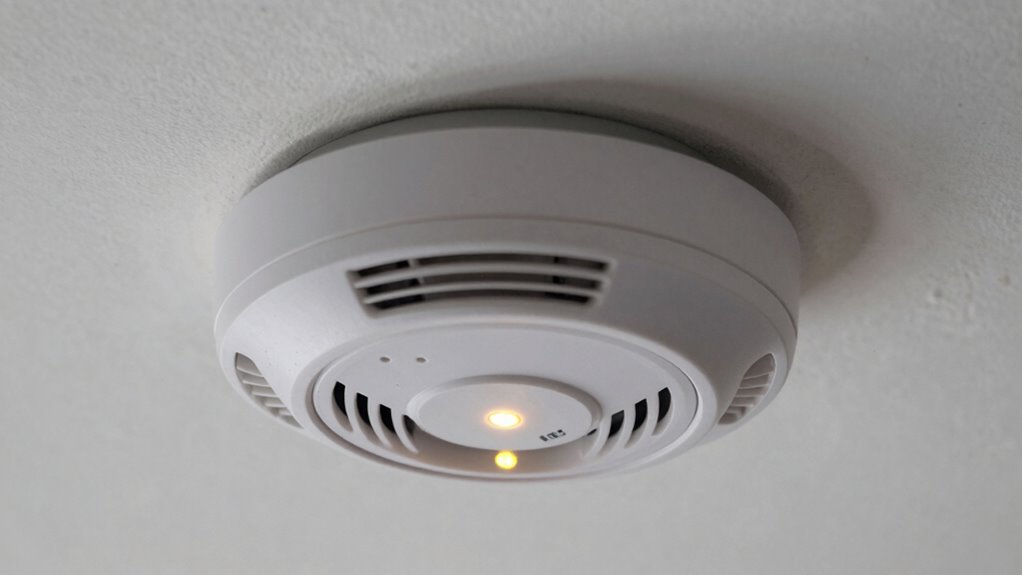
Sensor failures and false alarms can be frustrating, but many of these issues are fixable with some simple troubleshooting. First, verify your smoke alarm’s sensor is properly calibrated, which can help prevent false alarms. Regularly cleaning the sensor with a soft brush removes dust that might trigger false signals. Check the placement of your alarm; installing it too close to kitchens or bathrooms can cause false triggers. Using the table below, you can identify common causes and solutions:
| Issue | Cause | Solution |
|---|---|---|
| False alarms | Dust or insects on sensor | Clean sensor regularly |
| Sensor miscalibration | Sensor drift over time | Recalibrate or replace alarm |
| Placement problems | Too close to cooking/baths | Relocate alarm to less humid area |
| Power issues | Weak batteries or wiring | Replace batteries or check wiring |
Prevent False Alarms and Persistent Beeping: Tips and Tricks
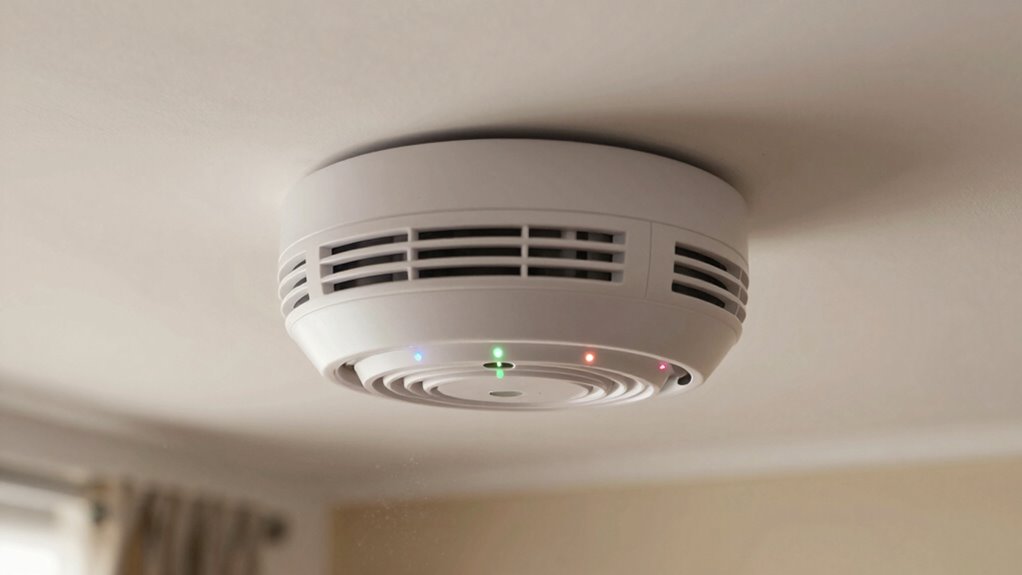
To reduce false alarms and persistent beeping, make sure you regularly clean and maintain your smoke alarm sensors. Proper placement is key—avoid installing alarms near kitchens or bathrooms where cooking fumes and humidity can trigger them. Additionally, keep your alarm away from common cooking triggers to prevent unnecessary alerts.
Regular Sensor Maintenance
Regularly maintaining your smoke alarm sensors is key to preventing false alarms and persistent beeping. Start by checking and replacing batteries regularly to guarantee reliable power and avoid false alerts caused by low battery voltage. Additionally, sensor calibration is essential; dust, dirt, or insects can interfere with sensor accuracy. Gently clean the sensor using a soft brush or compressed air to remove debris that may cause false alarms or constant beeping. Confirm the sensor is properly aligned and functioning correctly after cleaning. Performing routine maintenance keeps your smoke alarm in prime condition, reducing unnecessary noise and false signals. By staying on top of battery maintenance and sensor calibration, you help ensure your alarm responds accurately when it truly matters.
Proper Alarm Placement
Proper placement of your smoke alarm is essential to prevent false alarms and persistent beeping. Correct detector positioning guarantees that smoke reaches the alarm quickly without triggering it unnecessarily. Place alarms on every level of your home, especially outside bedrooms and in common areas. Keep them at least 10 feet away from kitchens and bathrooms to avoid false triggers from cooking steam or humidity. Mount alarms on the ceiling or high on the wall, as smoke rises. Avoid placing them near vents, windows, or ducts, which can interfere with detection. Confirming proper alarm placement helps your detector function accurately and reduces false alarms. Regularly check and adjust the positioning if you notice frequent false beeping or if the alarm isn’t responding promptly.
Avoid Cooking Triggers
Cooking is a common cause of false alarms, so taking steps to minimize triggers can save you from persistent beeping. To improve cooking safety and reduce false alarms caused by kitchen hazards, guarantee proper ventilation when frying, grilling, or sautéing. Use exhaust fans or open windows to clear smoke and steam quickly. Keep your stove and oven clean to prevent buildup that can create smoke or odors. Also, avoid overcooking or burning foods, which can easily set off the alarm.
- Install the smoke alarm away from the kitchen or cooking appliances
- Use a microwave or toaster oven for quick meals instead of stovetop cooking
- Regularly clean and maintain your smoke detector to prevent false triggers
When to Replace Your Smoke Alarm Instead of Repairing It
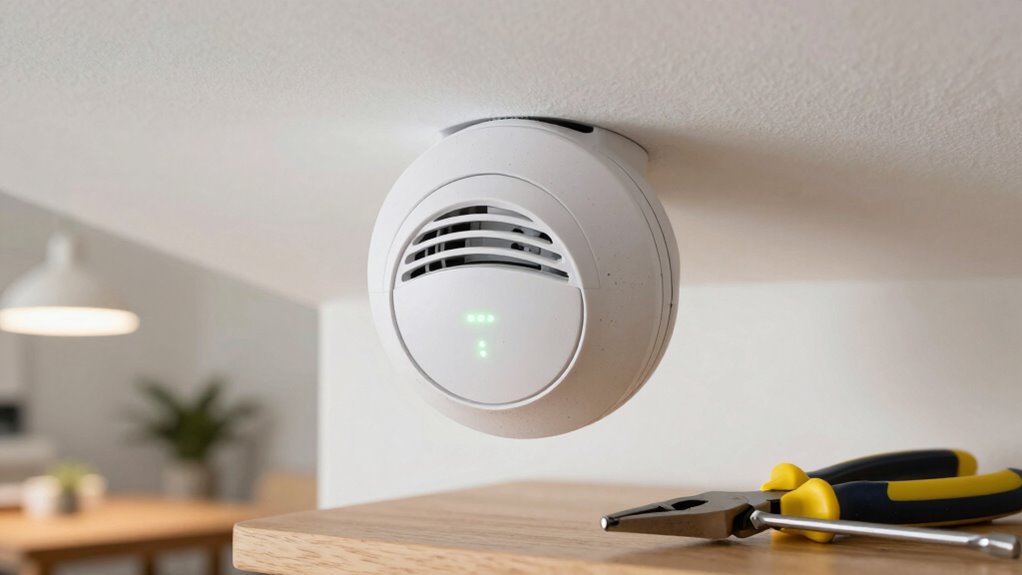
Eventually, if your smoke alarm continues to beep despite troubleshooting, it’s probably time to replace it rather than try to repair it. Over time, smoke alarms lose sensitivity and may become unreliable, compromising your fire safety. If your alarm is old—typically over 10 years—or showing signs of wear, replacing it is the safest choice. Repairing may only be a temporary fix, and outdated alarms won’t meet current safety standards. Upgrading to newer models with advanced features like interconnected alarms or photoelectric sensors can enhance your home’s fire safety. Don’t risk a malfunctioning alarm; timely replacement ensures reliable detection and peace of mind. Remember, investing in alarm upgrades can greatly improve your overall fire safety strategy.
Final Tips for Keeping Your Smoke Alarm Quiet and Functional
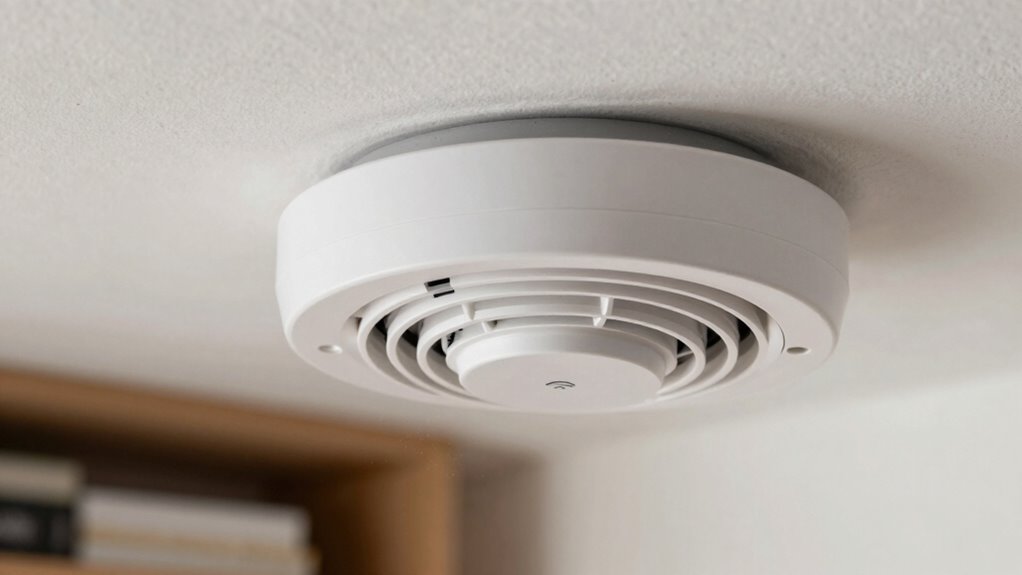
To keep your smoke alarm quiet and functioning reliably, regular maintenance is key. Staying on top of fire safety tips guarantees your alarm stays effective and reduces false beeps. Incorporate these habits into your emergency preparedness routine:
- Test your alarm monthly to confirm it’s working properly.
- Clean the unit regularly to prevent dust buildup that causes false alarms.
- Replace batteries at least once a year or when prompted by the alarm.
Frequently Asked Questions
How Often Should I Test My Smoke Alarm?
You should test your smoke alarm at least once a month to guarantee it’s working properly. When testing, follow installation tips to place alarms on every level and in key areas like bedrooms and hallways. Proper alarm placement makes testing more effective, and regular checks help you catch any issues early. Don’t forget to replace batteries yearly or as needed, and clean alarms to maintain peak performance.
Can Pets Cause Smoke Alarms to Beep?
Pets can cause smoke alarms to beep, mainly due to pet hair or alarm interference. Pet hair can get into the detector, triggering false alarms or beeping. Additionally, pets may accidentally bump or disturb the alarm, causing it to activate. Regularly cleaning your smoke alarm and keeping pet hair away from sensors can reduce false beeps. Make sure your pets are calm around alarms to prevent unnecessary disturbances.
Are There Smoke Alarms With Longer-Lasting Batteries?
Think of long-lasting batteries as the heartbeat of your safety system. Yes, some smoke alarms come with extended-life batteries that last up to 10 years, substantially boosting your smoke alarm lifespan. These alarms reduce the hassle of frequent replacements and keep you protected longer. Investing in one means peace of mind, knowing your home’s alert system is reliable, like a vigilant guardian watching over you night and day.
What Safety Precautions Should I Take During Alarm Maintenance?
During alarm maintenance, follow safety guidelines by turning off the power if wired, and handle batteries carefully. Make sure alarms are placed correctly, away from vents or windows to prevent false alarms. Use a sturdy ladder if needed, and never disable alarms without replacing batteries or fixing issues. Regularly check alarm placement to guarantee maximum coverage, and always test alarms after maintenance to confirm they’re working properly.
How Do I Reset a Smoke Alarm After Replacing Batteries?
You’ll want to press and hold the reset button on your smoke alarm for about 15-20 seconds—like you’re awakening a sleepy giant. After replacing the batteries, guarantee proper battery disposal and check that the alarm is correctly placed on the ceiling or high on the wall for maximum safety. Once reset, the beeping should stop, signaling the alarm is alert and ready to protect you again.
Conclusion
So, next time your smoke alarm starts its relentless beeping, picture it as a tiny, overenthusiastic drummer in your ceiling band—demanding attention. Instead of ignoring the beat, give it a quick check, clean, or battery change. If that doesn’t silence the drumroll, maybe it’s time to retire the star performer and bring in a fresh act. Keep your home’s soundtrack peaceful, not a never-ending concert of beeps!
NFL season / tailgating Picks
team gear
As an affiliate, we earn on qualifying purchases.