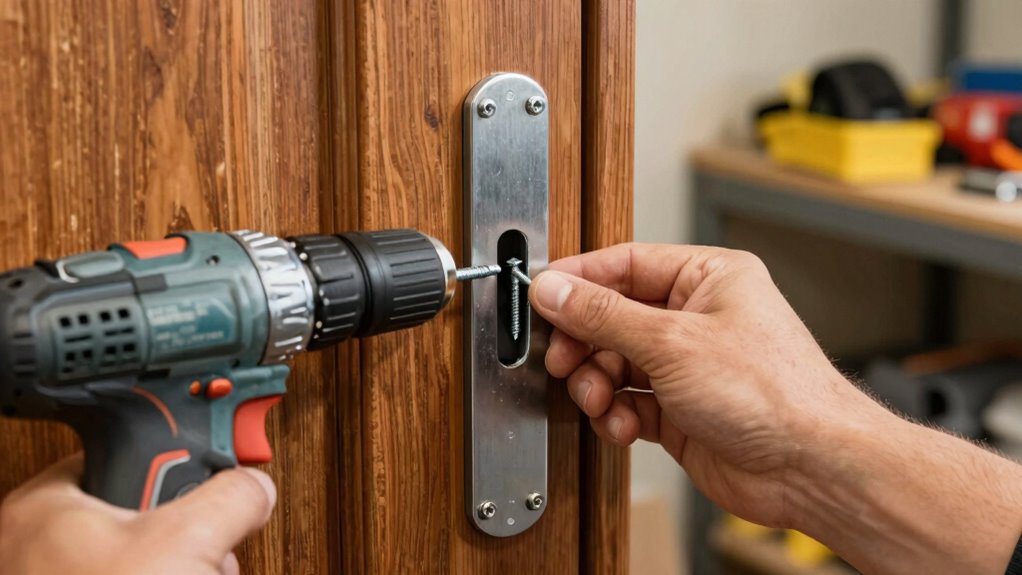

To reinforce your entry door properly, start by inspecting the door and frame for damage or weaknesses. Use heavy-duty strike plates, longer screws into wall studs, and security hinges to resist forced entry. Upgrade to high-security deadbolts or smart locks, and add metal corner brackets inside the frame for extra stability. Don’t forget regular maintenance, like tightening screws and replacing worn weatherstripping. For detailed steps that protect your home, keep exploring the best techniques.

Get home appliances delivered free — and shop member deals
- Fast, free delivery on millions of items
- Access to Prime Big Deal Days deals on October 6–7
- Prime Video, Amazon Music and more included
Key Takeaways
- Install heavy-duty strike plates with longer screws into wall studs for increased door frame strength.
- Use security hinges that prevent removal and reinforce hinges with steel brackets or longer screws.
- Upgrade to high-security deadbolt locks and consider electronic or smart lock options for added protection.
- Reinforce the door and frame with metal or aluminum corner brackets and apply wood glue to cracks or gaps.
- Regularly inspect and maintain hardware, weatherproofing, and the door frame to ensure ongoing security.
heavy-duty strike plates with long screws
As an affiliate, we earn on qualifying purchases.
As an affiliate, we earn on qualifying purchases.
Why Your Entry Door’s Strength Matters for Home Security
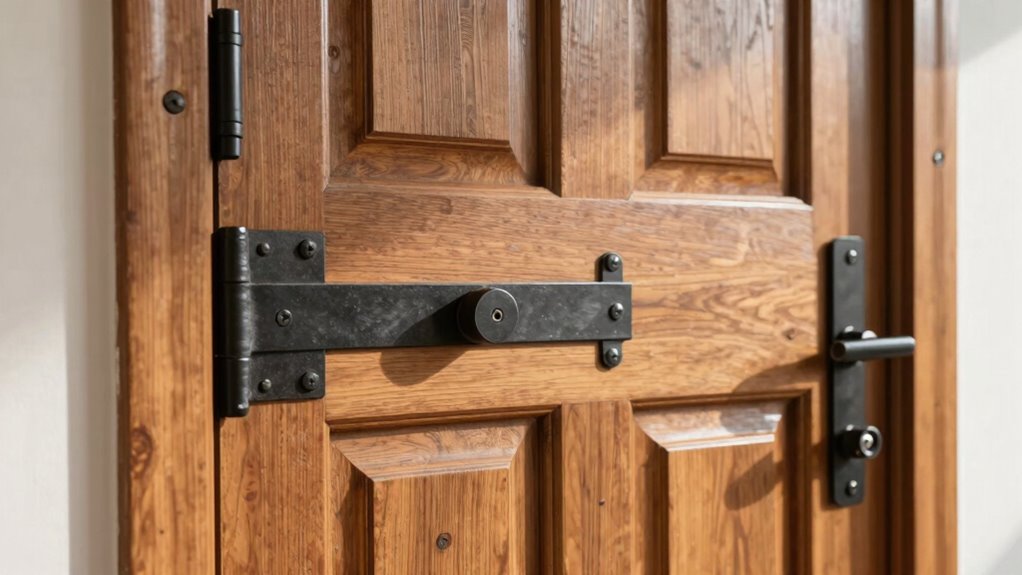
Your entry door is often the first line of defense against intruders, making its strength essential for home security. The door material plays a vital role—solid wood, metal, or reinforced composite can resist forced entry better than hollow or flimsy options. Additionally, window security features on or near your door can be vulnerable points if not properly secured. Glass panels or sidelights should be reinforced with shatter-resistant glass or protective film to prevent break-ins. A strong door combined with secure windows creates a formidable barrier, discouraging intruders from attempting forced entry. Investing in durable materials and window security measures considerably boosts your home’s overall safety, giving you peace of mind knowing your entrance can withstand attempts to breach it. Properly maintaining your door hardware also plays a crucial role in ensuring the door remains secure over time. Understanding the importance of contrast ratio can help you choose the right lighting and security features that enhance visibility and deter unwanted visitors. Additionally, considering the security zone info can guide you in implementing comprehensive security measures around your entry points. Regular inspections and upgrades to your security features can further reinforce your home’s defenses against potential intruders.
As an affiliate, we earn on qualifying purchases.
How to Check If Your Door and Frame Need Reinforcing
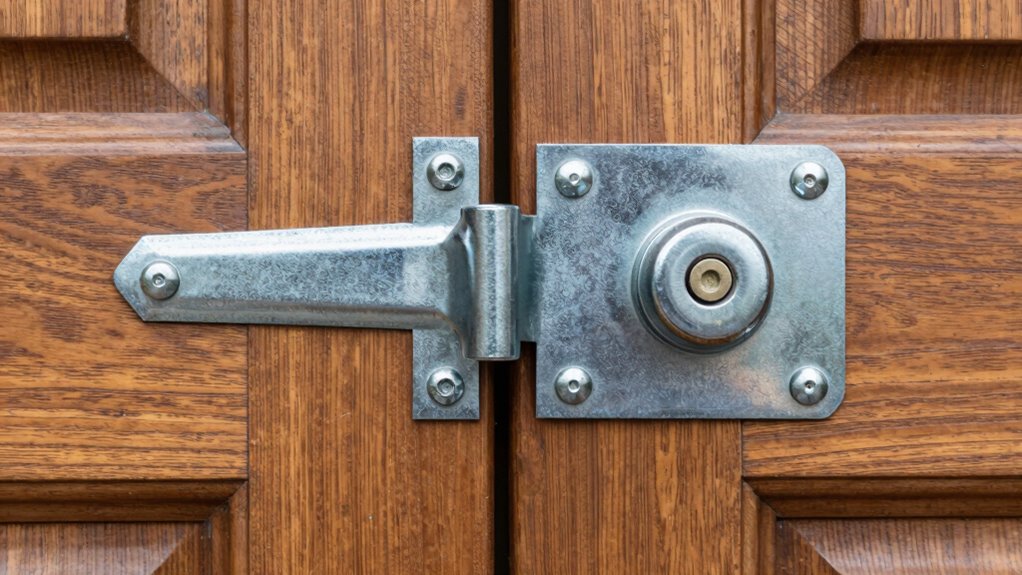
Determining whether your door and frame need reinforcing is a crucial step in maintaining home security. Start by inspecting the door material—solid wood, steel, or fiberglass—since weaker materials may require extra reinforcement. Check for cracks, warping, or signs of damage, especially around the edges and hinges. Examine the frame’s weather resistance; if it shows signs of rot, rust, or deterioration, it could compromise strength. Test the door by applying gentle pressure around the lock and hinges; if it wobbles or feels loose, reinforcement is necessary. Also, consider how the door responds to weather, as exposure can weaken materials over time. Regular inspections ensure your door remains sturdy, providing better protection against potential intruders. Additionally, understanding water-resistant materials can help you choose durable options that withstand environmental damage over time. Being aware of door and frame durability can guide you in selecting the most suitable materials for long-term security, especially considering the importance of material strength in preventing break-ins. Incorporating reinforcement techniques such as security plates or braces can further bolster your door’s resilience. A well-maintained door and frame contribute significantly to overall home security, and choosing appropriate reinforcement techniques can further enhance protection.
As an affiliate, we earn on qualifying purchases.
Choosing the Best Hardware to Strengthen Your Entry Door
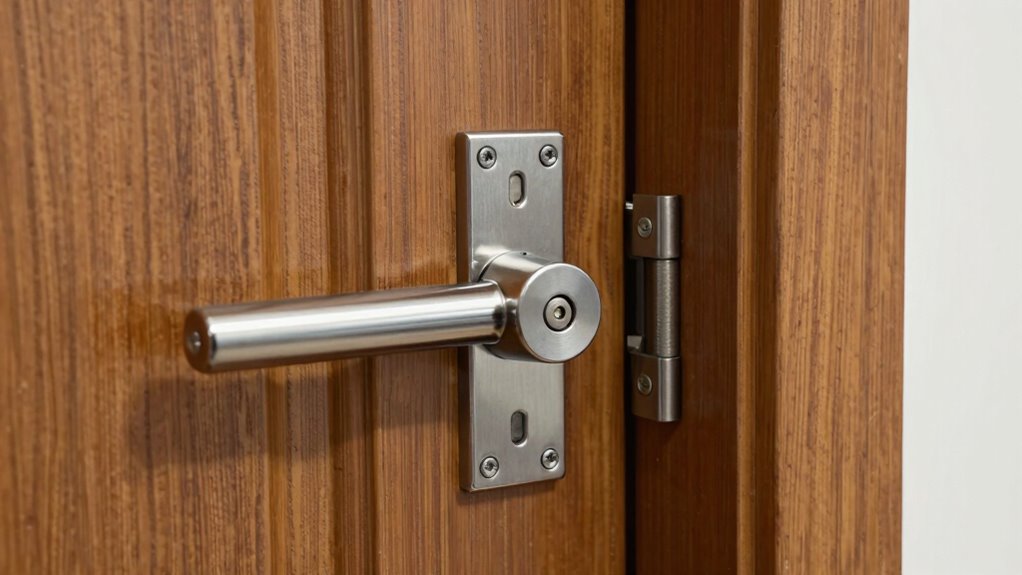
Choosing the right hardware is key to reinforcing your entry door effectively. Quality hardware not only boosts security but also offers aesthetic enhancements that elevate your home’s look. To make the best choice, consider these options:
Selecting quality hardware enhances both your home’s security and curb appeal effectively.
- Deadbolt Locks – Opt for high-security deadbolts for added protection.
- Strike Plates – Reinforced strike plates distribute force and prevent kick-ins.
- Decorative Hardware – Choose hardware with attractive designs that complement your home’s style.
- Door Handles and Knobs – Select sturdy, tamper-resistant handles for durability and visual appeal.
- Proper installation and regular hardware maintenance are essential to ensure long-lasting security and performance. Additionally, understanding home security fundamentals can help you select the most effective hardware for your needs, especially in relation to electric power generation and other modern security upgrades. Incorporating robust security measures can further enhance your door’s resistance to forced entry.
metal corner brackets for door reinforcement
As an affiliate, we earn on qualifying purchases.
As an affiliate, we earn on qualifying purchases.
Reinforce Your Door Frame for Lasting Durability
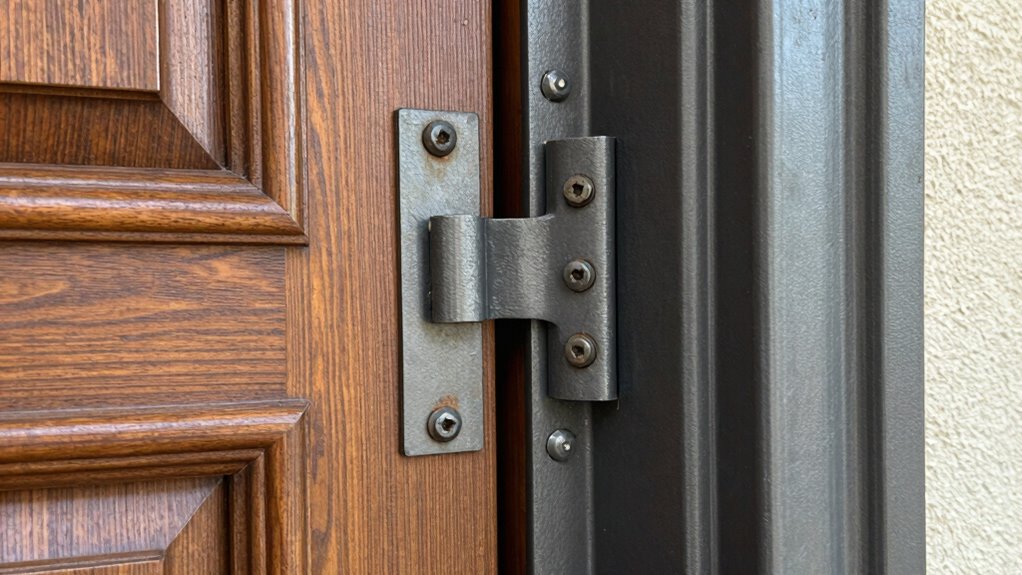
Reinforcing your door frame is essential for ensuring lasting durability and security. A sturdy frame resists forced entry and maintains door aesthetics, even after years of use. To reinforce effectively, select quality reinforcement materials like steel plates, reinforcing strips, or additional framing. These materials strengthen the connection between the door and wall, preventing warping or damage. Visualize the options below:
| Reinforcement Material | Door Aesthetics Impact |
|---|---|
| Steel plates | Minimal, sleek look |
| Reinforcing strips | Discreet but strong |
| Additional framing | Slightly bulkier |
Choosing the right reinforcement can also depend on the security features of your door, ensuring a comprehensive approach to protection. Select materials that blend durability with your door’s style, ensuring your entry remains secure without sacrificing appearance. Incorporating door security tips can further enhance your door’s resilience against forced entry. Additionally, understanding indoor plant care can help maintain a welcoming atmosphere around your entryway, balancing security with aesthetic appeal. Properly installing reinforcement materials is crucial to achieving the best results and long-term effectiveness, especially as proper installation directly impacts the overall strength and longevity of your reinforcement.
Upgrading Locks and Deadbolts for Better Security
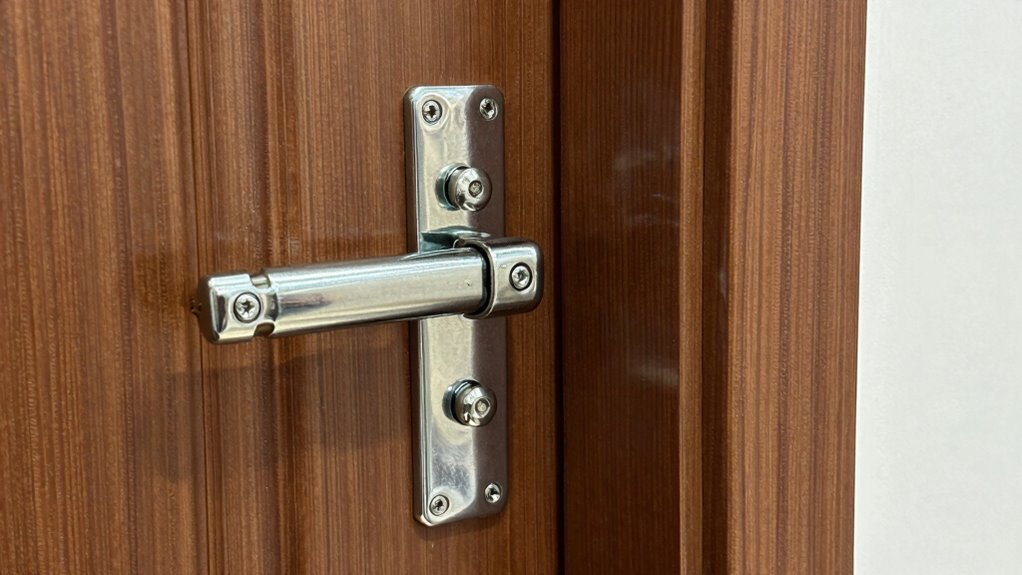
Ever wondered how much a simple upgrade to your locks and deadbolts can boost your home’s security? Upgrading these components is a smart move to deter intruders. Consider these key steps:
- Install high-security deadbolts that resist picking and forced entry.
- Opt for smart lock installation for keyless access and remote control.
- Weatherproof your locks and deadbolts using weatherproofing strategies to prevent rust and freezing. Regular maintenance, including proper cleaning and lubrication, helps extend their lifespan and reliability. Incorporating preventive measures can further enhance durability during harsh weather conditions.
- Upgrade to electronic locks with auto-lock features for added convenience and security.
- Incorporate portable oil radiators to maintain optimal lock functionality during cold weather, preventing freezing and ensuring reliable security.
These upgrades not only improve safety but also enhance your home’s resilience against weather elements. By investing in robust locks and deadbolts, you create a more secure barrier, giving you peace of mind every time you leave or rest at home.
How to Secure Your Door With Strike Plates and Hinges
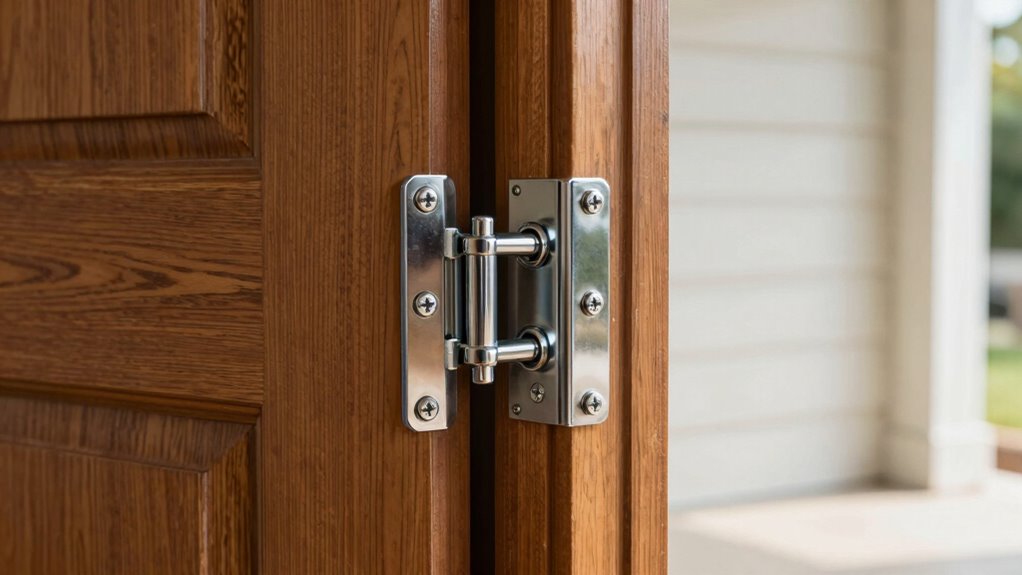
Securing your door involves more than just the locks—it also depends on the strength of the strike plates and hinges. Properly installed, heavy-duty strike plates reinforce the door frame, making it harder to kick in or force open. When attaching hinges, opt for security hinges that prevent removal from the outside. Weatherproofing techniques, like sealing gaps around hinges and strike plates, protect against drafts and moisture, which can weaken door components over time. Additionally, consider aesthetic enhancements by choosing strike plates and hinges that match your door’s style, maintaining curb appeal while boosting security. Regularly check and tighten hinges, and replace worn strike plates to ensure your door remains sturdy. Incorporating security hardware that is both functional and visually appealing can further improve your door’s resistance to forced entry. To ensure long-lasting durability, it’s also helpful to select hardware made from corrosion-resistant materials, especially in areas prone to moisture. This combination of security hardware and weatherproofing keeps your entry safe and attractive, while understanding doorframe reinforcement techniques can provide an additional layer of security. Moreover, choosing hardware with tamper-proof features can deter potential intruders from attempting to compromise your door.
Cost-Effective Tips to Reinforce Your Door on a Budget
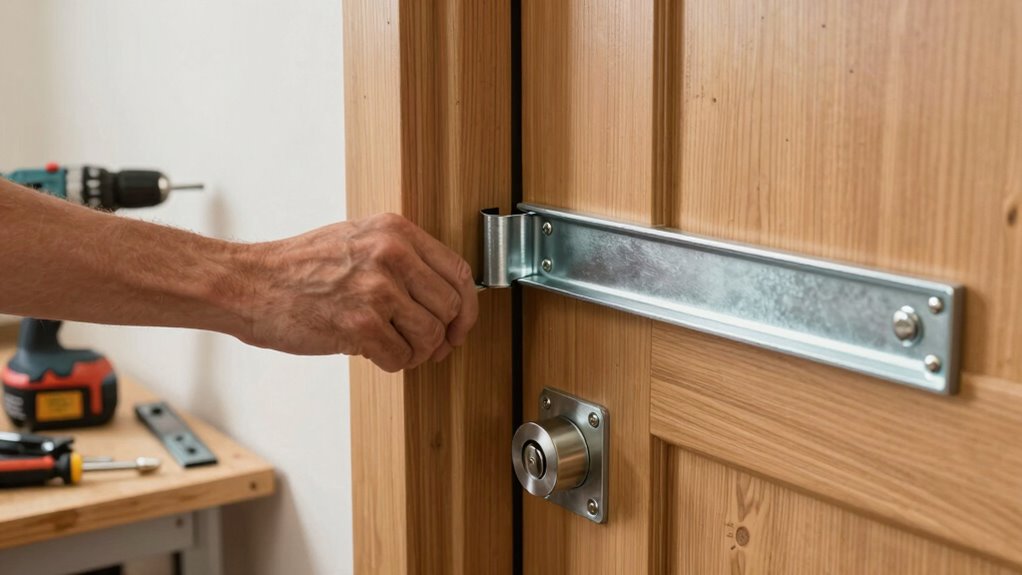
You can strengthen your door without breaking the bank by reinforcing the door frame with simple, affordable methods. Adding basic security hardware, like a deadbolt or door brace, also makes a big difference. These budget-friendly steps help protect your home effectively without costly upgrades.
Reinforce Door Frame
Looking for affordable ways to strengthen your door frame? You can improve its security without breaking the bank by choosing cost-effective reinforcement techniques. Start by inspecting your current door frame materials—wood, metal, or vinyl—and identify weak points. Then, consider these options:
- Add metal strike plates to distribute force and reinforce the area around the lock.
- Install steel or aluminum corner brackets inside the frame for extra stability.
- Use longer screws (at least 3 inches) to secure hinges and strike plates firmly into wall studs.
- Apply wood glue or epoxy to any cracks or gaps for additional support.
These simple reinforcement techniques help make your door frame more resistant to forced entry, all while staying budget-friendly.
Add Security Hardware
Ever wondered how a simple addition of hardware can dramatically boost your door’s security without draining your wallet? Installing smart locks is an affordable upgrade that offers keyless entry and remote locking, making your door more secure and convenient. They’re easy to install and compatible with most doors. A sliding bolt is another cost-effective option; it provides an extra physical barrier, especially useful for interior or secondary doors. Both options are quick fixes that notably improve security without extensive renovations. Together, smart locks and sliding bolts are practical, budget-friendly ways to reinforce your entry point. By adding these hardware upgrades, you enhance your door’s resilience against forced entry while keeping costs low.
Common Mistakes to Avoid When Reinforcing Your Door
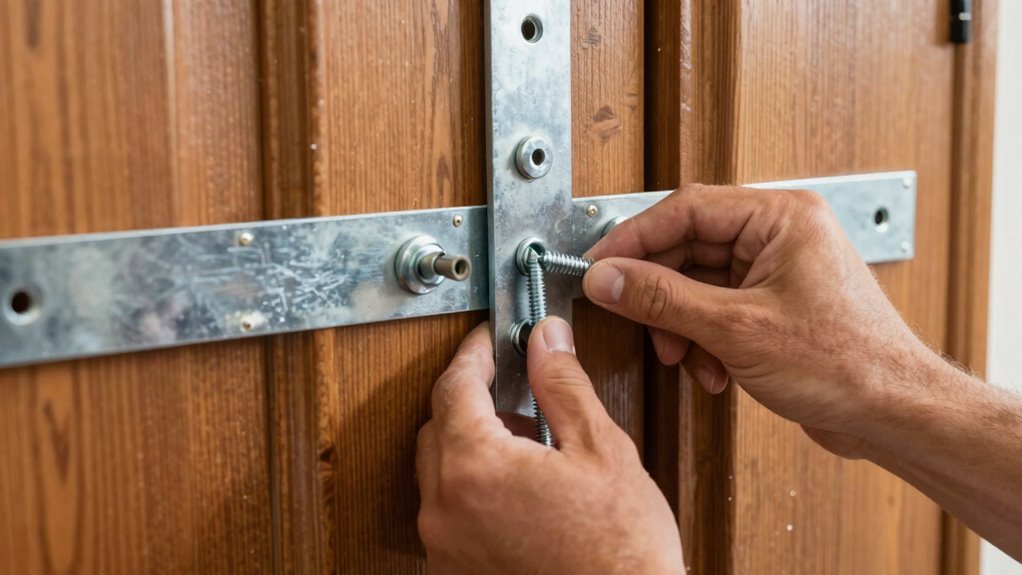
Reinforcing your entry door is a smart security upgrade, but neglecting common mistakes can undermine its effectiveness. One mistake is ignoring the door frame’s condition; if it’s weak or damaged, reinforcement won’t hold. Another is failing to check the exterior paint; peeling or cracked paint can hide underlying issues or lead to moisture problems. Overlooking these details weakens the overall security. Additionally, installing reinforcement without proper measurement can cause gaps, reducing effectiveness. Finally, rushing the project without considering the door’s design or existing hardware can result in an uneven look and compromised security. Always inspect the door frame thoroughly, maintain the exterior paint, measure carefully, and plan your reinforcement for a secure, long-lasting upgrade.
Maintaining Your Reinforcements for Long-Term Security
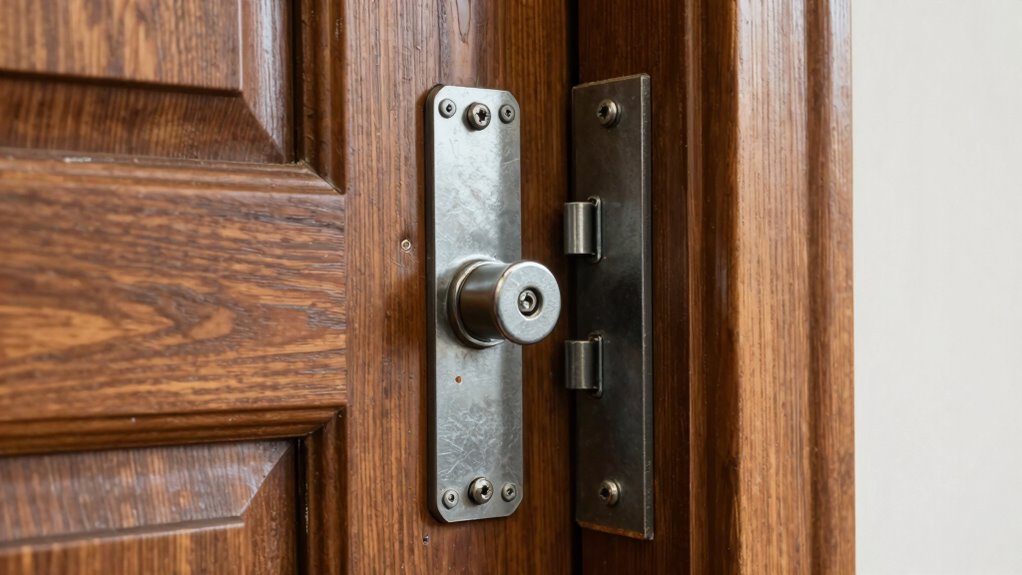
Once you’ve reinforced your entry door, maintaining those improvements over time is key to guaranteeing long-term security. Regularly inspect the door material for signs of wear or damage, especially around hinges and locks. Weatherproofing features, like seals and door sweeps, help protect your door from moisture and temperature fluctuations that can weaken reinforcements. Keep these components clean and in good condition to prevent rust and deterioration. Tighten loose screws or bolts promptly and replace any worn weatherstripping to maintain a secure barrier. Additionally, verify that your door’s material remains sturdy and free of cracks or warping. Consistent upkeep ensures your reinforcements stay effective, providing ongoing protection against potential intruders and the elements.
Frequently Asked Questions
What Materials Are Best for Reinforcing Entry Doors?
You should use sturdy steel or solid wood for the door frame to enhance strength. Reinforce with high-quality security hardware like deadbolt locks, strike plates, and door jammers. Installing a metal reinforcement plate around the lock area adds extra protection. These materials work together to make your entry door more resistant to forced entry, giving you peace of mind. Make certain everything is properly installed for maximum security.
How Often Should Door Reinforcements Be Inspected or Replaced?
You should inspect your door reinforcements every 6 to 12 months to ensure they’re secure. Regular checks help you spot wear or damage early. Keep security sensors and alarm systems integrated with your door reinforcement, so you’re alerted to any tampering. Studies show that reinforced doors markedly reduce break-in chances, but only when maintained properly. Replacing worn components promptly keeps your home safe and your security system effective.
Can DIY Reinforcement Be as Secure as Professional Installation?
DIY reinforcement can be as secure as professional installation if you follow proper security upgrades and use quality materials. However, DIY risks include missing subtle flaws or not knowing the best techniques, which could compromise your door’s strength. If you’re confident in your skills, take your time, research thoroughly, and prioritize security upgrades carefully. But remember, sometimes professional help guarantees maximum security and peace of mind.
Are There Specific Reinforcement Methods for Different Door Types?
Yes, different door types require specific reinforcement methods. For wood doors, strengthen the door frame with steel plates and upgrade the security latch for better resistance. Metal doors often need reinforced hinges and strike plates. Fiberglass doors benefit from additional internal reinforcements and a sturdy door frame. Tailoring your approach guarantees each door type provides maximum security, making it harder for intruders to force entry.
How Do Weather Conditions Affect Reinforced Door Durability?
Weather conditions critically impact your reinforced door’s durability. Climate impact, like extreme heat, cold, or humidity, can weaken materials over time, reducing their resilience. Metal doors may corrode in rainy climates, while wooden doors can warp in high humidity. To guarantee longevity, choose materials with high resilience to your area’s climate, and regularly inspect and maintain your door to prevent weather-related damage from compromising its strength.
Conclusion
By reinforcing your entry door, you’re not just improving security—you’re creating an impenetrable fortress that can withstand even the most determined intruders. Think of your door as the ultimate gatekeeper, and with the right upgrades, it becomes an unstoppable barrier, a shield so tough that burglars will turn away in defeat. Don’t leave your home vulnerable—arm it with powerhouse defenses and sleep soundly, knowing nothing can breach your fortress!
Halloween Picks
halloween
As an affiliate, we earn on qualifying purchases.