
TL;DR

Get home appliances delivered free with Prime
- Fast, free delivery on millions of items
- Prime Video, Amazon Music and more included
- Member-only deals all year
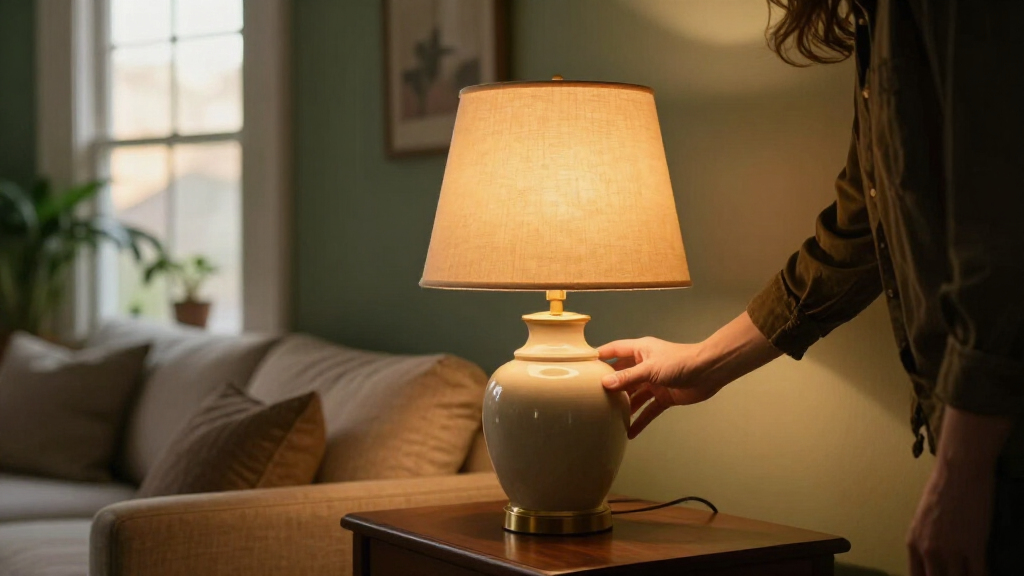
Fatih Arslan published a tour of the designer lamps in his home, describing their history, features and how he uses them. He says the lamps are costly, but values them as collectibles, while noting that similar-looking, lower-cost options and secondhand finds are available.
Designer and writer Fatih Arslan published a tour of the lamps in his home on October 5, describing the objects’ design histories and the reasons he collects them. The selection includes works by Artemide, Louis Poulsen and Isamu Noguchi, and offers readers a personal account of how iconic lighting designs function in a lived-in home.
Arslan says he often shares lamp photos on social media and is regularly asked about their brands and models. He writes that he has a particular interest in designer lamps from the past and has designed a lamp himself. The post presents the collection without ranking the pieces and says the photographs were taken in his house.
The lamps include an Artemide Tolomeo Mini, designed by Michele De Lucchi and Giancarlo Fassina in 1987, and a Tizio Micro, designed by Richard Sapper. Arslan describes the Tolomeo as a practical desk lamp and says he made an adaptor to attach his to a USM Haller desk. The Tizio uses its arms to carry electricity and counterweights to keep it balanced, according to the post.
Several lamps are from Noguchi’s Akari series, including the 1A, 3A, 16A and 75A. Arslan says he acquired the 1A secondhand in Germany and values the series’ washi paper construction and gentle light. The collection also includes Louis Poulsen’s PH 5 and PH 3/2, both associated with Poul Henningsen’s multi-shade approach to diffusing light, and an Arne Jacobsen AJ wall lamp.
How Collecting Shapes the Choices
Arslan’s account illustrates a distinction between buying a lamp primarily for illumination and collecting one for its design, history or place in a home. He acknowledges that the lamps are expensive and says they may not justify their prices on practical grounds, while describing them as worthwhile to him personally. That distinction helps explain why design objects can carry value beyond function for their owners.
The post also points readers toward alternatives to buying new at full price. Arslan says vintage shops and fairs can offer the lamps at better prices, and that contemporary retailers such as IKEA sell well-designed lamps for a fraction of the cost. His remarks are personal rather than a price survey, but they underscore the range of ways people can approach lighting: as a functional purchase, a collectible, or both.
For readers interested in design, the article connects familiar household objects to the people and ideas behind them. It describes, for example, how the Tizio’s red details relate to Sapper’s other work and how Noguchi’s Akari designs use traditional paper to shape light. The lamps’ histories provide context for why some models remain recognizable across generations.
Products Worth Considering

Bose TV Speaker Compact Soundbar with Bluetooth and HDMI-ARC, Black

Ring Outdoor Cam 4K Plus Battery Security Camera, 3-Pack, White

Dyson Ball Animal 3 Corded Upright Vacuum
As an affiliate, we earn on qualifying purchases.
Design Histories Behind the Lamps
The lamps in Arslan’s tour span several decades and design traditions. The Artemide Tolomeo dates to 1987 and, according to Arslan, won the Compasso d’Oro in 1989. He notes that many manufacturers have made desk lamps with a similar appearance. The Tizio, by contrast, was designed in 1972 after Sapper sought a better lamp for his own desk, as the post recounts.
Noguchi began the Akari series in 1951 after visiting Gifu, Japan, a city known for paper lanterns. Arslan says the lamps are made by hand at Ozeki, a family-run workshop in Gifu, using traditional methods. He also notes that authentic Akari lamps carry a red sun-and-moon stamp. Noguchi designed more than 100 models in the series during his lifetime, according to the article.
The Danish designs in the collection reflect Henningsen’s work on indirect lighting. The PH 5, introduced in 1958, uses layered shades to soften light and conceal the bulb from direct view. Arslan traces the three-shade system used in the PH 3/2 to 1925. Jacobsen designed the AJ lamp for Copenhagen’s SAS Royal Hotel in 1957, the post says.
“Are they worth it? Probably not for their price, but for me they are worth every penny.”
— Fatih Arslan
Prices and Collection Details
The post does not give purchase prices, current market values or a full inventory of Arslan’s lamps. It also does not compare specific IKEA models with the designer pieces or provide a method for estimating the stated price difference. The article is a personal tour, not an independent evaluation of quality, authenticity or value.
Arslan says some lamps can be found at vintage shops and fairs, but does not identify particular sellers, locations or prices. Availability and condition can differ, especially for secondhand pieces. The source text supplied for the AJ wall lamp ends while describing how Arslan uses its tilting feature, so the full account of that lamp is not available here.
Where Readers Can Follow Up
Arslan’s post is the reported development; it does not announce a product launch, sale or exhibition. Readers can consult the original article for its photographs and fuller descriptions, and can check retailers or secondhand dealers for current availability if they are interested in a particular model.
Anyone comparing lamps should verify the maker, model, condition and price rather than assume that a visually similar design is the same product. The source does not provide a subsequent event or publication date, so no further update is specified.
Key Questions
What is the news about the lamps in Arslan’s house?
Fatih Arslan published a personal tour of the designer lamps he owns, outlining their design histories and how he uses some of them at home.
Which lamp designs does the article feature?
The collection described includes an Artemide Tolomeo Mini, a Tizio Micro, four Akari models, two Louis Poulsen PH lamps and an Arne Jacobsen AJ wall lamp.
Does Arslan say the lamps are worth their prices?
He says they are probably not worth their prices on a purely practical basis, but says they are worth it to him as a collector. That is his personal assessment, not an independent valuation.
Are lower-cost alternatives mentioned?
Yes. Arslan says IKEA sells well-designed lamps at a much lower price and that some designer lamps can be found at vintage shops or fairs. The post does not provide specific model comparisons or current prices.
Source: hn