
To protect drywall in a working garage, focus on using impact-resistant materials like durable panels, rubber bumpers, or metal guards in high-traffic areas. Install protective coverings around tools, storage, and corners, and secure bumpers near lighting and ventilation to prevent dents. Regularly maintain and clean your walls, and consider professional repairs if needed. Want to discover simple tips to keep your garage walls looking their best? Keep exploring for more helpful ideas.
Play games included with Prime
Start a Prime free trial and play with Amazon Luna on your devices.
As an affiliate, we earn on qualifying purchases.
Key Takeaways
- Install impact-resistant wall coverings like plywood, PVC panels, or metal sheets in high-traffic areas.
- Use wall guards and bumpers near garage doors, workbenches, and lighting fixtures to absorb impacts.
- Improve ventilation and lighting to reduce moisture buildup and prevent drywall warping or mold growth.
- Seal and reinforce drywall edges and corners with caulk or sealant to prevent damage from impacts and moisture.
- Regularly inspect and maintain protective coverings and repair any damage promptly to ensure continuous drywall protection.
impact-resistant garage wall panels
As an affiliate, we earn on qualifying purchases.
As an affiliate, we earn on qualifying purchases.
What Causes Garage Drywall to Get Damaged Over Time?

Garage drywall can sustain damage over time due to a variety of practical factors. Poor garage insulation allows temperature fluctuations, which can cause drywall to expand and contract, leading to cracks. Moisture control is essential—excess humidity from leaks or condensation can lead to mold growth and warping. If moisture seeps into the drywall, it weakens the material, making it more vulnerable to damage from impact or vibration. Additionally, improper ventilation can trap moisture, accelerating deterioration. Regular exposure to oil, grease, or chemicals from your garage activities can stain or degrade drywall surfaces. To prevent these issues, you should focus on good moisture control practices and guarantee your garage insulation is adequate, creating a stable environment that preserves your drywall’s integrity over time. Monitoring indoor air quality can also help identify potential moisture problems early on, as maintaining proper ventilation helps prevent excess humidity buildup. Implementing moisture barriers can further protect your drywall from seepage and damage. Using proper insulation techniques can also help mitigate temperature-related stress on your drywall, extending its lifespan.
As an affiliate, we earn on qualifying purchases.
How to Choose Impact-Resistant Materials for Your Garage Walls
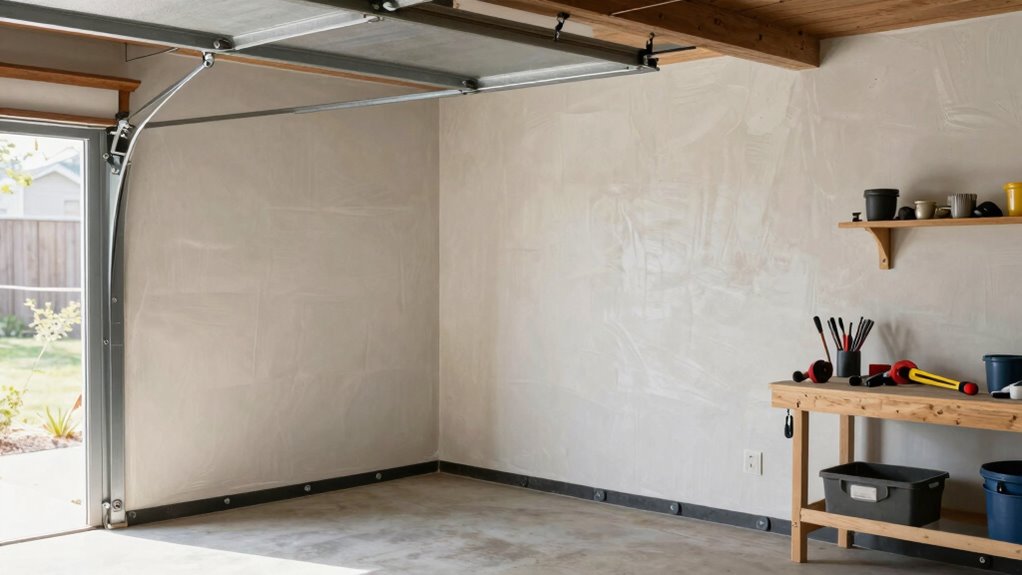
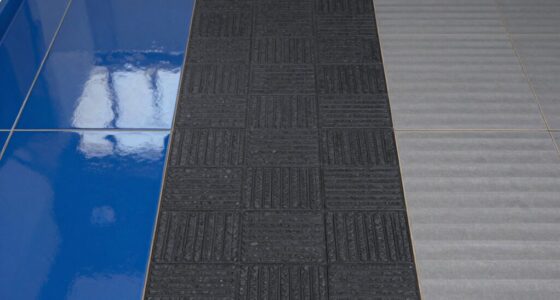
When selecting materials for your garage walls, prioritizing impact resistance can substantially reduce damage from daily activities, moving vehicles, or accidental bumps. Durable options like steel panels, fiber-reinforced plastic, or impact-resistant drywall can withstand knocks better than standard drywall. Consider combining impact-resistant materials with good garage insulation to improve energy efficiency and comfort. Additionally, choosing materials that support ventilation improvements helps prevent moisture buildup, which can weaken wall surfaces over time. Proper ventilation also reduces the risk of mold and corrosion, extending the lifespan of your impact-resistant walls. Incorporating impact-resistant drywall into your garage design can provide an extra layer of protection against accidental damage. Proper ventilation not only helps maintain the integrity of impact-resistant materials but also promotes a healthier environment inside your garage. Properly installed and maintained impact-resistant walls can significantly extend the longevity of your garage structure, especially in environments prone to moisture or physical stress. Paying attention to material durability ensures that your garage walls can better withstand the stresses of a busy workspace.
As an affiliate, we earn on qualifying purchases.
Installing Protective Wall Coverings to Prevent Dents
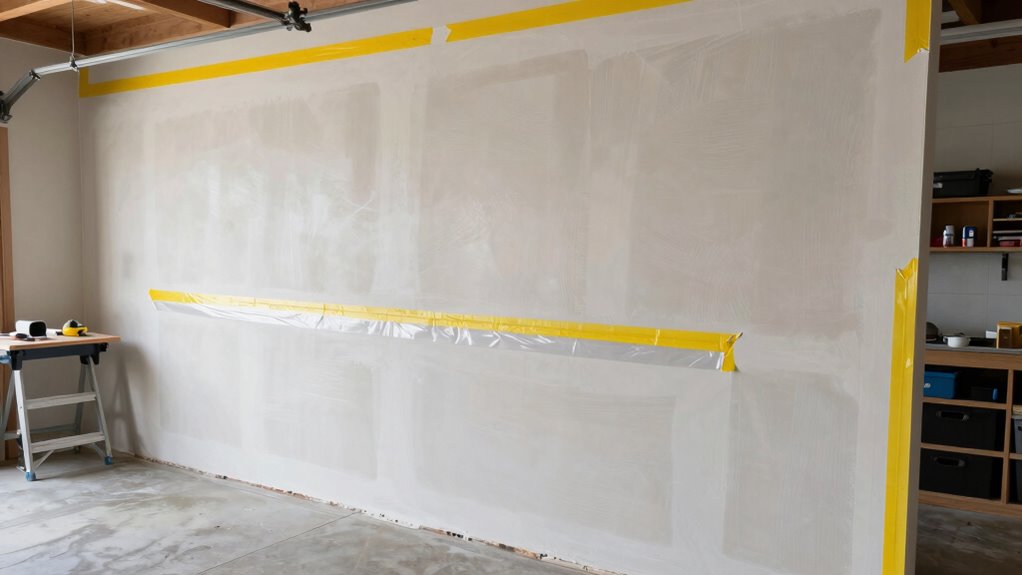
To prevent dents, start by selecting durable wall coverings that can withstand impacts. Then, guarantee you install them properly using the right techniques for a secure fit. Incorporating protective accessories like padding or bumper strips can further enhance wall durability. Additionally, choosing environmentally friendly disposal methods for damaged or worn coverings ensures sustainable practices. Incorporating landscaping elements around the garage can also help absorb impacts and protect the walls further. Considering the types of butter used in various cuisines can inspire creative ways to reinforce or decorate walls, such as using butter-themed murals or artwork that can be easily cleaned or replaced. Understanding AI and society can also help inform smarter planning for garage safety and maintenance strategies.
Choosing Durable Wall Materials
Choosing the right wall materials is essential to prevent dents and damage in a busy garage. Durable materials can withstand impacts from tools, equipment, and vehicles. When selecting wall coverings, consider options like rubber mats, PVC panels, or metal sheets, which absorb shocks better than drywall alone. These materials also help maintain good garage lighting and ventilation systems by reducing dust buildup and allowing for easier cleaning. Additionally, they’re resistant to moisture and rust, extending your garage’s lifespan. Think about installing protective bumpers or corner guards for high-traffic areas. Keep your workspace safe and functional by choosing materials that balance strength, ease of maintenance, and compatibility with your garage’s lighting and ventilation needs. Implementing enterprise USB backups can also help you securely store important maintenance plans and safety guidelines for quick access.
Proper Installation Techniques
Proper installation is essential to guarantee your protective wall coverings effectively prevent dents and damage in your garage. Start by verifying drywall finishing is smooth and even, which helps the coverings adhere properly. Use soundproofing techniques like insulation panels behind coverings to absorb impact and reduce noise. When installing, secure materials tightly with appropriate fasteners, avoiding gaps that could weaken protection. Consider sealing edges with caulk or sealant for a seamless finish. Properly aligned coverings prevent shifting and damage over time. Additionally, ensuring your drywall surface has been properly finished enhances overall durability and adhesion. A well-prepared surface not only improves adhesion but also ensures the longevity of the protective layers. Here’s a quick guide:
| Step | Action | Tip |
|---|---|---|
| 1 | Prepare drywall | Verify surface is smooth and dry |
| 2 | Install soundproofing | Use insulation behind coverings |
| 3 | Attach coverings | Secure tightly with fasteners |
| 4 | Finish edges | Seal gaps for added protection |
This approach maximizes durability and impact resistance. Ensuring proper drywall finishing is crucial for optimal adhesion and protection.
Strategic Placement of Coverings
Strategic placement of wall coverings is essential for effectively preventing dents and damage in your garage. By thoughtfully positioning protective panels, you create a buffer against impacts from tools, equipment, or vehicle movement. Consider covering areas prone to contact, especially near garage ventilation points and lighting fixtures, to avoid obstruction and guarantee safety. Proper placement also enhances lighting optimization, reducing shadows and improving visibility. Additionally, ensuring coverings are properly secured helps maintain their effectiveness over time and prevents accidental dislodgment. To maximize protection, focus on:
- Covering high-traffic zones near garage doors
- Surrounding workbenches and storage areas
- Protecting corners and edges vulnerable to dents
- Placing coverings around garage ventilation vents
- Guaranteeing coverings do not block lighting fixtures or airflow
Implementing impact-resistant materials can further strengthen your drywall’s defenses in busy garage environments. Incorporating protective wall coverings adds an extra layer of defense, ensuring your drywall remains intact despite frequent impacts. Using impact-absorbing materials can help dissipate the force of impacts, reducing the risk of damage. Additionally, selecting durable and resilient materials can prolong the lifespan of your protective coverings, especially in a high-traffic garage setting. This strategic approach keeps drywall safe while maintaining a well-lit, ventilated workspace.
garage impact guards and corner bumpers
As an affiliate, we earn on qualifying purchases.
As an affiliate, we earn on qualifying purchases.
Using Wall Guards and Bumpers to Protect Against Collisions
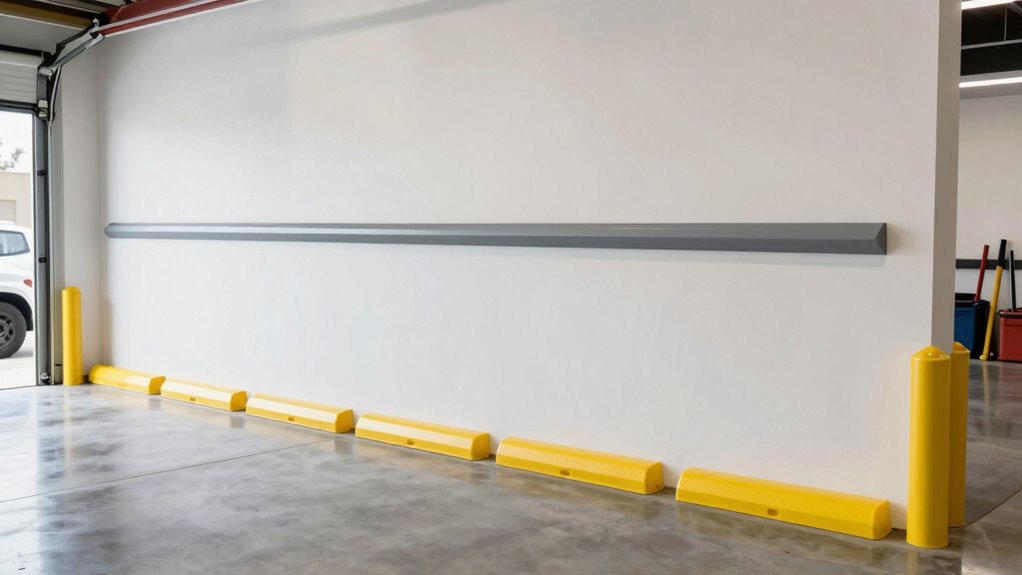
Choosing the right material for wall guards and bumpers is essential to guarantee durability and protection. Proper placement along high-traffic areas or corners helps prevent damage from collisions. By carefully selecting materials and positioning them correctly, you can keep your garage drywall safe and intact. Incorporating cybersecurity tactics such as monitoring for potential vulnerabilities can also be a useful analogy for understanding the importance of strategic planning in physical protection.
Material Options for Wall Guards
When selecting wall guards and bumpers for your garage, the material you choose plays a crucial role in protecting your drywall from collisions. You want options that balance material durability with aesthetic options to match your space. Durable materials like rubber and high-impact plastics can withstand repeated bumps, offering long-lasting protection. Foam bumpers provide soft cushioning, ideal for light contact. Vinyl is versatile, easy to clean, and available in various colors. Stainless steel or aluminum bumpers are sturdy but may be more visible. For a sleek look, consider options with paintable or textured surfaces. Your choice depends on how much protection you need and the style you prefer, ensuring your garage remains functional and visually appealing.
Proper Placement Techniques
To effectively protect your drywall, it’s essential to install wall guards and bumpers at appropriate heights and locations. Position bumpers along areas prone to vehicle or tool impact, especially near garage lighting fixtures that can be accidentally knocked over. Install wall guards at a height that covers common collision zones, making sure they don’t interfere with ventilation systems or lighting. Keep in mind that proper placement minimizes damage from daily activities, like moving equipment or parking vehicles. Use a level or measuring tape to ensure consistent positioning. Regularly check that guards stay secure and adjust if needed. Thoughtful placement not only preserves your drywall but also maintains clear access to garage lighting and ventilation, creating a safer, more functional workspace.
How to Apply Paint and Sealant to Resist Stains and Scratches
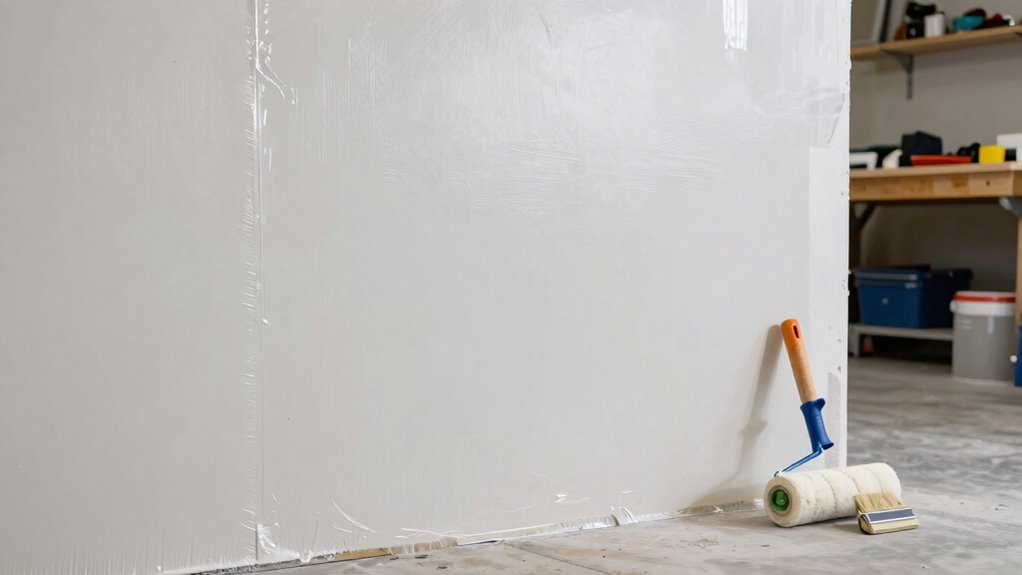
Applying paint and sealant correctly is essential for creating a durable, stain-resistant surface in your garage. Start with proper paint preparation by cleaning and sanding the drywall to ensure smoothness and adhesion. Use sealing techniques like applying a high-quality primer to prevent stains from seeping through. When sealing, focus on areas prone to moisture or impact to reinforce the drywall. Remember, the key is thorough coverage and multiple coats if needed.
- Clean and sand drywall before painting
- Use a stain-blocking primer for better protection
- Apply sealant evenly with a brush or roller
- Allow sufficient drying time between coats
- Maintain consistent sealing techniques for uniform protection
Setting Up Work Zones to Keep Your Garage Drywall Safe
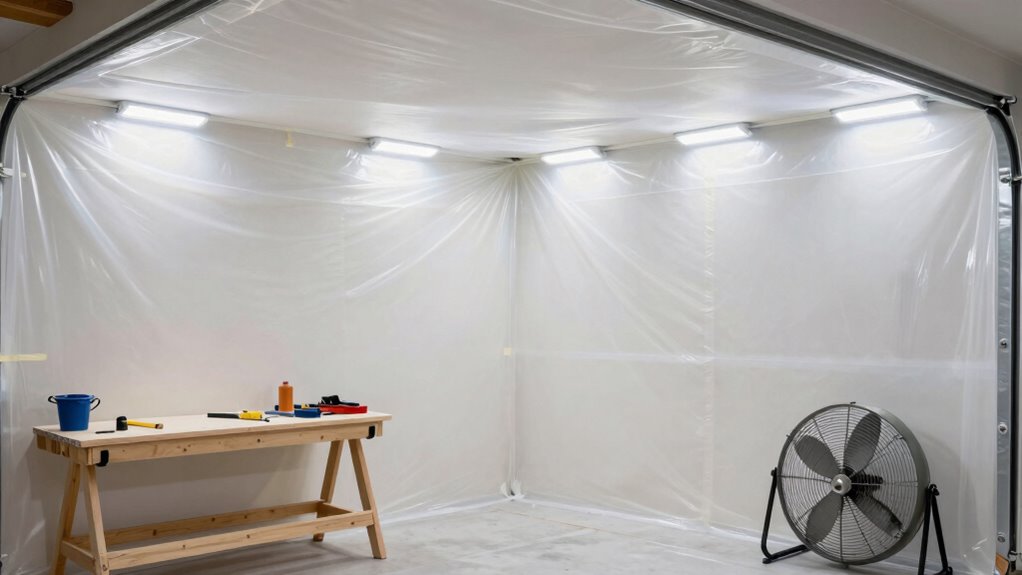
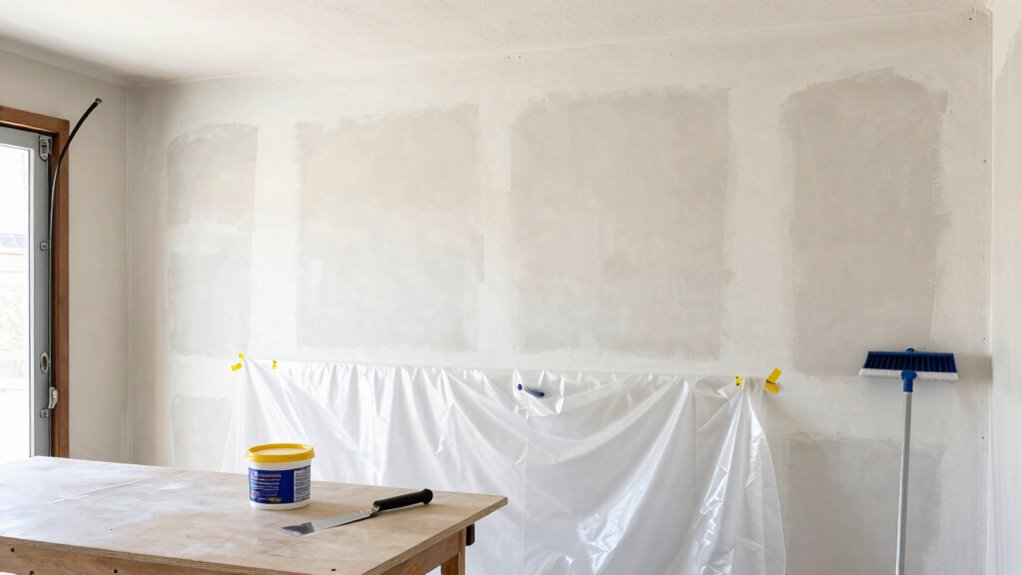
To protect your drywall, start by clearly designating specific work areas in your garage. Use protective barriers like plastic sheeting or temporary walls to keep dust, debris, and spills contained. This setup helps prevent damage and keeps your drywall safe while you work.
Designate Clear Work Areas
Have you ever considered how easily drywall can be damaged during a busy workday in your garage? To protect it, you need clearly designated work areas. These zones prevent accidental impacts and keep clutter away from drywall surfaces. Use bright garage lighting to illuminate your work zones, reducing mistakes. Make sure proper ventilation systems are in place to avoid dust buildup that can weaken drywall. Keep tools and materials confined to specific areas, and mark boundaries with tape or signs. This arrangement minimizes risks and maintains an organized space. By setting up distinct zones, you create a safe environment that preserves your drywall’s integrity and makes your garage more functional. Clear work areas are essential for efficient, damage-free projects.
Use Protective Barriers
Protective barriers are essential for safeguarding your drywall when working in a busy garage. They create clear boundaries, preventing damage from tools, debris, or accidental bumps. You can set up barriers using plastic sheeting, curtains, or temporary walls around work zones. This keeps clutter, garage shelving, and vehicle parking areas separate from renovation spaces. Consider marking zones clearly to avoid confusion. For example:
| Zone Type | Barrier Method | Purpose |
|---|---|---|
| Work Area | Plastic sheeting | Protect drywall from dust/spills |
| Vehicle Parking | Temporary barriers | Keep vehicles safe from damage |
| Storage & Shelving | Curtains or partitions | Prevent clutter from spreading |
Using barriers helps you focus on your work while protecting your drywall from unintended harm.
Organizing Tools and Storage to Minimize Wall Damage
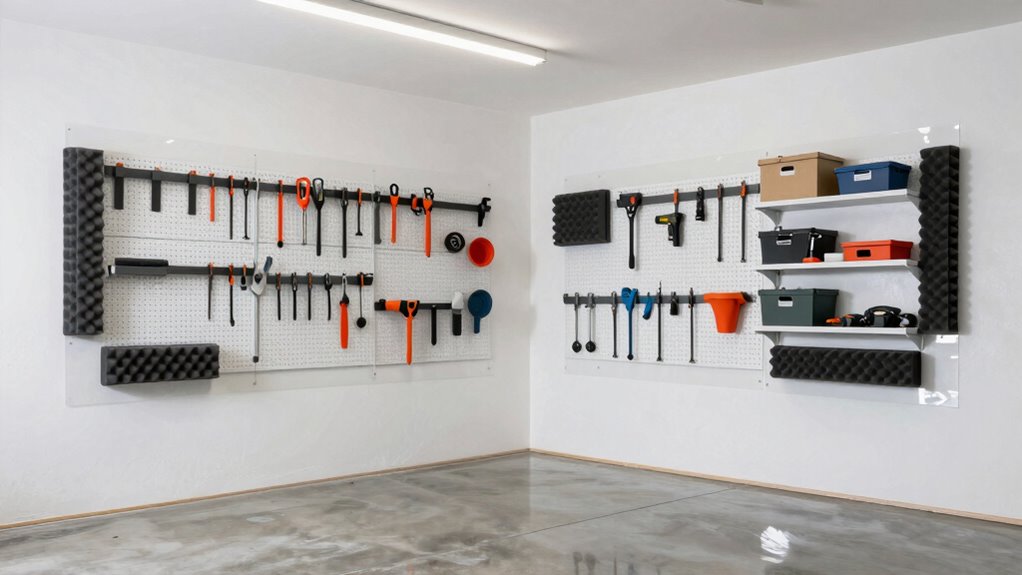
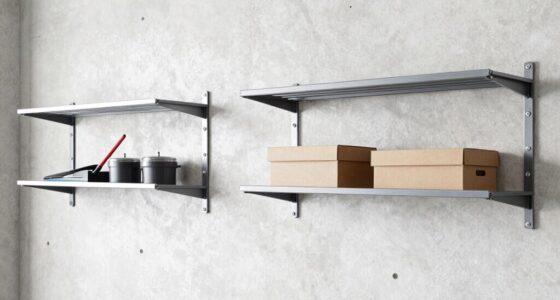
Organizing your tools and storage solutions effectively can considerably reduce wall damage in your garage. Properly stored tools prevent accidental impacts on drywall and protect wall insulation from unnecessary wear. Use wall-mounted racks or pegboards to keep items off the ground and away from walls, reducing the risk of dents. Label storage bins to quickly find tools, avoiding unnecessary wall contact. Install hooks for hanging larger equipment, and keep lighting fixtures clear of clutter to prevent accidental knocks. Consider using protective panels or bumpers around areas prone to impacts. Here are some key tips:
Organize tools with wall-mounted racks and labels to prevent wall damage and improve garage safety.
- Use wall-mounted tool organizers
- Install hooks for large tools
- Keep lighting fixtures unobstructed
- Add bumper strips near high-traffic areas
- Store heavy items on sturdy shelves away from drywall
Regular Maintenance Tips to Keep Your Garage Walls Looking New
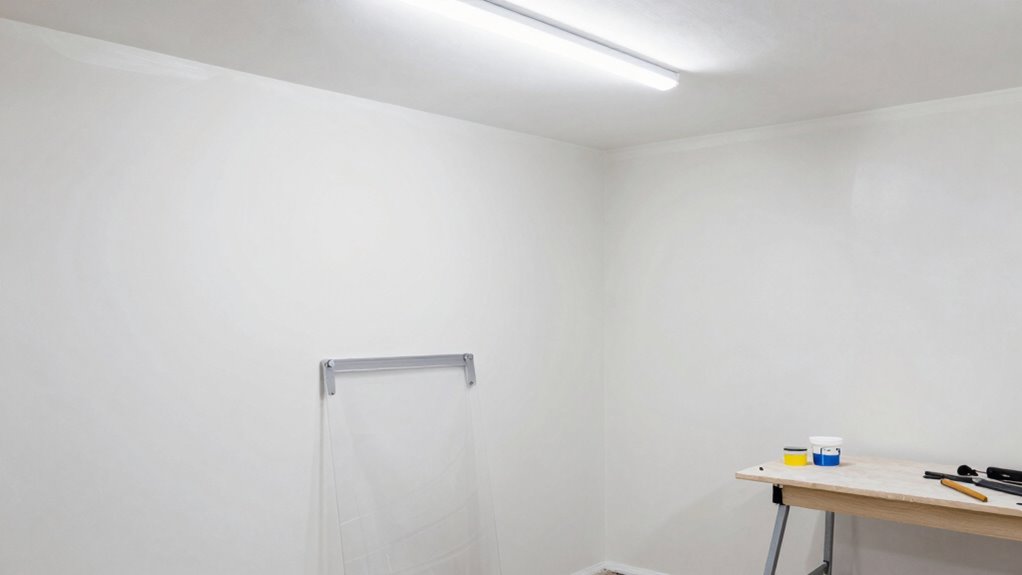
Maintaining your garage walls in top condition requires regular attention beyond just organizing tools. Keep drywall looking fresh by inspecting for cracks or stains and cleaning surfaces with a damp cloth. Improving garage lighting enhances visibility, making it easier to spot issues early. Ventilation improvements prevent moisture buildup, reducing mold and warping risks. Use this table to guide your maintenance routine:
| Task | Frequency | Tips |
|---|---|---|
| Clean walls | Monthly | Use mild detergent and soft cloth |
| Check for damage | Quarterly | Repair small cracks promptly |
| Improve lighting | Annually | Replace bulbs with brighter, energy-efficient options |
| Ventilation review | Biannually | Ensure vents are unobstructed |
Consistent upkeep helps preserve drywall integrity and keeps your garage looking new.
When to Consider Professional Repairs for Damaged Drywall
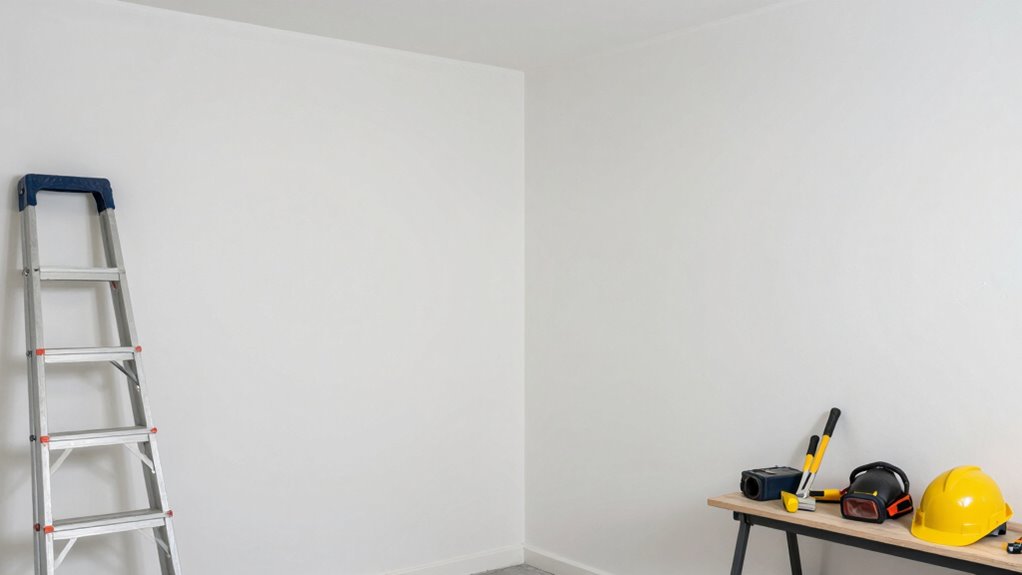
While small cracks and minor dents in your drywall may seem manageable, there comes a point when calling in a professional is the best move. Significant damage can compromise your garage’s safety and insulation, especially around garage lighting and ventilation systems. You should consider professional repairs if:
- Damage exceeds a few inches or covers large areas
- The drywall is sagging or bowing
- Mold or water damage is evident
- Cracks are growing or spreading
- Repairs interfere with lighting or ventilation installations
Professional drywall repair guarantees proper sealing and finishing, preventing further issues. If your garage’s lighting fixtures or ventilation systems are affected or compromised, it’s time to seek expert help. Proper repairs protect your space’s durability and safety.
Budget-Friendly Ways to Protect Your Garage Drywall on a Tight Budget
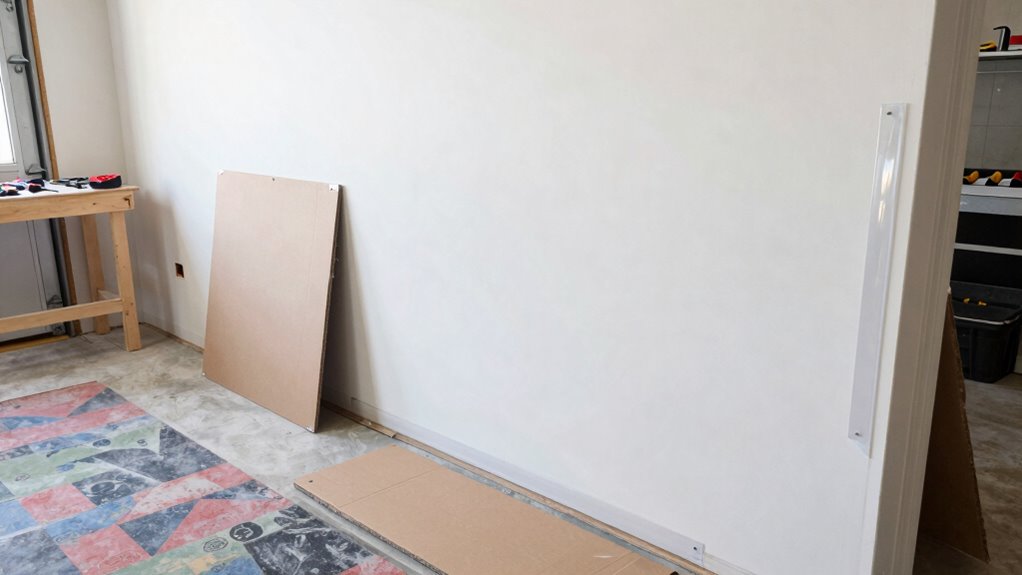
Protecting your garage drywall doesn’t have to cost a fortune; with some simple, budget-friendly strategies, you can keep it in good shape without breaking the bank. Start by improving garage lighting—bright, well-placed lights help you avoid accidental bumps and scratches. Additionally, guarantee proper ventilation systems are in place; good airflow reduces humidity and prevents mold or warping. You can also use affordable wall coverings like plywood or plastic panels to shield the drywall from impacts and stains. Regularly clean your garage to prevent dust buildup, which can damage drywall over time. These low-cost fixes are effective and easy to implement, helping you maintain your garage drywall’s integrity while sticking to a tight budget.
Frequently Asked Questions
Can I Install Drywall Protection Myself or Should I Hire a Professional?
You can definitely handle drywall installation yourself if you have some DIY skills and the right tools. However, for the best results and to avoid mistakes, you might want professional assistance. Professionals guarantee proper drywall protection, precise installation, and a durable finish, especially in a busy garage. Weigh your experience against the complexity of the project, and consider hiring a professional if you’re unsure—you’ll save time and get a cleaner, longer-lasting result.
What Are the Best Cleaning Products to Avoid Damaging Garage Drywall?
For garage cleaning and drywall maintenance, stick to gentle cleaning products like mild soap diluted in water or a mixture of vinegar and water. Avoid harsh chemicals, bleach, or abrasive scrubbers that can damage your drywall. Use a soft sponge or cloth to clean surfaces carefully. Regularly dust and spot-clean to prevent buildup, and always test cleaning solutions in a small area first to verify they won’t harm your drywall.
How Often Should I Inspect Garage Drywall for Signs of Damage?
You should inspect your garage drywall at least every three to six months, especially if you notice garage clutter or changes in moisture control. Regular checks help catch issues like cracks, water stains, or mold early. Keep an eye out for signs of damage caused by humidity or stored items pressing against walls. Staying vigilant guarantees you maintain drywall integrity and prevent costly repairs down the line.
Are There Specific Paint Finishes That Help Protect Drywall From Stains?
Yes, choosing a paint with high durability and stain resistance helps safeguard drywall in your garage. Look for finishes like semi-gloss or satin, which are more resistant to stains and easier to clean. These finishes provide a protective barrier that resists dirt, grease, and spills, making your garage drywall easier to maintain. Applying a high-quality, stain-resistant paint ensures long-lasting protection and keeps your garage looking fresh.
What Additional Safety Measures Can Prevent Accidental Drywall Damage?
You can prevent accidental drywall damage by installing protective barriers like plywood or plastic sheets in high-traffic areas. Additionally, set up safety signage to alert everyone of potential hazards, reducing careless movements near walls. Keep tools and equipment organized to avoid bumps or scrapes. Regularly remind everyone to be cautious and respectful of the space. These measures help maintain your drywall’s integrity and create a safer garage environment overall.
Conclusion
Protecting your garage drywall is like shielding a delicate canvas from daily wear and tear. By choosing impact-resistant materials, installing protective coverings, and organizing your tools wisely, you create a fortress that keeps damage at bay. Regular upkeep and timely repairs guarantee your walls stay pristine, turning your garage into a resilient space. Think of it as giving your walls a suit of armor—ready to withstand life’s bumps and bruises with confidence.
Flea & tick season Picks
flea and tick prevention
As an affiliate, we earn on qualifying purchases.