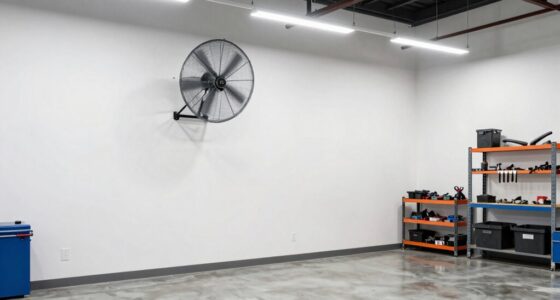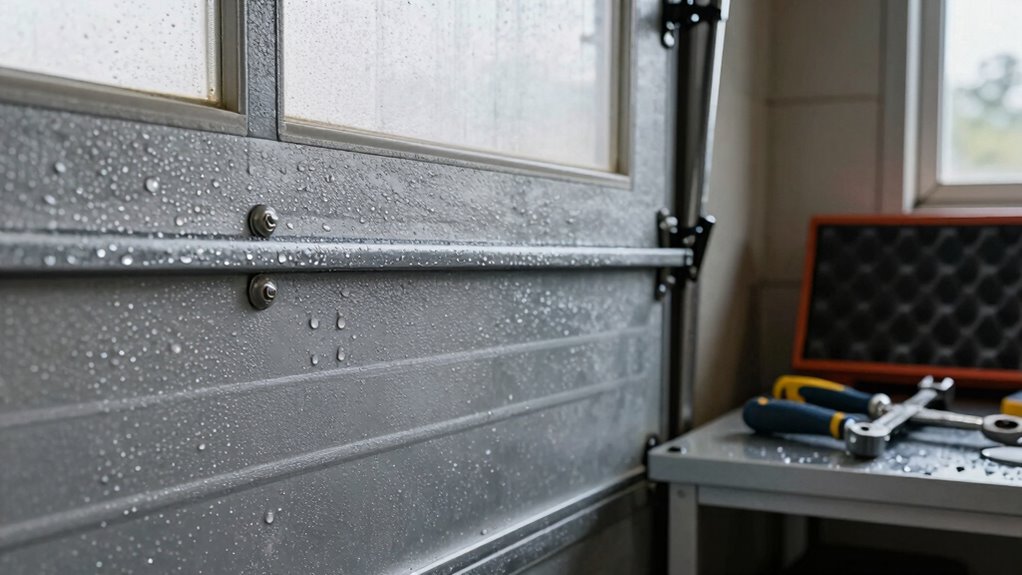

To stop condensation on your garage doors and tools, improve ventilation by installing vents or exhaust fans and keep windows open on dry days. Seal gaps and add moisture barriers like plastic sheeting or specialized paint to block humidity. Use dehumidifiers or silica gel packs to actively remove moisture, and store tools in sealed containers. Regular maintenance and seasonal adjustments help keep your garage dry. Continue exploring for more tips to protect your space effectively.

Get home appliances delivered free with Prime
- Fast, free delivery on millions of items
- Prime Video, Amazon Music and more included
- Member-only deals all year
Key Takeaways
- Improve garage ventilation with exhaust fans, vents, and open windows to reduce humidity levels.
- Seal garage doors and walls with proper weatherstripping and moisture barriers to prevent humid air entry.
- Use dehumidifiers and silica gel packs to actively remove moisture from the air and storage areas.
- Elevate tools on shelves or hooks and store in sealed containers to prevent rust and moisture contact.
- Conduct regular maintenance, including sealing gaps and inspecting insulation, to minimize sources of interior moisture.
Products Worth Considering

Ring Alarm 14-Piece Wireless Security System Kit

Google Nest Cam Indoor Security Camera, 3-Pack

LEVOIT Vital 200S-P Smart Air Purifier for Large Rooms
As an affiliate, we earn on qualifying purchases.
What Causes Garage Door and Tool Condensation?
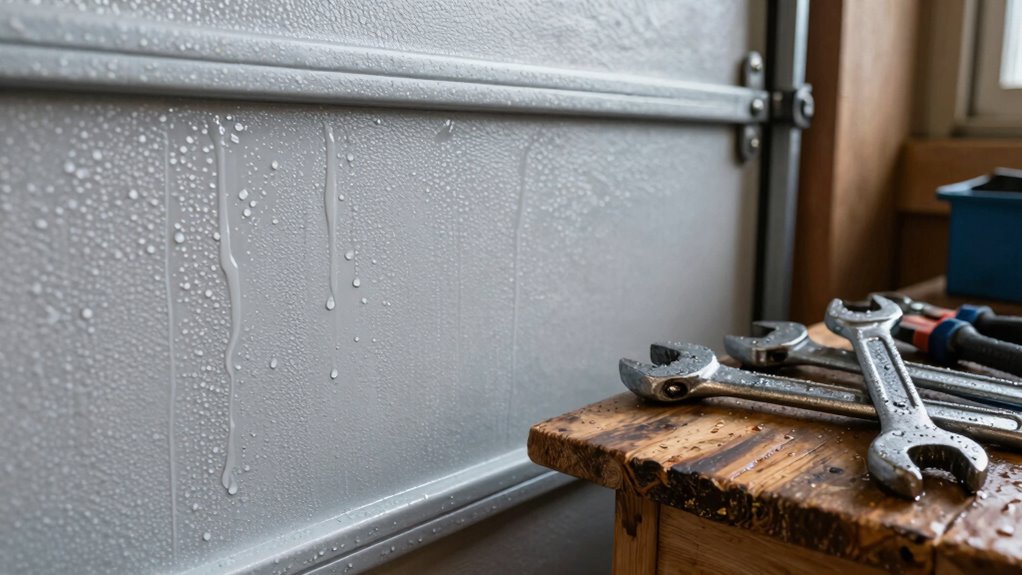
Condensation on garage doors and tools occurs when warm, moist air comes into contact with cooler surfaces, causing water vapor to turn into liquid. If your garage isn’t properly sealed, moisture-laden air can seep inside, increasing condensation risks. Garage door seals play a crucial role here; worn or damaged seals allow humid air to enter and cool surfaces, fostering condensation. Additionally, your tool storage methods matter—storing tools in open or poorly ventilated areas exposes them to fluctuating humidity levels, which encourages moisture buildup. To reduce this, consider using airtight containers or cabinets with good ventilation. Understanding how moisture interacts with garage surfaces helps you identify the causes of condensation, so you can take targeted steps to keep your tools and garage doors dry and protected. Proper garage insulation can also help stabilize interior temperatures and reduce condensation formation. Regularly checking and maintaining your seal integrity ensures that humid air doesn’t infiltrate and contribute to moisture issues. Implementing ventilation practices can further help control humidity levels and prevent condensation from forming on surfaces. Additionally, installing dehumidifiers can significantly decrease moisture levels inside your garage, further preventing condensation. Improving air circulation within the space is another effective way to reduce humidity and keep surfaces dry.
How to Prevent Moisture Buildup in Your Garage
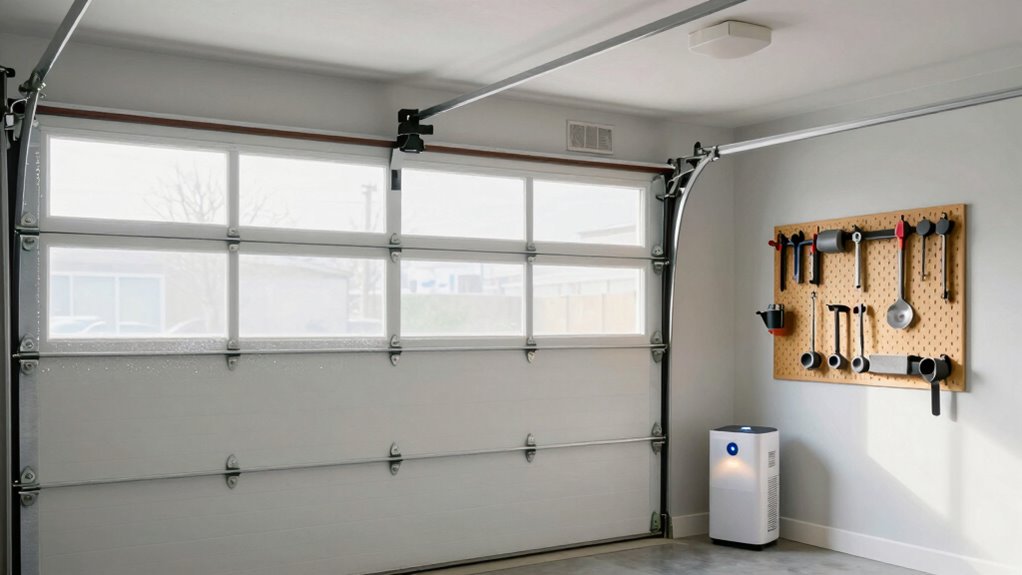
To prevent moisture buildup, you should focus on improving ventilation in your garage to allow excess humidity to escape. Using moisture barriers on floors and walls can also help block dampness from seeping in. Installing a dehumidifier can further reduce indoor humidity levels, providing an extra layer of protection for your tools and doors from condensation. Ensuring proper home maintenance can help identify and address potential sources of excess moisture early on. Regularly inspecting for AI ethicist jobs and understanding their impact can also inform strategies to manage moisture-sensitive environments effectively, especially as technology advances. Additionally, understanding seasonal changes can help you prepare your garage for periods of higher humidity, preventing condensation issues before they arise. Being aware of the horsepower of electric dirt bikes can also give insight into how different electrical systems generate heat, which can influence moisture levels in enclosed spaces. These strategies work together to keep your garage dry and protect your tools and doors from condensation.
Improve Ventilation Strategies
Improving ventilation is one of the most effective ways to prevent moisture buildup in your garage. Enhancing natural airflow helps remove excess humidity, reducing condensation. Focus on strategic window placement to maximize airflow; positioning windows on opposite walls creates a cross-breeze that circulates air efficiently. Additionally, consider installing vents or exhaust fans to boost ventilation further. Proper airflow prevents moisture from settling on tools and surfaces. Here are some ideas to improve your garage’s ventilation:
- Install or upgrade windows for better cross-ventilation
- Use exhaust fans or vents near high-moisture areas
- Keep windows open during dry, windy days
- Arrange the garage to promote unobstructed airflow
These strategies help keep your garage dry and free of condensation.
Use Moisture Barriers
Moisture barriers are essential tools in preventing water vapor from seeping into your garage and settling on surfaces. Installing moisture barriers, like plastic sheeting or specialized paints, creates a protective layer that blocks moisture from penetrating walls and floors. This added layer enhances the overall effectiveness of your digital content exploration, providing a comprehensive approach to moisture control. Proper garage sealing with moisture barriers is especially important in areas prone to high humidity or temperature fluctuations. By creating a physical barrier, you limit the amount of moisture that can enter your space, making it easier to maintain a dry environment. Regularly inspecting and replacing these barriers guarantees they remain effective, helping you prevent condensation buildup and protect your garage from moisture-related damage. Additionally, understanding household products that aid in moisture control can further improve your efforts. Maintaining good ventilation practices further reduces humidity levels and enhances moisture management. Incorporating natural elements like native plants around your property can also help manage humidity levels and improve overall moisture control.
Effective Ventilation Tips to Reduce Garage Humidity
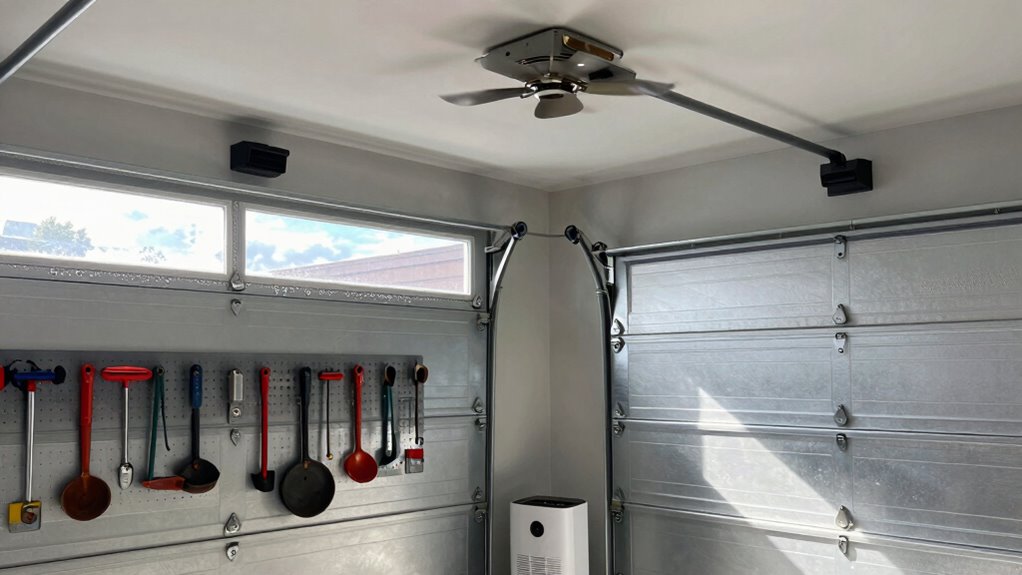
To reduce garage humidity, start by optimizing vent placement to guarantee proper airflow. Installing exhaust fans helps remove moist air quickly, while maintaining good insulation prevents temperature swings that cause condensation. Incorporating ventilation systems can further enhance air circulation and moisture control, keeping your garage dry and minimizes moisture buildup. Additionally, ensuring proper humidity levels with dehumidifiers can significantly improve overall climate control in the space. Using sound healing science principles, such as specific frequencies, can also be employed to promote a calming environment that discourages excessive moisture accumulation. Properly managing air exchange rates is essential to maintaining a balanced indoor climate and preventing condensation. Understanding and applying ventilation best practices can make a substantial difference in moisture management.
Optimize Vent Placement
Strategically placing vents is essential for promoting effective airflow and reducing humidity levels in your garage. Proper vent placement maximizes airflow enhancement and improves ventilation efficiency, preventing moisture buildup. Position vents near the ceiling to allow warm, humid air to escape naturally. Install intake vents lower on walls or near the floor to draw in fresh air, creating a steady airflow cycle. Guarantee vents are unobstructed by objects or insulation. Consider cross-ventilation by placing vents on opposite walls for ideal air exchange. Regularly inspect and clean vents to maintain airflow. These steps help control humidity, reduce condensation, and protect your tools and garage structure. Proper vent placement is a simple, effective way to keep your garage dry and well-ventilated. Incorporating U.S. tax planning strategies can also help you allocate resources for maintenance and improvements effectively. Proper ventilation techniques are also supported by effective ventilation practices, ensuring your garage stays dry and free of excess moisture. Additionally, understanding air quality benefits can guide you in choosing optimal vent locations to improve overall indoor air conditions. Recognizing ventilation efficiency as a key factor can further enhance your efforts in moisture control. Implementing these practices can also prevent the buildup of condensation, safeguarding your tools and structural components from damage.
Use Exhaust Fans
Exhaust fans are a highly effective tool for improving ventilation and reducing humidity in your garage. Installing an exhaust fan helps to circulate moist air outside, preventing condensation on garage doors and tools. Proper exhaust fan installation guarantees ideal airflow, which minimizes moisture buildup. Regular ventilation fan maintenance keeps it running efficiently and extends its lifespan. When choosing an exhaust fan, consider size and power to match your garage’s needs. Additionally, understanding how microplastics in dust can affect indoor air quality highlights the importance of proper ventilation to reduce airborne pollutants.
Maintain Proper Insulation
Proper insulation is essential for controlling moisture levels in your garage. It helps prevent thermal bridging, which can transfer cold temperatures and cause condensation. To maintain effective insulation, check for insulation gaps around doors, windows, and walls, sealing any leaks promptly. Insulation gaps allow warm, moist air to contact cold surfaces, increasing humidity and condensation risk. Ensuring continuous insulation reduces cold spots and minimizes thermal bridging, keeping your garage warmer and drier.
- Seal gaps around doors and windows
- Use foam or spray insulation for vulnerable areas
- Insulate wall and ceiling cavities thoroughly
- Install vapor barriers to block moisture transfer
Using Dehumidifiers and Moisture Absorbers to Keep Dry
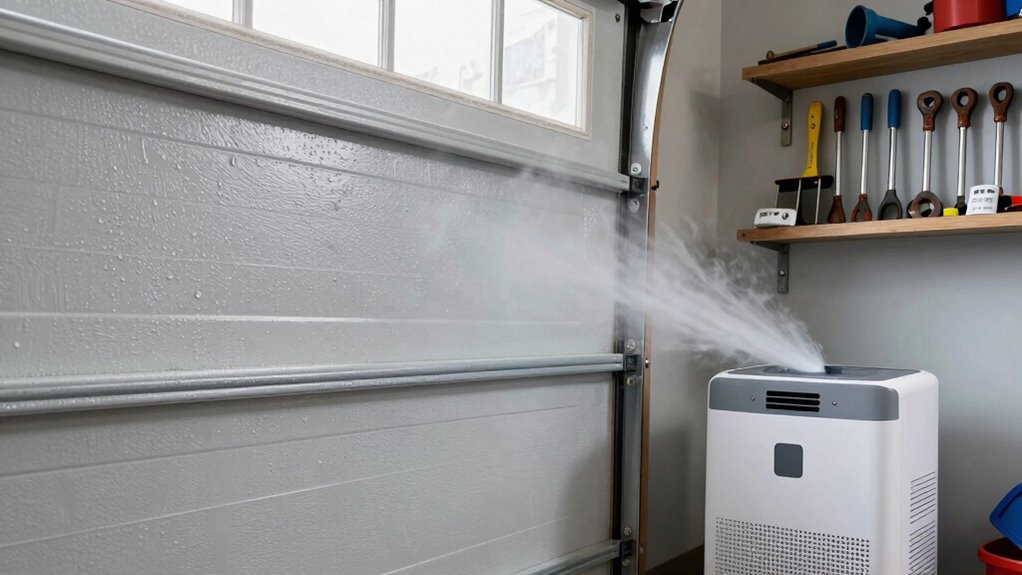
Using dehumidifiers and moisture absorbers is an effective way to keep your garage dry and prevent condensation from forming. Desiccant packs, like silica gel, absorb excess moisture, reducing humidity levels. These small packs can be placed in toolboxes, shelves, or corners to protect your belongings. Dehumidifiers actively remove moisture from the air, creating a dry environment that discourages condensation. Imagine your tools staying rust-free and your garage feeling comfortable year-round. Here’s a quick comparison:
| Method | Benefits |
|---|---|
| Desiccant packs (silica gel) | Compact, reusable, easy to place |
| Dehumidifiers | Large capacity, automated moisture control |
Keeping moisture at bay guarantees your garage remains a safe, dry space.
Protect Tools and Surfaces From Rust and Damage
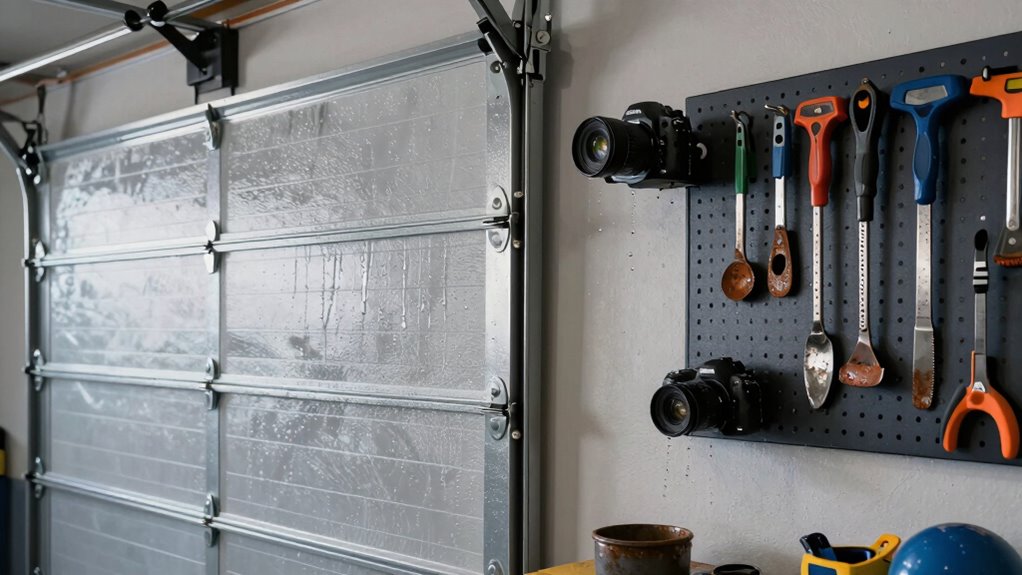
By maintaining a dry environment with dehumidifiers and moisture absorbers, you’re already taking important steps to prevent condensation. To further protect your tools and surfaces from rust and damage, focus on proper storage. Use quality garage door seals to block moisture entry and keep your garage dry. Invest in effective tool storage solutions, like sealed containers or tool cabinets, to prevent exposure to humidity. Regularly wipe down tools with a rust-inhibiting oil to add a protective layer. Elevate tools off the floor on shelves or hooks to avoid contact with damp surfaces. Additionally, consider applying rust-proof coatings to metal surfaces and ensuring proper ventilation to reduce moisture buildup. These measures help keep your tools functional and your surfaces intact.
Daily and Seasonal Habits to Maintain a Dry Garage
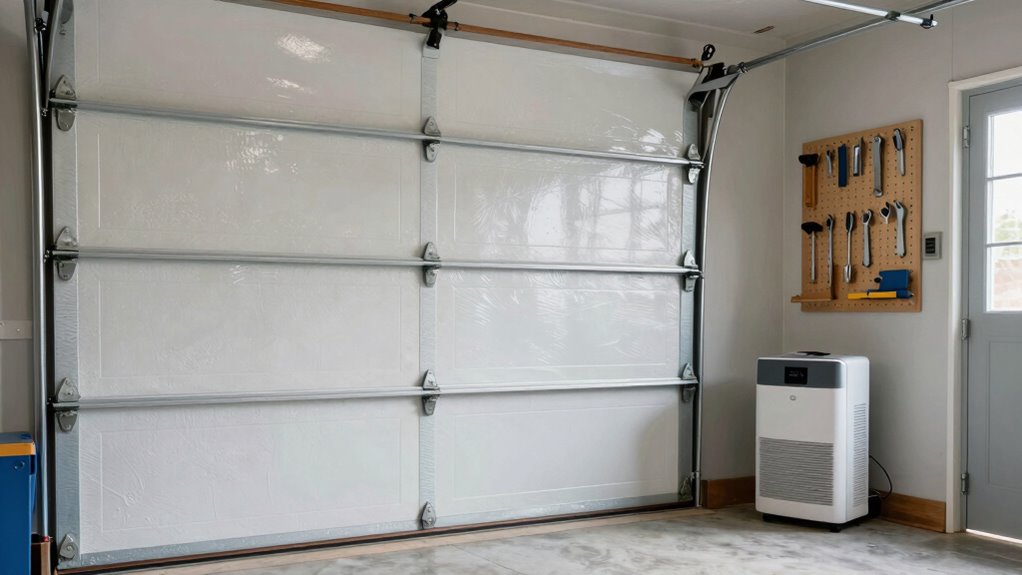
Maintaining a dry garage requires consistent daily and seasonal habits that prevent moisture buildup. Regularly check your garage door aesthetics, ensuring it’s sealed properly to keep humidity out. Keep tools organized to improve airflow and reduce damp spots. During seasonal changes, increase ventilation and consider using a dehumidifier. Also, clear clutter that traps moisture and inspect for leaks or condensation sources.
| Habit | Benefit |
|---|---|
| Seal garage door edges | Prevents moisture ingress |
| Organize tools properly | Reduces damp areas and promotes airflow |
| Use a dehumidifier | Maintains consistent dry conditions |
| Ventilate seasonally | Removes excess moisture from seasonal humidity shifts |
Frequently Asked Questions
Can Insulation Help Prevent Condensation on Garage Doors?
Yes, insulation can help prevent condensation on garage doors. Insulation benefits include maintaining consistent temperatures and reducing moisture buildup. Installing insulated garage doors or adding insulation panels creates a barrier that limits warm, moist air from contacting cold surfaces. Additionally, using moisture barriers alongside insulation helps block humidity from entering, further preventing condensation. This combined approach keeps your garage dry, protects tools, and minimizes the risk of mold or rust.
Are There Specific Types of Garage Doors More Prone to Condensation?
Imagine droplets forming on your garage door like tiny glass beads—some materials and designs are more prone to this. Aluminum garage doors, especially with thin or metallic finishes, tend to sweat more than insulated steel or wood options. Door design matters too; large, flat, uninsulated panels trap moisture, making condensation worse. If you want to keep your garage dry, choose garage materials and designs that resist temperature swings and moisture buildup.
How Often Should I Check for Condensation Buildup?
You should check for condensation buildup at least once a week, especially during humid months or if you notice temperature swings. Regular inspections help you spot moisture early. Use proper ventilation strategies, like exhaust fans or vents, to improve airflow and moisture control. Keep an eye on your garage doors and tools for any signs of condensation, and address issues quickly to prevent damage and maintain a dry, protected space.
Do Climate Changes Affect Garage Condensation Levels?
Certainly, climate changes can influence your garage’s humidity control and condensation levels. As temperatures fluctuate, especially during seasonal shifts, humidity tends to rise or fall, affecting moisture buildup. To counteract this, you should employ effective ventilation strategies, such as exhaust fans or dehumidifiers, ensuring consistent air circulation. By adapting these methods to seasonal conditions, you help maintain a balanced environment, reducing unwanted condensation and protecting your tools and garage doors.
Can Sealing Gaps Around Garage Doors Reduce Moisture Issues?
Yes, sealing gaps around your garage door can reduce moisture issues. When you seal gaps, you prevent humid air from entering and use vapor barriers to block moisture from seeping in. Improving air circulation inside your garage also helps disperse damp air, reducing condensation. Together, these steps keep your garage drier, protect your tools, and minimize condensation buildup on doors and surfaces.
Conclusion
By taking these simple steps, you can keep your garage dry and your tools rust-free, just like a well-oiled machine in a vintage workshop. Regularly ventilate, use dehumidifiers, and adopt good habits to prevent moisture from sneaking in. Think of your garage as your castle—protect it from the inside out. With consistent effort, you’ll turn your space into a fortress against condensation, ensuring your tools stay pristine and ready for action whenever you need them.