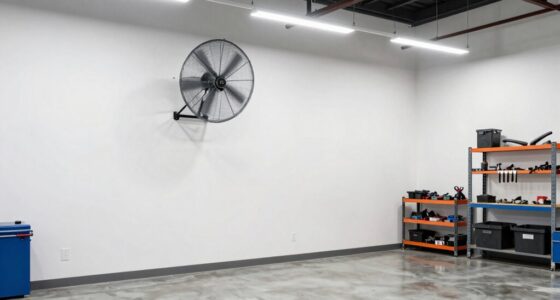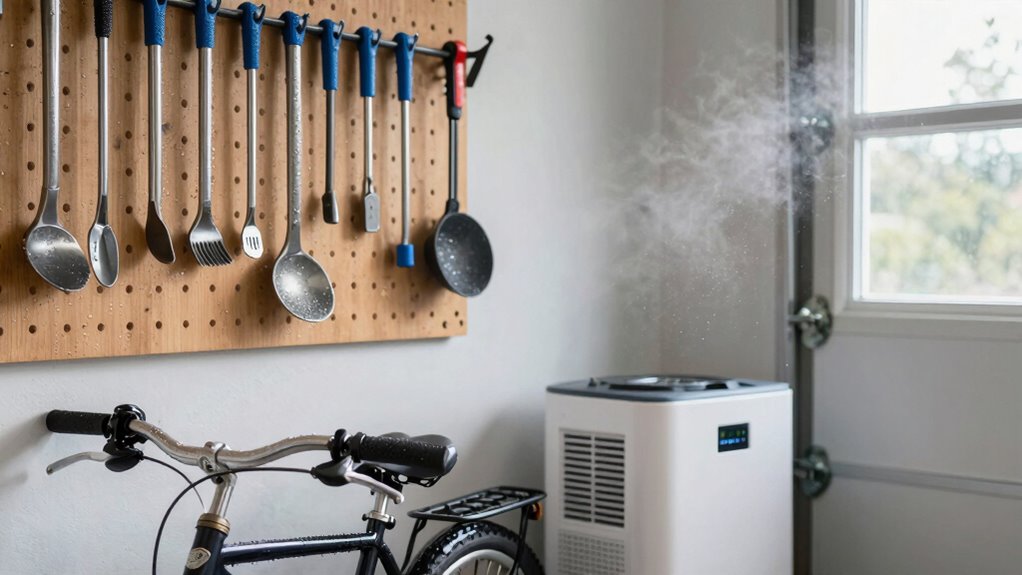

To prevent condensation on your garage tools and bikes, improve ventilation and add insulation to maintain consistent temperatures. Use dehumidifiers and desiccants to absorb excess moisture, and seal gaps around doors and windows to prevent humid air from entering. Store items off the ground and inside moisture-resistant containers. Regularly check for leaks or leaks and keep the space well-maintained. Keep these tips in mind, and you’ll find even more effective ways to protect your belongings.

Get home appliances delivered free with Prime
- Fast, free delivery on millions of items
- Prime Video, Amazon Music and more included
- Member-only deals all year
Key Takeaways
- Insulate walls, ceilings, and floors to maintain consistent temperatures and reduce surface condensation.
- Improve garage ventilation with vents or exhaust fans to circulate moist air and prevent buildup.
- Use dehumidifiers to actively remove excess moisture and keep humidity levels around 50%.
- Seal gaps around doors, windows, and entry points to prevent outside humid air from entering.
- Store tools and bikes in dry, well-ventilated areas with moisture barriers and desiccants for added protection.
Products Worth Considering

Sonos Era 100 Wireless Smart Speaker, Black

Blueair Blue Pure 211i Max Air Purifier

Levoit Vital 200S-P Smart Air Purifier for Large Rooms
As an affiliate, we earn on qualifying purchases.
How Does Garage Condensation Form and Why Is It a Problem?
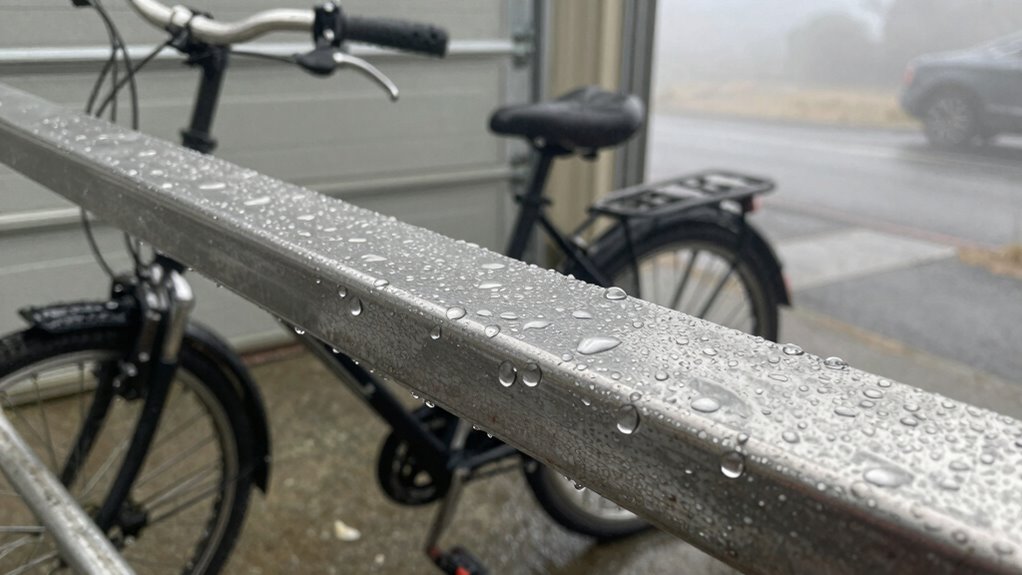
Ever wonder why condensation often appears on your garage tools and bikes? It happens because warm, moist air inside your garage hits cooler surfaces, like metal tools or bike frames, causing water droplets to form. Poor garage insulation allows temperature fluctuations, making surfaces more prone to condensation. If your garage has roof leaks, moisture seeps in and raises humidity levels, intensifying the problem. These conditions create a damp environment that promotes rust and corrosion, damaging your equipment over time. Without proper insulation or roof repairs, the moisture cycle continues, worsening the issue. Improving your garage’s ventilation systems can help reduce humidity and prevent condensation from forming. Additionally, addressing insulation issues can create a more stable temperature environment, reducing the likelihood of condensation. Properly sealing and maintaining your garage can significantly reduce moisture buildup and extend the lifespan of your equipment, especially when you consider how humidity control plays a key role in moisture management. Understanding how garage insulation and roof leaks contribute to condensation helps you take better steps to keep your tools and bikes dry and protected.
What Causes Moisture Buildup on Tools and Bikes?
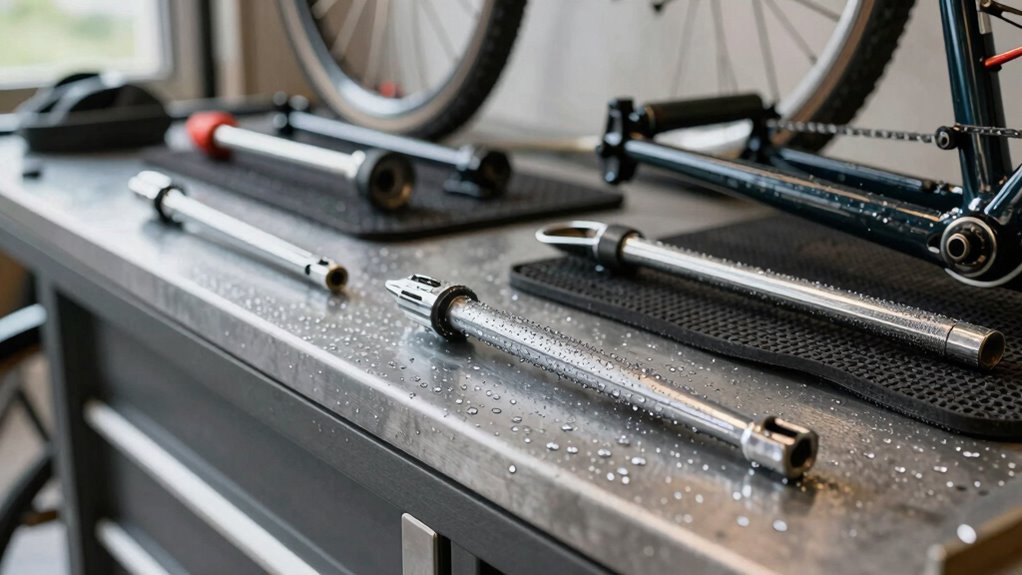
You may notice moisture building up on your tools and bikes when humidity levels rise or temperatures fluctuate. Poor ventilation allows moisture to linger, making condensation worse. Understanding these factors helps you take better steps to keep your items dry. Additionally, proper ventilation is essential for controlling humidity levels and preventing condensation buildup. Using smart yard care solutions, such as automated ventilation systems, can further enhance moisture control, especially in garages with limited airflow. Implementing moisture barriers can also help reduce condensation by blocking moisture transfer from the environment. Incorporating home automation devices to monitor humidity and temperature can provide real-time alerts and help maintain optimal conditions automatically. Properly managing ventilation is vital to reducing moisture accumulation and safeguarding your tools and bikes from rust and corrosion.
Humidity Levels Rising
Humidity levels rise when warm, moist air enters your garage and cools down, causing the moisture to condense on surfaces like tools and bikes. Poor garage insulation allows indoor humidity to increase, especially during humid weather or after activities like laundry or showering. Sealant applications around doors, windows, and any gaps help prevent outside air from seeping in, reducing moisture buildup. Without proper insulation and sealing, moisture-laden air circulates inside, raising humidity levels. This creates a perfect environment for condensation to form on cold surfaces. To keep moisture at bay, improve your garage insulation and apply sealants where needed. Additionally, using a dehumidifier can actively manage indoor humidity and control moisture levels, maintaining a dry environment. Proper ventilation can also help disperse humid air and prevent condensation. Ensuring good air circulation helps remove excess moisture and enhances overall drying. Proper ventilation techniques can significantly reduce moisture accumulation and help maintain a comfortable and dry garage space.
Temperature Fluctuations Occur
Temperature fluctuations cause moisture to build up on tools and bikes because surfaces repeatedly heat up and cool down, creating the perfect conditions for condensation. When your garage lacks proper insulation, it’s more vulnerable to these temperature swings, making surfaces more prone to moisture buildup. Weatherproof sealing around garage doors and windows helps stabilize indoor temperatures, reducing the rapid heating and cooling cycles that contribute to condensation. Without these measures, the temperature shifts cause moisture in the air to condense on cooler surfaces, leading to rust and damage. To prevent this, improve your garage insulation and guarantee weatherproof sealing is intact. These steps help maintain more consistent temperatures, minimizing condensation and protecting your tools and bikes from moisture-related issues. Implementing moisture control techniques can further reduce indoor humidity levels, preventing excess moisture accumulation.
Insufficient Ventilation Present
When ventilation is inadequate in your garage, moisture from everyday activities can accumulate quickly, creating a humid environment that promotes condensation. Without proper air circulation, damp air lingers, and moisture levels rise, especially if your garage lacks sufficient garage insulation. Poor airflow prevents moisture from escaping, leading to condensation on tools and bikes. To visualize this, consider the following:
| Poor Ventilation Causes | Effects | Solutions |
|---|---|---|
| Limited air circulation | Moisture buildup | Improve airflow with vents |
| Insufficient garage insulation | Trapped humidity | Add insulation for better sealing |
| No exhaust fans | Stagnant moist air | Install exhaust fans |
Enhancing air circulation and insulation helps reduce moisture, preventing condensation and protecting your tools and bikes. Proper garage ventilation is essential to maintain a dry environment and avoid long-term damage. Additionally, understanding how moisture management impacts your garage can help you implement more effective solutions. For example, airflow improvement techniques can significantly reduce humidity buildup, safeguarding your possessions over time. Being aware of humidity control strategies can further optimize your garage environment for durability and preservation. Incorporating proper ventilation methods can make a substantial difference in maintaining a dry and protected space.
How to Easily Lower Garage Humidity
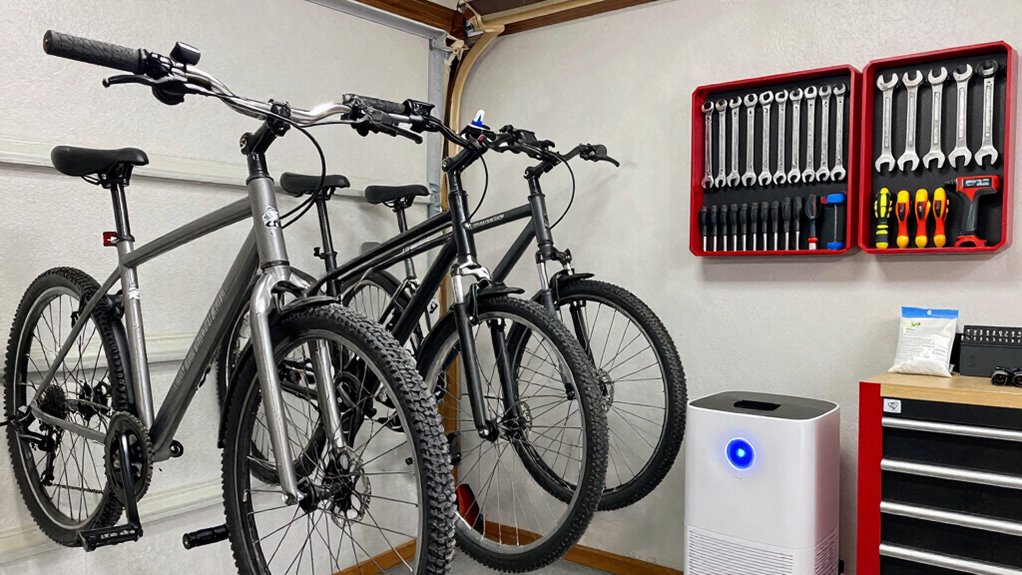
To lower your garage humidity easily, start by improving your ventilation systems to promote airflow. Use dehumidifiers effectively to remove excess moisture, and make sure to minimize sources of water like leaks or damp materials. These simple steps help keep your garage dry and prevent condensation buildup. Incorporating indoor air quality gear with powerful meanings can also add a sense of strength and resilience to your space. Additionally, exploring the latest wall art trends, such as digital frames or interactive murals, can enhance the aesthetic and atmosphere of your garage environment. Remember, maintaining proper ventilation systems can significantly impact the overall humidity levels and protect your tools and bikes from damage.
Improve Ventilation Systems
Improving your garage’s ventilation system is one of the most effective ways to lower humidity levels and prevent condensation. Start by enhancing air circulation with vents, exhaust fans, or even installing a ceiling vent. Proper garage insulation helps regulate temperature, reducing the chances of moisture buildup. Make certain vents are unobstructed so fresh air can flow freely, replacing damp air inside. Consider adding a roof vent or exhaust fan to actively pull moist air out, especially during humid days. Good air circulation prevents stagnant, damp air from settling, which is key to controlling moisture levels. Combined with quality garage insulation, a well-ventilated space greatly diminishes condensation risks, protecting your tools and bikes from moisture damage.
Use Dehumidifiers Effectively
After upgrading your garage’s ventilation system, adding a dehumidifier can further reduce moisture levels and prevent condensation. To maximize effectiveness, verify your garage insulation is adequate, as it helps maintain a stable temperature and reduces humidity swings. When placing the dehumidifier, position it in a central location away from walls or clutter to allow proper airflow. Keep it elevated slightly off the ground to improve efficiency and avoid blocked vents. Regularly empty the water reservoir or connect a drain hose for continuous operation. Set the dehumidifier to maintain a humidity level around 50%, which is ideal for preventing condensation on tools and bikes. Consistent use and proper placement are key to keeping your garage dry and protected.
Minimize Moisture Sources
Reducing moisture sources in your garage is one of the most straightforward ways to lower humidity levels and prevent condensation. Start by improving your garage insulation to reduce temperature fluctuations that cause moisture buildup. Proper insulation helps keep the space dry and stable. Seal any gaps or cracks with sealant applications to prevent moisture from entering through leaks in walls, doors, or windows. Verify that vents and exhaust fans are functioning correctly to improve air circulation and remove excess humidity. Avoid storing damp items or wet tools inside, as they release moisture into the air. By sealing leaks and insulating effectively, you create a less humid environment, making it easier to keep your tools and bikes dry and protected from condensation damage.
How to Prevent Condensation on Your Tools and Bikes
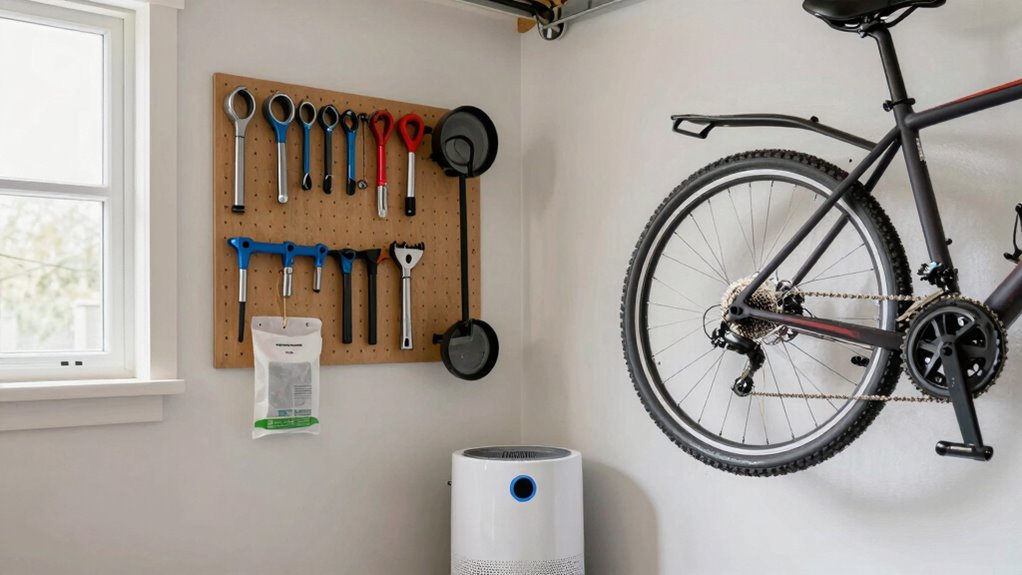
Condensation forms when warm, moist air comes into contact with cooler surfaces, which is common in garages where temperatures fluctuate. To prevent this, guarantee your garage is well-insulated with proper garage insulation, which helps maintain consistent temperatures and reduces moisture buildup. Additionally, sealing gaps and cracks prevents moist air from entering and creating ideal conditions for pests. Proper insulation also keeps tools and bikes dry, shielding them from rust and deterioration. Consider the following strategies:
| Method | Benefits | Tips |
|---|---|---|
| Improve Garage Insulation | Maintains temperature, reduces moisture | Use high-quality insulation |
| Seal Cracks & Gaps | Prevents moist air entry | Use weather stripping |
| Pest Prevention Measures | Keeps insects away from tools | Regular pest control |
| Use Vapor Barriers | Stops moisture from seeping in | Install on garage floors |
| Maintain Ventilation | Circulates air and dries surfaces | Keep vents clear |
How to Use Desiccants and Ventilation to Keep Your Garage Dry
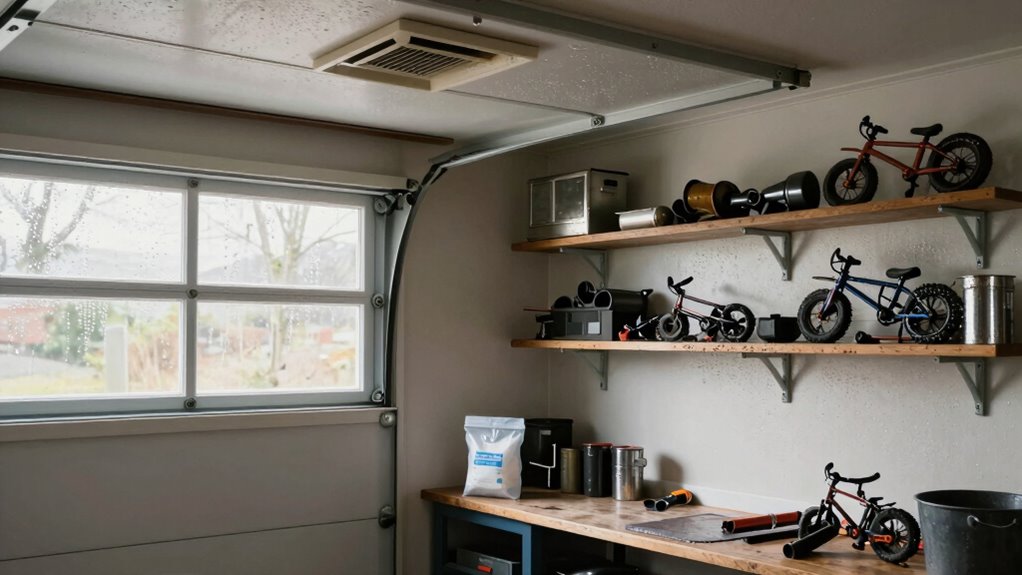
Using desiccants and proper ventilation can significantly improve the dryness of your garage, especially in areas prone to high humidity. Start by installing moisture barriers on floors and walls to prevent ground moisture from seeping in. Desiccant types vary, including silica gel, activated charcoal, and bentonite clay, so choose those suited for your space. Place desiccant containers in key areas like tool storage or near bikes to absorb excess moisture. Additionally, guarantee good airflow with vents, exhaust fans, or dehumidifiers to keep humidity levels low. Regularly replace or recharge desiccants to maintain their effectiveness. Combining moisture barriers, the right desiccant types, and ventilation creates a dry environment that prevents condensation, protecting your tools and bikes from rust and damage.
What Are the Best Storage Practices to Prevent Rust?
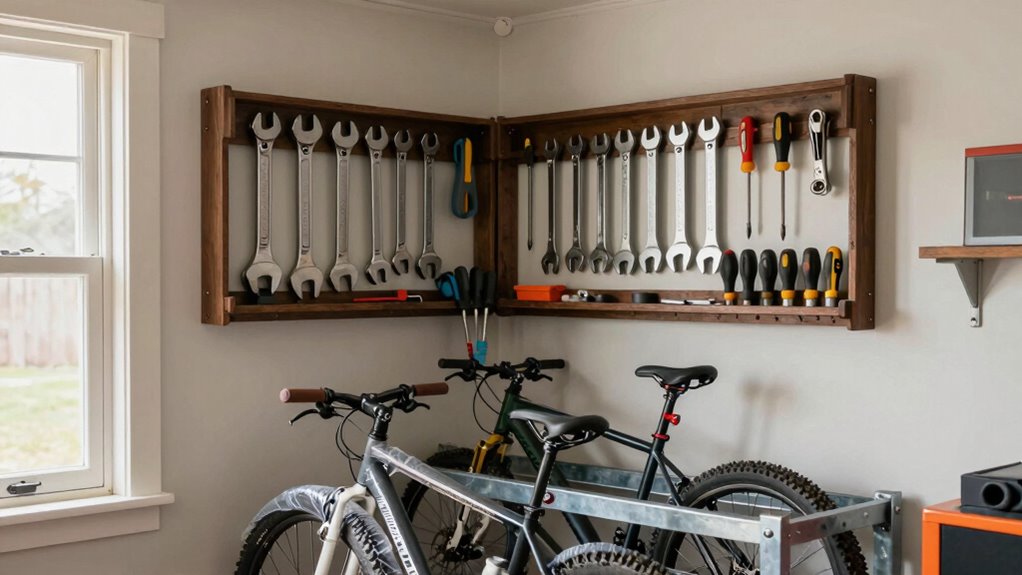
Proper storage is essential to prevent rust from forming on your tools and bikes. Organize your garage efficiently to reduce clutter and ensure easy access to items. Use airtight containers or sealed bags for smaller tools, and hang bikes on wall mounts or ceiling racks to keep them off the floor. Maintain your tools regularly by cleaning off dirt and moisture after each use, and apply protective coatings like oil or rust inhibitors. Keep your garage at a consistent, low humidity level to minimize condensation. Implementing good garage organization not only prolongs the lifespan of your gear but also makes tool maintenance easier. By keeping your tools dry, clean, and properly stored, you substantially lower the risk of rust and extend their usability.
How to Perform Regular Checks to Keep Moisture Out of Your Garage
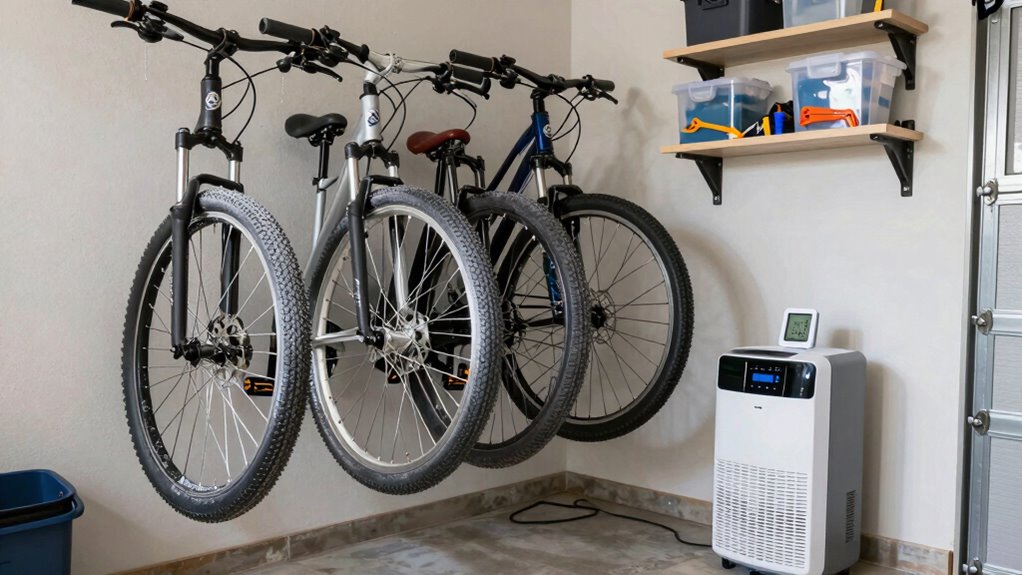
Regularly inspecting your garage is essential for preventing moisture buildup that can lead to rust and mold. Check for signs of dampness, especially in corners and around windows. Make sure your garage insulation is intact to maintain a stable temperature and prevent condensation. Look for pest entry points that can increase humidity levels and compromise insulation. Use the following guide to visualize your inspection:
| Area | What to Look For | Action Needed |
|---|---|---|
| Walls & Corners | Moisture, mold, or damp spots | Seal cracks, improve insulation |
| Windows | Condensation, leaks | Repair or replace |
| Floor | Water pooling, dampness | Clean, dry, and seal cracks |
| Ventilation | Blockages, poor airflow | Clear vents, add fans |
| Pest Entry Points | Holes, gnaw marks | Seal gaps, set traps |
Regular checks help maintain a dry, pest-free, well-insulated garage.
Frequently Asked Questions
Can Temperature Fluctuations Worsen Condensation Issues in My Garage?
Yes, temperature fluctuations can worsen condensation issues in your garage. When temperatures change quickly, humidity control becomes more difficult, leading to increased moisture buildup. To combat this, you should improve airflow by adding vents or fans, which helps regulate temperature and moisture levels. Maintaining consistent temperatures and reducing humidity will minimize condensation, protecting your tools and bikes from rust and damage.
Are There Specific Paint or Coating Options to Prevent Tool Rust?
Yes, you can choose rust-resistant coatings and anti-corrosion paints to protect your tools. These coatings form a nearly impenetrable barrier against moisture, preventing rust from taking hold. Look for products specifically designed for metal protection, and apply them thoroughly. Using these coatings is like giving your tools a suit of armor, making them last much longer and maintaining their performance despite humidity or temperature changes.
How Do Garage Insulation Materials Impact Condensation Control?
Garage insulation materials profoundly impact condensation control by enhancing insulation effectiveness and reducing temperature fluctuations. Proper insulation helps keep the garage warmer, preventing moisture-laden air from condensing on cold surfaces like tools and bikes. Incorporating moisture barriers within the insulation further blocks humidity from penetrating walls and ceilings. This combination minimizes condensation, protecting your items from rust and damage, and creates a more stable environment overall.
What Are Eco-Friendly Methods to Reduce Moisture in Garages?
You can reduce moisture in your garage with eco-friendly methods like using natural dehumidifier options such as silica gel packs or charcoal bags. These moisture-absorbing materials are sustainable and safe. Additionally, improve ventilation by opening windows or installing vents, and consider installing a solar-powered dehumidifier. These eco-friendly strategies help control humidity, prevent condensation, and protect your tools and bikes without harming the environment.
Can Indoor Plants Help or Hinder Moisture Management?
Indoor plants can help moisture absorption, but they might also hinder moisture management if overwatered or placed in poorly ventilated areas. You see, while they add beauty and natural humidity regulation, excess watering or high humidity can promote condensation. So, if you keep your plants healthy and avoid overwatering, they can aid in reducing moisture. Otherwise, they might contribute to increased humidity, making condensation worse.
Conclusion
By keeping your garage dry, you’re fundamentally turning it into a fortress against the relentless invasion of rust and corrosion. With proper ventilation, desiccants, and smart storage, you’ll prevent moisture from turning your tools and bikes into rusty relics. Think of it as arming your garage with an unstoppable shield—one that stops condensation dead in its tracks! Protect your gear now, or prepare for a future where every bike and tool is a squeaky, rusty ghost of what it once was.