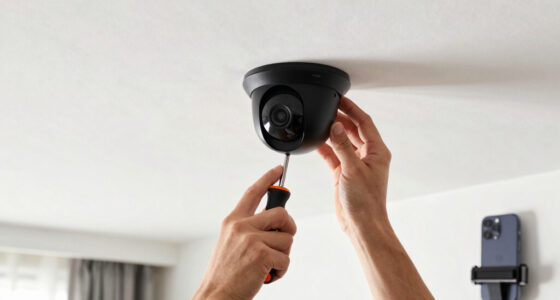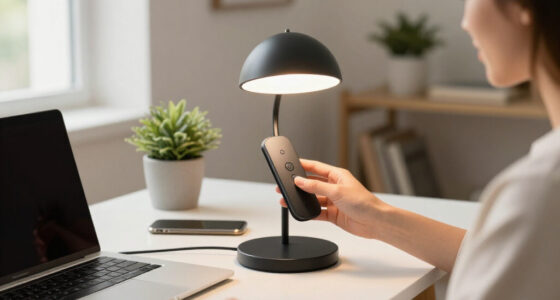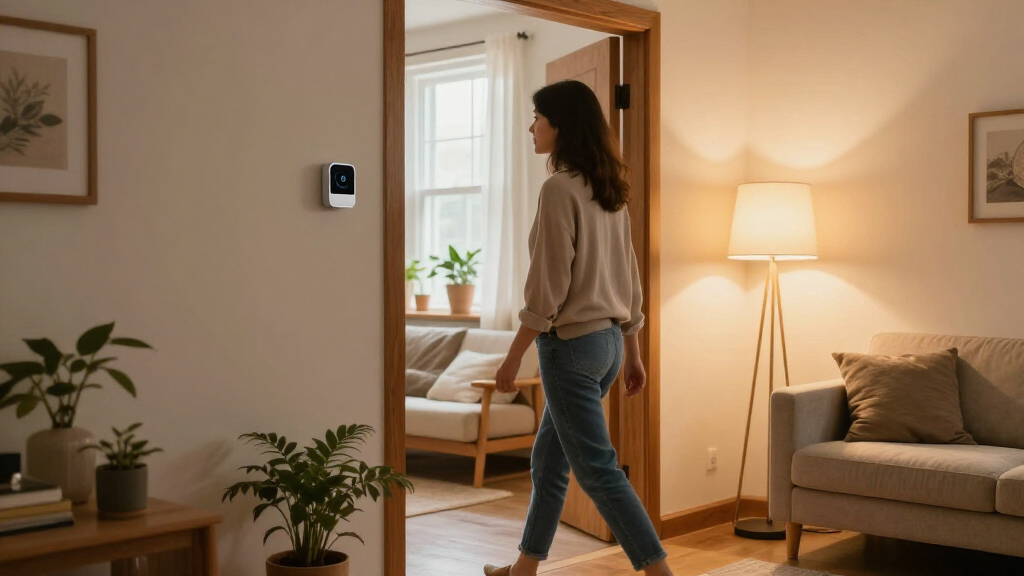

The best smart presence sensors keep lights and automations responsive even when someone is sitting still. My best overall pick is the Aqara Presence Sensor FP2 for buyers who want room-level detection and more detailed automation, while the Aqara FP300 stands out for a wireless, multi-sensor design and the Meross MS605 for battery power and Matter over Thread. The main choice is between richer zone detection, simpler connectivity, and flexible placement without a power cable. Hub requirements and smart-home compatibility can matter as much as sensing technology. Read on for the full comparison and help matching a sensor to your setup.

Get home appliances delivered free — and shop member deals
- Fast, free delivery on millions of items
- Access to Prime Big Deal Days deals on October 6–7
- Prime Video, Amazon Music and more included
Complete the kit


Key Takeaways
- The FP2 is the feature-led pick: its room-level detection and zone-based automation make it a stronger fit for detailed room setups than basic occupancy-trigger sensors.
- Power changes where a sensor can go: the wired GoveeLife, FP1E, and corded Meross MS600 suit fixed placements, while the battery-powered FP300 and IP67 MS605 offer more placement flexibility.
- Protocol choice shapes setup: Zigbee models such as the SONOFF SNZB-06P and ThirdReality R3 need a compatible hub or ecosystem, while Wi-Fi and Matter options take different routes to smart-home integration.
- One sensor rarely fits every room: zone positioning, illumination readings, air-quality sensing, or weather resistance matter only when they solve a specific placement or automation need.
- Simple detection can be the better value: the SONOFF SNZB-06P and SNZB-06P24 keep the focus on presence detection, while premium and multi-function models add capability at the cost of more setup decisions.
| SONOFF SNZB-06P24 Zigbee Presence Sensor |  | Best for Customizable Room Zones | Model: SNZB-06P24 | Detection technology: 24 GHz mmWave radar | Maximum range: 4 meters | VIEW LATEST PRICE | See Our Full Breakdown |
| GoveeLife Human Presence Sensor with mmWave Radar and PIR Wired Motion Sensor |  | Best for Flexible Placement and Broad Coverage | Detection technology: mmWave radar and PIR | Maximum range: 26 feet | Power source: Corded electric; continuous power required | VIEW LATEST PRICE | See Our Full Breakdown |
| Aqara Presence Sensor FP300 Wireless 5-in-1 Motion Sensor with mmWave |  | Best Battery-Powered Multi-Sensor | Detection technology: 60 GHz mmWave radar and PIR | Additional sensors: Light, temperature, and humidity | Maximum range: 6 meters (20 feet) | VIEW LATEST PRICE | See Our Full Breakdown |
| eMylo WiFi Presence Sensor, Millimeter-Wave Radar, No-Hub Motion Detector |  | Best for Simple Hub-Free Wi-Fi Setup | Detection technology: Millimeter-wave radar | Maximum range: 6 meters | Power source: Corded USB | VIEW LATEST PRICE | See Our Full Breakdown |
| Aqara Zigbee Presence Sensor FP1E – mmWave Radar Wired Motion Sensor |  | Best for Aqara Hub Owners | Detection technology: mmWave radar | Connectivity: Zigbee 3.0 | Sensing distance: Up to 6 meters | VIEW LATEST PRICE | See Our Full Breakdown |
| ThirdReality Smart Presence Sensor R3 – 60 GHz mmWave Radar |  | Best for Quiet Rooms | Radar frequency: 60 GHz | Maximum range: 6 meters | Power: USB-C | VIEW LATEST PRICE | See Our Full Breakdown |
| SwitchBot Smart mmWave Radar Motion Sensor – Pack of 2 |  | Best Battery-Powered Pair | Radar frequency: 60 GHz | Detection technologies: mmWave radar, PIR, and light sensing | Power: Two AAA batteries per sensor | VIEW LATEST PRICE | See Our Full Breakdown |
| SONOFF SNZB-06P Zigbee Human Presence Sensor |  | Best for Local Zigbee Lighting | Radar frequency: 5.8 GHz | Maximum range: 4 meters | Power: 1 × 9V battery | VIEW LATEST PRICE | See Our Full Breakdown |
| Akamatis Litos v3 Human Presence & Light Sensor – 2-Pack |  | Best for Home Assistant DIY Setups | Radar sensor: HLK-LD2401, 24 GHz mmWave | Detection range: Up to 20 ft (6 m) | Connectivity: 2.4 GHz Wi-Fi | VIEW LATEST PRICE | See Our Full Breakdown |
| Meross MS605 Presence Sensor, IP67 Battery-Powered, Matter over Thread |  | Best for Indoor-Outdoor Placement | Detection technologies: mmWave radar, PIR, and light sensing | Maximum range: 6 meters | Connectivity: Matter over Thread | VIEW LATEST PRICE | See Our Full Breakdown |
| Aqara Presence Sensor FP2 mmWave Radar Smart Motion Sensor |  | Best for Multi-Zone Coverage | Maximum range: 8 meters | Coverage and zones: Up to 40㎡; up to 30 customizable zones | Power: 5V × 1A DC adapter required; not included | VIEW LATEST PRICE | See Our Full Breakdown |
| Meross Presence Sensor MS600 – Matter over Wi-Fi, 1.5 m Corded Motion Sensor |  | Best for Flexible Wired Detection | Motion range: Up to 12 meters | Presence range: Up to 6 meters | Sensing: PIR, mmWave radar, and ambient-light sensor | VIEW LATEST PRICE | See Our Full Breakdown |
| Zigbee Human Presence Sensor – Millimeter Wave Radar Motion Detector for Home Assistant, SmartThings, Hubitat, and Echo Devices |  | Best Battery-Powered Zigbee Pick | Radar frequency: 24 GHz | Maximum range: 7 meters (20 feet) | Power: Two AAA alkaline batteries included | VIEW LATEST PRICE | See Our Full Breakdown |
| SwitchBot Smart mmWave Radar Motion Sensor |  | Best for Cordless Flexible Placement | Moving-human range: 8 meters | Stationary-human range: 5 meters | Detection angle: 120° | VIEW LATEST PRICE | See Our Full Breakdown |
| smart presence sensor | Dimensions | Mounting | Maximum range | Power |
|---|---|---|---|---|
| SONOFF SNZB-06P24 Zigbee Prese | 1.74 × 1.74 × 2.32 inches | Ceiling mount | 4 meters | — |
| GoveeLife Human Presence Senso | 1.49 × 1.65 × 2.53 inches | Wall or ceiling mount | 26 feet | — |
| Aqara Presence Sensor FP300 Wi | 1.65 × 1.65 × 1.97 inches | Wall mount with adjustable multi-axis mount | 6 meters (20 feet) | — |
| eMylo WiFi Presence Sensor | 1 × 1 × 1 inch | Wall mount | 6 meters | — |
| Aqara Zigbee Presence Sensor F | 2.24 × 1.46 × 1.97 inches | — | — | — |
| ThirdReality Smart Presence Se | 1.42 × 2.64 × 2.76 inches | — | 6 meters | USB-C |
| SwitchBot Smart mmWave Radar M | 2.1 × 1.2 × 2.1 inches | Wall mount with magnetic base | — | Two AAA batteries per sensor |
| SONOFF SNZB-06P Zigbee Human P | 1.73 × 2.32 × 1.73 inches | Wall mount | 4 meters | 1 × 9V battery |
| Akamatis Litos v3 Human Presen | 1.35 × 1.35 × 0.45 inches | — | — | — |
| Meross MS605 Presence Sensor | 1.38 × 1.91 × 3.03 inches | Wall mount; folds 90° and rotates 360° | 6 meters | 1 CR123A battery, included |
| Aqara Presence Sensor FP2 mmWa | 2.51 × 2.51 × 1.14 inches | Ceiling mount | 8 meters | 5V × 1A DC adapter required; not included |
| Meross Presence Sensor MS600 | 2.97 × 1.5 × 1.37 inches | Wall mount with 180° pivot and 360° rotation | — | Corded electric; 1.5-meter cord |
| Zigbee Human Presence Sensor | 0.79 × 0.98 × 2.76 inches | Wall mount | 7 meters (20 feet) | Two AAA alkaline batteries included |
| SwitchBot Smart mmWave Radar M | 2.1 × 1.2 × 2.1 inches | Wall mount or magnetic base | — | Two AAA batteries included |
More Details on Our Top Picks
SONOFF SNZB-06P24 Zigbee Presence Sensor
The SONOFF SNZB-06P24 is a strong fit when you need presence detection to distinguish between useful parts of a room and areas that should not trigger automations. Its seven customizable detection zones let you exclude locations such as a doorway or moving appliance, while self-learning calibration helps limit false triggers from environmental interference. It detects subtle movement, so lights can stay on when someone is sitting still rather than relying on motion alone. Compared with the eMylo WiFi Presence Sensor, this SONOFF offers more detailed zone control and broader listed ecosystem compatibility, but it requires a Zigbee hub. Its 4-meter maximum range is also shorter than the eMylo’s 6 meters, making it better suited to a focused room area than wide coverage. USB-C power means it is not a battery-placement option.
Pros:- Seven customizable zones help exclude areas that should not trigger automations.
- Detects subtle human movement that ordinary motion sensing can miss.
- Self-learning calibration is designed to reduce triggers from appliances and airflow.
- Listed compatibility includes Home Assistant, SmartThings, and Alexa when used with a hub.
Cons:- A separate Zigbee hub is required.
- Maximum range is 4 meters, less than the 6-meter eMylo and Aqara FP1E.
- USB-C power requires a nearby power source and does not offer battery placement.
Best for: Zigbee smart-home owners who want to set room zones and keep presence automations from reacting to unwanted areas.
Not ideal for: Buyers without a Zigbee hub, or anyone who needs battery power or coverage beyond a 4-meter range.
- Model:SNZB-06P24
- Detection technology:24 GHz mmWave radar
- Maximum range:4 meters
- Field of view:110°
- Power source:USB-C powered
- Mounting:Ceiling mount
- Dimensions:1.74 × 1.74 × 2.32 inches
- Compatibility:Home Assistant, SmartThings, and Alexa; Zigbee hub required
Our verdict“Choose the SNZB-06P24 if zone control matters more than long-range coverage and you already have a compatible Zigbee hub.”
GoveeLife Human Presence Sensor with mmWave Radar and PIR Wired Motion Sensor
The GoveeLife Human Presence Sensor pairs mmWave radar with PIR, giving it two sensing methods for detecting people across a larger area. Its listed 26-foot range is far beyond the 4-meter reach of the SONOFF SNZB-06P24, making GoveeLife the more natural pick for open rooms where one sensor needs to cover more ground. A folding magnetic base that rotates 360° also makes it easier to aim from a wall or ceiling, and selectable sensitivity modes let you adjust detection to household routines. The tradeoff is a need for continuous wired power: there is no battery option. It also does not support Home Assistant, which makes it less suitable for users building around that platform than the SONOFF. Its integrations are a better match for Alexa, Google Assistant, IFTTT, and GoveeLife devices.
Pros:- Combines mmWave radar and PIR for two-method presence detection.
- Listed 26-foot range suits larger spaces better than the shorter-range SONOFF SNZB-06P24.
- Magnetic base folds 120° and rotates 360° for flexible aiming.
- Works with Alexa, Google Assistant, IFTTT, and other GoveeLife devices.
Cons:- Requires continuous wired power and has no battery operation.
- Not compatible with Home Assistant.
- The larger listed range may be unnecessary for small rooms where precise coverage matters more than reach.
Best for: People outfitting a larger room who want broad detection, adjustable placement, and Alexa or Google Assistant integration.
Not ideal for: Home Assistant users and anyone who needs a battery-powered sensor or cannot provide continuous wired power.
- Detection technology:mmWave radar and PIR
- Maximum range:26 feet
- Power source:Corded electric; continuous power required
- Mounting:Wall or ceiling mount
- Base adjustment:Folds 120° and rotates 360°
- Dimensions:1.49 × 1.65 × 2.53 inches
- Operating temperature:14°F–104°F
- Compatibility:Alexa, Google Assistant, IFTTT, and GoveeLife devices
Our verdict“Pick GoveeLife for a large, powered room and Alexa or Google integrations, but skip it if Home Assistant support or battery placement is a requirement.”
Aqara Presence Sensor FP300 Wireless 5-in-1 Motion Sensor with mmWave
The Aqara FP300 stands apart in this group by combining presence detection with light, temperature, and humidity sensing in a battery-powered unit. Its 60 GHz mmWave radar is designed to detect someone who remains still, while the listed battery life of up to three years reduces the need for a nearby outlet. That makes it a more flexible placement choice than the wired Aqara FP1E, though the FP1E may suit users who prefer a plug-in setup and a 120° field of view. The FP300 supports both Matter over Thread and Zigbee, with broad listed ecosystem compatibility, but full functionality depends on a compatible Thread Border Router or Matter hub. Its two CR2450 cells are replaceable, yet less common than AA or AAA batteries, so replacements may take more planning.
Pros:- Combines mmWave presence detection with light, temperature, and humidity sensing.
- Supports Matter over Thread and Zigbee for broad listed ecosystem compatibility.
- Two replaceable CR2450 batteries are rated for up to three years of life.
- Detects stationary presence, unlike a motion-only sensor.
Cons:- Full functionality requires a compatible Thread Border Router or Matter hub.
- Uses CR2450 batteries, which may be less readily available than AA or AAA cells.
- The listed maximum range is 6 meters, so it does not match the GoveeLife sensor’s 26-foot reach.
Best for: Smart-home owners who want battery-powered presence sensing plus light, temperature, and humidity readings in one device.
Not ideal for: Buyers without a compatible Thread Border Router or Matter hub, or those who prefer common AA or AAA batteries.
- Detection technology:60 GHz mmWave radar and PIR
- Additional sensors:Light, temperature, and humidity
- Maximum range:6 meters (20 feet)
- Power source:Two CR2450 lithium metal batteries
- Connectivity:Matter over Thread and Zigbee
- Mounting:Wall mount with adjustable multi-axis mount
- Dimensions:1.65 × 1.65 × 1.97 inches
Our verdict“Choose the FP300 if you want a long-life battery sensor that also tracks room conditions and can connect through a supported Thread or Zigbee setup.”
eMylo WiFi Presence Sensor, Millimeter-Wave Radar, No-Hub Motion Detector
The eMylo WiFi Presence Sensor is the most direct route here for buyers who want mmWave detection without adding a hub: it connects to 2.4 GHz Wi-Fi and uses the Tuya or Smart Life app for scene automation. It can detect stationary presence as well as movement, which gives it an advantage over ordinary motion sensors when lights should remain on while someone is sitting still. Five preset modes offer a simpler setup path than the seven-zone customization on the SONOFF SNZB-06P24, but they provide less control over exactly which parts of a room trigger detection. The eMylo also reaches 6 meters, compared with SONOFF’s 4 meters. The compromise is continuous USB power, a 2.4 GHz network requirement, and a narrower ecosystem focused on Tuya or Smart Life rather than the broad integrations listed for the Aqara FP300.
Pros:- Connects directly to 2.4 GHz Wi-Fi without a separate hub.
- mmWave radar detects stationary presence as well as movement.
- Five preset detection modes simplify setup for different room types.
- Six-meter range exceeds the SONOFF SNZB-06P24’s 4-meter maximum.
Cons:- Requires constant USB power, limiting placement away from outlets.
- Works with 2.4 GHz Wi-Fi only.
- Tuya or Smart Life compatibility is narrower than the Aqara FP300’s listed ecosystem support.
Best for: Tuya or Smart Life users who want hub-free presence automations in a room with a convenient USB power source.
Not ideal for: Buyers who need battery operation, 5 GHz Wi-Fi, advanced detection-zone control, or broad smart-home platform support.
- Detection technology:Millimeter-wave radar
- Maximum range:6 meters
- Power source:Corded USB
- Wireless network:2.4 GHz Wi-Fi
- Mounting:Wall mount
- Detection modes:Five preset modes
- Dimensions:1 × 1 × 1 inch
- Compatibility:Tuya/Smart Life
Our verdict“Choose the eMylo for straightforward Tuya or Smart Life presence automations without a hub, provided continuous USB power is practical.”
Aqara Zigbee Presence Sensor FP1E – mmWave Radar Wired Motion Sensor
The Aqara FP1E is a practical wired choice for users already building around Aqara: its mmWave radar covers up to 6 meters and the stated 120° field of view suits whole-room presence automations. AI filtering is designed to reduce false triggers from small pets and other interference, while a 200 ms response time supports quick reactions when someone enters. Compared with the SONOFF SNZB-06P24, the FP1E lists a longer sensing distance and faster response, but SONOFF offers seven customizable zones for more precise exclusions. The FP1E depends on an Aqara Zigbee hub and a separately supplied 5 V/1 A power source, so it is not a plug-and-play fit for every Zigbee setup. Matter-over-bridge support broadens platform access through an Aqara hub, but buyers seeking a battery sensor should look instead at the Aqara FP300.
Pros:- Six-meter sensing distance and 120° field of view cover a broad room area.
- AI filtering is designed to reduce false triggers from small pets and interference.
- 200 ms response time supports quick automation responses.
- Matter-over-bridge support enables access to major platforms through an Aqara hub.
Cons:- Requires an Aqara Zigbee hub rather than a generic hub or third-party USB dongle.
- A 5 V/1 A power adapter is needed and is not included.
- Official support for Zigbee2MQTT and similar integrations is limited.
Best for: Aqara hub owners who want fast, wired mmWave presence detection for whole-room automations.
Not ideal for: Buyers without an Aqara Zigbee hub, users seeking battery operation, or those who need extensive third-party Zigbee integration.
- Detection technology:mmWave radar
- Connectivity:Zigbee 3.0
- Sensing distance:Up to 6 meters
- Field of view:120°
- Coverage area:About 35 m²
- Response time:200 ms
- Power requirement:5 V DC, 1 A source
- Dimensions:2.24 × 1.46 × 1.97 inches
Our verdict“The FP1E makes sense for Aqara hub owners who want fast, wide-area wired sensing, but it is a poor fit for hub-free or battery-powered setups.”
ThirdReality Smart Presence Sensor R3 – 60 GHz mmWave Radar
The ThirdReality R3 is a strong fit for rooms where ordinary motion sensors lose track of someone sitting still. Its 60 GHz mmWave radar can detect subtle movement such as breathing, while USB-C power avoids the battery maintenance that comes with the SwitchBot Smart mmWave Radar Motion Sensor. The R3 also adds lux and TVOC readings, an RGB status light, and Zigbee repeater duties, giving a compatible smart-home setup more automation inputs and another mesh node. Those extras make it more versatile than the simpler SONOFF SNZB-06P, but their usefulness depends on platform support. It needs a nearby USB-C power source, and its six-meter range may not suit larger open areas. I’d choose it for a powered, quiet room where still-person detection matters more than cordless placement.
Pros:- 60 GHz radar detects subtle presence, including occupants who are mostly still.
- USB-C power avoids recurring battery changes.
- Acts as a Zigbee 3.0 repeater for compatible mesh networks.
- RGB status light and lux and TVOC sensors add useful automation signals where supported.
Cons:- Requires a USB-C power source, limiting placement compared with battery-powered options.
- Lux and TVOC readings depend on support from the connected platform.
- Six-meter maximum range may be limiting in large or open rooms.
Best for: Home Assistant or SmartThings users automating a bedroom, office, or reading area with a nearby USB-C outlet.
Not ideal for: People who need a battery-powered sensor, broad-area coverage, or lux and TVOC data on a platform that does not expose those readings.
- Radar frequency:60 GHz
- Maximum range:6 meters
- Power:USB-C
- Connectivity:Zigbee 3.0; also functions as a Zigbee repeater
- Compatible platforms:Home Assistant (ZHA and Z2M), SmartThings, Aeotec, and Echo devices with built-in Zigbee hubs
- Additional sensors:Ambient light (lux) and TVOC
- Dimensions:1.42 × 2.64 × 2.76 inches
- Weight:4.8 ounces
Our verdict“Choose the ThirdReality R3 for a powered quiet room where still-person detection and Zigbee mesh support matter more than cordless installation.”
SwitchBot Smart mmWave Radar Motion Sensor – Pack of 2
The SwitchBot two-pack suits buyers who want presence sensing in multiple rooms without running power cables. Each sensor combines mmWave radar, PIR, and light sensing, and its magnetic base allows flexible positioning; the listed battery life of up to three years also reduces routine upkeep. Compared with the USB-C-powered ThirdReality R3, this set is easier to place away from outlets, while the R3 offers Zigbee repeating and additional TVOC sensing. SwitchBot’s hub-free response and integrations are appealing for straightforward setups, but advanced automations require a SwitchBot Hub. The stated 393-foot range conflicts with the product details, which describe practical moving-subject detection at about eight meters, so I would plan around the shorter figure. This is a sensible choice for smaller rooms and SwitchBot households, not oversized spaces.
Pros:- Two sensors provide coverage for separate rooms in one set.
- Combines mmWave, PIR, and light sensing to keep lighting responsive to subtle presence.
- Magnetic base supports flexible wall placement and angle adjustment.
- Listed battery life is up to three years on two AAA batteries.
Cons:- Requires two AAA batteries per sensor and eventual replacement.
- Practical moving-subject range is described as about eight meters, limiting large-space coverage.
- Advanced automations require an additional SwitchBot Hub.
Best for: SwitchBot households that want to add presence sensing to two smaller rooms without installing power cables.
Not ideal for: Buyers covering a large open-plan area, avoiding battery replacement, or seeking advanced automations without a SwitchBot Hub.
- Radar frequency:60 GHz
- Detection technologies:mmWave radar, PIR, and light sensing
- Power:Two AAA batteries per sensor
- Listed battery life:Up to 3 years
- Mounting:Wall mount with magnetic base
- Compatibility:SwitchBot devices, Apple Home, Home Assistant, Alexa, and Google Home
- Dimensions:2.1 × 1.2 × 2.1 inches
- Pack size:2 sensors
Our verdict“Pick this pair for cordless presence sensing in two modest rooms, especially if your home already uses SwitchBot devices.”
SONOFF SNZB-06P Zigbee Human Presence Sensor
The SONOFF SNZB-06P is a straightforward pick for buyers who already have a Zigbee hub and want presence-based lighting that can run locally. Its 5.8 GHz microwave radar detects movement and stationary presence, while the ambient light sensor can help prevent lights from turning on when a room is already bright. Compared with the 60 GHz ThirdReality R3, this model has a shorter four-meter range and fewer listed extras, but its local Zigbee scene control makes it a practical choice for basic room-level automations without internet access. The tradeoff is a required compatible hub and a 9V battery, rather than the R3’s USB-C power. It is designed for indoor use, so I would keep it to compact rooms where the limited range is manageable.
Pros:- Microwave radar senses both movement and stationary presence.
- Ambient light sensing can keep lights off when daylight is sufficient.
- Zigbee scene linkage supports local control without internet access.
- Works with a range of listed platforms, including Alexa, Google Home, SmartThings, and Home Assistant.
Cons:- A compatible Zigbee hub is required.
- Four-meter maximum range is limited compared with the six-meter ThirdReality R3.
- Indoor-only use and a 9V battery constrain placement.
Best for: Zigbee users who want a compact indoor sensor for local lighting scenes in a small room.
Not ideal for: People without a compatible Zigbee hub, anyone needing outdoor sensing, or buyers covering a space wider than its four-meter range.
- Radar frequency:5.8 GHz
- Maximum range:4 meters
- Power:1 × 9V battery
- Connectivity:Zigbee 3.0; compatible hub required
- Mounting:Wall mount
- Temperature range:-10 °C to 60 °C
- Dimensions:1.73 × 2.32 × 1.73 inches
- Weight:31 g
Our verdict“Choose the SNZB-06P for hub-based local lighting in a small indoor room, not for expansive coverage or hub-free use.”
Akamatis Litos v3 Human Presence & Light Sensor – 2-Pack
The Akamatis Litos v3 two-pack is aimed squarely at Home Assistant users who want compact sensors with data they can fold into custom automations. Its pre-flashed ESPHome firmware removes the need to flash the devices yourself, and the HLK-LD2401 radar detects stationary presence while the VEML7700 supplies ambient-light readings. Compared with the SONOFF SNZB-06P, the Litos v3 offers Wi-Fi and a six-meter stated detection range rather than Zigbee and four meters; it also avoids the SONOFF’s hub requirement if Home Assistant is already running. That flexibility comes with a firm ecosystem boundary: it is designed for Home Assistant, not direct Alexa or Google Home use. These are not general-purpose sensors for every smart home, but they make a focused two-room option for ESPHome users.
Pros:- Pre-flashed ESPHome firmware simplifies setup for Home Assistant users.
- 24 GHz mmWave radar detects stationary presence as well as motion.
- Integrated VEML7700 provides ambient-light readings for context-aware automations.
- Two compact units include three-axis wall mounts and have a stated range up to six meters.
Cons:- Requires an existing Home Assistant installation.
- No direct compatibility with Alexa or Google Home is listed.
- Uses 2.4 GHz Wi-Fi, which may not suit networks or setups centered on Zigbee.
Best for: Home Assistant users who want a pair of compact ESPHome sensors for presence and light-aware automations.
Not ideal for: Buyers who do not run Home Assistant or want direct integration with Alexa, Google Home, or a broad off-the-shelf ecosystem.
- Radar sensor:HLK-LD2401, 24 GHz mmWave
- Detection range:Up to 20 ft (6 m)
- Connectivity:2.4 GHz Wi-Fi
- Firmware:Pre-flashed ESPHome
- Compatibility:Home Assistant
- Light sensor:VEML7700
- Dimensions:1.35 × 1.35 × 0.45 inches
- Weight:0.42 oz (12 g)
- Pack size:2 sensors
Our verdict“Pick the Litos v3 pair if you run Home Assistant and want compact ESPHome presence and light sensing, but skip it for a mixed-platform household.”
Meross MS605 Presence Sensor, IP67 Battery-Powered, Matter over Thread
The Meross MS605 stands apart from the indoor-focused SONOFF SNZB-06P with an IP67 rating for placement in exposed areas such as a terrace or walkway. It combines mmWave radar, PIR, and light sensing to help maintain occupancy lighting when someone is still, and Matter over Thread is intended to connect it with major smart-home ecosystems. Its foldable, rotating mount gives more control over sensor direction than the fixed wall-mount approach of the SONOFF. The compromises are a required Matter/Thread hub for remote access and a listed range of six meters, which is not suited to a very large area. The supplied CR123A battery is described as lasting three years, but the sensor is not standalone Wi-Fi. I’d favor it when weather resistance and flexible mounting outrank a simple hub-free setup.
Pros:- IP67 rating supports indoor or outdoor placement.
- mmWave radar, PIR, and light sensing help detect still occupants and add context to automations.
- Matter over Thread is designed to integrate with major smart-home platforms.
- Foldable 90-degree and rotatable 360-degree mount allows flexible aiming.
Cons:- Matter/Thread hub is required for remote access.
- Not a standalone Wi-Fi sensor.
- Six-meter maximum range may not cover large outdoor or open-plan areas.
Best for: Smart-home owners who need a battery-powered presence sensor for a terrace, walkway, or other exposed location and already have Matter/Thread equipment.
Not ideal for: Buyers without a Matter/Thread hub, those seeking a standalone Wi-Fi sensor, or anyone who needs more than six meters of coverage.
- Detection technologies:mmWave radar, PIR, and light sensing
- Maximum range:6 meters
- Connectivity:Matter over Thread
- Power:1 CR123A battery, included
- Listed battery life:3 years
- Weather protection:IP67
- Mounting:Wall mount; folds 90° and rotates 360°
- Dimensions:1.38 × 1.91 × 3.03 inches
Our verdict“Choose the MS605 for weather-resistant, flexibly mounted sensing when you have a Matter/Thread hub and need coverage beyond indoor rooms.”
Aqara Presence Sensor FP2 mmWave Radar Smart Motion Sensor
The FP2 is the strongest fit here when one sensor needs to track activity across several parts of a room. Its up to 30 customizable zones across 40㎡ give automations more precision than the simpler coverage approach of the Zigbee Human Presence Sensor, which is better suited to a single detection area. The FP2 can also identify up to five people and supports local automations with HomeKit, Alexa, Google Home, and Home Assistant without an Aqara hub. Its mmWave sensing can help keep lights on while someone sits still, while ceiling mounting adds fall detection. The tradeoff is a fixed power connection: the 5V adapter is not included, and unlike battery-powered alternatives, the FP2 is less flexible to place. Fall detection also depends on ceiling mounting.
Pros:- Creates up to 30 customizable zones across a 40㎡ area.
- Detects up to five people simultaneously.
- Supports major smart-home ecosystems without an Aqara hub.
- IPX5 protection suits humid locations such as bathrooms.
Cons:- Needs continuous 5V power, and the adapter is not included.
- Fall detection works only when ceiling-mounted.
- No built-in battery limits placement flexibility.
Best for: Smart-home owners who want room-level zones, multi-person detection, and local automations across a large or shared space.
Not ideal for: Renters or anyone needing a battery-powered sensor, a quick placement change, or fall detection without ceiling mounting.
- Maximum range:8 meters
- Coverage and zones:Up to 40㎡; up to 30 customizable zones
- Power:5V × 1A DC adapter required; not included
- Mounting:Ceiling mount
- Connectivity:2.4 GHz Wi-Fi
- Compatible platforms:Alexa, HomeKit, Google Home, Home Assistant
- Protection:IPX5
- Dimensions:2.51 × 2.51 × 1.14 inches
Our verdict“Choose the FP2 if multi-zone room coverage matters more than easy, cordless placement.”
Meross Presence Sensor MS600 – Matter over Wi-Fi, 1.5 m Corded Motion Sensor
The MS600 combines PIR, mmWave radar, and ambient-light sensing, making it a practical choice for automations that need to distinguish occupancy from simple movement and respond to room brightness. Its 12-meter motion range exceeds the stated range of the Aqara FP2, while the pivoting base and 360° rotation help aim coverage without changing the mounting point. The pet-proof shield may also reduce triggers from animals or robot vacuums. Matter support broadens platform options, though it may require a compatible hub, so it is not automatically a hub-free setup. Unlike the battery-powered SwitchBot sensor, the MS600 needs continuous power and stops operating during outages. Choose it for adjustable, broad wired coverage rather than cordless placement.
Pros:- Combines PIR, mmWave radar, and ambient-light sensing.
- Offers up to 12 meters of motion detection and adjustable positioning.
- Supports Matter and several major smart-home platforms.
- Includes a pet-proof shield to help limit unwanted triggers.
Cons:- Corded power restricts placement and leaves it inactive during outages.
- Matter compatibility may require a separate hub.
- The 1.5-meter cord may constrain mounting locations.
Best for: Households that want adjustable wall-mounted coverage, multiple sensing methods, and Matter support in a reliably powered location.
Not ideal for: People who need a cordless sensor, outage operation, or Matter connectivity without checking their hub requirements.
- Motion range:Up to 12 meters
- Presence range:Up to 6 meters
- Sensing:PIR, mmWave radar, and ambient-light sensor
- Power:Corded electric; 1.5-meter cord
- Mounting:Wall mount with 180° pivot and 360° rotation
- Compatible platforms:HomeKit, Alexa, Google Home, Home Assistant, Matter
- Backup battery:One C battery required for backup
- Dimensions:2.97 × 1.5 × 1.37 inches
Our verdict“Pick the MS600 for broad, aimable detection where a power outlet is close and hub compatibility is sorted.”
Zigbee Human Presence Sensor – Millimeter Wave Radar Motion Detector for Home Assistant, SmartThings, Hubitat, and Echo Devices
This sensor suits buyers who want stationary-person detection without running a power cable. Its 24 GHz radar can help prevent lights from switching off while someone is sitting still, and two AAA batteries are rated for about two years. That makes placement simpler than with the corded Meross MS600, though the Meross offers PIR and light sensing alongside radar. The key limitation is the Zigbee requirement: this is not a standalone Wi-Fi sensor, so buyers need a compatible hub such as Home Assistant, SmartThings, Hubitat, or an Echo with a built-in Zigbee hub. Its 7-meter range is useful for ordinary rooms but falls short of the MS600’s stated motion range. A sensible choice for hub owners who value cordless operation over broader sensing features.
Pros:- Millimeter-wave radar detects people who remain still.
- Runs on two included AAA batteries rated for about two years.
- Works with several Zigbee platforms and hub types.
- Compact, lightweight wall-mount design.
Cons:- Requires a compatible Zigbee hub to operate.
- The 7-meter range is shorter than the Meross MS600’s stated motion range.
- The listed feature set does not include the MS600’s PIR and ambient-light sensing.
Best for: Zigbee smart-home owners who want battery-powered presence detection for rooms where occupants often sit still.
Not ideal for: Buyers without a compatible Zigbee hub or those seeking a standalone sensor with light sensing and multiple detection methods.
- Radar frequency:24 GHz
- Maximum range:7 meters (20 feet)
- Power:Two AAA alkaline batteries included
- Mounting:Wall mount
- Compatible hubs and platforms:Home Assistant, SmartThings, Aeotec, Homey, Hubitat, compatible Echo devices
- Operating temperature:-10°C to 65°C
- Dimensions:0.79 × 0.98 × 2.76 inches
Our verdict“Choose this model if you already have a Zigbee hub and want cordless detection of stationary occupants.”
SwitchBot Smart mmWave Radar Motion Sensor
The SwitchBot pairs mmWave radar with PIR and light sensing in a compact, battery-powered body, so it can detect subtle activity without needing a nearby outlet. Its magnetic base makes it easier to adjust aim than the fixed wall placement of the Zigbee Human Presence Sensor, and its stated range reaches 8 meters for moving people. Stationary detection is limited to 5 meters, however, so it is less suited to larger rooms where a person may sit quietly farther away. The listed battery life is up to two years on two AAA cells. Apple Home compatibility requires a SwitchBot Matter Hub, which makes it less direct for Apple households than the Aqara FP2, which works with HomeKit without an Aqara hub. This is the more flexible choice when placement matters more than long stationary reach.
Pros:- Detects stationary people within a stated 5-meter range.
- Runs on two included AAA batteries for up to two years.
- Magnetic base supports flexible wall or flat mounting.
- AI anti-interference is designed to reduce triggers from pets and appliances.
Cons:- Apple Home compatibility requires a SwitchBot Matter Hub.
- Stationary detection is limited to 5 meters.
- Battery operation requires periodic battery replacement.
Best for: People who want a cordless sensor they can reposition easily, especially in smaller rooms with a compatible smart-home setup.
Not ideal for: Apple Home users unwilling to add a SwitchBot Matter Hub, or anyone needing stationary detection beyond 5 meters.
- Moving-human range:8 meters
- Stationary-human range:5 meters
- Detection angle:120°
- Radar frequency:60 GHz
- Power:Two AAA batteries included
- Mounting:Wall mount or magnetic base
- Compatibility:Alexa, HomeKit, Apple Home, Google Home, Home Assistant
- Dimensions:2.1 × 1.2 × 2.1 inches
Our verdict“Choose the SwitchBot for cordless, repositionable sensing in a smaller area where its hub requirements fit your setup.”
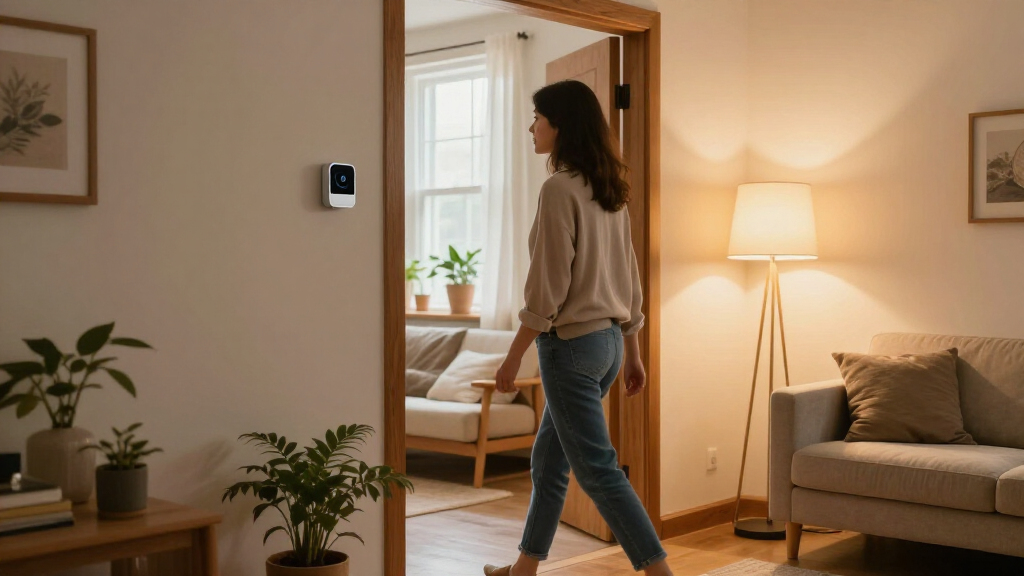
How We Picked
I compared these 14 sensors by how well their sensing approach, connectivity, and power design fit real home-automation decisions. The main criteria were the ability to detect stationary presence, compatibility with common smart-home platforms, placement flexibility, and whether added functions—such as zone positioning, illumination readings, or air-quality sensing—serve a clear use. I also weighed setup demands: a hub-dependent Zigbee sensor can be a sensible choice for an established hub household, but a poor match for someone seeking a standalone installation.
The ranking favors useful capability and a clear audience over feature count alone. The FP2 leads for buyers who want detailed room automation; the FP300 and MS605 rank strongly for wireless flexibility and newer ecosystem approaches. Straightforward sensors remain good fits for simpler automations, but they place lower when their connectivity or detection options are narrower. Since compatibility and performance can depend on the hub, placement, and firmware, readers should confirm support for their own setup before choosing.
Factors to Consider When Choosing Best Smart Presence Sensors
Smart presence sensors differ in ways that affect everyday reliability more than their names suggest. I would start with the room, the automations you want, and the smart-home system already in place, then weigh power and sensing detail against setup effort.
Choose Detection Detail for the Room
A sensor that reports simple occupied or vacant status may be enough for a pantry or hallway, but a living room can benefit from more detailed zones. Zone-aware detection can help control separate lights or avoid treating activity in one part of a room as occupancy everywhere. Map out the area and identify likely blind spots before buying; walls, furniture, and room layout can affect readings. Avoid assuming that a sensor’s advertised coverage translates into reliable detection from every mounting position. More detailed detection may call for more configuration, so buy it when you have a specific automation goal rather than for feature count alone.
Match the Protocol to Your Smart-Home Setup
Wi-Fi, Zigbee, Bluetooth, Thread, and Matter describe different ways devices connect and appear in an automation system. A Zigbee sensor may be a natural addition if you already use a compatible hub, but it may add cost and setup work in a home without one. Matter support can simplify cross-platform integration, yet buyers should still verify the exact device, controller, and feature support they need. Bluetooth-based products may depend on a nearby bridge or ecosystem service for remote control. Check the manufacturer’s current compatibility list before purchase, especially if you rely on a particular voice assistant or home-automation platform.
Treat Power as a Placement Decision
Wired sensors can stay in a fixed position without routine battery changes, making them suitable for outlets or permanent mounting points. Battery-powered units let you place a sensor where detection is useful rather than where a cable reaches, and weather resistance can expand the possible locations. That freedom comes with battery maintenance and possible limits on reporting or feature availability. Before choosing, check whether the planned position has an outlet, whether a cable will be visible, and whether you can easily reach the device later. A common mistake is buying a technically suitable sensor that cannot be mounted in the best spot.
Separate Presence Detection from Motion Detection
Presence sensors are meant to address a familiar motion-sensor problem: a person who sits still may no longer trigger activity. Even so, sensing technologies and room conditions can affect whether a device reports occupancy consistently. Think through the use case—a desk, sofa, or bathroom may need different timing and sensitivity than a pass-through area. Where available, adjustable zones and vacancy delays can reduce unwanted lights-off events. Plan to tune automation rules after installation rather than relying on default settings to match every room.
Pay for Extra Sensors Only When You Will Use Them
Some models add illumination readings, air-quality data, repeater functions, or zone positioning to presence detection. Those features can reduce the need for separate devices when they support an automation you already want, such as changing lighting based on ambient brightness. If you will not use the extra readings, they may add configuration without improving occupancy control. Check which data points are exposed in your preferred platform, since a feature on the device may not be available in every integration. Buy for the automations you intend to maintain, not a hypothetical future dashboard.
Plan for False Triggers and Automation Timing
Even a well-chosen sensor can produce frustrating behavior if an automation reacts too quickly to a brief change in detection. Set a vacancy delay that suits the room: a short interval may work in a corridor, while a reading area usually needs more patience. Consider whether pets, moving curtains, nearby fans, or activity beyond a doorway could affect the chosen sensor and its placement. Test one room before building several automations around the same settings. Small adjustments to mounting angle, zone boundaries, and off-delay can matter more than switching to a more feature-rich model.
Frequently Asked Questions
Do I need a hub to use a smart presence sensor?
Not always, but it depends on the connection type and the features you expect. Zigbee sensors typically require a compatible hub or coordinator, while Wi-Fi models may connect directly to a home network. Thread and Matter setups also need compatible controllers or border-router equipment for the functions you want. Bluetooth products may rely on a bridge for remote access or integrations. Check the device’s current compatibility details against your existing system before buying, rather than assuming that a shared protocol guarantees every feature will work.
Should I choose a zone-aware sensor or a basic occupancy sensor?
Choose zone awareness when you want different actions for different parts of a room, such as controlling desk and lounge lighting separately. For a small room with one simple light automation, basic occupied-or-vacant detection may be easier to configure and maintain. Zone features also depend on careful positioning and setup, so they can add work if the room layout is complicated. Write down the automation you want before paying for more detailed sensing. If you cannot name a useful zone-specific action, simpler detection may be the more practical choice.
Is a battery-powered sensor a better choice than a wired one?
Battery power makes placement easier when the best detection point is far from an outlet or a visible cable would be inconvenient. Wired models are a better fit for fixed locations where continuous power is easy and you prefer not to manage batteries. The tradeoff is not just convenience: confirm the expected maintenance routine and whether the sensor’s functions change when it runs on battery. Outdoor or damp locations also call for checking the stated protection rating, not just the power source. Decide on the mounting spot first, then choose the power design that fits it.
Will a presence sensor work with my existing smart-home platform?
Compatibility varies by exact model, protocol, hub, and software integration, so a product listing’s general platform names may not tell the whole story. Confirm that your controller supports the device and the specific data or controls you need, such as occupancy zones or illumination readings. A sensor may connect successfully while exposing fewer functions through a particular ecosystem. If your setup depends on a hub, check that it supports the required device type and firmware. For a mixed-brand home, favor a clearly documented integration and verify it before expanding to multiple rooms.
How do I reduce lights switching off while someone is still in the room?
Start with placement: put the sensor where it has a clear view of the likely occupied area and follow its mounting guidance. Then lengthen the vacancy delay, especially in rooms where people sit still for long periods. If the model supports zones or sensitivity adjustments, tune those settings to the room instead of applying one rule everywhere. Check for false readings from adjacent rooms or moving objects before changing the automation repeatedly. A short test period with one light or routine can reveal whether placement, sensor settings, or the off-delay is causing the problem.
Conclusion
For most buyers who want detailed room automation, I recommend the Aqara FP2 as best overall; its zone-oriented approach sets it apart from simpler occupancy sensors. The SONOFF SNZB-06P is my best value pick for a hub-based setup that needs straightforward presence detection, while the Aqara FP300 is the best premium-style choice for shoppers drawn to wireless, multi-sensor capability. Beginners should start with whichever model has the clearest compatibility with their existing hub or platform, rather than choosing by feature count alone; a simple Wi-Fi option may suit a hub-free home. For flexible placement in a more demanding location, consider the Meross MS605, while the ThirdReality R3 makes more sense when its extra sensing and repeater functions fit an established smart-home network. Match the sensor to your room, power access, and automation plan, and the right choice should be clear.
Halloween Picks
halloween
As an affiliate, we earn on qualifying purchases.