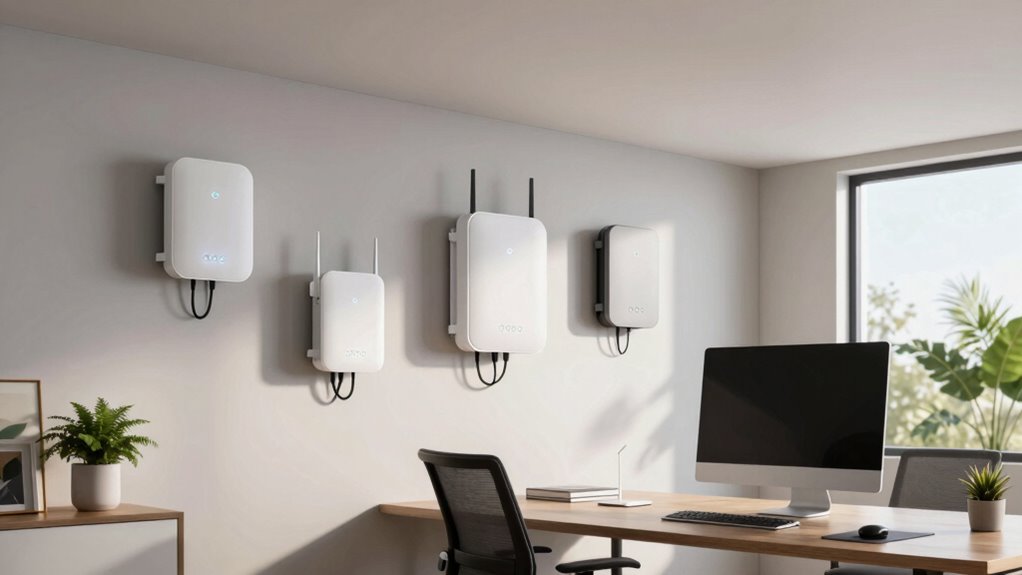

Finding the right access point for a home office can significantly improve your Wi-Fi stability and speed. The Ubiquiti U6+ stands out as the overall best due to its dual-band performance and robust features. For those prioritizing enterprise-grade management, the Cisco Meraki MR36-HW offers seamless cloud control, though at a higher price. Meanwhile, budget-conscious users might lean toward models like the Tenda AC1200. Choosing the right access point involves balancing performance, ease of setup, and price. Keep reading for a detailed breakdown of these options to find your best fit.

Get home appliances delivered free with Prime
- Fast, free delivery on millions of items
- Prime Video, Amazon Music and more included
- Member-only deals all year
Complete the kit


Key Takeaways
- Top picks combine high-speed Wi-Fi 6 technology with user-friendly management features.
- Price varies significantly, with enterprise-grade options costing more but offering better scalability.
- Dual-band support and PoE are common features among the best access points for home offices.
- Ease of setup and management can be a decisive factor for non-technical users.
- Tradeoffs often involve balancing cost against future-proofing and enterprise features.
| Ubiquiti U6+ Dual Band IEEE 802.11 a/b/g/n/ac/ax Wireless Access Point |  | Best Overall for High-Performance Home Office Networks | Wireless Standard: IEEE 802.11 a/b/g/n/ac/ax | Max Data Transfer Rate: 3 Gbit/s | Frequency Bands: 2.4 GHz, 5 GHz | VIEW ON AMAZON | See Our Full Breakdown |
| Omada EAP650 Business WiFi 6 AX3000 Dual Band Wireless Gigabit Access Point |  | Best for Cloud-Managed Business Environments | Wireless Standard: WiFi 6 (802.11ax) | Speed: up to 2976 Mbps | Bands: Dual Band (2.4 GHz and 5 GHz) | VIEW ON AMAZON | See Our Full Breakdown |
| Omada EAP610 Business WiFi 6 AX1800 Dual Band Wireless Gigabit Access Point |  | Best for Modern Business with Advanced Wireless Features | Wireless Technology: WiFi 6 | Speed: 1800 Mbps | Bands: Dual Band | VIEW ON AMAZON | See Our Full Breakdown |
| NETGEAR WiFi 6 Wireless Access Point (WAX210) |  | Best for Small Business and Retail Environments | WiFi Standard: WiFi 6 (AX1800) | Max Speed: 1,800 Mbps | Supported Devices: up to 128, 30 active | VIEW ON AMAZON | See Our Full Breakdown |
| Grandstream GWN7630 AC2330 Wi-Fi 5 Access Point |  | Best for High-Density Business Environments | Wireless Throughput: 2.33 Gbps | Number of Ports: 2 | LAN Port Bandwidth: 1000 Mbps | VIEW ON AMAZON | See Our Full Breakdown |
| Linksys LAPAC1200C AC1200 Wireless Access Point for Business |  | Best Overall for Business-Grade Performance and Remote Management | Brand: Linksys | Model Number: LAPAC1200C | Type: Wireless Access Point | VIEW ON AMAZON | See Our Full Breakdown |
| TP-Link TL-WA1201 AC1200 Dual Band Wireless Gigabit Access Point |  | Best Value for Flexible, Multi-Mode Deployment | Wi-Fi Speed: up to 1200 Mbps | Bands: 2.4GHz and 5GHz | Operation Modes: Client, Multi-SSID, Range Extender, AP | VIEW ON AMAZON | See Our Full Breakdown |
| TP-Link EAP225 AC1350 Gigabit Wireless Access Point |  | Best for Seamless Mesh and Cloud Control in Business Settings | Power Supply: Supports 802.3af PoE and passive PoE | Wireless Standard: IEEE 802.11ac | Maximum Wireless Rates: AC1350 | VIEW ON AMAZON | See Our Full Breakdown |
| Ubiquiti Networks UniFi nanoHD Wave-2 Access Point |  | Best Compact High-Density Wi-Fi 5 for Discreet Deployment | Wireless Standard: Wi-Fi 5 (802.11ac) | Frequency Band: Dual-Band | Maximum Data Rate: 1733 Mbps | VIEW ON AMAZON | See Our Full Breakdown |
| Cisco Meraki MR36-HW Cloud-Managed Wi-Fi 6 Indoor Wireless Access Point |  | Best for Future-Proof Indoor Wi-Fi with Cloud Management | Item Package Dimension: 11.8 x 6.2 x 2.9 inches | Item Package Weight: 2.31 lbs | Product Type: Networking Device | VIEW ON AMAZON | See Our Full Breakdown |
| Ubiquiti UniFi nanoHD Compact 802.11ac Wave2 MU-MIMO Enterprise Access Point | 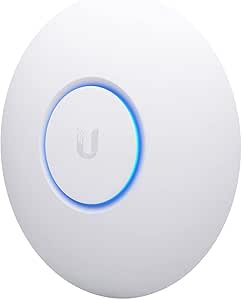 | Best Overall for Discreet, High-Capacity Home Office Wi-Fi | Technology: 802.11ac Wave2 | Concurrent Users: 200+ | PoE Compatibility: Yes | VIEW ON AMAZON | See Our Full Breakdown |
| Meraki MR34 Cloud-Managed Wireless Access Point (802.11ac, 1.75 Gbps Dual-Band, 3×3:3 MIMO Radios, Enterprise Class) |  | Best for Large, High-Density Home Offices Requiring Cloud Management | Wireless Standard: 802.11ac | Max Data Rate: 1.75 Gbps | Radio Configuration: 3×3:3 MIMO | VIEW ON AMAZON | See Our Full Breakdown |
| Linksys Business LAPAC1200 Access Point Wireless Wi-Fi Dual Band AC1200 with PoE |  | Best for Small to Medium Home Offices Needing Reliable Business-Grade Wi-Fi | Frequency Band: Dual-Band (2.4 GHz + 5 GHz) | Wireless Standard: 802.11ac | Data Transfer Rate: 1.17 Gbps | VIEW ON AMAZON | See Our Full Breakdown |
| Tenda AC1200 WiFi Access Point |  | Best Budget-Friendly Outdoor/Indoor Coverage for Home Offices | Frequency Band: Dual-Band | Wireless Compatibility: 802.11ac | Connectivity Technology: Ethernet | VIEW ON AMAZON | See Our Full Breakdown |
| access point for home office | Wireless Standard |
|---|---|
| Ubiquiti U6+ Dual Band IEEE 80 | IEEE 802.11 a/b/g/n/ac/ax |
| Omada EAP650 Business WiFi 6 A | WiFi 6 (802.11ax) |
| Omada EAP610 Business WiFi 6 A | — |
| NETGEAR WiFi 6 Wireless Access | — |
| Grandstream GWN7630 AC2330 Wi- | — |
| Linksys LAPAC1200C AC1200 Wire | — |
| TP-Link TL-WA1201 AC1200 Dual | — |
| TP-Link EAP225 AC1350 Gigabit | IEEE 802.11ac |
| Ubiquiti Networks UniFi nanoHD | Wi-Fi 5 (802.11ac) |
| Cisco Meraki MR36-HW Cloud-Man | Wi-Fi 6 |
| Ubiquiti UniFi nanoHD Compact | — |
| Meraki MR34 Cloud-Managed Wire | 802.11ac |
| Linksys Business LAPAC1200 Acc | 802.11ac |
| Tenda AC1200 WiFi Access Point | — |
More Details on Our Top Picks
Ubiquiti U6+ Dual Band IEEE 802.11 a/b/g/n/ac/ax Wireless Access Point
The Ubiquiti U6+ stands out for its support of Wi-Fi 6, offering data transfer speeds up to 3 Gbit/s, making it ideal for users with demanding bandwidth needs. Compared to the Omada EAP650, it provides higher raw throughput, but it requires a PoE+ switch, which adds complexity and cost. Its wall or ceiling mountability allows flexible placement, and PoE+ simplifies wiring—yet, the single Ethernet port limits expandability in complex setups. This access point is perfect for tech-savvy users who want maximum speed and are ready to handle a more involved installation process.
Pros:- Supports Wi-Fi 6 with speeds up to 3 Gbit/s
- Flexible mounting options for optimal placement
- PoE+ power simplifies installation and wiring
- Reliable and secure wireless connection
Cons:- Requires PoE+ switch or injector, increasing setup complexity
- Limited to one Ethernet port, restricting network expansion
- May be overkill for small, low-traffic home networks
Best for: Home office users with high data demands and technical familiarity who want top-tier Wi-Fi 6 performance
Not ideal for: Casual users seeking simple plug-and-play solutions or small networks with minimal devices
- Wireless Standard:IEEE 802.11 a/b/g/n/ac/ax
- Max Data Transfer Rate:3 Gbit/s
- Frequency Bands:2.4 GHz, 5 GHz
- Ethernet Ports:1 Gigabit Ethernet
- PoE+ Power:Up to 25.5W
- Coverage Area:140 square meters
Our verdict“This is best suited for technically proficient users seeking maximum speed and reliability in a home office setup.”
Omada EAP650 Business WiFi 6 AX3000 Dual Band Wireless Gigabit Access Point
The Omada EAP650 offers high-speed WiFi 6 (AX3000) performance, delivering up to 2976 Mbps, making it a solid choice for busy professional settings. Its cloud management via Omada provides seamless control, comparable in ease to the NETGEAR WAX210, but with more advanced features and faster speeds. Installation is flexible thanks to multiple power options, including PoE+ and 12V DC, yet it requires the Omada SDN controller for full mesh capabilities, adding complexity for some users. This model is ideal for businesses needing reliable, scalable Wi-Fi with centralized management.
Pros:- High-speed WiFi 6 performance up to 2976 Mbps
- Cloud management simplifies network oversight
- Flexible power options including PoE+ and DC
- Supports seamless roaming and enterprise features
Cons:- Requires Omada SDN controller for full features
- Some advanced features depend on compatible hardware/software
- Setup can be complex for non-technical users
Best for: Small to medium-sized businesses or advanced home offices requiring centralized control and high throughput
Not ideal for: Users without existing Omada infrastructure or those seeking simple, standalone access points
- Wireless Standard:WiFi 6 (802.11ax)
- Speed:up to 2976 Mbps
- Bands:Dual Band (2.4 GHz and 5 GHz)
- Management:Cloud-based via Omada
- Power Options:802.3at PoE+, 12V DC
- Warranty:5 years
Our verdict“Best suited for users who want enterprise-grade Wi-Fi management with robust performance and scalability.”
Omada EAP610 Business WiFi 6 AX1800 Dual Band Wireless Gigabit Access Point
The Omada EAP610 delivers solid WiFi 6 speeds up to 1800 Mbps and features like Mesh WiFi, WPA3, and Beamforming, making it suitable for modern offices. Its slim design and multiple power options, including PoE+ and DC, foster easy placement. While it offers excellent wireless features, it shares the Omada EAP650’s reliance on a cloud or SDN platform for full functionality, which might be a hurdle for less tech-savvy users. Compared with other affordable options like the NETGEAR WAX210, it provides more advanced features but at a higher cost and complexity.
Pros:- Fast WiFi 6 speeds up to 1800 Mbps
- Supports Mesh and WPA3 security
- Cloud and SDN management compatibility
- Flexible installation with multiple power options
Cons:- Requires Omada SDN controllers for full mesh features
- Limited details on compatibility with non-Omada devices
- Setup complexity for non-technical users
Best for: Businesses or home offices seeking a sleek, feature-rich WiFi 6 access point with flexible management options
Not ideal for: Users seeking straightforward, plug-and-play solutions without cloud management dependencies
- Wireless Technology:WiFi 6
- Speed:1800 Mbps
- Bands:Dual Band
- Management:Cloud and SDN compatible
- Power Options:PoE+, DC
- Warranty:5 years
Our verdict“Ideal for tech-savvy users wanting a modern, feature-packed WiFi 6 access point with scalable management.”
NETGEAR WiFi 6 Wireless Access Point (WAX210)
The NETGEAR WAX210 provides WiFi 6 speeds up to 1800 Mbps, designed for small business settings, retail stores, or professional offices. Its straightforward web-based management makes it accessible to users comfortable with basic configuration, but it lacks the advanced cloud management of models like the Omada EAP650. Its support for up to 30 active devices over 1,500 sq. ft. makes it suitable for small to medium spaces, though it requires existing networking infrastructure, including PoE switches. For users seeking a balance between performance and ease of use, this model offers a practical, no-fuss setup.
Pros:- Supports WiFi 6 for faster, reliable connections
- Handles up to 30 active devices simultaneously
- Web browser management is straightforward
- Supports multiple SSIDs and security protocols
Cons:- Requires existing router and PoE switch for operation
- Power adapter sold separately, adding to cost
- Cannot function as a mesh or extender
Best for: Small business owners who want reliable WiFi 6 performance with simple web management
Not ideal for: Homes or users without existing PoE infrastructure or those needing mesh capabilities
- WiFi Standard:WiFi 6 (AX1800)
- Max Speed:1,800 Mbps
- Supported Devices:up to 128, 30 active
- Coverage Area:up to 1,500 sq. ft.
- Power:PoE (adapter sold separately)
- Mounting Options:Wall or T-bar ceiling
Our verdict“A practical choice for small businesses needing straightforward WiFi 6 with manageable setup and operation.”
Grandstream GWN7630 AC2330 Wi-Fi 5 Access Point
The Grandstream GWN7630 offers impressive throughput up to 2.33 Gbps and MU-MIMO technology, making it well-suited for busy small to medium-sized business environments with many concurrent users. Its dual-band, Wi-Fi 5 technology is slightly behind Wi-Fi 6 options but still capable of supporting over 200 clients simultaneously. Compared to the Ubiquiti U6+, it’s more affordable and easier to install, but it doesn’t provide the latest Wi-Fi 6 features. It’s a solid choice when high concurrency and high throughput are priorities, especially if upgrading to Wi-Fi 6 isn’t feasible.
Pros:- High throughput of 2.33 Gbps
- Supports over 200 clients concurrently
- MU-MIMO technology improves coverage and speed
- Easy to manage via embedded controller or GWN.Cloud
Cons:- Requires PoE or PoE+ power supply (not included)
- Limited to Wi-Fi 5, missing newer Wi-Fi 6 features
- Design less sleek compared to newer models
Best for: Small to medium-sized businesses needing high client density support without requiring Wi-Fi 6
Not ideal for: Environments where future-proofing with Wi-Fi 6 is essential or for home users with fewer devices
- Wireless Throughput:2.33 Gbps
- Number of Ports:2
- LAN Port Bandwidth:1000 Mbps
- Maximum Upstream Rate:2.33 Gbps
- Number of Antennas:4
- Coverage:175 meters
Our verdict“Ideal for high-density environments where robust performance trumps the latest Wi-Fi standards.”
Linksys LAPAC1200C AC1200 Wireless Access Point for Business
This model stands out for its high-speed dual-band performance, supporting data transfer rates up to 1.17 Gbps, making it suitable for demanding business environments. Unlike the Ubiquiti UniFi nanoHD, which is more compact but limited to Wi-Fi 5, the Linksys LAPAC1200C offers advanced security features and cloud management, ideal for organizations needing centralized control. However, it involves a higher cost, and its cloud management license after five years adds ongoing expenses. Its PoE+ support simplifies installation, and the security features protect sensitive business data. The need for cloud licensing might be a hurdle for smaller setups, but overall, it provides robust, scalable network access for growing offices.
Pros:- High-speed dual-band wireless performance up to 1.17 Gbps
- Remote management via cloud dashboard for easy control
- PoE+ support simplifies installation and deployment
- Advanced security features protect sensitive data
Cons:- Requires a cloud management license after 5 years, adding ongoing costs
- Complex setup for users unfamiliar with business networking
Best for: Medium to large businesses requiring reliable, high-speed Wi-Fi with centralized management and security.
Not ideal for: Home users or small offices with limited technical expertise and budget constraints, due to complexity and higher cost.
- Brand:Linksys
- Model Number:LAPAC1200C
- Type:Wireless Access Point
- Connectivity:PoE+
- Data Transfer Speed:up to 1.17 Gbps
- Bands:Dual-band (2.4 GHz + 5 GHz)
- Security:Business class security features
- Management:Cloud management via Linksys Cloud Manager
Our verdict“This access point is best suited for businesses that prioritize security, speed, and remote management, accepting higher initial investment.”
TP-Link TL-WA1201 AC1200 Dual Band Wireless Gigabit Access Point
Compared with the Ubiquiti UniFi nanoHD, which excels in high-density environments but is limited to Wi-Fi 5, the TP-Link TL-WA1201 offers a versatile feature set with multiple operation modes including Client, Multi-SSID, Range Extender, and AP, making it adaptable for various network needs. Its four external antennas with Beamforming technology extend coverage, and support for PoE simplifies installation. However, it requires an additional PoE adapter, which might increase setup costs, and lacks advanced management features found in business-centric models like the TP-Link EAP225. This pick makes the most sense for small offices or home setups needing flexible, multi-purpose access points without a hefty price tag, but less so for complex enterprise environments requiring centralized management.
Pros:- Supports high-speed dual-band Wi-Fi up to 1200 Mbps
- Flexible operation modes including Extender and Client
- Beamforming antennas for better coverage
- Easy PoE installation for flexible placement
Cons:- Requires an external PoE adapter, adding extra cost
- Limited management and security features for enterprise needs
- No built-in Wi-Fi security beyond WPA/WPA2
Best for: Small offices or tech-savvy home users who need multi-mode functionality and extended coverage at a budget.
Not ideal for: Large enterprises or environments requiring centralized management, as it lacks advanced cloud-based control features.
- Wi-Fi Speed:up to 1200 Mbps
- Bands:2.4GHz and 5GHz
- Operation Modes:Client, Multi-SSID, Range Extender, AP
- Antennae:4 external with Beamforming
- Ethernet Port:Gigabit Ethernet
- PoE Support:Yes
Our verdict“This access point is ideal for budget-conscious users who need versatile deployment options without complex management requirements.”
TP-Link EAP225 AC1350 Gigabit Wireless Access Point
Compared to the Ubiquiti UniFi nanoHD, which is compact and MU-MIMO capable but Wi-Fi 5 only, the TP-Link EAP225 offers a more comprehensive management experience via Omada SDN Cloud and supports seamless roaming, ideal for business environments with multiple access points. Its dual-band AC1350 speeds and MU-MIMO technology allow for efficient handling of many devices simultaneously. It supports PoE and passive PoE, making installation flexible for different building layouts. However, performance can vary based on environmental factors and client device compatibility with MU-MIMO. It’s a great choice for organizations that need centralized, cloud-based control and extended coverage, but less suitable for those requiring Wi-Fi 6 or the highest throughput available today.
Pros:- Supports flexible power options with PoE and passive PoE
- Dual-band Wi-Fi with MU-MIMO for efficient multi-device handling
- Seamless roaming and mesh network support
- Cloud management via Omada SDN platform
Cons:- Performance depends on environmental conditions and device support
- Requires compatible client devices for full MU-MIMO benefits
- Setup can be complex for non-technical users
Best for: Medium-sized companies seeking a scalable, cloud-managed Wi-Fi solution with seamless roaming.
Not ideal for: Small offices or residential users looking for plug-and-play simplicity without cloud management complexity.
- Power Supply:Supports 802.3af PoE and passive PoE
- Wireless Standard:IEEE 802.11ac
- Maximum Wireless Rates:AC1350
- Technology:MU-MIMO, Seamless Roaming
- Ethernet Ports:Gigabit Ethernet
- Mesh Support:Yes
Our verdict“This pick is best for businesses wanting centralized, cloud-managed Wi-Fi with seamless coverage across multiple access points.”
Ubiquiti Networks UniFi nanoHD Wave-2 Access Point
This access point excels in environments where space is limited but high-density device connections are needed, thanks to its compact design and MU-MIMO support. It offers a maximum data rate of 1733 Mbps on dual-band Wi-Fi 5, suitable for busy offices or cafes. Compared with the Cisco Meraki MR36, which supports Wi-Fi 6 and cloud management, the nanoHD is more affordable and easier to deploy in existing structures. However, it is limited to Wi-Fi 5, which may become a bottleneck as Wi-Fi 6 becomes more widespread. It also requires PoE power, and its internal antennas offer less customization. This model makes sense for small to medium deployments where discreetness and high throughput are priorities without the need for Wi-Fi 6.
Pros:- Compact and discreet design ideal for limited spaces
- Supports MU-MIMO for multiple device connections
- High data rate of 1733 Mbps with dual-band Wi-Fi 5
- Includes mounting options for flexible installation
Cons:- Limited to Wi-Fi 5, not future-proof for Wi-Fi 6 devices
- Requires PoE switch or injector for power
- Lacks external antennas for customization
Best for: High-density environments needing discreet, high-performance Wi-Fi 5 access points with MU-MIMO.
Not ideal for: Large, future-proof networks requiring Wi-Fi 6 or extensive external antenna customization.
- Wireless Standard:Wi-Fi 5 (802.11ac)
- Frequency Band:Dual-Band
- Maximum Data Rate:1733 Mbps
- Ethernet Port:1 Gigabit Ethernet 802.3af PoE
- Number of Antennas:4
- Mounting Options:Wall or Ceiling
Our verdict“This access point suits high-density, space-constrained environments that need reliable Wi-Fi 5 performance without Wi-Fi 6 support.”
Cisco Meraki MR36-HW Cloud-Managed Wi-Fi 6 Indoor Wireless Access Point
Compared with the Ubiquiti UniFi nanoHD, which offers Wi-Fi 5, the Meraki MR36-HW supports Wi-Fi 6, providing faster speeds and improved capacity. It’s designed for indoor environments seeking reliable, scalable performance, with cloud management making remote control straightforward. Its mounting kit and cloud-based dashboard make it suitable for larger offices or environments where centralized control is a priority. The main tradeoff is that it’s a renewed product, which might limit warranty and support, and additional licenses may be necessary for full functionality. Still, for organizations preparing for future Wi-Fi demands, the Meraki MR36 is a solid investment in scalability and speed.
Pros:- Supports Wi-Fi 6 for faster, more efficient wireless connections
- Cloud-managed for seamless remote administration
- Includes mounting kit for straightforward installation
- Designed for indoor, high-density environments
Cons:- Renewed product may have limited warranty
- Additional licenses might be required for full features
- No detailed specs on throughput or coverage
Best for: Indoor enterprise environments needing Wi-Fi 6 with easy cloud management and scalability.
Not ideal for: Small home offices or users on a strict budget, due to the renewed status and potential extra licensing costs.
- Item Package Dimension:11.8 x 6.2 x 2.9 inches
- Item Package Weight:2.31 lbs
- Product Type:Networking Device
- Wireless Standard:Wi-Fi 6
- Indoor Use:Yes
- Management:Cloud-based
Our verdict“This access point is best for organizations seeking to future-proof their indoor Wi-Fi with cloud management and Wi-Fi 6 technology, despite some potential licensing and warranty limitations.”
Ubiquiti UniFi nanoHD Compact 802.11ac Wave2 MU-MIMO Enterprise Access Point
The Ubiquiti UniFi nanoHD stands out for its combination of high user capacity and discreet design, making it ideal for a home office needing to support many devices without clutter. Compared with the Linksys LAPAC1200, it supports significantly more concurrent users—over 200—while maintaining a compact form factor suited for discreet installations. However, the nanoHD requires PoE infrastructure and the covers are sold separately, adding complexity and cost for setup. While coverage details are limited, its support for MU-MIMO ensures efficient handling of multiple devices, reducing congestion. This pick makes the most sense for users who want a sleek, enterprise-grade solution that blends into home decor but are prepared for the infrastructure investment.
Pros:- Supports over 200 concurrent users for busy environments
- Compact and discreet design blends into home decor
- PoE compatible for flexible installation
Cons:- Covers sold separately, increasing total cost
- Limited information on actual coverage range
- Requires PoE infrastructure, which might be complex for some users
Best for: Home office users with multiple devices and a need for discreet, high-capacity Wi-Fi
Not ideal for: Those seeking an easy plug-and-play setup without PoE infrastructure or additional accessories
- Technology:802.11ac Wave2
- Concurrent Users:200+
- PoE Compatibility:Yes
- Supports Optional Covers:Yes
Our verdict“This is best for tech-savvy home office users who prioritize high capacity and unobtrusive design.”
Meraki MR34 Cloud-Managed Wireless Access Point (802.11ac, 1.75 Gbps Dual-Band, 3×3:3 MIMO Radios, Enterprise Class)
The Meraki MR34 is tailored for large-scale, demanding home office environments where remote management and security matter. Its 1.75 Gbps dual-band throughput and 3×3:3 MIMO radios deliver fast, reliable connections across many devices, comparable to the Ubiquiti U6+ but with the added advantage of cloud-based management. Its security features, spectrum analytics, and 24/7 WIDS/WIPS make it suitable for users with sensitive data or multiple users in a high-density setting. The need for a separate cloud license and possibly higher cost are tradeoffs, especially for smaller setups. This makes the MR34 ideal for tech-forward users who want enterprise-grade management and security in a home office.
Pros:- High throughput of 1.75 Gbps dual-band
- Advanced security with spectrum analytics
- Cloud-managed for remote control and monitoring
- Designed for high-density deployments
Cons:- Requires separate cloud license, increasing ongoing costs
- Setup complexity may be daunting for beginners
- Higher initial investment compared to simpler access points
Best for: Tech-savvy professionals needing remote management, security, and high throughput
Not ideal for: Users who prefer simple, local-only setups or have tight budgets
- Wireless Standard:802.11ac
- Max Data Rate:1.75 Gbps
- Radio Configuration:3×3:3 MIMO
- Bands:Dual-band
- Power:PoE (802.3at, 802.3af)
- Management:Cloud-managed via Meraki
Our verdict“This is ideal for home offices with high device density and a need for centralized, cloud-based control.”
Linksys Business LAPAC1200 Access Point Wireless Wi-Fi Dual Band AC1200 with PoE
The Linksys LAPAC1200 offers a balanced mix of performance and manageability, supporting dual-band Wi-Fi up to 1.17 Gbps and featuring PoE+ for flexible deployment. Compared with the Tenda AC1200, it provides more robust security protocols and a user-friendly interface, making it suitable for small businesses or serious home offices. The internal antennas limit coverage in larger spaces, and it requires PoE+ infrastructure, which may add to setup complexity. Nonetheless, its combination of high-speed dual-band Wi-Fi and security makes it a strong choice for users who want enterprise features without the complexity of cloud management. It’s best suited for those who want a reliable, wired-in Wi-Fi solution that’s easy to control via web or app.
Pros:- Supports high-speed dual-band Wi-Fi up to 1.17 Gbps
- Includes PoE+ for flexible installation
- Advanced security protocols suitable for business use
- Easy to manage via web interface or app
Cons:- Requires PoE+ network infrastructure
- Limited to internal antennas, affecting large space coverage
- No external antenna options for extended range
Best for: Small to medium home office setups requiring dependable Wi-Fi with security features
Not ideal for: Home users without PoE+ infrastructure or those seeking outdoor coverage
- Frequency Band:Dual-Band (2.4 GHz + 5 GHz)
- Wireless Standard:802.11ac
- Data Transfer Rate:1.17 Gbps
- Number of Ports:4
- PoE Support:Yes
- Security Protocols:WPA-PSK, WPA2-PSK
Our verdict“This is a solid choice for office environments that need secure, reliable Wi-Fi with manageable deployment.”
Tenda AC1200 WiFi Access Point
The Tenda AC1200 offers dual-band Wi-Fi with a coverage area reaching up to 3,200 sq.ft, making it suitable for larger or outdoor home office spaces. Its IP65-rated enclosure allows for outdoor installation, which is a significant advantage over the other models meant solely for indoor use. Compared to the Linksys LAPAC1200, it provides broader coverage and rugged durability but lacks detailed management features or external antenna options. The single LAN port could limit wired connectivity, and the user interface is less advanced. Nevertheless, this model excels in environments where outdoor or harsh conditions exist, and budget constraints are a concern. It’s ideal for users wanting versatile, weather-resistant coverage for outdoor or semi-outdoor setups.
Pros:- Durable IP65-rated enclosure for outdoor use
- Supports over 100 devices with seamless coverage
- Flexible mounting options for diverse environments
- Advanced RF technology minimizes interference
Cons:- No mention of included mounting hardware
- Limited to one LAN port, restricting wired connections
- Lacks detailed management or app features
Best for: Home offices needing outdoor or rugged Wi-Fi coverage in large or challenging environments
Not ideal for: Indoor-only setups where sleek design or advanced management features are priorities
- Frequency Band:Dual-Band
- Wireless Compatibility:802.11ac
- Connectivity Technology:Ethernet
- Antenna Type:Internal
- Security Protocol:WPA-PSK
- Coverage:3200 sq.ft
Our verdict“This is perfect for outdoor or rugged home office spaces requiring durable Wi-Fi coverage and flexible installation.”

How We Picked
Products were selected based on their performance, build quality, and suitability for a home office environment. Priority was given to Wi-Fi standards (preferably Wi-Fi 6), ease of installation, and management features that cater to both tech-savvy users and beginners. We also evaluated value for money, considering price versus feature set, and looked for models that offer reliable coverage and scalability. The ranking emphasizes a mix of high-performance options and budget-friendly choices, ensuring there’s a suitable pick for different needs and budgets.Factors to Consider When Choosing Access Point For Home Office
When choosing an access point for your home office, it’s important to consider several factors that impact your network’s reliability and future growth. The right device should balance speed, coverage, ease of management, and cost. Making an informed choice can prevent frustrations like dead zones or slow connections, especially as your home office needs evolve. Here’s what to keep in mind before purchasing.Performance and Wi-Fi Standards
Look for access points supporting Wi-Fi 6 (802.11ax) for faster speeds and better handling of multiple devices. Devices with Wi-Fi 5 (802.11ac) can suffice for basic needs but may struggle with multiple users or high-bandwidth tasks. The choice impacts not only current performance but also future-proofing, as Wi-Fi 6 is becoming the new standard in home and small office setups.
Coverage and Scalability
Assess your space and consider whether a single access point can cover your entire home or if you’ll need multiple units. Devices supporting mesh networking or seamless roaming make it easier to extend coverage without complicated setups. Overestimating coverage needs can lead to dead zones, so accurate measurements and choosing scalable solutions matter.
Management and Setup Ease
Many access points now feature cloud-based management or mobile apps, simplifying setup and ongoing control. If you prefer a plug-and-play experience, models with straightforward interfaces will save time. Conversely, enterprise-grade options with detailed controls are better suited for users comfortable with network management or with larger, more complex setups.
Power Options and Cost
PoE (Power over Ethernet) capability can streamline installation by reducing cabling, especially in more permanent setups. However, PoE switches add initial cost. Budget models may lack features like PoE or advanced management, so consider your long-term needs and whether paying more upfront will save you headaches later.
Price and Long-term Value
Higher-priced models often offer better performance, security, and scalability, which can be worthwhile if your home office demands consistent high-speed connectivity. Cheaper options might suffice temporarily but could require upgrades sooner. Balancing upfront costs against potential future needs is key to making a cost-effective choice.
Frequently Asked Questions
Can I replace my router with an access point for my home office?
While an access point can extend or improve your Wi-Fi coverage, it typically works in conjunction with a router rather than replacing it. Some devices combine the router and access point functions, but for most home setups, a dedicated access point is used alongside an existing router. Consider your current network setup and future needs before making the switch to ensure compatibility and optimal performance.
Is Wi-Fi 6 necessary for a home office?
Wi-Fi 6 provides faster speeds, better device handling, and improved reliability, especially in environments with multiple connected devices. While not strictly necessary for basic tasks like browsing or email, it becomes valuable if your home office involves high-bandwidth activities like video conferencing, large file transfers, or multiple users. Investing in Wi-Fi 6 now can future-proof your setup and improve overall stability.
What is PoE, and do I need it for my home office?
Power over Ethernet (PoE) allows an access point to receive power through the Ethernet cable, reducing the need for a separate power supply. For home offices, PoE is most useful if you prefer a cleaner, more flexible installation or have a PoE switch. If your setup is simple and you don’t want to upgrade your network infrastructure, non-PoE models can be easier to install and less costly initially.
How many access points do I need for a large home?
The number depends on your home’s size, layout, and construction materials. One high-quality access point might suffice for smaller spaces, but larger or multi-story homes often require multiple units to eliminate dead zones. Using mesh-capable access points can simplify coverage expansion, allowing you to add units seamlessly without complex configuration.
Are enterprise-grade access points worth it for home use?
Enterprise-grade devices offer advanced management, security, and scalability features that can benefit serious home office setups or those with multiple users and high data demands. However, they come at a higher price and often require technical knowledge to configure. For most typical home offices, mid-range Wi-Fi 6 models provide sufficient performance without the complexity and cost of enterprise solutions.
Conclusion
For general home office needs, the Ubiquiti U6+ offers a balanced mix of speed, ease of use, and scalability, making it the best overall pick. Budget-conscious users should consider models like the Tenda AC1200, which provides reliable performance at a lower price point. For those with larger spaces or requiring enterprise features, the Cisco Meraki MR36-HW delivers premium management and security, though at a higher cost. Beginners will benefit from plug-and-play options like the Linksys LAPAC1200, while power users with demanding setups might prioritize Wi-Fi 6 models with PoE support for future-proofing.
Fall Picks
fall essentials
As an affiliate, we earn on qualifying purchases.