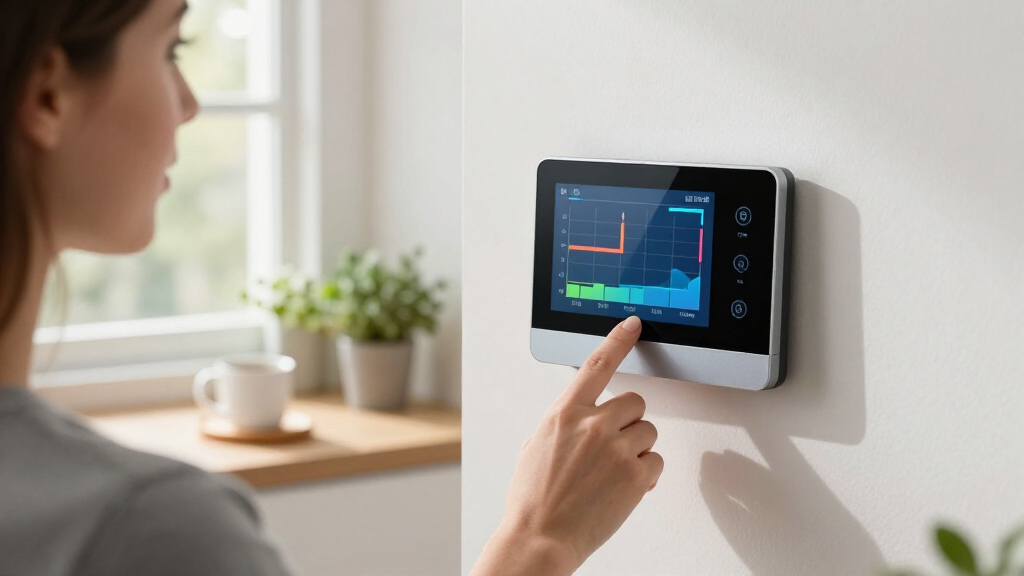

Smart home energy monitors clamp onto your electrical panel and show exactly where every kilowatt-hour goes, and the differences between models come down to how granular the data is, how good the app is, and whether you’re locked into a cloud. The Emporia Vue 3 stands out as the best overall pick thanks to its polished app, reliable whole-home accuracy, and affordable per-circuit expansion. The Refoss monitor with Open API and no cloud dependency is the strongest choice for Home Assistant users who want local control, while the 16-circuit sensor monitor appeals to homeowners who want branch-by-branch detail without a subscription. The main tradeoffs in this category: circuit-level monitors cost more and take longer to install, cloud-free models demand more technical setup, and cheap dual-channel units only track two loads. Keep reading for the full breakdown of all 13 monitors.

Get home appliances delivered free with Prime
- Fast, free delivery on millions of items
- Prime Video, Amazon Music and more included
- Member-only deals all year
Complete the kit


Key Takeaways
- Whole-home accuracy was table stakes across the lineup — what separated the top picks was per-circuit monitoring, with 16-sensor models (the Home Assistant-compatible unit and the Refoss 60A) revealing phantom loads that dual-channel monitors simply cannot see.
- Cloud dependency was the biggest dividing line: Emporia and Meross offer the smoothest apps but require accounts and internet, while both Refoss models work fully locally with Home Assistant — better for privacy-minded buyers, harder for beginners.
- The three Emporia Vue 3 listings are effectively the same product sold in different bundles; buy based on included sensors, not listing price alone, since expansion CTs add up quickly.
- Dual-channel monitors (the 2×120A and 2×80A WiFi units) are the worst fit for main-panel monitoring in larger homes — their clamp ratings suit subpanels, well pumps, or EV chargers, not 200A service.
- The Siemens Inhab sits in an awkward middle: brand-trustworthy hardware and solid circuit sensors, but a pricier ecosystem with less third-party integration than Emporia or Refoss.
| Eyedro Home Smart Energy Monitor 200A 2.4GHz WiFi/Ethernet Net Metering |  | Best for Solar and Net Metering | Current Sensors: 2 x 200A | Connectivity: WiFi 2.4 GHz, Ethernet | Compatibility: Solar, grid, net metering | VIEW LATEST PRICE | See Our Full Breakdown |
| Emporia Vue 3 Home Energy Monitor |  | Best Overall | Certification: UL Listed, CE Listed | Installation: Circuit panel with clamp-on sensors | Supported Systems: Single phase, split phase, 2-wire, 3-wire, 3-phase, 4-wire Wye | VIEW LATEST PRICE | See Our Full Breakdown |
| WiFi Home Energy Monitor with 3 80A CT Clamps |  | Best for Targeted Circuit Monitoring | CT Clamps: 3 x 80A | Input Voltage: AC 100–240V | Connectivity: WiFi | VIEW LATEST PRICE | See Our Full Breakdown |
| Smart Home Energy Monitor with 16 50A Circuit Sensors, Compatible with Home Assistant |  | Best for Smart Home Enthusiasts | Sensors: 16 x 50A circuit sensors | Supported Voltages: 120VAC, 240VAC, 415Y/240VAC | Connectivity: WiFi 2.4GHz, MQTT, LAN | VIEW LATEST PRICE | See Our Full Breakdown |
| Smart Home Energy Monitor 2×120A, Dual-Channel WiFi Electricity Usage Meter with App Control |  | Best Value for Big Appliances | Channels: 2 | Current Capacity: 120A per channel | Connectivity: WiFi 2.4GHz | VIEW LATEST PRICE | See Our Full Breakdown |
| SIEMENS Inhab Smart Home Energy Monitor with Circuit Sensors |  | Best Brand-Backed Pick for North American Homes | Circuit Sensors: 16–50Amp | Main Sensors: 2 x 200Amp | Compatibility: USA and Canada | VIEW LATEST PRICE | See Our Full Breakdown |
| Emporia Vue 3 Home Energy Monitor – Smart Home Automation Module and Real-Time Electricity Usage Monitor |  | Best for Solar Owners | Certification: UL Listed | Supported Systems: Single phase, single-split phase, 2-wire, 3-wire, 3-phase, 4-wire Wye | Sensor Type: Clamp-on sensors | VIEW LATEST PRICE | See Our Full Breakdown |
| WiFi Home Energy Monitor with 2 x 120A CTs and Power Tracking |  | Best Budget Whole-Home Tracker | Current Transformers: 2 x 120A CTs | Energy Monitoring: Live energy use, bi-directional tracking | Phase Support: Single-phase 3-wire | VIEW LATEST PRICE | See Our Full Breakdown |
| Refoss Smart Home Energy Monitor with Open API, Home Assistant, No Cloud |  | Best for Home Automation Enthusiasts | Model: EM16P | Control: Local Web UI, Open API, MQTT | Compatibility: Home Assistant, OpenClaw AI | VIEW LATEST PRICE | See Our Full Breakdown |
| Meross Smart Home Energy Monitor |  | Best Balanced Local-Storage Pick | Certification: ETL, UL 61010 | System Compatibility: Single-phase 2-wire, single-split phase 3-wire, 3-phase 4-wire Wye | Supported Circuits: Main up to 200A, branch up to 60A | VIEW LATEST PRICE | See Our Full Breakdown |
| Smart Home Energy Monitor 2×80A, Dual-Channel WiFi Electricity Usage Tracker with App Control |  | Best Budget Starter Pick | Channels: 2 | Current per Channel: 80A | Connectivity: WiFi (2.4GHz) | VIEW LATEST PRICE | See Our Full Breakdown |
| Refoss Smart Home Energy Monitor with 16 60A Circuit Sensors |  | Best for Circuit-Level Detail and Privacy | Number of Sensors: 16 | Sensor Capacity: 60A each | Supported Systems: Single-phase, Split-phase, 3-phase 4-wire Wye | VIEW LATEST PRICE | See Our Full Breakdown |
| Emporia Vue 3 Home Energy Monitor – Smart Home Automation Module and Real-Time Electricity Usage Monitor |  | Best Overall | Part Number: EMV3A-2P-8 | Certification: CE, UL Listed | Supported Systems: Single-phase, Single-split phase, 2-wire, 3-wire, 3-phase, 4-wire Wye (earthed neutral) | VIEW LATEST PRICE | See Our Full Breakdown |
| smart home energy monitor | Connectivity | Warranty |
|---|---|---|
| Eyedro Home Smart Energy Monit | WiFi 2.4 GHz, Ethernet | — |
| Emporia Vue 3 Home Energy Moni | 2.4 GHz Wi-Fi | 1 year |
| WiFi Home Energy Monitor with | WiFi | — |
| Smart Home Energy Monitor with | WiFi 2.4GHz, MQTT, LAN | 1 year |
| Smart Home Energy Monitor 2×12 | WiFi 2.4GHz | — |
| SIEMENS Inhab Smart Home Energ | WiFi | — |
| Emporia Vue 3 Home Energy Moni | 2.4 GHz WiFi | 1 year |
| WiFi Home Energy Monitor with | 2.4 GHz WiFi | — |
| Refoss Smart Home Energy Monit | — | 2 years |
| Meross Smart Home Energy Monit | — | 2 years |
| Smart Home Energy Monitor 2×80 | WiFi (2.4GHz) | — |
| Refoss Smart Home Energy Monit | Wi-Fi with external antenna | 2 years |
| Emporia Vue 3 Home Energy Moni | 2.4 GHz Wi-Fi | 1 year |
More Details on Our Top Picks
Eyedro Home Smart Energy Monitor 200A 2.4GHz WiFi/Ethernet Net Metering
Among whole-home monitors, this option stands out for its dual 200A sensor capacity and its handling of bi-directional net metering, which makes it the most natural fit for solar households in this lineup. Compared with the Emporia Vue 3, the Eyedro offers both WiFi and Ethernet connectivity, a meaningful advantage when your electrical panel sits far from your router or in a WiFi dead zone. The subscription-free MyEyedro cloud also keeps lifetime costs lower than sensor-laden setups. The tradeoff: net metering typically demands a second unit, which pushes the total price well past the Emporia’s baseline, and installation is less beginner-friendly than the clamp-and-go WiFi options further down this list. For solar owners, though, few alternatives here match its production-and-consumption tracking.
Pros:- Dual 200A sensors cover whole-home loads including high-draw appliances
- Ethernet plus WiFi gives flexible, reliable placement options
- Solar, grid, and net metering support in one ecosystem
- Free cloud access with no recurring fees
Cons:- Full net metering setup usually requires purchasing a second device
- Configuration is more involved than simpler app-based monitors
Best for: Solar homeowners who need accurate net metering and production tracking without subscription fees
Not ideal for: Budget-conscious buyers monitoring a few specific circuits — a second unit is often required for net metering, inflating the cost
- Current Sensors:2 x 200A
- Connectivity:WiFi 2.4 GHz, Ethernet
- Compatibility:Solar, grid, net metering
- Cloud Access:MyEyedro cloud, no subscription
- Included Accessories:Ethernet cable, power adapter
- Standards:North American safety standards
Our verdict“This pick makes the most sense for solar households that want production and consumption tracked in one place without paying monthly for the privilege.”
Emporia Vue 3 Home Energy Monitor
This model earns the top spot because it balances safety certification, expandability, and app-driven automation better than anything else in this batch. The UL and CE listings matter more than they might seem: the Eyedro and generic Tuya-based monitors can’t match that certification pedigree, which matters when a device lives inside your electrical panel. Compared with the 16-circuit Home Assistant monitor, the Vue 3 trades local-only operation for a polished app with remote management and automation, plus solar and net metering support. The catch is cost creep — branch sensors sell separately, so appliance-level detail means paying beyond the base unit — and 1-minute data only persists for 7 days unless you accept hourly granularity. Still, for most homeowners it’s the most complete package here.
Pros:- UL and CE certified for panel-safe installation
- Expandable to 16 branch sensors for circuit-by-circuit detail
- Remote management and automation through the app
- Broad electrical system support including 3-phase 4-wire Wye
Cons:- Branch sensors sold separately, raising the true cost of detailed monitoring
- Only 7 days of 1-minute data retention
- Wi-Fi dependent — no wired fallback like the Eyedro’s Ethernet
Best for: Homeowners who want a certified, expandable whole-home system with room to grow into appliance-level monitoring
Not ideal for: Offline-first users or Home Assistant devotees — it requires cloud connectivity and Wi-Fi for real-time data
- Certification:UL Listed, CE Listed
- Installation:Circuit panel with clamp-on sensors
- Supported Systems:Single phase, split phase, 2-wire, 3-wire, 3-phase, 4-wire Wye
- Connectivity:2.4 GHz Wi-Fi
- Data Retention:7 days (1-minute data), indefinite (1-hour data)
- Sensor Capacity:Up to 16 branch sensors (sold separately)
- Warranty:1 year
Our verdict“If you want one monitor that can start simple and scale up without safety compromises, this is the one to buy first.”
WiFi Home Energy Monitor with 3 80A CT Clamps
Rather than trying to see everything, this option focuses on three specific circuits at 80A each — think HVAC, water heater, and a solar line. That targeted approach is its whole value proposition: compared with the Emporia Vue 3, you skip the base-unit-plus-add-on-sensors spending and get fixed hardware for the loads that actually drive your bill. The bonus features are practical too — temperature alerts at 50°C and a 15A relay let you cut power to a connected device remotely, something none of the whole-home monitors here offer. The tradeoffs are real: it won’t give you a whole-home picture like the Eyedro, wiring into circuits generally needs an electrician, and the relay is too weak for heavy loads. For diagnosing energy hogs, though, it’s a smart, affordable entry point.
Pros:- Monitors three high-consumption circuits simultaneously
- Temperature alerts add a safety layer the bigger monitors lack
- Built-in 15A relay enables remote appliance shutoff
- Real-time and historical data through Smart Life or Tuya app
Cons:- No whole-home view — blind to every unclamped circuit
- Installation involves circuit wiring and likely an electrician
- 15A relay too limited for controlling the large loads you’re monitoring
Best for: Homeowners who want to pinpoint two or three expensive loads like HVAC and water heating, with remote shutoff
Not ideal for: Anyone wanting whole-home visibility or historical utility-bill reconciliation — it only sees its three clamped circuits
- CT Clamps:3 x 80A
- Input Voltage:AC 100–240V
- Connectivity:WiFi
- App Compatibility:Smart Life, Tuya
- Temperature Alert:50°C threshold
- Relay Current:15A
Our verdict“Choose this if your goal is understanding and controlling a few specific energy hogs, not auditing your entire home.”
Smart Home Energy Monitor with 16 50A Circuit Sensors, Compatible with Home Assistant
For readers already running a smart home hub, this monitor’s Home Assistant compatibility and local MQTT/LAN operation make it the privacy-first choice in the roundup. Unlike the Emporia Vue 3, which routes everything through its cloud, this unit runs entirely without internet access — data stays on your network. The 16 included 50A sensors also give it a per-circuit detail advantage out of the box that the Vue 3 only reaches after buying add-ons, which is why it appeals to landlords and shared households tracking individual rooms. The flip side is the audience question: MQTT configuration and Home Assistant setup demand technical comfort that the Tuya-based dual-channel monitor avoids entirely. It also lacks Delta configuration support and may struggle in busbar panels without flexible sensors.
Pros:- 16 circuit sensors included, no add-on purchases needed
- Fully local operation over MQTT and LAN — no cloud dependency
- Real-time power and cost tracking per circuit
- Works across Android, Apple, and Home Assistant
Cons:- Technical setup required to get value from MQTT and Home Assistant
- No Delta three-phase support
- May need flexible sensors for busbar-style panels, an extra cost
Best for: Tech-savvy users and landlords who want local, private, per-circuit cost tracking tied into Home Assistant
Not ideal for: Casual users wanting a plug-in app experience — MQTT and Home Assistant setup involves a real learning curve
- Sensors:16 x 50A circuit sensors
- Supported Voltages:120VAC, 240VAC, 415Y/240VAC
- Connectivity:WiFi 2.4GHz, MQTT, LAN
- Compatibility:Home Assistant, Android, Apple
- Operation:Local, no cloud or internet required
- Warranty:1 year
Our verdict“This is the pick for hobbyists who want granular, cloud-free energy data piped straight into their existing smart home setup.”
Smart Home Energy Monitor 2×120A, Dual-Channel WiFi Electricity Usage Meter with App Control
This dual-channel monitor occupies the value sweet spot between the targeted 3-clamp unit and the full Eyedro system. With two 120A channels, it clamps onto the mains or a pair of heavy circuits without any wiring changes — a simpler install than the 80A three-clamp model, which requires breaking into circuits. Compared with the Eyedro, you lose whole-home granularity and net metering depth, but you also avoid its price and complexity, and bi-directional power flow tracking still gives solar owners basic production visibility. The Tuya and Smart Life app delivers real-time voltage, current, and historical data in a format non-technical users can actually navigate. Just know the limits: two channels can’t map a multi-circuit home, the app ecosystem is less polished than Emporia’s, and a flaky 2.4 GHz connection degrades the experience quickly.
Pros:- 120A per channel handles mains-level and high-power appliance loads
- Clamp-style external sensors install without wiring modifications
- Bi-directional tracking supports solar and backup systems
- Detailed voltage, current, and energy data via a beginner-friendly app
Cons:- Only 2 channels — no whole-home circuit visibility
- Depends on stable 2.4 GHz WiFi with no wired fallback
- Tuya app less refined than dedicated platforms like Emporia’s
Best for: Budget-minded homeowners or solar users who want main-feed or two-appliance monitoring with zero wiring hassle
Not ideal for: Households wanting circuit-by-circuit breakdowns — two channels can’t see past the loads they clamp
- Channels:2
- Current Capacity:120A per channel
- Connectivity:WiFi 2.4GHz
- App Compatibility:Tuya, Smart Life
- Installation:Clamp-style sensors, external attachment
- Monitoring:Real-time, historical data, bi-directional power flow
Our verdict“The most sensible low-cost way to watch your two biggest loads or your main feed, provided two channels are enough for you.”
SIEMENS Inhab Smart Home Energy Monitor with Circuit Sensors
Siemens brings industrial credibility to a category crowded with no-name brands, and that alone makes this option stand out. With 16–50A circuit sensors plus 2 x 200A main sensors, it matches the circuit-level granularity of the Emporia Vue 3, but with the engineering pedigree of a major electrical manufacturer behind it. Compared with the Refoss EM16P, this model leans on a polished mobile app and established smart home integration rather than open APIs and Home Assistant workflows, which makes it friendlier for mainstream buyers and less appealing to tinkerers. The tradeoff is real, though: the app is limited to the USA and Canada, and installation requires opening your electrical panel — the same hurdle every clamp-on monitor here shares. Anyone outside North America should skip it entirely.
Pros:- Real-time circuit-level monitoring with both main and branch sensors included
- Backed by Siemens, a major established electrical manufacturer
- Supports advanced energy management and demand-response features
- Installs in existing panels without rewiring the home
Cons:- App locked to USA and Canada, excluding international buyers
- Requires panel access and comfort working near live circuits
- No branch circuits above 50A can be monitored
Best for: North American homeowners who want circuit-level insight from a trusted electrical brand rather than a startup
Not ideal for: Buyers outside the USA and Canada, since the companion app simply won’t function there
- Circuit Sensors:16–50Amp
- Main Sensors:2 x 200Amp
- Compatibility:USA and Canada
- Connectivity:WiFi
- Included Components:Energy monitor, wire harness, CTs, antenna, wire nuts
- Installation:Electrical panel mount
Our verdict“This is the pick if brand accountability matters more to you than open-source flexibility, provided you live in North America.”
Emporia Vue 3 Home Energy Monitor – Smart Home Automation Module and Real-Time Electricity Usage Monitor
Of everything in this roundup, the Vue 3 is the one that treats solar and net metering as first-class features rather than an afterthought. Where the budget WiFi monitors with 2 x 120A CTs only handle single-phase setups, the Vue 3 covers single phase, split phase, and 3-phase 4-wire Wye systems — a rarity at this tier. Its UL listing also gives it a safety credential the generic imports can’t match, putting it alongside the Siemens Inhab for peace of mind. The compromise is data: retention drops to 3 hours of granular data once the app closes, and 1-minute resolution only persists for 7 days. Home Assistant hobbyists will prefer the Refoss EM16P with its 5-year local storage; the Vue 3 is built for the app-first household that wants solar payback tracking without any tinkering.
Pros:- Native solar and net metering support with production tracking
- UL Listed for verified safety standards
- Works across an unusually wide range of electrical systems including 3-phase
- Includes multiple clamp-on sensors for critical load monitoring out of the box
Cons:- Data retention shrinks to just 3 hours of fine-grained data when the app is closed
- 3-phase systems with earthed neutral need an extra sensor
- Dependent on WiFi and Emporia’s cloud for real-time monitoring
Best for: Solar homeowners who want production, consumption, and net metering tracked in one polished app
Not ideal for: Data hoarders and Home Assistant users — short cloud retention and closed automation paths favor the Refoss instead
- Certification:UL Listed
- Supported Systems:Single phase, single-split phase, 2-wire, 3-wire, 3-phase, 4-wire Wye
- Sensor Type:Clamp-on sensors
- Connectivity:2.4 GHz WiFi
- Data Retention:7 days for 1-minute data; indefinite for 1-hour data
- Warranty:1 year
Our verdict“If you have panels on your roof and want the simplest whole-home solar picture, this is the strongest match in the lineup.”
WiFi Home Energy Monitor with 2 x 120A CTs and Power Tracking
This is the no-frills entry point of the roundup, and it earns its slot by doing the fundamentals cheaply. The pair of 120A CTs and bi-directional measurement means a basic solar household can watch energy flow in both directions — something the Meross and Refoss units also offer, but with far more sensor capacity and cost attached. Installation is genuinely approachable thanks to split-core clamps and pluggable terminals, so there’s no panel disassembly beyond clipping around the mains. The catch is scope: it’s single-phase 3-wire only, with no branch-circuit breakdown whatsoever. You’ll see total consumption, not which appliance is the culprit. Compared with the Emporia Vue 3, you give up certifications, solar-specific features, and per-circuit data — but if the goal is simply knowing what your bill will look like before it arrives, this covers it.
Pros:- Bi-directional tracking works for net metering and solar setups
- Split-core CTs and pluggable terminals make DIY installation simple
- Real-time app data with voltage, current, power, and cumulative energy
- Low-cost entry into whole-home monitoring
Cons:- Limited to single-phase 3-wire electrical systems
- No branch circuit monitoring — whole-home totals only
- No recognized safety certification listed
Best for: Budget-conscious renters or owners who want a whole-home consumption snapshot without paying for circuit-level detail
Not ideal for: Anyone on multi-phase power or wanting to identify which specific circuits drive their bill
- Current Transformers:2 x 120A CTs
- Energy Monitoring:Live energy use, bi-directional tracking
- Phase Support:Single-phase 3-wire
- Connectivity:2.4 GHz WiFi
- Control:Smartphone app
- Measured Values:Voltage, current, power, total energy
Our verdict“A sensible minimal purchase if you want total usage and solar flow on a phone screen, and nothing more.”
Refoss Smart Home Energy Monitor with Open API, Home Assistant, No Cloud
The EM16P is unapologetically built for the Home Assistant crowd, and nothing else in this batch competes on that axis. Local control via Web UI, MQTT, and an open API means your energy data never leaves the house — a stark contrast to the Emporia Vue 3’s cloud-first approach and its 3-hour retention quirk. Refoss counters with up to 5 years of stored data at ±1% accuracy on the mains, plus 16 branch sensors for circuit-level diagnosis that the budget dual-CT monitors can’t touch. The Meross monitor is its closest rival — same certifications, same storage, same local-first philosophy — but the Refoss pulls ahead with explicit OpenClaw AI integration and published accuracy figures. The price of that depth is a steeper learning curve: there’s no display, no turnkey app experience, and you’ll need basic electrical confidence to get the 16 clamps placed correctly.
Pros:- Fully local control with MQTT and open API — no cloud dependency at all
- 16 branch sensors deliver true circuit-level attribution
- Up to 5 years of data storage with ±1% accuracy at 200A
- ETL and UL 61010 certified with a 2-year warranty
Cons:- Requires basic electrical knowledge for a proper 16-circuit install
- No built-in display; entirely dependent on app or web interface
- Limited to circuits inside the home panel
Best for: Home Assistant users and privacy-focused tinkerers who want circuit-level data with full local control
Not ideal for: Casual users who expect a polished plug-and-play app experience without any setup effort
- Model:EM16P
- Control:Local Web UI, Open API, MQTT
- Compatibility:Home Assistant, OpenClaw AI
- Accuracy:±1% (200A), ±2% (low current)
- Sensors:2 main (2–200A), 16 branch (1–60A)
- Data Storage:Up to 5 years
- Certifications:ETL, UL 61010
- Warranty:2 years
Our verdict“If your smart home already runs on Home Assistant, this is the clear upgrade over every cloud-tied option here.”
Meross Smart Home Energy Monitor
Meross occupies the middle ground between simplicity and sovereignty. It shares the Refoss EM16P’s local-storage philosophy — 5 years of data, no cloud required, Home Assistant and open API support — but packages it with the approachable clamp-on installation and cost-tracking focus typical of Meross’s mainstream lineup. Compared with the Refoss, you get slightly broader electrical coverage out of the gate, including 3-phase 4-wire Wye systems without extra hardware, plus cost calculations the Refoss leaves to your automation platform. The ETL and UL 61010 certifications put it on par safety-wise with the Vue 3. The notable gap is remote access details: Meross is vague about mobile app specifics, whereas Emporia’s app is the category benchmark. If you want local-first monitoring with a familiar brand name and less setup friction than a 16-channel install, this is the compromise that fits.
Pros:- Up to 5 years of local data storage with no cloud dependency
- Built-in cost tracking translates usage directly into dollars
- Handles single-phase, split-phase, and 3-phase 4-wire Wye systems
- ETL and UL 61010 certified with 2-year warranty
Cons:- Mobile app and remote access specifics are unclear compared with rivals
- Limited to US home electrical standards
- Requires a compatible electrical system for proper installation
Best for: Homeowners who want long-term local data storage and cost tracking without the complexity of a full 16-circuit Refoss setup
Not ideal for: Users who prioritize a rich mobile app experience, since remote access details are thin
- Certification:ETL, UL 61010
- System Compatibility:Single-phase 2-wire, single-split phase 3-wire, 3-phase 4-wire Wye
- Supported Circuits:Main up to 200A, branch up to 60A
- Installation:Clamp-on, easy install
- Data Storage:Up to 5 years
- Integration:Home Assistant, Open API, Web Control
- Warranty:2 years
Our verdict“The right choice when you want Refoss-style privacy and storage but with broader system support and a gentler setup curve.”
Smart Home Energy Monitor 2×80A, Dual-Channel WiFi Electricity Usage Tracker with App Control
For buyers who want to dip a toe into energy monitoring without rewiring anything, this dual-channel monitor is the simplest entry point in this roundup. The clamp-style sensors attach externally, which means no wiring modifications — a real advantage over panel-installed options like the Refoss 16-sensor monitor, which demands opening the breaker box and managing far more channels. What sets it apart is bi-directional tracking, so solar households can watch both production and consumption, something the Meross monitor doesn’t handle as gracefully at this price. The tradeoff is granularity: two channels tell you what a high-draw appliance or main line is doing, but not which individual circuits are eating your budget. The Tuya/Smart Life app also takes some getting used to, and setup is locked to 2.4GHz Wi-Fi.
Pros:- Tool-free clamp installation with no wiring modifications
- Bi-directional tracking supports solar panels and backup systems
- Real-time power, voltage, current, and historical data in one app
- Lowest-commitment way to start tracking energy costs
Cons:- Only 2 channels — no per-circuit detail
- Requires a 2.4GHz Wi-Fi network for setup
- Tuya/Smart Life app has a learning curve and limited integrations
Best for: Budget-conscious homeowners or solar users who want basic real-time tracking of two high-power loads without professional installation
Not ideal for: Households that want circuit-by-circuit breakdowns — two channels can’t attribute costs to individual rooms or appliances
- Channels:2
- Current per Channel:80A
- Connectivity:WiFi (2.4GHz)
- App Compatibility:Tuya / Smart Life
- Installation:External clamp-style sensors
- Solar Support:Yes (bi-directional tracking)
Our verdict“A sensible first monitor for solar owners or anyone tracking a couple of big loads cheaply, not a whole-home analytics tool.”
Refoss Smart Home Energy Monitor with 16 60A Circuit Sensors
This Refoss kit is the data-nerd pick of the lineup. Sixteen 60A sensors mean you can label and track nearly every meaningful circuit in the house, and its fully local operation — web UI, API, no cloud account required — is a genuine differentiator. Compared with the Emporia Vue 3, which leans on Emporia’s app and cloud, the Refoss keeps five years of history on your own hardware and plugs cleanly into Home Assistant, making it the stronger choice for privacy-minded automators. The ETL certification and solar-optimization features round out a serious package. The cost of that depth is setup effort: wiring sixteen CTs and configuring integrations is a weekend project, not a lunch break. And unlike the dual-channel starter monitors, it’s limited to single-phase, split-phase, and 3-phase Wye systems, so some electrical configurations are simply out of reach.
Pros:- 16 sensors deliver true circuit-by-circuit cost attribution
- Local control with no cloud dependency protects data privacy
- 5 years of stored data supports long-term trend analysis
- Open API and Home Assistant integration for custom automation
Cons:- Requires technical setup and integration work for full value
- Not compatible with all electrical systems (single-phase, split-phase, 3-phase Wye only)
Best for: Home automation enthusiasts and privacy-focused homeowners who want per-circuit analytics, local data storage, and API access
Not ideal for: Casual users wanting a plug-and-play app experience — the technical setup and Home Assistant integration will feel like homework
- Number of Sensors:16
- Sensor Capacity:60A each
- Supported Systems:Single-phase, Split-phase, 3-phase 4-wire Wye
- Data Storage:5 years local
- Connectivity:Wi-Fi with external antenna
- Control:Local web UI, open API, Home Assistant
- Certifications:ETL
- Warranty:2 years
Our verdict“The most capable monitor here for tinkerers who want granular, private, long-term energy data — if they’re willing to earn it.”
Emporia Vue 3 Home Energy Monitor – Smart Home Automation Module and Real-Time Electricity Usage Monitor
The Vue 3 earns the top spot because it balances what most buyers actually need: UL-listed safety, broad compatibility, and a polished app experience that works on day one. Where the Refoss monitor rewards technical users with local APIs, Emporia bets on convenience — real-time data, cost tracking, and app-based automations arrive without any configuration fuss, and solar households get net metering support built in. Its electrical compatibility is the widest in this roundup, spanning single-phase through 3-phase 4-wire Wye with earthed neutral, so fewer buyers will hit a wall at installation. The compromises are real though: fine-grained data expires after 7 days (hourly data persists), the warranty is only a year versus Refoss’s two, and 3-phase setups need an extra sensor. Compared with the cheaper dual-channel Tuya monitor, it costs more but delivers a whole-home picture.
Pros:- UL Listed for safety and reliability
- Widest electrical system compatibility in the lineup
- Real-time monitoring, cost tracking, and app-based automation out of the box
- Solar and net metering support included
Cons:- Cloud-dependent — 1-minute data only retained for 7 days
- 3-phase systems require an additional sensor
- Only a 1-year warranty
Best for: Homeowners who want a safe, well-supported whole-home monitor with a polished app, solar net metering, and minimal setup friction
Not ideal for: Privacy-focused users or Home Assistant builders — the cloud-centric app and lack of local API make the Refoss a better fit
- Part Number:EMV3A-2P-8
- Certification:CE, UL Listed
- Supported Systems:Single-phase, Single-split phase, 2-wire, 3-wire, 3-phase, 4-wire Wye (earthed neutral)
- Connectivity:2.4 GHz Wi-Fi
- Data Retention:7 days (1-minute data), indefinite (hourly data)
- Solar Support:Yes, with net metering
- Item Weight:3.36 lbs
- Warranty:1 year
Our verdict“The safest all-around choice for mainstream homeowners who want reliable whole-home insights without a technical project.”
How We Picked
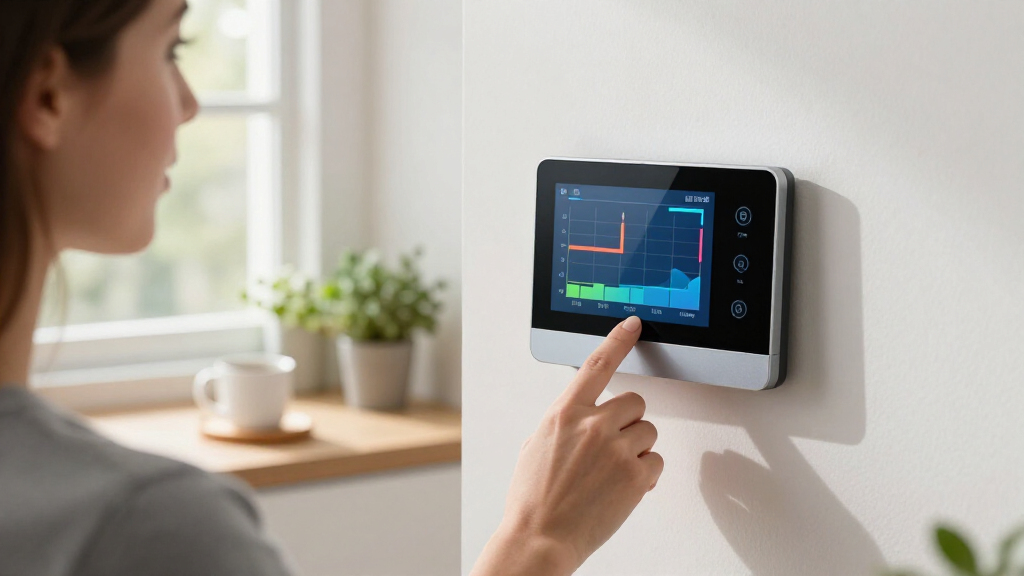
I ranked these monitors on four factors that actually change the ownership experience. Data granularity came first — a monitor that only reads your mains tells you how much you’re spending, but 8- or 16-circuit models tell you which device is costing you money, which is the entire point for most buyers. App quality and reliability came second, because a monitor with clunky software becomes furniture within a month. Integration flexibility — Home Assistant support, open APIs, and no-cloud operation — separated the enthusiast picks from the mass-market ones. Finally, I weighed installation complexity and clamp ratings, since a 50A sensor on a 200A main is a mismatch that produces useless data.
The ranking logic follows buyer fit rather than raw specs. Monitors that balance accuracy, app polish, and expansion headroom (Emporia Vue 3) rank highest for most people. Locally controlled models (both Refoss units and the HA-compatible 16-circuit monitor) rank high for their target audience but are marked down for setup difficulty. Budget dual-channel units rank lower because they answer a narrower question, and the Siemens Inhab lands mid-pack on price versus ecosystem support.
Factors to Consider When Choosing Smart Home Energy Monitors
Before picking a monitor, it helps to understand what actually drives satisfaction in this category — and where buyers most often go wrong.Whole-Home vs. Circuit-Level Monitoring
The most common mistake is buying a two-channel monitor expecting whole-home insight. Dual-channel units with 80A or 120A clamps are designed for individual loads or subpanels — an EV charger, a heat pump, a workshop — not for tracking your entire house. If your goal is a lower electric bill, you need to know which circuits are the culprits, and that means 8 to 16 branch sensors on top of the mains. Circuit-level kits cost more upfront and take an extra hour or two in the panel, but they’re the difference between ‘my bill was $240’ and ‘the basement freezer is costing $18 a month.’ A reasonable middle path: start with mains plus your eight heaviest circuits, since lighting and receptacle circuits rarely justify sensor slots.
Cloud vs. Local Control
Every monitor here either streams data through a manufacturer’s cloud or keeps it on your network, and the choice shapes everything else. Cloud-based systems (Emporia, Meross, Eyedro) give you better apps, remote access out of the box, and easier setup — but if the company changes its pricing or shuts down servers, your hardware loses its brain. Local-first systems (the Refoss models, anything Home Assistant-compatible) keep working regardless of internet or corporate decisions, and your usage data never leaves the house. The tradeoff is real: local systems demand more technical comfort, and features like alerts or dashboards depend on your own setup. Buyers who wouldn’t know what to do with an API should honestly choose cloud; tinkerers should choose local and never look back.
Clamp Ratings and Electrical Panel Compatibility
CT clamp ratings are not marketing fluff — a clamp that saturates at 50A will under-report any load beyond that, silently corrupting your data. Match clamps to reality: a typical US home with 200A service needs 200A-rated clamps on the mains, while branch circuits rarely exceed 20–50A and EV chargers need 50A-rated sensors at minimum. Also check your panel before ordering: crowded or older panels, and some solar setups with back-fed breakers, change what physically fits. One more compatibility note — if you have solar, confirm the monitor supports net metering (the Eyedro explicitly does), or you’ll get nonsense numbers whenever you’re exporting power.
Installation: DIY or Electrician
Nearly every monitor here requires opening your electrical panel and clipping sensors around live wires, which is legal for homeowners in many jurisdictions but genuinely dangerous if you’re careless. Budget 30–60 minutes for a mains-only install and 2–3 hours for a 16-circuit kit, and consider a $100–200 electrician visit if your panel is tight or you’re unsure — it’s cheap insurance. Installation difficulty varies meaningfully between models: some kits have rigid clamps that fight you in crowded panels, while others ship with flexible split-core sensors that clip on easily. Also plan your WiFi coverage; panels are often in garages or basements where signal is weak, which is why the Ethernet option on the Eyedro matters more than it sounds.
Real Cost of Ownership
The sticker price is only part of the math. Some ecosystems push subscription tiers for historical data or advanced analytics, and expansion sensors — the thing that makes circuit-level monitoring useful — can add $50–150 beyond the base kit. Compare the cost of the complete configuration you actually want, not the entry bundle: a cheap base unit plus eight add-on sensors can exceed a 16-sensor kit that includes everything. Utility rebates are worth checking too; some power companies subsidize whole-home monitors because they reduce peak demand. Against that, even the most expensive kit here pays for itself if it helps you find one vampire load or catch one failing appliance early.
Frequently Asked Questions
Can a smart energy monitor actually lower my electric bill?
Yes, but indirectly — the monitor finds waste, and you have to act on it. The realistic savings come from three places: identifying phantom loads (devices drawing power 24/7, often $5–20/month each), spotting inefficient appliances like a dying refrigerator compressor or a heat pump running on backup strips, and shifting large loads like EV charging or laundry to off-peak rates if your utility uses time-of-use billing. Buyers with circuit-level monitors typically find actionable savings within the first month or two, which is why I ranked granular kits above dual-channel units for most households. If your bill is under $100/month and you already run an efficient home, expect smaller wins — maybe 5–10% rather than dramatic cuts.
Do these monitors work with solar panels?
Some do, and it’s a make-or-break feature if you have solar. You need either net metering support or dedicated clamps on your solar input so the monitor can distinguish consumption from generation — the Eyedro 200A explicitly handles net metering, and Emporia sells solar-specific kits. Without this, a monitor reading only your mains will show confusing numbers whenever you’re exporting, because power flowing backward confuses basic CT readings. If solar monitoring matters to you, verify this before buying, since several dual-channel budget units in this lineup handle it poorly or not at all. Solar owners should also prioritize models with solid historical export data, since that record is valuable for verifying production and troubleshooting panel issues.
Is a plug-in smart plug enough instead of a whole-home monitor?
Smart plugs work well for individual 120V devices — a TV, a router, a space heater — and cost $10–15 each, so they’re a legitimate first step. But they miss everything that matters most in a typical home: 240V loads like HVAC, water heaters, dryers, and EV chargers, which typically account for 40–60% of household consumption and can’t be measured by any plug. A panel-mounted monitor captures 100% of usage including hardwired and 240V circuits, which is where the real money hides. The practical answer for many buyers is both: a panel monitor for the big picture, then a few plugs to automate the specific offenders it identifies. If you can only buy one, the panel monitor answers more questions.
What happens if the manufacturer’s cloud shuts down?
For cloud-dependent monitors, the honest answer is that hardware can become a brick — or at least lose remote access, history, and alerts — if the company exits the business or changes terms. This isn’t hypothetical; several energy-monitor startups have shut servers down over the past decade, leaving customers with useless hardware. That risk is exactly why the Refoss no-cloud model and other Home Assistant-compatible units rank so well for technically capable buyers: their data flows through your own hardware, so they keep functioning regardless of any company’s fortunes. Cloud ecosystems from larger companies (Siemens, Emporia) carry lower risk but not zero. If multi-year reliability matters more than app convenience for you, lean local; if you value polish and accept some platform risk, cloud is fine.
How many circuit sensors do I realistically need?
For most homes, 8 sensors covers the meaningful loads: HVAC, water heater, dryer, oven/range, refrigerator, dishwasher, well pump or EV charger, and one spare. The 16-sensor kits are worth it for larger homes, solar owners, or anyone doing detailed audits, but adding sensors past your major circuits delivers diminishing returns — lighting and general receptacle circuits rarely surprise anyone. A useful trick: your mains reading minus the sum of your monitored circuits equals ‘everything else,’ which many apps display automatically. So if budget is tight, buy a smaller kit covering the heavy hitters rather than a cheap dual-channel unit, because knowing your two biggest circuits beats guessing across sixteen minor ones.
Conclusion
For most buyers, the Emporia Vue 3 is the best overall choice — accurate whole-home tracking, an app that people actually keep using, and affordable expansion into circuit-level detail. Best value goes to the WiFi monitor with 3×80A clamps for anyone who just needs mains-level awareness of two or three specific loads without paying for sensors they won’t use. On the premium end, the Siemens Inhab earns its price for buyers who prioritize brand support and build quality, though the 16-circuit Home Assistant-compatible monitor is the better premium pick for tech-forward homes that want maximum visibility and local control. Beginners should start with the Emporia Vue 3 or the Meross — both offer near plug-and-play setup compared with the Refoss units, which reward Home Assistant enthusiasts with no-cloud operation and an open API. Solar owners should zero in on the Eyedro’s net metering support, and anyone monitoring an EV charger or subpanel can save money with either dual-channel unit. Match the monitor to the question you’re trying to answer, and you’ll get value from day one.
NFL season / tailgating Picks
team gear
As an affiliate, we earn on qualifying purchases.