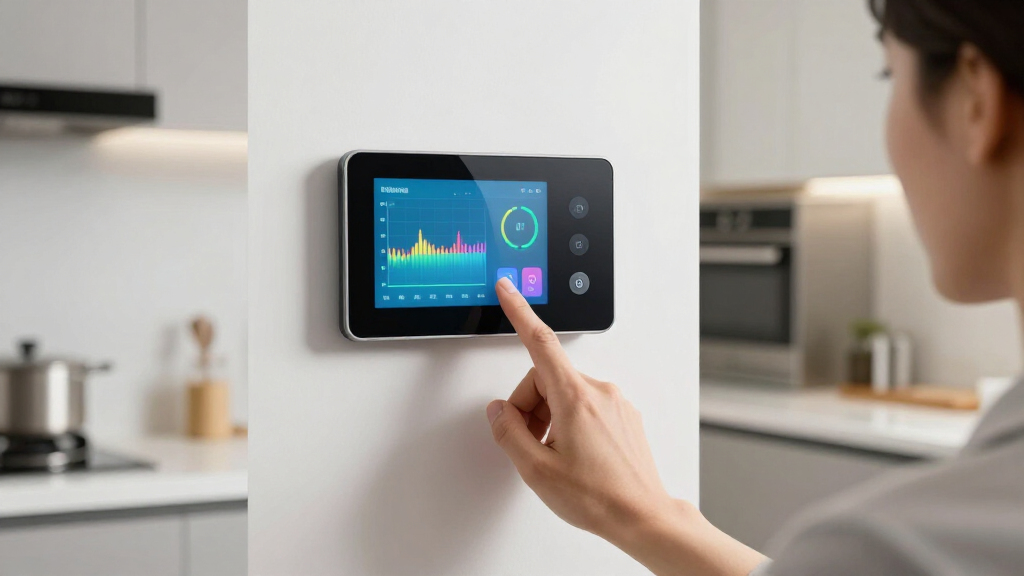

Smart home energy monitors clip onto the wiring inside your electrical panel and show exactly where every kilowatt-hour goes, and after comparing 15 of them, I found the Emporia Vue 3 is the best overall pick for most homes thanks to its circuit-level accuracy, solar monitoring support, and lack of a required subscription. The Meross 16-circuit monitor is the standout value option, offering similar per-circuit tracking with native Home Assistant support for less money, while the Refoss Open API model makes the most sense if you want local, cloud-free data. The core tradeoff in this category is depth versus simplicity: mains-only monitors cost less and install faster, but only circuit-level models can tell you which specific breaker is wasting power. You’ll also need to weigh sensor count against your panel’s capacity, and cloud apps against local control. Keep reading for the full ranking of all 15 monitors and the buyer each one suits best.

Get home appliances delivered free with Prime
- Fast, free delivery on millions of items
- Prime Video, Amazon Music and more included
- Member-only deals all year
Complete the kit



Key Takeaways
- The Emporia Vue 3 claims three of the 15 slots in this lineup, and for good reason: its combination of 16 circuit sensors, solar monitoring, and a subscription-free app set the benchmark every other monitor here is measured against.
- Meross and Refoss have closed most of the gap with 60A CT sensors, native Home Assistant support, and no subscription fees, often at noticeably lower prices than the category leader.
- Mains-only monitors with two 80A or 120A CT clamps are cheaper and easier to fit, but they only report total household draw — they can’t identify which circuit or appliance is actually responsible for a spike.
- Subscriptions barely exist in this category; nearly every monitor here stores and reports data for free, so the real price divider is sensor count and whether you need to hire an electrician.
- Matching CT amperage to your panel matters more than brand loyalty — 50A and 60A clamps suit branch circuits, while 120A and 200A units are built for full-service mains monitoring.
| Meross Smart Home Energy Monitor, Real-Time Power & Cost Tracking, 16×60A CT Sensors |  | Best for Home Assistant Users | Supported Systems: Single-phase 2-wire, split-phase 3-wire, 3-phase 4-wire Wye | Sensors: 16×60A CT branch sensors | Main Circuit Rating: 200A | VIEW LATEST PRICE | See Our Full Breakdown |
| Emporia Vue 3 Home Energy Monitor – Real-Time Electricity Usage and Solar Monitoring |  | Best Overall | Certification: UL Listed | Supported Systems: Single phase, split phase, 2-wire, 3-wire, 3-phase 4-wire Wye | Sensors: Sixteen 50A branch sensors | VIEW LATEST PRICE | See Our Full Breakdown |
| Emporia Vue 3 Home Energy Monitor – Real-Time Electricity Usage and Power Consumption Meter |  | Best for Beginners | Certification: UL Listed | Installation: Circuit panel, clamp-on sensors | Supported Systems: Single phase, split phase, 2-wire, 3-wire, 3-phase 4-wire Wye | VIEW LATEST PRICE | See Our Full Breakdown |
| Refoss Smart Home Energy Monitor with 16 60A Circuit Sensors |  | Best for Privacy & Local Control | Sensors: 16 branch + 2 main sensors | Sensor Capacity: 60A per branch, 200A mains | Supported Systems: Single-phase, split-phase, 3-phase 4-wire Wye | VIEW LATEST PRICE | See Our Full Breakdown |
| Meross Smart Home Energy Monitor with 18 Circuit Monitoring, Solar Surplus Detection, Smart Alerts | | Best for Solar Homes | Circuit Monitoring: 18 circuits (2 main + 16 branch) | Current Capacity: 200A mains, 60A branches | Supported Systems: Single-phase 2-wire, split-phase 3-wire, 3-phase 4-wire Wye | VIEW LATEST PRICE | See Our Full Breakdown |
| WiFi Home Energy Monitor with 3 80A CT Clamps |  | Best for Targeted Circuit Monitoring | Input Voltage: AC 100–240V | CT Clamps: 3 included | Max Current per Clamp: 80A | VIEW LATEST PRICE | See Our Full Breakdown |
| SIEMENS Inhab Smart Home Energy Monitor with Circuit Sensors |  | Best Premium Pick for Demand Control | Main Sensors: 2 × 200A | Circuit Sensors: 16 × 50A | Panel Compatibility: US and Canada | VIEW LATEST PRICE | See Our Full Breakdown |
| Emporia Vue 3 Home Energy Monitor |  | Best Overall | Certification: UL Listed | Supported Systems: Single phase, split phase, 2-wire, 3-wire, 3-phase, 4-wire Wye | Connectivity: 2.4GHz WiFi | VIEW LATEST PRICE | See Our Full Breakdown |
| Refoss Smart Home Energy Monitor EM16P with Open API |  | Best for Local Control and Privacy | Model: EM16P | Sensor Count: 16 (2 main, 14 branch) | Current Range: 1–200A branch; 2–200A main | VIEW LATEST PRICE | See Our Full Breakdown |
| Smart Home Energy Monitor 2×80A Dual-Channel WiFi Tracker |  | Best Budget Entry | Channels: 2 | Current per Channel: 80A | Connectivity: 2.4GHz WiFi | VIEW LATEST PRICE | See Our Full Breakdown |
| Smart Home Energy Monitor 2×120A, Dual-Channel WiFi Electricity Usage Tracker with App Control |  | Best Value Pick | Power Source: Corded Electric | Minimum Operating Voltage: 110 volts | Measurement Type: Ammeter | VIEW LATEST PRICE | See Our Full Breakdown |
| Emporia Energy Monitor with 16 Sensors and 4 Smart Plugs Bundle |  | Best Overall | Circuit Sensors: 16 | Smart Plugs Included: 4 Wi-Fi plugs | Compatibility: iOS, Android, Alexa | VIEW LATEST PRICE | See Our Full Breakdown |
| Smart Home Energy Monitor with 16 50A Circuit Sensors, Real-Time Power & Cost Tracking, Compatible with Home Assistant |  | Best for Home Assistant and Local Control | Number of Sensors: 16 | Sensor Current Rating: 50A each | Supported Voltages: 120VAC, 240VAC, 415Y/240VAC | VIEW LATEST PRICE | See Our Full Breakdown |
| Smart Home Energy Monitor 200A WiFi/Ethernet Whole House Power Consumption Meter |  | Best for High-Capacity Panels | Current Sensors: 2 × 200A | Connectivity: WiFi 2.4GHz, Ethernet | Safety Standards: North American | VIEW LATEST PRICE | See Our Full Breakdown |
| WiFi Home Energy Monitor with 2 x 120A CTs and Power Tracking |  | Best for Solar Owners | Connectivity: 2.4GHz WiFi | Current Transformers: 2 × 120A CTs | Measurement Accuracy: Class 1 | VIEW LATEST PRICE | See Our Full Breakdown |
| smart home energy monitor | Connectivity |
|---|---|
| Meross Smart Home Energy Monit | Home Assistant, Open API, Web Control |
| Emporia Vue 3 Home Energy Moni | 2.4 GHz Wi-Fi |
| Emporia Vue 3 Home Energy Moni | 2.4 GHz Wi-Fi |
| Refoss Smart Home Energy Monit | Wi-Fi with external high-gain antenna |
| Meross Smart Home Energy Monit | — |
| WiFi Home Energy Monitor with | 2.4GHz WiFi |
| SIEMENS Inhab Smart Home Energ | — |
| Emporia Vue 3 Home Energy Moni | 2.4GHz WiFi |
| Refoss Smart Home Energy Monit | Open API, MQTT, Web UI |
| Smart Home Energy Monitor 2×80 | 2.4GHz WiFi |
| Smart Home Energy Monitor 2×12 | 2.4GHz WiFi |
| Emporia Energy Monitor with 16 | — |
| Smart Home Energy Monitor with | WiFi (2.4GHz), MQTT |
| Smart Home Energy Monitor 200A | WiFi 2.4GHz, Ethernet |
| WiFi Home Energy Monitor with | 2.4GHz WiFi |
More Details on Our Top Picks
Meross Smart Home Energy Monitor, Real-Time Power & Cost Tracking, 16×60A CT Sensors
This option stands out for its deep Home Assistant integration and open API, making it the natural pick for anyone already running a home automation server. Where the Emporia Vue 3 routes everything through its cloud app, this Meross monitor keeps data local with five years of on-device storage and no subscription fees, so your usage history stays yours. The sixteen 60A CT sensors plus a 200A main rating match what the Refoss monitor offers, which covers most residential panels comfortably. The tradeoff is polish: compared with the Vue 3’s refined app experience, setup and daily checking here assume comfort with Home Assistant or web dashboards, and the panel installation is best left to confident DIYers or an electrician. I’d point automation enthusiasts here first.
Pros:- Sixteen 60A CT sensors cover a full panel plus 200A mains
- Native Home Assistant and open API support for automation
- Five years of local data storage with no subscription
- Two-year warranty with ETL and UL 61010 certification
Cons:- Installation requires comfort working inside an electrical panel
- Daily use leans on Home Assistant rather than a polished standalone app
- Designed around US wiring standards, limiting use elsewhere
Best for: Home Assistant users who want circuit-level data feeding automations without monthly fees
Not ideal for: Buyers who want a polished standalone app — day-to-day use assumes Home Assistant or a web dashboard
- Supported Systems:Single-phase 2-wire, split-phase 3-wire, 3-phase 4-wire Wye
- Sensors:16×60A CT branch sensors
- Main Circuit Rating:200A
- Connectivity:Home Assistant, Open API, Web Control
- Data Storage:Up to 5 years, local
- Certifications:ETL, UL 61010
- Warranty:2 years
Our verdict“The strongest choice for Home Assistant households that want local, subscription-free circuit data.”
Emporia Vue 3 Home Energy Monitor – Real-Time Electricity Usage and Solar Monitoring
This pick makes the most sense for the widest range of buyers. The Vue 3 bundles sixteen branch sensors with a UL-listed base unit and the most polished app in this lineup, turning raw circuit data into cost breakdowns most households can act on right away. Compared with the Meross monitor, it demands far less technical know-how; the Refoss matches its circuit count but leans on a web UI rather than a consumer-friendly app. The tradeoffs are real, though: it depends on 2.4 GHz Wi-Fi and Emporia’s cloud, minute-level history expires after seven days, and the one-year warranty is half what Meross and Refoss provide. Its 50A branch sensors also rate slightly below the 60A clamps on competing units, though that rarely matters in practice. For most homes, this is the balanced choice.
Pros:- Sixteen branch sensors included for circuit-level detail
- UL listed for safety and reliability
- Mature app turns usage data into actionable cost insights
- Works with single-phase, split-phase, and 3-phase Wye systems
Cons:- Real-time data requires constant 2.4 GHz Wi-Fi and cloud connection
- Minute-level history expires after seven days
- One-year warranty is shorter than Meross and Refoss rivals
Best for: Households wanting a proven, app-guided whole-home monitor with sixteen circuits of detail
Not ideal for: Privacy-first buyers — real-time data requires Emporia’s cloud and a constant Wi-Fi connection
- Certification:UL Listed
- Supported Systems:Single phase, split phase, 2-wire, 3-wire, 3-phase 4-wire Wye
- Sensors:Sixteen 50A branch sensors
- Connectivity:2.4 GHz Wi-Fi
- Data Retention:Minute data 7 days; hourly data indefinitely
- Solar Support:Solar and net metering monitoring
- Warranty:1 year
Our verdict“The easiest all-round recommendation: full circuit detail, a great app, and few surprises.”
Emporia Vue 3 Home Energy Monitor – Real-Time Electricity Usage and Power Consumption Meter
Compared with similar options, this version of the Vue 3 is the gentlest entry point into energy monitoring. It shares the UL-listed hardware and clamp-on panel installation of the sixteen-sensor Emporia bundle, but the pitch here is simplicity: open the app and you get one-second live readings, solar and net metering support, and enough guidance to spot waste without any wiring expertise beyond the initial install. Against the Meross monitors, there’s no local-storage or Home Assistant depth — data lives in Emporia’s cloud, and minute-level history disappears after seven days unless the app stays open. The one-year warranty also trails the two years Meross offers. Buyers who want a guided app experience over raw data control will feel at home here; power users should look at the Meross or Refoss instead.
Pros:- UL-certified hardware with clamp-on panel installation
- One-second live readings in the app for instant feedback
- Built-in solar and net metering support
- Remote energy management from anywhere via smartphone
Cons:- Cloud-dependent — key features stop without Wi-Fi
- Some live data only visible while the app is actively open
- Extra sensor required for certain 3-phase setups
Best for: First-time energy monitor buyers who want guided app insights and solar readiness
Not ideal for: Data hoarders and automation tinkerers — there’s no local storage path or Home Assistant depth
- Certification:UL Listed
- Installation:Circuit panel, clamp-on sensors
- Supported Systems:Single phase, split phase, 2-wire, 3-wire, 3-phase 4-wire Wye
- Connectivity:2.4 GHz Wi-Fi
- Data Retention:1-second data in app; minute data 7 days; hourly data indefinite
- Solar Support:Solar and net metering integration
- Warranty:1 year
Our verdict“The friendliest first monitor for app-centric buyers who value guidance over data control.”
Refoss Smart Home Energy Monitor with 16 60A Circuit Sensors
This model is better suited to buyers who want zero cloud involvement. Like the Meross monitor, it pairs sixteen 60A branch sensors with local storage, an open API, and no subscriptions — but the Refoss goes further with a built-in web UI that works without any third-party platform, so you don’t need Home Assistant running just to see your data. The external high-gain antenna is a practical touch for panels tucked in garages or basements where the Emporia Vue 3’s Wi-Fi might struggle. Tradeoffs: five years of history lives only on the device, there’s no optional cloud backup if it fails, and the API-first design rewards technical users while leaving casual ones with a steeper learning curve than Emporia’s app. I’d steer privacy-focused tinkerers here over the Meross for the standalone web access alone.
Pros:- Built-in web UI and open API — full access with zero cloud
- External high-gain antenna improves Wi-Fi reach from panel locations
- Backward sensor calibration forgives install orientation mistakes
- Five years of local storage and a two-year warranty
Cons:- No optional cloud backup if the local device fails
- API-first design is unfriendly to non-technical users
- Requires working knowledge of electrical panels to install safely
Best for: Privacy-focused tinkerers who want full local control via a web UI and open API
Not ideal for: Non-technical households — no consumer app, no cloud fallback, and a steeper setup curve
- Sensors:16 branch + 2 main sensors
- Sensor Capacity:60A per branch, 200A mains
- Supported Systems:Single-phase, split-phase, 3-phase 4-wire Wye
- Data Storage:5 years, local
- Connectivity:Wi-Fi with external high-gain antenna
- Certification:ETL Certified
- Warranty:2 years
Our verdict“The right pick for hands-on buyers who want every watt of data kept inside their own home.”
Meross Smart Home Energy Monitor with 18 Circuit Monitoring, Solar Surplus Detection, Smart Alerts
This option stands out for solar surplus detection, a feature aimed squarely at households with panels who want to run appliances when generation peaks. The 18-circuit layout — two mains plus sixteen branches — mirrors the Refoss, while smart alerts flag unusual draws before they turn into failed-appliance surprises. Compared with the Emporia Vue 3’s cloud-based solar tracking, everything here stays local with five years of storage and no fees, though you give up the Vue’s slick app since remote access runs through Home Assistant or web control. Versus its cheaper Meross sibling, the added alerts and surplus logic justify the step up for solar owners. Buyers without panels, or those wanting a plug-and-play app, are better served by the Vue 3. For solar households already in the Home Assistant ecosystem, this is the sharper tool.
Pros:- Solar surplus detection helps time appliance use to peak generation
- Smart alerts flag abnormal draws and potential appliance faults
- 18-circuit coverage with 200A mains and 60A branches
- No subscriptions — five years of local data storage
Cons:- Remote access depends on Home Assistant or web control, with no polished dedicated app
- Overkill for homes without solar panels
- Only fits electrical systems on its supported list
Best for: Solar-equipped homes that want to shift usage to surplus hours and catch appliance faults early
Not ideal for: Homes without solar, or buyers wanting a simple app — the value here is surplus logic and Home Assistant integration
- Circuit Monitoring:18 circuits (2 main + 16 branch)
- Current Capacity:200A mains, 60A branches
- Supported Systems:Single-phase 2-wire, split-phase 3-wire, 3-phase 4-wire Wye
- Solar Features:Solar surplus detection, smart alerts
- Data Storage:Up to 5 years, local
- Compatibility:Home Assistant, Open API, Web Control
- Warranty:2 years
Our verdict“Solar households on Home Assistant get the most from this monitor’s surplus detection and alerts.”
WiFi Home Energy Monitor with 3 80A CT Clamps
If you don’t need whole-home data, this three-clamp WiFi monitor takes a narrower, cheaper approach than the Emporia Vue 3: instead of sixteen branch sensors, you watch up to three circuits — think HVAC, a water heater, or a solar feed — through the familiar Smart Life/Tuya app. The built-in 15A relay and 50°C high-temperature alerts add a safety and shutoff layer the Emporia lacks, which matters for space heaters or an EV outlet. The tradeoff is scope: like the dual-channel budget model in this roundup, it can’t tell you what the rest of the house is doing, and the CT clamps still sit inside your panel, so most buyers will want an electrician. Relay switching also caps at 15A, ruling out direct control of bigger loads.
Pros:- Monitors up to three circuits at once with included 80A CT clamps
- Built-in 15A relay enables remote shutoff from the app
- 50°C high-temperature alerts add a real safety layer
- Runs on the widely supported Smart Life/Tuya ecosystem
Cons:- Covers selected circuits only — no whole-home picture
- In-panel wiring means most buyers need professional installation
- 15A relay cap rules out direct control of heavy loads
Best for: Homeowners who want to watch two or three specific heavy loads — HVAC, water heater, solar feed — without paying for whole-home hardware
Not ideal for: Anyone after a full-house breakdown; three monitored circuits can’t show where the rest of the power goes
- Input Voltage:AC 100–240V
- CT Clamps:3 included
- Max Current per Clamp:80A
- Relay Output:15A
- Connectivity:2.4GHz WiFi
- App Compatibility:Smart Life, Tuya
- Temperature Alert:50°C threshold
Our verdict“The right pick if you want app control and safety alerts on a few specific circuits rather than data on the whole house.”
SIEMENS Inhab Smart Home Energy Monitor with Circuit Sensors
The Siemens Inhab is the panel-brand heavyweight here, and it behaves like one: alongside real-time whole-home and circuit tracking, it supports peak demand management and load shedding — functions the Emporia Vue 3 and Refoss EM16P only approximate through alerts and automation. Personalized notifications flag abnormal energy activity before it becomes an expensive surprise, and the UL Listing and CE marking carry extra weight for a device that lives inside your breaker panel. The catch is commitment: it works with US and Canada panels only, installation inside the panel is effectively mandatory professional work, and pricing isn’t transparent up front. Compared with the cheaper dual-channel and three-clamp options in this list, you’re paying for grid-style control features that apartments and smaller homes will never use.
Pros:- Real-time tracking at both panel and individual circuit level
- Peak demand management and load shedding built in
- UL Listed and CE marked for in-panel safety
- Personalized alerts for savings opportunities and abnormal activity
Cons:- Compatible only with US and Canada electrical panels
- Panel installation effectively requires a professional
- No transparent pricing available before purchase
Best for: Homeowners on demand-rate or time-of-use utility plans who want automated peak shaving from an established electrical brand
Not ideal for: Renters and buyers outside North America — it requires in-panel installation and supports only US and Canada panels
- Main Sensors:2 × 200A
- Circuit Sensors:16 × 50A
- Panel Compatibility:US and Canada
- Monitoring Scope:Whole-home plus circuit level
- Advanced Functions:Peak demand management, load shedding
- Alerts:Personalized savings and abnormal activity
- Certifications:UL Listed, CE marked
- Access:Mobile app
Our verdict“Worth the premium only if your utility bill punishes peak demand and you want automated control, not just monitoring.”
Emporia Vue 3 Home Energy Monitor
The Emporia Vue 3 earns the top slot by covering nearly every use case at a mid-range price: it’s UL Listed, handles everything from single-phase to 3-phase and 4-wire Wye systems, and supports solar net metering out of the box — a flexibility the Siemens Inhab and the budget dual-channel monitor can’t match. One-minute data kept for a week, plus indefinite hourly history, gives enough resolution to hunt down phantom loads and verify savings. The compromises are real, though: the sixteen branch sensors are sold separately, so true circuit-level visibility costs extra, and it leans on 2.4GHz WiFi and the cloud, unlike the fully local Refoss EM16P. Panel installation is DIY-able but intimidating enough that many buyers will still hire it out, and the warranty lasts just one year.
Pros:- UL Listed and compatible with nearly any residential system, including 3-phase
- Solar net metering support included out of the box
- One-minute data resolution for detailed load hunting
- Scales to sixteen branch circuits with add-on sensors
Cons:- Branch sensors sold separately, raising the true cost of circuit-level data
- Depends on 2.4GHz WiFi and cloud connectivity for full functionality
- Only a one-year warranty
Best for: Most homeowners who want one UL-certified monitor that handles solar, unusual panel configurations, and per-circuit add-ons as budgets allow
Not ideal for: Privacy-focused buyers who want local-only data — full functionality depends on WiFi and Emporia’s cloud
- Certification:UL Listed
- Supported Systems:Single phase, split phase, 2-wire, 3-wire, 3-phase, 4-wire Wye
- Connectivity:2.4GHz WiFi
- Data Retention:1-minute data 7 days; hourly data indefinite
- Branch Sensors:Up to 16 (sold separately)
- Solar Support:Net metering
- Warranty:1 year
Our verdict“The default recommendation — the broadest electrical compatibility and app polish at a price most households can justify.”
Refoss Smart Home Energy Monitor EM16P with Open API
For buyers who don’t want their power data leaving the house, the Refoss EM16P is the clear pick: it runs on local control via open API, MQTT, and a web UI, with no cloud account required — a fundamentally different philosophy from the cloud-dependent Emporia Vue 3. Sixteen sensors come in the box (the Emporia charges extra for branch coverage), and ±1% accuracy at 200A, five years of on-device history, and native Home Assistant integration make it the tinkerer’s choice, with solar automation to shift loads into surplus production. The cost of that freedom is effort: setup assumes comfort with home automation tooling, some owners report a learning curve, and the 16-circuit ceiling can fall short on sprawling panels, where the Meross 18-circuit model elsewhere in this roundup stretches further.
Pros:- Fully local operation via open API, MQTT, and web UI — no cloud required
- Sixteen sensors included (2 main plus 14 branch)
- ±1% accuracy at 200A with up to five years of stored history
- Native Home Assistant integration and solar surplus automation
Cons:- Setup assumes technical knowledge; some users report real difficulties
- 16-circuit limit may not cover very large or complex panels
Best for: Home Assistant users and privacy-conscious tinkerers who want local API access, MQTT, and solar automation without subscriptions
Not ideal for: Plug-and-play shoppers — the local-first setup rewards technical confidence and frustrates beginners
- Model:EM16P
- Sensor Count:16 (2 main, 14 branch)
- Current Range:1–200A branch; 2–200A main
- Accuracy:±1% at 200A; ±2% at low current
- Connectivity:Open API, MQTT, Web UI
- Cloud Dependency:None — local control
- Certification:ETL, UL 61010
- Data Storage:Up to 5 years
- Integration:Home Assistant
Our verdict“The monitor to buy if you want your energy data on your own network, in Home Assistant, and nowhere else.”
Smart Home Energy Monitor 2×80A Dual-Channel WiFi Tracker
This dual-channel 80A monitor is the cheapest door into energy tracking here, and the simplest: two external clamp-on sensors mean no wiring modifications, and the Tuya/Smart Life app surfaces voltage, current, and power flow in real time. Bi-directional tracking is a genuine bonus at this price, letting small solar or backup systems show export as well as import — something the three-clamp Smart Life model above handles less cleanly. Compared with the Emporia Vue 3, though, you’re blind below the two monitored channels: no branch circuits, no per-appliance breakdown, and no Home Assistant or open API path like the Refoss EM16P offers. It’s also locked to 2.4GHz WiFi and standard residential setups, so treat it as a starter tool for learning your home’s appetite, not a long-term whole-home answer.
Pros:- Clamp-on installation with no wiring modifications
- Bi-directional tracking suits small solar and backup systems
- Real-time voltage, current, and power data in the Tuya/Smart Life app
- Cheapest entry point in this roundup
Cons:- Two channels only — no branch or per-appliance visibility
- Requires a 2.4GHz WiFi network for setup
- No integration path beyond the Tuya/Smart Life ecosystem
Best for: Beginners and budget buyers who want to track overall consumption — or a small solar or backup setup — without touching panel wiring
Not ideal for: Data hunters who want per-appliance or branch-circuit detail — two channels is the hard ceiling
- Channels:2
- Current per Channel:80A
- Connectivity:2.4GHz WiFi
- App Compatibility:Tuya, Smart Life
- Installation:Clamp-on sensors, external attachment
- Power Tracking:Bi-directional (solar and backup)
- Compatibility:Standard residential circuits
Our verdict“A low-risk first step into energy monitoring, as long as you accept that two channels is all you’ll ever get.”
Smart Home Energy Monitor 2×120A, Dual-Channel WiFi Electricity Usage Tracker with App Control
Not every home needs sixteen circuit sensors, and I’d argue this dual-channel monitor is the proof. Two 120A clamp sensors snap around your main lines, so you get whole-house consumption data without opening up individual breakers — the clamp-on design means no rewiring at all. Compared with the Emporia 16-sensor bundle, you lose per-circuit detail entirely: this tells you how much the house is using, not which appliance is the culprit. In exchange, it’s far cheaper and simpler to live with, feeding real-time and historical data into the familiar Tuya or Smart Life app, and it plays nicely with solar and backup power setups. The catch is there’s no built-in display, so the app is your only window into the data, and the 110V ceiling rules it out for some systems. For a first pass at tracking usage, that’s a fair trade.
Pros:- Clamp-style sensors install without any wiring modifications
- Real-time and historical data in the widely used Tuya/Smart Life apps
- Works with solar panels and backup power systems
- Low-cost entry point into energy monitoring
Cons:- No built-in display, so the app is the only way to see data
- Limited to 110V electrical systems
- Requires a stable 2.4GHz WiFi connection for setup
Best for: Budget-conscious homeowners who want whole-house usage totals in the Tuya or Smart Life app and don’t need per-circuit detail
Not ideal for: Anyone hunting specific energy-wasting appliances — two mains clamps can’t break usage down by circuit
- Power Source:Corded Electric
- Minimum Operating Voltage:110 volts
- Measurement Type:Ammeter
- Sensor Configuration:2 × 120A clamps (dual channel)
- Compatible Apps:Tuya, Smart Life
- Connectivity:2.4GHz WiFi
- Display:None — app-only data viewing
- Color:Black
Our verdict“The sensible starter monitor for homeowners who want cheap, app-based whole-house tracking and can live without circuit-level breakdowns.”
Emporia Energy Monitor with 16 Sensors and 4 Smart Plugs Bundle
This bundle is the pick I’d hand to most households, because it solves both halves of the problem: seeing the waste and doing something about it. The 16 circuit-level sensors break consumption down breaker by breaker — where the Smart Home Energy Monitor 2×120A only reports a single whole-house figure — and the four included Wi-Fi smart plugs let you schedule or cut power to the worst offenders straight from the Emporia app. Solar owners get net metering support, and Alexa compatibility covers voice checks and routines. The tradeoffs are real, though. Sixteen clamps make for a crowded panel and an install that can intimidate anyone who hasn’t worked inside a breaker box, and the app configuration takes some patience. And while the plugs are a nice bonus, they cover just four outlets, so the main unit is still doing the heavy lifting for the rest of the house.
Pros:- 16 sensors deliver true per-circuit energy breakdowns
- Four smart plugs add remote control and automation, not just monitoring
- Supports solar net metering for managing production and consumption
- Works with iOS, Android, and Alexa
Cons:- Panel installation with 16 clamps is involved and can intimidate beginners
- App setup and configuration require time and patience
- Smart plugs cover only four outlets, leaving most plug loads unmonitored
Best for: Homeowners with solar or high power bills who want circuit-by-circuit detail plus plug-level control in one ecosystem
Not ideal for: Renters or anyone uneasy about working inside a breaker panel — the 16-clamp install is the most involved in this roundup
- Circuit Sensors:16
- Smart Plugs Included:4 Wi-Fi plugs
- Compatibility:iOS, Android, Alexa
- Solar Net Metering:Yes
- App:Emporia app with real-time usage
- Automation:Schedules and remote control via smart plugs
- Monitoring Scope:Whole-home, circuit-level
Our verdict“The most complete package here for homeowners who want to find waste circuit by circuit and then automate the fix.”
Smart Home Energy Monitor with 16 50A Circuit Sensors, Real-Time Power & Cost Tracking, Compatible with Home Assistant
Where the Emporia bundle leans on its cloud app, this monitor takes the opposite path: local, privacy-first operation with MQTT and native Home Assistant support, so no cloud account stands between you and your data. Sixteen 50A clamp sensors cover individual circuits, and the customizable billing features make it genuinely useful for landlords splitting costs across a rental or shared apartment — a niche the Emporia doesn’t really address. Support for 120V, 240V and 415Y/240V configurations adds flexibility that most rivals in this roundup skip, including the 110V-capped dual-channel Tuya pick. The price of that freedom is setup friction: LAN operation expects an MQTT broker and some comfort with configuration, and Delta three-phase panels aren’t supported. Against the Refoss options in this lineup the pitch is similar, but the multi-voltage support and billing tools give this one a clearer audience.
Pros:- Runs locally with no cloud account or subscription required
- Native Home Assistant integration plus MQTT for custom setups
- 16 circuits with billing tools suited to rentals and shared housing
- Supports 120VAC, 240VAC, and 415Y/240VAC configurations
Cons:- Requires an MQTT server and compatible setup for LAN operation
- Advanced features have a steep learning curve for non-technical users
- No support for Delta three-phase configurations
Best for: Home Assistant users, privacy-focused buyers, and landlords who need per-unit billing in rentals or shared apartments
Not ideal for: Non-technical users who want a plug-and-play app experience — LAN operation expects an MQTT broker and hands-on configuration
- Number of Sensors:16
- Sensor Current Rating:50A each
- Supported Voltages:120VAC, 240VAC, 415Y/240VAC
- Connectivity:WiFi (2.4GHz), MQTT
- Compatibility:Home Assistant, Android, Apple
- Cloud Required:No — local/LAN operation
- Warranty:1 year
Our verdict“The right choice for technically confident buyers who want circuit-level data kept local and wired into Home Assistant.”
Smart Home Energy Monitor 200A WiFi/Ethernet Whole House Power Consumption Meter
Most monitors in this roundup top out at 120A clamps, which is fine for smaller services but leaves larger homes underserved. This model’s 2×200A sensors handle big residential panels, and the Ethernet option matters more than it sounds — panels tend to live in basements and garages where 2.4GHz WiFi is weakest, so a wired fallback keeps data flowing. The MyEyedro cloud platform handles solar, grid and net metering with no subscription fee, which softens the higher hardware cost over time. Against the Emporia 16-sensor bundle, though, you give up all circuit-level visibility: two clamps means whole-house totals only, much like the budget 2×120A Tuya pick but at a steeper price. Net metering also demands a second device, which doubles the outlay for solar owners — the single-unit solar approach of the 120A bi-directional monitor is cleaner there. I’d call it the right tool for big panels, a blunt one for appliance hunting.
Pros:- 200A sensors accommodate large residential service panels
- Ethernet fallback suits panels in weak-WiFi locations
- Free MyEyedro cloud access with no subscription fee
- Handles solar, grid, and net metering applications
Cons:- Net metering setup requires buying a second device
- Only two clamps, so no circuit-level breakdown
- Limited to North American safety standards
Best for: Owners of larger homes with 200A service panels, especially where the panel sits in a weak-WiFi spot that benefits from Ethernet
Not ideal for: Appliance-level sleuths — with only two mains clamps it can’t isolate individual circuits the way 16-sensor rivals can
- Current Sensors:2 × 200A
- Connectivity:WiFi 2.4GHz, Ethernet
- Safety Standards:North American
- Included:Ethernet cable, power adapter, MyEyedro cloud access
- Solar Support:Solar, grid, net metering
- Subscription:None
- Monitoring Scope:Whole-house mains
Our verdict“The pick for big 200A panels and wired-network homes, so long as whole-house totals are all you need.”
WiFi Home Energy Monitor with 2 x 120A CTs and Power Tracking
Solar households have a specific problem — knowing not just what they use but what they export — and this monitor is built around it. Bi-directional measurement tracks energy flowing both ways, while the zero grid export mode and dynamic load balancing let you actively manage surplus rather than just watch it, something the Smart Home Energy Monitor 2×120A can display but not control. Class 1 accuracy means the numbers hold up against your utility bill, and split-core CTs with plug-in terminals make the install genuinely approachable for a panel device. Versus the 200A WiFi/Ethernet unit, you don’t need a second device for net metering, which simplifies a solar setup and keeps the cost down. The limits are hard ones, though: it only works on single-phase 3-wire systems, and two CTs mean no per-circuit breakdown like the 16-sensor Emporia or Refoss options deliver. For pure solar management, it’s the most focused tool here.
Pros:- Bi-directional monitoring tracks both consumption and solar export
- Class 1 measurement accuracy stands up to utility-bill comparison
- Zero grid export mode and DLB actively manage solar surplus
- Split-core CTs with plug-in terminals simplify installation
Cons:- Limited to single-phase 3-wire systems
- Two CTs means whole-house figures only, no per-circuit view
- Depends on a WiFi connection and compatible app setup
Best for: Single-phase solar homeowners who want to track grid import/export and actively manage surplus power with billing-grade accuracy
Not ideal for: Homes outside single-phase 3-wire systems, and buyers who want per-circuit detail rather than mains-level solar tracking
- Connectivity:2.4GHz WiFi
- Current Transformers:2 × 120A CTs
- Measurement Accuracy:Class 1
- Installation:Plug-in terminals, split-core CTs
- Measurement:Bi-directional power, real-time data
- Solar Features:DLB, zero grid export mode
- System Support:Single-phase 3-wire
- Integration:Smart app with automation
Our verdict“The most capable choice for solar owners on single-phase systems who want to control export, not just observe it.”
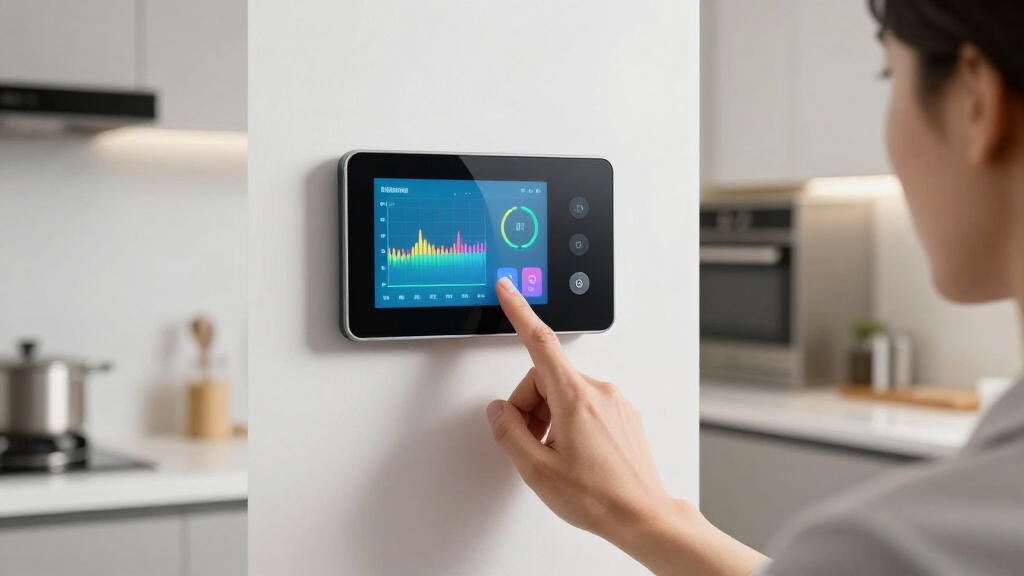
How We Picked
I ranked these 15 monitors on the factors that decide whether the hardware actually lowers your bill rather than just decorating your phone with graphs. Measurement granularity carried the most weight: per-circuit monitoring reveals which breaker is misbehaving, while mains-only units only confirm that something, somewhere, is drawing power. I also weighed installation burden, since a monitor that needs two hours inside a live panel is a very different purchase from one that clamps on in fifteen minutes. App quality, data history retention, solar and net-metering support, smart home integration (Home Assistant, open APIs, Smart Life/Tuya), and total cost of ownership rounded out the scoring.
The ordering reflects those priorities. The Emporia Vue 3 leads because it balances accuracy, sensor count, app polish, and price better than anything else here. Meross and Refoss models rank high on value and local-control credentials, giving Home Assistant users a credible alternative without ongoing fees. The SIEMENS Inhab earns its premium position through panel-grade build quality and brand-backed support rather than raw sensor count. The dual-channel mains-only monitors sit lower in the list not because they’re bad products, but because whole-home totals alone give you less to act on — they’re ranked as entry points, not end points.
Factors to Consider When Choosing Smart Home Energy Monitors
The product reviews above tell you which monitors are worth buying; this guide tells you how to decide which type fits your home. Most disappointment in this category comes from buying the wrong class of device — too few sensors, the wrong clamp rating, or a cloud dependency you didn’t expect — so work through these five factors before you spend anything.
Circuit-Level Monitoring vs. Whole-Home Totals
The single biggest decision is whether you need per-circuit data or just a whole-home total. A mains-only monitor with two CT clamps tells you your house used 3.2 kW at 7 p.m., which is useful for spotting standby waste and verifying billing, but it can’t separate the water heater from the EV charger. Circuit-level models with 8, 16, or 18 sensors let you trace consumption to individual breakers, which is what turns a vague suspicion about the old freezer in the garage into a confirmed number. In this lineup, the Emporia, Meross, and Refoss 16-sensor kits all deliver that depth, while the dual-channel 80A and 120A units trade insight for a lower price and a much simpler install. If your goal is diagnosing a high bill, buy circuit-level. If your goal is general awareness and budget tracking, mains-only is honestly enough. Buyers who start with mains-only and later want detail usually end up buying a second device, so decide based on your actual goal, not the entry price.
Installation: The Real Cost Nobody Advertises
Every monitor in this roundup installs inside your electrical panel, and that fact shapes the true cost of ownership more than the sticker price does. Clamping CT sensors around live conductors is legal for homeowners in most regions, but it means working centimeters from components that stay energized even with the main breaker off. If you’re comfortable in a panel, a 16-sensor kit is a one- to two-hour job; if you’re not, budget $150 to $300 for an electrician, which can double the effective price of a budget monitor. A common mistake is buying the biggest sensor kit available for a panel that only has 12 branch circuits — count your breakers first and buy the sensor count you’ll actually populate. Also check physical space: crowded panels can make routing 16 clamps genuinely awkward, and compact mains-only units exist partly for this reason. Renters should note that panel access usually requires landlord approval, which pushes many of them toward plug-level monitors instead.
Match CT Sensor Ratings to Your Panel
CT clamps are rated for the amperage they measure, and mismatches cause real problems. 50A and 60A sensors are sized for branch circuits — that’s why the 16-sensor kits from Meross, Refoss, and others ship with them. Mains monitoring needs heavier hardware: 80A clamps suit smaller service entrances, 120A covers most standard residential panels, and 200A units are built for large homes with full 200-amp service. Buying a 200A whole-home meter for a 100A panel wastes money; buying 80A clamps for a 200A service risks saturation and inaccurate readings at peak load. North American buyers should also confirm the monitor handles split-phase 120/240V service correctly, which everything in this roundup does, and solar owners need a model that measures bidirectional flow so export and import are tracked separately. This is one spec where bigger is not automatically better — accuracy within the clamp’s rated range is what counts.
Cloud Apps vs. Local Control
Almost every monitor here is free of subscriptions, but free cloud is still cloud. Your consumption data lives on someone else’s server, the app depends on that server staying up, and a company pivot or shutdown can brick an otherwise functional device — this has happened in the smart home world more than once. If that bothers you, the local-first options in this roundup are the Refoss model with its open API and no-cloud operation and the Meross and other Home Assistant-compatible units, which can keep data on your own hardware. The tradeoff is convenience: vendor apps like Emporia’s and Smart Life/Tuya offer polished dashboards, alerts, and multi-year history with zero setup, while local control means running and maintaining Home Assistant yourself. Privacy-conscious buyers should also know that whole-home energy traces reveal daily routines in surprising detail. Pick the data model you’re comfortable living with for a decade, because these devices tend to stay installed for a long time.
Turning Data Into Actual Savings
An energy monitor that only produces graphs saves nothing; the savings come from what the data prompts you to change. Studies of home energy feedback generally credit monitors with 5 to 15 percent reductions, and the high end of that range belongs to people who act on what they see — rescheduling the dishwasher off-peak, hunting down a failing pool pump, or replacing a space heater habit with a heat pump setting. Features that push you toward action matter more than raw accuracy past a certain point: smart alerts for abnormal draw, cost tracking in your actual utility rate, and automation hooks that shut devices off when solar surplus disappears. That’s why integration support deserves real weight in your decision — a monitor that triggers automations through Home Assistant or pairs with smart plugs, like the Emporia bundle in this roundup, closes the loop between seeing waste and stopping it. Set a concrete goal before you buy, such as finding $30 a month of standby waste, and let that goal dictate whether you need circuit-level detail, alerts, or just a reliable whole-home total.
Frequently Asked Questions
Do smart home energy monitors require a subscription?
Almost none of them do, and this roundup reflects that: every monitor here, including the Emporia Vue 3, Meross, and Refoss models, provides its app, historical data, and alerts without a monthly fee. The category moved away from subscriptions years ago because the hardware margins support free cloud storage at this data volume. What you should check instead is the data retention window and export options, since some apps limit how far back granular history goes or gate CSV exports behind account features. The bigger hidden cost isn’t subscriptions — it’s potential electrician fees for installation and, for cloud-dependent models, the risk that the vendor’s servers outlive your patience but not your device. If long-term independence matters to you, favor the local-control options with open APIs or Home Assistant support.
Can I install an energy monitor myself, or do I need an electrician?
It depends on your comfort level around live electrical equipment, not on any single product. Every monitor in this lineup installs inside your breaker panel, and CT clamps snap around conductors without cutting any wires, which keeps it a non-invasive, reversible job. Homeowners who have worked in panels before typically finish a mains-only install in 15 to 30 minutes and a 16-circuit kit in one to two hours. However, the bus bars behind the breakers remain energized even with the main switch off, so anyone uneasy about that should hire an electrician — expect to pay $150 to $300 depending on your area. If you’re renting, get written landlord approval first. When in doubt, price the electrician before choosing between a budget monitor and a premium one, since installation can erase the price difference.
Will an energy monitor work with my solar panels?
Most modern ones will, but you need a model that measures bidirectional power flow — energy moving both into and out of your home. Without that, the monitor may read your solar export as consumption or simply produce nonsense numbers during sunny hours. The Emporia Vue 3 is the strongest solar option in this roundup, with dedicated solar monitoring that separates what you generate, what you consume directly, and what you pull from the grid. The 18-circuit Meross model adds solar surplus detection, which is useful for running appliances when you have excess generation rather than exporting it cheaply. Before buying, confirm the sensor count covers both your mains and your solar feed breaker, and check whether the app displays net metering in a way that matches your utility’s billing. Whole-home mains-only monitors generally handle solar poorly compared with circuit-level kits.
Should I get a panel-based monitor or just use smart plugs?
They answer different questions, and the honest answer is that many households benefit from both. A panel-based monitor sees everything — hardwired loads like HVAC, water heaters, ovens, and EV chargers that no plug can touch — and that’s where most of your consumption lives. Smart plugs only measure what physically plugs into them, so they’re ideal for confirming suspicions about individual devices: the garage freezer, the entertainment center’s standby draw, the dehumidifier. If your budget forces a choice, start with the panel monitor, because heating, cooling, and water heating typically account for the majority of a home’s energy use, and plugs can’t see any of it. The Emporia bundle in this roundup pairs a 16-sensor panel monitor with four smart plugs precisely because the two approaches complement each other — circuit data narrows the search, and plug data names the culprit.
How much money can a smart home energy monitor actually save me?
Realistic expectations run from 5 to 15 percent of your electricity bill, with the wide range explained entirely by whether you act on the data. The savings come from three places: finding always-on phantom loads, which often total $10 to $30 a month; catching malfunctioning equipment like a well pump cycling at night or an HVAC system short-cycling; and shifting flexible loads to off-peak hours if your utility uses time-of-use rates. Households on time-of-use billing tend to see the fastest payback because the monitor makes expensive hours visible. A typical $100 to $150 circuit-level monitor pays for itself in six months to two years under those conditions. The buyers who see little return are the ones who check the app for two weeks and never change a habit — the hardware reveals waste, but only behavior eliminates it, so pair the purchase with at least one concrete goal like cutting standby draw or rescheduling the EV charger.
Conclusion
After weighing all 15 monitors against each other, the choice comes down to which kind of buyer you are. For most homes, the Emporia Vue 3 is the best overall pick — nothing else here matches its blend of circuit-level accuracy, solar support, app polish, and subscription-free operation at this price. If you’re watching your budget, the Meross 16×60A monitor is the best value, delivering nearly the same per-circuit insight plus Home Assistant support for less money. Privacy-focused and automation-driven buyers should go straight to the Refoss Open API model, which keeps your data local and off third-party servers entirely. If you want a premium, panel-grade install backed by an established electrical brand, the SIEMENS Inhab justifies its higher price. Beginners and anyone with a cramped panel or a tight budget should start with one of the dual-channel 120A mains monitors — you’ll give up per-circuit detail, but you’ll get a working picture of your home’s consumption in under an hour. And if you already own solar or plan to, pick a bidirectional model like the Vue 3 or the 18-circuit Meross with surplus detection from day one, because retrofitting solar support later means buying twice. Whatever you choose, the monitor only earns its keep if you act on what it shows you — so buy the one whose data you’ll actually use.
NFL season / tailgating Picks
team gear
As an affiliate, we earn on qualifying purchases.