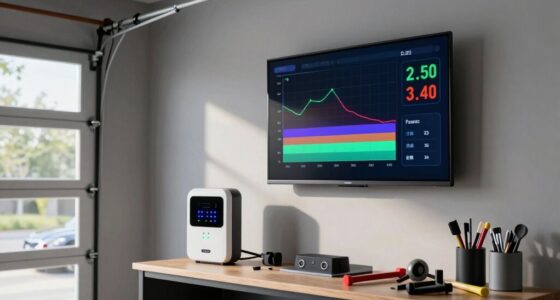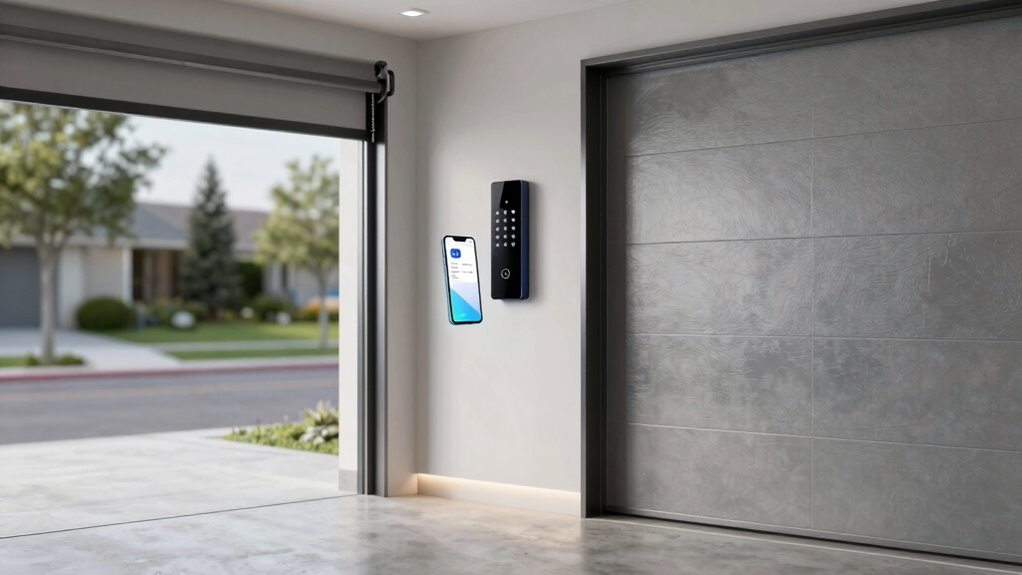

Geofencing for garage doors uses GPS or RFID to create a virtual boundary around your home, automatically opening or closing the door as you approach or leave. It offers convenience and enhanced security but can raise privacy concerns and trigger false alarms due to GPS inaccuracies. Setting it up involves configuring the app, creating geofences, and testing systems. If you’re curious about optimizing your system and addressing potential issues, you’ll find helpful insights if you keep exploring.

Get home appliances delivered free with Prime
- Fast, free delivery on millions of items
- Prime Video, Amazon Music and more included
- Member-only deals all year
Key Takeaways
- Geofencing uses GPS or RFID to automate garage door control based on your smartphone’s location, enhancing convenience.
- It offers benefits like hands-free operation but raises privacy concerns and potential false triggers due to GPS inaccuracies.
- Proper setup involves enabling location services, creating a geofence, and testing to prevent false alarms.
- Troubleshooting includes addressing connectivity issues and updating firmware; alternatives include manual controls.
- Incorporating manual backups and security measures helps mitigate risks and ensures reliable, secure garage door operation.
garage door smart opener with geofencing
As an affiliate, we earn on qualifying purchases.
As an affiliate, we earn on qualifying purchases.
What Is Geofencing and How Does It Work for Garage Doors?
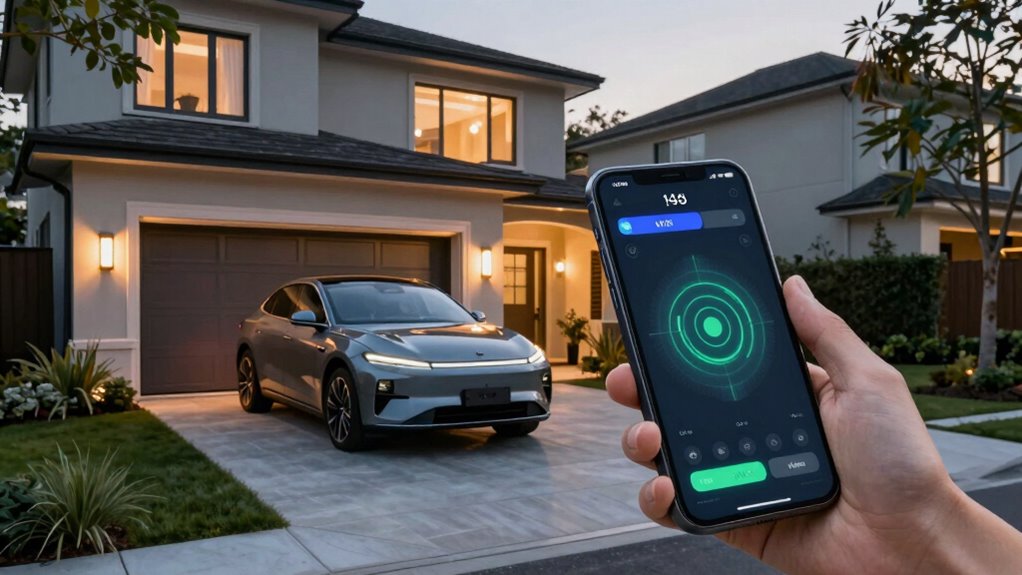
Geofencing is a smart technology that uses GPS or RFID to create a virtual boundary around a specific location, such as your home. When you approach this boundary, your garage door opener detects your presence and can automatically open or close the door. It’s convenient, but you should be aware of privacy concerns, as your location data is constantly being tracked and stored. Additionally, geofencing can impact your device’s battery life, especially if the system frequently checks your position. You might notice faster battery drain on your smartphone or smart device. While this technology offers ease of access, understanding these factors helps you balance convenience with privacy and device performance. Moreover, ongoing content formats exploration allows developers to refine these systems for better privacy and efficiency, including the implementation of privacy safeguards to protect user data. Developers are also working on location accuracy improvements to reduce false triggers and enhance user experience.
smart garage door remote control
As an affiliate, we earn on qualifying purchases.
As an affiliate, we earn on qualifying purchases.
Benefits and Drawbacks of Using Geofencing for Your Garage
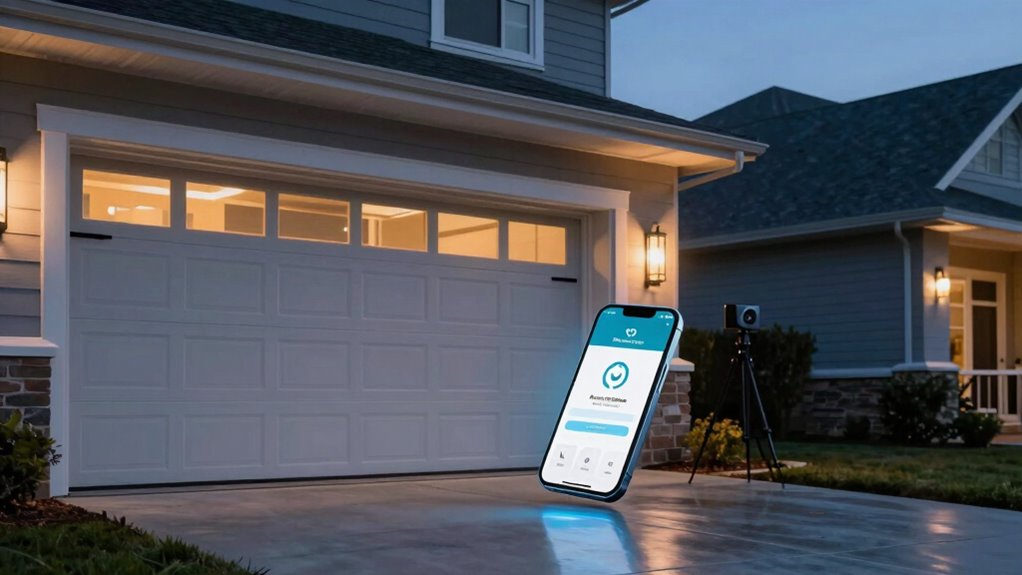
Using geofencing for your garage offers notable advantages, such as increased convenience and enhanced security. It automatically opens or closes your garage door when you arrive or leave, saving you time. However, there are drawbacks to take into account:
- Privacy concerns: Sharing your location data raises issues about who can access this information.
- Security risks: If your system isn’t properly protected, hackers could exploit vulnerabilities.
- False triggers: GPS inaccuracies may cause the garage to open or close unintentionally.
- Dependence on technology: Malfunctions or connectivity issues can disable the system, leaving you without control.
While geofencing boosts convenience, you must weigh these benefits against potential privacy concerns and security risks. Proper setup and safeguards are essential to maximize advantages while minimizing downsides. Additionally, understanding the privacy and security practices involved in smart home systems can help you make informed decisions about implementing geofencing features.
garage door security system with manual backup
As an affiliate, we earn on qualifying purchases.
As an affiliate, we earn on qualifying purchases.
How to Set Up Geofencing for Your Smart Garage Door
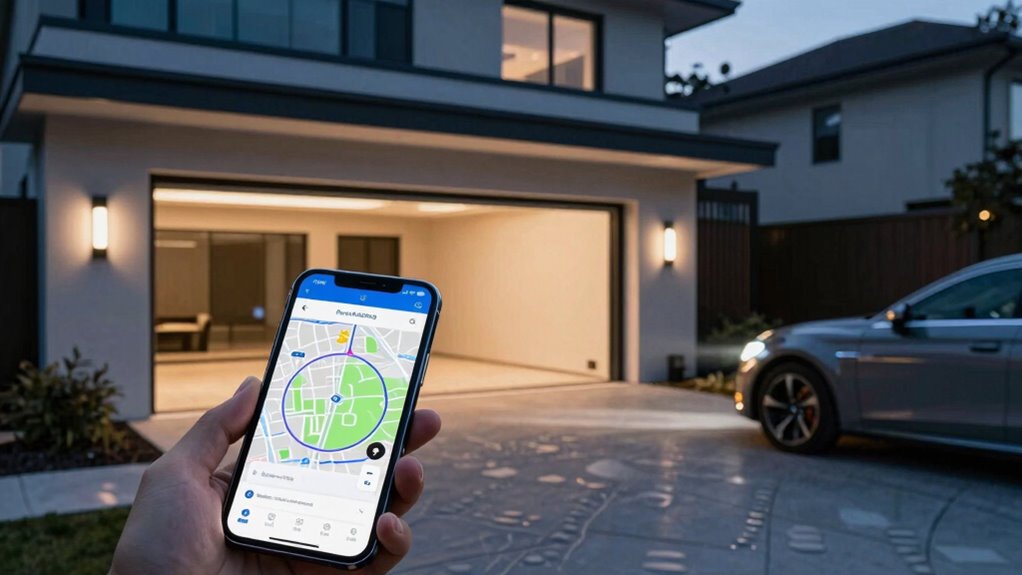
Setting up geofencing for your smart garage door involves a few straightforward steps to guarantee it works smoothly and securely. First, verify your smartphone’s location services are enabled and your chosen app supports geofencing. Next, open the app and navigate to the garage door settings, then create a geofence around your home’s perimeter. Set rules for automatic opening and closing based on your arrival or departure. To maintain garage door security, double-check that only trusted devices are linked. Be mindful of privacy concerns; limit location sharing to what’s necessary. Test the system thoroughly to confirm it activates correctly without false triggers. Regularly update your app and firmware to keep your setup secure and reliable. Incorporating automotive performance parts knowledge can also inspire innovative ways to enhance your smart home setup. Additionally, understanding filter sizing/flow can help optimize your home’s overall automation and security, ensuring seamless integration of your smart devices. Being aware of device limitations can help prevent potential issues with connectivity or false triggers, especially when considering the impact of high refresh rates on system responsiveness.
As an affiliate, we earn on qualifying purchases.
Features to Look for in a Garage Door Geofencing System
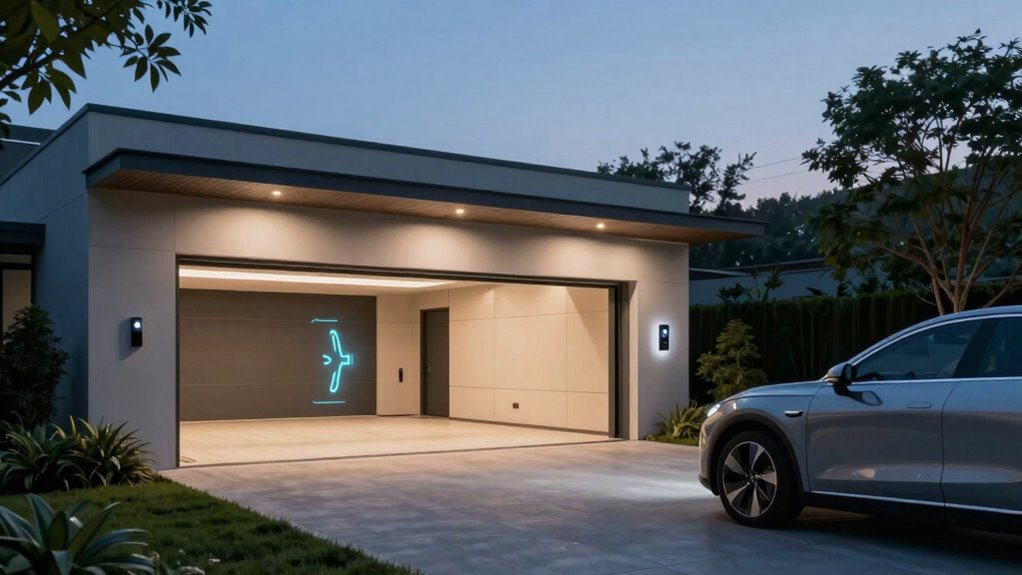
- Geofence customization options to prevent false triggers, allowing you to tailor the system to your specific driveway layout and reduce false alarms.
- Secure app access with user permissions, ensuring only authorized individuals can operate the garage door remotely.
- Real-time notifications for door activity, keeping you informed of any open or close events as they happen. Incorporating proper security measures can further protect your system from unauthorized access and safeguard your smart home ecosystem.
- Compatibility with existing smart home security systems, enabling seamless integration and centralized control.
A new feature to consider is water-resistant hardware, ensuring reliable operation even in outdoor conditions. Additionally, choosing systems with astrological compatibility features can sometimes enhance the overall user experience by aligning with personal preferences or beliefs.
Troubleshooting Common Issues With Geofenced Garage Doors
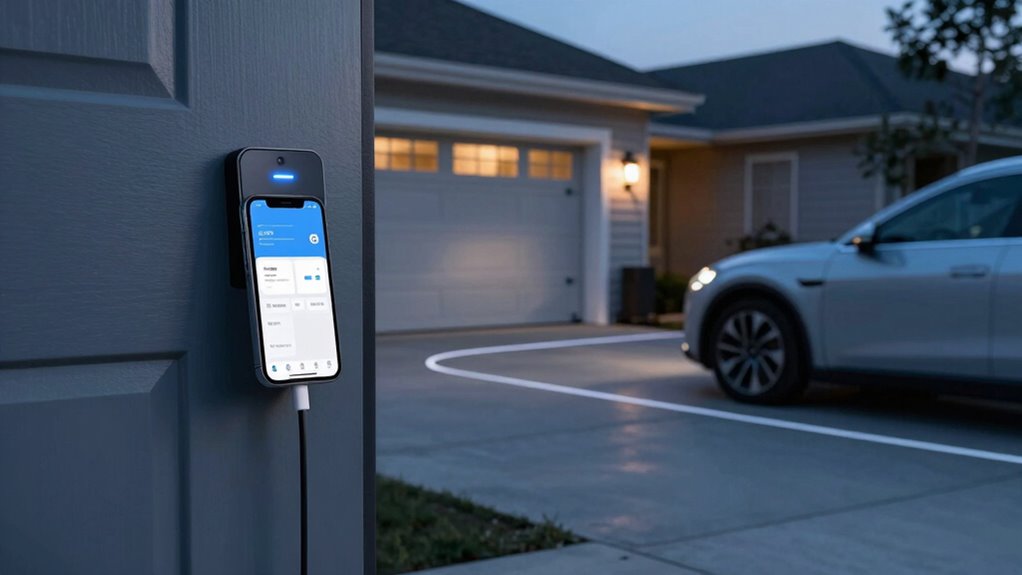
Despite the convenience of geofenced garage doors, you might encounter some common issues that can disrupt their reliable operation. One frequent problem is false triggers, where the system opens or closes unexpectedly, raising security concerns. To fix this, check your GPS settings and verify your device’s location accuracy is high. Connectivity issues can also interfere, especially if your Wi-Fi or smartphone signal is weak. Additionally, privacy implications may arise if your location data isn’t properly secured, so review your system’s privacy settings. Regularly update your app and firmware to prevent bugs that cause malfunctions. By troubleshooting these issues, you guarantee your garage door operates smoothly and securely, minimizing risks related to unauthorized access or data breaches. Maintaining awareness of work-life harmony principles can also help you manage technology use to prevent distractions and enhance overall security.
Is Geofencing the Right Choice for Your Smart Home?
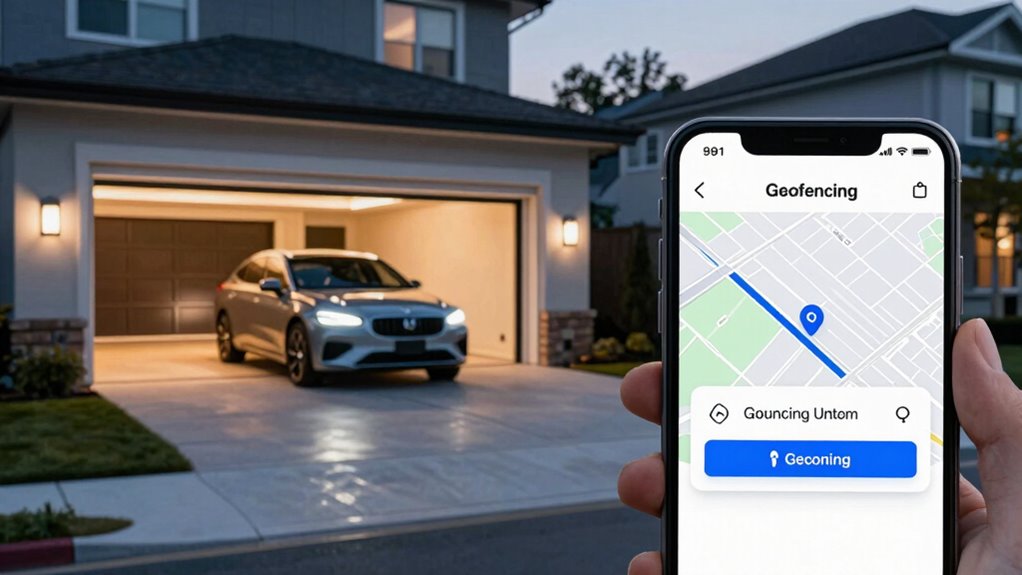
Have you considered whether geofencing truly fits your smart home lifestyle? It can be convenient, but it also raises important questions about security concerns and privacy implications. To decide if it’s right for you, think about these points:
- Are you comfortable with location data tracking?
- Can you handle potential false triggers or missed openings?
- How confident are you in your home’s cybersecurity measures?
- Do you trust the app or service managing your geofencing?
If you’re uneasy about sharing your location data or worried about security breaches, geofencing might not be the best fit. While it offers automation, it’s essential to weigh these privacy and safety factors before integrating it into your smart home.
Alternatives to Geofencing for Garage Door Automation
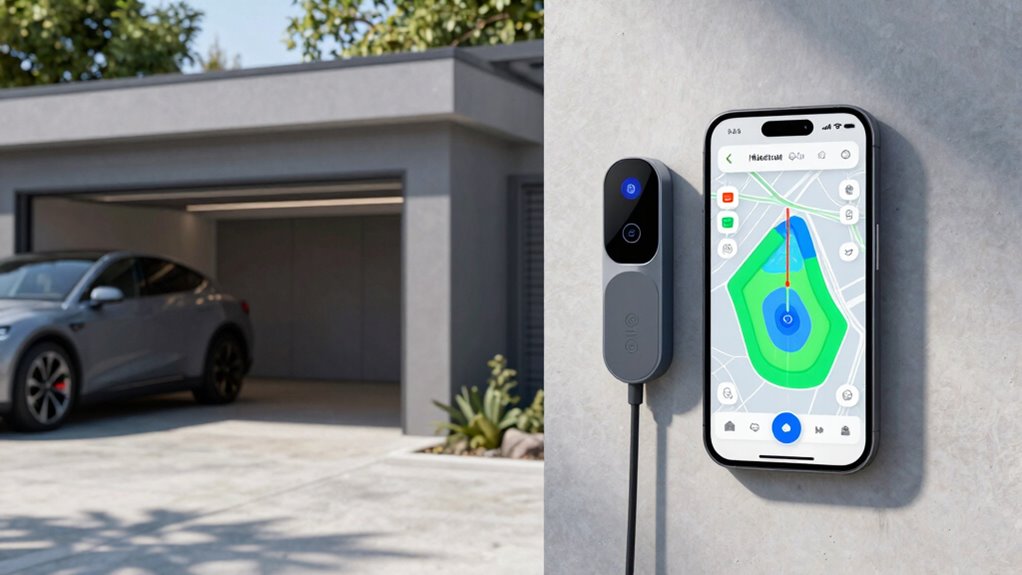
If you’re seeking alternatives to geofencing for your garage door automation, several options can provide reliable access without compromising your privacy. Voice commands are a convenient method; you can simply ask your smart home assistant to open or close the garage door. This hands-free approach offers quick control and doesn’t require proximity. Manual control is another reliable alternative—using physical buttons on your garage door opener or a dedicated remote ensures you can operate it anytime, regardless of connectivity or privacy concerns. Additionally, smart home apps allow for scheduled or remote activation, giving you flexibility without relying on location-based triggers. Understanding privacy considerations and the differences in technology can help you choose the most secure and effective method for your needs. These options provide secure, straightforward ways to manage your garage door, reducing dependency on geofencing technology. Incorporating manual backups can further enhance reliability in case of connectivity issues or power outages. Being aware of security risks associated with different control methods can also help you make informed decisions to protect your home. Moreover, exploring alternative automation methods can help tailor your setup to your specific security preferences and lifestyle.
Frequently Asked Questions
How Secure Is Geofencing Against Hacking or Unauthorized Access?
Geofencing for garage doors can be relatively secure, but cybersecurity risks still exist. You might face unauthorized access if hackers exploit vulnerabilities in the system or your smartphone. To protect yourself, make sure your app and device software are updated regularly, use strong, unique passwords, and enable two-factor authentication. Staying vigilant helps minimize the risk of cyberattacks and keeps your garage door secure from unauthorized access.
Can Geofencing Be Integrated With Existing Smart Home Systems?
Imagine your smart home system as a conductor guiding an orchestra. Yes, geofencing can be integrated seamlessly, thanks to smart home compatibility and wireless connectivity. You connect your garage door to your existing setup, allowing it to respond when your phone enters or leaves a designated zone. This integration streamlines your home automation, making your garage smarter and more responsive without disrupting the harmony of your current smart devices.
What Privacy Concerns Are Associated With Geofencing Technology?
You should be aware that geofencing technology raises privacy concerns, especially around data encryption and user consent. Your location data is often stored and transmitted, which could be vulnerable if not properly encrypted. Without clear user consent, your privacy might be compromised, as companies could track your movements or misuse your data. Always review privacy policies and guarantee your data is protected through strong encryption before using geofencing features.
How Does Weather Affect Geofencing Performance for Garage Doors?
Imagine your garage door as a loyal guard, but weather impact can challenge its watch. Rain, snow, and fog can weaken signal reliability, causing delays or false triggers. Storms and extreme weather might temporarily disrupt the geofencing system, making it less dependable. To stay secure, you’ll want to monitor weather conditions and consider robust signal technology, ensuring your garage’s guard remains vigilant, no matter the weather outside.
Is Professional Installation Required for Effective Geofencing Setup?
You don’t necessarily need professional installation for effective geofencing setup, but it can help minimize issues related to technical complexity and guarantee your system respects user privacy. DIY installation is feasible if you’re comfortable with technology, but a professional can optimize accuracy and security. Proper setup is essential to prevent false triggers, protect user data, and assure reliable operation, especially if you’re new to smart home devices.
Conclusion
Embrace geofencing for your garage door, and experience the ultimate convenience that transforms your daily routines into seamless, effortless moments. Say goodbye to forgotten openers or security worries—this technology puts control right in your pocket. With just a tap, you’ll access a new level of smart home living that feels like something out of the future. Don’t settle for less—upgrade today and elevate your home to extraordinary heights!
Fall Picks
fall essentials
As an affiliate, we earn on qualifying purchases.