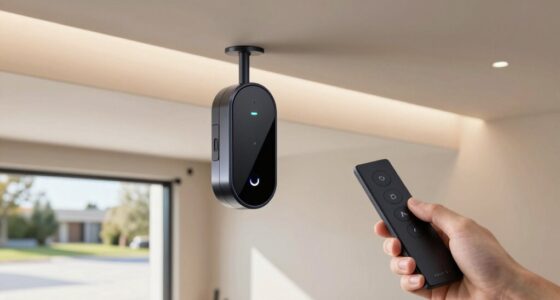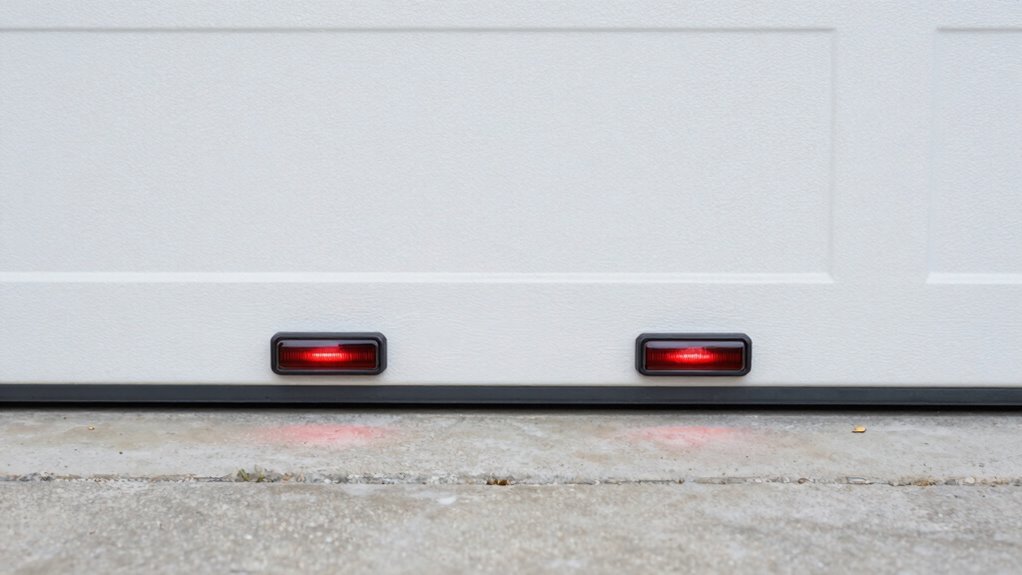

To test your garage door safety sensors, first make certain both sensors are clean and properly aligned facing each other at the recommended height. Turn on the sensors and observe their LED indicators—blinking lights usually mean a misalignment or obstruction. Use a flashlight or sensor tester to check for consistent communication. If your sensors aren’t working correctly, there are simple troubleshooting steps you can try. Keep going to discover more tips for maintaining safe and reliable operation.

Get home appliances delivered free with Prime
- Fast, free delivery on millions of items
- Prime Video, Amazon Music and more included
- Member-only deals all year
Key Takeaways
- Perform a functional test by closing the door and observing if it stops or reverses when obstructed.
- Check LED indicators on sensors to ensure proper alignment and operation.
- Use a flashlight or sensor tester to verify signal transmission between photoelectric units.
- Clean sensor lenses and remove any dirt, debris, or obstructions blocking the sensor path.
- Confirm sensors face each other directly, are properly aligned, and mounted at the recommended height.
garage door safety sensor tester
As an affiliate, we earn on qualifying purchases.
As an affiliate, we earn on qualifying purchases.
How Do Garage Door Safety Sensors Work?
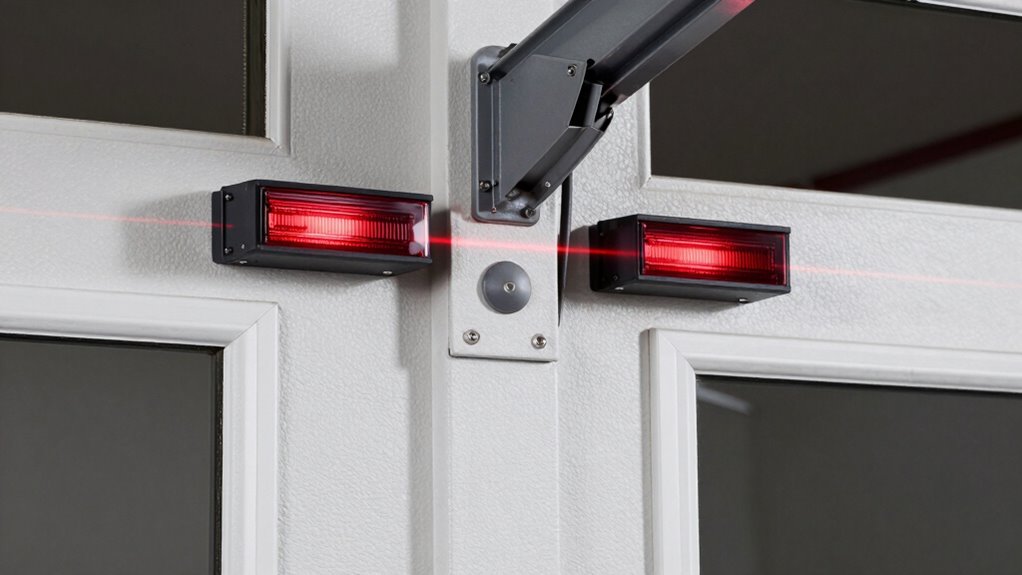
Garage door safety sensors are essential for preventing accidents and injuries, especially when the door is closing. These sensors use advanced sensor technology to detect objects or people in the door’s path. When you activate the garage door, the sensors send an invisible beam between the photoelectric units mounted on either side of the door. If the beam is interrupted, the safety system signals the opener to stop or reverse the door’s movement. These sensors are designed to meet strict safety standards, guaranteeing reliable operation and preventing pinched fingers or trapped individuals. Modern sensors typically feature LED indicators to show proper alignment and functioning. By understanding how these sensors work, you can better maintain safety and ensure your garage door operates smoothly and securely. Additionally, ensuring correct sensor alignment can help prevent false triggers and improve overall safety performance. Proper installation and maintenance of these sensors are crucial for consistent safety and to avoid malfunctions.
garage door sensor alignment kit
As an affiliate, we earn on qualifying purchases.
As an affiliate, we earn on qualifying purchases.
Common Causes of Sensor Malfunctions
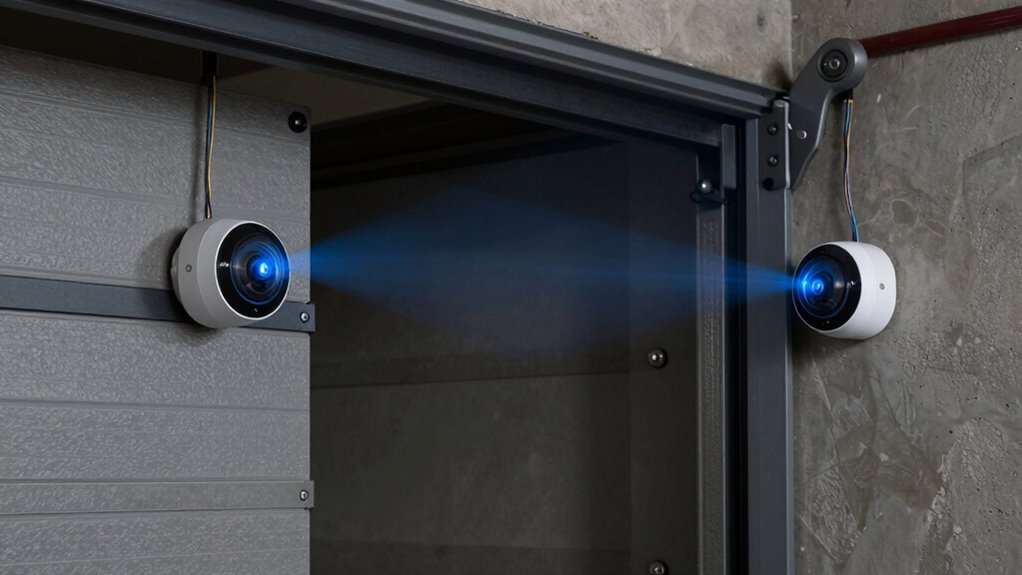
Sensor malfunctions often happen when debris or dirt accumulates on the photoelectric units, blocking or reflecting the beam and causing false signals. Over time, misaligned sensors can also result from improper sensor calibration, leading to inconsistent responses. Damaged or loose electrical wiring is another common cause, disrupting the power supply or signal transmission between the sensors and the garage door opener. Corrosion or wear on wiring connections can create intermittent issues, making sensors unreliable. Additionally, exposure to harsh weather conditions may affect sensor alignment or damage the units themselves. Regularly cleaning the sensors, checking the calibration, and inspecting electrical wiring connections help prevent these malfunctions. Introducing AI-driven diagnostics can also assist in identifying sensor issues more efficiently. Ensuring proper sensor alignment is crucial for reliable operation, and addressing these issues guarantees your sensors operate correctly, maintaining safe and reliable garage door function. Proper electrical wiring maintenance and inspection can significantly reduce intermittent problems caused by corrosion or loose connections. Utilizing preventative maintenance routines can further extend the lifespan of the sensors and improve overall safety.
As an affiliate, we earn on qualifying purchases.
How to Tell If Your Sensors Are Faulty

If you notice your garage door isn’t closing properly or stops partway down, it could be a sign that your safety sensors are faulty. Faulty sensors may result from incorrect sensor installation or issues with sensor alignment. Check the sensor color coding—typically, the sensors should have matching colors on both sides, like green or red. If the colors don’t match, the sensors might not communicate correctly. Also, inspect for dirt, obstructions, or misalignment, as these can mimic sensor faults. Use the table below to review common signs:
| Symptom | Potential Cause | Solution |
|---|---|---|
| Door stops mid-closure | Sensor misalignment | Realign sensors |
| Sensors not blinking green | Incorrect sensor color coding | Correct the color coding |
| No response from sensors | Obstructions or dirt | Clean sensors, remove debris |
| Continuous blinking lights | Faulty sensor installation | Reinstall sensors properly |
Recognizing these signs helps identify if your sensors are faulty. Regularly testing your garage door sensors ensures safe operation and can prevent accidents. Additionally, performing sensor tests periodically can help catch issues early before they lead to safety concerns. Ensuring proper sensor calibration is also crucial for optimal performance and safety.
garage door photoelectric sensors
As an affiliate, we earn on qualifying purchases.
As an affiliate, we earn on qualifying purchases.
How to Test Your Garage Door Sensors

To test your garage door sensors, start by checking if they are properly aligned and free of dirt or debris. Make sure there are no obstructions blocking the sensors’ path. Then, perform a functional test by closing the door and observing if it responds correctly. Additionally, ensure the sensors are free from misalignment issues that can affect their performance. Regularly inspecting your tools and understanding safety tips can help prevent accidents during maintenance. Incorporating curiosity about how sensors work can also help you better troubleshoot potential problems.
Visual Sensor Alignment Check
Ensuring your garage door sensors are properly aligned is a simple yet crucial step in maintaining safe operation. Begin with a visual alignment check by inspecting the sensors on each side of the door. Make sure they are facing directly at each other and that nothing is blocking their line of sight. If the sensors appear tilted or misaligned, gently adjust them until they are perfectly aligned. Proper sensor calibration is essential for the safety system to function correctly; misaligned sensors can cause the door to malfunction or not detect obstructions. Use a level or visual cues to confirm the sensors face each other squarely. Once aligned, test the sensors by closing the door and checking if it responds correctly to obstructions. Proper alignment ensures reliable safety and smooth operation. Remember, regular sensor maintenance can prevent future issues and maintain optimal safety. Additionally, inspecting for obstructions or dirt on the sensors can help ensure they work correctly and avoid false triggers. Regularly checking the sensor alignment can also prevent potential malfunctions and prolong their lifespan. Incorporating data-driven strategies can help monitor sensor performance over time and identify when realignment or cleaning is needed. Being aware of indoor air quality and avoiding dust buildup around the sensors can also help ensure consistent performance.
Clear Obstruction Removal
Wondering if your garage door sensors are working correctly? Clear obstruction removal is key to proper obstruction detection. First, inspect the sensor path and remove any debris, dirt,, or objects that could block the sensors’ view. Even small obstructions can interfere with sensor signals, preventing the door from closing properly. Keep in mind that regular cleaning helps maintain sensor durability, guaranteeing they function reliably over time. After clearing the area, test the sensors by closing the door and observing if it stops or reverses when an object is in the path. Removing obstructions not only enhances safety but also reduces unnecessary wear on the sensors. Maintaining a clear sensor path is a simple yet essential step to ensure your garage door operates smoothly and safely. Additionally, understanding how auditory processing impacts sensor function can help identify underlying issues that may affect their performance. Regular sensor maintenance can further prevent malfunctions and extend the lifespan of your system, especially considering the significance of proper wall decor and environmental factors. For optimal performance, it’s also helpful to be aware of how sensor alignment can influence the detection capability of your garage door system.
Functional Testing Procedure
Testing your garage door sensors regularly is essential to confirm they’re functioning correctly and maintaining safety. Start by inspecting the sensor installation to ensure they’re aligned and free of dirt or debris. Check wiring connections for any loose or damaged wires, as faulty wiring can cause sensor failure. To test, place an object or your hand in the sensor’s path while closing the door. The door should stop or reverse immediately. If it doesn’t, verify the wiring connections are secure and that the sensors are properly aligned. You can also use a simple sensor tester or a flashlight beam to ensure the sensors communicate correctly. Regular testing helps identify issues early, keeping your garage door safe and operational. Additionally, understanding the protocols used by smart devices can aid in troubleshooting and optimizing sensor performance. Being aware of sensor technology can also help you better understand how these systems work and how to improve their reliability. Furthermore, familiarizing yourself with safety standards can ensure your system complies with safety regulations and functions optimally. Incorporating knowledge of communication protocols can assist in diagnosing connectivity issues and enhancing sensor reliability.
How to Adjust and Realign Sensors
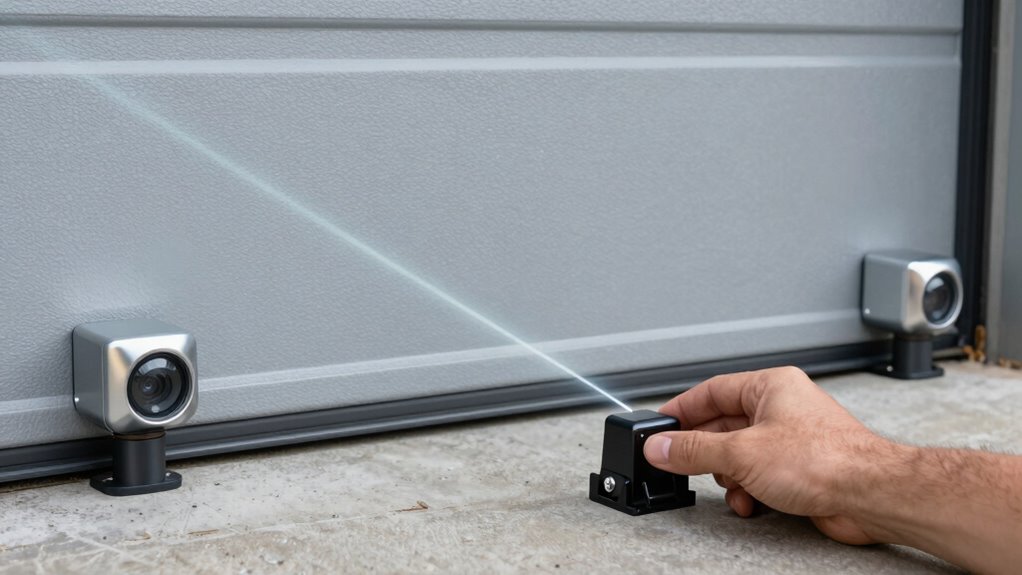
To properly adjust and realign your garage door sensors, start by inspecting their position and making sure they’re level and facing each other directly across the doorway. Proper sensor installation is key to safe operation, so verify they’re mounted at the correct height, typically about 4 to 6 inches above the floor. Check the wiring connections for any loose or damaged wires, as faulty wiring can cause misalignment or sensor failure. If the sensors aren’t aligned, gently adjust their brackets until the LED indicator lights (if present) turn solid, indicating proper alignment. Keep in mind that even small shifts can disrupt the sensor signal. Take your time to make precise adjustments, ensuring the sensors face each other squarely for reliable detection and safe garage door operation.
Troubleshooting Sensor Problems That Persist

Even after adjusting and realigning your garage door sensors, some issues may persist. First, double-check the sensor installation to guarantee they’re mounted correctly and securely. Improper placement or loose brackets can cause persistent sensor problems. Next, verify sensor compatibility with your garage door opener. Not all sensors work with every system, so confirm that your sensors are compatible. Inspect the wiring for damage or disconnection, as faulty wiring can interfere with sensor signals. Clean the sensor lenses to remove dust, dirt, or spider webs that might block the infrared beam. If problems continue, consider swapping out the sensors for new ones to rule out defective units. Addressing these points helps resolve lingering sensor issues and restores proper garage door operation.
Maintenance Tips for Long-Lasting Sensors

To keep your garage door sensors working smoothly, you should regularly clean the lenses to prevent dirt and debris from interfering. Make certain the sensors are properly aligned and positioned to guarantee they function correctly. Consistent maintenance like this can extend the lifespan of your sensors and prevent future issues.
Regular Cleaning Practices
Regular cleaning is essential to keep your garage door safety sensors functioning properly. Dust, dirt, and cobwebs can obstruct the sensors, causing malfunctions. To maintain peak operation, regularly wipe the sensors with a soft, damp cloth, avoiding harsh chemicals that might damage the lenses. Keep your garage decor organized to prevent clutter from interfering with the sensors’ alignment. Additionally, ensure your tool storage area is tidy, so debris doesn’t accidentally land on the sensors. Proper cleaning not only improves safety but also extends the lifespan of your sensors, saving you money in the long run. Remember, a clean sensor is a reliable sensor, so make it part of your regular garage maintenance routine.
Alignment and Positioning
Proper alignment and positioning of your garage door sensors are essential for reliable operation. During sensor installation, make sure both sensors are directly facing each other at the recommended height, usually about 4-6 inches above the ground. Misaligned sensors can cause false signals or prevent the door from closing. Check the sensor wiring to confirm all connections are secure and free of damage; loose or frayed wires can disrupt sensor function. Use a level or a straight edge to verify that the sensors are perfectly aligned. Adjust the sensor brackets as needed, keeping the sensors steady and facing each other directly. Regularly inspecting and maintaining proper sensor positioning helps prevent safety issues and ensures your garage door operates smoothly.
When to Call a Professional for Sensor Repairs

Even if you’ve tried troubleshooting your garage door sensors, there are times when calling a professional is the safest choice. If the sensors remain misaligned, damaged, or unresponsive after basic DIY safety tips, don’t risk injury or further damage. Professional repairs guarantee proper calibration and safety compliance, especially important for emergency preparedness. You should consider calling a technician if:
- The sensors are physically broken or cracked
- The wiring is frayed or corroded
- Troubleshooting efforts don’t restore proper sensor function
Attempting complex repairs without proper knowledge can lead to accidents or system failure. When in doubt, prioritize safety by consulting a trained expert. Knowing when to seek professional help keeps your garage door system reliable and safe for everyone.
Frequently Asked Questions
Are There Different Types of Garage Door Safety Sensors?
Yes, there are different types of garage door safety sensors, mainly based on infrared technology. You’ll find photoelectric sensors, which use infrared beams to detect objects, requiring proper sensor alignment for safety. Some sensors are wired, while others are wireless, but all need regular checks to guarantee the infrared sensors are aligned correctly. When functioning properly, they prevent the door from closing on objects or people, ensuring safety.
Can Weather Conditions Affect Sensor Performance?
Weather impact can be harsh enough to challenge sensor reliability, making it feel like your garage is battling a storm of chaos. Rain, snow, and fog can interfere with sensor signals, causing false alerts or failure to detect obstructions. Extreme temperatures may also weaken sensor components. To guarantee safety, regularly check your sensors’ alignment and cleanliness, especially after severe weather, because reliable sensors are essential for preventing accidents.
How Often Should Safety Sensors Be Tested?
You should test your garage door safety sensors at least once a month to guarantee proper sensor calibration. Regular testing helps identify troubleshooting techniques early, preventing accidents or malfunction. To test, close the door and wave an object in front of the sensors—if the door doesn’t reverse, check for obstructions or misalignment. Consistent testing keeps your sensors functioning correctly and maintains safe operation over time.
What Safety Features Do Sensors Include?
You might think safety sensors are just fancy lights, but they include clever features to keep you safe. They detect misalignment or signal interruption, preventing the door from closing if something’s wrong. Proper sensor alignment is essential; even a tiny misadjustment can stop the door. Signal interruption detection acts like a guardian angel, ensuring the door doesn’t close on anyone or anything, making your garage a safer place—irony included.
Are There DIY Kits for Sensor Replacement?
Yes, you can find DIY kits for sensor replacement that include everything you need for calibration and installation. These kits typically come with step-by-step instructions, making replacement procedures straightforward. You’ll need to carefully follow calibration steps to guarantee proper sensor alignment and functioning. While these kits simplify the process, always double-check sensor alignment after replacement to maintain safety and proper operation.
Conclusion
Keeping your garage door sensors in top shape might seem like a small task, but neglecting them can lead to big problems—like unexpected closures or safety hazards. Think of sensors like the eyes of your garage door: when they’re clear and aligned, everything runs smoothly. But ignore their signals, and you risk costly repairs. Regular testing and maintenance are your best tools—because a well-functioning sensor is the quiet hero behind your safety and convenience.
Halloween Picks
halloween
As an affiliate, we earn on qualifying purchases.