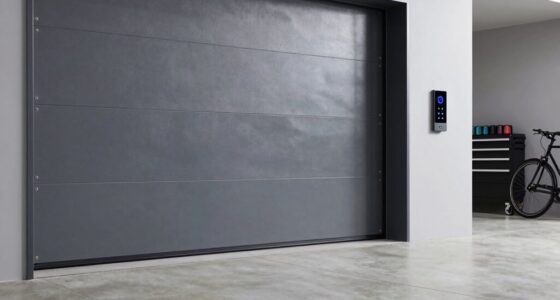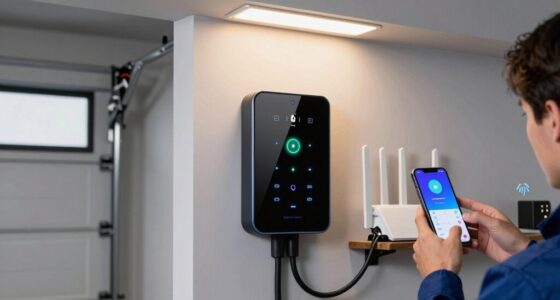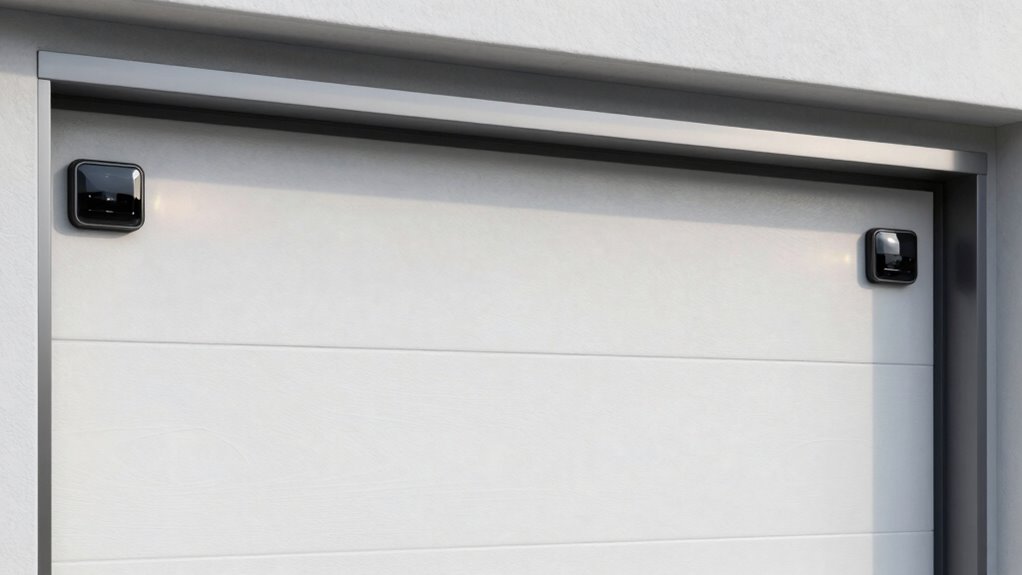

Garage door safety sensors are installed near the ground on each side of your door, emitting infrared or laser beams across the opening. When an obstacle interrupts the beam, the sensors signal the opener to stop or reverse the door, preventing injuries or damage. Proper alignment and regular maintenance guarantee they work correctly. To keep your system safe and functional, it’s helpful to understand how these sensors operate and how to troubleshoot common issues.

Get home appliances delivered free with Prime
- Fast, free delivery on millions of items
- Prime Video, Amazon Music and more included
- Member-only deals all year
Key Takeaways
- Safety sensors emit infrared or laser beams across the garage door opening to detect obstacles.
- When the beam is interrupted, sensors signal the opener to stop or reverse the door.
- Proper sensor alignment and cleanliness are essential for accurate obstacle detection.
- Sensors operate through wiring connections that link them to the garage door opener system.
- Regular maintenance and testing ensure sensors function correctly and prevent safety hazards.
As an affiliate, we earn on qualifying purchases.
What Are Garage Door Safety Sensors?
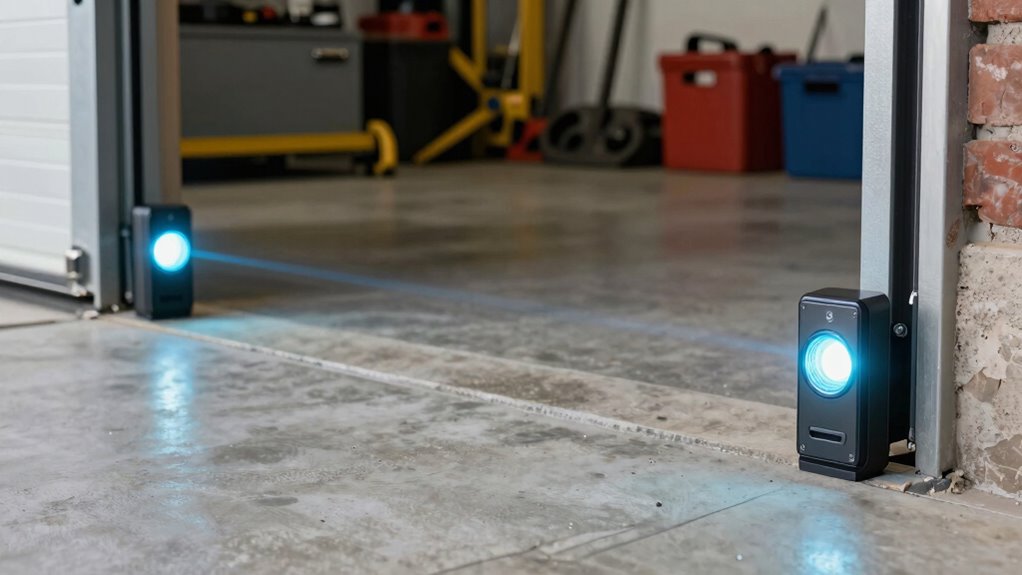
Have you ever wondered how garage doors prevent accidents and injuries? Garage door safety sensors are the key. These sensors, usually installed near the bottom of the door tracks, detect obstacles in the door’s path. Sensor installation is simple but vital for safety. They emit an invisible beam between two units; if the beam is broken, the door stops closing immediately. This prevents injuries and property damage by stopping the door if something or someone is in the way. Proper sensor installation guarantees they work correctly, giving you peace of mind every time you open or close your garage door. Learning about garage door safety features can help you ensure your system functions properly. Additionally, ensuring the sensors are properly calibrated can improve their detection accuracy and overall effectiveness. Regular maintenance and understanding how these sensors operate can further enhance their safety performance, reducing the risk of accidents. Understanding how these sensors work and are maintained can significantly improve overall safety in your garage, especially considering common cable failures that can affect sensor alignment and operation.
As an affiliate, we earn on qualifying purchases.
How Do Safety Sensors Detect Obstacles?
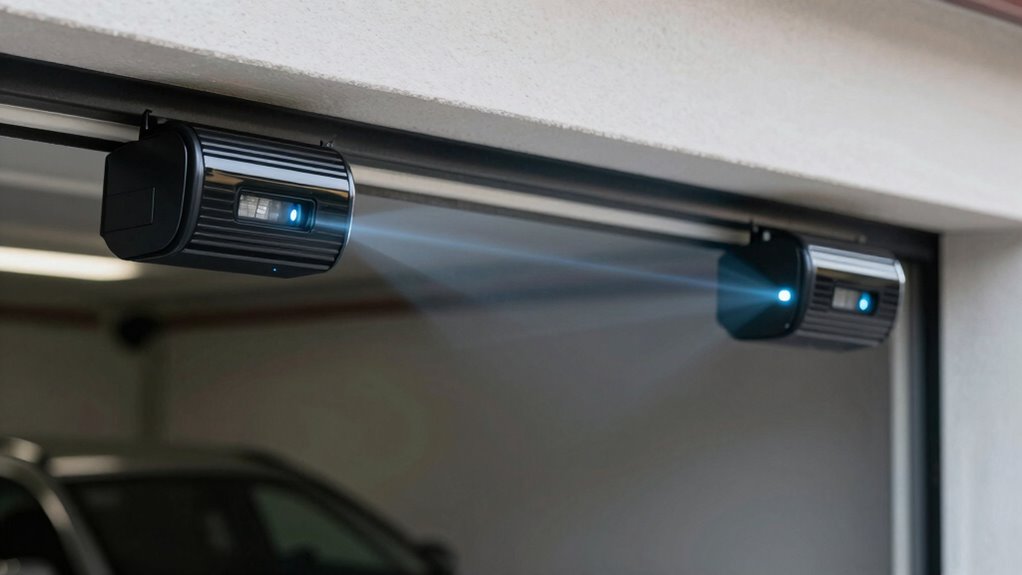
Safety sensors detect obstacles by using an invisible beam of infrared light or laser that spans across the garage door opening. When the beam is uninterrupted, the sensors know the path is clear. If an object blocks the beam, obstacle detection occurs, prompting the door to stop or reverse. Proper sensor alignment is essential; misaligned sensors can cause false alarms or failure to detect obstacles. To guarantee accurate detection:
- Check that the sensors face each other directly without obstructions.
- Adjust the sensor brackets if the beams aren’t aligned properly.
- Clean the sensor lenses to prevent dirt or dust from interfering.
- Understanding the technology behind infrared sensors helps ensure your safety system works effectively. Additionally, regular inspection of sensor alignment ensures reliable operation, similar to how water detection systems in pools rely on precise sensor placement for safety. Ensuring that sensors are correctly aligned and functioning properly is crucial, just as personality assessments require accurate measurement to provide meaningful insights. Proper wiring connections also play a vital role in maintaining the circuit integrity of the safety system. Regularly inspecting and maintaining sensor alignment, along with understanding the fundamentals of sensor technology, guarantees reliable obstacle detection, keeping your garage door operation safe and smooth.
As an affiliate, we earn on qualifying purchases.
What Are the Components of a Garage Door Safety Sensor System?
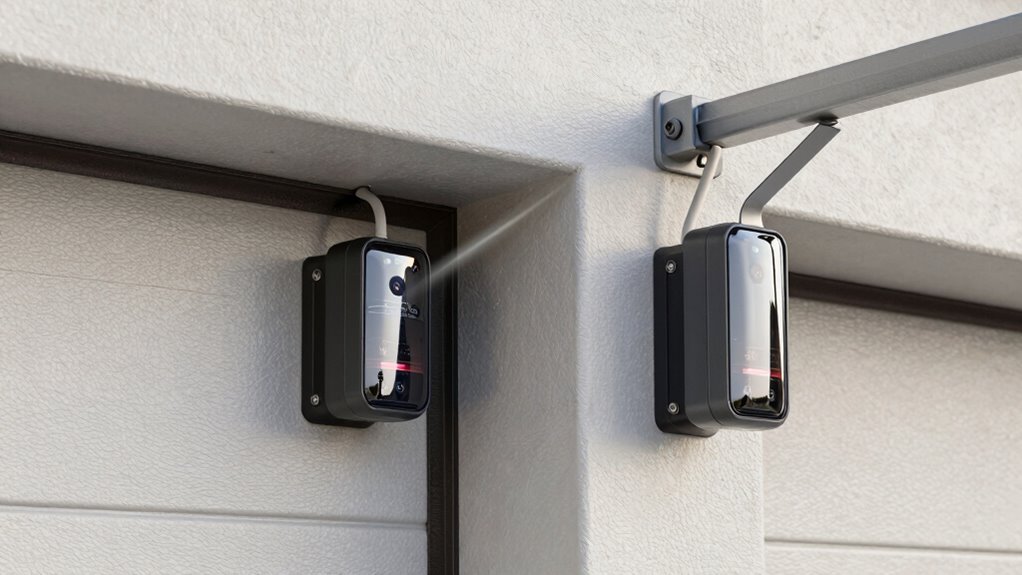
A garage door safety sensor system consists of several key components that work together to detect obstacles and prevent accidents. The primary components include the sensors themselves, usually mounted on each side of the garage door near the ground. Proper sensor installation guarantees they are aligned and securely fixed. Wiring connections link the sensors to the garage door opener, transmitting the obstacle detection signals. These wires must be correctly connected and protected from damage to assure reliable operation. The sensors emit an invisible beam across the doorway, and if the beam is broken by an obstacle, the system triggers the door to stop closing or reverse. Additionally, support breakfast options in some areas can provide quick snacks or meals for technicians working on these systems. Proper sensor alignment is crucial for the system to function correctly, ensuring the safety sensors reliably detect obstacles. The effectiveness of the safety sensors can also be influenced by sensor technology, which has advanced to improve detection accuracy. Together, these components create a safety net that prevents accidents and keeps your garage safe.
garage door sensor alignment kit
As an affiliate, we earn on qualifying purchases.
As an affiliate, we earn on qualifying purchases.
How to Troubleshoot Common Safety Sensor Problems
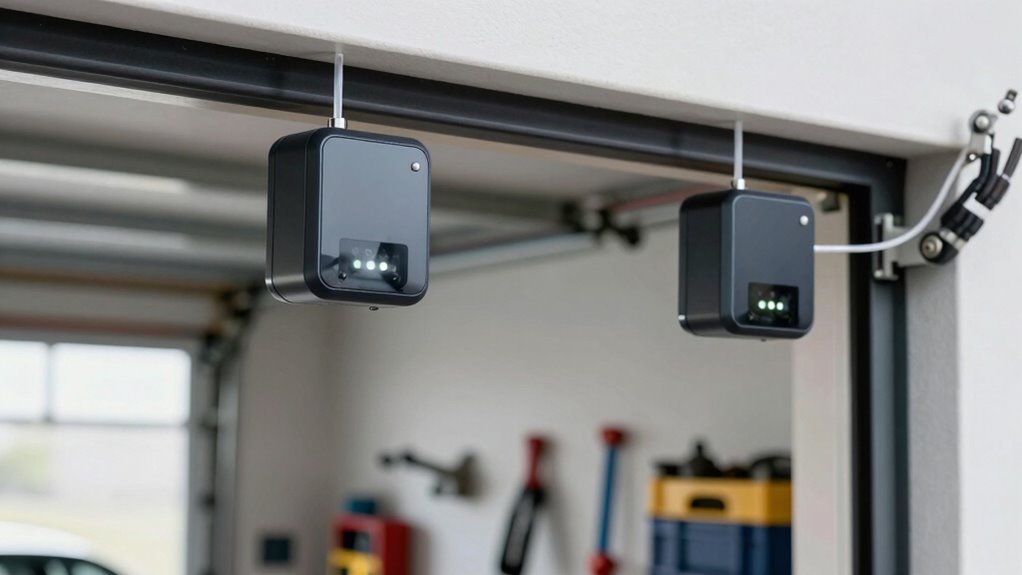
When your garage door safety sensors aren’t working properly, troubleshooting quickly can help prevent accidents and keep your door functioning smoothly. Start with sensor troubleshooting by checking these common issues:
- Ensure sensors are aligned: Misalignment causes safety feature diagnostics to fail. Gently realign the sensors so they face each other directly.
- Clean the lenses: Dirt or debris can block the sensor’s signal. Wipe the lenses with a soft cloth to ensure a clear path.
- Check for obstructions: Anything blocking the sensors’ line of sight can disrupt operation. Remove any objects or debris in the sensor’s path.
Perform these steps to diagnose and fix common safety sensor problems efficiently. Proper sensor troubleshooting maintains the safety feature’s reliability and keeps your garage door operating safely.
How to Maintain and Realign Garage Door Safety Sensors
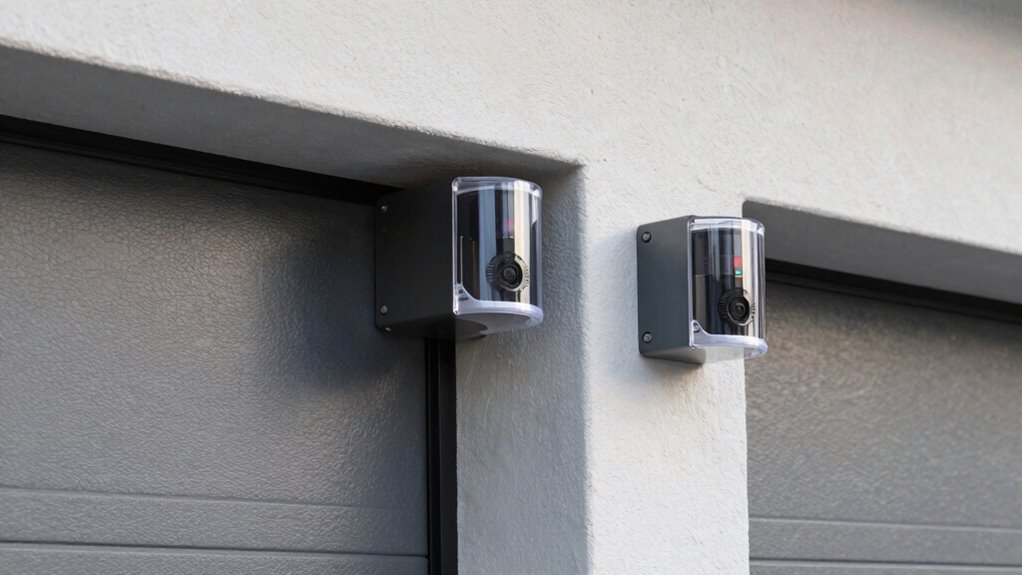
Regular maintenance and proper realignment of your garage door safety sensors are essential to guarantee they function correctly and keep your family safe. Start by cleaning the sensors with a soft, dry cloth to remove dust and debris that can interfere with sensor calibration. If the sensors aren’t aligned, gently adjust them until the LED lights are steady and facing each other directly. Always check the wiring for damage and verify connections are secure. If the sensors remain misaligned or damaged beyond repair, sensor replacement might be necessary. When replacing sensors, follow the manufacturer’s instructions carefully to ensure proper calibration. Regularly testing your sensors after maintenance ensures they’re working effectively, preventing accidents and ensuring smooth operation of your garage door. Additionally, understanding safety features helps you recognize when your system is functioning correctly and when it needs attention. To optimize performance, consider inspecting sensor alignment during routine maintenance, especially if you notice inconsistent sensor signals. It’s also beneficial to familiarize yourself with common troubleshooting steps for sensor issues to quickly identify and resolve problems. Proper sensor calibration is crucial for preventing false alarms and ensuring reliable operation.
Frequently Asked Questions
Can Safety Sensors Be Bypassed or Disabled Intentionally?
Yes, you can bypass or disable safety sensors, but it’s dangerous and not recommended. If you attempt to do so, you might improperly calibrate the sensor or misplace it, which can cause safety issues. Proper sensor calibration and correct sensor placement are essential for safe operation. Bypassing sensors compromises safety, risking injury or damage, so always verify sensors are functioning correctly and consult a professional if needed.
How Do Weather Conditions Affect Safety Sensor Performance?
Weather interference can considerably impact your garage door safety sensors, making them less dependable. Rain, snow, fog, or debris can block or misalign the sensors, causing false readings or failure to activate properly. To guarantee peak performance, you should regularly check and calibrate the sensors, especially after severe weather. Proper sensor calibration helps maintain accurate detection, preventing accidents and ensuring your garage door operates safely despite weather conditions.
Are There Different Types of Safety Sensors for Various Garage Door Models?
You’ll be amazed at the variety of safety sensors available for different garage door models! From ultra-sensitive infrared sensors to advanced laser systems, each type is designed to fit specific setups. Proper sensor calibration and precise sensor installation are essential to guarantee flawless operation. Whether you have a standard or custom door, there’s a sensor tailored for your needs, providing peace of mind and keeping you safe from accidents.
How Long Do Garage Door Safety Sensors Typically Last?
Garage door safety sensors typically last around 5 to 10 years, but their lifespan depends on factors like sensor calibration and exposure to the elements. You should regularly check and clean the sensors to guarantee proper alignment. If they stop working or become misaligned despite calibration efforts, sensor replacements are necessary to maintain safety. Proper maintenance can extend their functional life, keeping your garage door operating safely.
What Should I Do if Safety Sensors Keep Activating Randomly?
If your safety sensors keep activating randomly, first check for sensor misalignment or obstructions. You should also calibrate the sensors to guarantee proper alignment and functioning. Clean the sensor lenses gently with a soft cloth to remove dust or debris that could interfere with their signal. Regular sensor calibration and cleaning can prevent false activations, maintaining safe and smooth operation of your garage door.
Conclusion
Now that you know how garage door safety sensors work, you’re practically a superhero protecting your home! With just a quick check or realignment, you can prevent accidents and save lives—imagine turning a potential disaster into a smooth, worry-free glide every time. So, get out there and master those sensors! Before you know it, you’ll be the hero of your garage, making safety look effortless and turning everyday routines into a fortress of security.
Halloween Picks
halloween
As an affiliate, we earn on qualifying purchases.