
To prevent rust on your tools, make sure you clean and dry them thoroughly after each use. Apply a light coat of oil or rust inhibitor to create a barrier against moisture. Store your tools in a dry area, using desiccants or sealed containers to control humidity. Regular maintenance, like sharpening blades and inspecting for early rust signs, helps keep tools in good shape. Keep these tips in mind, and you’ll learn more ways to protect your tools effectively.

Get home appliances delivered free with Prime
- Fast, free delivery on millions of items
- Prime Video, Amazon Music and more included
- Member-only deals all year
Key Takeaways
- Clean and thoroughly dry tools after each use to remove moisture and debris.
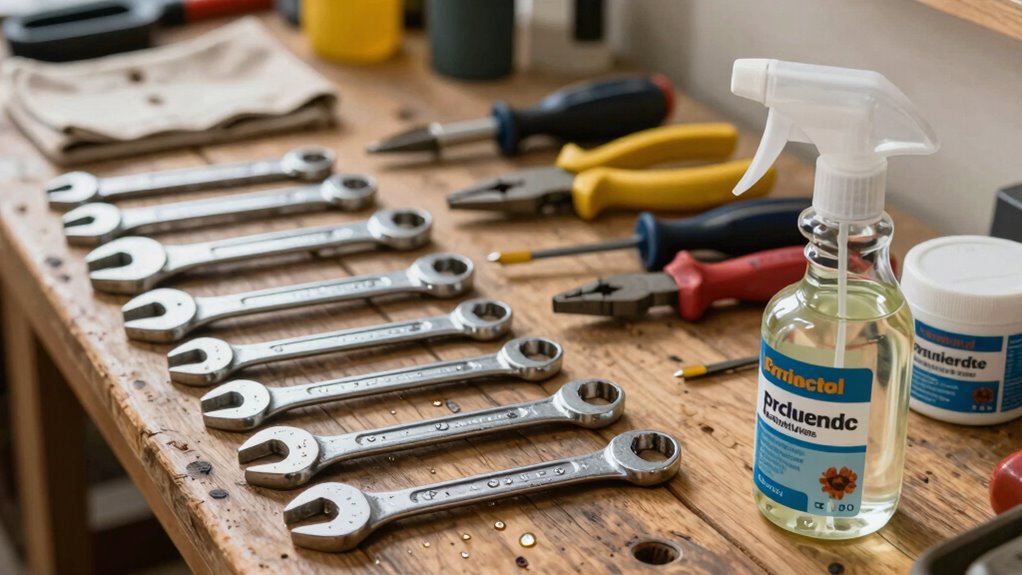
- Apply a light coat of oil or rust inhibitor to create a protective barrier.
- Store tools in a dry, low-humidity environment, preferably with desiccants like silica gel.
- Use protective coatings or anti-rust sprays designed for tools for added moisture resistance.
- Regularly inspect, clean, and maintain tools to identify and address rust early.
As an affiliate, we earn on qualifying purchases.
Why Rust Damages Your Tools and How to Recognize It
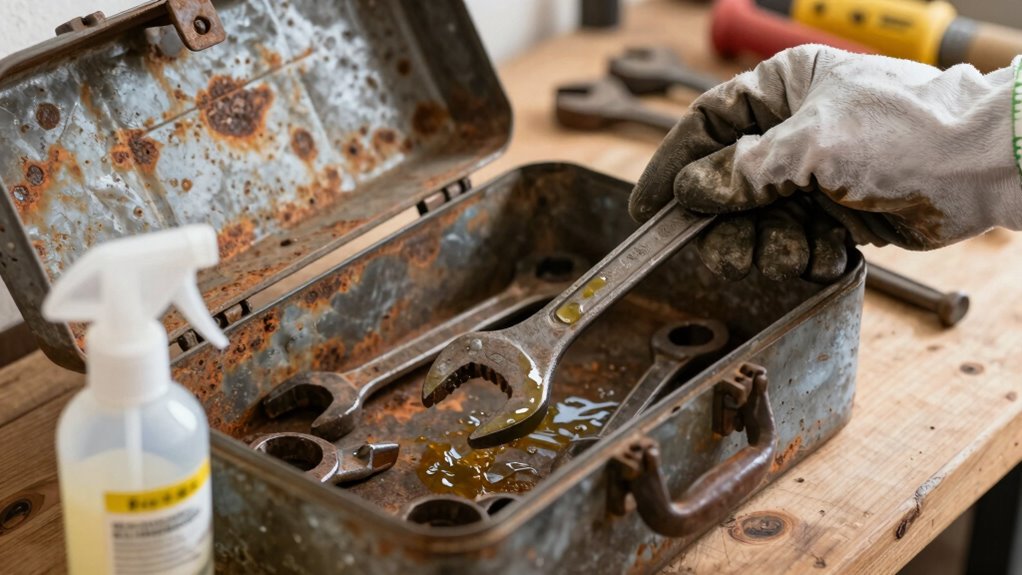
Rust damages your tools by causing metal to weaken and deteriorate over time, which can lead to reduced functionality and eventual failure. Rust formation occurs when moisture and oxygen come into contact with metal surfaces, initiating corrosion causes that break down the material’s integrity. As rust develops, it creates a flaky, reddish layer that compromises the tool’s strength and precision. You’ll notice surface discoloration, rough textures, or pitting—clear signs of corrosion causes at work. Over time, rust can cause parts to seize or break, making tools unsafe and difficult to use. Recognizing these signs early helps prevent further damage. Understanding how rust forms and causes metal corrosion is essential to protecting your tools and extending their lifespan. Proper storage techniques can also help minimize exposure to moisture and reduce rust formation, especially when considering the impact of indoor humidity levels on metal preservation. Additionally, maintaining a dry environment is crucial for preventing rust from developing in the first place. Regularly applying protective coatings or rust inhibitors creates a barrier against moisture, further safeguarding your tools from corrosion.
As an affiliate, we earn on qualifying purchases.
How to Properly Clean and Dry Your Tools After Use
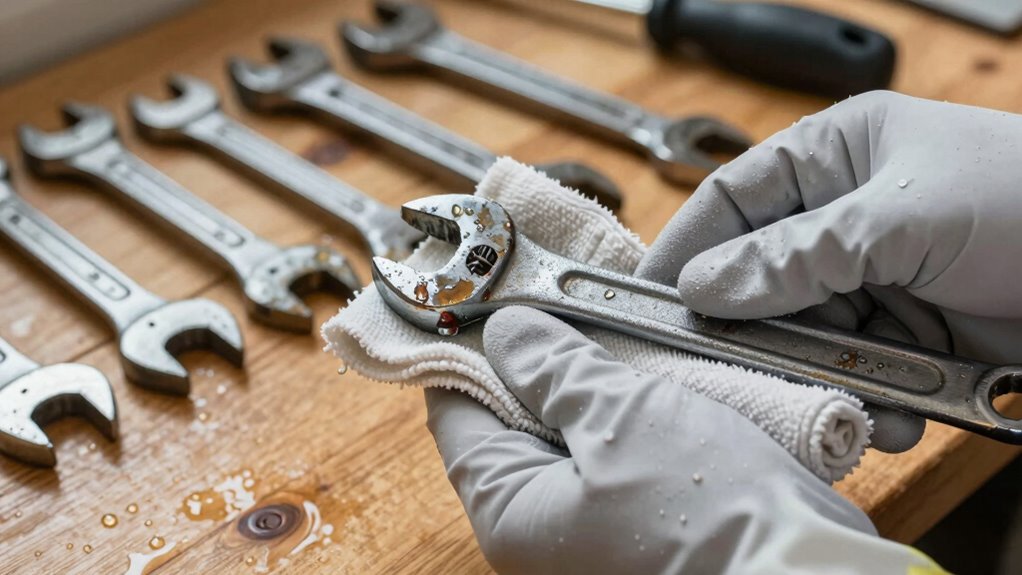
After finishing your work, it’s essential to clean and dry your tools thoroughly to prevent moisture from lingering on metal surfaces. Use effective cleaning techniques like wiping with a rag, brushing off dirt, or using compressed air to remove debris. For stubborn grime, a mild soap solution can help, but make sure you rinse and dry the tools afterward. When drying, choose methods that eliminate moisture completely—use a dry cloth or air-dry in a warm, well-ventilated area. Proper drying methods prevent rust buildup by removing residual moisture and protecting your tools from corrosion. Regular maintenance and awareness of early warning signs can help identify issues before rust develops. Additionally, understanding regional flavors and techniques can inspire proper storage methods influenced by local environments. Proper drying methods keep your tools in prime condition, reducing the risk of corrosion. Incorporating preventative measures such as applying a light coating of oil can further safeguard your tools from rust. Taking these simple steps guarantees your tools stay rust-free and ready for your next project.
silica gel desiccant for tool storage
As an affiliate, we earn on qualifying purchases.
As an affiliate, we earn on qualifying purchases.
Best Protective Coatings and How to Apply Them
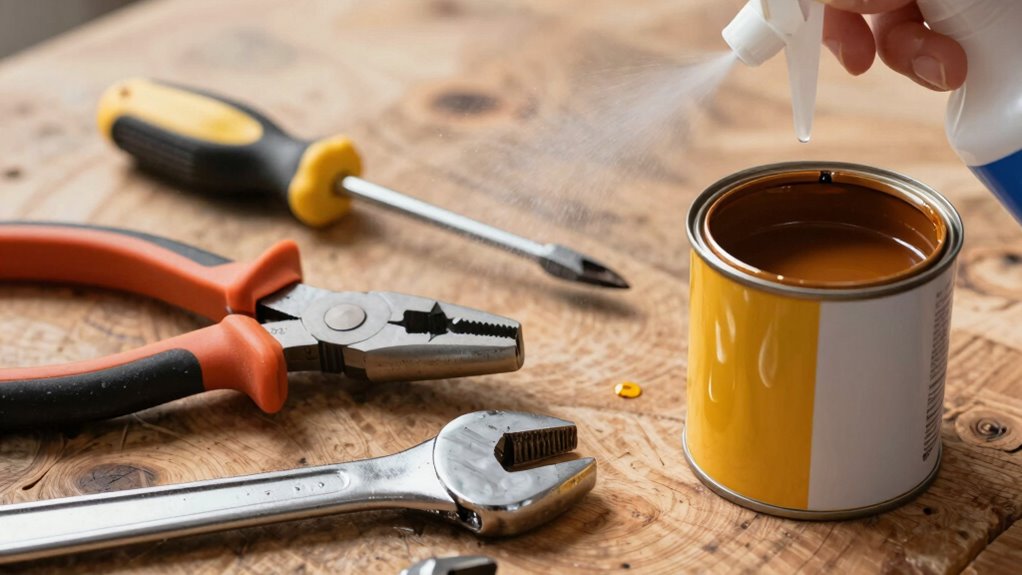
Applying the right protective coatings is essential to prevent rust and extend the lifespan of your tools. Choosing suitable protective coatings depends on your tool type and usage. Proper application techniques ensure the coating adheres evenly and provides maximum protection. Use a clean cloth or brush to apply thin, even layers, avoiding drips or pooling. Additionally, selecting coatings based on measurement accuracy can help ensure the longevity and reliability of your tools over time. Being aware of corrosion resistance properties can also guide you in selecting the most durable coatings for harsh environments. For optimal results, consider the type of environment in which your tools will be used, as this significantly impacts the effectiveness of the protective coating. Understanding the warp issues associated with certain coatings can help prevent deformation or damage. It is also important to consider the application temperature to ensure the coating cures properly and provides effective rust protection. Follow manufacturer instructions for best results, and reapply coatings periodically for ongoing rust prevention.
As an affiliate, we earn on qualifying purchases.
Effective Storage Tips to Prevent Rust
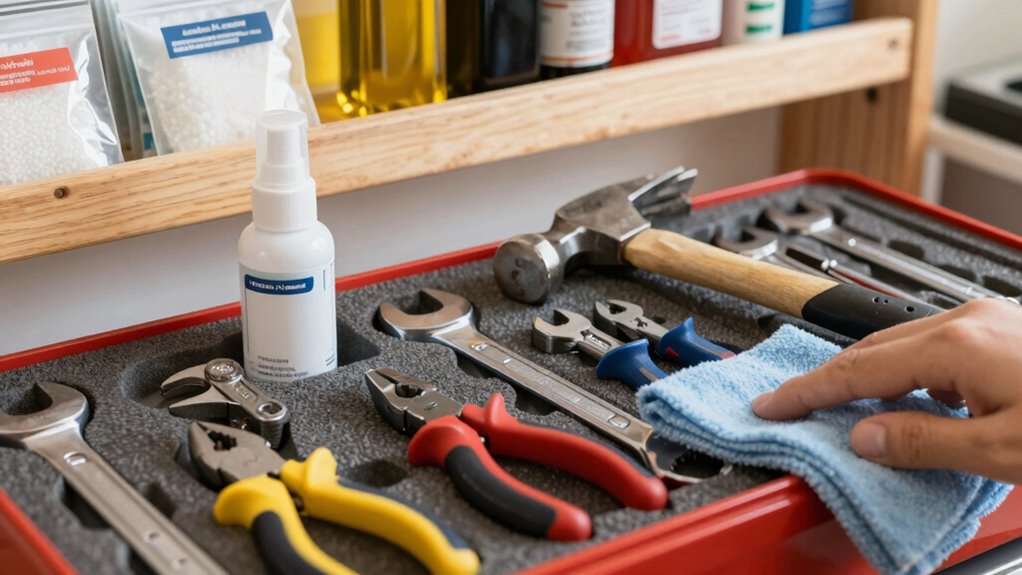
To prevent rust, you should keep your tools in a dry environment and use moisture absorbers to control humidity. These simple steps help reduce exposure to moisture that causes corrosion. Proper storage keeps your tools in good condition and ready for use. Incorporating foam rolling techniques can also promote better moisture circulation around your tools, further preventing rust formation. Additionally, applying a light coating of oil or rust inhibitor can provide an extra layer of protection against metal corrosion. Maintaining regular tool maintenance routines can also extend the lifespan of your tools and prevent rust from developing over time.
Use Moisture Absorbers
Moisture absorbers are a simple yet effective way to keep rust at bay when storing tools. They help with moisture control, preventing humidity from causing corrosion. There are various absorber types, including silica gel, clay-based, and activated charcoal, each suited for different storage needs. Using the right absorber minimizes rust risk and prolongs your tools’ lifespan. Proper storage techniques, such as utilizing sustainable textile care practices, can also contribute to maintaining tool integrity. For optimal protection, consider indoor air quality factors like humidity levels and proper ventilation in your storage area. Choosing the proper moisture absorber guarantees your tools stay dry and rust-free. Incorporating chemical properties of these absorbers can further enhance their effectiveness in moisture control. Additionally, selecting products with non-toxic materials ensures safety in enclosed storage spaces. Understanding the environmental impact of these products can help you make more eco-friendly choices.
Store in Dry Environment
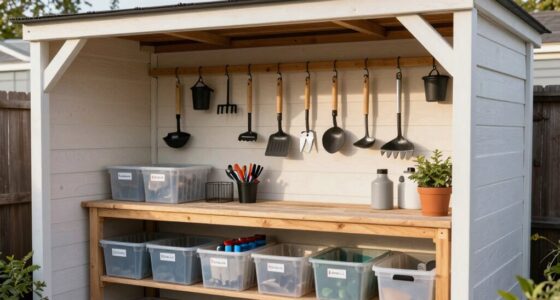
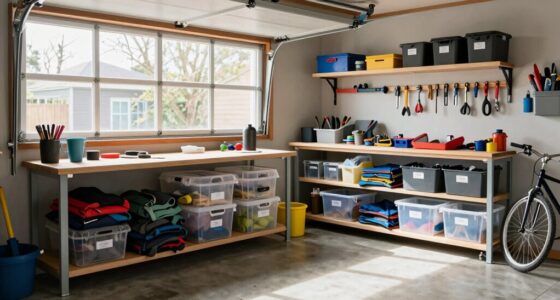
Storing tools in a dry environment considerably reduces the risk of rust formation. Proper storage is a key part of tool maintenance and rust prevention techniques. Keep your tools in a place with low humidity, such as a garage with climate control or a sealed toolbox. Avoid leaving tools exposed to moisture or damp conditions, as this accelerates rust development. Use desiccants or silica gel packs to absorb residual moisture inside storage containers. Regularly inspect your tools and wipe them clean before storing. These simple steps ensure your tools stay dry and functional longer, minimizing the need for rust removal and extensive maintenance. Maintaining a dry environment is an effective, straightforward way to protect your tools from rust and extend their lifespan. Additionally, considering the use of effective storage techniques can further enhance rust prevention. Proper tool organization also helps prevent accidental damage and exposure to moisture, further safeguarding your tools. Incorporating climate-controlled storage can further reduce the risk of rust in environments prone to humidity fluctuations.
Using Anti-Rust Products and Desiccants for Extra Protection
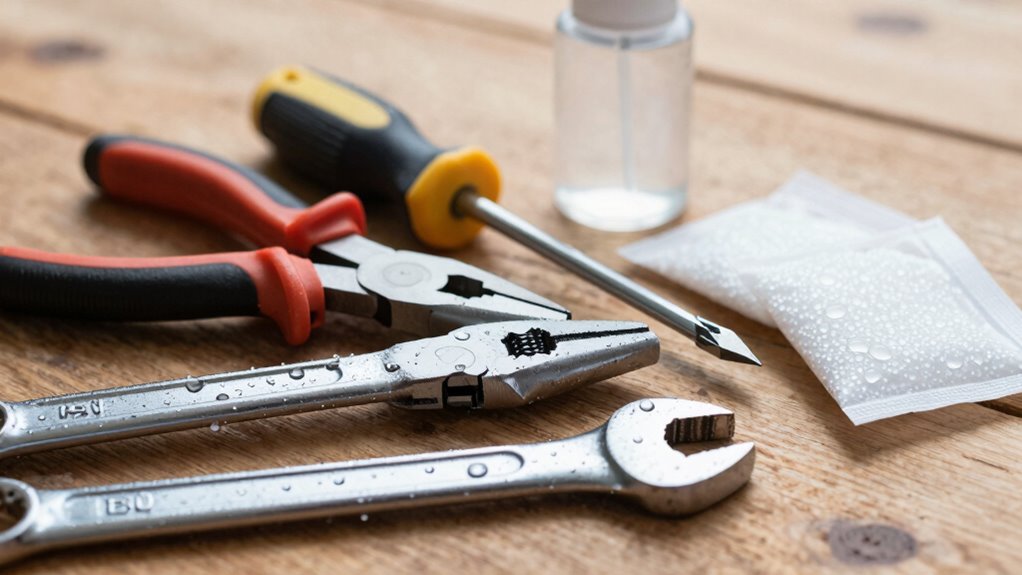
Choosing the right anti-rust products can make a big difference in protecting your tools, so look for ones designed specifically for your equipment. Properly using desiccants helps absorb moisture and adds an extra layer of defense. When you combine effective products with correct application, you can considerably reduce rust formation.
Choosing Effective Anti-Rust Products
Selecting the right anti-rust products is essential for effectively protecting your metal items from corrosion. Look for products specifically designed for rust prevention, such as rust inhibitors or rust-preventive sprays. These formulations create a protective barrier that minimizes moisture contact, helping extend tool longevity. Consider factors like the type of metal and the environment where you’ll store your tools—some products work better in humid conditions, while others are suited for dry environments. Always choose trusted brands with proven effectiveness, and read labels carefully to guarantee compatibility with your tools. Using the right anti-rust products isn’t just about immediate protection; it’s about maintaining your tools’ quality over time. Proper selection can considerably reduce rust formation and preserve their performance for years to come.
Proper Use of Desiccants
After applying anti-rust products, adding desiccants can give your tools an extra layer of protection against moisture. Silica gel packs are a common choice because they excel at moisture absorption. Place these desiccants in toolboxes, storage containers, or drawers to keep humidity levels low. Make sure the desiccants are fresh; dried-out silica gel loses effectiveness. Regularly check and replace them to maintain ideal moisture control. Using desiccants alongside anti-rust coatings prevents condensation buildup, which is often the main cause of rust. This combination provides continuous protection, especially in humid environments. Remember, moisture absorption by silica gel is a simple yet effective way to extend your tools’ lifespan and keep rust at bay. Proper use of desiccants is key to long-term rust prevention.
Routine Maintenance to Keep Rust at Bay
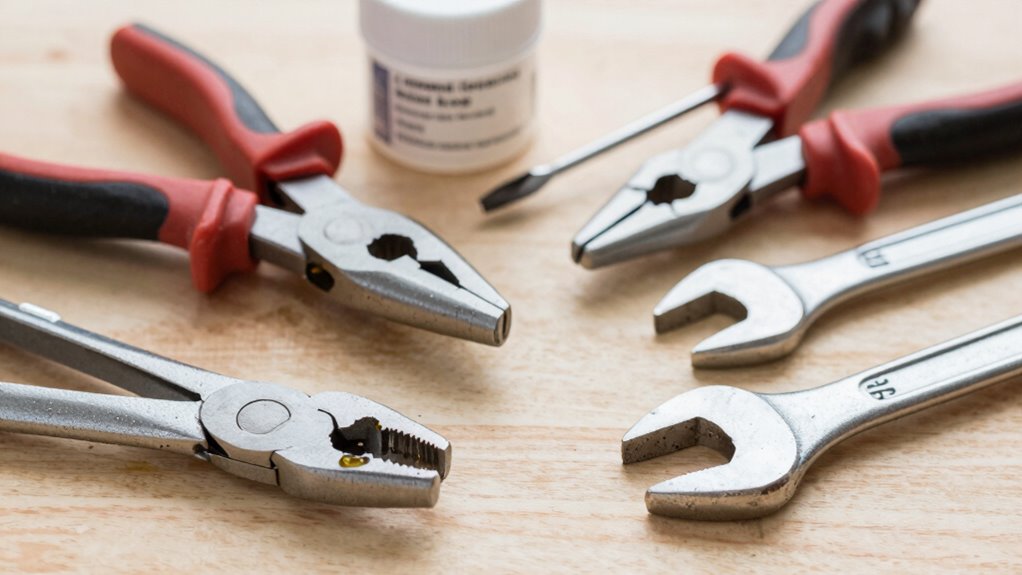
Regular maintenance is essential for preventing rust from taking hold on your tools and equipment. Consistently cleaning and drying your tools after use removes moisture that could cause corrosion. Apply a light coating of oil or rust inhibitor to exposed metal surfaces to create a protective barrier, enhancing tool longevity. Store your tools in a dry, organized space, and check them periodically for signs of rust or damage. Sharpen blades and tighten loose parts to guarantee peak performance and reduce exposure to moisture. Regularly inspecting and maintaining your tools not only prevents rust but also extends their lifespan. By establishing this routine, you ensure your tools stay in top condition, saving you time and money in the long run. Proper maintenance is your best defense against rust.
Troubleshooting Rust Problems and When to Replace Tools
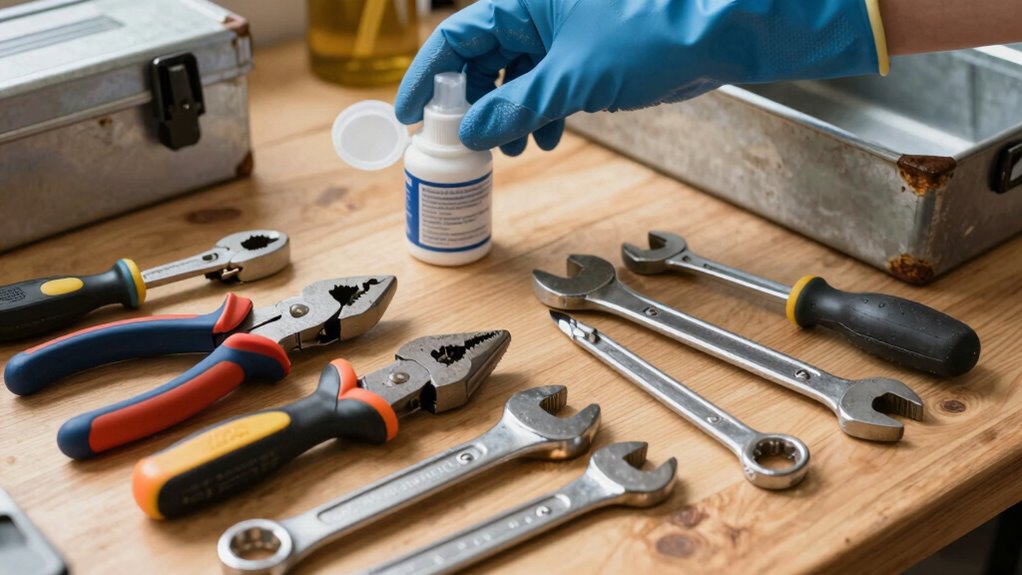
When rust begins to appear on your tools, it’s important to assess the extent of the damage promptly. Rust formation can weaken the metal, reducing tool longevity and risking failure during use. Check if rust is only surface-deep or has penetrated deeper into the metal. Surface rust can often be cleaned with rust remover or a wire brush, but deep corrosion may compromise the tool’s integrity. If rust has caused pitting or significant deterioration, it’s best to replace the tool. Continuing to use heavily rusted tools can lead to unsafe working conditions or further damage to other tools. Regular inspection helps catch rust early, preserving tool longevity and ensuring safe, efficient work. When in doubt, prioritize safety and replace compromised tools.
Frequently Asked Questions
Can Rust Be Completely Removed From Heavily Corroded Tools?
Yes, rust can be completely removed from heavily corroded tools with proper rust removal methods like soaking in vinegar or using a rust remover. After cleaning, focus on corrosion prevention by thoroughly drying and applying a protective coating, such as oil or paint. Regular maintenance and storage in a dry environment help prevent future rust. While complete removal is possible, some pitting may remain depending on corrosion severity.
Are Some Materials Naturally More Resistant to Rust Than Others?
Some materials are naturally more resistant to rust than others, like stainless steel and certain alloys, which practically repel corrosion like superhero armor. Their material composition gives them superior corrosion resistance, making them almost invincible against rust’s relentless assault. So, if you want tools that stand tough against moisture and oxidation, choose materials with high corrosion resistance—these are your best bet for long-lasting, rust-free performance.
How Often Should I Inspect My Tools for Early Rust Signs?
You should inspect your tools at least once a month as part of your maintenance routines. Look for early signs of rust, such as discoloration or rough spots. Applying protective coatings like oil or specialized rust inhibitors after each use helps prevent corrosion. Regular inspections combined with these protective measures make sure your tools stay rust-free, extend their lifespan, and perform reliably whenever you need them.
Does Using Electric Tools Increase the Risk of Rust Formation?
Using electric tools doesn’t necessarily increase rust risk if you take proper care. Tool coatings and high-quality metal alloys help protect against moisture and corrosion. Regularly cleaning and drying your electric tools after use is essential. Applying protective coatings or rust inhibitors adds an extra layer of defense. By maintaining these practices, you can minimize rust formation, ensuring your electric tools stay in good condition and last longer.
Can Storing Tools in a Garage Cause More Rust Than in a Shed?
Storing your tools in a garage can turn into a rust disaster faster than you can say “metal meltdown,” especially if your garage’s storage conditions are humid or poorly ventilated. Compared to a shed, which often has better airflow and less moisture, a garage’s environment can accelerate rust formation. Regular tool maintenance and controlling humidity are your best bets to keep rust at bay, no matter where you store them.
Conclusion
By following these simple steps, you’ll transform your tools from rust-prone to resilient. Think of your tools as loyal companions—treat them with care, and they’ll serve you well through countless projects. Remember, prevention is the best armor against rust’s silent invasion. With proper cleaning, protective coatings, and smart storage, you hold the power to preserve your tools’ strength and longevity, turning rust’s threat into nothing more than a distant memory.
Fall Picks
fall essentials
As an affiliate, we earn on qualifying purchases.