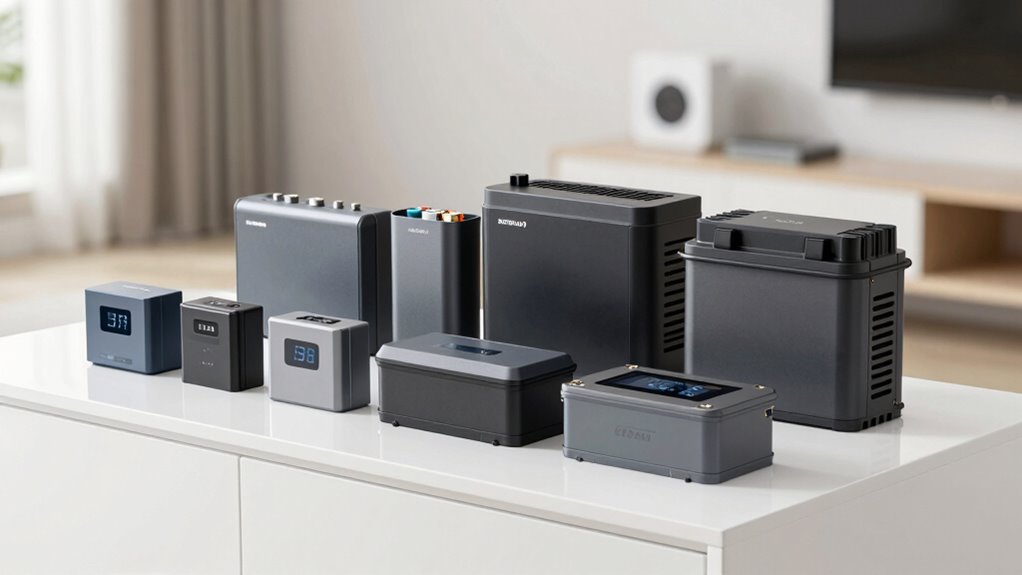

When choosing a battery backup for home use, reliability and capacity are key. The CyberPower CP1500PFCLCD stands out as the best overall pick for its balance of power and features, especially for protecting multiple devices. The APC BE600M1 offers a compact, budget-friendly option for basic needs, while the CyberPower CP1500AVRLCD provides a high-capacity solution for larger setups. Most buyers face tradeoffs between capacity, price, and ease of installation, so understanding your specific needs is crucial. Continue reading for a detailed breakdown of each option and how they compare.

Get home appliances delivered free with Prime
- Fast, free delivery on millions of items
- Prime Video, Amazon Music and more included
- Member-only deals all year
Complete the kit


Key Takeaways
- The top-ranked models balance capacity, reliability, and ease of use, making them suitable for different home scenarios.
- Higher-capacity units typically cost more but provide longer backup times, essential for critical systems like home offices or security.
- Compact, budget options like the APC BE600M1 are best for basic electronics and small setups, but may not support extensive power needs.
- Features like LCD displays and automatic voltage regulation (AVR) add convenience and protect connected devices more effectively.
- Many units are compatible with solar or alternative power sources, which can be crucial for off-grid or emergency preparedness.
| CyberPower CP1500PFCLCD PFC Sinewave UPS Battery Backup and Surge Protector |  | Best Overall for High-Performance Home Office and Networking | Capacity: 1500VA/1000W | Outlets: 12 NEMA 5-15R (6 backup + surge, 6 surge only) | Input: NEMA 5-15P right angle, 45-degree offset, 5 ft cord | VIEW ON AMAZON | See Our Full Breakdown |
| CyberPower EC850LCD Ecologic UPS Battery Backup and Surge Protector |  | Best Value for Eco-Conscious Small Office or Home Use | Number of Outlets: 12 | Battery Backup Outlets: 6 | Eco Mode: Yes | VIEW ON AMAZON | See Our Full Breakdown |
| CyberPower ST425 Standby UPS Battery Backup and Surge Protector |  | Best Compact Backup for Basic Home Office and Entertainment Devices | Voltage: 120 volts | Maximum Power: 260 watts | Surge Protection Rating: 890 Joules | VIEW ON AMAZON | See Our Full Breakdown |
| APC Battery Backup 650VA/390W Uninterruptible Power Supply for PC, BE650G1 |  | Best for Moderate Home Office or Networking Equipment | Capacity: 650VA/390W | Outlets: 8 (4 backup + surge, 4 surge only) | Runtime at 100W: Up to 22 minutes | VIEW ON AMAZON | See Our Full Breakdown |
| APC BX1500M UPS Battery Backup & Surge Protector for Computers and Electronics |  | Best for Long-Lasting Power and High Capacity in Home Setups | VA Capacity: 1500VA | Wattage: 900W | Backup Runtime: Up to 68 minutes at 100W | VIEW ON AMAZON | See Our Full Breakdown |
| CyberPower CP1500AVRLCD3 Intelligent LCD UPS Battery Backup |  | Best Overall for Power Capacity and Features | Capacity: 1500VA/900W | Outlets: 12 NEMA 5-15R (6 backup & surge, 6 surge only) | Input: NEMA 5-15P, 6 ft cord | VIEW ON AMAZON | See Our Full Breakdown |
| APC BE600M1 UPS Battery Backup & Surge Protector for Computer, Router, NAS |  | Best Compact Choice for Essential Electronics | Capacity: 600VA/330W | Outlets: 7 (5 backup + surge, 2 surge-only) | Surge Energy Rating: 490 joules | VIEW ON AMAZON | See Our Full Breakdown |
| CyberPower CP1000AVRLCD Intelligent LCD UPS Battery Backup |  | Best Mid-Range for Balanced Features | Capacity: 1000VA/600W | Outlets: 9 (5 backup & surge, 4 surge only) | Input Plug: NEMA 5-15P right angle, 45° offset | VIEW ON AMAZON | See Our Full Breakdown |
| battery backups for home | Outlets | Warranty | Capacity |
|---|---|---|---|
| CyberPower CP1500PFCLCD PFC Si | 12 NEMA 5-15R (6 backup + surge, 6 surge only) | 3 years including battery | 1500VA/1000W |
| CyberPower EC850LCD Ecologic U | — | 3 years | — |
| CyberPower ST425 Standby UPS B | — | 3 years | — |
| APC Battery Backup 650VA/390W | 8 (4 backup + surge, 4 surge only) | 3 years | 650VA/390W |
| APC BX1500M UPS Battery Backup | 10 (5 backup + 5 surge only) | — | — |
| CyberPower CP1500AVRLCD3 Intel | 12 NEMA 5-15R (6 backup & surge, 6 surge only) | 3 years including battery | 1500VA/900W |
| APC BE600M1 UPS Battery Backup | 7 (5 backup + surge, 2 surge-only) | — | 600VA/330W |
| CyberPower CP1000AVRLCD Intell | 9 (5 backup & surge, 4 surge only) | 3 years including battery | 1000VA/600W |
More Details on Our Top Picks
CyberPower CP1500PFCLCD PFC Sinewave UPS Battery Backup and Surge Protector
This model stands out for its sine wave output, making it ideal for active PFC power supplies found in modern computers and servers. Compared with the smaller APC BX1500M, the CP1500PFCLCD offers a higher capacity and more outlets, but this comes with increased bulk and weight. The color LCD display provides real-time voltage, load, and battery status, which helps with ongoing management. Its automatic voltage regulation ensures stable power, reducing stress on sensitive electronics. However, the size might be a drawback for those with limited space, and battery replacement after the 3-year warranty could be an additional expense.
Pros:- Provides sine wave power output suitable for sensitive electronics
- Multiple outlets with both battery backup and surge protection
- Color LCD display for detailed real-time info
- Automatic voltage regulation for stable power
Cons:- Heavy and bulky, less suitable for portable setups
- Battery replacement can be costly after warranty period
- Limited cable length may restrict placement
Best for: Tech enthusiasts and small business owners with high-powered computers, servers, or network gear that require reliable, clean power.
Not ideal for: Casual users or those with minimal electronics, since its size and capacity may be unnecessary for low-power needs.
- Capacity:1500VA/1000W
- Outlets:12 NEMA 5-15R (6 backup + surge, 6 surge only)
- Input:NEMA 5-15P right angle, 45-degree offset, 5 ft cord
- Display:Color LCD
- Warranty:3 years including battery
- Connected Equipment Guarantee:$500,000
Our verdict“This UPS is best suited for users with high-power, sensitive equipment needing stable, high-quality power supply.”
CyberPower EC850LCD Ecologic UPS Battery Backup and Surge Protector
The CyberPower EC850LCD offers a solid balance of capacity and eco-friendly features, making it a good choice for users who want reliable backup without overspending. Its eco mode reduces energy consumption, which is beneficial for energy-conscious households and small offices. The multifunction LCD provides clear status updates, similar to the more powerful CyberPower CP1500PFCLCD, but with fewer outlets and lower capacity. The 3-year warranty and software management make it a practical, budget-friendly option. However, the shorter power cord and fewer outlets mean it’s less flexible for larger setups, and the warranty period might be limiting for some.
Pros:- Multiple outlets with backup and surge protection
- Eco mode lowers energy consumption
- Detailed LCD for real-time monitoring
- 3-year warranty with software support
Cons:- Limited to lower capacity, fewer outlets than larger units
- Shorter power cord limits placement options
- Not suited for high-power or large setups
Best for: Small home offices or media setups seeking reliable power with an emphasis on energy efficiency and budget.
Not ideal for: Heavy-duty or high-power environments that need extensive outlet options and longer runtime.
- Number of Outlets:12
- Battery Backup Outlets:6
- Eco Mode:Yes
- Warranty:3 years
- Connected Equipment Guarantee:$100,000
- Power Cord Length:5 ft
Our verdict“This UPS fits best for small, energy-conscious environments that don’t require extensive power capacity.”
CyberPower ST425 Standby UPS Battery Backup and Surge Protector
The CyberPower ST425 is a compact, budget-friendly option that provides reliable power for basic electronics like routers, modems, and small desktop setups. Its limited 260W output makes it less suitable for high-power devices, but for simple needs, it offers straightforward surge and battery protection. The LED indicators help users quickly assess status, and the 3-year warranty adds peace of mind. Compared with larger units like the APC BX1500M, it’s smaller and lighter, but that also means shorter runtime and fewer outlets, making it less ideal for more extensive setups.
Pros:- Reliable battery backup for small electronics
- Multiple outlets including surge protected ones
- High-efficiency design reduces power waste
- Simple LED status indicators
Cons:- Limited runtime for extended outages
- Output power is restricted to 260W, not suitable for high-power devices
- Limited number of outlets for larger setups
Best for: Home users with light electronics such as routers, small PCs, and gaming consoles who need basic backup power.
Not ideal for: Power users with multiple high-demand devices or requiring extended runtime during outages.
- Voltage:120 volts
- Maximum Power:260 watts
- Surge Protection Rating:890 Joules
- Form Factor:Compact
- Warranty:3 years
- Runtime at 260W:Limited
Our verdict“This UPS makes the most sense for basic home electronics that need simple, dependable protection without extra bulk.”
APC Battery Backup 650VA/390W Uninterruptible Power Supply for PC, BE650G1
The APC BE650G1 provides dependable backup power for home offices and small networks, with a runtime of up to 22 minutes at 100W—adequate for saving work during brief outages. Its user-replaceable batteries simplify maintenance, and the clear indicators make operation straightforward. While it’s smaller than the CyberPower CP1500PFCLCD, it offers enough capacity for everyday tasks like powering a PC, router, and external drives. The main tradeoff is the limited runtime for higher loads, and replacing batteries involves purchasing a separate model. Still, its user-friendly design makes it a practical choice for moderate needs.
Pros:- Reliable backup during outages
- Easy-to-replace batteries
- Multiple outlets with surge protection
- Clear status indicators
Cons:- Limited runtime for high-demand devices
- Battery replacement requires additional purchase
- Mid-size capacity may not support very high loads
Best for: Home offices or small business setups that need reliable, short-term backup power for essential devices.
Not ideal for: Users with high-power equipment or needing long outage runtimes, as it’s designed for shorter durations.
- Capacity:650VA/390W
- Outlets:8 (4 backup + surge, 4 surge only)
- Runtime at 100W:Up to 22 minutes
- Warranty:3 years
- Protection:$75,000 Equipment
- Battery Replacement:Yes, user-replaceable
Our verdict“This UPS suits users needing dependable, short-term power backup for everyday office electronics.”
APC BX1500M UPS Battery Backup & Surge Protector for Computers and Electronics
The APC BX1500M offers a robust capacity of 1500VA and a runtime of up to 68 minutes at 100W, making it suitable for longer outages or higher-demand devices. Its user-replaceable battery ensures minimal downtime and extended usability, standing out against smaller, non-upgradable models like the CyberPower ST425. The LCD display provides real-time info on load, battery status, and estimated runtime, aiding maintenance and planning. However, the larger size and higher weight may be less convenient for smaller spaces, and runtime decreases significantly with higher loads, so it’s best for critical devices rather than entire home setups.
Pros:- High capacity with 1500VA/900W
- Up to 68 minutes runtime at 100W
- User-replaceable battery for extended life
- LCD display for monitoring
Cons:- Bulky and heavy for smaller spaces
- Battery replacement costs extra
- Runtime drops with higher loads
Best for: Home users with high-capacity needs, such as gaming PCs, media centers, or small home servers requiring extended outages.
Not ideal for: Casual users or those with limited space, as its size and weight may be cumbersome for small rooms or portable needs.
- VA Capacity:1500VA
- Wattage:900W
- Backup Runtime:Up to 68 minutes at 100W
- Outlets:10 (5 backup + 5 surge only)
- Battery Type:Replaceable
- Efficiency:92%+
Our verdict“This UPS is best for users who need long backup times and high capacity for critical home electronics or gaming setups.”
CyberPower CP1500AVRLCD3 Intelligent LCD UPS Battery Backup
This model stands out for its high capacity of 1500VA/900W, making it ideal for protecting multiple high-demand devices like gaming setups, home offices, or small home servers. The color LCD display provides detailed real-time information that simplifies monitoring system health, unlike the APC BE600M1 which offers only basic indicators. Its automatic voltage regulation stabilizes fluctuations, ensuring consistent power, but the limited number of surge-only outlets might require additional surge protectors for some setups. Compared with the CyberPower CP1000AVRLCD, this unit offers more backup power, yet it’s bulkier and more expensive. Battery replacement is straightforward but adds ongoing maintenance costs after the warranty expires.
Pros:- High capacity supports multiple devices simultaneously
- Color LCD display provides detailed real-time info
- Automatic voltage regulation stabilizes power fluctuations
Cons:- Limited to 6 battery backup outlets, may require additional surge protectors
- Battery replacement after warranty can be costly
Best for: Home users with multiple electronics and high power demands who want detailed monitoring and reliable backup.
Not ideal for: Small apartments or minimal setups where space and budget are limited, as its size and cost might be overkill.
- Capacity:1500VA/900W
- Outlets:12 NEMA 5-15R (6 backup & surge, 6 surge only)
- Input:NEMA 5-15P, 6 ft cord
- Display:Color LCD
- Safety Certification:UL
- Warranty:3 years including battery
Our verdict“This UPS is best suited for users with sizable setups needing detailed monitoring and robust power protection.”
APC BE600M1 UPS Battery Backup & Surge Protector for Computer, Router, NAS
This UPS makes the most sense for users seeking a small, space-efficient backup solution with quick, user-replaceable batteries. Compared with the CyberPower CP1500AVRLCD3, it offers less capacity but excels in portability and ease of maintenance. Its user-replaceable sealed lead-acid battery allows for extending device lifespan without costly repairs, a feature not available on larger models. The 23-minute runtime at 100W load is sufficient for short outages but falls short for longer power interruptions, unlike the CyberPower CP1000AVRLCD which offers a similar, slightly longer runtime. Its compact design makes it ideal for wall mounting, but that limits its capacity to support multiple high-power devices simultaneously.
Pros:- Compact size fits in tight spaces or wall mounting
- User-replaceable battery reduces long-term costs
- Includes USB port for mobile device charging
Cons:- Limited runtime (about 23 minutes at 100W)
- Battery replacement requires purchasing a separate APC battery
Best for: Small households or offices needing reliable backup for essential devices like routers and NAS without taking up much space.
Not ideal for: Power users with high device loads or those requiring extended backup times, as this model’s capacity is limited.
- Capacity:600VA/330W
- Outlets:7 (5 backup + surge, 2 surge-only)
- Surge Energy Rating:490 joules
- USB Charging Port:1.5A
- Battery Type:Sealed lead-acid, user-replaceable
- Battery Life:Approximately 23 minutes at 100W
Our verdict“Ideal for small setups needing reliable, space-efficient backup with easy maintenance, but not suited for high-power or extended outages.”
CyberPower CP1000AVRLCD Intelligent LCD UPS Battery Backup
This model strikes a balance for those who need dependable backup power without the high price tag of larger units like the CyberPower CP1500AVRLCD3. It offers 1000VA/600W capacity, enough for a modest home office or entertainment system. The multifunction LCD displays real-time power, battery status, and load info, similar to the larger CyberPower but with fewer outlets. Its automatic voltage regulation helps extend battery life and protect sensitive electronics. However, the simulated sine wave output may not be suitable for high-end audio or sensitive equipment, unlike true sine wave models. The 3-year warranty and detailed monitoring make it a practical choice for most average users.
Pros:- Reliable backup for multiple devices
- Detailed LCD display for real-time info
- Automatic voltage regulation extends battery life
Cons:- Simulated sine wave may not suit sensitive audio equipment
- Battery replacement after warranty can be costly
Best for: Home users or small offices needing dependable backup for computers, networking gear, and entertainment devices on a budget.
Not ideal for: Power users with high-end audio equipment or those requiring pure sine wave output, as this could cause compatibility issues.
- Capacity:1000VA/600W
- Outlets:9 (5 backup & surge, 4 surge only)
- Input Plug:NEMA 5-15P right angle, 45° offset
- Display:Multifunction LCD
- Warranty:3 years including battery
- Connected Equipment Guarantee:$350,000
Our verdict“A well-rounded option for average home or office setups, balancing cost and features for dependable backup power.”

How We Picked
These products were evaluated based on their power capacity, build quality, usability, and value. I prioritized models that reliably support essential home electronics during outages, with user-friendly features like clear displays and easy setup. Durability and brand reputation also played a role, along with price point and overall performance. The ranking reflects a balance between affordability for general use and higher-end options for critical or larger-scale backup needs. Devices with advanced protections and expandability options scored higher in our assessment.Factors to Consider When Choosing Battery Backups For Home
Choosing the right battery backup for your home involves understanding several key factors. Capacity determines how long your devices can run during an outage, so consider what appliances or electronics you need to support. Usability features like LCD screens and automatic voltage regulation can simplify operation and protect your gear. Price and build quality are also important; investing in a reliable, durable unit may save money and stress over time. Keep in mind the potential for future expansion if your power needs grow, and verify compatibility with any renewable energy sources if relevant.Capacity and Runtime
The capacity of a battery backup is measured in volt-amps (VA) or wattage (W). Larger capacity units can support more devices or extend backup time, which is vital during prolonged outages. However, higher capacity models tend to be more expensive and bulkier. Think about what essential electronics you need to keep running—if it’s just a router and a few lights, a smaller unit may suffice. For critical systems like home offices or security, investing in a higher-capacity model ensures you won’t run out of power when it matters most.
Ease of Use and Features
Features like LCD displays, automatic voltage regulation (AVR), and user-friendly interfaces greatly enhance the experience. An LCD screen provides real-time information on battery status and load, helping you monitor performance easily. AVR protects connected devices from voltage fluctuations, which can extend their lifespan. Simpler units with basic plug-and-play operation are ideal for novices, while more advanced models offer customization and detailed diagnostics for tech-savvy users. Consider what features will make the system more manageable for your household setup.
Price and Long-Term Value
Prices vary widely based on capacity and features, but a higher upfront investment often results in better reliability and longer lifespan. Cheaper models may seem appealing initially but can lack durability or fail to provide sufficient runtime during outages. Conversely, premium units with advanced protections and larger capacities can be worth the cost if you rely heavily on backup power. Always assess your needs against the price to find a balanced option that offers good value without overpaying for unnecessary features.
Compatibility and Expandability
Some battery backups are designed to integrate with solar panels or alternative power sources, which can be a game-changer for off-grid living or emergency preparedness. If you plan to expand your setup later, look for models that support daisy-chaining or additional batteries. Compatibility with smart home systems can also provide remote monitoring and control, adding convenience. Be cautious about units that have limited expandability, as they may require replacement sooner if your power needs grow.
Maintenance and Longevity
Battery backups require periodic maintenance, including testing and replacing batteries after several years. Opting for units with longer-lasting batteries and clear maintenance indicators can save headaches down the line. Consider the manufacturer’s warranty and support options, as these reflect confidence in the product’s durability. Proper placement in a cool, dry environment also extends the lifespan of your backup system, ensuring reliable performance when needed most.
Frequently Asked Questions
How long should a home battery backup last during a power outage?
The runtime of a battery backup depends on its capacity and the load connected. For essential devices like routers, modems, and small appliances, many units provide several hours of backup time. Larger capacity models can support more or heavier loads for longer periods, sometimes up to 8 hours or more. To determine the right size, list your critical devices and their wattage, then choose a backup with sufficient capacity to cover their combined power draw for the desired duration.
Can I connect a battery backup to solar power?
Yes, many modern battery backups are compatible with solar panels, especially those with AC and DC input options designed for renewable sources. Connecting your backup to solar can extend its usefulness during extended outages and reduce reliance on grid power. Check the specifications for compatibility with your solar system and consider models that support solar input or have hybrid capabilities. Proper setup and inverter compatibility are key to making this integration safe and effective.
Is it worth paying more for a higher-capacity backup?
Investing in a higher-capacity backup makes sense if you need to support multiple devices or extended outage periods. While these units cost more initially, they can prevent interruptions to critical systems like security cameras, medical devices, or home offices. Cheaper, smaller units may suffice for basic needs but might not keep your essential electronics running for long. Consider your specific power needs and potential outage duration before choosing a premium model.
How often should I replace the batteries in my backup system?
Batteries typically last between 3 to 5 years, depending on usage and environmental conditions. Regular testing and monitoring can help identify declining performance early. Some units have built-in indicators to alert you when replacement is needed, while others require manual checks. Replacing batteries proactively ensures your system remains reliable during emergencies, avoiding unexpected failures when you depend on it most.
What is the main difference between standby and line-interactive UPS systems?
Standby UPS units provide basic backup power and switch to battery mode during outages, suitable for simple electronics. Line-interactive models, on the other hand, include features like automatic voltage regulation, which protect against power fluctuations without switching to battery, offering better overall device protection. For home use, especially if you experience frequent voltage swings, a line-interactive system provides more comprehensive support, though it usually comes at a higher price.
Conclusion
For most homeowners, the CyberPower CP1500PFCLCD offers the best overall combination of capacity, features, and reliability. Those on a budget or with minimal backup needs will find the APC BE600M1 to be a practical choice. If you prioritize maximum capacity for larger or more critical systems, the CyberPower CP1500AVRLCD stands out. Beginners seeking an easy-to-install option should consider models with simple interfaces and clear indicators. For off-grid or emergency preparedness, units with solar compatibility or expandability will be most suitable. Your choice depends on balancing your power needs, budget, and future expansion plans.
As an affiliate, we earn on qualifying purchases.NFL season / tailgating Picks
team gear