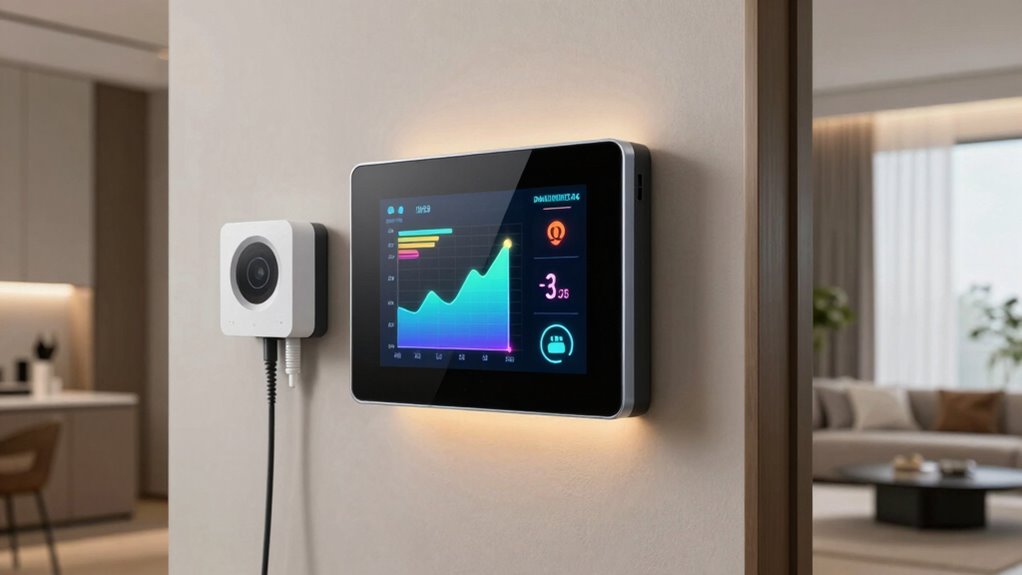

Home energy monitors are key tools for understanding and controlling your electricity consumption. The Emporia Vue 3 stands out as the best overall pick, offering comprehensive real-time data and easy integration. The Refoss Smart Home Energy Monitor provides excellent value with open API access, while the SIEMENS Inhab Smart Home Energy Monitor excels in circuit-level detail for advanced users. Balancing features, ease of use, and cost remains the main challenge—more features often mean higher prices and complexity. Keep reading for a detailed breakdown to find the right monitor for your needs.

Get home appliances delivered free with Prime
- Fast, free delivery on millions of items
- Prime Video, Amazon Music and more included
- Member-only deals all year
Complete the kit


Key Takeaways
- Top picks differentiate primarily on integration capabilities and circuit sensing range.
- Value-oriented options often trade some advanced features for affordability and simplicity.
- Ease of setup and compatibility with smart home ecosystems are key factors for beginners.
- More sensors and detailed circuit monitoring typically come with higher costs and complexity.
- The best monitors strike a balance between detailed data and user-friendly interfaces.
| Home Energy Monitor for Home Assistant – Real Time Electricity Usage & Power Meter |  | Best for Tech-Savvy Home Automation Enthusiasts | Monitoring Circuits: 10 circuits (expandable to 30 with additional units) | Connectivity: Wi-Fi and Ethernet | Supported Power Systems: Single-phase, three-phase (TN/TT) | VIEW ON AMAZON | See Our Full Breakdown |
| Refoss Smart Home Energy Monitor with Open API, Home Assistant, No Cloud |  | Best for Privacy-Conscious Solar Home Owners | Model: EM16P | Control: Local Web UI, Open API, MQTT | Compatibility: Home Assistant, OpenClaw AI | VIEW ON AMAZON | See Our Full Breakdown |
| SIEMENS Inhab Smart Home Energy Monitor with Circuit Sensors |  | Best for Residents Wanting Detailed Circuit Monitoring | Circuit Level Sensors: 16-50Amp | Main Sensors: 2-200Amp | Compatibility: USA and Canada | VIEW ON AMAZON | See Our Full Breakdown |
| Smart Home Energy Monitor with 16 50A Circuit Sensors |  | Best for Device-Level Monitoring and Alerts | Number of Sensors: 16 | Sensor Current Rating: 50A | Wi-Fi Compatibility: Dual-band 2.4G/5G | VIEW ON AMAZON | See Our Full Breakdown |
| Smart Home Energy Monitor with 16 50A Circuit Sensors, Real-Time Power & Cost Tracking, Compatible with Home Assistant |  | Best for Rental Properties and Shared Living Spaces | Sensor Count: 16 | Sensor Current Rating: 50A | Supported Voltages: 120VAC, 240VAC, 415Y/240VAC | VIEW ON AMAZON | See Our Full Breakdown |
| Meross Smart Home Energy Monitor, Real-Time Power & Cost Tracking |  | Best Overall for Privacy and Automation Integration | Certification: ETL, UL 61010 | System Compatibility: Single-phase 2-wire, 3-phase 4-wire Wye | Maximum Current: 200A main, 60A branch | VIEW ON AMAZON | See Our Full Breakdown |
| Emporia Vue 3 Home Energy Monitor – Smart Home Automation Module and Real-Time Electricity Usage Monitor |  | Best for Complete Home Monitoring and Smart Integration | Certification: UL Listed | Supported Systems: Single phase, split phase, 2-wire, 3-wire, 3-phase, 4-wire Wye | Connectivity: 2.4 GHz Wi-Fi | VIEW ON AMAZON | See Our Full Breakdown |
| Refoss Smart Home Energy Monitor with 16 60A Circuit Sensors |  | Best for Detailed Circuit-Level Monitoring and Privacy | Number of sensors: 16 | Sensor capacity: 60A per sensor | Supported systems: Single-phase, split-phase, 3-phase 4-wire Wye | VIEW ON AMAZON | See Our Full Breakdown |
| Emporia Energy Monitor with 16 Sensors and 4 Smart Plugs Bundle |  | Best for Whole-Home Monitoring with Automation and Solar Support | Sensors: 16 | Smart Plugs: 4 | Compatibility: iOS, Android, Alexa | VIEW ON AMAZON | See Our Full Breakdown |
| Smart Home Energy Monitor with Circuit Level Sensors and WiFi |  | Best for Real-Time, Accurate Power Monitoring with Tuya Integration | Sensors: 16 x 50A + 3 x 200/300A | Connectivity: WiFi 2.4 GHz | Measurement Accuracy: ±2% | VIEW ON AMAZON | See Our Full Breakdown |
| SONOFF NSPanel Pro 120 Smart Home Control Panel |  | Best All-in-One Control Panel for Smart Home Management | Display: 4.7-inch | Integration: Zigbee Gateway | Features: Energy monitoring, camera viewing, thermostat control, web browsing | VIEW ON AMAZON | See Our Full Breakdown |
| Emporia Vue 3 Home Energy Monitor – Real-Time Electricity Usage and Power Consumption Meter |  | Best Value for Accurate, Reliable Energy Monitoring with Solar Support | Certification: UL Listed | Supported Systems: Single phase, 3-phase, 2-wire, 3-wire, Wye | Sensors: Sixteen 50A branch sensors | VIEW ON AMAZON | See Our Full Breakdown |
| Emporia Vue 3 Home Energy Monitor – Smart Home Automation Module and Real-Time Electricity Usage Monitor |  | Best for Fully Automated, Whole-Home Energy Management | Part Number: EMV3A-2P-8 | Item Weight: 3.36 pounds | Product Dimensions: 10 x 5 x 5 inches | VIEW ON AMAZON | See Our Full Breakdown |
| home energy monitor | Connectivity |
|---|---|
| Home Energy Monitor for Home A | Wi-Fi and Ethernet |
| Refoss Smart Home Energy Monit | — |
| SIEMENS Inhab Smart Home Energ | Mobile App |
| Smart Home Energy Monitor with | — |
| Smart Home Energy Monitor with | WiFi 2.4GHz, MQTT |
| Meross Smart Home Energy Monit | Home Assistant, Open API, Web Control |
| Emporia Vue 3 Home Energy Moni | 2.4 GHz Wi-Fi |
| Refoss Smart Home Energy Monit | Wi-Fi with external antenna |
| Emporia Energy Monitor with 16 | — |
| Smart Home Energy Monitor with | WiFi 2.4 GHz |
| SONOFF NSPanel Pro 120 Smart H | — |
| Emporia Vue 3 Home Energy Moni | 2.4 GHz Wi-Fi |
| Emporia Vue 3 Home Energy Moni | — |
More Details on Our Top Picks
Home Energy Monitor for Home Assistant – Real Time Electricity Usage & Power Meter
This monitor excels in integrating seamlessly with Home Assistant, making it ideal for users who want real-time data across multiple circuits and automated control. Compared with the Refoss Smart Home Energy Monitor, it offers broader circuit support and supports both Wi-Fi and Ethernet, but its setup can be complex for those without technical experience. Its support for renewable energy tracking adds value for solar owners, yet it’s limited to North American power systems, which could restrict international users. The need for configuration and familiarity with home automation means this is best suited for users comfortable with technical setup and home automation platforms.
Pros:- Seamless integration with Home Assistant for automation
- Supports up to 10 circuits, expandable to 30, for detailed monitoring
- Dual connectivity options with Wi-Fi and Ethernet for secure data access
Cons:- Requires technical setup and configuration, which can be daunting
- Limited to North American power systems, reducing compatibility internationally
Best for: Homeowners with existing Home Assistant setups seeking advanced, multi-circuit energy management
Not ideal for: Casual users or those with minimal technical skills who want plug-and-play solutions
- Monitoring Circuits:10 circuits (expandable to 30 with additional units)
- Connectivity:Wi-Fi and Ethernet
- Supported Power Systems:Single-phase, three-phase (TN/TT)
- Certifications:FCC, CE, UL/IEC
- Installation:Circuit panel, space-saving design with spring terminals
Our verdict“This product is perfect for energy-conscious tech enthusiasts who want detailed control and automation, despite its setup complexity.”
Refoss Smart Home Energy Monitor with Open API, Home Assistant, No Cloud
The Refoss EM16P stands out for its local control capabilities, offering high accuracy and data privacy without relying on cloud storage, unlike the Smart Home Energy Monitor with 16 50A Circuit Sensors, which lacks detailed app control. Its compatibility with Home Assistant and OpenClaw AI makes it ideal for users who want to automate surplus solar power and reduce bills. However, installation requires access to the circuit panel and some technical knowledge, which may deter less experienced users. Its focus on circuit-level insights and privacy makes it an excellent choice for those prioritizing data security and local control.
Pros:- Local control with no reliance on cloud services for privacy
- Supports integration with Home Assistant and AI automation platforms
- High accuracy monitoring at ±1% with circuit-level sensors
Cons:- Requires installation in the home circuit panel, which may need professional help
- Limited to specific sensor capacities—2 main sensors and 16 branch sensors
Best for: Solar homeowners seeking high accuracy and local data control with automation integration
Not ideal for: Users preferring simple, plug-and-play solutions or those without the technical skills for installation
- Model:EM16P
- Control:Local Web UI, Open API, MQTT
- Compatibility:Home Assistant, OpenClaw AI
- Accuracy:±1% (200A), ±2% (low current)
- Data Storage:Up to 5 years
- Main Circuit Sensors:2 (2–200A each)
Our verdict“Ideal for solar-focused users who value privacy and circuit-level detail, with the willingness to handle installation complexity.”
SIEMENS Inhab Smart Home Energy Monitor with Circuit Sensors
The Inhab Smart Home Energy Monitor offers comprehensive real-time data at both the home and circuit levels, making it a strong choice for users who want detailed insights without the complexity of integration seen in the Home Energy Monitor for Home Assistant. Its installation directly into electrical panels suits those comfortable with professional setup, but it’s limited to the US and Canada, which could restrict availability and app compatibility outside these regions. Its ability to support personalized alerts and manage energy use effectively makes it ideal for proactive energy management at a detailed level.
Pros:- Real-time energy monitoring at the home and circuit level
- Supports personalized alerts and advanced energy management
- Easy installation in existing electrical panels
Cons:- Limited to USA and Canada for mobile app functionality
- Requires professional installation, which adds cost and complexity
Best for: Homeowners in North America seeking detailed circuit-level data with user alerts
Not ideal for: International users or those preferring a wireless, app-only solution without panel installation
- Circuit Level Sensors:16-50Amp
- Main Sensors:2-200Amp
- Compatibility:USA and Canada
- Connectivity:Mobile App
Our verdict“This monitor suits North American homeowners who want detailed, real-time circuit insights with alert features, accepting professional installation.”
Smart Home Energy Monitor with 16 50A Circuit Sensors
This energy monitor provides a straightforward way to track real-time power usage and costs across 16 circuits, offering instant alerts for anomalies. Compared to the Home Energy Monitor for Home Assistant, it lacks app-based remote control and integration but makes up for ease of installation with clamp-on sensors suitable for various electrical systems. Its focus on individual device monitoring makes it perfect for users who want to identify power hogs or abnormal consumption but might find its lack of remote access a limitation for remote monitoring needs.
Pros:- Provides real-time power usage and cost data
- Supports 16 sensors for individual device monitoring
- Instant alerts for abnormal energy consumption
Cons:- No mention of mobile app or remote access features
- Limited to single-phase and three-phase systems, no delta configuration
Best for: Homeowners wanting detailed device-level insights with instant alerts for abnormal power usage
Not ideal for: Users seeking full automation or remote control via mobile apps
- Number of Sensors:16
- Sensor Current Rating:50A
- Wi-Fi Compatibility:Dual-band 2.4G/5G
- Connection Type:RJ45 wired
- Supported Voltage:up to 415Y/240VAC
Our verdict“This pick is ideal for users needing detailed circuit and device monitoring with immediate alerts, but not for those wanting remote control capabilities.”
Smart Home Energy Monitor with 16 50A Circuit Sensors, Real-Time Power & Cost Tracking, Compatible with Home Assistant
This monitor combines detailed energy tracking with app-based notifications and customizable billing, making it a smart choice for landlords or shared housing. While it shares features with the Smart Home Energy Monitor with 16 50A Circuit Sensors, its support for MQTT and app notifications enhances automation and user control. Its installation in circuit panels is straightforward for those with technical skills, but setup complexity and WiFi dependence could be hurdles for some users. Its focus on flexible billing makes it especially suited for rental environments.
Pros:- Supports real-time energy and cost tracking across circuits
- Offers app notifications and customizable billing for rentals
- Compatible with WiFi and MQTT for home automation
Cons:- Requires WiFi and setup with compatible home automation systems
- Limited to single-phase and three-phase systems, no delta configuration
Best for: Landlords or tenants managing multiple circuits with needs for app notifications and billing customization
Not ideal for: Users seeking a simple, non-automated, plug-and-play solution without app or automation features
- Sensor Count:16
- Sensor Current Rating:50A
- Supported Voltages:120VAC, 240VAC, 415Y/240VAC
- Connectivity:WiFi 2.4GHz, MQTT
- App Compatibility:Android, Apple
- Warranty:1 year
Our verdict“This monitor suits rental and shared living spaces needing detailed, customizable energy management with automation support, despite its setup complexity.”
Meross Smart Home Energy Monitor, Real-Time Power & Cost Tracking
The Meross Smart Home Energy Monitor stands out for its focus on local data storage and integration with Home Assistant, making it ideal for tech-savvy users concerned about privacy. Unlike the Emporia Vue 3, which relies heavily on cloud services, Meross keeps your energy data within your home, offering enhanced security. Its easy clamp-on installation means it can be set up quickly without wiring changes, but it requires a compatible electrical system for optimal use, particularly in the US. The absence of a built-in display means you need to use the app, which may be less convenient for some users. Its detailed real-time charts make it easier to identify energy hogs, helping reduce bills effectively. Overall, this monitor is best for those who prioritize local control and advanced automation, though it’s less suited for regions outside North America.
Pros:- Accurate real-time energy monitoring with detailed charts
- Easy clamp-on installation, no wiring needed
- Supports local data storage and privacy without cloud reliance
- Integrates seamlessly with Home Assistant for automation
Cons:- Requires compatible electrical systems; not universal outside North America
- No built-in display; relies on app for data viewing
Best for: Homeowners wanting privacy-focused, local data storage with automation support
Not ideal for: Users outside the US or with incompatible electrical systems, who prefer a built-in display or simpler setup
- Certification:ETL, UL 61010
- System Compatibility:Single-phase 2-wire, 3-phase 4-wire Wye
- Maximum Current:200A main, 60A branch
- Data Storage:Up to 5 years
- Connectivity:Home Assistant, Open API, Web Control
- Warranty:2 years
Our verdict“This monitor makes the most sense for advanced users seeking privacy and automation integration within US electrical standards.”
Emporia Vue 3 Home Energy Monitor – Smart Home Automation Module and Real-Time Electricity Usage Monitor
The Emporia Vue 3 is designed for users who want comprehensive energy tracking and remote management across multiple circuits, similar to the Refoss monitor but with broader smart home compatibility. Its UL certification ensures safety and reliability, while support for various electrical systems makes it versatile. Unlike the Meross monitor, which primarily focuses on real-time data and automation, Vue 3 offers a user-friendly app for ongoing management, including solar and net metering features. However, it requires additional sensors for detailed appliance-level monitoring, which can increase setup complexity and cost. The 1-year warranty might be shorter than some competitors, but its flexibility makes it suitable for larger homes or those integrating with smart home ecosystems like Alexa.
Pros:- UL-certified for safety and reliability
- Supports a wide range of electrical systems
- Remotely manage energy via a mobile app
- Supports solar and net metering monitoring
Cons:- Requires additional sensors for detailed appliance monitoring
- Features heavily dependent on active app use
- Additional sensors sold separately
Best for: Homeowners seeking a versatile, comprehensive energy monitoring system with smart home automation
Not ideal for: Users with limited budgets or those preferring simple, plug-and-play solutions without extra sensor purchases
- Certification:UL Listed
- Supported Systems:Single phase, split phase, 2-wire, 3-wire, 3-phase, 4-wire Wye
- Connectivity:2.4 GHz Wi-Fi
- Data Retention:7 days minute data, indefinite hourly data
- Sensor Compatibility:Supports up to 16 branch sensors
- Dimensions:10 x 5 x 5 inches
- Warranty:1 year
Our verdict“This pick is best for users who want an all-in-one home energy management solution with smart automation, despite needing extra sensors for detailed insights.”
Refoss Smart Home Energy Monitor with 16 60A Circuit Sensors
The Refoss Smart Home Energy Monitor excels in providing detailed circuit-level data, making it ideal for households aiming to identify specific energy hogs at the breaker level, much like the Emporia Vue but with a focus on circuit granularity. Its 16 sensors support multiple circuits, offering high precision without relying on cloud storage—perfect for privacy-minded users. Compared with the Meross monitor, which offers real-time power tracking without detailed circuit info, Refoss delivers more granular insights. However, installation can be complex because it requires access inside the breaker box, and it’s limited to compatible electrical systems like single-phase or split-phase. No cloud storage means users must manage their data locally, which might not suit everyone.
Pros:- High-precision circuit-level energy monitoring
- Supports local control and data privacy
- Stores 5 years of data without subscription
- Supports various electrical systems
Cons:- Installation may be complex for some users
- Limited to specific electrical configurations
- No built-in cloud storage; relies on local data management
Best for: Homeowners wanting precise circuit-level energy data and privacy-focused management
Not ideal for: Users uncomfortable with breaker box installation or outside compatible electrical systems
- Number of sensors:16
- Sensor capacity:60A per sensor
- Supported systems:Single-phase, split-phase, 3-phase 4-wire Wye
- Data storage:5 years
- Connectivity:Wi-Fi with external antenna
- Warranty:2 years
Our verdict“This monitor is best for users wanting detailed circuit insights and privacy, willing to handle professional installation if needed.”
Emporia Energy Monitor with 16 Sensors and 4 Smart Plugs Bundle
The Emporia Vue bundle combines extensive home energy monitoring with smart plugs, making it ideal for users who want to oversee entire home usage and automate devices. Its 16 sensors give detailed insights into circuits, similar to the Refoss, but with added convenience via four smart plugs for remote control, scheduling, and automation. The app’s user-friendliness simplifies setup, although initial configuration can be tricky for non-technical users, and a stable Wi-Fi connection is necessary. Compared with standalone monitors like the Meross, this bundle offers more versatility and control, especially for homes with solar systems. The higher upfront cost reflects its comprehensive coverage, but it’s a compelling option for those seeking both detailed data and automation capabilities.
Pros:- Comprehensive energy monitoring for entire home
- Includes 4 smart plugs for remote automation
- Supports solar net metering
- User-friendly app for tracking and scheduling
Cons:- Setup can be complex for non-technical users
- Requires stable Wi-Fi for best performance
- Higher initial investment compared to basic monitors
Best for: Homeowners wanting integrated home automation and solar monitoring in a single package
Not ideal for: Budget-conscious users or those preferring simple, plug-and-play solutions without additional sensors or smart plugs
- Sensors:16
- Smart Plugs:4
- Compatibility:iOS, Android, Alexa
- Supports:Solar net metering
Our verdict“This bundle suits users seeking detailed home-wide energy insights combined with automation and solar support, despite a higher price point.”
Smart Home Energy Monitor with Circuit Level Sensors and WiFi
The Smart Home Energy Monitor with circuit sensors offers precise, real-time data ideal for users who want detailed insights into appliance-level power use. Its 16 sensors plus 3 high-capacity sensors support complex household setups, similar to the Refoss but with an emphasis on WiFi connectivity for Tuya and SmartLife systems. The ±2% measurement accuracy ensures reliable data, making it suitable for those managing energy costs actively. Installation requires some electrical knowledge, and it’s limited to 2.4 GHz WiFi networks, which could affect connectivity in crowded environments. Negative readings can occur if sensors are improperly installed, so proper setup is essential. It’s best for technically inclined users aiming for detailed, real-time power management.
Pros:- Highly accurate real-time power monitoring
- Supports extensive sensor coverage for detailed insights
- Easy to use with mobile apps
- Supports Tuya and SmartLife automation systems
Cons:- Requires qualified installation; not DIY friendly
- Potential for negative readings if installed incorrectly
- Limited to 2.4 GHz WiFi networks
Best for: Tech-savvy homeowners wanting detailed, real-time energy data and Tuya ecosystem integration
Not ideal for: Less experienced users or those without qualified installation support, due to installation complexity
- Sensors:16 x 50A + 3 x 200/300A
- Connectivity:WiFi 2.4 GHz
- Measurement Accuracy:±2%
- Data Interval:2 seconds
- Compatibility:Tuya, SmartLife
- Safety:Installation by qualified personnel recommended
Our verdict“This device is best for users needing precise, real-time data with smart home system support and are comfortable with installation complexity.”
SONOFF NSPanel Pro 120 Smart Home Control Panel
The SONOFF NSPanel Pro stands out for integrating multiple home functions into a single, sleek 4.7-inch display. Unlike the Emporia Vue models, which focus solely on energy data, this panel combines energy monitoring with camera viewing, thermostat control, and even web browsing, making it ideal for users wanting a centralized control hub. However, its versatility can be a double-edged sword: the device may be too complex for those unfamiliar with smart home setups, and compatibility details are somewhat sparse. The large display is easy to read at a glance, but the lack of detailed device compatibility information could cause frustration during setup. This pick makes the most sense for homeowners seeking a multifunctional panel to manage security, climate, and energy from one interface, despite a steeper learning curve.
Pros:- Large, easy-to-read display for quick status checks
- Combines multiple control functions—security, climate, cameras, web browsing
- Supports various camera types for flexible monitoring
- Customizable security modes with alarms and notifications
Cons:- Limited clarity on compatibility with other smart devices
- Potentially complex setup for users unfamiliar with smart home systems
- No clear pricing information available
Best for: Homeowners who want an all-in-one smart home control panel with energy monitoring, security, and web browsing capabilities.
Not ideal for: Those primarily interested in detailed energy data with minimal smart home features or less tech-savvy users who prefer simple setups.
- Display:4.7-inch
- Integration:Zigbee Gateway
- Features:Energy monitoring, camera viewing, thermostat control, web browsing
- Security:Customizable arming modes with alarms and notifications
Our verdict“This control panel is ideal for tech-savvy users wanting a centralized hub for comprehensive smart home management, despite its complexity.”
Emporia Vue 3 Home Energy Monitor – Real-Time Electricity Usage and Power Consumption Meter
Compared with the all-in-one SONOFF NSPanel Pro, the Emporia Vue 3 excels in providing detailed, real-time energy data focused on efficiency and cost savings. Its UL-listed safety certification adds confidence for long-term installation, and supporting solar and net metering makes it a strong choice for eco-conscious homeowners. While it requires a Wi-Fi connection and additional sensors for three-phase systems, these tradeoffs are minor considering its precise monitoring and automation capabilities. Unlike simpler monitors that only display data, the Vue 3 supports automated energy management, making it ideal for users aiming to optimize their electric bills. However, users should be aware that any interruption in Wi-Fi could limit data access, and additional sensors are needed for complex electrical setups.
Pros:- UL-certified for safety and reliability
- Supports comprehensive energy monitoring, including solar and net metering
- Enables automated energy management to lower bills
- Easy to install in most home circuit panels
Cons:- Requires Wi-Fi for real-time data updates
- Additional sensors needed for 3-phase systems with earthed neutral
- Data retention is limited when the app isn’t actively used
Best for: Homeowners seeking an affordable, reliable energy monitor that supports solar and automated management to reduce electricity costs.
Not ideal for: Users who prefer a device with built-in automation or are unwilling to handle additional sensor installations for three-phase systems.
- Certification:UL Listed
- Supported Systems:Single phase, 3-phase, 2-wire, 3-wire, Wye
- Sensors:Sixteen 50A branch sensors
- Connectivity:2.4 GHz Wi-Fi
- Data Retention:7 days of minute data; indefinite hourly data; 1 sec when app active
- Warranty:1 year
Our verdict“This model is perfect for cost-conscious homeowners wanting accurate energy data and automation without extra bells and whistles.”
Emporia Vue 3 Home Energy Monitor – Smart Home Automation Module and Real-Time Electricity Usage Monitor
While sharing the core energy monitoring capabilities of the previous Emporia Vue 3, this version emphasizes automation and remote management, making it ideal for users who want to integrate energy control into their smart home routines. Its design supports real-time data and solar compatibility, similar to the other Vue 3 model, but with a focus on automation via a mobile app. Installation is straightforward in most circuit panels, yet it requires an additional sensor for three-phase systems, which must be purchased separately. The device’s strength lies in its ability to help users actively manage and reduce energy use, but reliance on Wi-Fi and additional sensors can be perceived as hurdles for some. This pick is best for homeowners eager to automate their energy consumption for cost savings and environmental benefits.
Pros:- UL-certified for safety and reliability
- Supports real-time energy monitoring with automation features
- Compatible with solar and net metering systems
- Easy installation in most circuit panels
Cons:- Requires 2.4 GHz Wi-Fi for full operation
- Additional sensors needed for three-phase systems (sold separately)
- Installation may be slightly more involved for complex setups
Best for: Tech-savvy homeowners wanting a reliable, automated energy management system that supports solar and remote control.
Not ideal for: Less experienced users or those with complex three-phase systems unwilling to purchase extra sensors or handle Wi-Fi dependencies.
- Part Number:EMV3A-2P-8
- Item Weight:3.36 pounds
- Product Dimensions:10 x 5 x 5 inches
- Certification:CE, UL
- Style:Whole home monitor with 8 circuit sensors
- Warranty:1-year
Our verdict“This version suits homeowners seeking a smart, automated approach to managing their entire home’s energy, despite extra sensor needs.”

How We Picked
I evaluated these home energy monitors based on several criteria that matter to consumers: accuracy of real-time data, ease of installation and setup, compatibility with popular smart home systems, the breadth of monitoring features (such as circuit sensing and data logging), and overall value for the price. Products were ranked not only by their technical capabilities but also by how well they serve different user needs—from beginners to advanced DIYers. This approach ensures that each recommended monitor offers a clear advantage in its category, helping buyers find a solution tailored to their specific priorities.Factors to Consider When Choosing Home Energy Monitors
Choosing the right home energy monitor involves considering various factors that impact usability, accuracy, and integration. Beyond features, understanding your home’s electrical setup, your technical comfort level, and budget constraints can significantly influence your choice. A well-selected monitor can help reduce energy waste and lower bills, but poor choices may lead to frustration or inadequate data. Here are key considerations to keep in mind before making a purchase.Compatibility and Integration
Ensure the monitor works with your existing smart home ecosystem or app. Some models are designed specifically for platforms like Home Assistant or SmartThings, providing seamless automation. Incompatibility can mean manual data logging or limited functionality, so verify compatibility first. Also, consider whether you want WiFi, Zigbee, or Z-Wave options for easier integration with your other smart devices.
Sensor Coverage and Circuit Monitoring
The number and type of sensors determine how much of your home’s electrical system you can monitor. Basic models may only track main circuit usage, while advanced ones offer individual circuit sensing—ideal for pinpointing energy hogs. Keep in mind that more sensors typically increase cost and complexity; choose a model that matches your technical comfort and monitoring needs.
Ease of Installation and Use
Some monitors require professional wiring, while others are plug-and-play. Consider your DIY skills and whether the product provides clear setup instructions. User-friendly interfaces with mobile apps and real-time dashboards make ongoing monitoring easier, especially for those new to energy management. Avoid overly complex setups if you want quick results and minimal hassle.
Data Accuracy and Historical Tracking
Reliable data is essential for making meaningful energy savings. Look for monitors with proven accuracy and features like historical logs or customizable alerts. Some models also offer cost tracking, helping you understand how your usage impacts bills. Remember, higher accuracy often comes with a higher price, but it’s worth it if you’re serious about reducing energy waste.
Price and Long-Term Value
Balance your budget with the features you need most. Budget models may lack detailed circuit sensing or integration options but can still provide useful insights. Premium options often include extensive circuit monitoring, automation features, and better build quality. Consider how much you’re willing to invest for features that will genuinely help you save energy over time.
Frequently Asked Questions
Do I need professional installation for a home energy monitor?
It depends on the model and your electrical setup. Basic plug-in monitors are straightforward and usually require no professional help. However, models with circuit-level sensing or those integrated into your electrical panel may need a licensed electrician for safe, proper installation. Always prioritize safety and ensure the product is compatible with your existing wiring before attempting any DIY setup.
Can a home energy monitor help reduce my electricity bills?
Yes, a monitor provides visibility into your energy consumption, enabling you to identify high-usage appliances and times of peak demand. With this information, you can adjust usage patterns, switch off unnecessary devices, or automate energy-saving routines. While the monitor itself doesn’t lower your bills directly, it empowers you to make informed decisions that can lead to significant savings over time.
What features should I prioritize if I’m new to home energy monitoring?
If you’re just starting out, look for a model with easy installation, user-friendly app interfaces, and basic circuit monitoring. Compatibility with your smart home system can also make ongoing management more straightforward. Avoid overly complex setups or expensive models with features you won’t use initially. Simplicity and clarity in data presentation matter most for beginners seeking quick, actionable insights.
Are open API options worth the extra cost?
Open API access can be very valuable if you want to customize your data or integrate with other systems. It allows advanced users or DIY enthusiasts to create tailored dashboards or automate responses based on real-time data. However, for typical homeowners, closed systems with user-friendly apps may suffice. Consider your comfort with technical customization before investing in models with open APIs.
How reliable are these monitors over the long term?
Most home energy monitors are designed for years of use, but long-term reliability depends on build quality and maintenance. Devices with solid construction, good customer reviews, and ongoing software support tend to last longer. Regular updates and proper installation are also key factors in ensuring consistent, accurate data over time. Investing in reputable brands can help avoid the frustrations of early failure or outdated technology.
Conclusion
For most users, the Emporia Vue 3 offers the best overall combination of features, ease of use, and value, making it ideal for those seeking a comprehensive monitoring solution. Budget-conscious buyers will appreciate the Refoss Smart Home Energy Monitor for its affordability and open API access, perfect for DIY enthusiasts. For advanced users wanting circuit-level detail, the SIEMENS Inhab and Smart Home Energy Monitor with 16 circuits are worth considering, despite their steeper learning curves and higher costs. Beginners should prioritize models with simple installation and intuitive apps, while power users can benefit from more detailed data and customization options. Carefully matching your technical skills and goals will ensure you pick the right monitor to optimize your energy consumption in 2026.Fall yard work Picks

Halloween Inflatable Haunted House Maze – 20×20 ft with Removable Roof and Blower
As an affiliate, we earn on qualifying purchases.