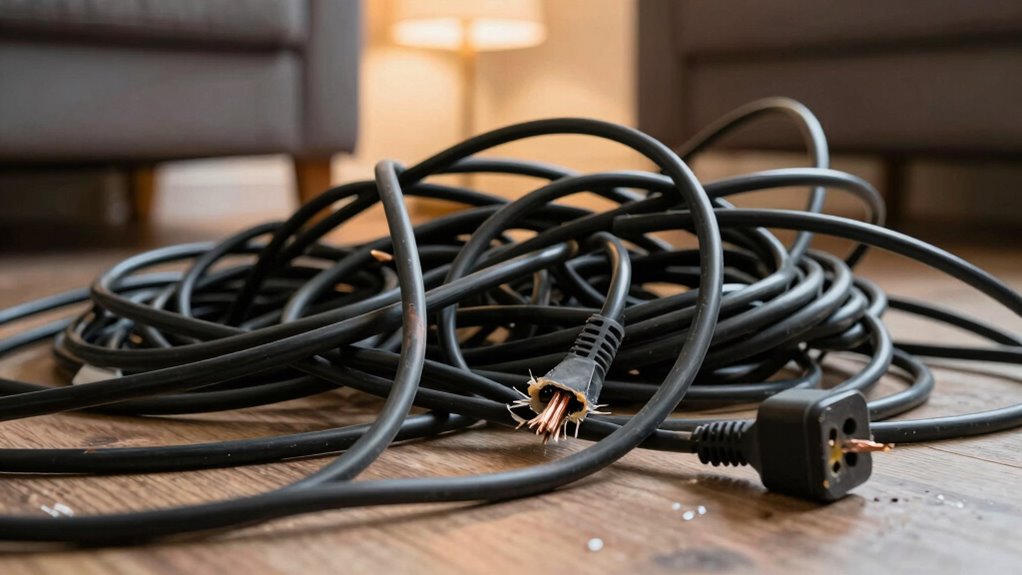

Extension cords can be dangerous if you misuse or damage them. Overloading them causes overheating and increases fire risk. Damaged insulation or poor quality cords can spark, short out, or harm your devices. Running cords through high-traffic areas or under rugs also poses tripping and fire hazards. To stay safe, you need to understand proper use, inspect cords regularly, and avoid common mistakes. Keep going to discover essential safety tips you should know.

Get home appliances delivered free with Prime
- Fast, free delivery on millions of items
- Prime Video, Amazon Music and more included
- Member-only deals all year
Key Takeaways
- Damaged or poorly insulated cords can cause electrical shocks or fires.
- Overloading extension cords leads to overheating and increases fire risk.
- Using cords beyond their rated wattage can damage devices and cause hazards.
- Running cords across walkways or under rugs creates tripping and fire dangers.
- Low-quality or damaged cords may fail, causing sparks, shorts, or appliance damage.
heavy-duty extension cords with safety features
As an affiliate, we earn on qualifying purchases.
As an affiliate, we earn on qualifying purchases.
Understanding the Electrical Hazards of Extension Cords
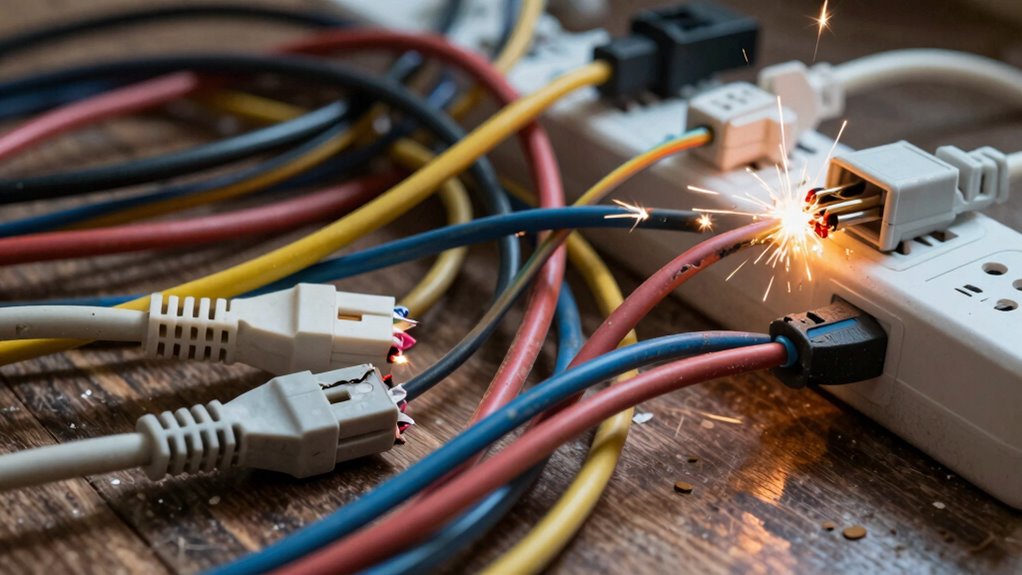
Extension cords are convenient, but they can pose serious electrical hazards if not used properly. One key risk is poor plug safety; damaged or loose plugs can cause sparks or short circuits. Always check that plugs fit snugly into outlets and avoid forcing them in. Cord durability also matters—cheap or worn cords are prone to fraying, exposing wires that increase shock risk. Over time, cords can develop cracks or expose internal wiring, which compromises safety. Using cords with proper insulation and sturdy construction helps prevent electrical fires and shocks. Never ignore signs of wear and tear. Regularly inspecting your extension cords and ensuring they meet safety standards keeps you protected and reduces the chances of accidents. Proper plug safety and durable cords are essential for safe extension cord use. Additionally, understanding electrical hazards can help you recognize potential dangers before they lead to accidents. Being aware of safety standards can further guide you in selecting reliable and safe extension cords for your needs. It’s also important to consider the power capacity of your extension cords to prevent overloads that could cause overheating or fires. Ensuring that your cords are rated for the appropriate load helps mitigate overload risks and enhances overall safety. Incorporating landscape design principles can also help position cords away from high-traffic or wet areas, reducing accidental damage or hazards.
insulated extension cords for outdoor use
As an affiliate, we earn on qualifying purchases.
As an affiliate, we earn on qualifying purchases.
Why Overloading Extension Cords Is Dangerous
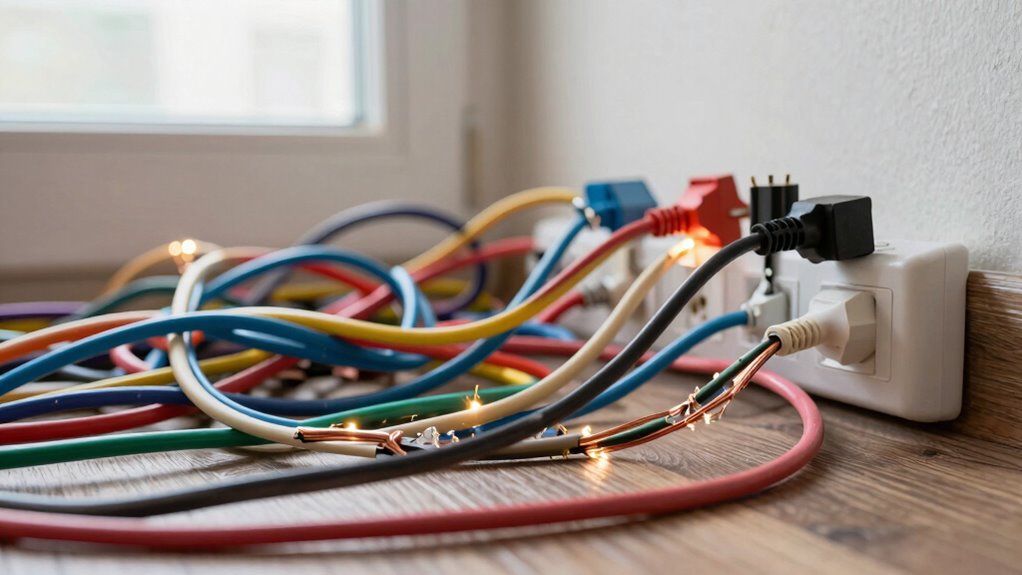
Overloading extension cords can cause them to overheat, increasing the risk of fire and damaging your devices. It also creates tripping hazards that can lead to falls or injuries. To stay safe, only use extension cords within their recommended limits and avoid plugging in too many devices at once. Proper home electrical safety practices can help prevent accidents and ensure your devices operate efficiently. Additionally, understanding the importance of curiosity about electrical safety can encourage you to learn more about safe usage and prevent potential hazards. Being aware of industry standards and inclusive safety guidelines can help ensure that all users are protected regardless of their background or experience. Recognizing electrical safety regulations and adhering to them can further reduce the risk of dangerous incidents in your home. Staying informed about safe electrical practices is also essential for maintaining a secure environment and avoiding preventable accidents.
Risk Of Fire
Have you ever wondered what happens when you plug too many devices into a single extension cord? Overloading can cause the cord’s insulation to overheat, increasing the risk of fire. When the insulation isn’t rated for the load, heat builds up, and damaged or worn insulation can spark a blaze. Proper grounding safety is essential; a cord without adequate grounding can cause electrical faults that ignite nearby materials. If the grounding system isn’t secure, it might lead to sparks or overheating. Always use cords with the correct capacity, check for damaged insulation, and guarantee grounding safety measures are in place. Ignoring these precautions can turn a simple extension cord into a fire hazard, endangering your home and loved ones. Early detection of electrical issues can help prevent these dangers. Additionally, using extension cords with proper home safety measures can significantly reduce the risk of accidents. Being aware of electrical load capacity and adhering to safety standards is crucial in preventing electrical fires.
Damage To Devices
When you overload an extension cord, you risk damaging your devices because excess current can cause electrical components to overheat and fail prematurely. If your devices aren’t compatible with the cord’s capacity, they may draw more power than the cord can safely handle, leading to potential damage. Poor cord insulation increases this risk, as heat can escape or cause shorts, further harming your devices. Overloading can also cause voltage fluctuations, which might result in data loss or hardware failure. To prevent this, always check device compatibility with the extension cord’s rated capacity and ensure the cord’s insulation is intact and appropriate for your environment. Properly rated cords reduce the chance of overheating and protect your devices from costly damage. Additionally, using cords with proper insulation can help manage heat buildup and prevent toxic fumes in the event of a fire. Regularly inspecting your extension cords for signs of wear and damage can also help prevent electrical hazards and ensure safe operation. Being aware of cord capacity and adhering to safety guidelines is essential for safe electrical use. Furthermore, choosing quality extension cords from reputable brands can significantly reduce the risk of failure and hazards, especially when combined with sound safety practices such as avoiding overuse in high-demand situations.
Tripping Hazards
Even if it seems convenient, plugging multiple devices into a single extension cord can create a tripping hazard. When cords are stretched across walkways or high-traffic areas, they reduce cord visibility, making it easy for someone to trip. Overloaded cords increase the risk of sudden disconnections or damage, but the immediate danger lies in trip hazards. A cord running across a room can be unnoticed until someone trips over it, potentially causing injury. To prevent this, keep cords out of walkways and secure them along walls or furniture. Regularly check that cords are visible and properly positioned. Avoid overloading extension cords, and always store excess cord length out of foot traffic zones to minimize trip hazards and guarantee safety. Understanding proper electrical safety practices can help prevent accidents and ensure a safer environment. Additionally, being aware of the precious metal IRA market can help investors make informed decisions when planning their retirement investments. It is also important to recognize that attention to detail in safety procedures ensures consistent compliance and reduces potential hazards. Maintaining awareness of fire safety guidelines is vital, especially when using multiple appliances with extension cords. Incorporating safety awareness into daily routines can further reduce the risk of accidents related to extension cord use.
As an affiliate, we earn on qualifying purchases.
The Risks of Using Damaged or Low-Quality Extension Cords
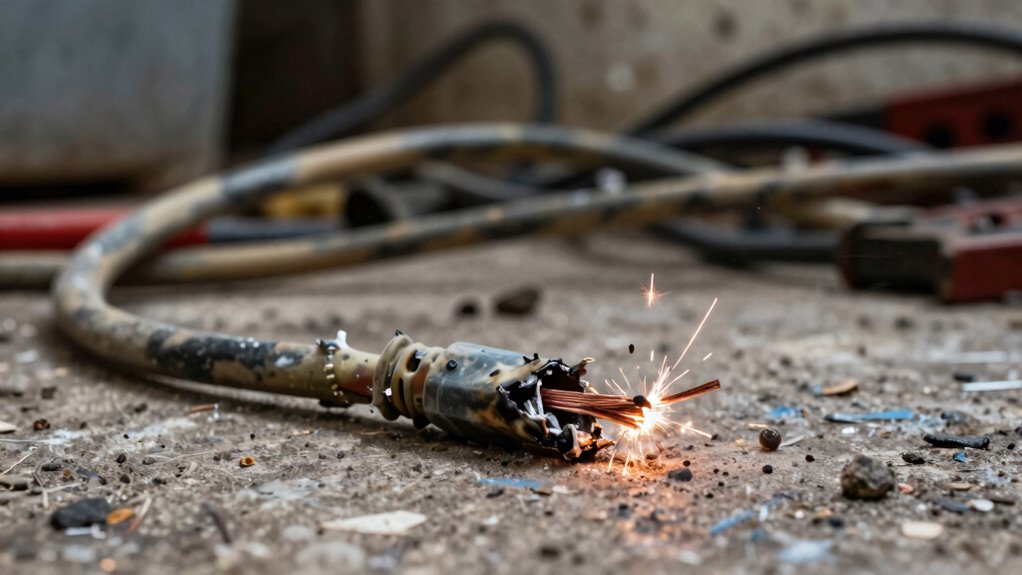
Why does using damaged or low-quality extension cords pose such a danger? The main issue lies in compromised cord durability and faulty cord insulation. When a cord is damaged, its insulation may crack or wear away, exposing live wires. This increases the risk of electrical shocks or short circuits. Low-quality cords often use inferior materials, making them more prone to overheating or melting under heavy use. A damaged or poorly made extension cord can easily overheat, leading to fires or damage to connected appliances. Poor cord durability means the cord can’t withstand regular wear and tear, raising the likelihood of internal wire breaks. Always inspect your extension cords regularly and replace any damaged or low-quality models to prevent accidents and guarantee safe use. Additionally, using cords with proper application and quality standards can significantly reduce these risks, especially since cord safety is critical for preventing electrical hazards.
childproof extension cord covers
As an affiliate, we earn on qualifying purchases.
As an affiliate, we earn on qualifying purchases.
How to Use Extension Cords Safely and Prevent Fires
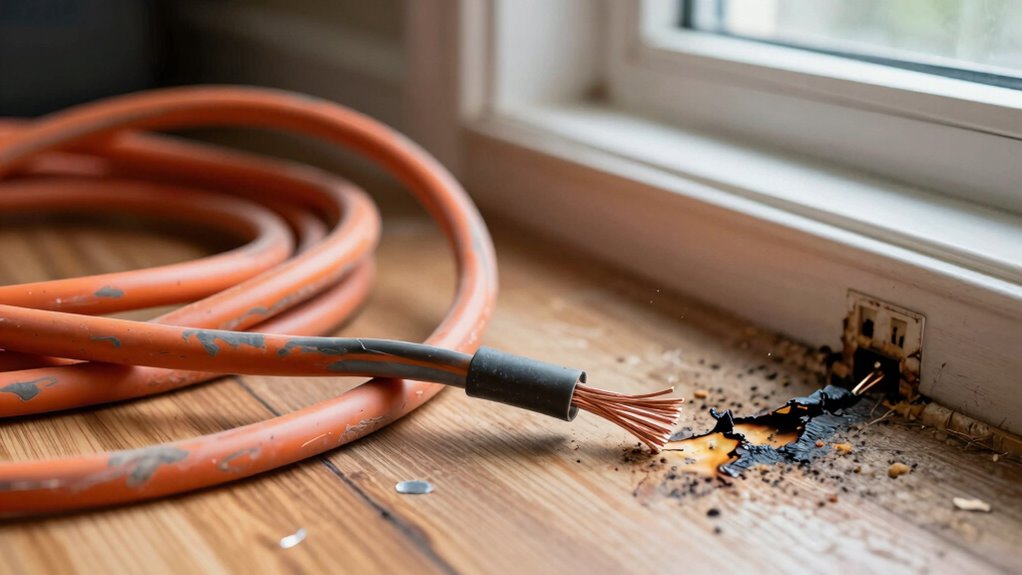
To use extension cords safely and prevent fires, you need to follow essential guidelines that reduce risks. First, always choose a cord with the appropriate power rating for your device. Extension cord safety depends on avoiding overloads, so don’t plug multiple high-wattage appliances into one cord. Keep cords away from water, heat sources, and sharp objects to prevent damage. Never run cords under rugs or furniture, as this can cause overheating. Regularly inspect cords for signs of wear or damage, and replace them immediately if needed. Be cautious of electrical hazards by unplugging cords when not in use and avoiding daisy-chaining multiple cords together. Following these safety tips helps prevent electrical hazards and reduces the risk of fire.
Common Extension Cord Mistakes and How to Avoid Them
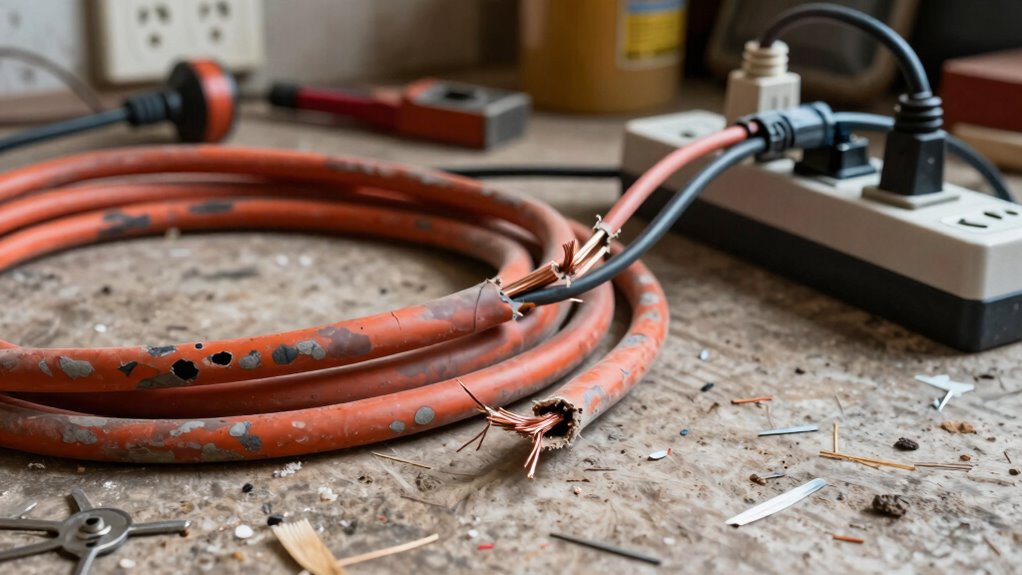
Many people make common mistakes when using extension cords that can lead to hazards. One mistake is choosing a cord with an inappropriate length, which can cause tripping or overloading issues. Using cords that are too long may increase resistance and reduce power efficiency, risking overheating. Another mistake is ignoring the power rating; plugging in devices that exceed the cord’s capacity can cause overheating or fires. Always match your cord’s power rating to your appliances’ needs.
| Mistake | Solution | Consequence |
|---|---|---|
| Using too long a cord | Use the shortest cord needed | Voltage drop, overheating |
| Ignoring power rating | Check labels and match ratings | Fire hazard, damage to devices |
| Overloading cords | Limit connected devices | Overheating, fire risk |
Quick Tips for Safe Extension Cord Use at Home and Work
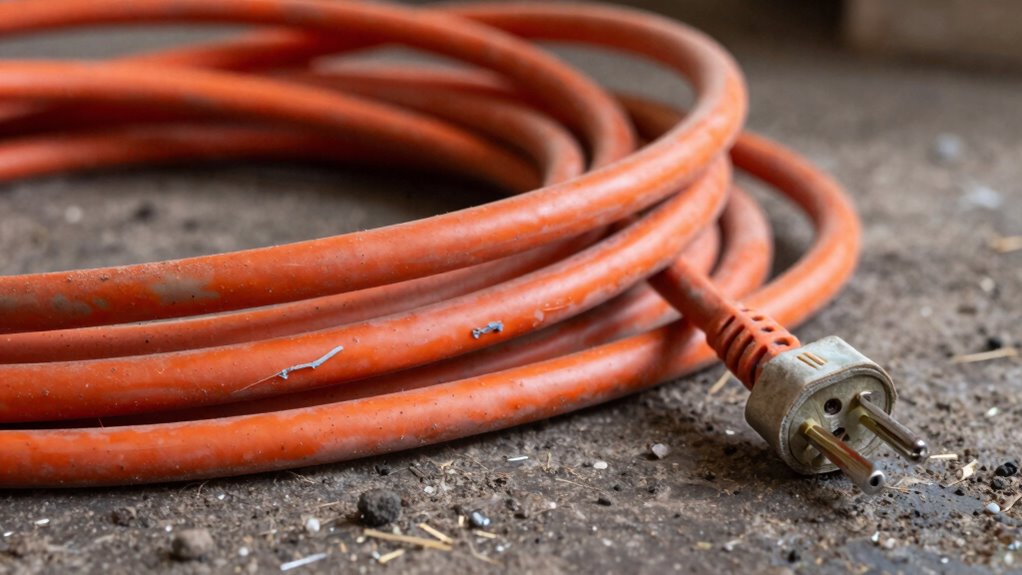
To keep your space safe, make sure you place extension cords away from high-traffic areas and avoid pinching or bending them sharply. Always check that you’re not plugging too many devices into one circuit, which can cause overloads. Following these simple tips helps prevent accidents and keeps your home and workplace secure.
Proper Cord Placement
Proper cord placement is essential for preventing accidents and ensuring safety when using extension cords at home or work. Effective cord management keeps cords out of walkways and prevents tripping hazards. To improve outlet safety and reduce risks, follow these tips:
- Keep cords away from high-traffic areas to avoid tripping.
- Avoid pinching or crushing cords under furniture or doors.
- Use cord covers or tape cords along walls to secure them safely.
- Unplug cords when not in use and avoid overextending them across multiple surfaces.
Avoid Overloading Circuits
Overloading extension cords can lead to overheating and increase the risk of fires or electrical shocks. To prevent this, don’t connect multiple high-power devices to a single extension cord. Overloading can cause power surges that damage your equipment or ignite fires. Always check the cord’s maximum wattage rating and stay well below it. Also, inspect the cord insulation regularly; damaged or worn insulation exposes wires, increasing shock risk. Avoid daisy-chaining multiple extension cords, which can easily strain circuits. Instead, use cords designed for your power needs and ensure circuits aren’t overloaded by other devices. By following these tips, you minimize the chance of overheating, protect your devices, and maintain a safer environment at home or work.
Frequently Asked Questions
Can Outdoor Extension Cords Be Safely Used Indoors?
Yes, outdoor extension cords can be safely used indoors if they are rated for indoor safety. Make sure to check the extension cord types and choose one specifically designed for indoor use, which typically have features like insulation suitable for indoor environments. Avoid using heavy-duty outdoor cords inside, as they may lack proper insulation and increase risk. Always follow manufacturer guidelines to guarantee safe and effective usage.
How Often Should I Replace My Extension Cords?
Think of your extension cord as a trusted road—over time, wear and tear can create cracks in the pavement. You should replace it when you notice frayed wires, exposed insulation, or frequent malfunctions. Regularly check for damaged cords to guarantee excellent electrical safety. Remember, even the sturdiest cords lose their strength with age, so prioritizing timely replacements keeps your home safe and your power flowing smoothly.
Are There Specific Extension Cords for High-Power Tools?
Yes, there are specific extension cords for high-power tools. You should look for cords with high power compatibility, meaning they can handle the electrical load your tools demand. Additionally, prioritize cords with greater cord durability, which withstand wear and tear from frequent use. Using the right high-power compatible extension cord guarantees safety, prevents overheating, and maintains your tools’ performance, reducing the risk of accidents or damage.
What Signs Indicate an Extension Cord Is Unsafe?
Your extension cord might be unsafe if you notice visible cord damage like fraying or exposed wires, which can lead to shocking hazards. Overheating hazards are signs too, such as the cord feeling hot or emitting a burning smell. If the cord is constantly tripping breakers or if the plug or socket is scorched, it’s a clear warning. Ignoring these signs could be as dangerous as facing a lightning storm in your living room.
Can Extension Cords Be Recycled or Disposed of Safely?
You can recycle or dispose of extension cords safely by exploring eco-friendly disposal and recycling options. First, check if your local recycling centers accept electrical cords; some electronics recyclers will take them. If not, consider donating functional cords. Avoid throwing damaged cords in regular trash, as they contain hazardous materials. Proper disposal helps safeguard the environment and promotes responsible recycling practices. Always follow local guidelines to ensure safe, eco-friendly disposal.
Conclusion
By understanding the risks and following safe practices, you can keep yourself and your home protected. Always avoid overloading cords, check for damage, and use them properly. Think of extension cords as a double-edged sword — when used wisely, they’re a helpful tool; when mishandled, they can cause serious harm. Stay vigilant and treat extension cords with respect to prevent accidents before they happen. Safety starts with you, so don’t let things get out of hand.
Fall Picks
fall essentials
As an affiliate, we earn on qualifying purchases.