TL;DR

Get home appliances delivered free with Prime
- Fast, free delivery on millions of items
- Prime Video, Amazon Music and more included
- Member-only deals all year
The heating should be off and radiators allowed to cool before you open a bleed valve, according to radiator expert Nick Duggan. After bleeding, wait a few minutes, check the boiler pressure against its recommended range, then restart the heating.
Homeowners should switch off central heating and let radiators cool before opening a bleed valve, radiator expert Nick Duggan told Ideal Home, because hot water can escape and cause burns. After bleeding, the report advises checking boiler pressure before turning the system back on.
Heating a radiator can help reveal a possible air problem: a radiator that is warm at the bottom but cold at the top may have air trapped inside. But the actual bleeding should be done with the heating off and the radiator cold, rather than while hot water is circulating.
Duggan, director of The Radiator Centre, said cooling allows the air and water inside the radiator to settle. He also warned that opening a valve while the system is hot can release hot water, while circulation may make water come out faster and turn the job into a messier one. The report says bleeding while the heating is on can also be less effective.
There is no fixed waiting period before restarting the heating. Duggan recommends waiting a few minutes after bleeding, then checking that the boiler pressure remains within the range specified for the system. Bleeding several radiators can lower pressure slightly, according to his advice.
Safer Bleeding Before Heating Season
The advice matters because bleeding involves opening a small valve in a water-filled heating system. Doing so while a radiator is hot creates a scalding risk, and water escaping more quickly can damage floors or furnishings. Letting the radiator cool makes the task safer and easier to manage.
Removing trapped air may help address uneven heat, but the report cautions that a warm-feeling radiator does not rule out air elsewhere in the system. Worcester Bosch training head Darren Danks said small air pockets may not create noticeable cold spots. The practical implication is to look for symptoms while the system is running, then turn it off and allow it to cool before bleeding.
Checking pressure afterward is also relevant to system operation. The source does not provide a universal pressure figure, so homeowners should use the boiler or heating-system guidance for their own installation rather than assume one value applies to every home.
As an affiliate, we earn on qualifying purchases.
Spotting Air Before Switching Off
The guidance was published as the writer of the Ideal Home report prepared to use central heating after a mild start to autumn. The report frames radiator bleeding as a seasonal check intended to help radiators heat evenly before regular use.
A cold patch near the top is a commonly cited sign of trapped air, while the lower part of the radiator may remain warm. Danks said air can also reduce heating performance and, over time, contribute to corrosion. Those are his stated points; the article does not give measurements or quantify how often these effects occur.
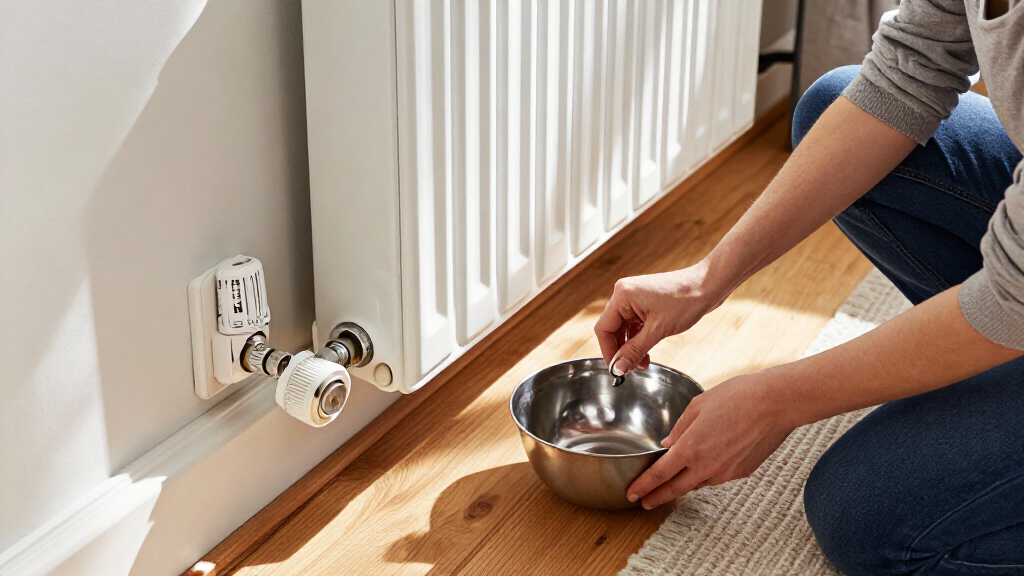
The report estimates that bleeding a radiator takes about 30 seconds and that bleeding all radiators in a home may take around 15 minutes, with extra time needed if covers must be removed. It lists a radiator key and a container to catch drips as useful equipment.
“Make sure the heating is switched off and, ideally, wait until your radiators have gone completely cold.”
— Nick Duggan, director of The Radiator Centre, quoted by Ideal Home
As an affiliate, we earn on qualifying purchases.
Pressure Ranges Vary by System
The report does not specify a single boiler-pressure target for all homes, nor does it set an exact cooling time before bleeding. Duggan recommends waiting until radiators are completely cold and checking the boiler guidance for the acceptable pressure range after the work.
It is also not clear from the report how often every radiator should be bled, or whether a particular home’s uneven heating is caused by trapped air rather than another fault. Persistent cold areas, pressure problems or recurring air may need further investigation by a qualified heating professional.
As an affiliate, we earn on qualifying purchases.
Check the System Before Restarting
For the procedure described in the report, homeowners should first use the heating to identify any unevenly heated radiators, then switch it off and wait for the radiators to cool. With a suitable key and a container ready for drips, they can open the bleed valve carefully and close it once air has escaped and water begins to come out.
After a few minutes, check the boiler pressure against the system’s recommended range before restarting the heating. If pressure is outside that range, or the heating problem persists after bleeding, consult the boiler instructions or a qualified heating professional rather than relying on a general pressure figure.
As an affiliate, we earn on qualifying purchases.
Key Questions
Should the heating be on or off when bleeding radiators?
Keep the heating off and wait for the radiator to become cold before opening its bleed valve. The Ideal Home report says this lowers the risk of hot water escaping and causing a burn.
Can I use the heating to find radiators that need bleeding?
Yes. The report says a radiator that is warm at the bottom and cold at the top can indicate trapped air. Switch the system off and let it cool before bleeding it.
How soon can I turn the heating back on?
There is no fixed waiting period in the report. Duggan advises waiting a few minutes, checking the boiler pressure against the recommended range, and then restarting the system.
Do all radiators need bleeding?
The report says trapped air may not always produce an obvious cold spot. It presents bleeding all radiators as an option, but does not establish that every home needs to do so on a set schedule.
How long does it take to bleed radiators?
Ideal Home estimates about 30 seconds per radiator and around 15 minutes for all radiators in a home. Covers or awkward access can add time.
Source: rss
Cold & flu season Picks
humidifiers
As an affiliate, we earn on qualifying purchases.