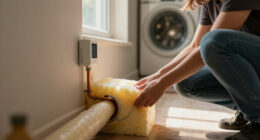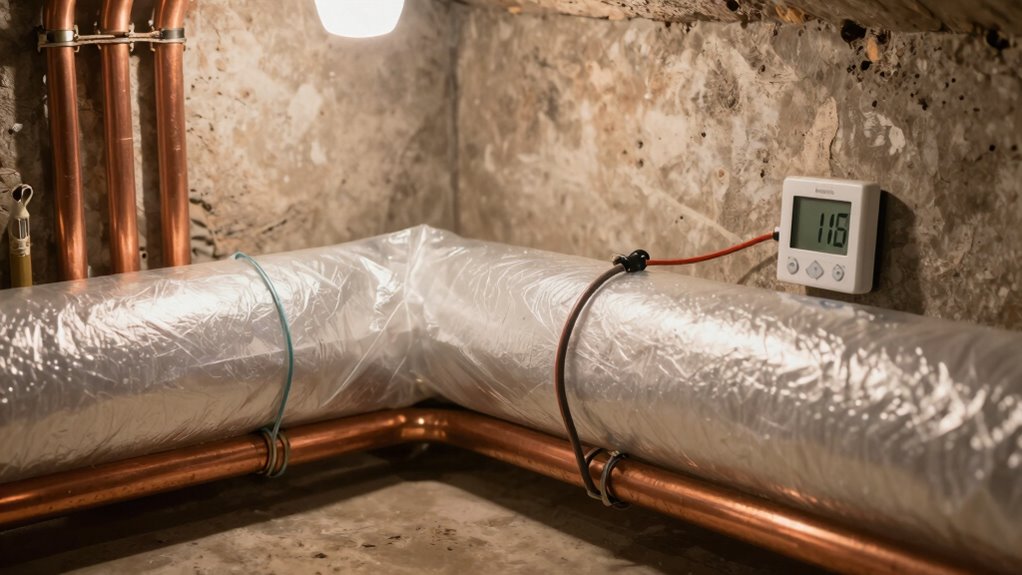

To prevent pipe freezing, you should insulate exposed pipes in areas like the garage and attic using foam or rubber materials, and seal gaps around pipes to keep cold air out. Keep your home heated above 55°F, especially during cold spells, and consider using heating tape or cables on vulnerable pipes. Allowing faucets to drip slightly can help prevent pressure buildup. Continuing with these tips can help you better protect your plumbing system from costly damage.

Get home appliances delivered free with Prime
- Fast, free delivery on millions of items
- Prime Video, Amazon Music and more included
- Member-only deals all year
Key Takeaways
- Insulate exposed pipes in unheated areas with foam, fiberglass, or rubber pipe insulation.
- Keep indoor temperatures above 55°F and maintain consistent heating during cold weather.
- Seal gaps around windows, doors, and pipes to prevent cold air infiltration.
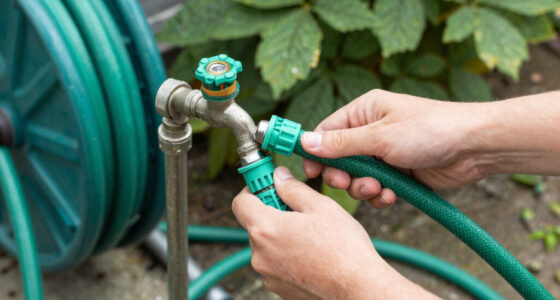
- Drip faucets and outdoor hoses to keep water moving and reduce pressure buildup.
- Use heating tape or cables on vulnerable pipes, ensuring proper installation and UL safety compliance.
As an affiliate, we earn on qualifying purchases.
Why Preventing Frozen Pipes Is Essential for Your Home
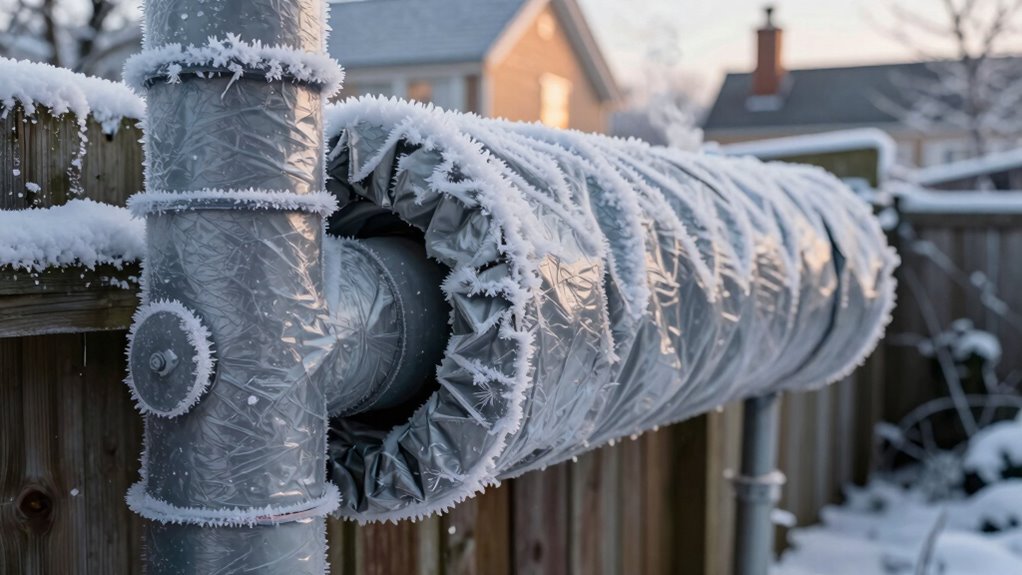
Have you ever experienced the chaos and damage caused by burst pipes during winter? Preventing frozen pipes is essential because a burst pipe can flood your home, cause extensive damage, and lead to costly repairs. The pipe material plays a role in how susceptible your pipes are to freezing; some materials, like plastic, are more prone to cracking than copper or steel. Water pressure also matters—high water pressure can increase the risk of pipe failure if freezing causes expansion. When pipes freeze, water expands and creates pressure inside the pipe, which can cause it to crack or burst. Protecting your plumbing helps avoid these disasters, preserves your home’s integrity, and saves you money and stress during the cold months. Understanding water chemistry can also help prevent problems, as certain conditions can influence freezing points and corrosion risks. Additionally, employing backyard transformation techniques, like insulation or heated outdoor spaces, can further safeguard your plumbing infrastructure. Proper insulation techniques can significantly reduce the risk of freezing, especially in vulnerable areas, and choosing the right pipe materials can make a notable difference in resilience against cold temperatures.
As an affiliate, we earn on qualifying purchases.
How to Prepare Your Plumbing System Before Winter Starts
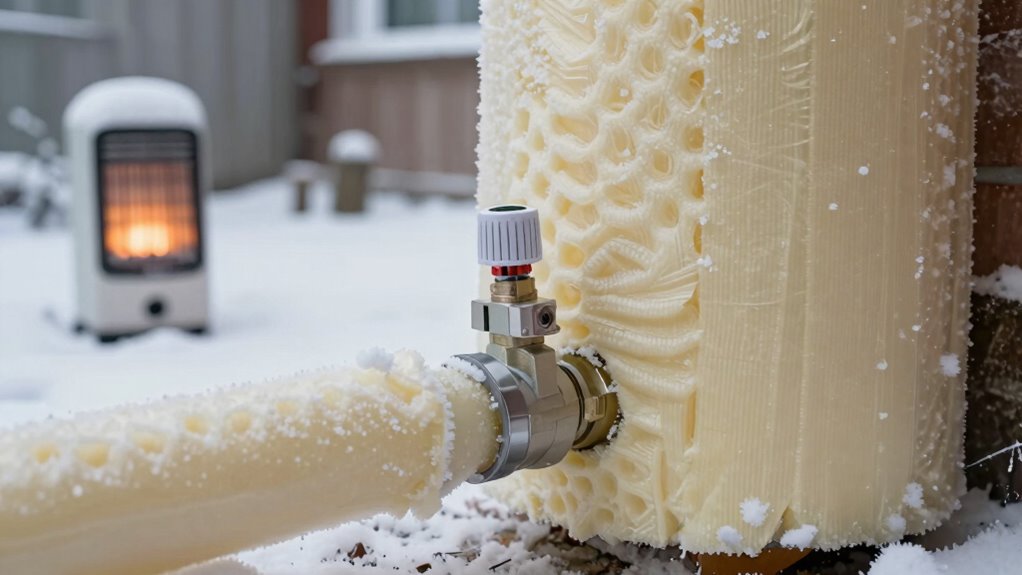
Preparing your plumbing system before winter arrives can make all the difference in preventing frozen pipes. Start with essential pipe maintenance by inspecting for leaks, cracks, or corrosion, and address issues promptly to avoid future problems. Consider plumbing upgrades if your pipes are old or poorly insulated, as modern materials can better withstand cold temperatures. Drain outdoor hoses and shut off exterior water supply valves to prevent freezing in outdoor spigots. Insulate exposed pipes in unheated areas like basements, garages, and crawl spaces to protect them from freezing. Regularly maintaining your plumbing system ensures it’s resilient against winter cold. Proper insulation techniques can significantly reduce the risk of pipe freezing during extreme cold weather. Additionally, reviewing your home’s architecture details can help identify vulnerable areas where cold air might seep in, potentially causing pipes to freeze. Ensuring proper pipe insulation and sealing gaps around windows and doors can further protect your plumbing system. Taking these proactive steps, including understanding building vulnerabilities, can help you avoid costly repairs, water damage, and the inconvenience of burst pipes during the coldest months. Being aware of air leaks and sealing them effectively can also contribute to a more insulated and protected home environment.
As an affiliate, we earn on qualifying purchases.
Insulate Exposed Pipes in Garage and Attic to Prevent Freezing
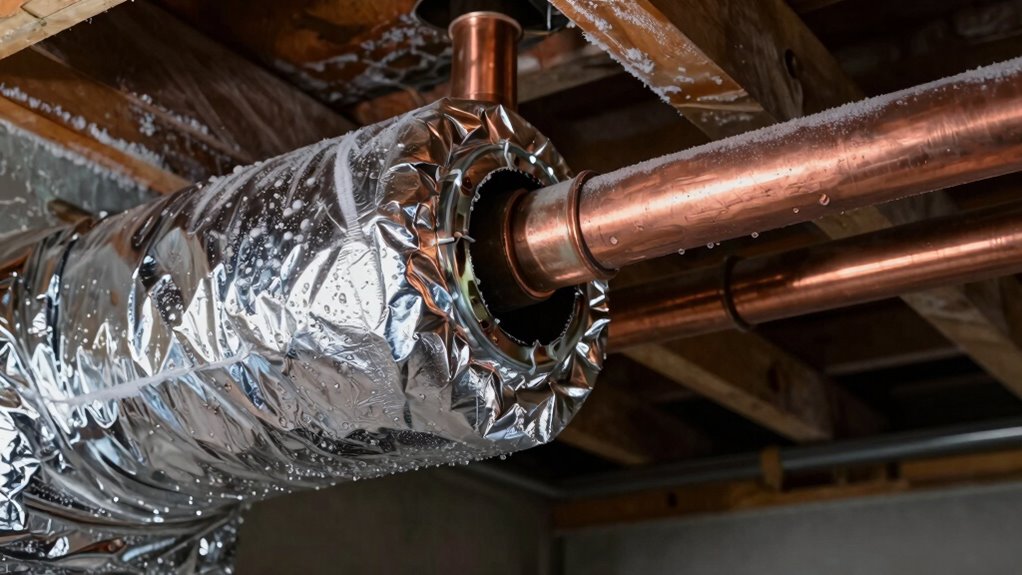
To protect your pipes from freezing, start by choosing the right insulation material that fits your needs. Make sure to seal any gaps and leaks around exposed pipes in your garage and attic, so cold air doesn’t reach them. Proper insulation and sealing are key steps to keep your pipes warm during cold snaps. For added protection, consider using quality gear and tools designed specifically for weatherproofing and insulation projects. Additionally, consulting waterpark safety tips can help ensure your home remains secure during winter weather. Using the correct airless paint spraying techniques can also help achieve more effective insulation coverage in tricky areas. Remember, using portable oil radiators safely can help maintain warmth in poorly insulated spaces, reducing the risk of freezing. Exploring trusted Gold IRA markets can also provide financial stability for homeowners planning for long-term winter preparedness.
Choose Suitable Insulation Material
Choosing insulation materials like foam pipe insulation, fiberglass, or rubber is essential for protecting exposed pipes in your garage and attic from freezing. These materials are effective at maintaining warmth and preventing heat loss. You should also think about ease of insulation installation—select options that are simple to cut and fit around pipes without gaps. Foam pipe insulation, for example, comes in pre-slit tubes that slip easily over pipes, making the process quick and straightforward. Proper insulation helps keep the pipes above freezing temperatures, especially during cold snaps. Make sure to cover all exposed sections, and secure the insulation firmly in place to maximize its effectiveness. Proper choosing insulation and installation can save you from costly repairs later. Additionally, selecting the right insulation material**** can improve overall energy efficiency and durability of the protection.
Seal Gaps and Leaks
Have you checked for gaps and leaks around your garage and attic pipes? Sealing these openings prevents cold air from entering and keeps your pipes warmer. Gaps can lead to increased water pressure and cause pipe corrosion over time, making pipes more vulnerable to freezing. Use weatherstripping or caulk to seal small gaps, and consider foam insulation for larger leaks. Properly insulated pipes are less likely to freeze, reducing the risk of costly bursts. Insulating exposed pipes also helps maintain water pressure and prevents damage caused by freezing and thawing cycles. Regularly inspecting and sealing gaps around these pipes guarantees they stay protected during cold snaps, keeping your plumbing system reliable and safe. Additionally, understanding regional flavors and weather patterns can help you better prepare your home infrastructure for specific climate challenges. Ensuring your pipes are adequately insulated can significantly improve their resilience against freezing temperatures.
As an affiliate, we earn on qualifying purchases.
Keep Your Home Warm Enough to Protect Pipes From Freezing
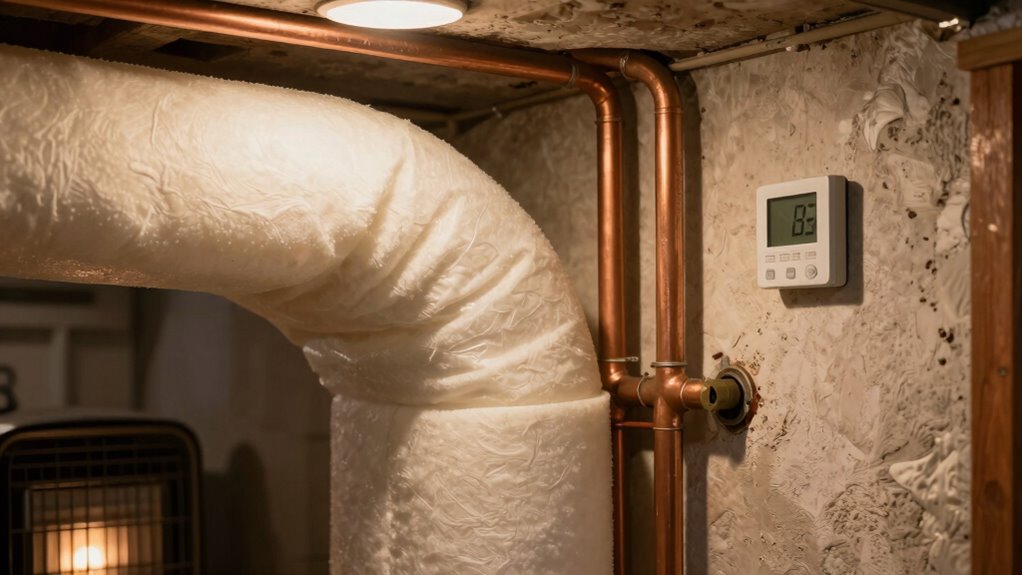
Keeping your home warm enough is essential for preventing pipes from freezing. When temperatures drop, maintaining consistent indoor warmth helps protect vulnerable pipes, especially those made of materials like copper or plastic, which respond differently to cold. A well-heated space keeps water moving, preventing pressure buildup that can cause pipes to burst. Make sure your thermostat stays at a steady level, ideally above 55°F, overnight and during cold spells. Insufficient warmth can lead to water pressure drops in some pipes, increasing the risk of freezing and damage. Also, consider how pipe material influences insulation needs; metal pipes lose heat faster than plastic ones. By keeping your home warm, you reduce the likelihood of frozen pipes and costly repairs. Additionally, understanding the capacity of your home’s heating system can help ensure it can maintain consistent warmth during prolonged cold periods. Proper insulation techniques can further prevent heat loss, helping your heating system work more efficiently and protect your pipes. Regularly checking your insulation and sealing drafts can also enhance heat retention, providing extra protection for your pipes during extreme cold. Improving your home’s overall insulation can make a significant difference in reducing heat transfer, which is crucial in cold weather. Ensuring your home’s heating system is properly maintained and capable of handling cold weather can make a significant difference in preventing pipe freezing.
Seal Gaps and Cracks Around Pipes to Keep Cold Air Out
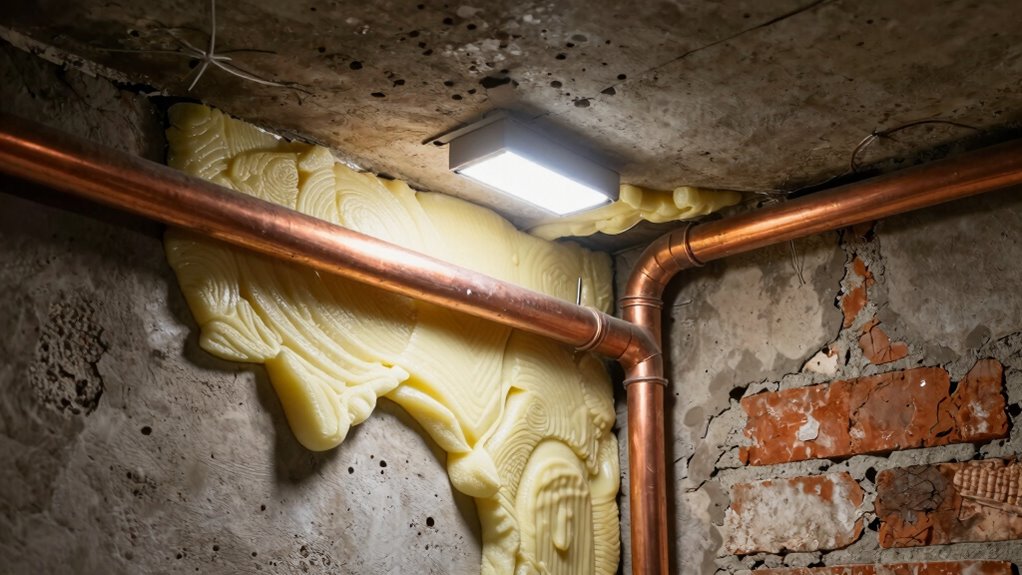
Since cold air can seep through tiny openings around pipes, sealing gaps and cracks is a crucial step in preventing freezing. Proper pipe maintenance involves blocking these entry points to keep warmth in and cold out. Consider these steps:
Sealing gaps around pipes prevents cold air intrusion and helps keep pipes warm during freezing weather.
- Inspect areas around pipes regularly for cracks or gaps.
- Use weatherstripping or foam sealant around pipe openings.
- Install insulating foam or rubber gaskets in gaps.
- When necessary, upgrade plumbing with insulated piping or fittings to prevent future issues.
- Additionally, using high-quality insulation materials can provide extra protection against freezing temperatures. Ensuring your plumbing system is well-maintained and protected can also help to prevent pipe bursts during extreme cold spells. Regularly checking for air leaks around pipes can further enhance your efforts to keep cold air out. Sealing gaps not only keeps cold air out but also improves overall pipe maintenance. Plumbing upgrades can include sealing vulnerable spots, reducing the risk of freezing and costly repairs. This simple step ensures your pipes stay warm and functional during freezing temperatures.
Use Heating Tape or Cables on Vulnerable Pipes
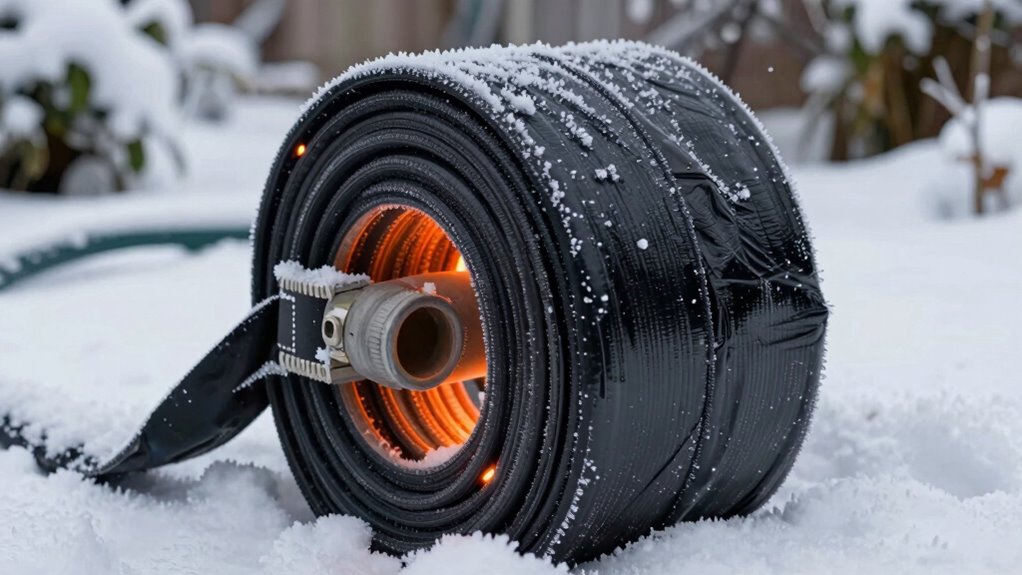
Vulnerable pipes in unheated or exposed areas are prone to freezing, but you can protect them effectively with heating tape or cables. These products provide direct heat, preventing ice formation. When selecting heating tape or cables, prioritize electrical safety by choosing UL-listed options and following manufacturer instructions. Confirm the tape’s material is compatible with your pipe’s material to avoid damage. Proper installation involves wrapping the tape evenly around the pipe without overlaps and securing it with appropriate fasteners. Keep electrical connections off the ground and away from water sources. Regularly inspect the tape for signs of wear or damage, and replace it if necessary. Using heating tape or cables is a reliable way to safeguard vulnerable pipes from freezing while maintaining safety and material compatibility.
Should You Allow Faucets to Drip in Cold Weather?
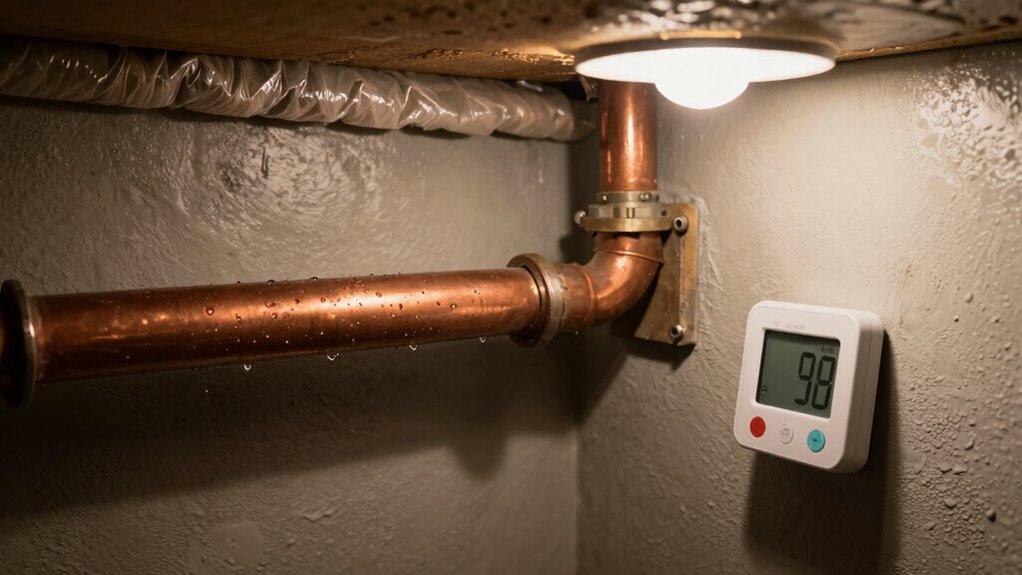
Should you allow your faucets to drip during cold weather? In many cases, yes—especially if you want to prevent pipe freezing. Allowing a slow drip helps keep water moving, reducing the risk of ice buildup. This is essential for outdoor plumbing and vulnerable indoor pipes. To make the most of faucet maintenance, consider these tips:
Allow faucets to drip during extreme cold to prevent pipe freezing and reduce ice buildup risks.
- Drip faucets connected to outdoor plumbing or exposed pipes.
- Keep interior cabinet doors open to circulate warm air.
- Insulate pipes in unheated spaces.
- Monitor weather forecasts, and drip faucets during extreme cold snaps.
What to Do If Your Pipes Freeze or Burst
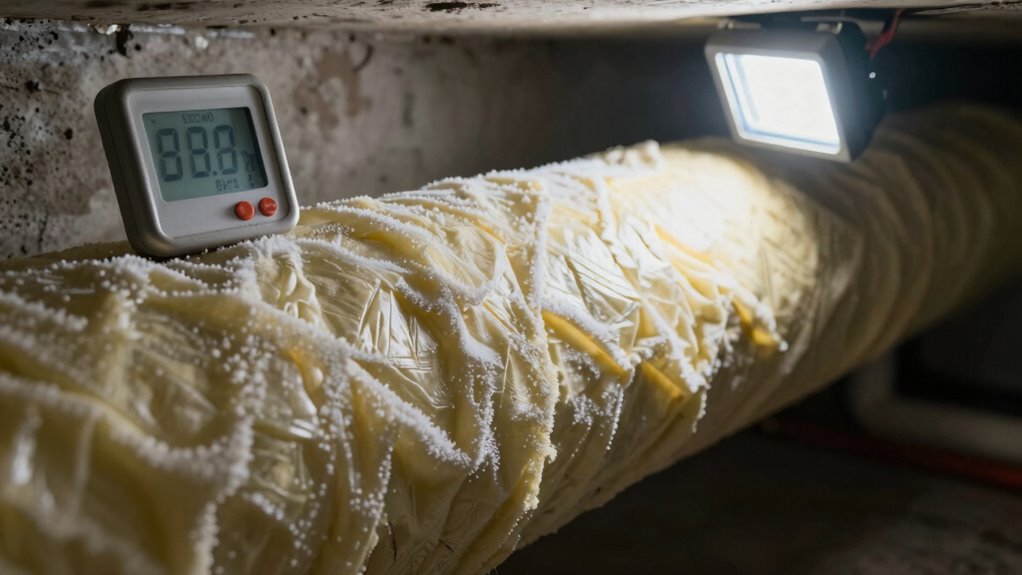
If your pipes have frozen or burst, quick action is essential to minimize water damage and repair costs. First, turn off the main water supply immediately to stop the flow of water. If a pipe has burst, carefully drain the affected area by opening faucets to relieve water pressure. When dealing with a frozen pipe, avoid applying direct heat like a torch, which can cause damage, especially to plastic pipes. Instead, use a hairdryer or warm towels to gently thaw the pipe. Keep in mind that pipe material influences how quickly it thaws and how easily it might burst under pressure. Once thawed, check for leaks or cracks, and guarantee water pressure is safe before turning the main back on.
Simple Steps to Protect Your Pipes and Avoid Costly Repairs
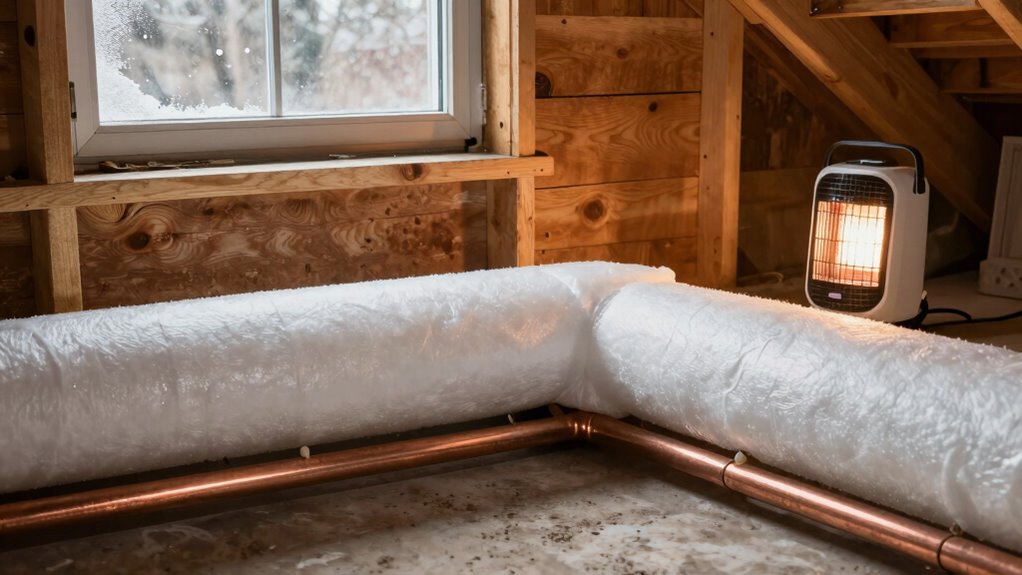
To protect your pipes, start by insulating those that are most exposed to cold. Keep your indoor temperature warm enough to prevent freezing, especially in unheated areas. These simple steps can help you avoid costly repairs and keep your plumbing safe during winter.
Insulate Vulnerable Pipes
Insulating vulnerable pipes is one of the simplest and most effective ways to keep your home safe during freezing weather. Proper insulation helps maintain water pressure and prevents pipes from freezing and bursting. To get started:
- Identify pipes made of material prone to freezing, like copper or plastic, especially those in unheated areas.
- Wrap these pipes with foam or fiberglass insulation sleeves for a snug fit.
- Use heat tape or cables on pipes in especially cold spots for extra protection.
- Seal gaps around pipes and in walls to prevent cold air from reaching vulnerable sections.
Keep Indoor Temperature Warm
Keeping your indoor temperature warm is one of the most effective ways to prevent pipes from freezing. Maintain a consistent temperature, ideally above 55°F, especially in unheated areas. While doing so, monitor indoor humidity levels, since dry air can increase the risk of pipe damage. Use ventilation strategies like opening curtains during the day to let sunlight warm your home naturally, and keep doors open between rooms to promote airflow. Avoid sudden temperature drops by adjusting your thermostat gradually. Proper ventilation also helps prevent excess moisture, which can cause condensation and further stress pipes. Regularly checking your heating system and sealing drafts guarantees your home stays warm and dry, reducing the chance of frozen pipes and costly repairs.
Frequently Asked Questions
How Can I Detect Hidden or Underground Pipes at Risk of Freezing?
You can detect underground pipes at risk of freezing by using underground detection tools like ground-penetrating radar or metal detectors, which reveal hidden pipes. Once identified, check if they’re properly insulated with pipe insulation; uninsulated pipes are more prone to freezing. Regularly inspecting these areas and adding insulation where needed helps prevent freezing, especially in colder months. Stay proactive to protect your pipes from damage caused by freezing temperatures.
Are There Specific Types of Insulation Recommended for Different Pipe Materials?
Think of pipe insulation as a cozy sweater for your pipes, tailored to their material. For copper, foam pipe insulation works well, hugging tightly to prevent cold air from sneaking in. For plastic or PVC pipes, consider rubber or polyethylene insulation, which flexes and adapts. Always check for material compatibility, ensuring your insulation keeps the pipes warm without causing any damage, like a perfect dance partner supporting each move.
What Are the Signs That a Pipe Is Starting to Freeze?
You’ll notice signs of a pipe starting to freeze if you see reduced or no water flow, or hear strange noises like banging or clanking from the pipes. Feel for cold spots along your pipes, especially near exposed areas or where pipe insulation isn’t sufficient. Frozen detection involves inspecting for frost or ice buildup on the pipe surface. Recognizing these signs early helps you take action before a burst occurs.
How Effective Are Outdoor Pipe Covers in Preventing Freezing?
Imagine you’re a knight guarding your castle—outdoor pipe covers are your armor. They’re quite effective at preventing freezing, especially when paired with proper pipe insulation. These covers shield your pipes from cold air and frost, reducing the risk of ice buildup. While no method guarantees absolute protection, using outdoor covers considerably lowers the chances of pipes freezing during cold snaps. Regularly check and replace damaged covers for ideal defense.
Can Installing a Sump Pump Help Prevent Pipe Freezing in Basements?
Installing a sump pump can help prevent pipe freezing in your basement by improving basement drainage and reducing moisture buildup. A sump pump actively removes excess water, keeping the area dry and preventing pipes from freezing due to cold, damp conditions. By maintaining proper drainage and controlling water levels, you create a less risky environment for pipes, especially during cold weather, decreasing the chance of freezing and subsequent damage.
Conclusion
By taking these simple steps, you can protect your pipes from freezing and avoid costly repairs. Did you know that burst pipes account for nearly 25% of all property damage claims during winter? Don’t let cold weather catch you off guard—insulate, seal, and keep your home warm. With proactive measures, you’ll stay safe and cozy all winter long, ensuring your plumbing stays in top shape no matter how low the temperatures drop.
Fall Picks
fall essentials
As an affiliate, we earn on qualifying purchases.