To check your attic insulation levels, start with a visual inspection—wear protective gear and look for uneven coverage, dampness, or pests. Measure the insulation’s depth with a tape measure, probing gently to avoid compression. Look for signs of settling or damage, like dark spots or wet areas. If you find issues or aren’t sure about your current insulation, there are simple steps to improve your home’s efficiency that you can explore further.

Get home appliances delivered free with Prime
- Fast, free delivery on millions of items
- Prime Video, Amazon Music and more included
- Member-only deals all year
Key Takeaways
- Safely access the attic and wear protective gear before inspecting insulation.
- Visually examine insulation for uneven coverage, damage, or moisture signs.
- Use a measuring tape or ruler to determine insulation depth in multiple areas.
- Compare measured insulation thickness to recommended R-value standards for your climate.
- Check for pest activity, water damage, or settling that may reduce insulation effectiveness.
fiberglass attic insulation batts
As an affiliate, we earn on qualifying purchases.
As an affiliate, we earn on qualifying purchases.
How to Visually Inspect Your Attic Insulation
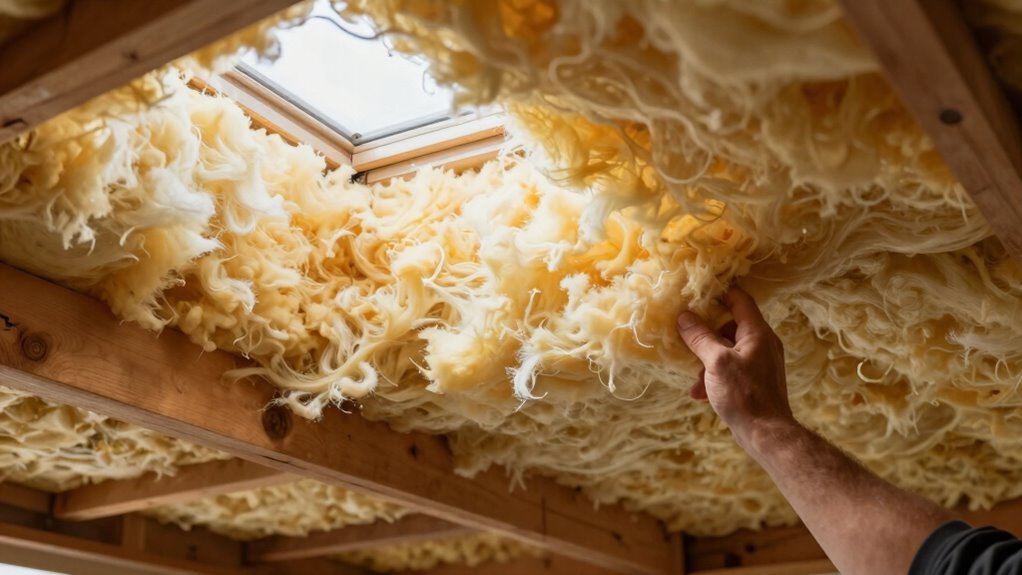
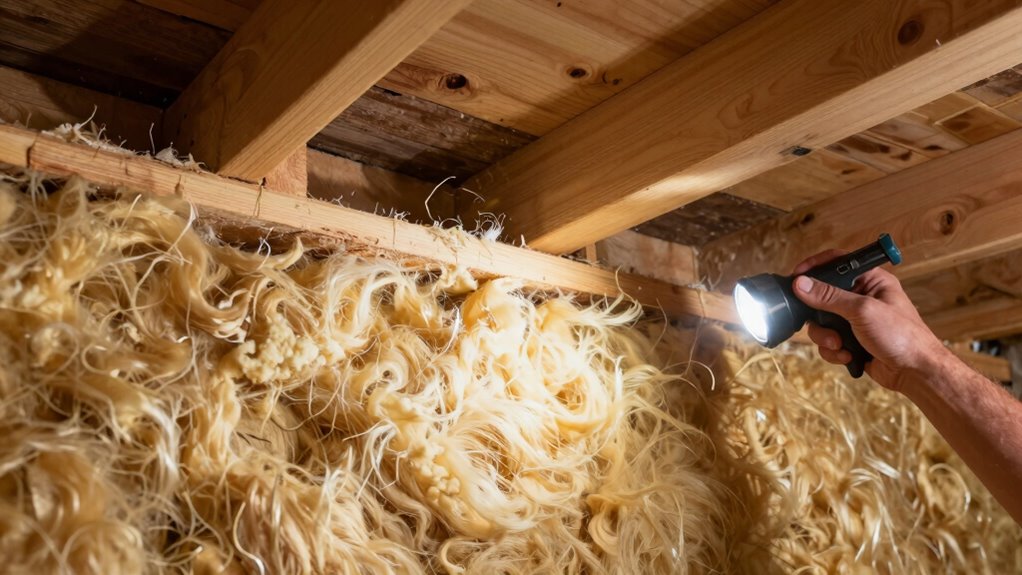
To visually inspect your attic insulation, start by safely accessing the attic space and wearing protective gear, such as gloves and a dust mask. Look for signs of inadequate insulation, like uneven coverage or compressed areas. Check the insulation materials; common types include fiberglass batts, spray foam, or cellulose. Good attic ventilation is vital—it prevents moisture buildup that can damage insulation and reduce effectiveness. Confirm vents are clear and functioning properly to maintain airflow. Examine if insulation has settled or been disturbed, which can create cold spots. Additionally, evaluating the insulation levels can help determine if your attic is properly insulated according to recommended standards. Understanding thermal performance is essential for assessing insulation efficiency. It’s also helpful to check for proper airflow to ensure your insulation performs optimally. Look for signs of pests or water damage, which can compromise insulation quality. A thorough visual inspection helps you assess whether your attic insulation is sufficient or needs upgrades. Monitoring insulation condition regularly allows for early detection of potential issues that could impact your home’s energy efficiency.
Furthermore, assessing insulation effectiveness can guide you in deciding whether additional insulation might be necessary.
As an affiliate, we earn on qualifying purchases.
Measuring Insulation Depth and Thickness
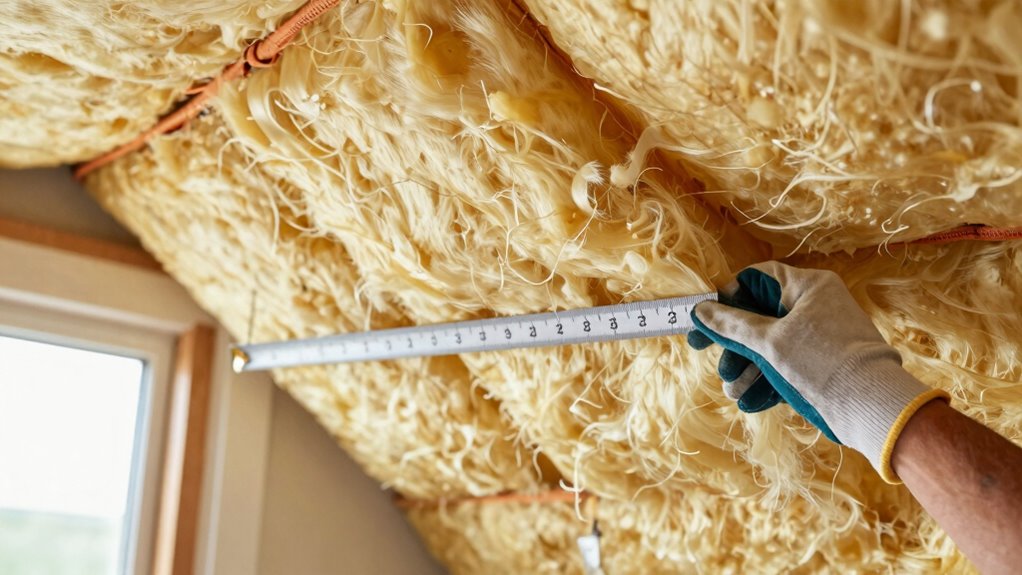
After visually inspecting your attic insulation, measuring its depth and thickness provides a more accurate assessment of its effectiveness. Different insulation types, like fiberglass batts, spray foam, or blown-in, have specific ways to measure their depth accurately. Use a ruler or a measuring tape to determine how many inches of insulation are present in various spots. For loose or blown-in insulation, gently probe the material to find its depth without compressing it, as compression reduces insulation’s effectiveness. Additionally, understanding insulation types can help you choose the best method for measuring and upgrading your attic. Once you have the measurements, compare them to the recommended R value measurement for your climate zone. This helps you understand whether your current insulation provides sufficient thermal resistance or if upgrades are needed to improve energy efficiency. Consulting best insulation practices can further guide you in optimizing your attic’s insulation. Being aware of insulation testing techniques can ensure your measurements are accurate and reliable. Incorporating proper measurement techniques can also help you achieve more precise results. Knowing the regional climate variations can also influence the level of insulation needed for optimal efficiency.
As an affiliate, we earn on qualifying purchases.
How to Check for Damage, Moisture, and Settling
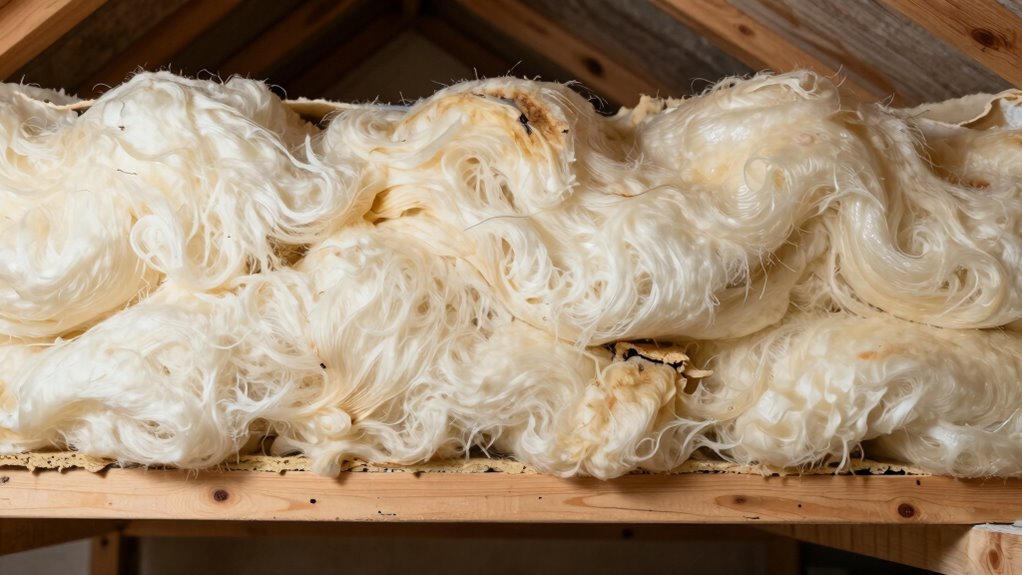
Inspecting your attic insulation for damage, moisture, and settling is vital because issues like these can greatly diminish its insulating effectiveness. Moisture can lead to mold growth, while settling reduces the insulation’s ability to trap air. Damage from pests or improper installation can also compromise performance. To check, carefully examine the insulation surface, looking for dark spots, dampness, or compressed areas. Different attic insulation types require specific inspections—fiberglass may appear uneven, while cellulose can settle unevenly. Use insulation installation tips such as wearing gloves and a mask. Additionally, understanding insulation types can help identify what specific signs to look for during your inspection. Recognizing proper installation practices can also help you assess whether your insulation has been installed correctly and is functioning optimally. Being familiar with home design principles can further guide you in making effective improvements or repairs to your attic insulation. Knowing how insulation interacts with ventilation systems can also prevent common issues like moisture buildup. It’s also helpful to be aware of common insulation problems so you can address issues promptly.
As an affiliate, we earn on qualifying purchases.
Deciding If Your Insulation Needs an Upgrade
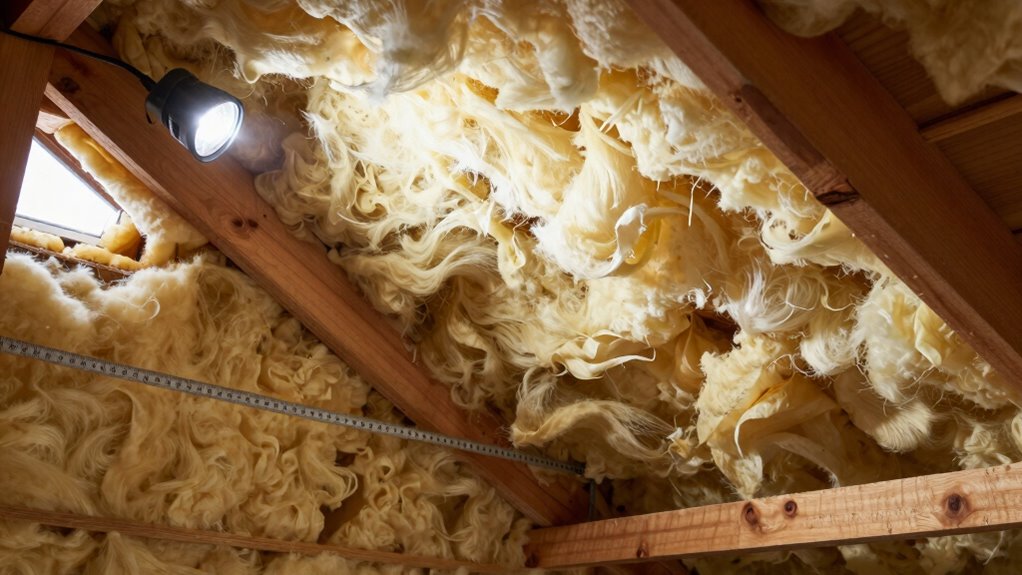
Deciding if your attic insulation needs an upgrade depends on its current condition and the climate you live in. If your insulation appears compressed, damp, or uneven, it’s a sign you may need more. In colder climates, insufficient insulation reduces energy efficiency, making your heating and cooling systems work harder. Different insulation types, like fiberglass, spray foam, or cellulose, have varying R-values that determine their effectiveness. If your current insulation falls short of recommended levels for your area, upgrading can improve energy efficiency, lower utility bills, and increase comfort. Consider how well your existing insulation performs during extreme weather; if you notice drafts or uneven temperatures, it’s likely time for an upgrade. Proper insulation is key to maintaining a consistent indoor climate year-round. Additionally, understanding how whole-home water systems impact your home’s energy use can help you optimize overall efficiency. Regularly inspecting your insulation and knowing insulation types can further ensure your home remains energy-efficient, especially when considering the R-value needed for your region. A simple energy audit can help identify insulation deficiencies and guide effective upgrades. To make informed decisions, it’s also helpful to learn about insulation installation techniques to ensure maximum effectiveness.
Next Steps for Improving Your Attic Insulation
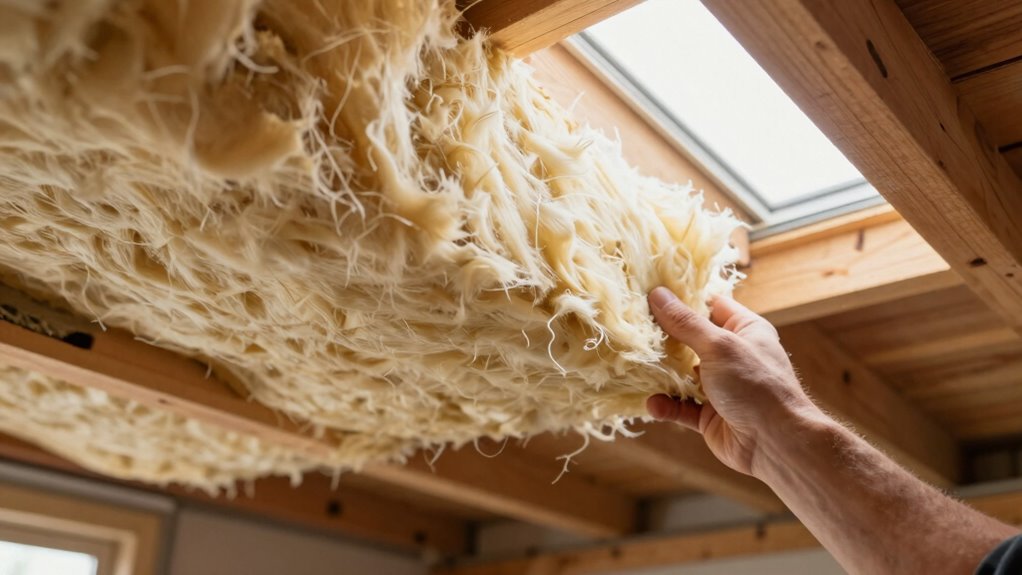
Once you’ve identified that your attic insulation needs improvement, the next step is to plan and implement effective upgrades. Start by considering ventilation improvements to prevent moisture buildup and maintain consistent temperatures. Proper ventilation ensures your insulation performs at its best and prolongs its lifespan. Next, evaluate insulation material types, such as fiberglass, cellulose, or spray foam, to choose the best fit for your needs and budget. Upgrading to higher R-value materials can greatly boost energy efficiency. Be sure to seal any air leaks before installing new insulation to maximize its benefits. Incorporating sustainable fabric technology solutions, like eco-friendly insulation options, can further enhance your home’s environmental impact. Additionally, understanding power quality and monitoring systems can help you assess how insulation improvements impact your overall energy consumption. Improving insulation standards and ensuring proper installation will maximize energy savings and comfort. Combining improved ventilation with the right insulation materials will create a more comfortable, energy-efficient attic, reducing heating and cooling costs while protecting your home from moisture damage. Regularly checking building codes and guidelines can ensure your upgrades meet safety and efficiency standards. Considering insulation installation techniques can also help achieve optimal results.
Frequently Asked Questions
What Types of Attic Insulation Are Most Energy-Efficient?
You’ll find spray foam and fiberglass batt insulation are among the most energy-efficient options. Spray foam offers high R-value ratings, creating a tight seal that reduces air leaks, while fiberglass batt insulation is affordable and easy to install, with solid R-value ratings too. Both materials can considerably improve your attic’s energy efficiency, helping you save on heating and cooling costs over time. Consider your budget and installation needs when choosing the best insulation material.
How Often Should Attic Insulation Be Inspected or Replaced?
Think of your attic as a guardian guarding your home’s comfort. You should inspect your attic insulation annually, especially before winter. During these checks, guarantee proper attic ventilation and moisture control, like vigilant sentinels protecting the fortress. If insulation appears compacted, moldy, or damp, it’s time to replace it. Regular inspections keep your home energy-efficient, preventing costly damage and maintaining a cozy, protected environment year-round.
Can Poor Insulation Cause Higher Energy Bills?
Yes, poor insulation can definitely cause higher energy bills. When insulation moisture levels rise or insulation installation isn’t done properly, it reduces the insulation’s effectiveness, making your heating and cooling systems work harder. This leads to more energy consumption and increased costs. Ensuring your attic has proper insulation moisture balance and that the insulation installation is correct can help keep energy bills lower and your home more comfortable.
Are There Safety Concerns When Inspecting Attic Insulation?
You should definitely consider safety when inspecting attic insulation, as improper precautions can lead to health issues. About 20% of attic-related injuries happen due to falls or contact with hazardous materials. Ventilation concerns are essential—poor airflow can cause mold or dust buildup. Always wear personal protective equipment like gloves, goggles, and a mask to protect against irritants or mold spores, ensuring a safe and thorough inspection.
What Are the Best Tools for Measuring Insulation Levels Accurately?
To measure insulation levels accurately, you should use a thermal imaging camera to identify temperature differences indicating insulation gaps. Moisture meters help detect hidden moisture issues that can affect insulation performance. These tools give you a clear picture of your attic’s insulation quality and areas needing improvement. Combining thermal imaging with moisture meters guarantees precise assessment, helping you make informed decisions about upgrading or replacing your attic insulation for better energy efficiency.
Conclusion
Now that you know how to inspect your attic insulation, you’re like a detective uncovering hidden truths about your home’s comfort. Regular checks help you catch issues early—like moisture or settling—that can decrease efficiency. If your insulation’s lacking, upgrading is a smart move. Think of it as giving your home a cozy, warm blanket. Keep an eye on it, and you’ll guarantee your home stays comfortable and energy-efficient year-round.
Fall yard work Picks
leaf blowers
As an affiliate, we earn on qualifying purchases.