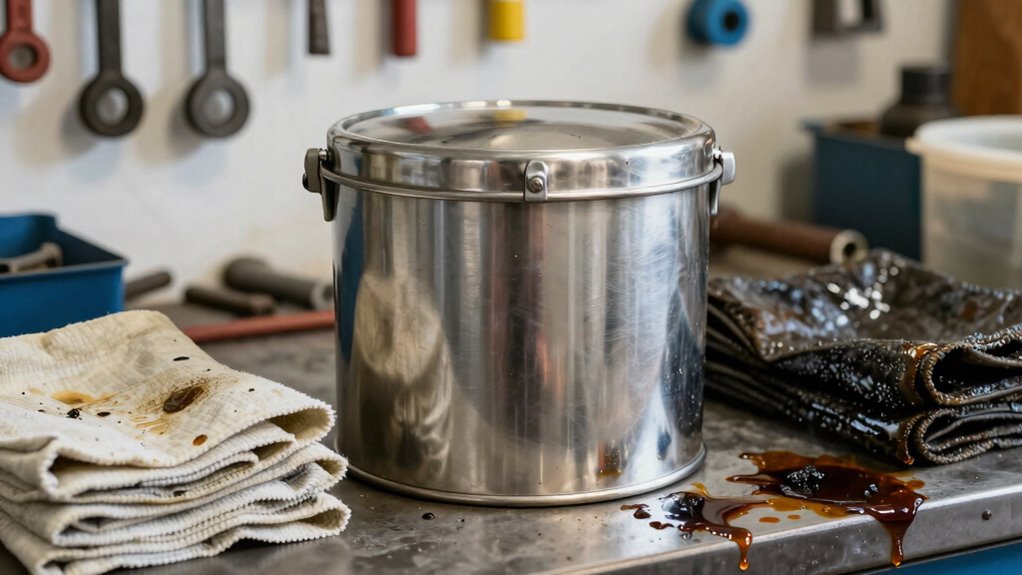

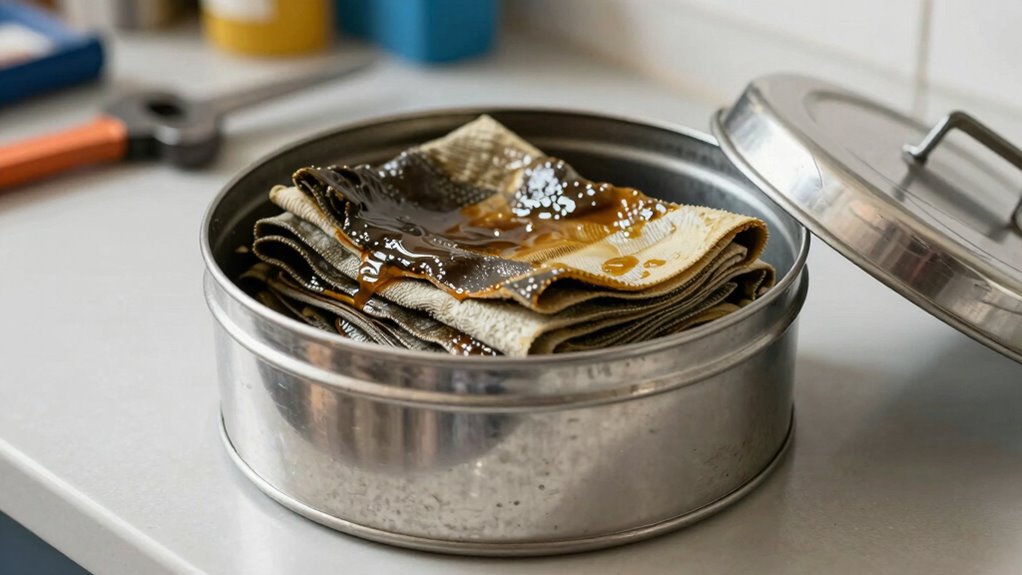
To prevent oily rags from self-igniting, store them in fire-resistant, airtight containers designed for flammable waste. Make sure the rags are completely dry and free of solvents before disposal. Use metal containers with tight-fitting lids and keep them in cool, well-ventilated areas away from heat or sparks. Proper handling and disposal are essential—if you want to learn more about keeping your workspace safe, there’s advice that can help.

Get home appliances delivered free with Prime
- Fast, free delivery on millions of items
- Prime Video, Amazon Music and more included
- Member-only deals all year
Key Takeaways
- Store oily rags in fire-resistant, airtight containers labeled clearly to prevent vapor buildup and spontaneous ignition.
- Ensure rags are completely dry and free of solvents before disposal or storage.
- Keep containers in cool, well-ventilated areas away from heat or open flames.
- Regularly inspect storage containers for damage, leaks, or deterioration.
- Dispose of oily rags promptly as hazardous waste following local safety regulations.
fire-resistant oily rag storage container
As an affiliate, we earn on qualifying purchases.
As an affiliate, we earn on qualifying purchases.
Why Properly Storing Oily Rags Is Critical for Fire Safety
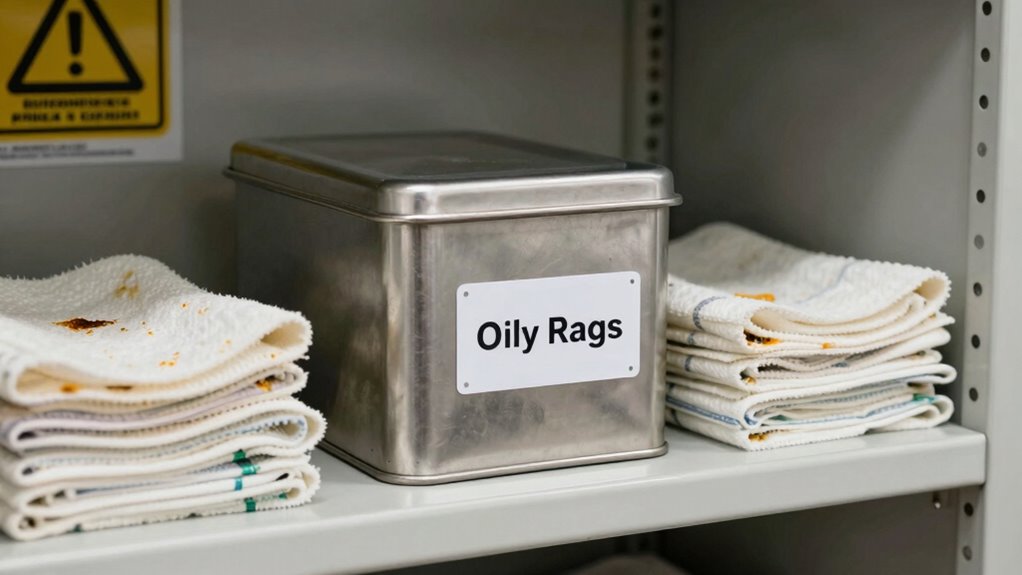
Oily rags can quickly become a fire hazard if not stored properly. When left exposed, they undergo chemical reactions, specifically oxidation processes, that generate heat. This heat buildup can cause the rags to reach their ignition point, leading to spontaneous combustion. The oils and solvents on the rags react with oxygen in the air, accelerating oxidation and increasing fire risk. Proper storage interrupts these reactions by limiting oxygen exposure and controlling heat accumulation. Using airtight containers or designated metal bins helps prevent oxygen from fueling ongoing oxidation processes. Failing to store oily rags correctly allows these chemical reactions to proceed unchecked, creating a dangerous environment. Understanding how oxidation processes contribute to spontaneous fires underscores the importance of safe storage practices to protect yourself and your property. Additionally, implementing color temperature adjustments in your safety measures can help optimize lighting conditions around storage areas, reducing the risk of accidental ignition. Recognizing the oxidation process involved in spontaneous combustion emphasizes the necessity of proper storage to prevent dangerous incidents.
airtight metal storage bin for flammable materials
As an affiliate, we earn on qualifying purchases.
As an affiliate, we earn on qualifying purchases.
The Risks of Improper Oily Rag Storage
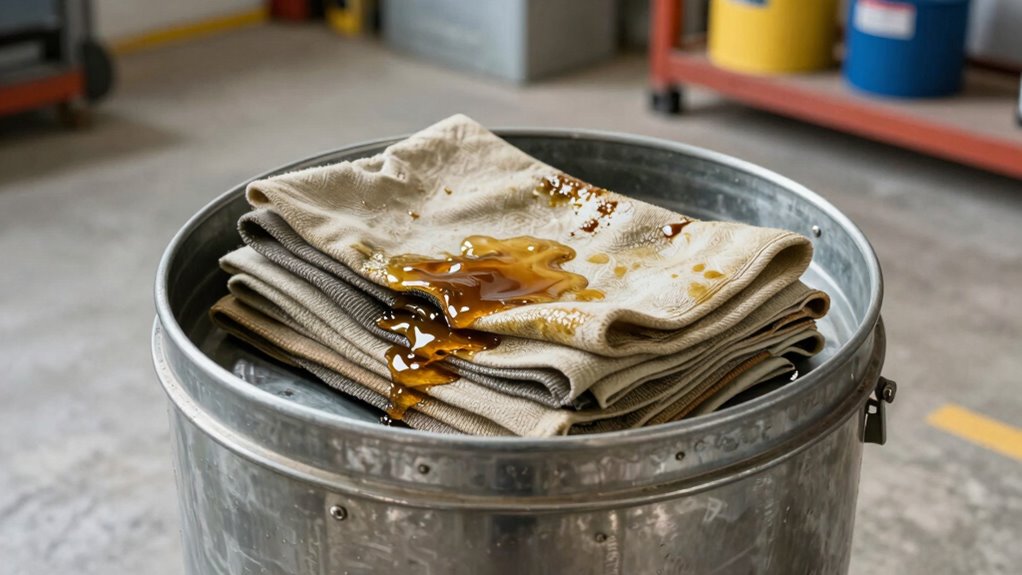
Have you ever considered what could happen if oily rags are stored improperly? The risk is significant because chemical reactions can occur when rags stay in contact with oxygen, potentially leading to spontaneous combustion. Improper storage also accelerates material degradation, weakening the fabric and making it more prone to ignition. When rags are left in a damp or unventilated area, they can trap heat, increasing the chance of self-ignition. Additionally, the buildup of flammable vapors from oils and solvents heightens the danger. Proper fire safety practices and understanding the risks of improper oily rag storage are essential for maintaining safety and avoiding costly consequences. To minimize these dangers, it is crucial to follow safe storage techniques that prevent the buildup of heat and vapors. Implementing proper disposal methods is also vital to reduce accumulated hazards and ensure a safer work environment. Recognizing the importance of herbal properties and proper handling can contribute to safer practices when working with sensitive or flammable materials.
flammable waste disposal container
As an affiliate, we earn on qualifying purchases.
As an affiliate, we earn on qualifying purchases.
How to Choose the Best Container for Oily Rags
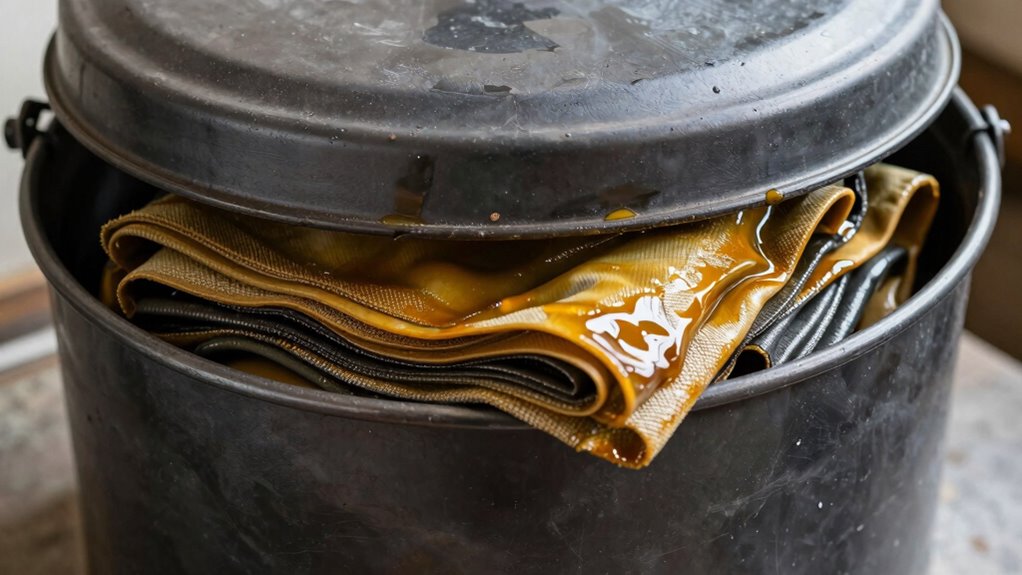
Choosing the right container for oily rags is key to preventing fire hazards and guaranteeing safe storage. You want a container that is fire-resistant, airtight, and clearly labeled. Consider these factors:
- Use containers with color coded labeling to differentiate between rags soaked in flammable substances and other waste, reducing accidental misuse.
- Select a container with built-in ventilation strategies—such as vents or vents with a flame arrester—to allow vapors to escape safely and prevent pressure buildup.
- Ascertain the container is made of fire-resistant material, such as metal, with a secure, tight-fitting lid to prevent oxygen exposure and limit air contact with oily rags.
Following these guidelines helps minimize the risk of ignition and maintains safe oily rag storage.
As an affiliate, we earn on qualifying purchases.
How to Prepare and Store Oily Rags Safely to Prevent Fires
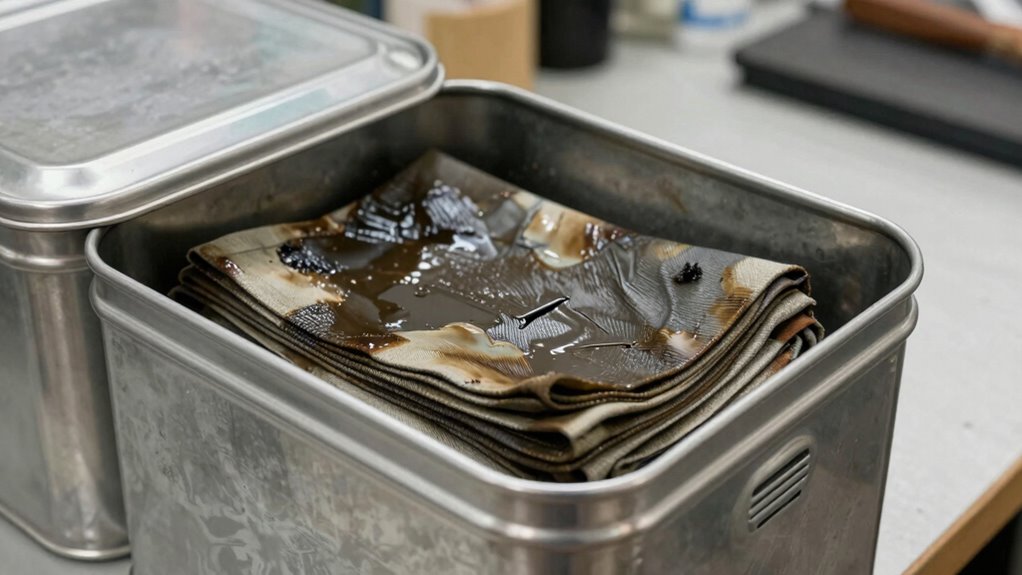
You need to dispose of oily rags properly to prevent fire hazards, which means never leaving them in piles or trash bins. Always store used rags in fire-resistant containers designed for oily materials. Taking these precautions helps keep your workspace safe and reduces the risk of accidental fires.
Proper Rags Disposal Methods
To prevent fires, careful handling of oily rags before disposal is essential. Proper oily rag disposal minimizes fire risk and enhances fire safety awareness. First, make sure rags are completely dry and free of solvent residue before discarding. Second, never throw oily rags into regular trash; instead, use designated metal containers with tight-fitting lids. Third, lay rags flat to dry in a well-ventilated area, avoiding clutter or heat sources. By following these steps, you reduce the chance of spontaneous combustion. Always stay vigilant about oily rag disposal, since improper handling can lead to dangerous fires. Remember, responsible disposal is key to maintaining a safe environment and preventing accidental ignition. Prioritize fire safety awareness in every step of oily rag disposal.
Use Fire-Resistant Containers
Using fire-resistant containers is essential for safely storing oily rags and preventing fires. These containers minimize the risk of spontaneous combustion by containing volatile chemicals and reducing oxygen exposure, which can trigger chemical reactions that lead to ignition. Fire-resistant materials slow down or prevent ignition caused by heat buildup or chemical reactions within the rags. Proper storage also helps mitigate environmental impact, as oily rags can leak and contaminate soil or water if not contained securely. Always choose metal or specially designed fire-resistant bins for oily rags, and keep them in well-ventilated areas away from heat sources. Choosing the right containers is an important step in ensuring safe storage practices. Additionally, selecting containers made from fire-resistant materials is crucial for maximizing safety and minimizing risk. Using the right containers guarantees safety, reduces fire hazards, and protects the environment from potential pollution. Incorporating water-resistant features in storage containers can further prevent deterioration or leaks caused by exposure to moisture, enhancing overall safety.
How Water or Solvents Can Reduce Flammability of Oily Rags
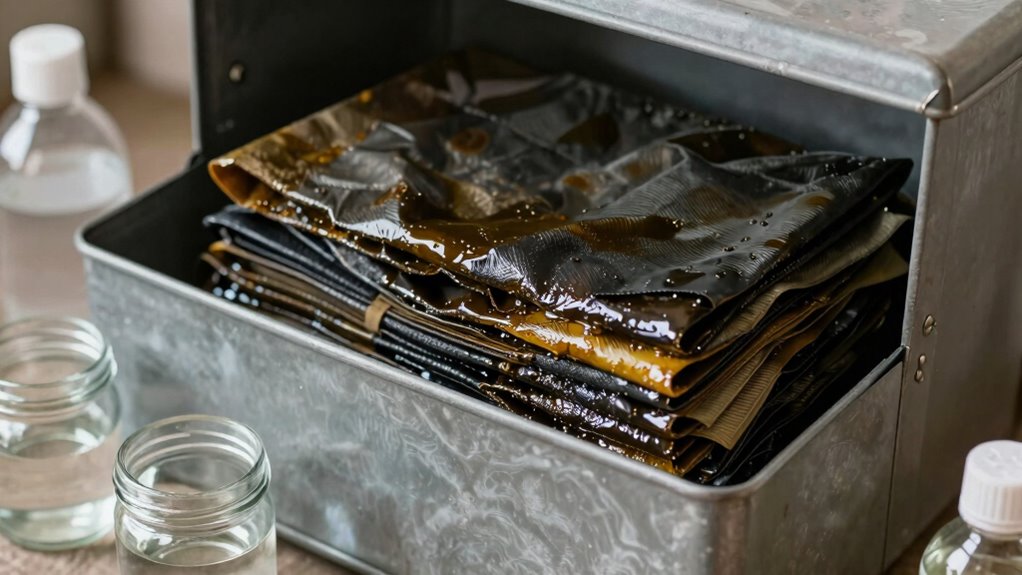
Ever wondered how water or solvents can make oily rags less likely to ignite? It’s because of chemical reactions and solvent effects that occur when you treat these rags properly. Adding water or specific solvents can neutralize flammable compounds, reducing their ignition risk. Here are three key points:
- Water promotes hydrolysis, diluting and stabilizing volatile substances, making spontaneous combustion less likely. Microplastics in dust can also be reduced through proper handling, further improving safety. Additionally, chemical stabilization techniques can enhance safety during storage and disposal.
- Certain solvents alter chemical reactions by disrupting the flammable compounds’ structure, decreasing their tendency to ignite.
- Solvent effects can also create a barrier, slowing the release of vapors that could ignite, therefore lowering flammability.
- Incorporating environmentally conscious practices in handling oily rags helps prevent accidents and promotes safer disposal.
Using Fire-Resistant Storage in Your Workshop

Using fire-resistant storage containers helps protect your workshop from fires caused by oily rags. Proper storage techniques guarantee rags stay contained and reduce hazards, while also keeping you compliant with safety regulations. Investing in the right containers is a simple step to improve overall safety and peace of mind. Incorporating work-life harmony principles can also help you stay vigilant about safety practices and prevent burnout from constant worry about hazards. Being aware of early warning signs of potential fire risks can further enhance your safety measures and ensure prompt action if needed. Monitoring heat buildup in stored materials is essential to prevent spontaneous ignition and maintain a safe environment. Understanding how ventilation impacts the dissipation of heat can be a crucial factor in avoiding dangerous temperature increases, especially considering that NEAT strategies can contribute to a healthier workspace environment by reducing stress and promoting alertness.
Benefits of Fire-Resistant Containers
Fire-resistant containers offer an essential layer of safety by containing combustible materials and preventing the spread of flames in your workshop. They reduce the risk of accidental fires, giving you peace of mind while working with oily rags. Using these containers also streamlines fire safety protocols through features like color coded labeling, which helps you quickly identify stored materials and ensure proper handling. Additionally, fire-resistant containers support effective fire safety training by illustrating best practices for storing hazardous materials. Here are three benefits:
- Minimize fire hazards by containing oily rags securely.
- Facilitate quick identification and response with color coded labeling.
- Support ongoing fire safety training to reinforce safe storage habits.
- Incorporating fire safety tips and knowledge about proper storage can further enhance your overall safety strategies when working in workshops or outdoor kitchens. Understanding how to handle fire safety equipment properly can also improve your preparedness for emergencies. Ensuring proper ventilation and regular inspection of storage areas can significantly reduce fire risk in your workspace.
Proper Rag Storage Techniques
To guarantee oily rags don’t pose a fire risk in your workshop, it’s essential to store them properly in fire-resistant containers. These containers prevent dangerous chemical reactions that can occur if oily rags are exposed to heat or sparks, reducing the risk of spontaneous combustion. Follow storage regulations by ensuring containers are airtight and made from non-combustible materials. Keep the containers in a cool, well-ventilated area away from sources of ignition. Proper storage not only minimizes fire hazards but also complies with safety standards. Regularly inspect your containers for damage or leaks, and never store oily rags in open piles. Implementing these techniques helps control potential ignition sources, keeping your workshop safe and compliant with fire safety regulations.
Safety Regulations Compliance
Proper storage of oily rags isn’t just about safety—it’s also about complying with legal standards designed to prevent fires. Storage regulations specify that oily rags must be stored in fire-resistant containers to prevent hazardous chemical reactions that could trigger combustion. By adhering to these regulations, you reduce the risk of spontaneous ignition caused by the buildup of flammable vapors. Additionally, understanding the importance of drone bees and hive health can help prevent other hazards in beekeeping environments, emphasizing the need for safe storage practices across different activities.
To guarantee compliance, consider these critical points:
- Use approved fire-resistant containers that meet local or national codes.
- Regularly inspect storage areas for signs of deterioration or leaks.
- Follow manufacturer instructions and local regulations regarding the handling and storage of oily rags.
Implementing these measures helps you meet safety standards and minimizes fire hazards in your workshop.
Properly Handling and Disposing of Oily Rags
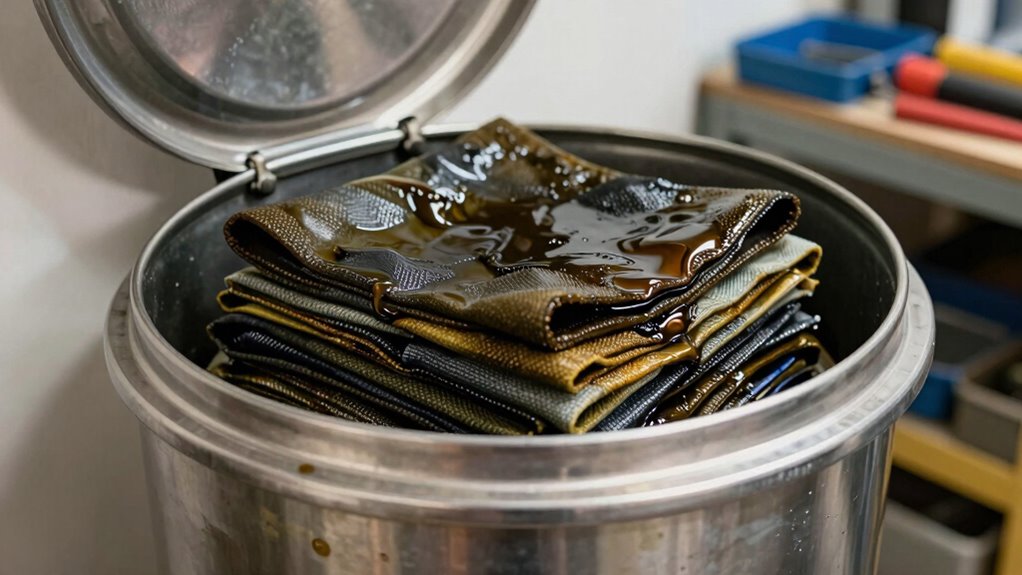
Handling and disposing of oily rags carefully is essential to prevent accidental fires. When you handle these rags, be aware that chemical reactions can occur if they’re not properly managed. Oily rags can spontaneously ignite if stored or disposed of incorrectly due to the oxidation process. Always use appropriate storage materials, such as metal containers with tight-fitting lids, to slow down chemical reactions and reduce fire risk. Never leave oily rags lying around or toss them in regular trash, as this can ignite unexpectedly. Instead, immerse used rags in water or a compatible solvent if immediate disposal isn’t possible. Follow local regulations for disposal, ensuring that oily rags are treated as hazardous waste to prevent accidents. Additionally, understanding the fire safety risks associated with oily rags can help you take extra precautions to keep your environment safe.
Common Mistakes That Increase Fire Risk With Oily Rags
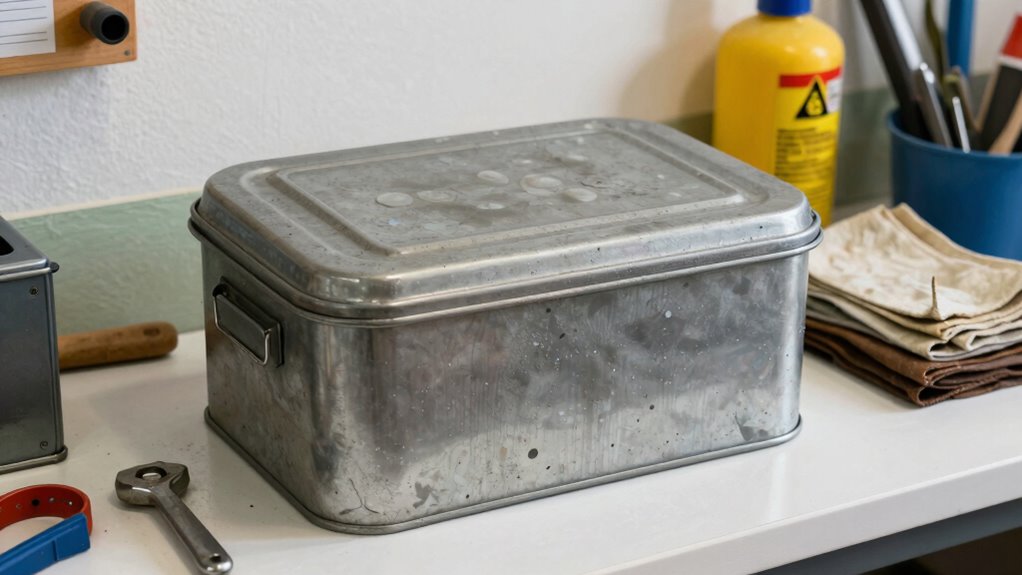
Many common mistakes can considerably increase the fire risk when dealing with oily rags. One major error is improperly storing rags without following storage guidelines, which can trap vapors and trigger dangerous chemical reactions. Second, tossing oily rags into open containers or piles allows flammable vapors to accumulate, raising the chance of spontaneous ignition. Third, ignoring safe handling procedures can cause oils to oxidize and generate heat, creating a self-igniting environment. To reduce hazards, always store oily rags in sealed, metal containers designed for this purpose, following strict storage guidelines. This minimizes vapor buildup and prevents chemical reactions that could lead to fires. Proper ventilation practices are also crucial to dispersing any vapors that may escape, further reducing risk. Additionally, understanding how filter maintenance and proper cleaning techniques can help reduce airborne contaminants, including flammable vapors, further enhances safety. Understanding these mistakes helps you stay safe and avoid accidental ignition caused by improper storage.
What to Do in an Emergency: Oily Rag Fire Safety Tips
Despite taking precautions with oily rag storage, accidents can still happen. If you notice oily rag hazards leading to a fire, act quickly and calmly. First, alert everyone nearby and call emergency services immediately. If it’s safe, use a fire extinguisher rated for electrical or chemical fires—never water, as it can worsen the blaze. If the fire is small and manageable, smother it with a fire blanket or a non-flammable material to cut off oxygen. Remember, fire safety awareness is essential; never try to fight large fires yourself. Prioritize your safety and evacuate if necessary. Keep exits clear and stay low to avoid smoke inhalation. Acting swiftly and understanding basic oily rag fire safety tips can prevent injuries and minimize damage.
Frequently Asked Questions
How Often Should I Inspect My Oily Rag Storage Containers?
You should inspect your storage containers regularly, ideally once a week, to guarantee they’re sealed tightly and free of leaks. Following a strict inspection schedule helps prevent any buildup of flammable vapors or accidental ignition. Check for signs of deterioration, corrosion, or spills. By staying vigilant and maintaining your storage containers, you reduce fire hazards and keep your workspace safe. Consistent inspections are key to effective oily rag storage.
Can I Reuse Oily Rags After Storing Them Safely?
Your oily rags are like ticking time bombs, so reuse isn’t recommended once they’ve been stored. Chemical reactions can make contaminated rags unsafe, risking fires or health hazards. Instead, you should always follow proper disposal procedures for oily rags, especially if they’ve absorbed flammable substances. Reusing them can lead to dangerous chemical interactions, so it’s best to discard them properly after use to stay safe and prevent accidents.
Are There Specific Regulations for Storing Oily Rags in Commercial Spaces?
Yes, there are specific storage regulations for oily rags in commercial spaces. You need to follow safety standards because chemical reactions in oily rags can cause fires if improperly stored. Use approved metal containers with tight-fitting lids, keep them in well-ventilated areas, and avoid storing near heat sources. Complying with these storage regulations helps prevent accidents and ensures compliance with safety laws.
What Signs Indicate My Oily Rags Are a Fire Hazard?
You’ll notice oily rags are a fire hazard when they feel warm or heat up over time, indicating ongoing chemical reactions. If they emit a strong odor or appear saturated and unorganized, these are warning signs. To prevent fires, always store oily rags in approved, sealed containers and avoid stacking them loosely. Recognizing these signs helps you stay vigilant and implement fire prevention measures effectively.
How Do I Safely Transport Oily Rags to Disposal Sites?
You should place oily rags in a proper disposal container, like a metal, airtight container designed for hazardous waste. Before transporting, make certain the container is sealed tightly to prevent vapor release. Avoid stacking or overfilling it, and keep it away from heat sources. When you arrive at the disposal site, follow local regulations for proper disposal, making sure the oily rags are safely contained to prevent any fire risk.
Conclusion
To keep your workshop safe, always store oily rags properly—preferably in water-filled, fire-resistant containers. Imagine a small spark igniting a heap of neglected rags, causing a fire that damages tools and risks lives. By following safety tips like proper disposal and avoiding common mistakes, you prevent tragedies before they start. Remember, a little caution today can save you from costly fires tomorrow. Stay vigilant, and keep your workspace safe.
Cold & flu season Picks
humidifiers
As an affiliate, we earn on qualifying purchases.