
Carbon monoxide builds up in garages mainly from vehicle exhaust, especially when engines run in enclosed, poorly ventilated spaces. Fuel-powered tools, backup generators, and stored containers can leak CO as well. Poor ventilation traps these fumes, increasing health risks. Cluttered garages block airflow and make it harder to disperse dangerous gases. If you keep things properly organized and ventilated, you’ll reduce CO risks. To get more tips on ensuring safety, keep going.

Get home appliances delivered free with Prime
- Fast, free delivery on millions of items
- Prime Video, Amazon Music and more included
- Member-only deals all year
Key Takeaways
- Running engines or fuel-powered equipment indoors releases CO, which can accumulate quickly in poorly ventilated garages.
- Inadequate ventilation traps CO, preventing its dispersal and increasing exposure risks.
- Clutter and blocked vents obstruct airflow, leading to higher CO concentrations.
- Damaged or blocked exhaust pipes cause excessive CO emissions inside garages.
- Lack of CO detectors delays warning of dangerous CO buildup, increasing health hazards.
carbon monoxide detector for garage
As an affiliate, we earn on qualifying purchases.
As an affiliate, we earn on qualifying purchases.
What Causes Carbon Monoxide to Build Up in Garages?
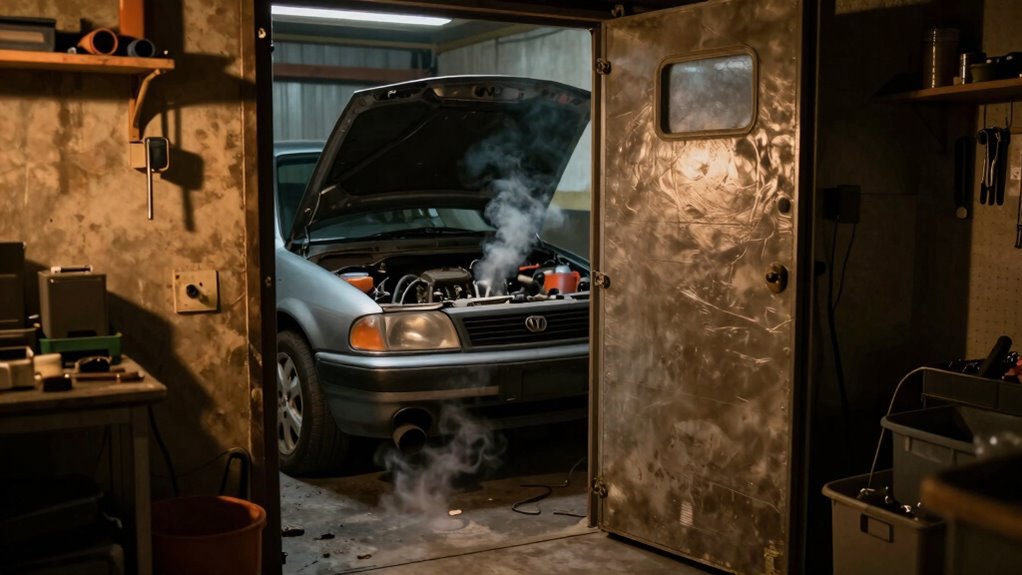
Carbon monoxide (CO) builds up in garages primarily because vehicles and other fuel-powered equipment release it during operation. Poor garage insulation can trap heat and fumes, making CO accumulation worse. When your garage isn’t well-insulated, the fumes don’t dissipate quickly, increasing the risk. Additionally, storage clutter creates obstacles that block proper ventilation, allowing CO to linger longer. Stacked boxes, tools, and other clutter can restrict airflow and prevent fresh air from diluting the gas. You might also unknowingly park or run engines in cluttered spaces, further elevating CO levels. To reduce risks, keep your garage well-insulated and organized, ensuring good airflow and minimizing areas where CO can accumulate. Staying aware of these factors helps protect you and your family from dangerous exposure.
As an affiliate, we earn on qualifying purchases.
Sources of Household CO in Your Garage
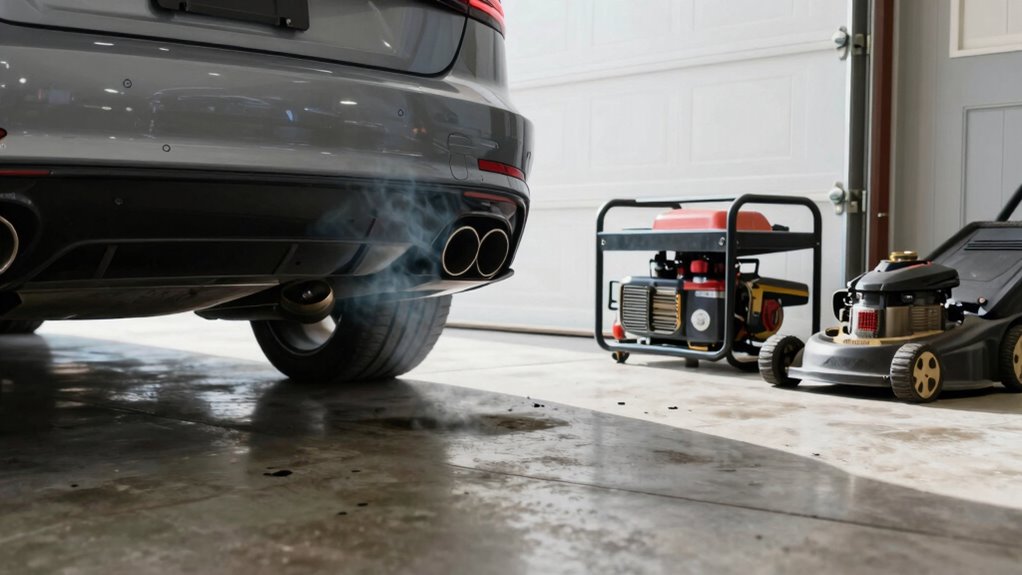
Many household sources can contribute to elevated CO levels in your garage, especially when ventilation isn’t ideal. Improper garage organization or cluttered storage can hide potential hazards. Common sources include gas-powered tools, outdoor grills, and backup generators stored inside. Fuel containers left unchecked can leak fumes, increasing CO risks. To improve storage safety, keep these items outside or in well-ventilated areas. Additionally, proper support networks for new dads can offer guidance on safety practices for new homeowners. Regularly inspecting and maintaining your garage equipment can also help prevent dangerous carbon monoxide buildup, as ensuring proper nail hygiene and care can be crucial in maintaining a safe environment.
As an affiliate, we earn on qualifying purchases.
How Do Vehicles Contribute to CO Accumulation?
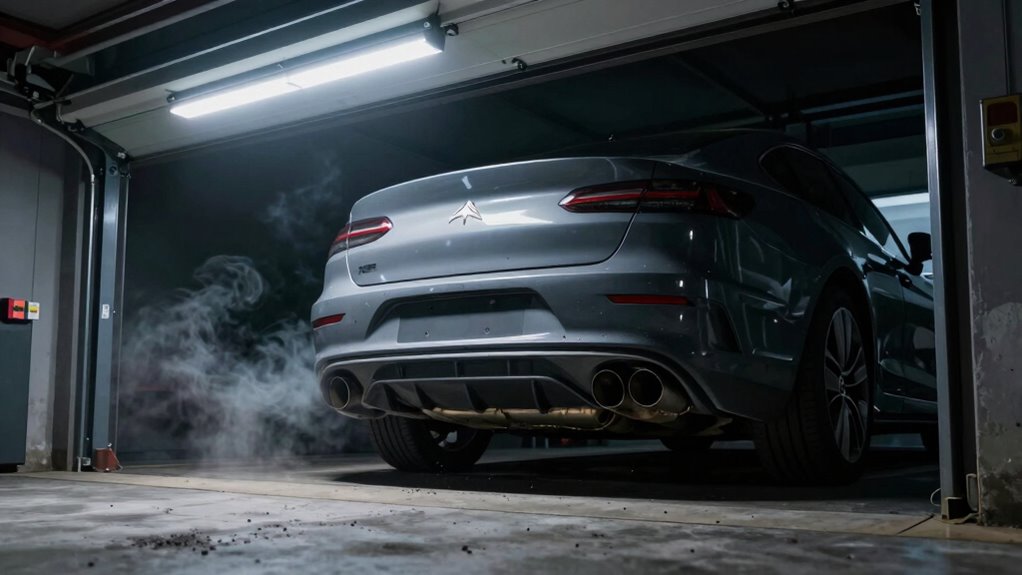
Your vehicle’s exhaust releases carbon monoxide directly into your garage, especially if the exhaust pipe is blocked or damaged. When your engine idles, CO can build up quickly, even if you’re not driving. Incomplete combustion inside the engine also produces more CO, increasing the risk of dangerous levels accumulating in enclosed spaces. Proper ventilation and regular maintenance can help prevent dangerous gas buildup, and ensuring your vehicle is well-maintained reduces the likelihood of exhaust leaks contributing to CO accumulation. Additionally, using portable oil radiators with safety features can help improve ventilation and reduce the risk of CO poisoning in enclosed areas. Regularly inspecting your vehicle’s exhaust system can prevent hazardous leaks before they occur. Implementing security scanning measures can also help detect exhaust system issues before they become hazardous.
Exhaust Emissions Release
Vehicles release exhaust emissions directly into garages when their engines run, and this process considerably contributes to carbon monoxide (CO) buildup. Poor garage insulation can trap these emissions, preventing proper ventilation and allowing CO levels to rise quickly. When your garage isn’t well-insulated, fumes linger longer, increasing the risk of dangerous concentrations. Storage organization also plays a role; cluttered spaces can block airflow and make it harder for fumes to disperse. If you run your vehicle inside without proper ventilation, CO accumulates unnoticed, creating a hazardous environment. To minimize risks, guarantee good garage insulation and keep storage organized to promote better airflow. Proper ventilation practices are essential to ensure harmful fumes do not accumulate in enclosed spaces. Always avoid running your vehicle in a closed garage for extended periods, especially if ventilation is inadequate.
Engine Idle Risks
Leaving a vehicle idling inside a garage considerably increases the risk of carbon monoxide (CO) buildup, even if the engine isn’t running at full throttle. Engine idling produces CO continuously, which can quickly accumulate in poorly insulated garages. Garage insulation plays a vital role because it can trap and concentrate the gas, preventing it from dissipating into the open air. When you keep the engine running inside, especially with minimal ventilation, CO levels can reach dangerous levels in just minutes. This is particularly risky if your garage is tightly sealed or lacks proper ventilation. Always turn off your engine after use and guarantee adequate airflow, as even brief periods of idling can lead to hazardous CO concentrations.
Incomplete Combustion Effects
How exactly do vehicles contribute to carbon monoxide (CO) buildup in garages? When combustion efficiency drops, your engine produces more CO due to an improper fuel mixture. Incomplete combustion happens if the air-to-fuel ratio isn’t ideal, leading to excess CO emissions. This dangerous gas can accumulate quickly in enclosed spaces. Here’s a quick look at factors affecting CO production:
| Factor | Effect on Combustion Efficiency | Result |
|---|---|---|
| Poor Maintenance | Decreases efficiency | Higher CO emissions |
| Fuel Mixture | Improper ratio | Incomplete combustion |
| Cold Starts | Less complete burning | Increased CO levels |
| Engine Age | Worn parts reduce efficiency | More CO production |
| Exhaust Leaks | Reintroduces CO into garage air | Higher buildup risk |
Understanding these factors helps prevent dangerous CO buildup in your garage. Regular vehicle maintenance can significantly improve combustion efficiency and reduce CO risks.
As an affiliate, we earn on qualifying purchases.
Why Does Poor Ventilation Lead to Dangerous CO Levels?
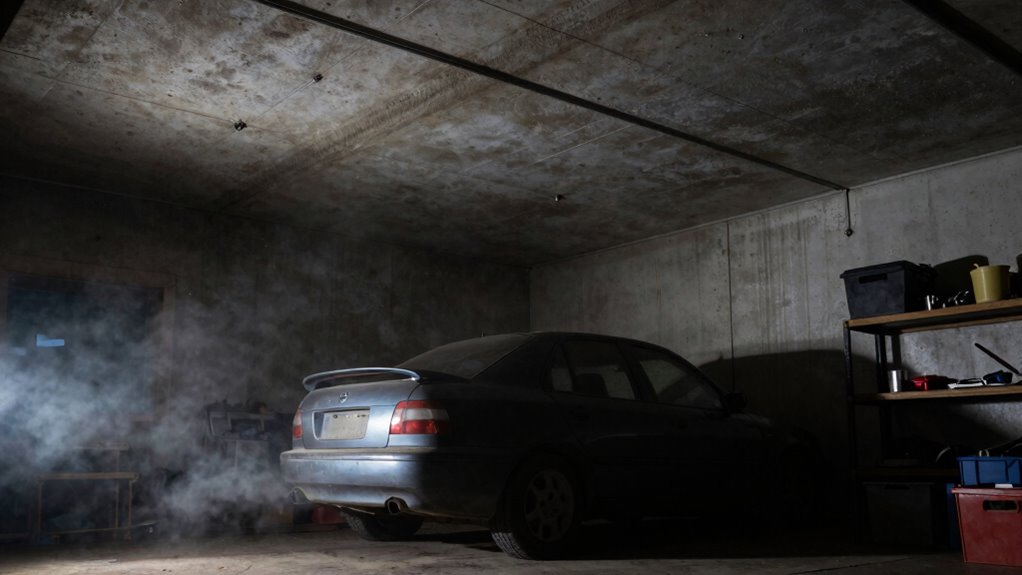
Poor ventilation in garages prevents harmful gases like carbon monoxide from dispersing safely into the air. Without proper airflow, CO builds up quickly, creating dangerous indoor air quality. Ventilation systems are vital to remove these toxins and guarantee safe breathing conditions. When ventilation is inadequate, the confined space traps CO, increasing the risk of poisoning. Proper placement of Ventilation systems is essential to effectively manage airflow and prevent dangerous buildup. To improve safety, consider:
- Installing effective exhaust fans
- Ensuring air exchange with outdoor air
- Regularly maintaining ventilation systems
- Using sensors to monitor CO levels
Good ventilation reduces harmful gas accumulation and maintains healthier indoor air quality. Additionally, proper system placement can significantly enhance the effectiveness of ventilation efforts. Ensufficient airflow is crucial for diluting and removing CO, especially during prolonged engine use or in colder weather when windows and doors are less likely to be opened. A well-designed ventilation setup can further optimize airflow and minimize risks. Inadequate ventilation can also lead to the rapid accumulation of CO, making continuous air quality monitoring essential in enclosed garage spaces. Without it, even small engine runs can lead to dangerous CO levels, putting you at risk. Proper ventilation is essential to prevent dangerous CO buildup in garages.
How to Spot Signs of CO Poisoning in Your Garage
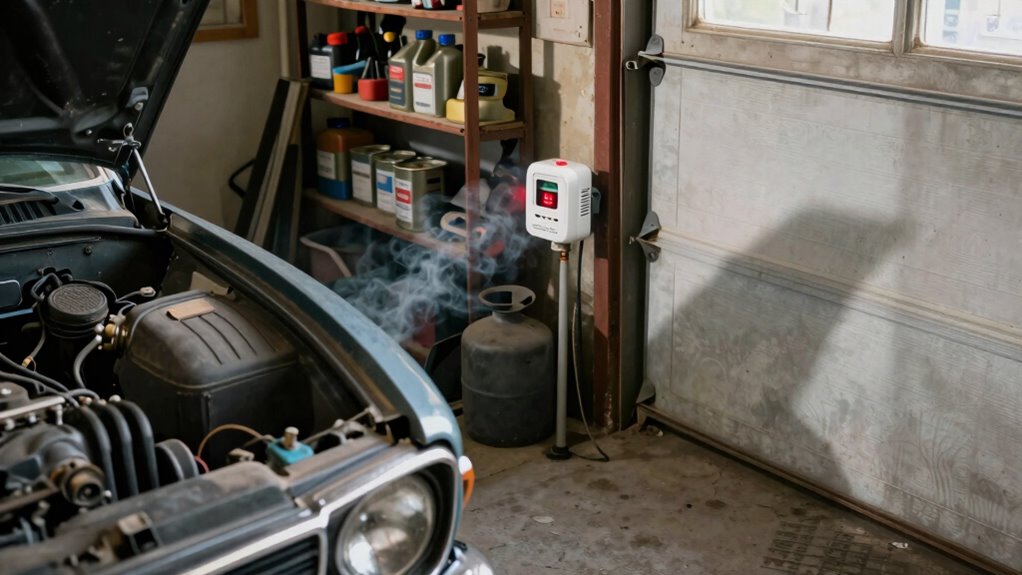
Since carbon monoxide is colorless and odorless, it can be hard to detect without warning signs, making it especially dangerous. To protect indoor safety, learn the symptoms of CO poisoning, which include headaches, dizziness, nausea, and confusion. If you or others experience these signs after working in your garage, get fresh air immediately and seek emergency preparedness by calling emergency services. Installing a CO detector is essential—it provides an early warning, giving you time to react before symptoms worsen. Regularly monitor your garage for signs of dangerous buildup, and never ignore symptoms linked to CO exposure. Being proactive helps prevent poisoning and guarantees your safety during activities in the garage. Understanding ventilation practices can also help reduce the risk of dangerous CO accumulation. Proper air exchange methods are crucial for maintaining a safe environment and preventing dangerous levels of CO from building up. Ensuring proper garage ventilation can significantly decrease the chance of CO buildup, especially when running engines or using fuel-powered tools indoors. Incorporating adequate airflow techniques, such as using exhaust fans or opening windows, can further diminish the risk of harmful CO concentrations. Additionally, consulting with professionals about CO risk management strategies can enhance your safety measures.
Practical Steps to Prevent CO Buildup in Your Garage
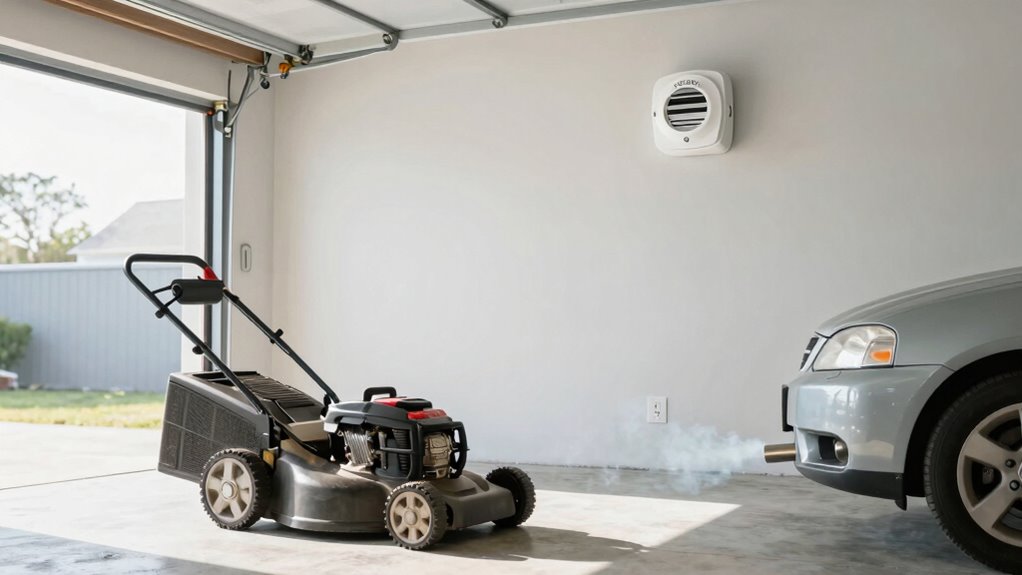
To prevent CO buildup in your garage, guarantee proper ventilation by opening doors or installing exhaust fans. Regularly check and maintain your heating and engine equipment to prevent leaks or malfunctions. Taking these simple steps helps keep the air safe and reduces the risk of dangerous CO accumulation. Additionally, consider installing carbon monoxide detectors to provide early warning of unsafe levels. Proper ventilation is crucial for reducing the likelihood of CO buildup, especially in enclosed spaces like garages.
Proper Ventilation Techniques
Proper ventilation is essential for preventing carbon monoxide buildup in your garage, especially when running engines or using fuel-powered tools. To guarantee safe air exchange, you should use effective ventilation systems that promote continuous airflow. Proper air exchange removes dangerous CO fumes and keeps the garage air fresh. A well-ventilated space helps prevent hazardous gas accumulation and safeguards your health.
To maximize safety, consider these techniques:
- Install exhaust fans that vent fumes outside
- Keep garage doors open during operation
- Use wall vents to facilitate airflow
- Ascertain windows are operable for cross-ventilation
Good ventilation relies on creating a steady flow of fresh air and removing contaminated air. Regularly check that ventilation systems are working correctly and unobstructed, reducing the risk of dangerous CO buildup in your garage.
Regular Equipment Maintenance
How often do you check and maintain your garage equipment? Regular maintenance is essential to prevent CO buildup. Keep your garage organized so you can easily access and inspect appliances like space heaters, generators, and tools. Well-maintained equipment runs efficiently and safely, reducing the risk of dangerous emissions. Don’t forget to check security lighting—properly functioning lights deter intruders and guarantee you can spot issues quickly. Clean filters, inspect exhaust systems, and follow manufacturer guidelines for servicing. Regular upkeep minimizes the chance of leaks or malfunctions that could produce dangerous carbon monoxide. Staying proactive with your garage organization and equipment maintenance guarantees your space remains safe and reduces the risk of CO hazards.
Frequently Asked Questions
Can CO Buildup Occur Even Without Running a Vehicle?
Yes, CO buildup can occur even without running a vehicle if indoor ventilation is poor. Gas-powered tools or appliances might produce carbon monoxide, which can accumulate in enclosed spaces. To prevent this, you should install carbon monoxide detectors and guarantee proper ventilation. Regularly check your detectors and keep the garage well-ventilated, especially when using fuel-powered equipment, to reduce the risk of dangerous CO buildup.
Are There Specific Garage Materials That Trap or Release CO?
About 80% of garage fires involve improper ventilation or insulation, so these factors are vital. Certain garage materials, like poorly insulated walls, can trap carbon monoxide (CO), while others, like metal surfaces, don’t release it. Proper ventilation systems prevent CO buildup by venting out fumes, while quality garage insulation helps contain or reduce CO leaks. You should guarantee your garage uses materials suited for safety and has effective ventilation.
How Long Does CO Typically Linger After Source Removal?
Carbon monoxide typically lingers for several hours after the source is removed, depending on indoor ventilation. If you open garage doors and windows, you can considerably speed up CO dissipation. It’s crucial to have carbon monoxide detection installed because it alerts you if CO levels remain dangerously high. Proper ventilation ensures CO disperses quickly, reducing health risks, and the detector helps confirm when the air is safe to breathe again.
Can Small Leaks Cause Dangerous CO Levels Over Time?
Yes, small leaks can cause dangerous CO levels over time, especially if indoor ventilation is poor. You might not notice the leak, but CO can accumulate gradually. To stay safe, guarantee good indoor ventilation and install reliable carbon monoxide detectors. Regularly check these detectors and keep your garage well-ventilated to prevent dangerous buildup. Promptly fix any leaks to avoid long-term CO exposure risks.
Are There Safety Devices Specifically Designed for Garages?
Yes, there are safety devices specifically designed for garages. You should install garage ventilation systems to help disperse harmful gases and prevent buildup. Additionally, CO detectors are essential; they alert you to dangerous carbon monoxide levels early. Combining proper ventilation with reliable detectors guarantees your garage stays safe. Regularly test your CO detectors and maintain ventilation to minimize risks, especially if you use fuel-powered tools or vehicles regularly.
Conclusion
To keep your garage safe, understanding how CO builds up is key. Did you know that nearly 60% of CO poisoning cases occur in residential garages? By ensuring proper ventilation, avoiding running engines indoors, and installing CO detectors, you can considerably reduce your risk. Don’t wait for symptoms—stay proactive. A little effort goes a long way in protecting you and your loved ones from the dangers of carbon monoxide.
Halloween Picks
halloween
As an affiliate, we earn on qualifying purchases.