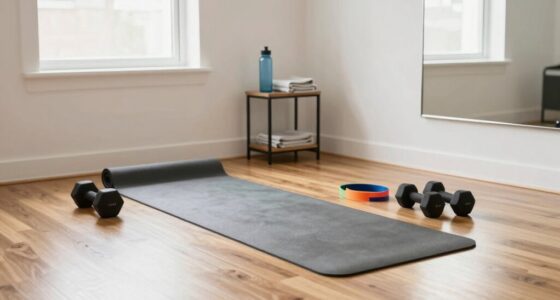
To improve your posture at home, start by evaluating your habits and making small adjustments to how you sit, stand, and move. Arrange your workspace ergonomically, using household items like pillows or supports to help maintain proper alignment. Incorporate simple posture exercises, such as shoulder rolls or wall stretches, into your daily routine. Stay aware of habits like slouching or craning your neck, and correct them consistently. Keep exploring ways to refine your posture for long-term health benefits.

Get home appliances delivered free with Prime
- Fast, free delivery on millions of items
- Prime Video, Amazon Music and more included
- Member-only deals all year
Key Takeaways
- Regularly assess and correct your sitting, standing, and moving habits to develop awareness and prevent poor posture habits.
- Arrange your home environment with ergonomic principles, using household items for support and proper alignment.
- Set up an ergonomic workspace by adjusting monitor height, chair position, and organizing your tools for comfort.
- Incorporate daily posture exercises like wall stretches and shoulder rolls to strengthen muscles and improve flexibility.
- Develop consistent habits such as mindful pauses, regular stretching, and posture checks to reinforce good posture automatically.
As an affiliate, we earn on qualifying purchases.
Why Posture at Home Matters for Your Health
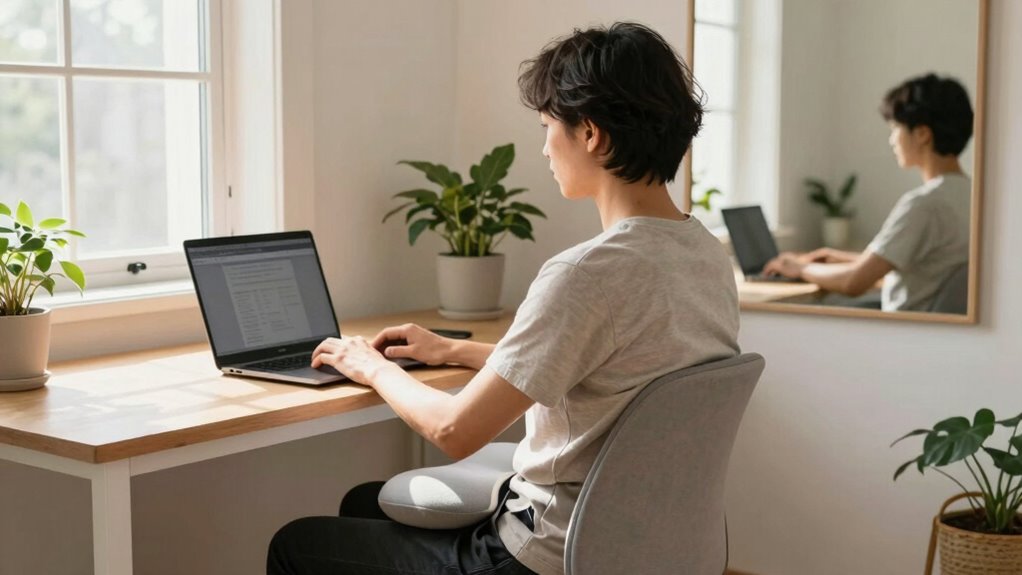
Maintaining good posture at home is essential because it directly impacts your overall health. When you’re aware of your posture, you can prevent discomfort and long-term issues like back pain or joint strain. Posture awareness helps you recognize poor habits and correct them before they become problematic. Good posture also promotes better breathing, circulation, and digestion, which are crucial health benefits. When you sit or stand correctly, you reduce unnecessary stress on muscles and bones, making daily tasks easier and less tiring. Improving your posture at home isn’t just about appearance; it’s a proactive way to support your physical well-being. Incorporating ergonomic principles can make a significant difference in body mechanics and comfort throughout the day. Paying attention to proper home ergonomics can help you sustain good posture and prevent strain. Using supportive accessories like anti-fatigue mats can enhance comfort and help maintain proper alignment during long periods of standing. Additionally, being mindful of your postural habits can lead to long-term improvements in your overall health and well-being. Practicing proper posture during everyday activities, such as working at your desk or watching TV, can reinforce healthy posture habits over time. By paying attention to how you hold your body, you set the foundation for a healthier, more comfortable life.
posture correction support pillow
As an affiliate, we earn on qualifying purchases.
As an affiliate, we earn on qualifying purchases.
Assess Your Posture at Home to Identify Problem Areas
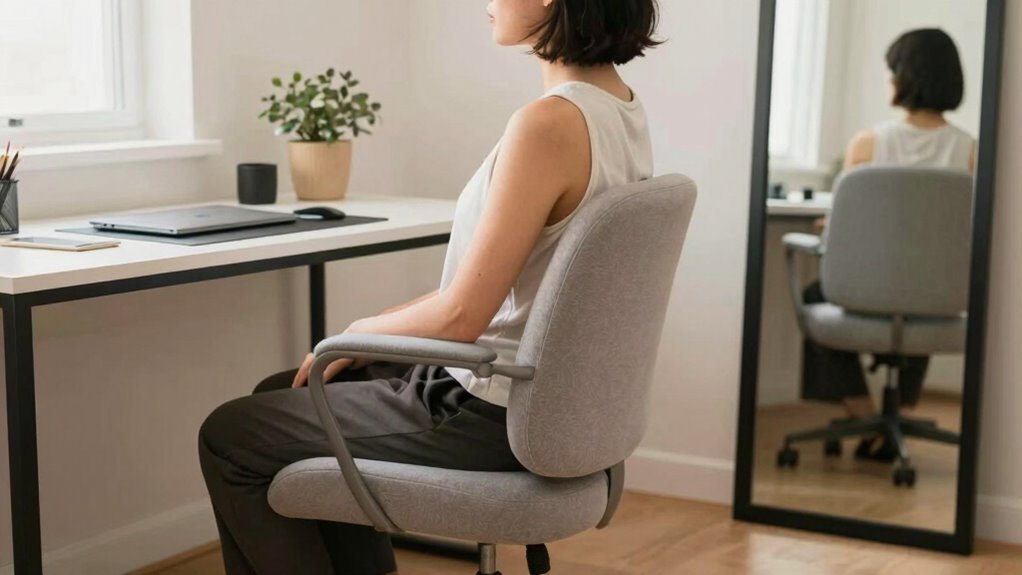
To effectively improve your posture at home, you need to understand how you currently hold your body throughout the day. Start by practicing posture awareness—pay attention to how you sit, stand, and move. Notice any habits like slouching, leaning forward, or craning your neck. Take a moment to observe yourself in mirrors or record a short video to see your natural alignment. Identifying these problem areas is essential for effective posture correction. Acknowledging digital distractions that may cause you to slouch or hunch over screens can help you address habits that contribute to poor posture. Once you recognize your habits, you can target specific issues and make conscious adjustments. Regularly evaluating your posture at different times helps you stay aware and committed to improvement. This awareness is the foundation for making lasting changes that promote better alignment and reduce discomfort. Incorporating ergonomic principles into your daily routine can further support proper posture and prevent strain. Additionally, understanding how whole-home water systems impact your environment can help you create a healthier, more comfortable living space that encourages better posture habits. Being mindful of your overall home environment can also influence your ability to maintain good posture throughout the day. Paying attention to the furniture arrangement in your space can make a significant difference in maintaining proper alignment.
As an affiliate, we earn on qualifying purchases.
Arrange Your Workspace for Better Posture
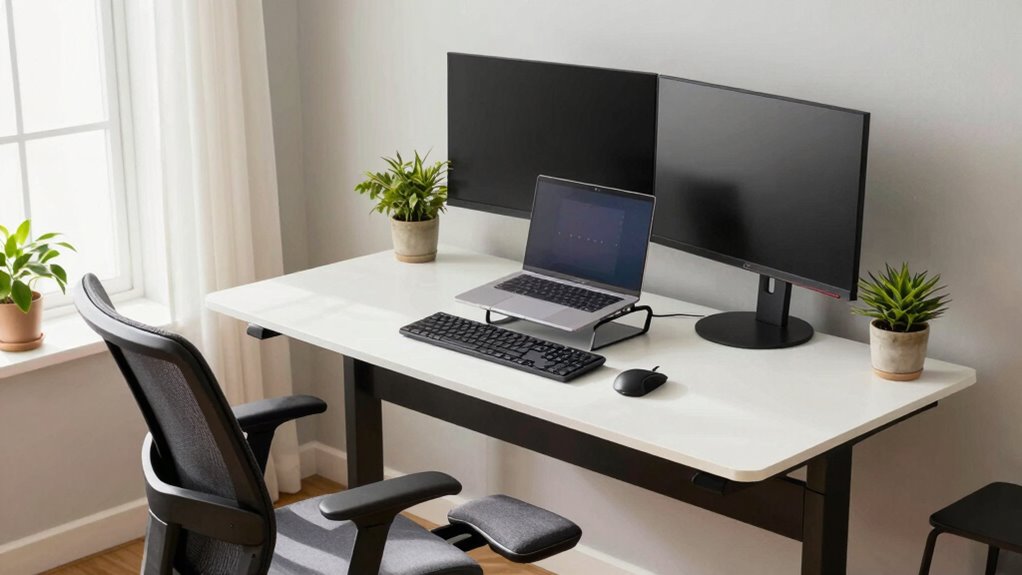
You can improve your posture by setting up an ergonomic workspace that supports your body comfortably. Make sure your monitor is at eye level so you don’t strain your neck, and adjust your chair and desk height to keep your feet flat and knees at a 90-degree angle. A well-arranged workspace helps prevent discomfort and encourages better sitting habits throughout the day. Incorporating proper ergonomic principles into your setup can further enhance your comfort and support healthy posture. Additionally, choosing the right furniture placement can promote better movement and reduce stiffness. Ensuring your workspace has appropriate lighting control can also reduce eye strain and improve overall comfort during extended periods of work. Paying attention to cabling solutions and managing cords properly can also prevent tripping hazards and maintain a clean, organized environment. Properly managing air quality in your workspace can also contribute to better overall health and focus during work sessions.
Ergonomic Desk Setup
Creating an ergonomic desk setup starts with positioning your workspace to support proper posture. Begin by arranging your desk and chair so that your feet rest flat on the floor, and your knees are at a 90-degree angle. Use ergonomic accessories like lumbar pillows or adjustable footrests to enhance support and maintain natural spinal curves. Keep your elbows close to your sides and at a 90-degree angle when typing. Incorporate posture awareness into your routine, reminding yourself to sit upright and avoid slouching. An organized, supportive workspace reduces strain and fatigue, helping you stay mindful of good posture throughout your workday. Small adjustments with ergonomic tools can make a significant difference in maintaining comfort and preventing long-term musculoskeletal issues, especially when considering home theater fundamentals that emphasize proper setup for comfort. Additionally, incorporating ergonomic principles into your workspace design can further promote sustained good posture and reduce discomfort. Being aware of battery maintenance best practices—such as proper charger settings and low-voltage cutoff—can also help you maintain equipment that supports your comfortable work environment. Regularly checking your device settings and ensuring your workspace aligns with ergonomic standards can prevent discomfort and support long-term health.
Proper Monitor Placement
Have you ever noticed how straining your eyes or tilting your head can cause discomfort during long work sessions? Proper monitor placement can prevent that. Keep your monitor at eye level—the ideal monitor height—so you don’t tilt your head up or down. Adjust the screen angle to guarantee you’re viewing straight ahead, reducing neck strain. Position the monitor about an arm’s length away, with the top of the screen aligned with your eye level. Use the table below to visualize different setups:
| Monitor Height | Screen Angle | Effect on Posture |
|---|---|---|
| Eye level | Slight tilt up | Reduces neck strain |
| Below eye level | Flat or downward | Causes neck extension |
| Above eye level | Upward tilt | Causes neck flexion |
| Too far back | Poor viewing | Leads to leaning forward |
| Too close | Eye strain | Causes squinting |
Proper placement promotes comfort and better posture. Additionally, ergonomic workspace setup plays a crucial role in maintaining good posture during extended periods of work. Ensuring that your workspace is properly arranged can significantly improve overall comfort and reduce the risk of musculoskeletal issues. Incorporating monitor placement guidelines is an essential part of this process. Paying attention to natural eye movement can help prevent unnecessary strain over time. Being mindful of visual ergonomics can further enhance your comfort and prevent fatigue.
As an affiliate, we earn on qualifying purchases.
Posture Exercises You Can Do at Home
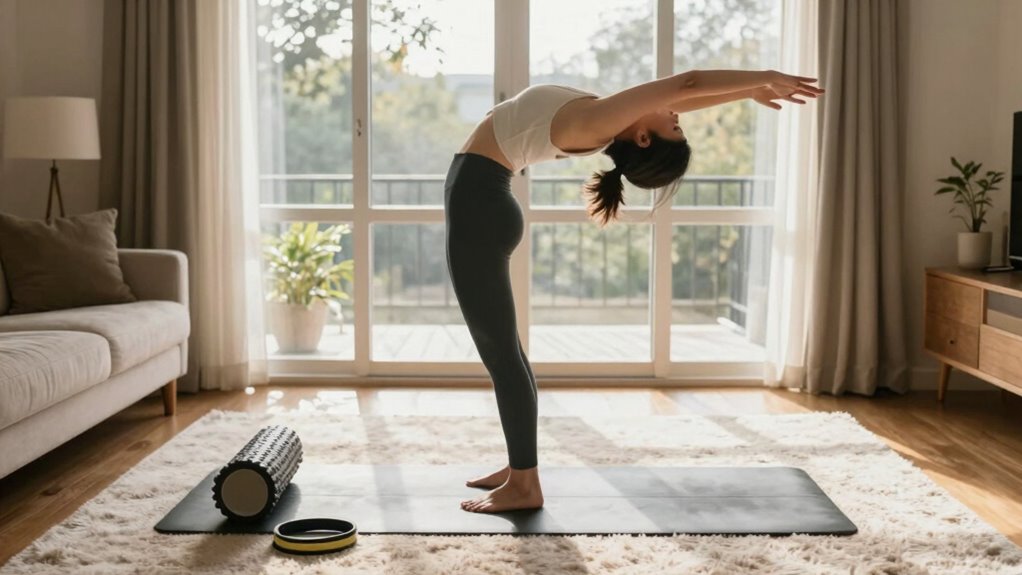
You can improve your posture with simple exercises right at home, like a wall stretch to open your chest, seated shoulder rolls to release tension, and the Cat-Cow movement to improve spinal flexibility. These quick moves target key areas that often get stiff from sitting too long. Incorporating them into your routine helps reinforce good posture habits effortlessly. Additionally, paying attention to natural light in your space can boost your mood and overall well-being, making it easier to stay mindful of your posture throughout the day.
Simple Wall Posture Stretch
Ever wonder how a simple wall can help improve your posture? This easy wall posture stretch boosts your posture awareness and fits seamlessly into your stretching routines. Stand with your back flat against the wall, heels a few inches away, and gently press your lower back into the wall. Keep your shoulders relaxed and arms bent, with elbows at shoulder height. Slowly raise your arms overhead, maintaining contact with the wall, then lower them back down. This movement encourages proper alignment and strengthens your upper back muscles. Regularly practicing this stretch helps you recognize your posture habits and develop better awareness. Incorporate it into your daily routine to improve flexibility, reduce tension, and promote healthier posture habits at home.
Seated Shoulder Rolls
Seated shoulder rolls are a simple yet effective way to release tension and improve your posture during the day. They help you become more aware of your posture and prevent slouching. To do these, sit upright and relax your shoulders. Roll them forward, then up toward your ears, and back in a smooth circle. Repeat this motion 10 times in each direction.
You’ll notice:
- Less shoulder tension after a few repetitions
- Increased awareness of your posture
- A quick break from long periods of sitting
Practicing seated shoulder rolls regularly encourages better posture awareness and helps you stay aligned throughout your day. This simple exercise can make a noticeable difference in how you carry yourself and feel overall.
Cat-Cow Spinal Movement
The Cat-Cow spinal movement is a dynamic exercise that helps stretch and strengthen your back and neck muscles, promoting better posture. It enhances your spinal flexibility and increases movement awareness, making daily activities easier. To do it, start on your hands and knees, inhale as you arch your back (Cow), then exhale as you round it (Cat). This fluid motion loosens tight muscles and improves posture awareness.
| Position | Movement | Focus Area |
|---|---|---|
| Starting | Inhale | Arch your back (Cow pose) |
| Shift | Exhale | Round your spine (Cat pose) |
| Repetition | Repeat | Spinal flexibility, posture |
| Tips | Smooth movement | Engage core, breathe deeply |
Develop Habits to Maintain Good Posture Daily
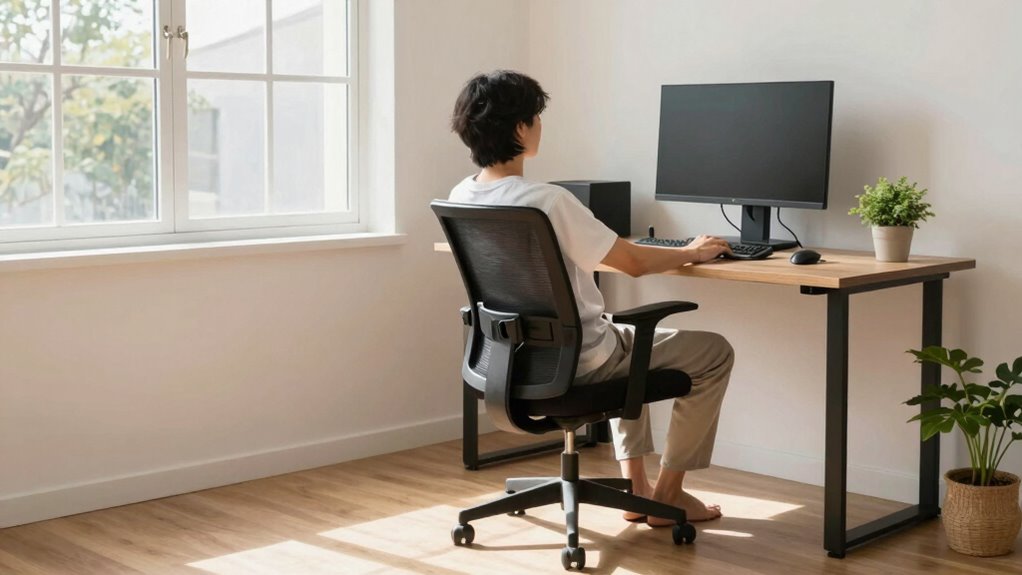
Building consistent habits is key to maintaining good posture every day. When you develop routines focused on posture awareness, it becomes second nature. To reinforce habit formation, try these simple tips:
Consistent habits make good posture effortless and second nature.
- Set reminders on your phone to check your posture regularly.
- Incorporate quick stretches or mindful pauses during your routine.
- Keep your workspace organized to encourage proper alignment effortlessly.
Adjust Your Sitting and Standing Positions Throughout the Day
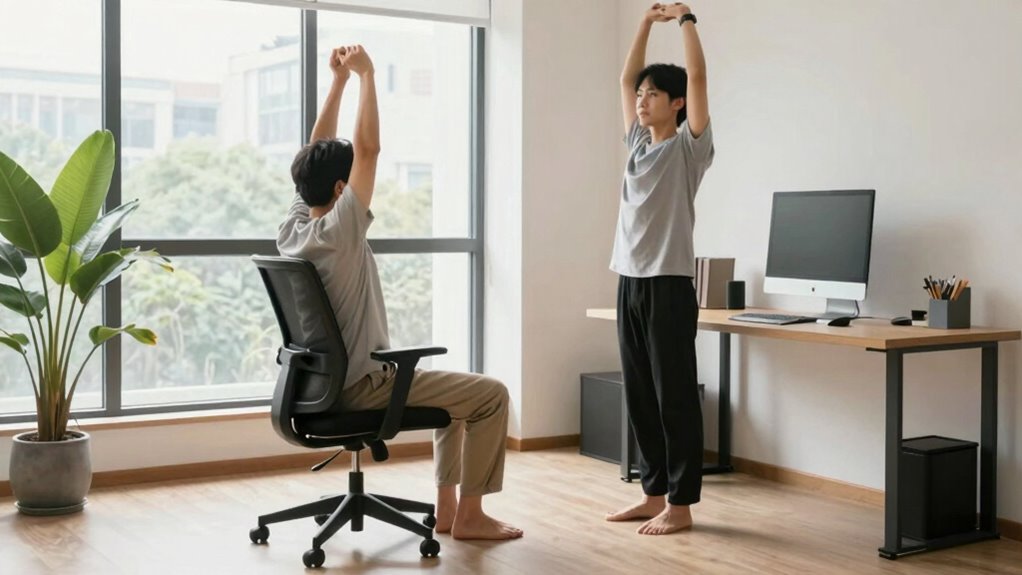
Since your body isn’t meant to stay in one position all day, it’s important to adjust your sitting and standing posture regularly to prevent strain and fatigue. Pay attention to your sitting habits; shift your position every 30 minutes to avoid stiffness. Keep your feet flat on the floor, back straight, and shoulders relaxed. When standing, incorporate good standing routines by shifting your weight from one foot to the other or taking brief breaks to stretch. Avoid staying in the same position for too long, as it can lead to muscle tension and poor alignment. Regularly changing your posture helps reduce discomfort and promotes better spinal health. Small adjustments throughout the day make a big difference in maintaining good posture at home.
Use Household Items to Support Your Posture
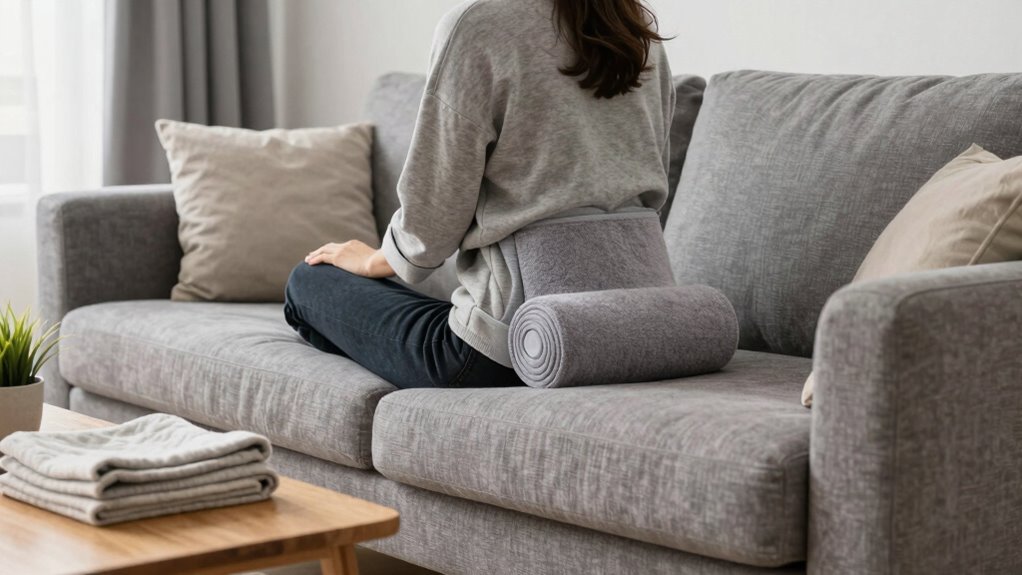
Using household items creatively can considerably improve your posture without the need for specialized equipment. You can make DIY posture aids or support tools with everyday objects around your home. For example, roll up a towel to support your lower back during long sitting sessions, or use a sturdy box to elevate your feet when sitting at your desk. These simple adjustments can help align your spine properly. Household stretching exercises can also be more effective when combined with supportive props. Try using a wall to stretch your shoulders or a chair to gently open your chest. Incorporating these household stretching techniques and DIY aids into your routine helps reinforce good posture habits naturally and cost-effectively.
Recognize and Correct Common Postural Habits
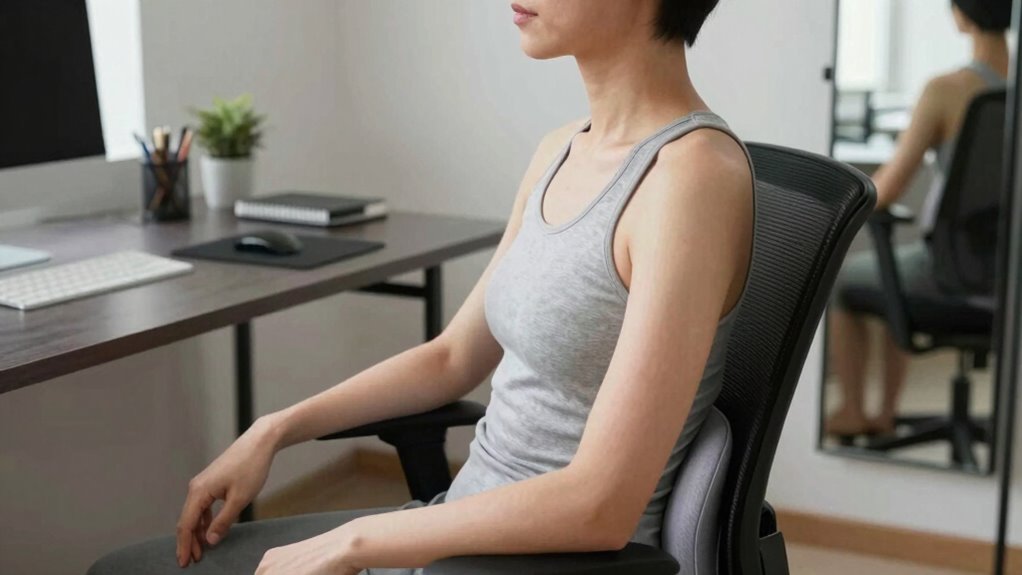
Being aware of your habitual postural patterns is the first step toward making meaningful improvements. Many people believe postural myths, like thinking slouching isn’t harmful or that only back pain indicates poor posture. Recognizing these misconceptions helps you identify habits that need correction. Pay attention to how you sit, stand, and move daily. Common habits, such as leaning forward at your desk or cradling your phone, can become ingrained. To improve, focus on habitual corrections like engaging your core, keeping shoulders relaxed, and maintaining a neutral spine. Small, consistent adjustments can break bad habits and promote better alignment. Being mindful of these patterns empowers you to fix postural issues early, preventing discomfort and long-term problems.
Track Your Posture Progress to Stay Motivated
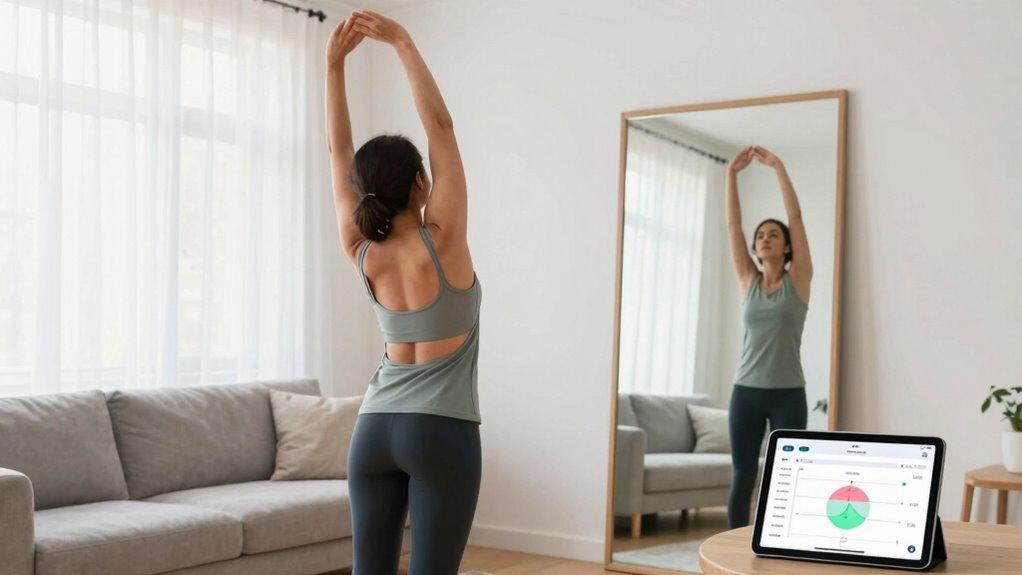
Tracking your posture progress is essential to stay motivated and see tangible results. Posture tracking helps you identify improvements and stay committed to your goals. Use a journal or app to record daily habits and note any changes you notice. This creates motivation strategies by highlighting your progress over time. To make it more engaging, try:
- Taking before-and-after photos to visualize your improvements
- Setting small, achievable milestones to celebrate progress
- Keeping a checklist of daily posture exercises and habits
Frequently Asked Questions
Can Poor Posture Lead to Long-Term Health Issues?
Yes, poor posture can lead to long-term health issues like chronic back pain and spinal misalignment. You might notice discomfort and fatigue if you don’t use ergonomic accessories, which support proper spinal alignment. Over time, this can cause more serious problems such as herniated discs or joint issues. By improving your posture now, you protect your musculoskeletal health and prevent future pain, keeping your body aligned and functioning effectively.
How Often Should I Check My Posture During the Day?
You should check your posture every 30 minutes to an hour. Posture awareness is key, so set daily reminders on your phone or computer to prompt you. When these alerts go off, pause and assess how you’re sitting or standing. Consistent, short checks help you develop better habits over time, reducing the risk of long-term issues. Stay mindful and make adjustments as needed to maintain good posture throughout the day.
Are There Specific Ergonomic Tools Recommended for Home Use?
Yes, there are specific ergonomic tools you should consider for home use. An ergonomic chair provides proper lumbar support, helping maintain good posture during long periods of sitting. An adjustable desk allows you to switch between sitting and standing, reducing strain and promoting movement. These tools make it easier to set up a workspace that encourages healthy posture habits, keeping you comfortable and reducing the risk of discomfort or injury.
How Do I Stay Consistent With Posture Improvements?
You can stay consistent by turning posture improvement into a daily habit. Use habit tracking to monitor your progress and set small, achievable goals. Incorporate posture reminders—like alarms or sticky notes—to keep you alert throughout the day. These cues create a sense of accountability, making it easier to develop lasting habits. With steady effort and these tools, you’ll notice your posture strengthens without even thinking about it.
Can Posture Correction Help With Chronic Back Pain?
Yes, posture correction can profoundly help with chronic back pain by improving muscle alignment and spinal health. When you focus on maintaining proper posture, you reduce strain on your muscles and spine, which alleviates discomfort. Regularly practicing exercises that promote correct alignment strengthens your core and supports your back, leading to better muscle balance and long-term relief from chronic pain. Consistency is key for lasting improvements.
Conclusion
By paying attention to your posture at home, you’re like a gardener tending to a delicate plant—small adjustments, consistent care, and mindful habits help it flourish. Picture yourself sitting tall on a cozy couch, muscles relaxed, as sunlight streams through your window. Every time you correct your posture, you’re nurturing your health, preventing discomfort, and creating a comfortable space that supports your well-being. With time, these habits become second nature, transforming your home into a sanctuary of good posture.
Fall yard work Picks
leaf blowers
As an affiliate, we earn on qualifying purchases.