
To reduce humidity in your garage, start by enhancing ventilation with exhaust fans or cross-ventilation. Use dehumidifiers and moisture absorbers in problem areas, and regularly clean gutters to keep water away from your foundation. Seal gaps around doors and windows with weatherstripping or caulk to block moist air. Proper drainage and natural methods like airflow and moisture-absorbing plants can also help. If you want to learn more about long-term moisture control, keep exploring these practical steps.
Key Takeaways
- Improve ventilation by installing exhaust fans and ensuring vents are unblocked to promote airflow.
- Use dehumidifiers and moisture absorbers in problem areas, maintaining and replacing them regularly.
- Seal gaps around doors, windows, and other entry points with weatherproof sealants and weather stripping.
- Maintain proper drainage by cleaning gutters and extending downspouts away from the garage foundation.
- Monitor humidity levels with sensors and automate ventilation and dehumidification systems for consistent control.

Dehumidifier, 95OZ Dehumidifier for Home 1000 Sq.Ft – Quiet with Auto Shut Off & Relaxing 7 Color Ambient Light,Ideal for Livingroom, Bedroom, Basement(Black)
Semiconductor dehumidifiers use thermoelectric cooling to remove moisture from the air. They create a drier, more comfortable environment…
As an affiliate, we earn on qualifying purchases.
As an affiliate, we earn on qualifying purchases.
Why Excess Garage Humidity Is a Problem
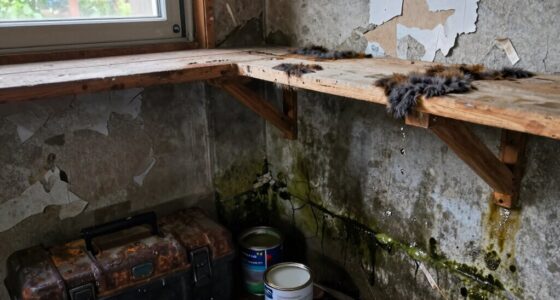
Excess humidity in your garage can lead to a range of problems that affect both the space and your belongings. When humidity levels are too high, moisture control becomes a challenge, allowing dampness to thrive. This excess moisture can cause rust on tools and equipment, warp wood, and damage stored items like boxes or furniture. It also creates an ideal environment for mold and mildew, which can spread quickly and harm both your health and your belongings. High humidity can make the garage feel clammy and uncomfortable, reducing usability. By managing humidity levels effectively, you prevent these issues, protecting your investments and maintaining a safer, more durable space. Proper moisture control is essential for keeping your garage in good condition and avoiding costly repairs. Additionally, understanding humidity control techniques can help you implement effective strategies to maintain optimal moisture levels. Paying attention to indoor air quality factors like dust and microplastics can further improve the environment in your garage and promote healthier conditions. Regularly monitoring humidity levels can help you detect problems early and adjust your approach as needed. Incorporating dehumidifiers can be particularly effective in maintaining consistent moisture control throughout different seasons. Using smart thermostat setups to manage temperature and humidity can also enhance overall climate regulation in your space.

iLIVING 12" Wall Mounted Shutter Exhaust Fan, Automatic Shutter, with Thermostat and Variable Speed controller, 0.6A, 960 CFM, 1400 SQF Coverage Area Silver (ILG8SF12V-ST)
POWERFUL AIR VENTILATOR – 960 CFM, 115V, 0.6A, 1/20 Horse Power, 1650 RPM, Coverage up to 1400 square…
As an affiliate, we earn on qualifying purchases.
As an affiliate, we earn on qualifying purchases.
How to Identify Moisture Signs in Your Garage
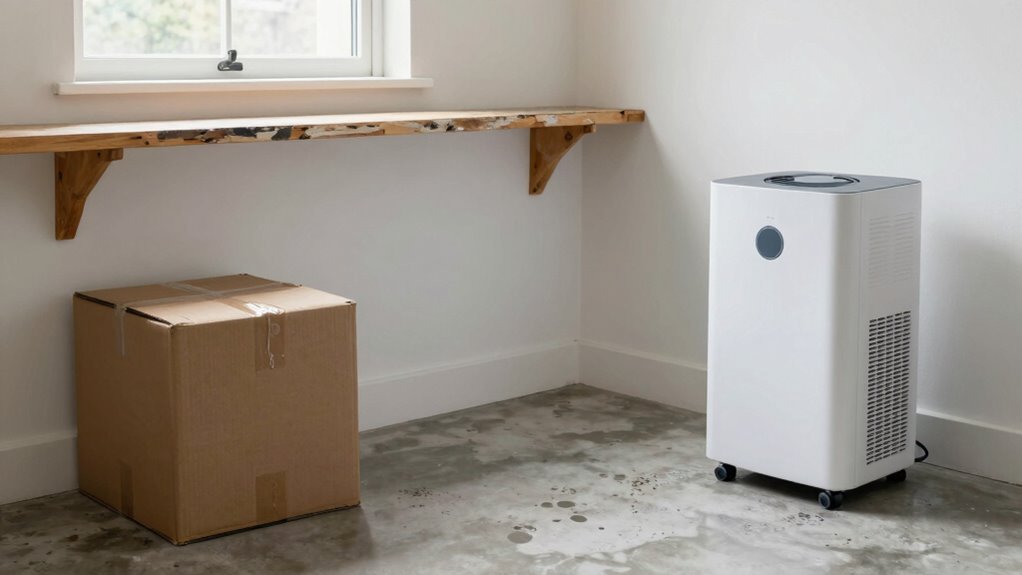
Recognizing the signs of moisture in your garage is the first step to controlling humidity. Look for visible clues like water stains, peeling paint, or damp patches on walls and ceilings. Use humidity sensors to monitor air moisture levels regularly—they provide quick, accurate readings. Pay close attention to mold detection; musty odors or fuzzy growth on surfaces indicate mold presence, which thrives in moist environments. Here’s a quick guide:
| Moisture Signs | What to Do |
|---|---|
| Water stains or peeling paint | Check humidity levels and improve ventilation |
| Musty odor or mold growth | Use mold detection tools and address sources of dampness |
| Condensation on surfaces | Install dehumidifiers and seal leaks |
Being vigilant helps catch moisture issues early and keeps your garage dry. Understanding humidity management is key to maintaining a healthy space. Proper ventilation and moisture control are essential components of effective moisture prevention.

DampRid Hi-Capacity Moisture Absorber Bucket, Fragrance Free, 2 lb. 15.5 oz. & Moisture Detection Strip (2 Pack), Attracts & Traps Excess Moisture
DampRid Hi-Capacity Moisture Absorber Bucket, Fragrance Free, 2 lb. 15.5 oz. & Moisture Detection Strip (2 Pack), Attracts…
As an affiliate, we earn on qualifying purchases.
As an affiliate, we earn on qualifying purchases.
Improve Garage Ventilation to Reduce Moisture
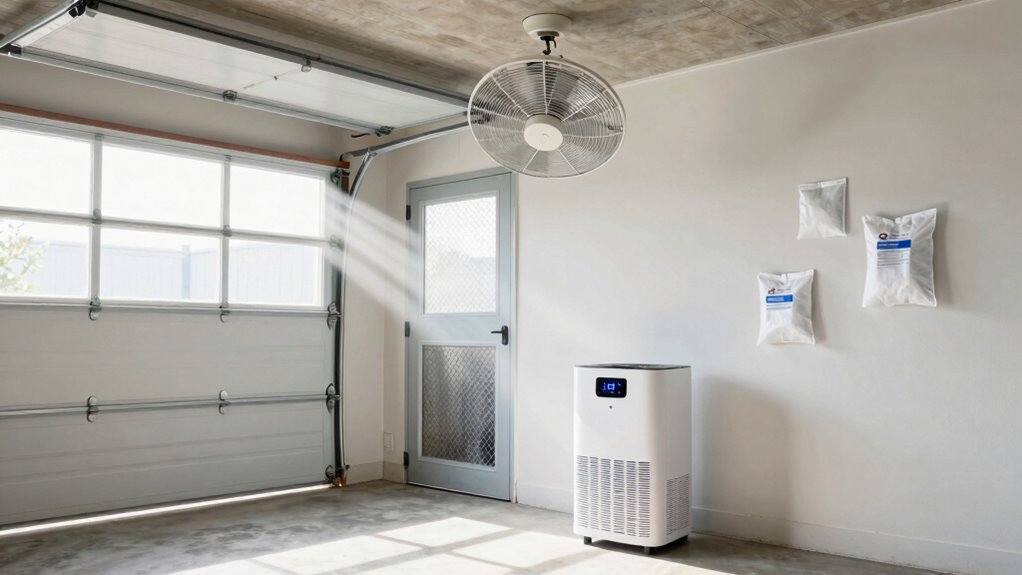
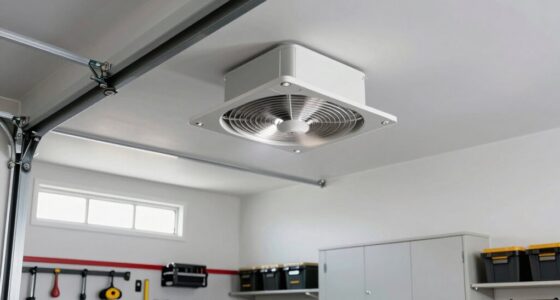
Improving your garage’s ventilation is one of the most effective ways to reduce humidity and prevent moisture buildup. Proper airflow circulation helps dry out moist air and prevents mold growth. Installing ventilation fans can markedly boost air exchange, especially in poorly ventilated spaces. To maximize effectiveness, make sure your ventilation system:
- Uses high-quality fans with sufficient airflow capacity
- Is positioned to promote cross-ventilation
- Operates regularly, especially during humid days
- Is combined with vent openings or exhaust vents
- Keeps intake vents unblocked for better airflow circulation
Good ventilation ensures moist air escapes and fresh air enters, maintaining a balanced humidity level. Regularly check and maintain your ventilation fans to keep the system working efficiently. Proper airflow circulation is key to a dry, moisture-free garage. Additionally, integrating biosensors for humidity detection can help monitor moisture levels in real-time and optimize ventilation schedules. Incorporating humidity control systems can further enhance moisture management and prevent long-term issues. Implementing smart automation features can also help automate these systems for consistent moisture control. Utilizing airflow optimization techniques can ensure even distribution of air and prevent stagnant zones that trap moisture. Employing properly designed vents can significantly improve overall airflow efficiency.

Ninsula 33Ft Door Weather Stripping, (1/2in x 1/4in), Strong Adhesive, Sound Proof, Door Insulation, Weatherproof Foam Tape for Doors, Weatherstripping for Doors Frames, Windows
Extra Long Size: You'll get a 33FT door weather stripping (1/2in x 1/4in). Easy to install, no tools…
As an affiliate, we earn on qualifying purchases.
As an affiliate, we earn on qualifying purchases.
Use Dehumidifiers and Moisture Absorbers Effectively
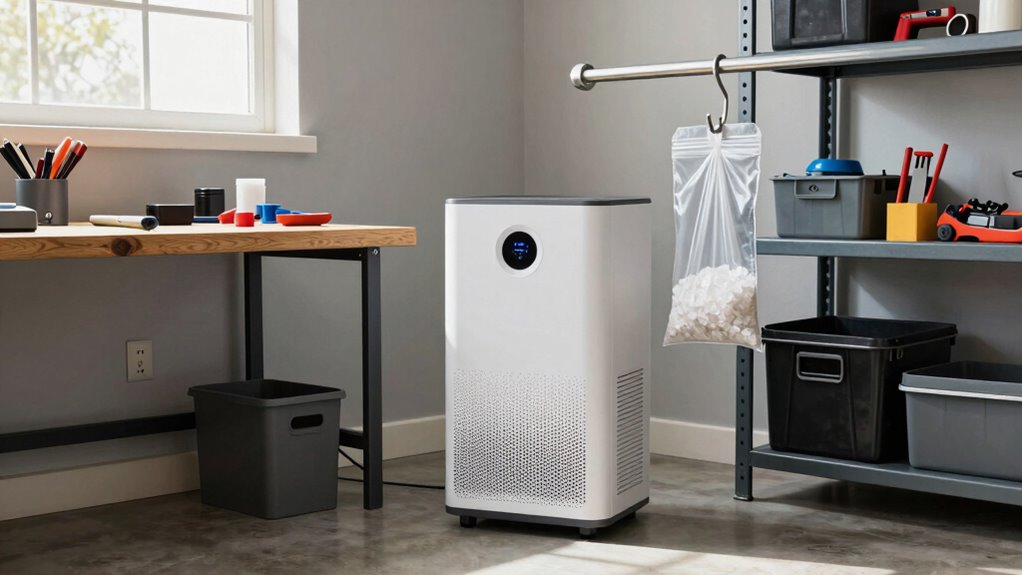
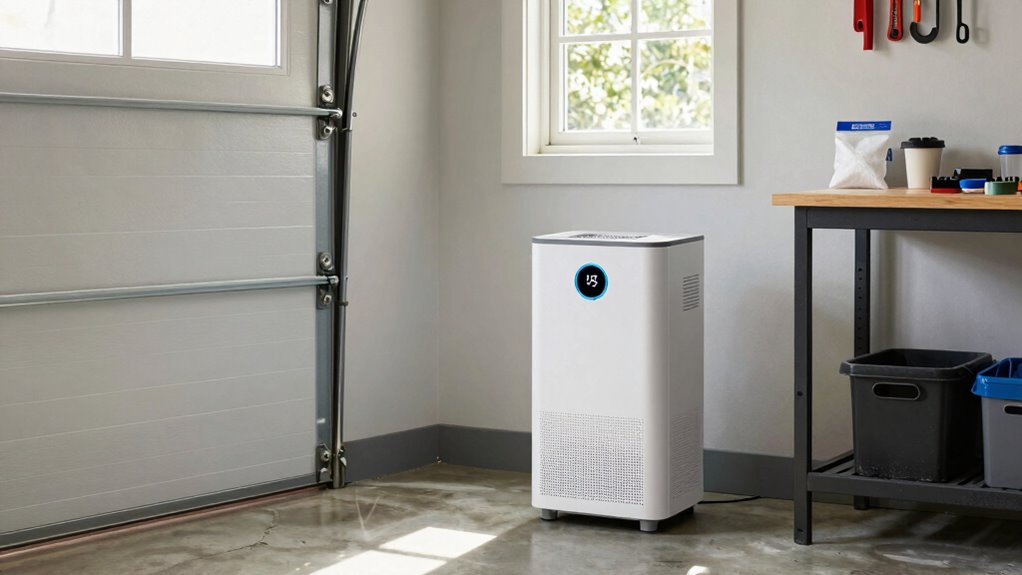
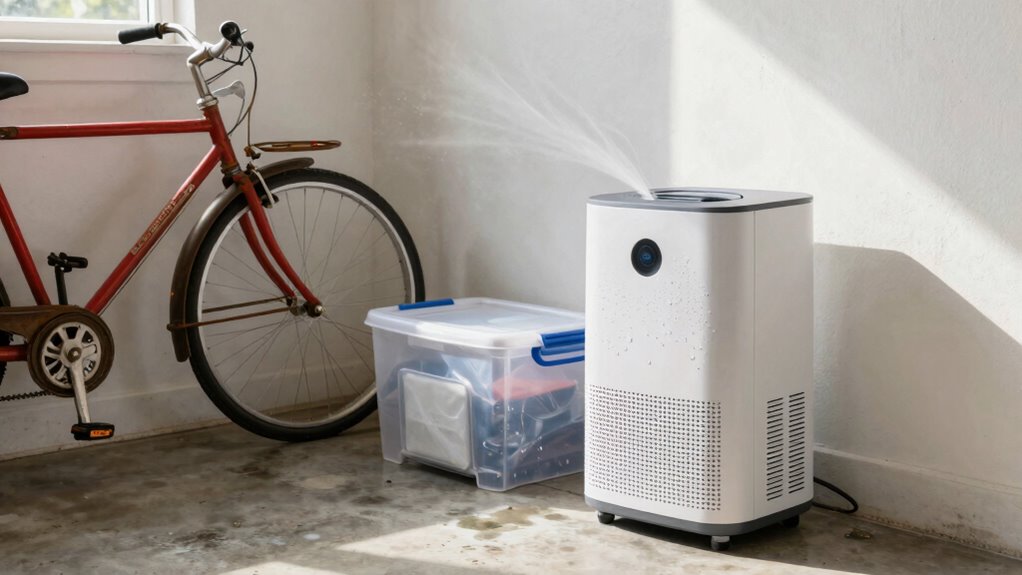
Dehumidifiers and moisture absorbers are vital tools for maintaining a dry garage environment, especially in areas where ventilation alone may not be enough. To maximize their effectiveness, practice smart placement by positioning dehumidifiers in central locations or near problem spots. This strategic placement helps in reducing fabric glue residue, which can contribute to humidity buildup. This ensures even moisture removal throughout the space. Regular maintenance routines are essential; empty water trays, clean filters, and check for malfunctions to keep devices running efficiently. Moisture absorbers, like silica gel or desiccant packs, work best when placed in areas with limited airflow, such as corners or shelves. Replace or recharge them as recommended to prevent saturation. Additionally, understanding the proper portrait photography gear and camera tips can help you better assess and monitor environmental conditions. Being aware of AI applications in home maintenance can provide innovative solutions for humidity control and monitoring. Proper knowledge of humidity control techniques can further enhance your efforts to reduce moisture and protect your garage from damp-related issues. By strategically placing these tools and adhering to maintenance routines, you’ll markedly reduce humidity and protect your garage from damp-related issues.
Seal Cracks and Insulate to Keep Out Humidity
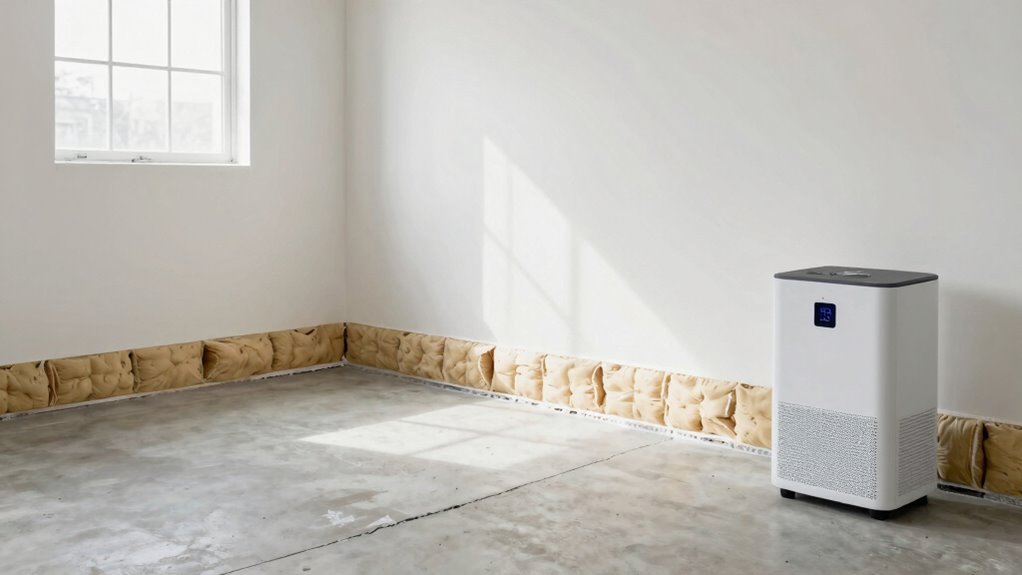
Even with dehumidifiers and moisture absorbers working effectively, moisture can still seep in through gaps and poorly insulated areas. To block this, you should seal cracks and improve insulation. Use caulking techniques to fill small gaps around windows, doors, and wall joints, preventing humid air from entering. For larger gaps, consider expanding foam or weatherstripping. When insulating, choose appropriate materials like foam boards, fiberglass batts, or spray foam to enhance your garage’s barrier against humidity. Proper sealing and insulation reduce air exchange, making dehumidifiers more effective. Additionally, addressing building envelope vulnerabilities can significantly improve humidity control in your garage, especially when considering best woods for farmhouse tables which emphasize durable and insulating materials. Incorporating insulation techniques can further optimize your efforts and ensure a more consistent indoor environment. Using airtight seals around critical entry points is essential to prevent moisture infiltration and maintain a dry garage atmosphere. Furthermore, selecting durable survival gear that withstands adverse conditions can be advantageous in maintaining your storage areas against environmental challenges.
Stop Garage Door and Window Leaks
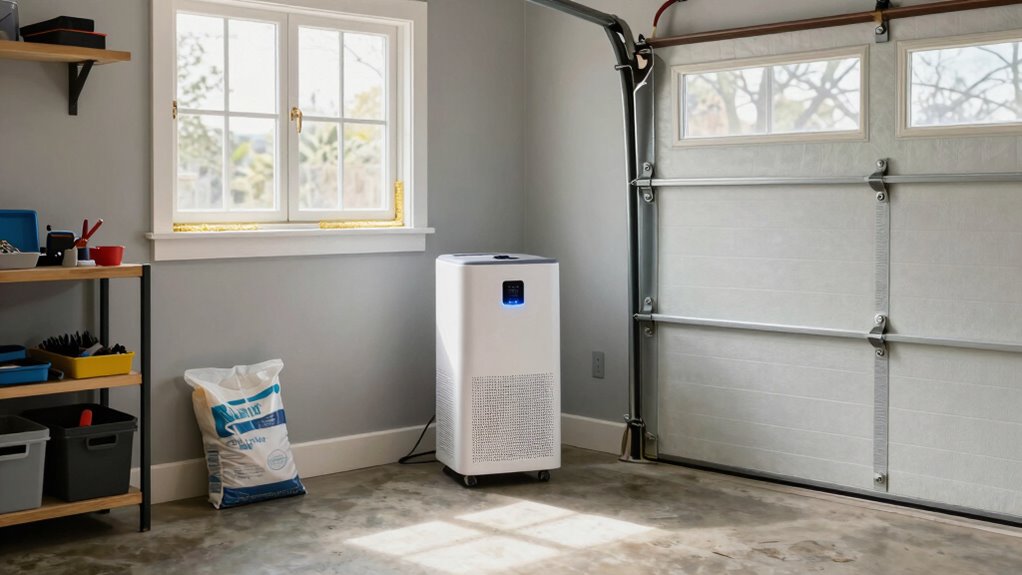
You can prevent leaks by sealing gaps and cracks around your garage door and windows. Installing weather stripping or repairing damaged seals keeps moisture out and maintains a dry environment. Taking these steps helps reduce humidity and protects your garage from water damage. Additionally, addressing potential sources of water intrusion can improve your overall home security and preserve your investment. Regularly inspecting and maintaining these seals ensures they remain effective over time, similar to how auditory processing techniques enhance communication clarity. Being aware of early warning signs of water leaks can also help you take prompt action before significant damage occurs.
Seal Gaps and Cracks
Gaps and cracks around your garage door and windows are common entry points for moist air, which can considerably increase humidity levels. To reduce this, you need to seal these openings effectively. Use proper caulking techniques and gap filling methods to guarantee a tight seal. Start by cleaning the area thoroughly, then apply high-quality caulk to fill gaps and cracks. Focus on areas around window frames, door jambs, and corners. For larger gaps, consider expanding foam or weatherproof sealants. Proper sealing prevents moist air from entering, helping to control humidity.
- Inspect regularly for new gaps
- Use weather-resistant caulk
- Fill larger cracks with foam sealant
- Ensure a smooth, even application
- Reapply as needed to maintain a tight seal
Install Weather Stripping
Have you considered how worn or poorly fitted weather stripping can lead to unnecessary leaks around your garage door and windows? Installing new weather stripping is a simple, effective way to improve garage insulation and reduce humidity. Proper weather stripping creates a tight seal that blocks drafts, preventing moist air from entering and warm air from escaping. Choose the right type for your garage, such as rubber or foam, and make sure it fits snugly along door edges and window frames. When installed correctly, weather stripping minimizes leaks and enhances energy efficiency. This small upgrade has a big impact on controlling humidity levels, keeping your garage drier and more comfortable. Regularly inspect and replace weather stripping to maintain ideal garage insulation.
Repair Damaged Seals
Worn or damaged seals around your garage door and windows can quickly undermine efforts to control humidity. To improve this, you need to close gaps and repair seals promptly. Start by inspecting all edges and corners for cracks, tears, or wear. Replace or patch damaged weather stripping to prevent moisture intrusion. Properly sealed gaps stop humid air from entering and reduce condensation.
Key tips include:
- Check for gaps around door frames and window sashes
- Clean surfaces before applying new seals
- Use weatherproof sealant for small cracks
- Ensure seals are tight and flush with surfaces
- Regularly inspect and maintain seals to prevent future damage
Maintain Proper Drainage and Gutters Around Your Garage
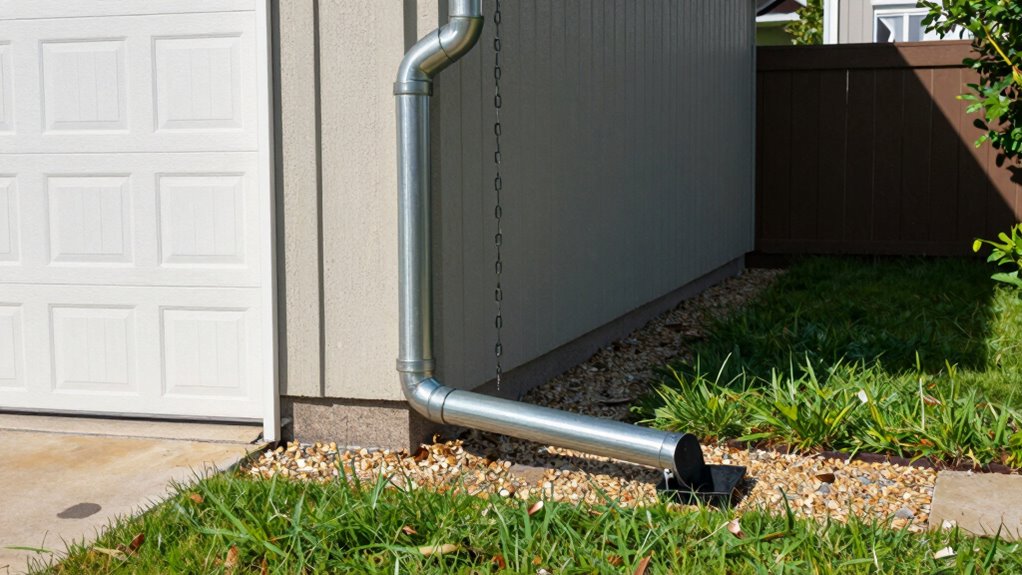
Ensuring proper drainage and well-maintained gutters around your garage is essential for preventing excess moisture buildup. Effective drainage systems direct rainwater away from your garage foundation, reducing the risk of leaks and water infiltration that can increase humidity. Regular gutter maintenance is key—clean out leaves and debris to ensure water flows freely. Check for leaks or sagging gutters and repair or replace damaged sections promptly. Properly functioning gutters prevent water from pooling near your garage, which can seep inside and raise humidity levels. Additionally, ensuring downspouts extend several feet away from the foundation helps keep water away from the structure. By maintaining your drainage and gutters, you create a dry environment that discourages moisture buildup and protects your garage from humidity-related issues.
Natural Ways to Keep Your Garage Dry
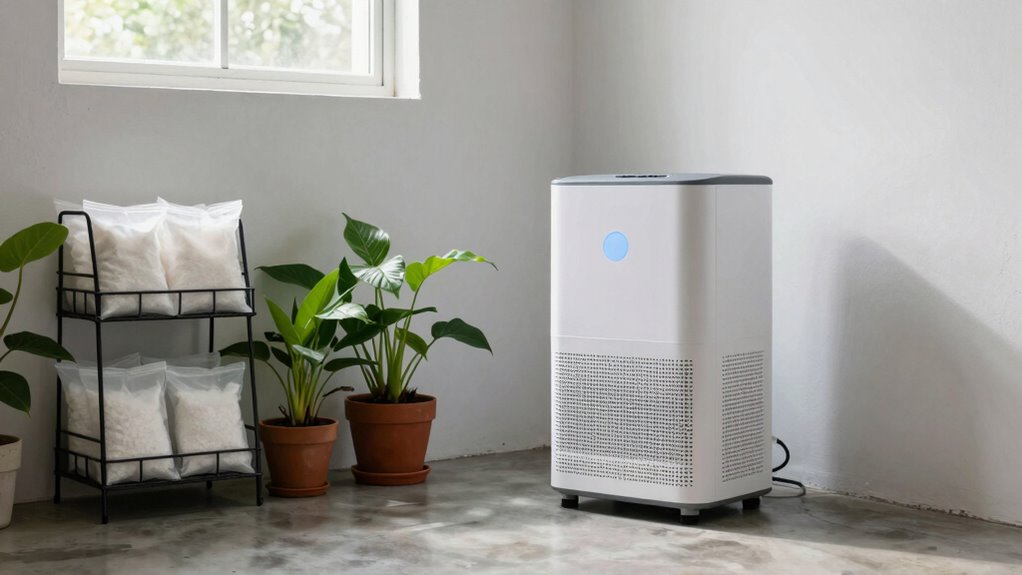
Wondering how to keep your garage dry naturally? One effective way is to use indoor plants that absorb moisture and improve air quality. Place humidity meters to monitor moisture levels, so you know when your garage needs additional ventilation. You can also increase airflow by opening windows or using vents during humid days. Adding dehumidifying crystals or silica gel packs helps control humidity without chemicals. Consider sealing gaps and cracks to prevent moisture intrusion. Finally, keep clutter organized to avoid trapping damp air. These natural methods help maintain a balanced environment, reducing humidity without relying on mechanical systems. Remember, monitoring with humidity meters and choosing the right indoor plants can make a significant difference in keeping your garage dry naturally.
Long-Term Strategies to Prevent Garage Humidity
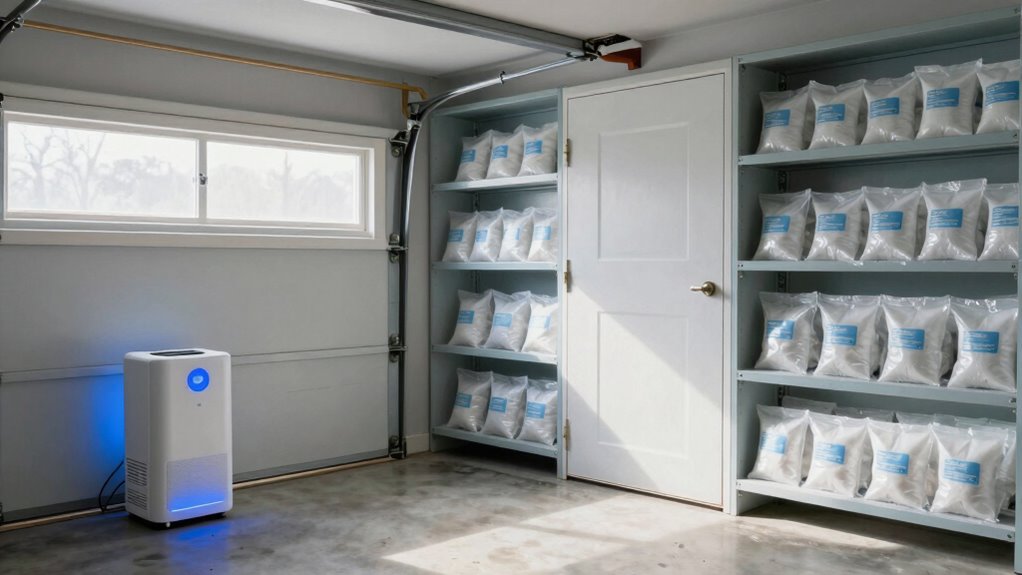
To effectively prevent garage humidity over the long term, implementing consistent maintenance practices is essential. Start by installing proper ventilation systems to promote airflow and reduce moisture buildup. Regularly inspect and clean vents or exhaust fans to ensure they work efficiently. Additionally, use moisture barriers on garage floors and walls to prevent ground moisture from seeping in. Seal any cracks or gaps in the foundation and walls to block humidity sources. Keep gutters and drainage systems clear to prevent water from pooling near the garage. Consider dehumidifiers for ongoing moisture control, especially in humid climates. By maintaining these systems and barriers consistently, you create a dry environment that minimizes humidity, protecting your belongings and preventing mold growth over time.
Frequently Asked Questions
Can Indoor Plants Help Reduce Garage Humidity Naturally?
Indoor plants can help reduce garage humidity naturally because they absorb moisture through their leaves and roots, aiding in moisture absorption. By adding plants like ferns or pothos, you create a natural humidity buffer, especially if your garage stays damp. Just make sure they’re suitable for your garage’s environment, and don’t forget to water them properly. These plants can make your space feel fresher and less humid over time.
Are There Specific Materials That Resist Moisture Better in Garages?
They say, “A chain is only as strong as its weakest link,” and that applies to moisture-resistant materials in your garage. Opt for moisture-resistant paint on walls and ceilings to prevent dampness. Use durable, water-resistant shelving and flooring materials like sealed concrete or vinyl. Enhance ventilation solutions, like exhaust fans or vents, to keep humidity levels low. These materials and solutions work together to create a drier, more stable environment.
How Often Should I Check for Signs of Excess Moisture?
You should check for signs of excess moisture weekly, especially if your garage has poor air circulation. Use humidity sensors to monitor the moisture levels regularly; ideally, keep humidity below 60%. Look for condensation, mold, or musty odors as indicators. Improving air circulation and using sensors can help you catch problems early, so you can take action before moisture causes damage or health issues.
Can Cleaning Products Impact Garage Humidity Levels?
Cleaning agents can impact your garage’s humidity levels, especially if they contain water or create excess moisture during use. Some cleaning products may promote mold growth if not properly dried or ventilated, affecting mold prevention efforts. To keep humidity in check, opt for low-moisture cleaning agents and make certain thorough ventilation after cleaning. Regularly wiping down surfaces helps prevent moisture buildup, supporting a healthier, mold-free garage environment.
Is It Safe to Use Chemical Moisture Absorbers Long-Term?
Using chemical absorbers long-term can be safe if you choose products specifically designed for extended use and follow the manufacturer’s instructions. However, some chemical absorbers may release fumes or contain substances that could pose health risks over time. You should regularly monitor your garage for any signs of chemical buildup or odors. For better safety, consider alternative moisture control methods like ventilation or dehumidifiers for long-term solutions.
Conclusion
Keeping your garage dry isn’t just about comfort — it protects your belongings and prevents costly damage. Did you know that excess humidity can lead to mold growth and structural deterioration in as little as a few months? By sealing cracks, improving ventilation, and using dehumidifiers, you can effectively reduce moisture. Take proactive steps today; a dry garage not only lasts longer but also maintains a healthier environment for you and your family.