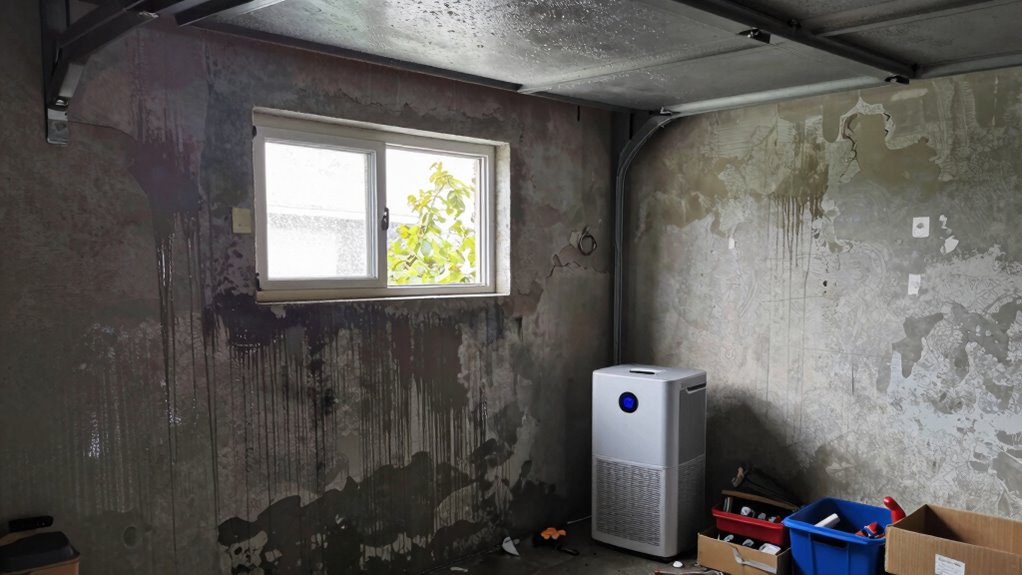
Your garage gets damp mainly because of moisture seeping in from outside, poor insulation, and insufficient ventilation. Cold surfaces cause condensation when warm, moist air touches them, while structural issues like cracks and leaks allow water inside. High humidity, temperature fluctuations, and ground moisture also contribute. Improving insulation, sealing leaks, and boosting airflow with vents or dehumidifiers can help. Keep going to discover simple ways to keep your garage dry all year round.

Get home appliances delivered free with Prime
- Fast, free delivery on millions of items
- Prime Video, Amazon Music and more included
- Member-only deals all year
Key Takeaways
- Moisture enters through leaks, cracks, or poor insulation causing condensation and dampness.
- High outdoor humidity and temperature fluctuations increase indoor moisture and condensation risk.
- Lack of ventilation traps moist air, leading to mold and damp conditions.
- Ground moisture seeping through walls or floors without proper barriers contributes to dampness.
- Regular maintenance, sealing leaks, and improving insulation help prevent and fix garage dampness.
Products Worth Considering

Ring Alarm 14-Piece Wireless Security System Kit

Shark Navigator Robot Vacuum with Self-Empty Base, Dark Grey (RV2120AE)

Dyson Cyclone V10 Origin Cordless Vacuum
As an affiliate, we earn on qualifying purchases.
Why Does My Garage Get Damp, and How Can I Fix It?
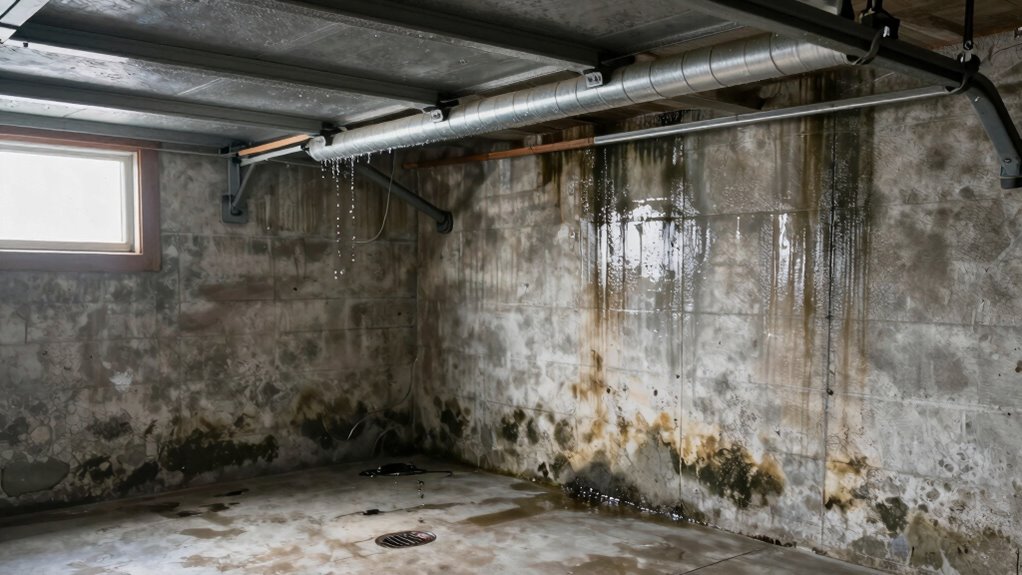
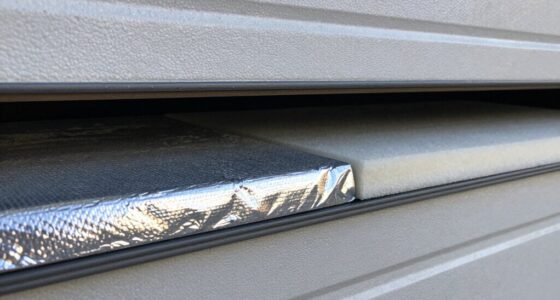
Dampness in your garage often occurs because moisture seeps in from outside or gets trapped inside due to poor ventilation. To combat this, focus on proper garage insulation, which helps regulate temperature and reduces condensation. Insulating walls and ceilings creates a barrier that prevents warm, moist air from contacting cold surfaces, cutting down on dampness and mold growth. Additionally, well-insulated garages are easier to keep dry and maintain temperature control. Good insulation also supports mold prevention by reducing the moisture that mold needs to thrive. If you notice persistent dampness, upgrading your garage insulation is a smart step. It not only keeps your space dry but also protects your belongings and promotes a healthier environment. Effective insulation techniques can further enhance your efforts to keep moisture out. Ensuring proper ventilation systems can also significantly reduce humidity levels and improve air circulation within your garage. Incorporating air circulation solutions like exhaust fans or dehumidifiers can make a notable difference in controlling moisture levels. Installing moisture barriers on walls and floors can also help prevent ground moisture from seeping into your garage space.
How Ventilation Helps Keep Your Garage Dry
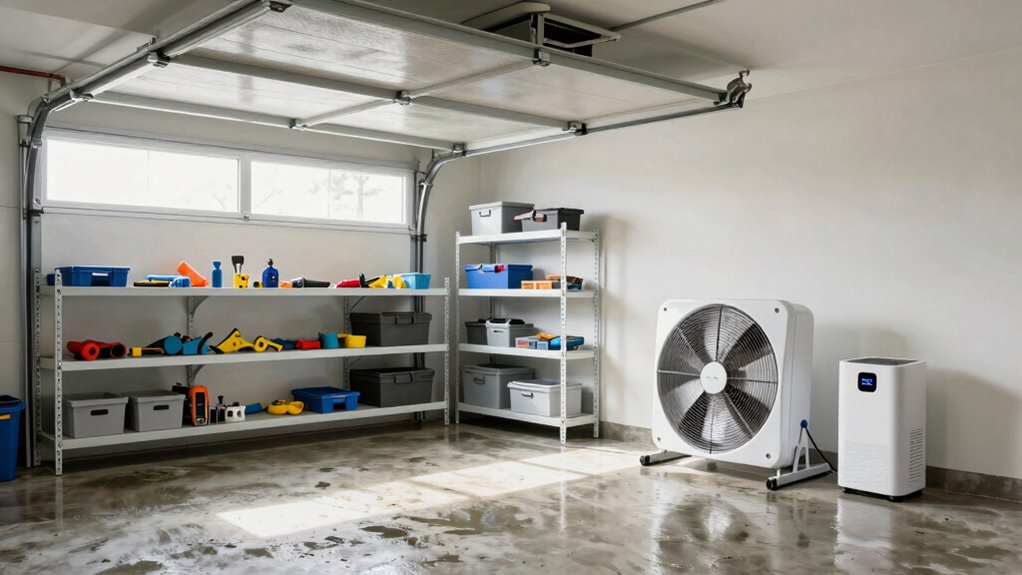
Proper ventilation improves air circulation in your garage, preventing stale, damp air from lingering. It also helps reduce moisture levels that can cause mold and damage. By ensuring good airflow, you keep your garage dry and better protected against dampness. Additionally, using smart home devices like sensors can help monitor humidity levels and optimize ventilation. Incorporating wall art trends such as digital frames or interactive murals can also improve the overall environment by adding elements that promote a healthier and more inviting space. Implementing energy-saving tips can further enhance the efficiency of your ventilation system, ensuring consistent air quality while minimizing energy consumption. Recognizing early warning signs of excess moisture can help you address issues before they escalate, creating a more resilient and comfortable garage environment. Proper ventilation is a key component of dampness prevention, helping you maintain a safe and healthy space.
Promotes Air Circulation
Have you ever noticed how stagnant air can make your garage feel damp and stuffy? When airflow patterns are restricted, moisture buildup can occur quickly, creating ideal conditions for dampness. Proper ventilation encourages fresh air to circulate, breaking up pockets of humid air that trap moisture. You want air to move freely throughout your garage, carrying away excess humidity. This constant movement keeps the environment dry and comfortable, making your garage less susceptible to dampness and its associated problems. Additionally, incorporating outdoor ovens or fire pits can improve air flow by creating natural movement patterns that help ventilate the area. Moreover, understanding market trends can help you choose the best ventilation solutions based on current needs and innovations. Ensuring effective air circulation is essential for preventing mold growth and maintaining a healthy space, especially as new ventilation technologies continue to evolve.
Reduces Moisture Levels
When you improve ventilation in your garage, you actively help reduce moisture levels. Proper airflow helps moisture escape, preventing buildup that leads to dampness. Installing moisture barriers on the floor and walls also blocks ground and outdoor moisture from seeping in. Additionally, strategic dehumidifier placement is key—position it in areas with poor airflow to efficiently remove excess humidity. Combining ventilation with moisture barriers and a well-placed dehumidifier creates an effective moisture control system. This reduces the risk of mold, mildew, and damage to stored items. Regularly opening vents or installing exhaust fans ensures continuous air exchange. Sound healing science suggests that optimal air circulation can also influence cellular health and overall environment quality. By actively managing ventilation and moisture sources, you keep your garage dry, safe, and more comfortable. Proper indoor air quality management techniques are essential for maintaining a healthy and safe environment.
The Effect of Temperature Fluctuations on Garage Moisture
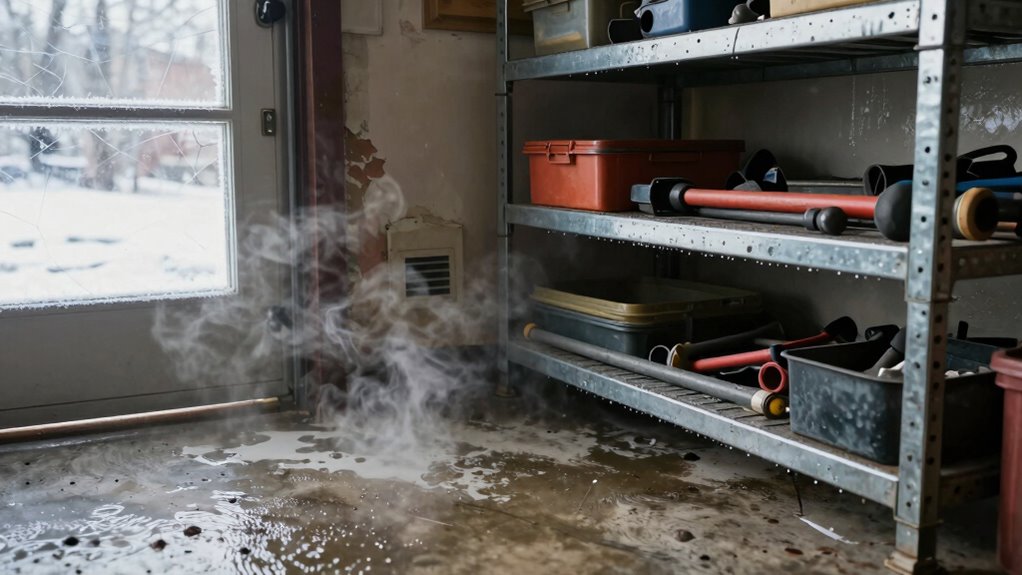
Temperature fluctuations can considerably impact the level of moisture in your garage. When temperatures change rapidly, it affects temperature stability, causing air to expand and contract. This movement can lead to increased condensation on walls, floors, and stored items. Insulation effectiveness plays a vital role here; well-insulated garages maintain more consistent temperatures, reducing moisture buildup. If your garage lacks proper insulation, it’s more vulnerable to temperature swings, which can cause persistent dampness. Conversely, a stable temperature minimizes condensation, keeping your garage drier. To improve this, consider upgrading your insulation and sealing gaps to promote temperature stability. Maintaining consistent temperatures helps control moisture levels, preventing dampness from fluctuating wildly and creating a healthier, drier space. Additionally, household products like dehumidifiers can help manage excess moisture effectively. Understanding indoor air quality factors can further assist in maintaining a comfortable environment, especially since proper ventilation can also reduce excess humidity. Regularly monitoring indoor humidity levels can help you take proactive steps to prevent moisture problems before they become severe. Incorporating temperature stability measures can also prevent rapid air expansion and contraction, further minimizing condensation issues.
Common Structural Problems That Lead to Water Leaks
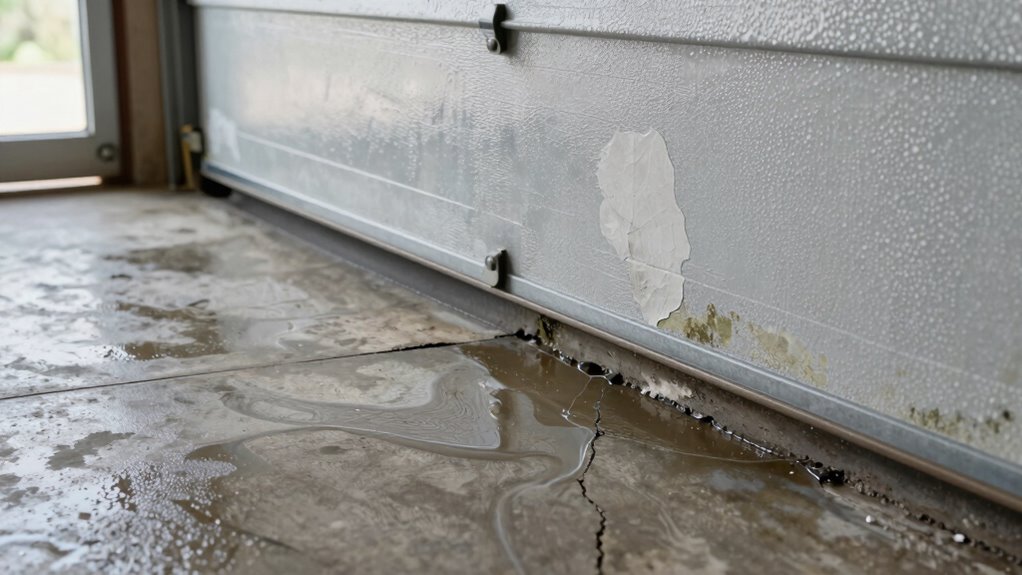
Structural issues in your garage can often be the root cause of water leaks, undermining efforts to control moisture and dampness. Foundation cracks are a common problem that allows water to seep into your garage from the ground, especially during heavy rains or snow melts. These cracks can expand over time, weakening the structure and increasing leak risk. Regular inspections of your foundation and roof can help identify these issues early, preventing costly repairs and moisture buildup. Proper piercing care and hygiene are also important to prevent additional damage or contamination that could worsen existing issues. Roofing issues also play a significant role; damaged or missing shingles, compromised flashing, or leaks in the roof itself enable water to enter and reach the walls or floor. If these problems go unnoticed or unaddressed, moisture will accumulate, leading to dampness and potential damage. Additionally, ensuring proper ventilation systems are in place can help reduce humidity levels and prevent condensation buildup that contributes to dampness. Proper cabling solutions and secure mounting can also ensure that electrical components remain protected from water ingress, further reducing potential moisture problems.
How Humidity and Climate Make Your Garage Damp
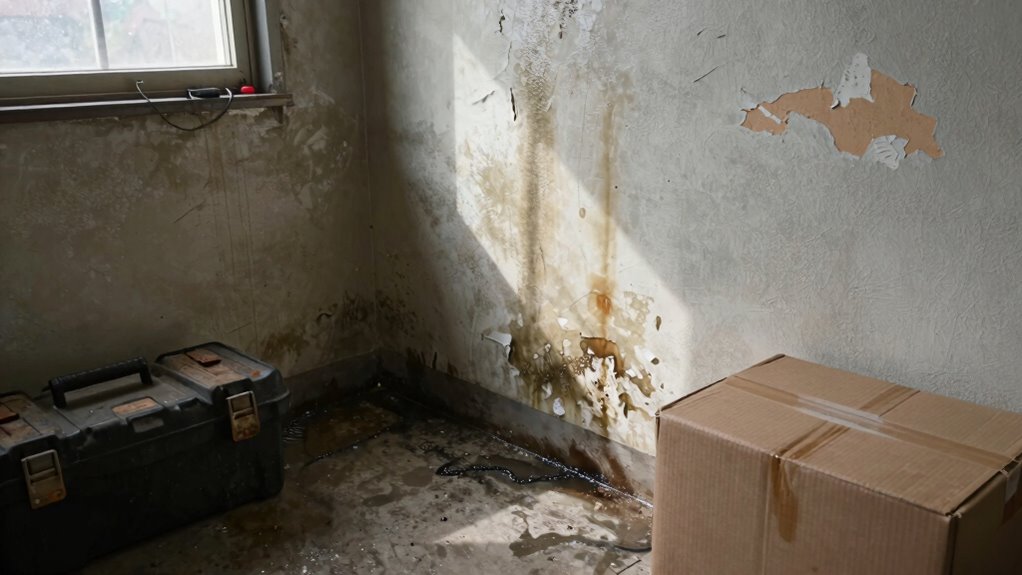
Humidity and climate play a significant role in making your garage damp by constantly introducing moisture into the air. High outdoor temperatures and humidity levels increase indoor humidity, leading to condensation and dampness. The climate impact varies depending on your location, whether it’s humid, rainy, or cold. These factors cause moisture to seep in or linger, especially if your garage isn’t well-sealed.
- Rising outdoor humidity raises indoor humidity levels
- Cold weather causes condensation on cold surfaces
- Rain increases moisture infiltration through leaks
- Seasonal changes affect moisture balance
- Poor insulation traps humidity inside
Understanding how climate impacts indoor humidity helps you identify why your garage stays damp and highlights the importance of managing moisture for a healthier space.
Simple Ways to Improve Garage Ventilation and Reduce Dampness

To improve your garage’s ventilation, consider installing exhaust fans to continuously remove moist air. You can also add ventilation openings or keep doors open regularly to promote airflow. These simple steps help reduce dampness and keep your garage dry.
Use Exhaust Fans
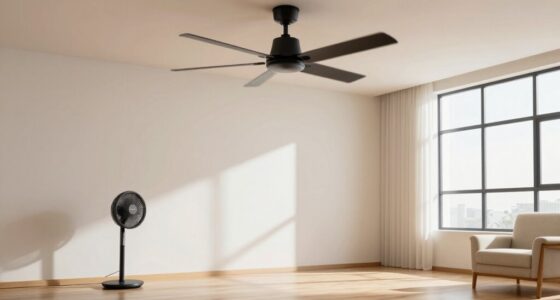
Exhaust fans are a simple and effective way to improve your garage’s ventilation and reduce dampness. By boosting air circulation, they help remove excess moisture and prevent mold growth. Installing an exhaust fan guarantees stale, humid air doesn’t linger, especially during colder months when windows stay shut. When choosing a fan, consider size, power, and noise level to match your garage’s needs. Regular use can dramatically cut dampness and improve air quality.
- Remove moisture quickly during work or laundry
- Reduce musty odors and mold risk
- Prevent condensation on walls and ceilings
- Help dry out wet tools and equipment
- Keep air fresh and breathable at all times
Install Ventilation Openings
Installing ventilation openings is a straightforward way to boost airflow and keep your garage dry. Proper ventilation improves moisture control by allowing damp air to escape and fresh air to circulate. You can add vents on walls or the ceiling, or install small windows that open easily. To maximize effectiveness, consider the location—placing openings near the floor and ceiling enhances airflow. Here’s a quick overview:
| Vent Location | Benefits | Best Use Case |
|---|---|---|
| Wall vents | Easy installation | Moisture escape |
| Ceiling vents | Promotes airflow | High humidity areas |
| Windows | Natural light & ventilation | Dual purpose |
Keep Doors Open Regularly
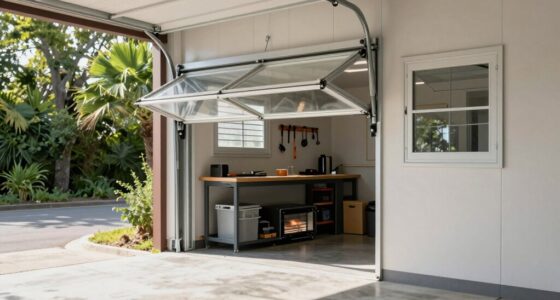
Keeping your garage doors open regularly is one of the simplest and most effective ways to improve ventilation and reduce dampness. It allows fresh air to circulate, preventing moisture buildup that leads to mold and mildew. To maximize benefits, consider organizing your garage efficiently so that open doors aren’t obstructed by clutter. Improving lighting can also encourage you to keep doors open longer, as a brighter space feels safer and more inviting. Here are some tips:
- Clear clutter to guarantee unobstructed airflow
- Use lighting improvements to create a welcoming environment
- Schedule regular door openings, especially during dry days
- Combine open doors with other ventilation methods
- Maintain good garage organization for quick access and airflow
These simple steps can markedly reduce dampness and keep your garage fresh.
Easy Maintenance Tips to Keep Your Garage Dry Year-Round

Maintaining a dry garage year-round is easier when you adopt simple, consistent practices. Regularly organize your garage to prevent clutter, which can trap moisture and promote mold. Keep tools and items off the floor to improve air circulation. Check for leaks or cracks and seal them promptly to prevent water intrusion. Use proper ventilation and consider installing a dehumidifier to control moisture levels. Good garage organization also helps with pest control, preventing pests from nesting in hidden corners.
| Tip | Benefit |
|---|---|
| Keep items elevated | Reduces moisture buildup and mold risk |
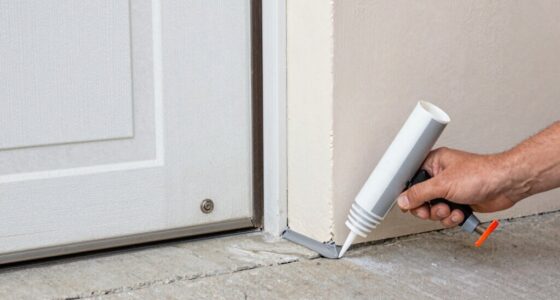
| Seal cracks and leaks | Stops water entry, keeps garage dry |
| Regular cleanup | Eliminates pest habitats and improves airflow |
Frequently Asked Questions
Can Indoor Plants Increase Garage Humidity?
Indoor plants can increase garage humidity because plant transpiration releases moisture into the air. When you place several plants in your garage, they actively add to indoor humidity levels, especially if the space is poorly ventilated. This moisture can contribute to dampness, mold, or a musty smell. To prevent this, you might want to limit the number of plants or improve ventilation to keep humidity balanced and your garage dry.
Does Sealing Cracks Fully Prevent Moisture Entry?
Sealing cracks can considerably reduce moisture entry, but it doesn’t fully prevent it. Studies show that even tiny gaps can allow up to 30% of moisture to seep in. By focusing on crack sealing, you minimize water intrusion, but complete prevention requires additional measures like proper insulation and sealing other potential entry points. So, sealing cracks is an essential step but not a foolproof solution alone.
Are Dehumidifiers Effective in Large Garages?
Dehumidifiers can be effective in large garages, but their efficiency depends on garage size considerations. You should choose a unit with sufficient capacity; smaller dehumidifiers might struggle to control humidity in bigger spaces. Keep in mind dehumidifier limitations, like needing regular emptying and maintenance. For large garages, consider commercial-grade models or supplement with proper ventilation and sealing strategies to guarantee moisture stays under control effectively.
How Often Should I Inspect My Garage for Leaks?
You should inspect your garage for leaks at least once every three to six months, especially after heavy rain or snow. Keep an eye on signs like water stains, mold, or musty odors. Use proper ventilation strategies during inspections to spot hidden leaks early. Regular inspection frequency helps prevent dampness, protecting your belongings and avoiding costly repairs. Don’t wait—being proactive now saves you trouble later.
Can Insulation Help Reduce Indoor Garage Dampness?
Yes, insulation can help reduce indoor garage dampness. Proper insulation, combined with ventilation systems, helps control temperature and humidity levels, preventing moisture buildup. Installing moisture barriers behind the insulation also blocks ground moisture from seeping in. This combined approach improves air circulation and keeps your garage dry. Regularly maintaining these systems guarantees they work effectively, reducing dampness and protecting your garage from mold and damage.
Conclusion
While tackling dampness can seem like a formidable task, addressing ventilation and structural issues makes a noticeable difference. Still, even with the best fixes, changing weather patterns and temperature swings can challenge your efforts. The key is consistency—regular maintenance and mindful adjustments. Just as moisture slips through cracks, so can your resolve—so stay vigilant. Embrace the balance between effort and patience, and your garage will remain dry, a sanctuary against the elements, rather than a haven for dampness.