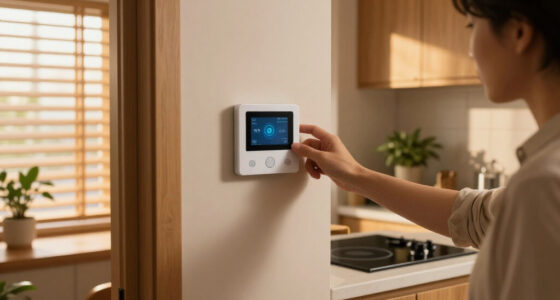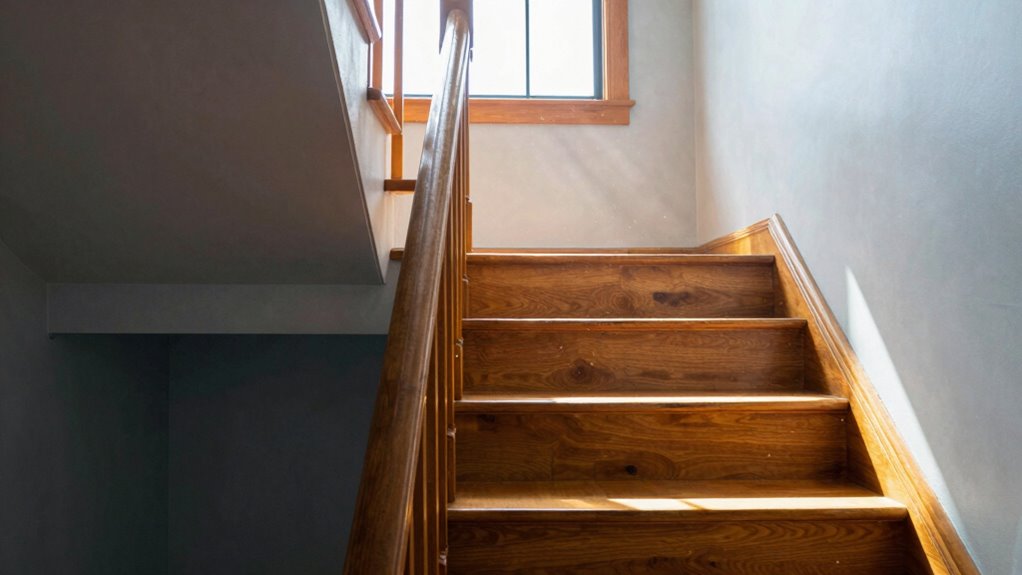

Your upstairs is often warmer because heat naturally rises, accumulating near ceilings, especially if your home isn’t well-insulated. Sunlight, roof design, and air leaks also contribute to the warmth upstairs. Poor airflow and inadequate ventilation can trap hot air, making it uncomfortable. By improving insulation, managing airflow, and sealing drafts, you can help balance temperatures. If you want to learn quick, effective ways to cool your upstairs, keep exploring the options available.

Get home appliances delivered free with Prime
- Fast, free delivery on millions of items
- Prime Video, Amazon Music and more included
- Member-only deals all year
Key Takeaways
- Warm air naturally rises and accumulates near ceilings, making upstairs consistently warmer.
- Sunlight heats upper floors more effectively through windows, increasing upstairs temperatures.
- Poor insulation and air leaks allow heat to escape or unevenly distribute warmth upstairs.
- Higher ceilings and thermal layering trap warm air upstairs, contributing to temperature differences.
- Insufficient airflow and ventilation prevent even cooling, causing upstairs to stay warmer.
As an affiliate, we earn on qualifying purchases.
Why Does Heat Rise and Make Your Upstairs Warmer?
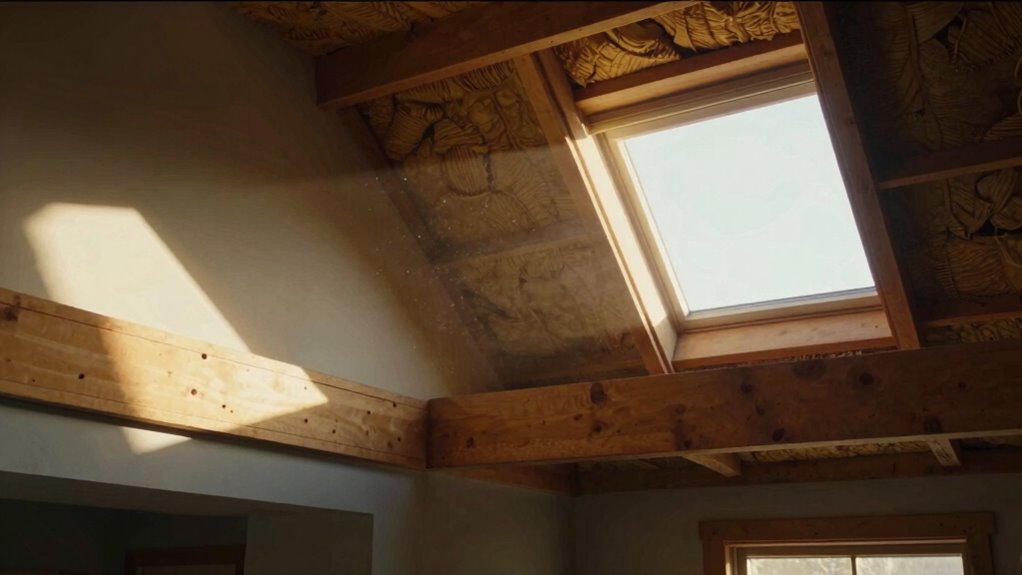
Heat naturally rises because warmer air is less dense than cooler air. When you heat a room, radiant heat from sources like radiators or sunlight warms objects and surfaces, which then transfer heat to the surrounding air. This process creates thermal layering, where warm air sits near the ceiling while cooler air stays lower. As a result, your upstairs feels warmer because the heat accumulates at higher levels. Warm air’s tendency to rise isn’t just due to convection but also because of its lower density. You might notice this effect in your home, especially if windows or sunlight heat the upper floors more directly. Additionally, insulation quality can influence how heat distributes and accumulates in different areas of your home. Understanding how radiant heat and thermal layering work helps explain why upstairs tends to be warmer than downstairs. Proper ventilation can also help balance the temperature differences by promoting better air circulation throughout your home, which can be especially important when considering the spiritual significance of energy flow in your living space. Moreover, the building materials used in your home can impact heat retention and distribution, further affecting temperature differences between floors.
As an affiliate, we earn on qualifying purchases.
How Your Home’s Design Affects Temperature Balance
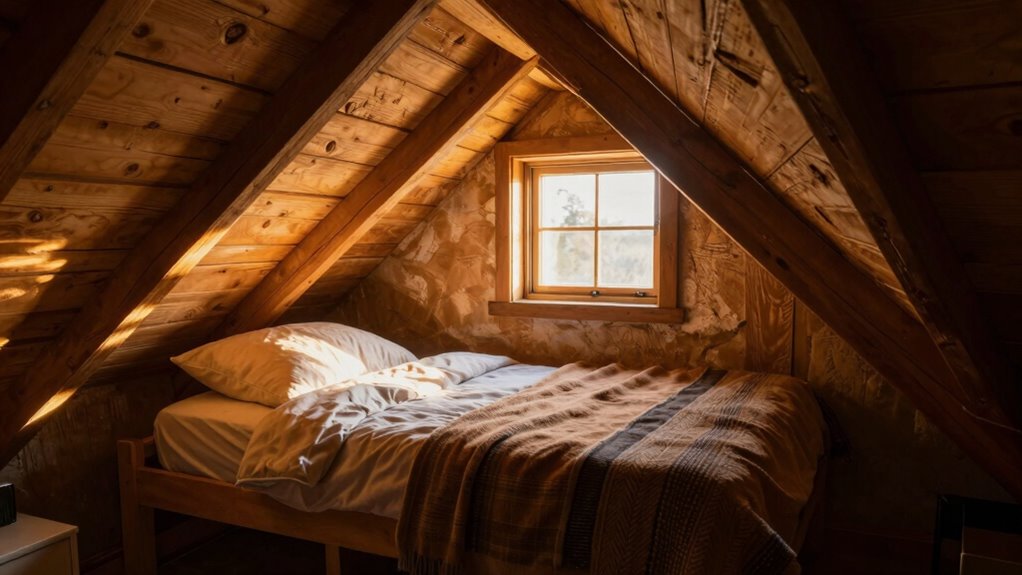
Your home’s design plays a big role in temperature balance; for example, how well it’s insulated can make a difference in heat retention. Proper airflow distribution helps keep rooms evenly warm or cool, while poor design can create hot spots upstairs and cold spots downstairs. Understanding these factors lets you improve your home’s comfort and energy efficiency. Additionally, selecting appropriate wall finishes and considering how they influence thermal performance can further enhance temperature regulation throughout your home. Incorporating thermal mass into your home’s design can also help stabilize indoor temperatures by absorbing and releasing heat as needed. Employing energy-efficient features can further optimize temperature control and reduce overall energy costs, making your home more comfortable and sustainable. Being mindful of indoor air quality is essential, as pollutants and humidity levels can also impact thermal comfort. Using necessary cookies for site functionality ensures your design considerations are effectively communicated and implemented.
Heat Rises Naturally
Because warm air is less dense than cold air, it naturally rises, creating a temperature difference between the upper and lower levels of your home. This process, known as thermal convection, causes heat to move upward without your intervention. Your home’s design influences this natural movement through factors like ceiling height, vent placement, and open floor plans. Additionally, heat conduction plays a role as warm air transfers heat to cooler surfaces, further amplifying temperature differences. To understand this better:
- Warm air rises through convection, moving toward upper floors.
- Heat conduction transfers warmth from warm surfaces to cooler areas.
- The design of vents and open spaces facilitates or hinders this natural heat movement.
Understanding these principles helps you see why upstairs tends to be warmer naturally.
Insulation Effectiveness Varies
While warm air naturally rises, the way your home is built can considerably influence how effectively heat stays distributed. Poor insulation, especially in wall cavities, allows heat to escape or transfer unevenly, creating thermal bridging. Thermal bridging occurs when heat bypasses insulation through materials like studs or metal components, reducing overall effectiveness. If your wall cavity isn’t properly insulated, the heat you generate upstairs may leak downward or escape outside, making the downstairs cooler. Additionally, traditional Indonesian home decor principles emphasize the use of natural materials and harmonious design, which can also impact airflow and temperature regulation within your space. The design of your insulation and how well the wall cavity is sealed directly impact how balanced your indoor temperature remains. Improving insulation around wall cavities minimizes thermal bridging, keeping heat where you need it most. Proper home design details can also influence airflow patterns, further affecting temperature distribution. Incorporating effective thermal management techniques can significantly enhance your home’s overall energy efficiency and comfort. Ensuring that your home’s construction incorporates insulation quality is essential for maintaining consistent temperatures throughout your space.
Airflow Distribution Matters
Have you ever noticed how warm air seems to linger upstairs while the ground floor stays cooler? Your home’s design greatly influences airflow distribution, impacting temperature balance. To improve airflow optimization, consider these ventilation strategies:
- Use ceiling fans to circulate air evenly across rooms, preventing warm air from settling upstairs.
- Install vents or operable windows to promote cross-ventilation, allowing cooler air to enter and warm air to escape.
- Adjust register and grille placements in your HVAC system to direct airflow where needed, ensuring even heating and cooling.
- Regularly inspect and maintain airflow pathways, such as cleaning vents and removing obstructions, to keep air moving efficiently throughout your home. Properly designed and maintained airflow pathways can also help mitigate issues related to air pressure imbalance, which can cause uneven temperature distribution. Additionally, integrating smart home technology can help monitor and optimize airflow for better comfort and energy efficiency. Understanding the principles of airflow dynamics can further assist in making effective adjustments to your home’s ventilation system.
As an affiliate, we earn on qualifying purchases.
How Insulation and Airflow Help Keep Your Home Comfortable
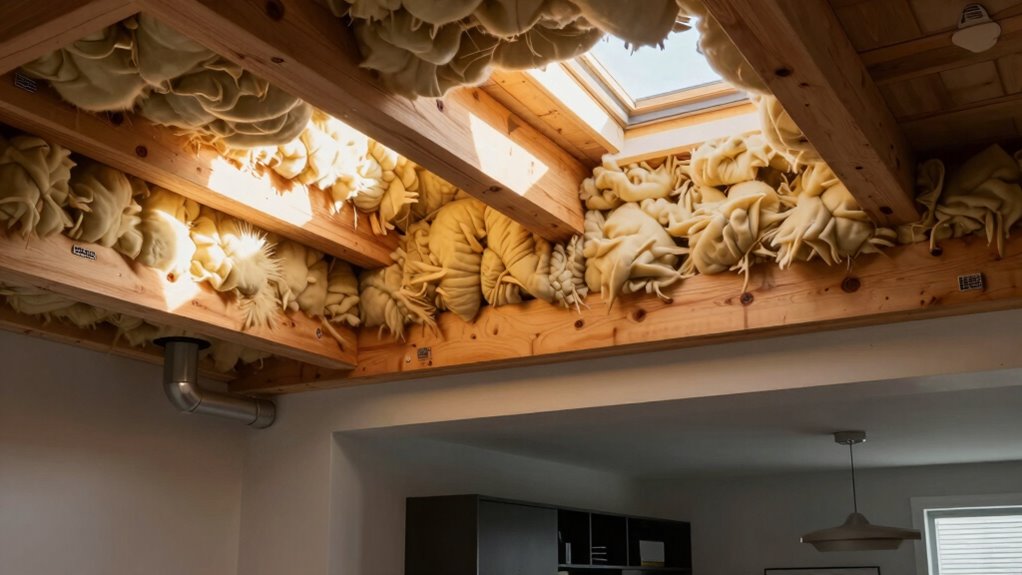
Ever wonder how insulation and airflow work together to keep your home comfortable? Proper insulation minimizes heat transfer through walls, ceilings, and floors, trapping warm air inside during winter and blocking heat during summer. It also helps prevent upstairs warmth from seeping down, helping balance temperatures. Airflow plays a vital role by circulating air efficiently, reducing hot spots and stale air. Using thermal curtains and window shading can add extra layers of insulation around your windows, blocking drafts and preventing heat from entering or escaping. These measures guarantee cooler upstairs temperatures in summer and retain warmth in winter. When insulation and airflow are optimized, your home stays more consistent in temperature, reducing the need for excessive heating or cooling. Incorporating indoor air quality gear such as HEPA filters and UV-C sterilization can further improve overall comfort and health. Additionally, understanding thermal dynamics can help you make more informed decisions about home climate management, including how airflow patterns influence temperature distribution. Being aware of air exchange rates can help you better control indoor humidity and temperature levels. Together, they create a more comfortable and energy-efficient living environment.
As an affiliate, we earn on qualifying purchases.
Practical Ways to Cool Down Your Upstairs
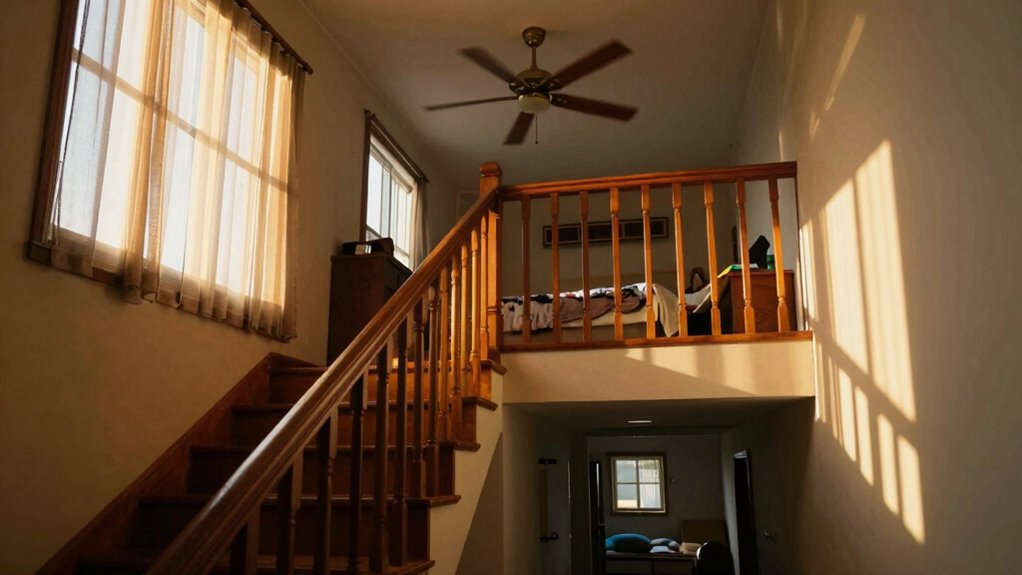
To cool down your upstairs, start by improving air circulation with fans or vents. Using ceiling fans can create a breeze that makes the space feel cooler, while installing attic insulation helps keep the heat out. These simple steps can make a noticeable difference in how comfortable your upstairs feels. Additionally, ensuring proper airflow management can prevent hot air from becoming trapped in the upper levels. Consider evaluating your HVAC system to ensure it is appropriately sized and functioning efficiently for your space. Regularly maintaining your air conditioning units can also enhance their performance and cooling capacity.
Improve Air Circulation
Wondering how to make the upstairs cooler? Improving air circulation is key. Start by adjusting air vent placement to guarantee cool air flows efficiently throughout the space. Proper vent positioning helps prevent hot spots near ceilings or corners. Next, consider the ceiling height; taller ceilings can trap warm air, so using fans or vents to move air downward helps balance temperatures. Finally, open windows on opposite sides of the house to create cross-ventilation, allowing cool air to enter and hot air to escape. These simple steps enhance airflow, reducing temperature buildup upstairs. By focusing on strategic air vent placement, addressing ceiling height issues, and promoting cross-ventilation, you’ll help keep your upstairs more comfortable all year round.
Use Ceiling Fans
Ceiling fans are a straightforward and effective way to enhance airflow and cool down your upstairs living space. Proper ceiling placement is key—install fans in the center of each room for ideal circulation. When using fans, adjust the fan speed to suit the current temperature; higher speeds create a strong breeze that cools quickly, while lower speeds provide gentle airflow for comfort. In summer, set fans to rotate counterclockwise to push cool air downward. Remember, fans cool people, not rooms, so turn them off when you leave a room to save energy. Combining well-placed ceiling fans with other cooling methods can greatly reduce upstairs heat, making your space more comfortable without a major energy expense.
Install Attic Insulation
Attic insulation plays a crucial role in maintaining a cooler upstairs environment by preventing heat from seeping into your living space. Proper insulation reduces heat transfer, keeping your home more comfortable. To maximize its effectiveness, consider these steps:
- Add insulation: Use high-quality fiberglass or spray foam insulation to fill gaps and ensure even coverage.
- Improve attic ventilation: Install vents or fans to circulate air, preventing heat buildup and moisture issues.
- Use radiant barriers: Install reflective barriers on the attic floor or underside of the roof to reflect radiant heat away from your home.
Combining insulation with proper ventilation and radiant barriers creates a cooler attic, which directly impacts the upstairs temperature, making your home more comfortable year-round.
Common Causes of Upstairs Warmth and How to Fix Them
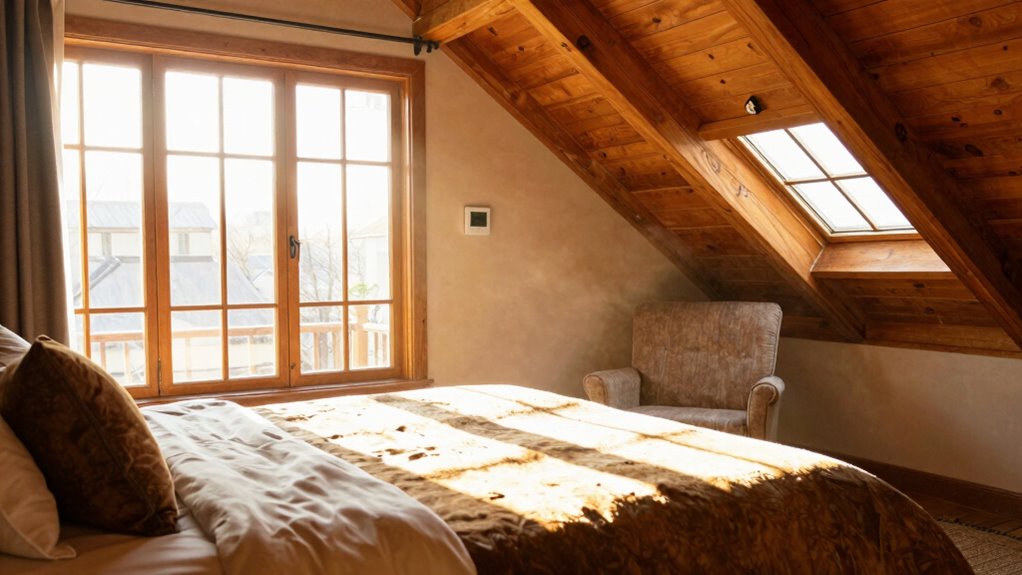
One common reason upstairs stays warmer is that hot air naturally rises and becomes trapped in the upper levels of your home. Poor insulation, especially around decorative radiators, allows heat to escape or unevenly distribute. Additionally, inadequate window treatments can let heat leak through windows, increasing upstairs warmth. To fix this, consider upgrading your window coverings to heavy curtains or thermal blinds. Also, seal leaks around radiators and windows with weatherstripping or caulk. Proper insulation helps maintain consistent temperatures.
| Issue | Solution | Effect |
|---|---|---|
| Poor insulation | Add insulation to attic or walls | Maintains temperature |
| Leaky windows | Install weatherstripping or thermal curtains | Reduces heat escape |
| Inefficient radiators | Use decorative radiators with thermostats | Controls heat output |
| Air leaks | Seal gaps around windows and doors | Prevents heat loss |
| Drafts | Use draft stoppers on doors and vents | Keeps warm air inside |
When to Call a Professional for Heating and Cooling Problems
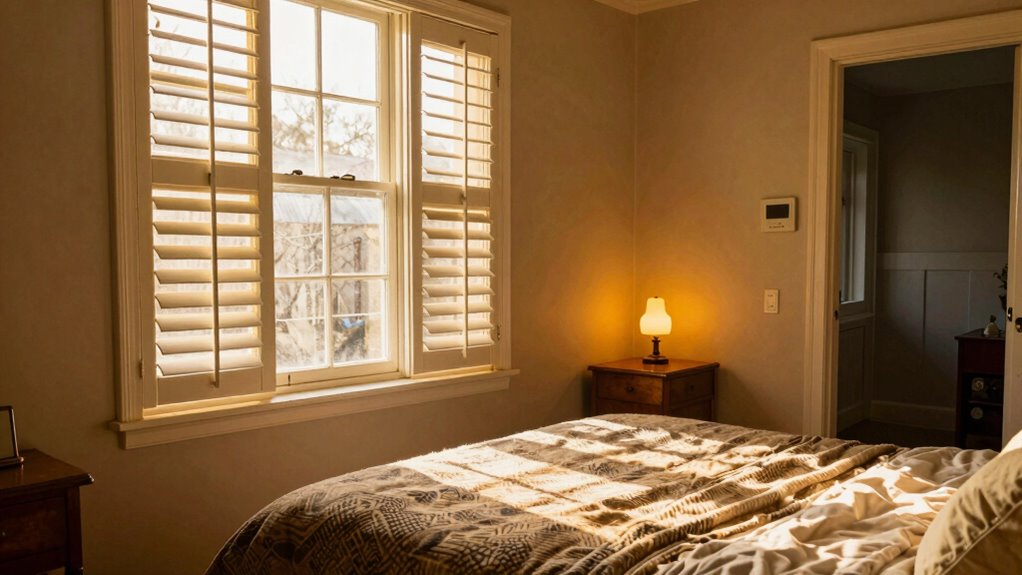
Knowing when to call a professional for heating and cooling issues is essential to avoiding unnecessary damage and ensuring your system operates efficiently. If adjustments to thermostat settings or window upgrades don’t improve comfort, it’s time to seek expert help. Consider calling a professional if:
- Your system runs constantly or short-cycles, indicating a potential malfunction.
- You notice uneven temperatures despite adjusting thermostat settings, especially upstairs versus downstairs.
- You’ve installed new windows or upgraded insulation, but issues persist, suggesting your HVAC system needs calibration or repairs.
A professional can evaluate your system, recommend proper thermostat calibration, and suggest proper window or insulation upgrades to optimize airflow. Don’t delay if problems persist, as ignoring them can lead to higher energy bills or system failure.
Frequently Asked Questions
Can Ceiling Fans Help Cool the Upstairs Effectively?
Ceiling fans can help cool upstairs effectively by improving air circulation, which enhances comfort. Their efficiency depends on proper placement and speed settings. When you turn on a ceiling fan, it creates airflow that makes the room feel cooler without lowering the temperature itself. The air circulation benefits help distribute cooled air more evenly, reducing hot spots and making your upstairs more comfortable, especially during warmer months.
Do Window Treatments Impact Upstairs Temperature?
Yes, window treatments considerably impact your upstairs temperature. By using proper window insulation, you prevent warm air from escaping and reduce heat transfer during hot days. Additionally, managing sun exposure with blinds, curtains, or reflective film helps block out intense sunlight, keeping upstairs cooler. These measures work together to maintain a more comfortable temperature, especially when combined with other cooling strategies.
How Does Attic Ventilation Influence Upstairs Warmth?
Attic ventilation plays a vital role in controlling upstairs warmth by preventing heat buildup. When you have a good ventilation system, it allows hot air to escape and cool air to enter, reducing attic temperatures. Proper attic insulation works with this system to keep heat from transferring downstairs. Together, they help maintain a more balanced temperature upstairs, making your home more comfortable and potentially lowering cooling costs.
Are Programmable Thermostats Beneficial for Upstairs Cooling?
Yes, programmable thermostats are beneficial for upstairs cooling. Smart thermostats let you set precise schedules, optimize comfort, and reduce energy use. With features like learning your habits and remote control, they make cooling more efficient. You save energy, cut utility bills, and stay comfortable. Consistently adjusting temperatures and automating cooling cycles helps maintain a cooler upstairs, making a smart thermostat a smart choice for energy savings and enhanced comfort.
What Role Do Duct Leaks Play in Upstairs Heating?
Duct leaks considerably affect upstairs heating by allowing warm air to escape before reaching upper floors. You can improve this by sealing ducts thoroughly, preventing heat loss. Additionally, upgrading insulation in your attic and walls helps retain heat upstairs, keeping it warmer. Regular duct sealing and insulation upgrades work together to ensure your upstairs stays comfortable, reducing energy waste and maintaining consistent temperatures throughout your home.
Conclusion
Did you know that heat rises and can make your upstairs up to 10°F warmer than downstairs? Understanding why this happens and how your home’s design influences temperature can help you stay comfortable year-round. Simple fixes like improving insulation or airflow can make a big difference. If issues persist, don’t hesitate to call a professional. Taking these steps can turn your home into a cooler, more comfortable space—keeping everyone happy and relaxed.
Halloween Picks
halloween
As an affiliate, we earn on qualifying purchases.