Before installing a home EV charger, assess your garage’s electrical capacity and verify your main panel can handle the additional load, considering upgrades if needed. Choose a suitable charger type and locate it where you can easily access and avoid hazards. Check local codes for permits and safety standards. Planning for future needs and proper installation helps prevent problems later. Keep these basics in mind to create a safe, efficient setup—that’s just the start of what you can do.

Get home appliances delivered free with Prime
- Fast, free delivery on millions of items
- Prime Video, Amazon Music and more included
- Member-only deals all year
Key Takeaways
- Evaluate your garage’s electrical system, including capacity and grounding, to ensure it can support an EV charger safely.
- Choose a charger compatible with your vehicle’s charging connector type and your daily routine needs.
- Obtain necessary permits and ensure compliance with local building codes and electrical standards.
- Plan for future expansion by installing higher-capacity circuits or flexible outlets to accommodate additional EVs.
- Ensure proper garage insulation, ventilation, and lighting to create a safe and efficient charging environment.
home EV charger installation kit
As an affiliate, we earn on qualifying purchases.
As an affiliate, we earn on qualifying purchases.
Assess Your Garage’s Electrical Capacity
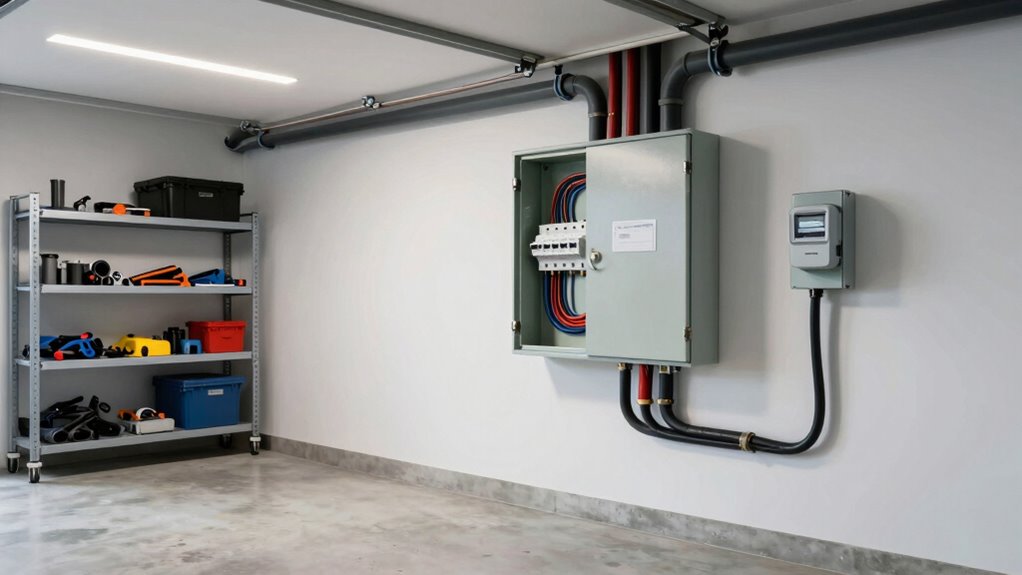
Before installing an EV charger at home, you need to evaluate your garage’s electrical capacity. Start by checking your main electrical panel to see if it can handle the additional load. Upgrading your garage’s electrical system might be necessary if it’s outdated or insufficient. Also, consider your garage insulation, as a well-insulated space helps maintain consistent temperatures and can impact electrical efficiency. Lighting considerations matter too; verify your garage lighting is adequate and compatible with any new electrical work. Proper lighting makes installation safer and easier. If you’re unsure about your electrical capacity, consult a professional electrician. They can assess your system, recommend upgrades, and ensure your garage is ready for a reliable, safe EV charging setup. Additionally, understanding your home electrical system can help you identify potential limitations and plan for future upgrades, including load management strategies to optimize your electrical use. Incorporating power storage solutions can also enhance your system’s reliability and efficiency. Being aware of your garage electrical capacity can help prevent overloads and ensure smooth charging operation, especially when considering electrical load assessment.
garage electrical capacity tester
As an affiliate, we earn on qualifying purchases.
As an affiliate, we earn on qualifying purchases.
Choose the Right EV Charger for Your Home
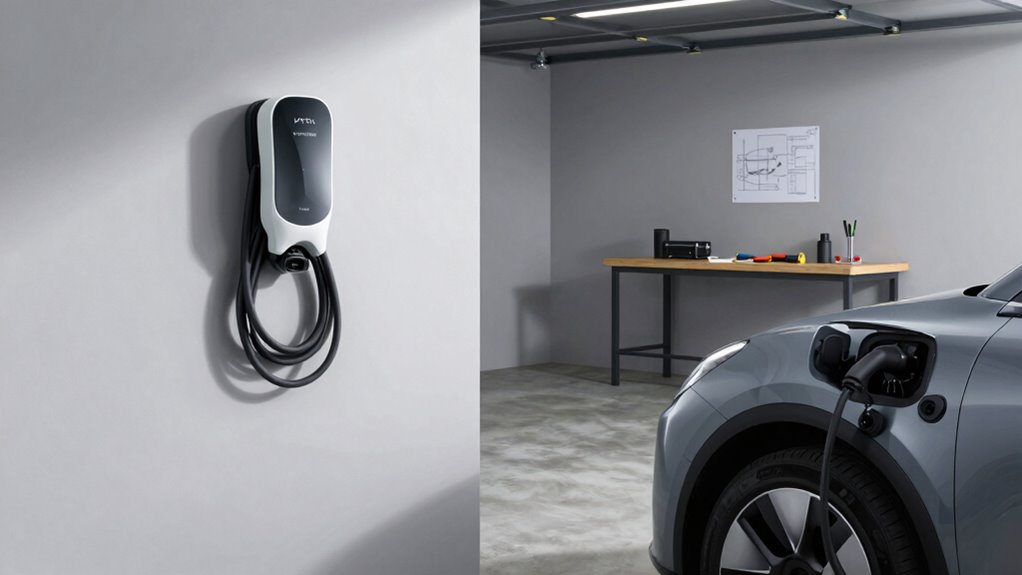
Selecting the right EV charger for your home involves understanding your vehicle’s charging needs and your electrical system’s capabilities. Consider how quickly you want to recharge—faster charging speeds mean more convenience but may require a higher-capacity circuit. Also, check your vehicle’s connector types; most EVs use either a Type 1 or Type 2 connector. Additionally, it’s important to evaluate your work-life harmony, ensuring your charging setup aligns with your daily routine and minimizes stress. Ensuring proper safety measures can help prevent electrical hazards and enhance your overall charging experience. Being aware of your electric system capacity is essential to avoid overloading circuits and ensure a safe installation. Recognizing flywheel benefits can help you appreciate how proper setup and upgrades contribute to overall vehicle performance. Understanding nail biology can remind us of the importance of proper care, similar to how assessing your electrical system can prevent issues.
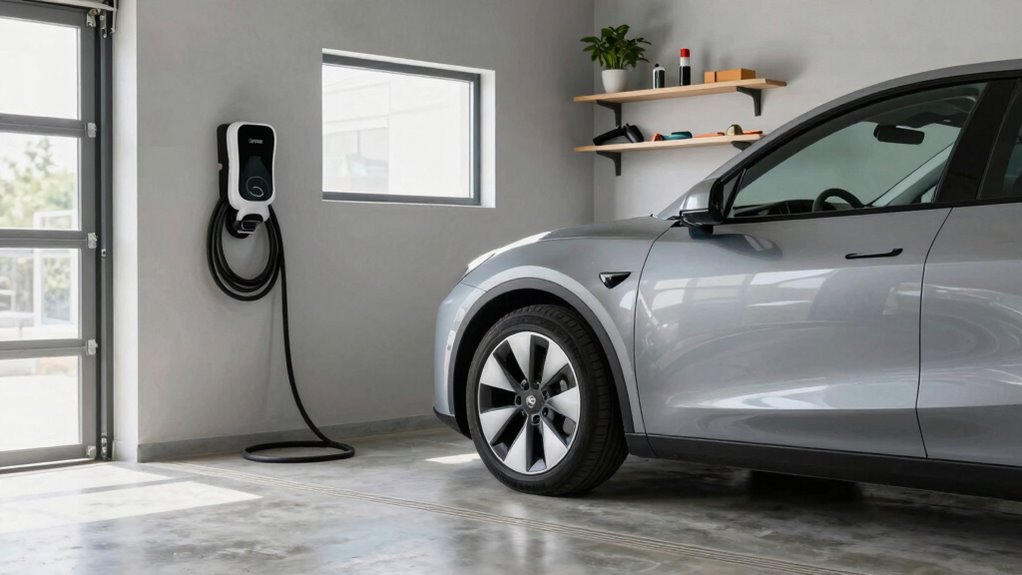
EV charging station with Type 2 connector
As an affiliate, we earn on qualifying purchases.
As an affiliate, we earn on qualifying purchases.
Understand Your Power Panel and Circuit Breakers
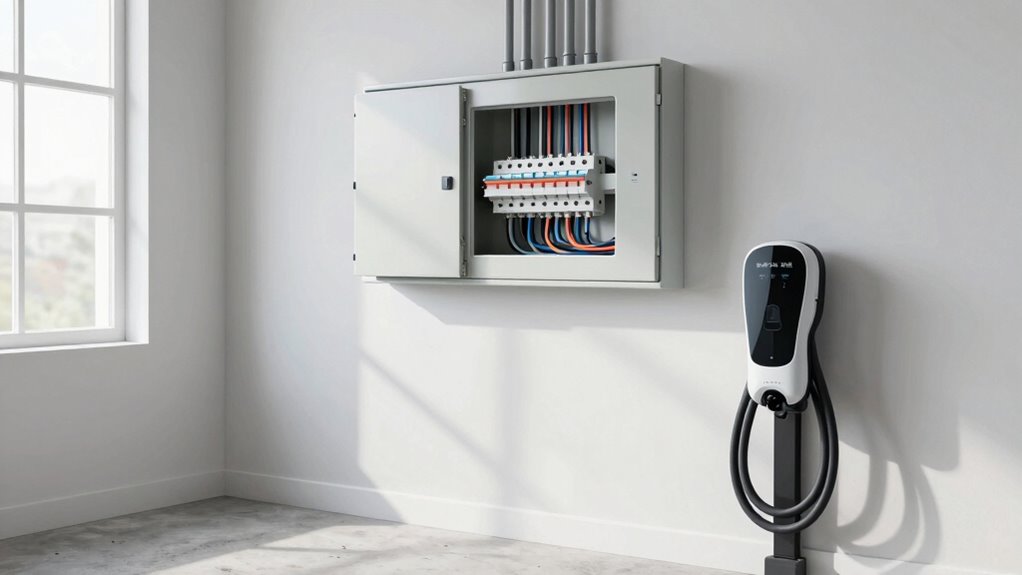
Understanding your home’s electrical system is key to choosing and installing the right EV charger. Start by inspecting your power panel and circuit breakers to determine wiring compatibility and capacity. Check the amperage ratings—most home circuits are 15 or 20 amps, but EV chargers often require higher capacity, like 30 or 40 amps. Confirming circuit safety is essential; overloads can trip breakers or cause hazards. Identify which circuits are dedicated or can be upgraded for your EV charger. If you’re unsure about your wiring, consult a professional to assess whether your existing panel can handle the additional load. Proper understanding of your power panel helps prevent electrical issues and guarantees a safe, reliable charging setup. Incorporating knowledge of electrical regulations ensures your installation aligns with safety standards. Additionally, understanding circuit capacity helps in planning for future electrical needs and upgrades. Being aware of your home electrical system can also help you evaluate potential costs and timeframes for installation. Knowing the local electrical codes is critical to ensure your installation is compliant and safe.
garage lighting and ventilation for EV charging
As an affiliate, we earn on qualifying purchases.
As an affiliate, we earn on qualifying purchases.
Select the Best Spot in Your Garage for Charging
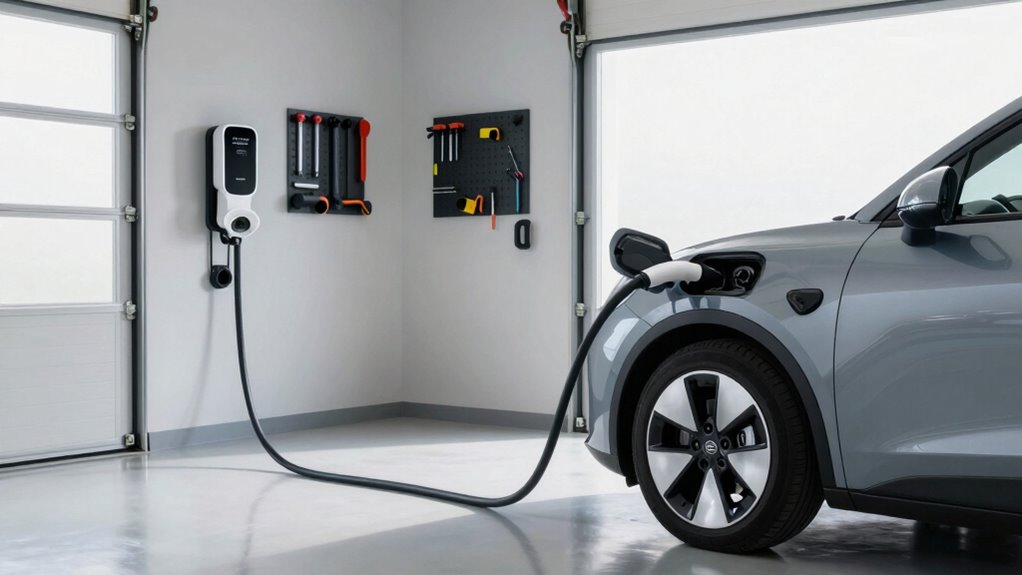
Selecting the right spot in your garage for charging your EV is essential for safety and convenience. The parking layout should allow easy access to the charger without blocking other vehicles or storage areas. Consider a location near an electrical outlet or where you can easily install one. Good lighting considerations are also vital; a well-lit spot ensures you can safely connect and disconnect your charger, especially at night. Here are three tips to help you pick the best spot:
- Place the charger where the cord length is sufficient without stretching or creating tripping hazards.
- Choose a location with minimal obstruction, so your vehicle can park straight and comfortably.
- Ensure the area is well-lit for safe handling during installation and daily use.
- Additionally, selecting a spot with proper electrical grounding can help prevent electrical issues and enhance safety. Proper grounding is crucial for electrical safety and to avoid potential hazards, especially when considering the electrical demands of electric bikes and other devices.
- Considering local electrical codes during your selection process can further ensure your installation remains compliant and safe.
Get Permits and Follow Local Building Codes
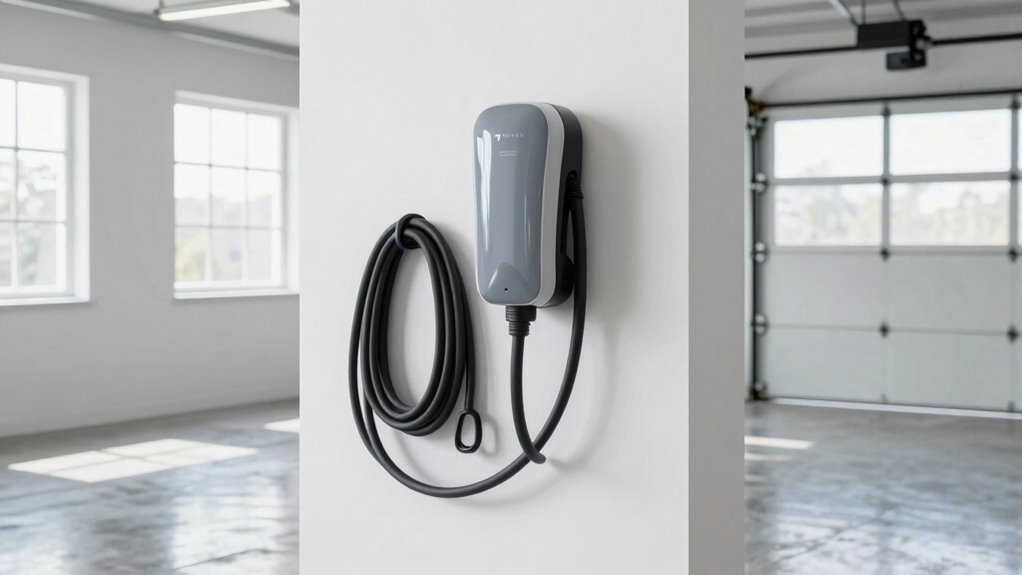
Before installing your home EV charger, you need to understand local regulations and obtain any required permits. Following the building codes guarantees your setup is safe and compliant. Skipping these steps could lead to fines or needing costly modifications later. Additionally, consulting with a professional ensures your installation adheres to industry standards and best practices. Sound design skills can help you plan a safe and efficient setup for your garage, especially when considering bedding picks and sleep comfort tools that promote overall well-being. Understanding regulatory compliance is essential to ensure your installation meets legal requirements and avoids potential issues down the line. Proper knowledge of mammography guidelines and the importance of regular screenings can also influence your health decisions, emphasizing the need for thorough planning and adherence to safety standards. Being aware of Rhythm Failure themes can inspire you to incorporate positive energy into your space design and overall environment.
Understand Local Regulations
Maneuvering local regulations is a essential step in installing a home EV charger, and it’s important to start by checking whether you need permits. As a homeowner, understanding your responsibilities helps guarantee compliance and smooth installation. Additionally, installer considerations are critical for safety and code adherence.
To stay on track, consider these key points:
- Confirm if permits are required in your area for electrical upgrades or new wiring.
- Review local building codes to make sure your charger placement and electrical setup meet standards.
- Discuss with your installer about any additional regulations or inspections needed.
- Be aware that appliance compatibility and proper electrical connections are vital to ensure your EV charger functions safely and efficiently.
Obtain Necessary Permits
Once you’ve reviewed local regulations and confirmed any necessary inspections, the next step is to obtain the permits required for your EV charger installation. The permit process involves submitting plans to your local building department, showing that your setup complies with safety standards. Be prepared to provide detailed electrical diagrams and specifications. During the permit process, you’ll also learn about inspection requirements, which guarantee your installation meets code. These inspections verify that wiring, grounding, and hardware are correctly installed and safe to use. Skipping permits or inspections can lead to fines, delays, or safety hazards. Always follow your local authority’s procedures carefully, and keep documentation handy for future reference or potential resale. Proper permitting ensures a safe, compliant, and hassle-free EV charging setup.
Comply With Building Codes
Ensuring your EV charger installation complies with building codes is essential for safety and legality. Proper code compliance helps prevent electrical safety hazards and ensures your setup meets local regulations. To stay on track:
- Check local building codes before starting, as requirements vary by area and may include specific electrical safety standards.
- Obtain necessary permits from your local authorities to ensure your installation is inspected and approved.
- Hire licensed professionals if needed, to guarantee your wiring, grounding, and circuit protection meet all code requirements.
Following these steps guarantees your EV charger installation is safe, legal, and reliable. Adhering to building codes protects your investment and keeps your home safe from electrical safety issues down the line.
Plan for Future Charging Needs
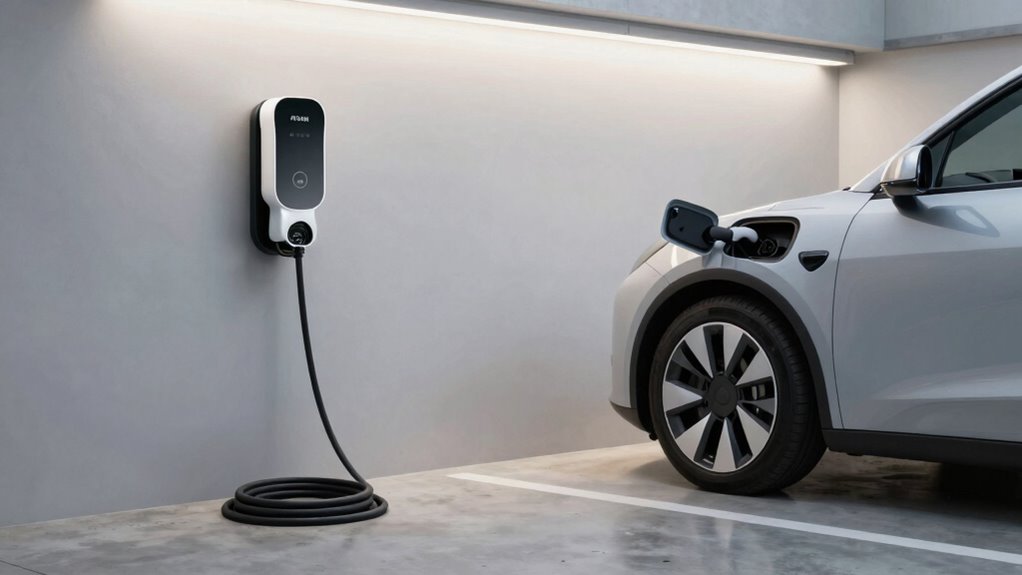
Planning for your future charging needs is essential to keep your electric vehicle (EV) ownership smooth and worry-free. Consider your current vehicle’s charging requirements and how they might evolve, especially if you plan to add more EVs later. Wireless compatibility is a key feature to look for, allowing you to upgrade or connect chargers without extensive rewiring. Think about future scalability—install a system that can handle increased power demands as your EV fleet grows. This might mean choosing a higher-capacity circuit or flexible outlets. By planning ahead, you guarantee your garage can accommodate future technology upgrades and additional vehicles without costly modifications. Being proactive now saves you time, money, and hassle down the road.
Prepare Your Garage for Safe and Practical Installation
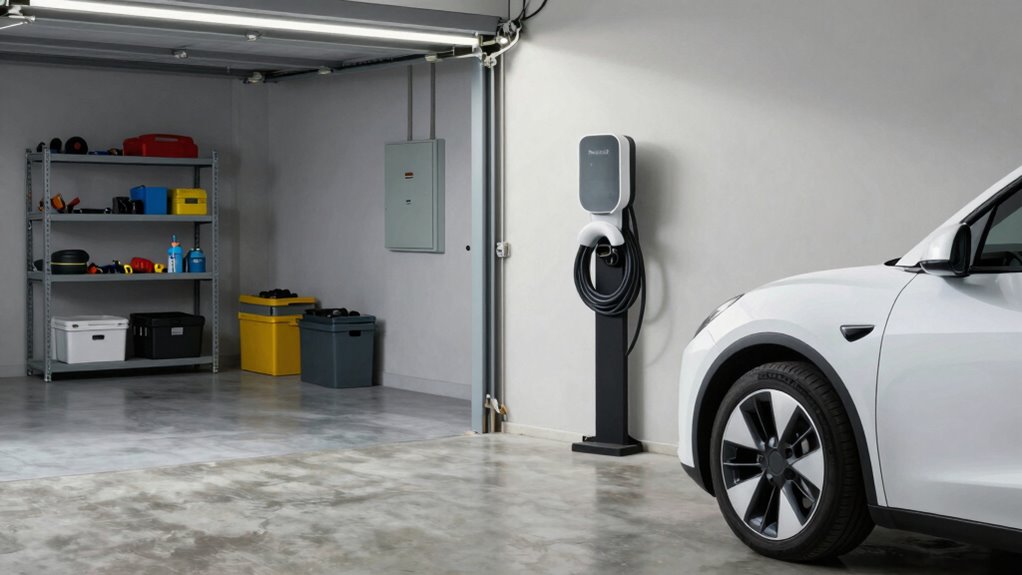
Preparing your garage for a safe and practical EV charger installation means evaluating your space and addressing potential hazards beforehand. Start by inspecting your garage insulation to verify it maintains a stable temperature, protecting your equipment and vehicle. Next, consider ventilation considerations; proper airflow prevents heat buildup and reduces fumes, especially if you plan to work on your EV inside. Finally, check for any electrical hazards, like outdated wiring or exposed circuits, and upgrade as needed.
Here’s a quick checklist:
- Improve garage insulation for temperature stability.
- Verify adequate ventilation to prevent heat and fumes buildup.
- Inspect and upgrade electrical wiring for safety and compatibility.
Taking these steps helps create a safe, functional environment for your EV charging setup.
Troubleshoot Common Garage Setup Challenges
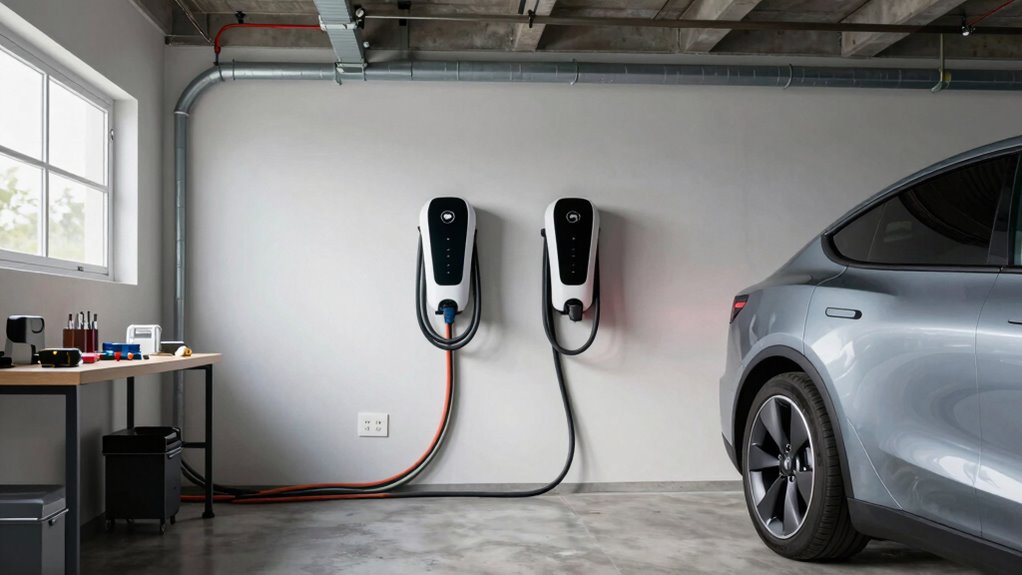
Garage setup challenges can often disrupt your EV charging plans, but identifying and addressing common issues early can save you time and frustration. Poor garage organization can make it difficult to access your charging station or safely store equipment. Take time to declutter and create a dedicated space for your charging setup. Lighting considerations are also vital; inadequate lighting can make it hard to see outlets or wiring, increasing safety risks. Install sufficient, well-placed lighting to guarantee visibility during installation and maintenance. Check for electrical panel capacity to avoid overloads, and verify outlets are properly grounded. By addressing these typical challenges upfront, you streamline your installation process, enhance safety, and make daily charging more convenient.
Frequently Asked Questions
Can I Install an EV Charger Without Professional Help?
You can attempt a DIY EV charger installation, but it’s not recommended due to DIY challenges and safety concerns. Handling electrical wiring without proper knowledge risks shock or fire hazards. If you lack experience with electrical work, you might miss essential safety steps or code requirements. To guarantee safety, compliance, and a reliable setup, it’s best to hire a professional electrician who understands EV charging station installation and local electrical codes.
How Long Does It Typically Take to Install a Home EV Charging Station?
Typically, it takes about a few hours to install your home EV charging station. The speed depends on your home’s setup, the charger type, and whether electrical work is needed. Faster charging speeds often mean higher installation costs, which can extend the time for proper setup. You’ll want to plan for a professional, precise installation, ensuring safety and efficiency while balancing your budget and desired charging speed.
What Safety Precautions Should I Consider During Installation?
During installation, you should prioritize grounding safety to prevent electrical shocks and guarantee system stability. Always verify that your circuit can handle the load to avoid overloads, which can cause damage or fires. Use proper grounding techniques and double-check that your circuit breaker matches the charger’s requirements. If unsure, consult a professional to ensure all safety precautions are met, keeping your home and family safe.
Will My Homeowner’s Insurance Cover EV Charger Installation?
Your homeowner’s insurance might cover EV charger installation, but it depends on your policy. Check your insurance coverage details for specific provisions related to charging stations. Keep in mind, there could be policy exceptions or limitations, especially if the installation isn’t performed by a licensed professional or causes damage. Contact your insurer directly to confirm if your policy includes coverage for the charger and installation process.
How Can I Upgrade My Garage’s Electrical System for Future EVS?
Think of your garage’s electrical system as the backbone of your future EV charging needs. To upgrade, you’ll want to enhance your garage wiring and possibly install a new electrical panel that can handle higher loads. This guarantees your system is ready for multiple EVs and faster chargers. Consult with a licensed electrician to assess your current setup and plan a safe, scalable upgrade that meets future demands.
Conclusion
Before you install your EV charger, taking these garage basics into account guarantees a safe and efficient setup. For example, Sarah upgraded her electrical panel beforehand, preventing costly surprises later. By evaluating your electrical capacity, choosing the right charger, and planning carefully, you’ll enjoy hassle-free home charging. Remember, proper preparation not only protects your home but also keeps your EV charging experience smooth and reliable for years to come.
Halloween Picks
halloween
As an affiliate, we earn on qualifying purchases.