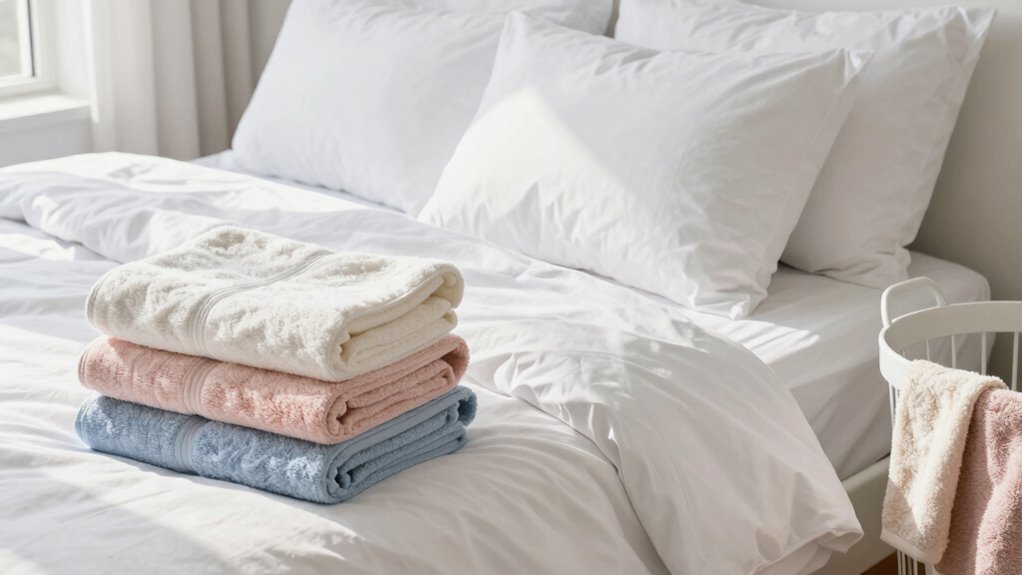

You should wash your bedding at least once a week to keep allergens, dust mites, and bacteria at bay, especially if you have pets or allergies. Towels need to be washed every 3-4 days to prevent bacteria buildup and odors. Factors like personal habits, skin sensitivity, and environmental conditions can influence these intervals. Staying consistent helps maintain a fresh, healthy household—discover more tips to optimize your laundry routine below.
Key Takeaways
- Wash bedding at least once a week to reduce allergens, dust mites, and maintain hygiene.
- Towels should be washed every 3-4 days to prevent bacterial growth and odors.
- Increase washing frequency for bedding and towels during allergy season, heavy sweating, or pet presence.
- Use hot water and thorough drying techniques to effectively clean and maintain fabric integrity.
- Adjust washing frequency based on personal routines, skin sensitivity, and environmental factors.

2 Pack Delicates Bag for Washing Machine, 31 x 23 inch Oversize Fine Mesh Laundry Bags for Lingeries, Sweaters, Bed Sheet, Stuffed Toys
LARGE CAPACITY – Each mesh laundry bag measures 31''×23'' , it’s large enough to make washing more adequate…
As an affiliate, we earn on qualifying purchases.
As an affiliate, we earn on qualifying purchases.
How Often Should You Wash Bedding for Optimal Health?

To maintain good hygiene and prevent health issues, you should wash your bedding at least once a week. Regular washing helps keep fabric softness, making your sheets comfortable and inviting. It also plays a vital role in allergy relief, especially if you’re prone to dust mites or pet dander. When you wash your bedding frequently, you remove sweat, oils, and dead skin cells that accumulate over time, reducing potential irritants. Using gentle detergents and warm water can enhance fabric softness while ensuring thorough cleaning. Consistent washing not only improves hygiene but also prolongs the life of your bedding. Proper stain removal techniques can help maintain the appearance of your sheets over time. Additionally, washing bedding regularly can help reduce the presence of microplastics in dust, which may contribute to indoor air pollution. Maintaining a healthy sleeping environment is essential for overall well-being and can be supported by a regular bedding washing routine. Understanding the importance of air quality can motivate you to keep your sleeping environment cleaner. By sticking to this routine, you create a healthier sleeping environment, helping you wake up refreshed and free from allergy symptoms. Incorporating regular cleaning habits can also support overall indoor air quality and well-being.

JML Microfiber Bath Towel 2 Pack(30" x 60"), Oversized Thick Towels, Soft, Super Absorbent and Fast Drying, No Fading Multipurpose Use for Sports, Travel, Fitness, Yoga, 30 in 60 in, Grey Count
Comfortable & Soft: JML microfiber bath towel set includes 2 bath towels of 30×60. Towels are made of…
As an affiliate, we earn on qualifying purchases.
As an affiliate, we earn on qualifying purchases.
Why Is Weekly Bedding Washing Recommended?
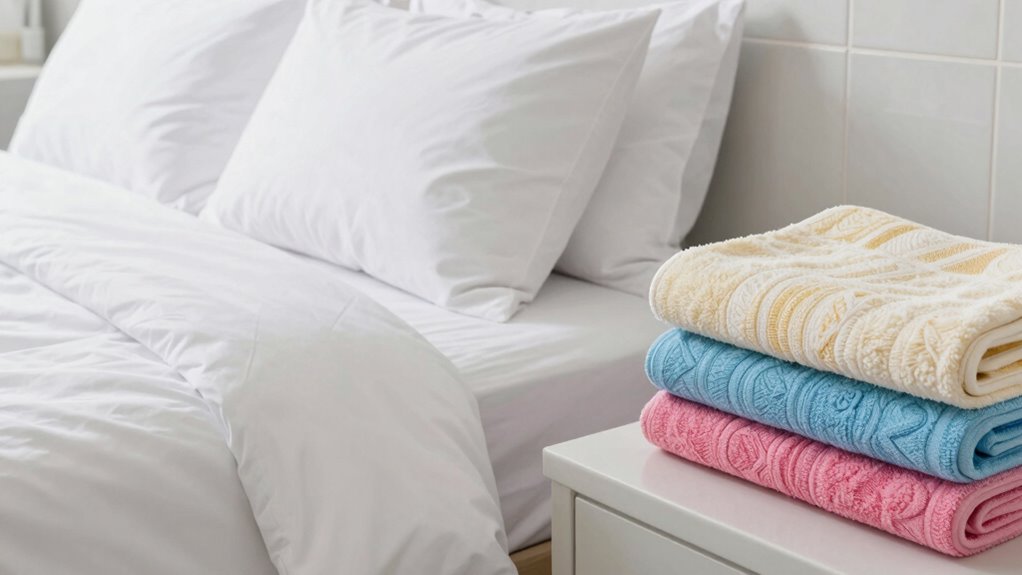
Have you ever wondered why experts recommend washing your bedding weekly? Regular washing helps reduce bedroom allergens like dust mites, pet dander, and bacteria that accumulate over time. These allergens can trigger allergies or worsen asthma symptoms, so cleaning weekly keeps your sleep environment healthier. Additionally, frequent washing preserves fabric durability by preventing dirt and oils from breaking down fibers prematurely. When you wash bedding regularly, you extend the lifespan of your sheets and pillowcases, saving money in the long run. It also ensures your bedding stays fresh and odor-free, contributing to better sleep quality. Overall, weekly washing strikes a balance between maintaining cleanliness and protecting your bedding’s fabric integrity, making it an essential routine for a cleaner, healthier bedroom. Incorporating proper washing techniques can further enhance bedding hygiene and ensure thorough cleaning. Keeping your bedding clean not only improves comfort but also supports overall health by minimizing exposure to harmful microorganisms. Regularly maintaining laundry routines can also help prevent the buildup of microbes that thrive in damp or soiled fabrics.

Poochie Suds Pet Laundry Detergent, Enzyme Cleaner and Odor Remover, Hypoallergenic and Fragrance-Free Pet Safe Detergent for Dog and Cat Bedding, Blankets, Toys and Gear, Made in USA, 16 fl oz
Cleans & Deodorizes What Your Pet Loves Most: Uses naturally derived enzymes to help break down the messy…
As an affiliate, we earn on qualifying purchases.
As an affiliate, we earn on qualifying purchases.
Is Washing Bedding Every Two Weeks Enough? Pros and Cons
Washing your bedding every two weeks can help reduce bacterial growth, but it might not be enough if you have allergies or pets. On the plus side, less frequent washing can extend the life of your fabrics and save water. Consider your lifestyle and personal needs to decide if this schedule works for you. Incorporating proper gear care tips can also help maintain your bedding’s freshness and durability between washes. Regularly inspecting and maintaining your laundry tools, such as washer and dryer maintenance, can improve washing efficiency and protect your fabrics. Additionally, understanding the power consumption insights of your appliances can help you optimize energy use during laundry days. Being aware of inclusive casting practices in manufacturing can also ensure that your bedding and towels are produced with a focus on sustainability and diverse representation.
Bacterial Growth Risks
Bacterial growth can become a concern if bedding isn’t washed frequently enough, as sweat, skin cells, and oils accumulate over time. These buildup items create a breeding ground for bacteria, which can increase allergy symptoms and skin irritation. Not washing bedding regularly might compromise allergy relief, especially for sensitive individuals. Additionally, bacteria can weaken fabric durability, causing bedding to wear out faster and lose its softness. Washing bedding every two weeks may seem sufficient, but it might not eliminate all bacteria and allergens. Regular cleaning helps reduce the risk of infections and improves overall sleep hygiene. By maintaining a consistent washing schedule, you’re actively protecting your health and extending the lifespan of your bedding, ensuring a cleaner, healthier sleeping environment. Proper laundry practices can further enhance hygiene and prolong the freshness of your bedding. Incorporating hygienic laundry routines can also help in maintaining fabric integrity and reducing environmental impact. To maximize cleanliness, using appropriate water temperatures and laundry detergents is essential for effective sanitation. Additionally, understanding the bacterial growth process can help you determine the most effective washing frequency to keep your bedding safe and clean. Considering water temperature and the use of disinfectants can be crucial in eliminating bacteria more effectively.
Fabric Maintenance Benefits
While washing bedding every two weeks is a common practice, it might not always be enough to maintain ideal fabric condition and hygiene. Regular cleaning helps preserve fabric durability by preventing dirt and oils from breaking down fibers over time. It also plays an essential role in color preservation, keeping your bedding looking vibrant and fresh. Skipping washings can lead to fabric wear and dullness sooner than expected. Incorporating proper crisping techniques can further enhance the freshness of your bedding and towels. Additionally, understanding the fabric types and their specific care requirements can help you choose the optimal washing frequency for each item. Being aware of fabric care guidelines can optimize your laundry routine and extend the life of your textiles, especially when considering laundry equipment and its role in effective cleaning. Proper detergent selection is also crucial to ensure thorough cleaning without damaging delicate fibers.
Frequency Alignment With Lifestyle
Choosing how often to wash your bedding depends largely on your lifestyle and personal habits. For many, washing every two weeks may seem sufficient, but seasonal changes can influence this schedule. During allergy seasons or when you experience allergic reactions, more frequent washing helps reduce dust mites, pollen, and other allergens. If you sweat heavily at night or have pets that sleep on your bed, you might need to wash bedding weekly. Conversely, if you have a low allergy risk and minimal exposure to outdoor elements, biweekly washes could work. Ultimately, aligning your laundry routine with these factors guarantees a healthier, more comfortable sleep environment. Adjusting your schedule based on seasonal and allergy considerations keeps your bedding fresh and reduces potential health issues.

Yejesiy 4 Ft Washing Machine Hoses, 2 Packs Premium Stainless Steel Washer Hoses Burst Proof, Hot and Cold Striped Water Supply Hoses with 3/4'' Standard Interface fit for ALL Washer
【PACKAGE INCLUDES】: 1 x Red colored Washing Machine Hoses for hot water, 1 x Blue colored Washing Machine…
As an affiliate, we earn on qualifying purchases.
As an affiliate, we earn on qualifying purchases.
How Frequently Should You Wash Towels to Prevent Bacteria?
To keep bacteria at bay, you should wash your towels every three to four days, since bacteria can start thriving within 24 hours of use. Proper washing techniques, like using hot water and thorough drying, are essential to eliminate germs effectively. Staying consistent with this schedule helps prevent bacteria buildup and keeps your towels fresh and safe.
Bacteria Growth Timeline
Towels can quickly become breeding grounds for bacteria if left unwashed for too long. Bacteria start multiplying within 24 hours, especially in damp environments. If you don’t wash towels regularly, you risk harboring germs that can cause infections. Using antibacterial agents in your laundry helps kill bacteria effectively, reducing health risks. Avoid over-relying on fabric softeners, as they can leave residues that trap bacteria and moisture. To prevent bacterial growth, wash towels at least every three uses or every three days. Proper drying and thorough washing eliminate most bacteria before they multiply. Remember, bacteria growth accelerates in humid conditions, so keeping towels dry and clean is essential for hygiene and health.
- Bacteria can double every 20 minutes in damp towels
- Antibacterial agents offer extra protection
- Fabric softeners may trap bacteria if overused
Proper Washing Techniques
Washing towels regularly is the best way to keep bacteria levels low and prevent the buildup of germs. Use hot water (at least 130°F) for effective cleaning, and avoid fabric softeners, which can reduce absorbency and trap bacteria. Opt for a thorough drying technique—either tumble dry on high heat or hang in direct sunlight—to eliminate remaining moisture. Proper washing involves separating towels from other laundry to prevent cross-contamination and ensuring your detergent is sufficient for deep cleaning. Here’s a quick visual guide:
| Step | Tip |
|---|---|
| Water Temperature | Use hot water to kill bacteria |
| Detergent | Use enough detergent for deep cleaning |
| Fabric Softeners | Avoid to maintain absorbency |
| Drying Technique | Tumble dry on high or sun-dry for bacteria removal |
| Washing Frequency | Wash towels every 3-4 days for hygiene |
How Can I Keep Towels Fresh Between Washes?
Keeping towels smelling fresh between washes can be simple if you take a few proactive steps. First, make certain your towels are completely dry before putting them away, as damp towels can develop odors. Store them in a well-ventilated area to prevent mustiness. You can also refresh towels by spritzing them with a mixture of water and a few drops of essential oil, like lavender, for a pleasant scent. When using laundry detergents, opt for those with odor-fighting properties and avoid overloading your washer. Fabric softeners can help keep towels soft and smelling fresh, but use them sparingly, as too much can build up and trap odors. Regularly washing towels with proper techniques ensures they stay clean and inviting between full washes.
What Factors Influence How Often You Should Wash Bedding and Towels?
Several factors determine how often you should wash bedding and towels, depending on your lifestyle and habits. If you have sensitive skin or allergies, you’ll likely wash more frequently to prevent irritation. The amount of use also matters; daily use of towels or bedding may require more frequent washing. Additionally, how well you care for your linens influences their longevity—frequent washing can lead to color fading and reduced fabric softness over time. If you notice colors dulling or fabrics becoming rough, it might be time for a wash. Conversely, infrequent washing can cause buildup of dirt, oils, and bacteria. Your routines, personal preferences, and the type of fabric all play a role in determining the ideal washing schedule to keep your linens fresh and in good condition.
Tips for Keeping Linens Clean and Fresh Between Washes
Even with a regular washing schedule, you can take steps to keep your linens feeling fresh between washes. To prevent mold buildup and maintain fabric softness, focus on proper care. Air out your bedding and towels daily to reduce moisture and inhibit mold growth. Use a fabric softener during laundry to keep linens soft and comfortable. Consider using a dehumidifier in humid spaces to control moisture levels. Regularly rotate your linens to ensure even wear and reduce odor buildup. Keep your linens dry and well-ventilated to extend freshness between washes.
- Air out linens daily to prevent mold prevention
- Use fabric softening products to maintain softness
- Keep your space dry and well-ventilated
Common Mistakes That Lead to Overwashing or Underwashing Linens
Many people struggle to find the right balance when washing linens, often falling into the trap of overdoing or neglecting their laundry. Overwashing can wear out fabrics and cause duvet maintenance issues, while underwashing lets dirt and bacteria build up. One common mistake is not paying attention to linen storage; storing linens improperly can make frequent washing unnecessary. Conversely, forgetting to wash towels regularly leads to odor and bacteria. Overwashing your linens wastes water and energy, while underwashing risks hygiene. To avoid these mistakes, follow recommended washing schedules and understand your household’s needs. Proper linen storage also helps maintain freshness, reducing the need for frequent laundering. Finding this balance ensures your linens stay clean, fresh, and durable without excess or neglect.
How to Adjust Your Laundry Routine Based on Your Household Needs
Adjusting your laundry routine to fit your household’s specific needs guarantees your linens stay fresh and last longer. Consider factors like household size, activity level, and sensitivities when planning your wash schedule. To boost bed linen durability, use the right laundry detergent selection—gentle but effective cleaners help preserve fabrics. Increase wash frequency if you have pets, allergies, or young children, while minimizing washes for less-used linens.
Tailor your laundry routine to household needs for fresher linens and longer-lasting fabrics.
- Use hypoallergenic detergent if anyone has sensitive skin
- Wash towels and bedding separately to prevent damage
- Adjust water temperature based on fabric type and soiling level
Frequently Asked Questions
Can Washing Bedding or Towels Too Often Damage the Fabric?
Washing bedding or towels too often can cause fabric deterioration over time. Frequent washing exposes the fabric to wear and tear, especially if you use harsh detergents or hot water. This can weaken fibers and reduce the lifespan of your linens. To prevent damage, use gentle detergents and wash at appropriate temperatures, balancing cleanliness with fabric care. Regular but mindful washing helps keep your bedding and towels fresh without harming the fabric.
Are There Specific Detergents Better for Maintaining Linen Freshness?
Did you know that 60% of people prefer scented detergents? For linen freshness, choose detergents with gentle ingredients like enzymes and plant-based cleaners, which effectively remove dirt without damaging fabrics. Consider your fragrance preferences—whether floral, fresh, or unscented—to keep your bedding smelling inviting. Look for options free of harsh chemicals, ensuring your linen stays soft, clean, and fresh longer.
How Does Climate Affect How Often I Should Wash Linens?
Climate impact and seasonal changes influence how often you should wash linens. In humid or hot climates, you might need to wash bedding weekly to prevent bacteria and mold buildup. During cooler, drier seasons, you can extend the time between washes. Pay attention to odors and visible dirt, adjusting your laundry routine accordingly. Proper ventilation and sunlight can also help keep your linens fresh longer, regardless of climate.
Should I Wash Bedding and Towels Separately From Other Laundry?
Don’t put all your eggs in one basket, and the same goes for laundry. You should wash bedding and towels separately from other laundry to prevent cross-contamination. This helps maintain linen storage hygiene and guarantees linens stay fresh longer. Follow proper laundry frequency for bedding and towels to avoid bacteria buildup. Washing these items separately also allows you to use the right settings and detergents for maximum cleanliness.
What Signs Indicate It’s Time to Replace Old Bedding or Towels?
You should replace bedding or towels when they show signs like decreased fabric softness despite washing, or if the thread count feels markedly lower, indicating wear. Fraying edges, persistent stains, or a musty odor also signal it’s time for new ones. Over time, even high thread count fabrics lose their plushness, so trusting your senses—touch and smell—helps you decide when replacement is necessary for comfort and hygiene.
Conclusion
Just like the steady rhythm of a heartbeat keeps life vibrant, regularly washing your bedding and towels keeps your home healthy and inviting. By finding the right balance—neither too often nor too infrequently—you create a sanctuary where freshness thrives, and bacteria retreat into the shadows. Think of your laundry routine as tending a garden, nurturing cleanliness to blossom into comfort and peace, ensuring your home remains a haven from the chaos beyond the door.