
For a safe and healthy workshop, aim for at least 6 to 10 air changes per hour (ACH), especially if you deal with dust, fumes, or chemicals. The exact number depends on the size of your space, activity type, and the effectiveness of your filtration system. Proper airflow helps remove contaminants and keeps air fresh. To find out the ideal ACH for your workshop, check out the detailed factors and tips that follow.
Key Takeaways
- The recommended ACH for workshops varies from 6 to 15, depending on activity type and contaminants present.
- Higher ACH levels improve air quality but may cause drafts; balance is essential.
- Use space volume and activity level to calculate appropriate CFM and ACH for effective filtration.
- Regularly monitor air quality and adjust ACH to meet safety standards and pollutant levels.
- Professional assessment can optimize ACH settings tailored to specific workshop needs.
Workshop air purifier with high CADR
As an affiliate, we earn on qualifying purchases.
As an affiliate, we earn on qualifying purchases.
Why Proper Air Changes Are Critical for Workshop Safety
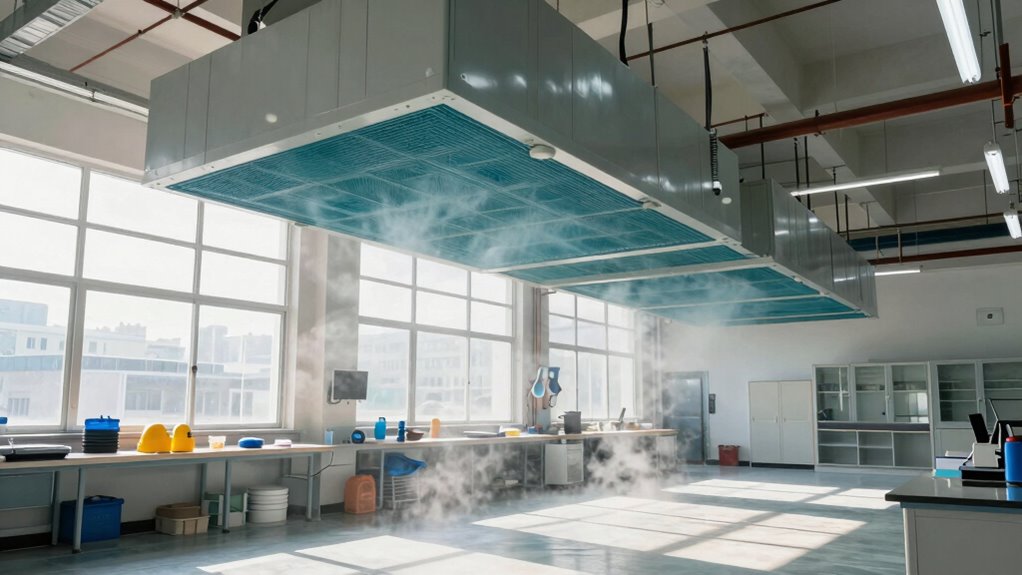
Ensuring proper air changes in your workshop is essential for maintaining a safe environment. When airflow dynamics are well-managed, contaminants like dust, fumes, and chemical particles are effectively removed, reducing health risks. Proper air changes improve filtration efficiency, meaning your filtration systems work effectively, capturing airborne pollutants before they accumulate. Without enough air circulation, hazardous particles linger, increasing the chance of respiratory issues and accidents. Microplastics in dust can also be a concern, as they may pose additional health risks over time. Incorporating natural filtration methods or sustainable practices can further enhance your ventilation strategy. Consistent ventilation helps control temperature and humidity levels, creating a more comfortable workspace. Additionally, understanding air change rates and how they impact airborne contaminant levels is crucial for optimizing safety protocols. Proper airflow and filtration are key to preventing long-term health problems and assuring a safe working environment. Regularly monitoring ventilation effectiveness can help identify areas needing improvement and ensure ongoing safety. Implementing air quality testing can provide valuable data to optimize your ventilation system further.
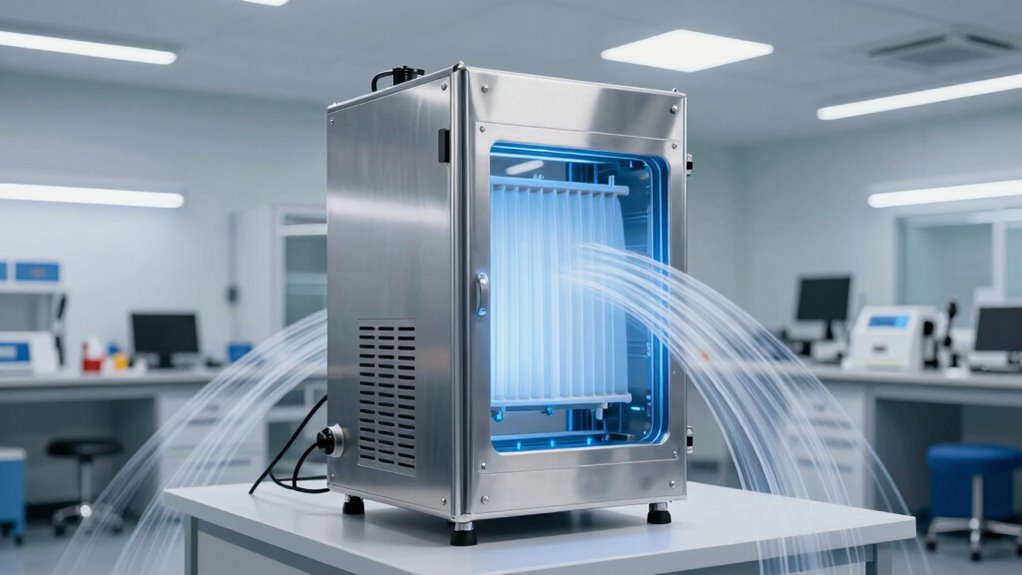
HEPA air filtration system for workshop
As an affiliate, we earn on qualifying purchases.
As an affiliate, we earn on qualifying purchases.
Key Factors Affecting Your Workshop’s ACH Needs
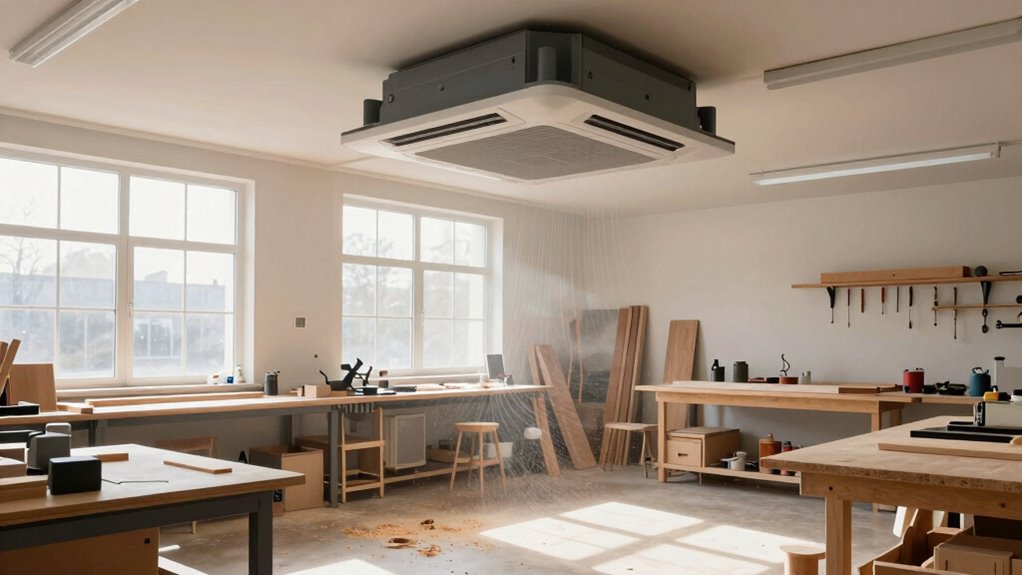
Several key factors influence the number of air changes per hour (ACH) your workshop needs to stay safe and healthy. First, airflow enhancement is essential; proper ventilation ensures contaminants are effectively removed and replaced with fresh air. You want to maximize airflow efficiency without creating drafts or turbulence that can spread dust or fumes. Second, filter durability plays a role—choosing high-quality filters ensures consistent performance and reduces frequency of replacements, maintaining steady ACH levels. The size of your workspace, the type of materials you work with, and the level of airborne pollutants also impact your ACH needs. Additionally, understanding contrast ratio can help you optimize your lighting conditions to better monitor air quality indicators visually. Regularly assessing airflow efficiency can further help you adapt your ventilation system to changing conditions, ensuring your workshop remains safe and compliant with health standards. By considering these factors, you can tailor your ventilation system to provide ideal air quality, keeping your workshop safe and compliant with health standards.
Adjustable workshop ventilation fan
As an affiliate, we earn on qualifying purchases.
As an affiliate, we earn on qualifying purchases.
How to Calculate the Right ACH for Your Space
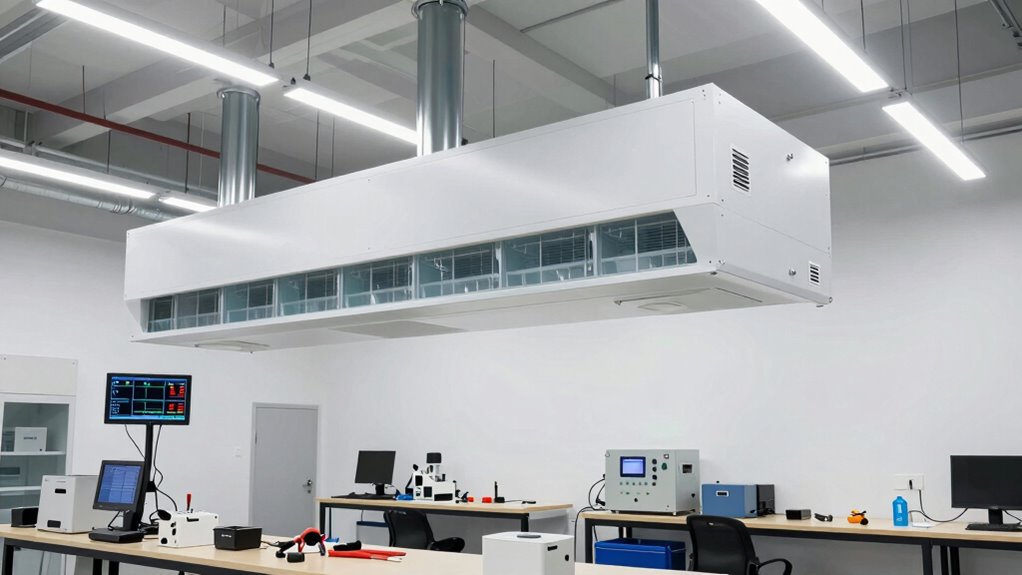
Calculating the right ACH for your workshop is essential to maintaining a safe and healthy environment. To do this, first determine the volume of your space by multiplying length, width, and height. Next, decide on the desired air exchange rate based on your activities and filtration efficiency. For example, if you’re working with dust or fumes, higher ACH levels are necessary. Divide the total cubic feet of your workshop by 60 to find the cubic feet per minute (CFM) needed, then adjust for your filter’s efficiency. Keep in mind that better filtration efficiency can reduce the required ACH, allowing you to use fewer air changes to achieve clean air. This calculation helps you select the right ventilation system and set effective air change rates.
Air quality monitor for workshop
As an affiliate, we earn on qualifying purchases.
As an affiliate, we earn on qualifying purchases.
Choosing the Best Ventilation System to Meet Your ACH Goals
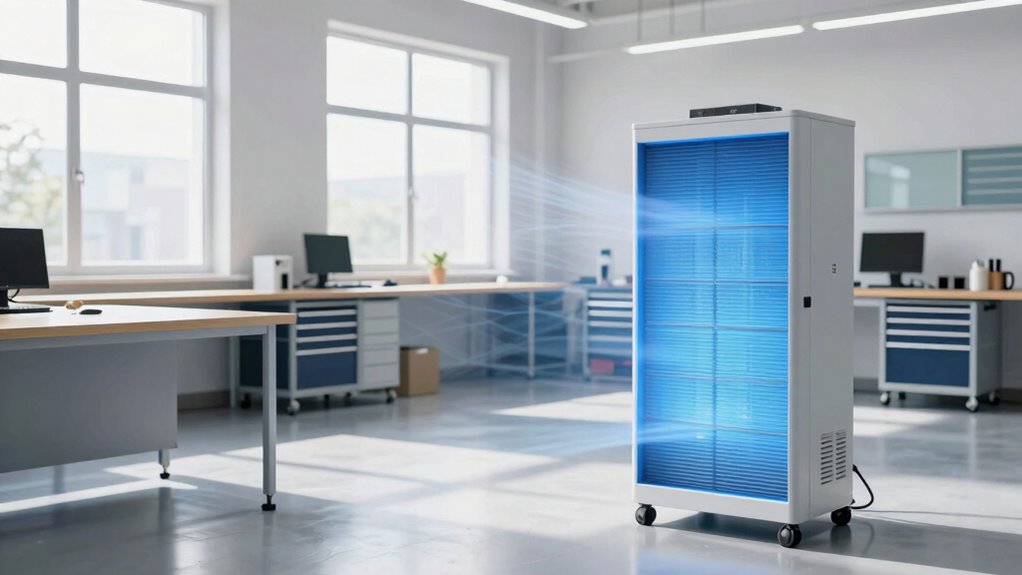
Choosing the right ventilation system is key to meeting your ACH goals and maintaining a safe workshop environment. Your goal is to select systems that effectively improve air purification while ensuring proper airflow. Consider ventilation systems that are designed for your space size and activity level. HEPA filters and exhaust fans are excellent options for removing dust, fumes, and airborne contaminants. For larger workshops, integrating mechanical ventilation with air purification units helps maintain consistent air changes. Make sure the system you choose can handle the required airflow rate to achieve your target ACH. Properly installed and maintained ventilation systems will keep the air clean and safe, reducing health risks and improving overall air quality. Incorporating air filtration efficiency into your planning ensures optimal removal of pollutants and compliance with safety standards. Additionally, understanding air change rates is essential for designing an effective ventilation strategy tailored to your specific needs. Recognizing the importance of ventilation system capacity helps in selecting equipment capable of meeting your ACH requirements efficiently. To optimize performance, consider regular assessments of system airflow and adjust components as needed to maintain consistent air quality levels. Being aware of airborne contaminants can further guide you in choosing the most suitable filtration solutions for your workspace.
Measuring and Verifying Your Workshop’s Air Quality
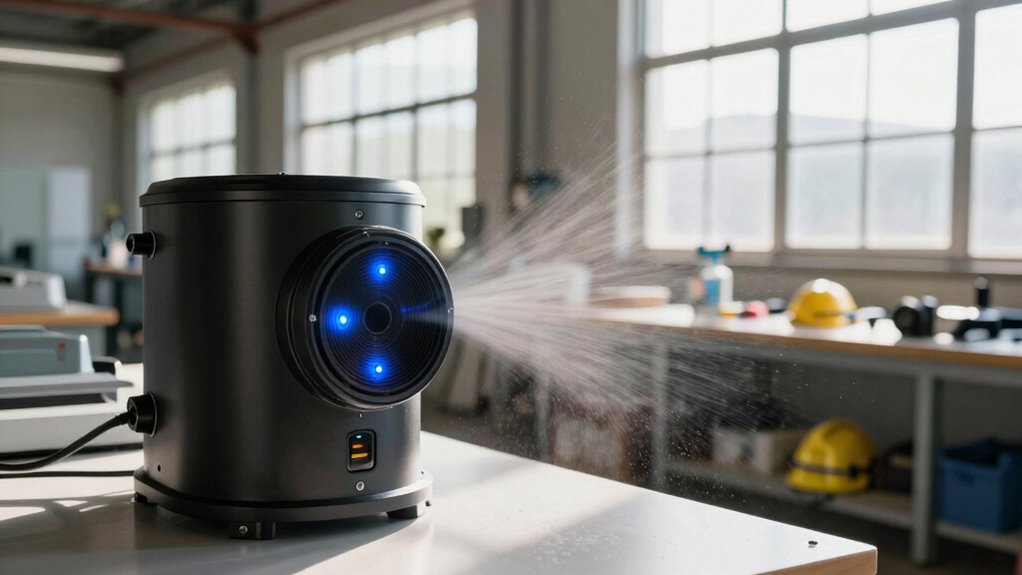
To guarantee your workshop maintains healthy air quality, it’s essential to regularly measure and verify the levels of airborne contaminants. This involves using simple tools like air quality monitors to track dust, fumes, and VOCs. By doing so, you can assess your filtration efficiency and determine if your current setup is effective. Regular testing helps identify when filters need replacing or upgrading, ensuring continuous performance. Make sure to check for consistent air changes per hour (ACH) to avoid stagnant air pockets. Documenting your measurements provides a clear picture of your workshop’s air quality over time. With accurate data, you can fine-tune your filtration system, maintaining *ideal* air quality and protecting your health and workspace. Additionally, understanding regional flavors and chicory/coffee insights can help you optimize indoor plant and aroma choices that may influence air quality. Incorporating air change rates into your maintenance routine can further enhance your understanding of your workshop’s ventilation performance. Regularly reviewing air exchange efficiency helps ensure your system is functioning optimally, especially when paired with knowledge of filtration system performance to address potential weaknesses. Being aware of humidity control techniques can also minimize mold growth and improve overall air quality.
Common Mistakes That Reduce Filtration Effectiveness
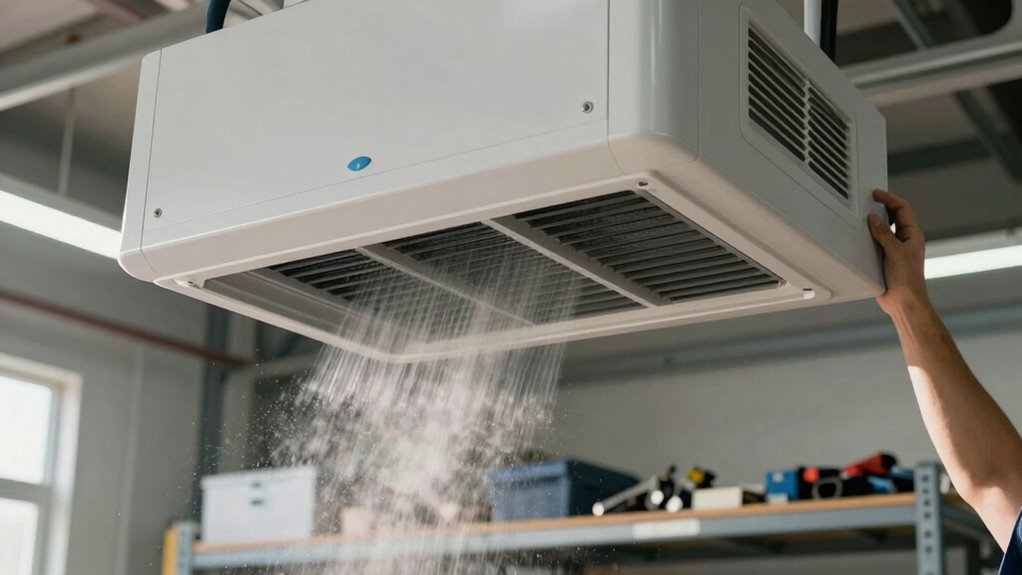
Choosing the wrong filters or neglecting regular maintenance can seriously compromise your filtration system’s performance. When filters aren’t suited to your workshop’s needs or aren’t replaced on time, dust and pollutants can bypass the system. To keep your air clean, it’s essential to select the right filters and stick to a consistent maintenance schedule. Regularly monitoring your filtration system helps ensure optimal air change rates and maintains a healthy environment. Recognizing early warning signs of filter inefficiency can help prevent larger issues and ensure continuous protection. Additionally, understanding the specifications of commercial cleaning fixtures/equipment can aid in selecting compatible filters that enhance overall air quality. Proper airflow around the unit, as recommended in Aero Guardians, can also significantly improve filtration efficiency and prevent dust buildup. Staying informed about filter types and their suitability can further optimize your system’s performance.
Improper Filter Selection
Selecting the wrong air filter can considerably undermine your ventilation system’s effectiveness. If you choose a filter with low durability, it will need frequent replacements, disrupting air circulation and increasing costs. Conversely, filters with inadequate filtration ratings won’t trap harmful particles effectively, compromising air quality. Proper filter selection guarantees peak air flow and maintains system efficiency. Using a filter that’s too restrictive can cause strain on your HVAC system, reducing overall performance and potentially damaging equipment. Always match your filter’s MERV rating and size to your system’s specifications. Assuring the filter is durable enough for your workshop’s environment also prolongs its lifespan. Testing accuracy and selecting the right filter are essential for optimal air quality and system performance. When you pick the right filter, you improve air circulation, enhance filtration performance, and avoid unnecessary system strain. Additionally, choosing filters with appropriate filter ratings ensures your ventilation system operates at peak efficiency without unnecessary stress.
Inadequate Maintenance Schedule
How often do you check and replace your air filters? Inadequate filter maintenance can drastically reduce filtration effectiveness, compromising your air quality standards. When filters aren’t changed regularly, dust, debris, and other contaminants build up, restricting airflow and decreasing equipment efficiency. This not only hampers air change rates but also strains your ventilation system. Skipping scheduled filter maintenance leads to poor air quality, increased energy costs, and potential health risks. To maintain ideal filtration, create a routine for inspecting and replacing filters based on manufacturer recommendations and usage levels. Staying consistent ensures your system operates at peak performance, keeps pollutants at bay, and meets air quality standards. Regular maintenance isn’t just a best practice—it’s essential for safe, clean, and efficient workshop air filtration.
Tips to Maintain Consistent, Clean Air in Your Workshop
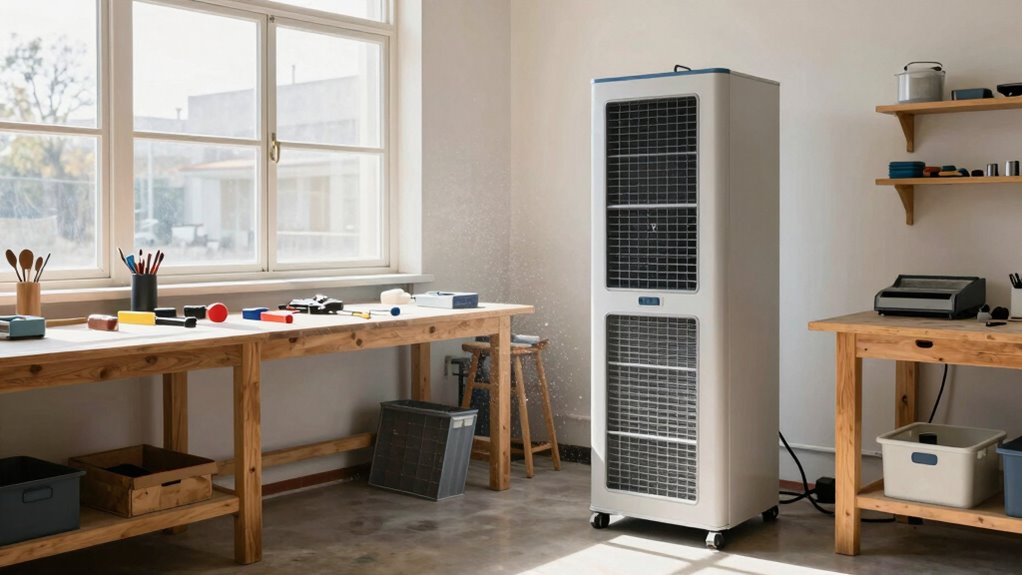
Maintaining consistent, clean air in your workshop requires regular attention and proactive measures. Start by investing in effective air purification systems that suit your space and workload. Regular filter maintenance is essential—check filters frequently and replace them as recommended to guarantee ideal performance. Keep your filters clean and free of dust buildup, which can hinder air quality. Ensure proper ventilation and airflow by organizing your workspace to prevent blockages. Use exhaust systems during dusty tasks and consider upgrading to high-efficiency particulate air (HEPA) filters for better filtration. Consistent cleaning routines, such as sweeping and dusting, also help maintain air quality. Staying vigilant with air purification and filter maintenance safeguards your health and keeps your workshop a safe, productive environment.
When to Consult Professionals for Advanced Air Filtration Solutions
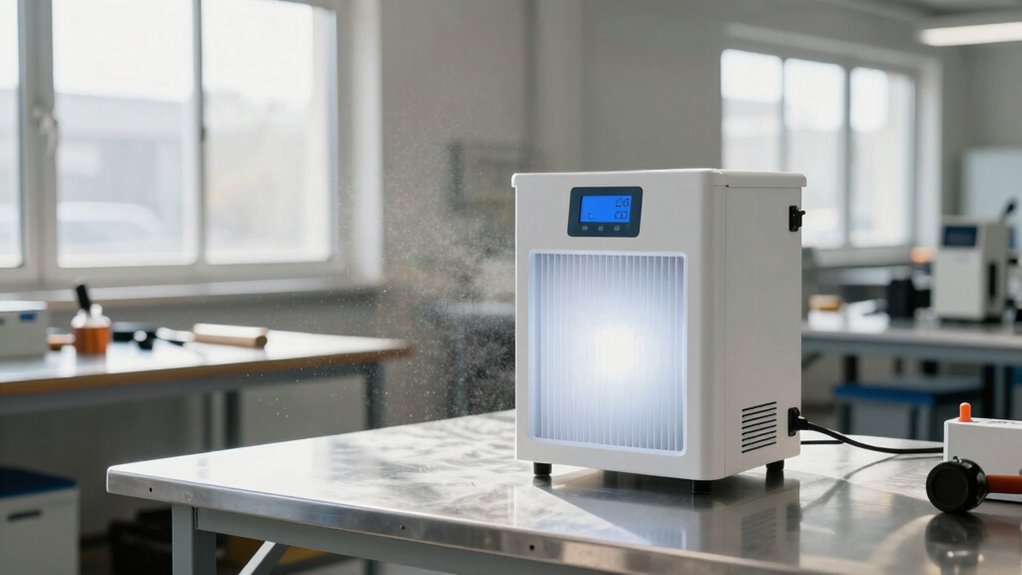
Even with regular filter checks and routine cleaning, there are times when your workshop’s air quality issues go beyond simple solutions. If you notice persistent dust, fumes, or odors despite maintenance, it’s time to consult professionals. They can evaluate your space’s specific needs and recommend advanced air filtration solutions that meet or surpass filtration standards. Professional assessment ensures you’re using the right systems to improve air quality effectively, especially in workshops with hazardous materials or high dust levels. Relying on experts helps you avoid under- or over-filtering, saving money and ensuring a healthier environment. When symptoms of poor air quality persist or worsen, seeking professional advice guarantees that your filtration setup is optimized for safety and compliance.
Top Questions About Workshop Ventilation and Air Quality
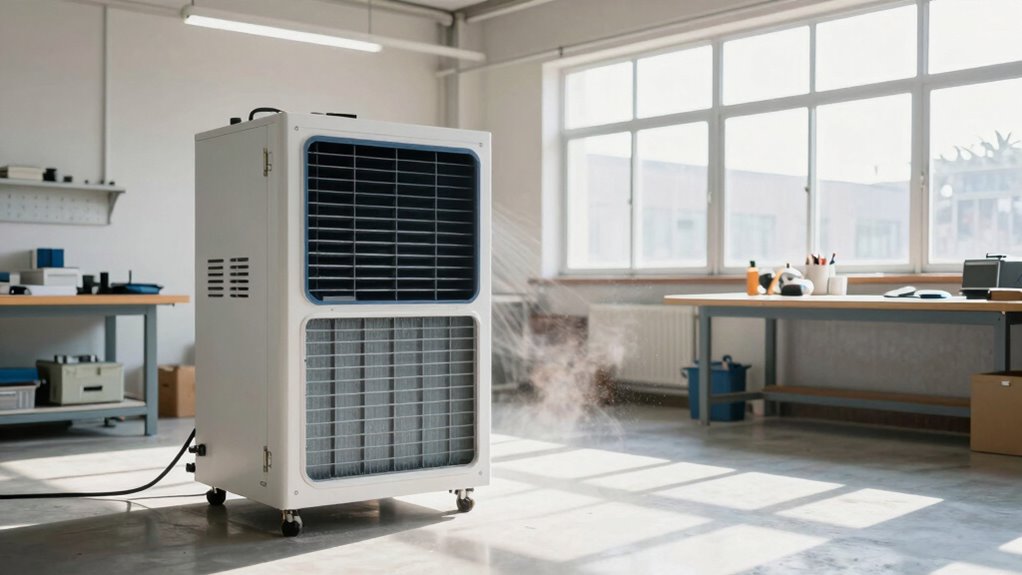
Are you unsure about the best way to guarantee your workshop’s air quality stays safe and breathable? Many questions come up about ventilation design and air purification. To make sure you’re on the right track, consider these key points:
- Proper ventilation design helps remove contaminants and prevents stale air.
- Using the right air purification systems can reduce dust, fumes, and VOCs effectively.
- Regular maintenance of filters and ventilation components keeps your system efficient.
Frequently Asked Questions
How Often Should I Replace or Clean Air Filters in My Workshop?
You should replace or clean your workshop air filters every 1 to 3 months, depending on usage and filter type. Regular filter maintenance is vital to maintain ideal air quality and prevent dust buildup. Keep an eye on filter performance; if airflow decreases or you notice increased dust, it’s time for a change. Proper maintenance ensures your workshop stays safe, healthy, and well-ventilated.
Can I Use Portable Air Purifiers Alongside Built-In Ventilation Systems?
Yes, you can use portable air purifiers alongside built-in ventilation systems for better air quality. Portable integration lets you target specific areas needing extra filtration, while maintaining ventilation compatibility guarantees the systems work together efficiently. Just make sure the purifiers’ airflow doesn’t conflict with your existing ventilation, and keep filters clean. This combined approach enhances overall air cleanliness, creating a safer, healthier workshop environment.
What Are the Signs of Inadequate Air Changes in a Workshop?
If your workshop smells like a chemical disaster or your dust feels like a personal cloud, you’re probably dealing with inadequate air changes. Poor air quality and sluggish ventilation efficiency lead to stuffiness, lingering fumes, and even health issues. You might notice workers coughing or eyes watering. These signs point to insufficient air circulation, meaning you need to boost your air changes per hour to keep the workspace safe and breathable.
How Does Humidity Affect Air Filtration Effectiveness?
Humidity impact can considerably reduce filtration efficiency in your workshop. When humidity is high, moisture can cause filters to clog faster and decrease their ability to trap dust and particles effectively. Conversely, very low humidity can lead to static buildup, affecting filtration systems. To maintain ideal filtration efficiency, control humidity levels, ideally between 40-60%, ensuring your air filtration system works effectively and keeps your workspace safe.
Are There Specific Standards or Regulations for Workshop Air Changes?
Think of your workshop’s air as the bloodstream—vital and constantly flowing. Yes, there are specific standards and regulations for air changes, like ventilation standards that guarantee air quality remains safe. These guidelines, often set by OSHA or local authorities, dictate the minimum air change rates needed to protect your workspace. Following these standards helps you maintain a healthy environment, preventing contaminants from building up and ensuring ideal air quality.
Conclusion
Ensuring the right air changes per hour isn’t just about numbers; it’s about creating a safe, breathable haven in your workshop. Think of your space like a well-tuned engine—when ventilation runs smoothly, everything works better. Keep an eye on your air quality, avoid common pitfalls, and don’t hesitate to call in pros when needed. With the right approach, you’ll breathe easier and work smarter, turning your workshop into a fortress of clean, healthy air.