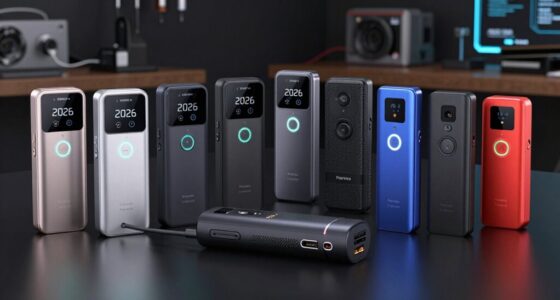
For a home energy monitor with an app, I’d start with the Emporia Vue 3 as the best overall fit for many homes, thanks to its circuit monitoring and broad energy tracking. The Siemens Inhab stands out for extensive circuit coverage, while the Refoss EM16P suits buyers who want local control and an open API. The main tradeoffs are how many circuits you need to track, whether you have solar, and how much you value cloud independence over straightforward app access. A monitor that fits your electrical panel matters more than a long sensor list on its own. Read on for how the nine options compare and which buyer each one suits.

Get home appliances delivered free with Prime
- Fast, free delivery on millions of items
- Prime Video, Amazon Music and more included
- Member-only deals all year
Complete the kit


Key Takeaways
- Emporia Vue 3 is my best overall starting point for buyers who want circuit-level monitoring and app-based energy tracking without prioritizing local-only control.
- Siemens Inhab and the 16-circuit Refoss model target broad panel coverage; check your panel layout and sensor compatibility before choosing either.
- The Emporia solar and net-metering version is the more specific pick for homes that need those measurements represented in their monitoring setup.
- Refoss EM16P stands apart for open API, Home Assistant, and no-cloud operation, which favors technically confident buyers over those seeking the simplest setup.
- The two-clamp WiFi models focus on main-service readings, so they may suit whole-home tracking but reveal less about which individual circuits drive usage than multi-sensor options.
| WiFi Home Energy Monitor with 3x 80A CT Clamps |  | Best for Selected Circuits | Manufacturer: Nestool | Model: PW03 | CT clamps: 3 x 80A | VIEW ON AMAZON | See Our Full Breakdown |
| Siemens Inhab Smart Home Energy Monitor with 16 x 50A Circuit Sensors and 2 x 200A Main Sensors |  | Best for Whole-Panel Management | Brand: Siemens | Model: INHEM1216 | Main sensors: 2 x 200A CTs | VIEW ON AMAZON | See Our Full Breakdown |
| Emporia Vue 3 Home Energy Monitor |  | Best Overall for Circuit Coverage | Included branch sensors: 16 x 50A | Measurement accuracy: ±2% | Connectivity: 2.4GHz Wi-Fi and internet connection | VIEW ON AMAZON | See Our Full Breakdown |
| Emporia Vue 3 Home Energy Monitor – Real-Time Electricity Usage Monitor with Solar and Net Metering |  | Best for Solar and System Flexibility | Sensor accuracy: ±2% | Connectivity: 2.4GHz Wi-Fi and internet connection | App compatibility: iPhone, Android, and web | VIEW ON AMAZON | See Our Full Breakdown |
| SEM-Meter Smart Home Energy Monitor with 16 50A Circuit-Level Sensors |  | Best for Local Privacy and Custom Rates | Manufacturer: Fusion Energy | Model: SEM-Meter | Included sensors: 16 x 50A circuit-level sensors | VIEW ON AMAZON | See Our Full Breakdown |
| Meross Smart Home Energy Monitor with Real-Time Power & Cost Tracking |  | Best for Detailed Circuit Tracking | Model: EM16 | Main circuit support: 2 circuits, up to 200A | Branch circuit support: 16 circuits, up to 60A | VIEW ON AMAZON | See Our Full Breakdown |
| Refoss Smart Home Energy Monitor with 16 60A Circuit Sensors and Local Control |  | Best for Local Data and Alerts | Model: EM16P | Main sensors: 2, up to 200A each | Branch sensors: 16, up to 60A each | VIEW ON AMAZON | See Our Full Breakdown |
| WiFi Home Energy Monitor with Two 120A CTs |  | Best for Solar Export Tracking | Current transformers: 2 × 120A CTs | Electrical configuration: Single-phase, 3-wire | Monitoring: Live, bi-directional energy tracking | VIEW ON AMAZON | See Our Full Breakdown |
| Refoss EM16P Smart Home Energy Monitor with Open API, Home Assistant, No Cloud |  | Best for Home Assistant Automation | Model: EM16P | Main circuit sensors: 2, 2–200A each | Branch circuit sensors: 16, 1–60A each | VIEW ON AMAZON | See Our Full Breakdown |
| home energy monitor with app | Connectivity | Model | Warranty |
|---|---|---|---|
| WiFi Home Energy Monitor with | 2.4GHz Wi-Fi | PW03 | — |
| Siemens Inhab Smart Home Energ | Wi-Fi | INHEM1216 | — |
| Emporia Vue 3 Home Energy Moni | 2.4GHz Wi-Fi and internet connection | — | 1 year |
| Emporia Vue 3 Home Energy Moni | 2.4GHz Wi-Fi and internet connection | — | 1 year |
| SEM-Meter Smart Home Energy Mo | 2.4GHz Wi-Fi | SEM-Meter | 1 year |
| Meross Smart Home Energy Monit | Wi-Fi, Home Assistant, Open API, and web control | EM16 | 2 years |
| Refoss Smart Home Energy Monit | — | EM16P | 2 years |
| WiFi Home Energy Monitor with | 2.4 GHz Wi-Fi | — | — |
| Refoss EM16P Smart Home Energy | Wi-Fi, Open API, MQTT, and built-in web UI | EM16P | — |
More Details on Our Top Picks
WiFi Home Energy Monitor with 3x 80A CT Clamps
Three 80A CT clamps let this Nestool monitor compare selected loads such as an HVAC system, water heater, and solar circuit without tracking every branch in the panel. Its Smart Life/Tuya app provides live readings and usage history, while a temperature sensor can send an alert if the monitored area gets hot. Compared with the Emporia Vue 3, which includes 16 branch sensors for a broader household view, the Nestool is a narrower fit for buyers focused on a few specific circuits. It adds remote switching for one connected circuit, but the relay is limited to 15A, so it cannot control every large appliance. Panel wiring is required, and the 2.4GHz-only Wi-Fi connection may call for a network adjustment.
Pros:- Tracks up to three selected circuits with included 80A CT clamps
- Shows real-time readings and historical usage in the Smart Life/Tuya app
- Temperature sensor supports high-temperature alerts
- Offers remote ON/OFF control for one circuit up to 15A
Cons:- Requires electrical panel wiring, with professional installation recommended
- Remote control is limited to one circuit and 15A
- Requires 2.4GHz Wi-Fi and does not support 5GHz networks
Best for: Homeowners who want app-based readings and temperature alerts for up to three chosen circuits, such as HVAC, water heating, or solar.
Not ideal for: Buyers who want whole-panel circuit coverage or remote control of multiple high-load appliances.
- Manufacturer:Nestool
- Model:PW03
- CT clamps:3 x 80A
- Input voltage:AC 100–240V
- Connectivity:2.4GHz Wi-Fi
- App compatibility:Smart Life / Tuya
- Relay control:Up to 15A on one circuit
- Temperature alert threshold:50°C
Our verdict“Choose the Nestool if three targeted circuit readings and one modestly rated remote-controlled circuit matter more than monitoring the whole panel.”
Siemens Inhab Smart Home Energy Monitor with 16 x 50A Circuit Sensors and 2 x 200A Main Sensors
The Siemens Inhab pairs two 200A main sensors with 16 branch-circuit sensors, giving app users a view of overall household demand alongside major individual loads. Custom alerts and tools for solar, peak demand, and load shedding make it suited to homeowners who want monitoring to inform broader energy management. Compared with the Nestool monitor, which follows three selected circuits and offers a limited 15A relay, Siemens covers far more circuits and focuses on panel-wide insight. That breadth comes with a narrower market: the listed compatibility is limited to the USA and Canada, and installation takes place inside the electrical panel. Buyers who only need to watch a few loads may find its sensor set and setup more than they need.
Pros:- Combines whole-home measurement with monitoring for up to 16 branch circuits
- Includes two 200A main sensors and 16 50A circuit sensors
- Custom alerts can help flag abnormal usage
- Includes solar management, peak-demand management, and load-shedding features
Cons:- Listed for use only in the USA and Canada
- Panel installation may require professional assistance
- Monitoring is limited to 16 branch circuits
Best for: Homeowners in the USA or Canada who want app-based whole-home and circuit-level data across a large panel, including solar or peak-demand planning.
Not ideal for: Households outside the USA and Canada, or buyers who need only a few circuit readings and want a simpler panel installation.
- Brand:Siemens
- Model:INHEM1216
- Main sensors:2 x 200A CTs
- Circuit sensors:16 x 50A CTs
- Connectivity:Wi-Fi
- Compatibility:USA and Canada
- Certifications:CE, UL Listed
- Installation:New and existing electrical panels
Our verdict“Pick Siemens for extensive panel coverage and energy-management features if your home is in the supported North American market.”
Emporia Vue 3 Home Energy Monitor
The Vue 3 makes a strong all-around case with 16 included 50A branch sensors and app monitoring for household use, solar production, and net metering. Its ±2% stated accuracy and automation and notification support help turn circuit readings into useful household tracking. Compared with the Siemens Inhab, it offers a similarly broad branch-sensor count while also listing solar and net-metering monitoring, but its data history is specified in detail: second-level readings remain for three hours, minute-level readings for seven days, and hourly data indefinitely. It needs 2.4GHz Wi-Fi and internet, and some three-wire or three-phase setups require an additional 200A sensor. The one-year warranty is also shorter than buyers seeking long-term coverage may prefer.
Pros:- Includes 16 branch sensors for individual circuit monitoring
- Tracks household use, solar production, and net metering in real time
- Supports energy-management automation and notifications
- UL and CE listed with stated measurement accuracy of ±2%
Cons:- Requires 2.4GHz Wi-Fi and an internet connection
- Some three-wire and three-phase configurations require an additional 200A sensor
- One-year warranty
Best for: Homeowners who want broad circuit monitoring with solar or net-metering visibility and are comfortable relying on Wi-Fi and an internet connection.
Not ideal for: Buyers who need offline monitoring, longer retention of second-by-second data, or compatibility with a system requiring an extra sensor they do not plan to add.
- Included branch sensors:16 x 50A
- Measurement accuracy:±2%
- Connectivity:2.4GHz Wi-Fi and internet connection
- Supported systems:Single phase, single-split phase, and 2-wire; some 3-wire and 3-phase systems require an additional 200A sensor
- Data retention:1-second data: 3 hours; 1-minute data: 7 days; 1-hour data: indefinitely
- Certifications:UL and CE Listed
- Installation:Circuit panel with clamp-on sensors
- Warranty:1 year
Our verdict“Choose the Vue 3 for a broad app-based view of circuits and solar when its internet requirement and system compatibility fit your home.”
Emporia Vue 3 Home Energy Monitor – Real-Time Electricity Usage Monitor with Solar and Net Metering
This Vue 3 listing suits buyers whose priority is solar and net-metering visibility across a wider range of electrical setups. The Emporia Energy app works on iPhone, Android, and web, and the stated ±2% sensor accuracy gives users a consistent basis for tracking changes in usage. Compared with the other Emporia Vue 3 listing, this product data spells out support for three-phase, four-wire Wye systems, though Delta is excluded and three-phase monitoring needs a separately sold 200A sensor. The tradeoff is that fast data is short-lived: one-second readings are available only while the app is open and retained for three hours. Like the other Emporia option, it requires 2.4GHz Wi-Fi and internet, so it is not a fit for offline monitoring.
Pros:- Supports real-time electricity monitoring with solar and net metering
- Works with iPhone, Android, and web
- Stated sensor accuracy is ±2%
- Supports several system types, including three-phase four-wire Wye with an additional sensor
Cons:- Requires 2.4GHz Wi-Fi and an internet connection
- Three-phase four-wire Wye monitoring requires a separately sold 200A sensor; Delta is unsupported
- One-second data is only available while the app is open and is retained for three hours
Best for: Solar households with a supported single-phase, split-phase, or three-phase four-wire Wye setup that want app access across phone and web.
Not ideal for: Delta-system owners, users who need offline access, or buyers who require persistent second-by-second history.
- Sensor accuracy:±2%
- Connectivity:2.4GHz Wi-Fi and internet connection
- App compatibility:iPhone, Android, and web
- Compatible systems:Single phase, single-split phase, 2-wire, 3-wire, and 3-phase 4-wire Wye; no Delta
- Additional sensor:200A sensor sold separately for 3-phase 4-wire Wye
- Data retention:1-second data: 3 hours; 1-minute data: 7 days; 1-hour data: indefinitely
- Certifications:UL Listed, CE Listed
- Warranty:1 year
Our verdict“Choose this Vue 3 listing if solar tracking and stated support for your electrical system matter more than persistent fast-reading history.”
SEM-Meter Smart Home Energy Monitor with 16 50A Circuit-Level Sensors
The SEM-Meter combines 16 circuit-level sensors with real-time usage and cost tracking, including customizable electricity rates that can help shared households or landlords make sense of separate loads. Its MQTT and Home Assistant local mode gives technically confident users a way to keep monitoring local instead of depending on a cloud app. Compared with the Emporia Vue 3, it offers stated 1% monitoring accuracy and a clearer local-integration path, while the Emporia listing provides defined app data-retention periods and its own automation features. SEM-Meter supports several single-, split-, and three-phase configurations, but not Delta three-phase systems. Panel installation is required, and panels with busbar-only access may need separate flexible sensors, adding a compatibility check before purchase.
Pros:- Includes 16 50A sensors for circuit-level monitoring
- Supports cost tracking with customizable electricity rates
- Offers local MQTT and Home Assistant operation
- Lists 1% monitoring accuracy and supports solar/net-metering tracking
Cons:- Requires installation inside the electrical panel
- Busbar-only panel access may require separate flexible sensors
- Does not support Delta three-phase systems
Best for: Home Assistant users, landlords, and shared-property managers who want local monitoring, circuit-level readings, and configurable rate calculations.
Not ideal for: Buyers who want a simple app-only setup, have a Delta three-phase panel, or lack compatible access for the included clamp-on sensors.
- Manufacturer:Fusion Energy
- Model:SEM-Meter
- Included sensors:16 x 50A circuit-level sensors
- Connectivity:2.4GHz Wi-Fi
- Compatibility:Android, Apple, Home Assistant, MQTT
- Supported electrical systems:Single-phase up to 240VAC line-neutral; split-phase 120/240VAC; three-phase up to 415Y/240VAC, no Delta
- Monitoring accuracy:1%
- Warranty:1 year
Our verdict“Choose SEM-Meter if local Home Assistant or MQTT access and configurable rate tracking are more useful to you than a simpler cloud-app setup.”
Meross Smart Home Energy Monitor with Real-Time Power & Cost Tracking
The Meross EM16 is a strong fit for buyers who want to see how individual circuits contribute to household use, with two main sensors and 16 branch sensors and stated ±1% accuracy for power, voltage, current, and power factor. Compared with the WiFi Home Energy Monitor with Two 120A CTs, it covers far more circuits; that extra detail can help pinpoint which appliances or areas drive consumption. Local storage for up to five years, exportable hourly reports, and Home Assistant support without a subscription also suit privacy-focused setups. The tradeoff is panel compatibility: it supports specified single-phase, split-phase, and Wye systems, but not Delta three-phase. Buyers who want polished app-led setup without configuring integrations may find the advanced controls less approachable.
Pros:- Tracks two main circuits and up to 16 branch circuits
- States ±1% accuracy for power, voltage, current, and power factor
- Stores up to five years of data and supports hourly report export
- Offers local web control, Open API, and Home Assistant support without a subscription
Cons:- Does not support Delta three-phase electrical systems
- Advanced integrations and automation can take setup work
- Requires installation of multiple sensors inside the electrical panel
Best for: Homeowners who want circuit-by-circuit usage history and plan to connect energy data to Home Assistant
Not ideal for: People with Delta three-phase service or buyers who want a simple app-only monitor with minimal setup
- Model:EM16
- Main circuit support:2 circuits, up to 200A
- Branch circuit support:16 circuits, up to 60A
- Measurement accuracy:±1% for power, voltage, current, and power factor
- Supported systems:Single-phase 2-wire, split-phase 3-wire, and 3-phase 4-wire Wye; no Delta
- Data storage:Up to 5 years, with hourly report export
- Connectivity:Wi-Fi, Home Assistant, Open API, and web control
- Warranty:2 years
Our verdict“Choose the Meross EM16 if detailed circuit tracking and local smart-home integration matter more than a simple app-only setup.”
Refoss Smart Home Energy Monitor with 16 60A Circuit Sensors and Local Control
The Refoss EM16P pairs broad panel coverage with local web access and exportable usage data, making it a useful pick for owners who want alerts and control without relying on a cloud account. Like the Meross Smart Home Energy Monitor, it supports two main sensors and 16 branch sensors with stated ±1% precision; Refoss adds MQTT and WebSocket alongside Open API and Home Assistant support. Its daily history is stored for up to five years, so buyers can review longer-term patterns as well as respond to unusually high consumption. The compromise is the same hands-on panel installation required by circuit-level monitors, and the solar optimization depends on a compatible system. Pick it over the WiFi Home Energy Monitor with Two 120A CTs when circuit detail and local integrations matter more than a simpler single-phase app setup.
Pros:- Monitors two main circuits and 16 branch circuits
- Supports local web access, Open API, MQTT, WebSocket, and Home Assistant
- Stores daily data for up to five years and allows data export
- Includes energy alerts for unusually high consumption
Cons:- Installing sensors requires working inside an electrical panel
- Solar optimization depends on a compatible system setup
- Circuit coverage requires fitting and configuring multiple sensors
Best for: Smart-home owners who want local access, circuit-level monitoring, and exportable history with energy alerts
Not ideal for: Buyers seeking a quick plug-in monitor or solar optimization without checking compatibility with their existing system
- Model:EM16P
- Main sensors:2, up to 200A each
- Branch sensors:16, up to 60A each
- Supported systems:Single-phase, split-phase, and 3-phase 4-wire Wye
- Measurement precision:±1%
- Data storage:Daily data stored for up to 5 years
- Connectivity and integrations:Wi-Fi, local web UI, Open API, MQTT, WebSocket, and Home Assistant
- Warranty:2 years
Our verdict“Choose the Refoss EM16P if local integrations, long-term data, and alerts are priorities for your circuit-monitoring setup.”
WiFi Home Energy Monitor with Two 120A CTs
For a home with solar, the standout here is bi-directional tracking: it measures household consumption and energy sent back to the grid, then presents live data, alerts, and automation through the Smart Life app. That gives it a different job from the Meross Smart Home Energy Monitor and Refoss EM16P, which cover many individual circuits and offer local integrations. This model instead focuses on a single-phase, 3-wire system and includes two 120A CTs, with support for dynamic load balancing and zero-export mode. Those controls can help users manage power flow, but the product data does not describe circuit-level coverage or the long historical storage offered by the Meross and Refoss models. It also requires 2.4 GHz Wi-Fi and is a poor match for other electrical configurations.
Pros:- Tracks both household consumption and energy exported to the grid
- Provides live monitoring, alerts, and automation through Smart Life
- Supports dynamic load balancing and zero-export mode
- Uses two split-core 120A CTs
Cons:- Designed for single-phase, 3-wire electrical systems
- Requires a 2.4 GHz Wi-Fi network
- Does not list the branch-circuit coverage of the Meross and Refoss monitors
Best for: Solar homeowners with a single-phase, 3-wire system who want app-based visibility into both grid use and export
Not ideal for: Buyers who need branch-circuit monitoring, local smart-home integrations, or compatibility beyond single-phase 3-wire service
- Current transformers:2 × 120A CTs
- Electrical configuration:Single-phase, 3-wire
- Monitoring:Live, bi-directional energy tracking
- Accuracy:Class 1 for bi-directional monitoring
- Connectivity:2.4 GHz Wi-Fi
- App compatibility:Smart Life
- Control features:Dynamic load balancing and zero-export mode
- Power source:Battery powered
Our verdict“Choose this monitor if solar export visibility and Smart Life controls matter more than tracking individual household circuits.”
Refoss EM16P Smart Home Energy Monitor with Open API, Home Assistant, No Cloud
This Refoss EM16P suits buyers who want to build energy data into a local smart-home setup, with Home Assistant, Open API, MQTT, and a built-in web UI available without cloud dependence or subscription fees. Its two main sensors and 16 branch sensors give it similar breadth to the Meross EM16 and the other Refoss listing, while support for solar self-consumption automation and smart alerts gives automation-minded owners more to connect. The stated accuracy is ±1% at rated current ranges, dropping to ±2% at low current, a useful detail for interpreting small loads. Daily data can be stored for up to five years and exported. Compared with the solar-focused WiFi Home Energy Monitor with Two 120A CTs, this Refoss monitors many circuits, but installation and automation need more setup than an app-first device.
Pros:- Provides local control through Home Assistant, Open API, MQTT, and built-in web UI
- Monitors two main circuits and up to 16 branch circuits
- Supports solar self-consumption automation and smart alerts
- Stores daily data for up to five years and supports export
Cons:- Installation inside the electrical panel may require familiarity with panel wiring
- Advanced automation features require additional setup
- Accuracy is stated as ±2% at low current, compared with ±1% at rated ranges
Best for: Home Assistant users who want to automate solar self-consumption and retain local, exportable circuit data
Not ideal for: Households wanting a simple app-first monitor or buyers unwilling to configure panel sensors and smart-home integrations
- Model:EM16P
- Main circuit sensors:2, 2–200A each
- Branch circuit sensors:16, 1–60A each
- Accuracy:±1% at rated current ranges; ±2% at low current
- Monitored metrics:Voltage, current, active power, and power factor
- Connectivity:Wi-Fi, Open API, MQTT, and built-in web UI
- Smart-home compatibility:Home Assistant and OpenClaw AI
- Data storage:Daily data stored for up to 5 years, exportable
- Installation:Non-invasive clamp-on
Our verdict“Choose this Refoss EM16P if local Home Assistant control and solar automation are central to how you want to use energy data.”

How We Picked
I compared these monitors on the factors that change the buying decision: measurement coverage, compatibility with a home’s electrical panel, app and data access, support for solar-related monitoring, and the setup demands implied by their sensor configurations. I gave more weight to a useful match for the intended buyer than to sensor count alone; a monitor with many circuit sensors is only a good fit if the panel can accept them and the owner wants that level of detail.
The order reflects those differences. Emporia Vue 3 leads as a broadly useful option, while its solar and net-metering variant serves a narrower need. Siemens Inhab and the multi-circuit SEM-Meter and Refoss models are positioned for buyers who want extensive circuit visibility. The simpler two- and three-clamp WiFi monitors suit readers focused on main-service tracking, and the EM16P earns a distinct place for local control and integration flexibility. Product listings alone do not settle panel compatibility or installation requirements, so buyers should confirm those details before purchase.
| home energy monitor with app | Model |
|---|---|
| WiFi Home Energy Monitor with | PW03 |
| Siemens Inhab Smart Home Energ | INHEM1216 |
| Emporia Vue 3 Home Energy Moni | — |
| Emporia Vue 3 Home Energy Moni | — |
| SEM-Meter Smart Home Energy Mo | SEM-Meter |
| Meross Smart Home Energy Monit | EM16 |
| Refoss Smart Home Energy Monit | EM16P |
| WiFi Home Energy Monitor with | — |
| Refoss EM16P Smart Home Energy | EM16P |
Factors to Consider When Choosing Home Energy Monitor With App
Before choosing, I’d work backward from what you want the app to tell you. A whole-home total, circuit-by-circuit clues, solar flows, and locally stored data are different goals, and the right monitor depends on which answers you need.
Decide Whether You Need Whole-Home or Circuit-Level Readings
A main-service monitor can show whether total household demand rises at particular times, while circuit sensors help connect that change to specific parts of the panel. More circuit data is useful when you are trying to isolate a persistent load, but it also adds setup work and may leave some circuits unmonitored if the sensor count is limited. Think about the decision you hope to make from the data before paying for broad coverage. If you mainly want to spot overall trends, a smaller setup may be enough. If you want to identify which circuits run major appliances, prioritize compatible circuit sensors. Check whether the product measures every circuit you care about or only a selected set.
Check Panel Fit Before Counting Sensors
Sensor capacity on a product page does not guarantee that every sensor will fit your particular electrical panel. Panel layout, available space, circuit arrangement, and service configuration can all affect installation. A common mistake is choosing the largest sensor bundle before confirming that the monitor supports the panel and wiring in the home. Gather the panel model and a clear view of its layout, then compare them with the manufacturer’s compatibility guidance. If the listing leaves key details unclear, seek a qualified electrician’s view before ordering. This check can matter more than choosing between two apps with similar dashboards.
Match Solar Monitoring to Your Energy Setup
Homes with solar need to distinguish energy consumed from energy generated or sent back to the grid. A monitor that mentions solar or net metering may be a better match, but buyers should confirm exactly which flows it can display and how the sensors must be installed. Avoid assuming that an app’s general energy charts automatically provide a useful view of solar production and export. If you have batteries, a time-of-use plan, or a separate inverter app, consider whether you need one combined view or simply a reliable household consumption reading. Those requirements can make a solar-focused configuration worthwhile. Without solar equipment, that specialized capability may not improve your day-to-day decisions.
Choose Between Cloud Convenience and Local Control
Many buyers value a polished app and remote access, while others want readings and automations to stay within their home network. Open API access and Home Assistant support can make local control more flexible, but they usually suit someone willing to configure integrations and troubleshoot them. Cloud-based access may be easier to start using, though it can depend on an account, internet connection, and the vendor’s service. Decide how you want to view data during an internet outage and whether you plan to connect the monitor to automations. Do not treat “smart home compatible” as a promise that every platform or feature works the way you expect. Verify the specific integrations you rely on.
Think About Who Will Install and Maintain It
Energy monitors connect to electrical equipment, so installation comfort should be part of the choice from the beginning. A system with many sensors can offer more detail but may take longer to install and label correctly. If you plan to hire an electrician, ask whether the product’s wiring and panel requirements are familiar and whether the installation includes configuring the app. After setup, clear circuit names and readable history matter more than a large volume of unlabeled measurements. Consider who will update the system if a circuit changes or the home gets new equipment. A simpler monitor can be the better buy if its readings are more likely to be used consistently.
Frequently Asked Questions
Will a whole-home monitor tell me which appliance is using electricity?
A monitor using only main-service clamps measures the home’s combined demand, so it may reveal when usage changes without identifying the exact appliance. Circuit-level sensors can narrow the source to a breaker, though a circuit may feed several devices. If appliance-level answers matter, check whether the system offers a supported way to isolate individual loads or whether dedicated plug-in meters are needed for some devices. Start by listing the questions you want the app to answer. That helps avoid expecting more detail than the sensor arrangement can provide.
Can I use one of these monitors with solar panels and net metering?
Some models are presented with solar or net-metering support, but buyers should confirm which energy flows the app will show: household use, solar generation, grid import, and export may be treated separately. The number and placement of sensors can affect what the system can report. Check the installation instructions for your inverter and service configuration, and ask the manufacturer about any unclear setup requirements. If you already rely on an inverter app, decide whether you need combined household data or simply want to compare consumption against solar production. That distinction can keep you from buying features you will not use.
Do I need an electrician to install a home energy monitor?
Installation involves working at the electrical panel, so the answer depends on local rules, the product instructions, and your qualifications. Many buyers will prefer a qualified electrician, particularly for a monitor with multiple circuit sensors or an unfamiliar panel configuration. Before buying, confirm whether the product requires professional installation and whether the installer can verify sensor placement and app setup. A rushed installation can produce confusing or mislabeled readings. Treat safe, accurate setup as part of the total effort involved in owning the monitor.
Is a local-control monitor a better choice than one that uses the cloud?
It depends on whether you value easier remote access or greater control over where data is processed and how integrations work. A local-control option with an open API can suit Home Assistant users who want automations and less reliance on a vendor account. A cloud-connected app may be simpler for buyers who want to check readings away from home with little configuration. Confirm what continues to work without internet access, and whether the features you need are available locally. The best fit follows your comfort with setup and your preferred way to access data.
How many circuit sensors should I buy?
Choose based on the circuits you want to understand and the panel compatibility of the monitor, rather than assuming every breaker needs a sensor. Major loads and circuits that are hard to estimate are often the most useful places to start, while a main-service reading can provide broader context. Check whether a system lets you add sensors later and whether its included sensor count matches your panel layout. Remember that one circuit may serve several devices, so more sensors do not always mean appliance-level readings. A targeted setup can give clearer answers with less installation and labeling work.
Conclusion
For most buyers, I’d choose the Emporia Vue 3 as the best overall starting point for app-based circuit monitoring. The best value direction is a simpler WiFi monitor with main-service clamps if whole-home trends are all you need; compare the two- and three-clamp models against your service setup before deciding. For the best premium-style coverage, look at Siemens Inhab or a multi-circuit option such as SEM-Meter, then verify panel fit and sensor needs. The best pick for solar households is Emporia’s solar and net-metering version, while the best for local-control enthusiasts is Refoss EM16P. Beginners should favor the setup that matches their panel and monitoring goals with the least configuration, rather than buying the highest sensor count.
Halloween Picks
halloween
As an affiliate, we earn on qualifying purchases.