Choosing the best insulation for existing walls depends less on a single R-value than on whether you can open the wall, how deep its cavities are, and how moisture will be managed. I rank the Vega Bond Open-Cell Injection Foam Kit first for its retrofit-specific approach to closed cavities, the Owens Corning R-13 Kraft-Faced Roll as my practical pick when wall interiors are open and framed for 2×4 construction, and the Owens Corning R-19 Unfaced Batts for deeper 2×6 cavities where greater stated thermal resistance is the priority.

Get home appliances delivered free with Prime
- Fast, free delivery on millions of items
- Prime Video, Amazon Music and more included
- Member-only deals all year
These choices solve different jobs rather than competing on equal terms. Injection foam can reach a wall without removing drywall, but application requires careful planning and it is not an open-spray product. Fiberglass batts are more straightforward when the wall is already accessible, yet neither product is a simple drop-in answer for every finished wall. I compare access, cavity fit, R-value, and moisture details so you can choose a method that suits the wall you actually have.
Complete the kit



Key Takeaways
- For an intact, closed wall cavity, Vega Bond is the only listed product designed specifically for injection without removing drywall; it requires a compatible cavity and careful installation.
- Owens Corning R-13 Kraft-Faced is the clearest match for open 2×4 walls because its 3.5-inch thickness and facing are specified for that framing depth.
- Owens Corning R-19 Unfaced has the highest stated R-value, but its 6.5-inch thickness makes it a fit for deeper 2×6 cavities, not typical 2×4 walls.
- The R-19 batts have a stated area coverage of 77.5 square feet per bag, while the R-13 listing gives no square-foot coverage, making quantity planning less direct.
- The R-19 product has no vapor barrier; I would plan moisture control separately rather than treating unfaced batts as a complete wall assembly.
| Vega Bond Open-Cell Injection Foam Insulation Kit, 100 cu. ft. |  | Best Overall for Closed Existing Wall Cavities | Brand: Vega Bond | Model: VG-100 | Foam type: Open-cell, slow-rise injection foam | VIEW LATEST PRICE | See Our Full Breakdown |
| Owens Corning R-13 Kraft-Faced Fiberglass Insulation Roll, 15 in. x 32 ft., 3-Pack |  | Best for Accessible 2×4 Walls | Brand: Owens Corning | R-value: R-13 | Material: Fiberglass | VIEW LATEST PRICE | See Our Full Breakdown |
| Owens Corning R-19 Unfaced Fiberglass Insulation, 77.5 sq. ft., 15 x 93 in. |  | Best for Deeper 2×6 Cavities | Brand: Owens Corning | Material: Fiberglass | R-value: R-19 | VIEW LATEST PRICE | See Our Full Breakdown |
| insulation for existing wall | Brand | R-value | Coverage | Material |
|---|---|---|---|---|
| Vega Bond Open-Cell Injection | Vega Bond | 4.4 per inch | 100 cubic feet | — |
| Owens Corning R-13 Kraft-Faced | Owens Corning | R-13 | — | Fiberglass |
| Owens Corning R-19 Unfaced Fib | Owens Corning | R-19 | 77.5 sq. ft. | Fiberglass |
More Details on Our Top Picks
Vega Bond Open-Cell Injection Foam Insulation Kit, 100 cu. ft.
I put the Vega Bond injection foam kit first because it addresses the hardest common retrofit constraint: adding insulation while leaving drywall in place. Its slow-rise open-cell foam is intended for injection into existing closed wall cavities, with a stated rise time of 2–4 minutes. That makes it the lineup’s clearest match for a finished wall whose interior surface is staying put. The R-13 and R-19 fiberglass choices are more conventional, but their listed formats are batts or rolls suited to accessible framing rather than a specified closed-cavity injection process.
The kit’s 100-cubic-foot coverage figure and included extended injection tube, spray gun, hose, and nozzles give it a purpose-built retrofit profile. The extended tube is described as helping reach behind existing fiberglass, which may matter when a cavity has some insulation already. Foam is also listed as providing air sealing and sound absorption alongside thermal resistance of R-4.4 per inch. Those benefits are different from simply fitting a batt between exposed studs: injection is intended to fill cavity space, although actual results depend on the wall layout and application.
There are real limits. This is not for open spraying on walls or ceilings, and the kit is specifically intended for closed cavities. The product details do not state a complete project area in square feet, since cavity volume and depth affect how far 100 cubic feet goes. Injection also calls for planning access points and controlling the material as it expands; the slow rise is intended to reduce pressure-related wall damage, not to remove the need for careful installation. Compared with the fiberglass options, this is the most relevant choice for intact walls, but the least like a straightforward batt replacement.
I would choose it when preserving finished surfaces matters and the wall cavity is suitable for injection. I would not select it just because a wall feels cold: hidden obstructions, existing materials, and moisture conditions can change whether injection is appropriate. Buyers who can open a wall may find the Owens Corning batts easier to inspect and position. The Vega Bond kit earns the top spot because it is the only option here designed around closed-wall access, not because foam is automatically preferable to fiberglass.
Pros:- Designed to insulate existing closed wall cavities without removing drywall.
- Slow 2–4 minute rise is intended to reduce pressure-related wall damage.
- Provides stated thermal resistance, sound absorption, and air sealing.
- Includes an extended injection tube and multiple nozzles for cavity access.
Cons:- Not intended for open spraying on walls or ceilings.
- The 100-cubic-foot figure does not specify a square-foot coverage area.
- Injection requires suitable cavities and careful application planning.
Best for: Homeowners or contractors insulating suitable closed wall cavities while keeping existing drywall in place.
Not ideal for: Anyone who needs insulation for exposed framing or open-surface spraying, or who cannot confirm that the closed cavity is suitable for injection.
- Brand:Vega Bond
- Model:VG-100
- Foam type:Open-cell, slow-rise injection foam
- Coverage:100 cubic feet
- Rise time:2–4 minutes
- R-value:4.4 per inch
- Recommended use:Thermal insulation, sound control, and air sealing in existing closed wall cavities
- Included components:Spray gun, hose, 8 nozzles, gloves, goggles, cleaner, and extended injection tube
Our verdict“For a suitable finished wall that must remain closed, I rank this first because its injection format is tailored to the retrofit access problem the two fiberglass products do not address.”
Owens Corning R-13 Kraft-Faced Fiberglass Insulation Roll, 15 in. x 32 ft., 3-Pack
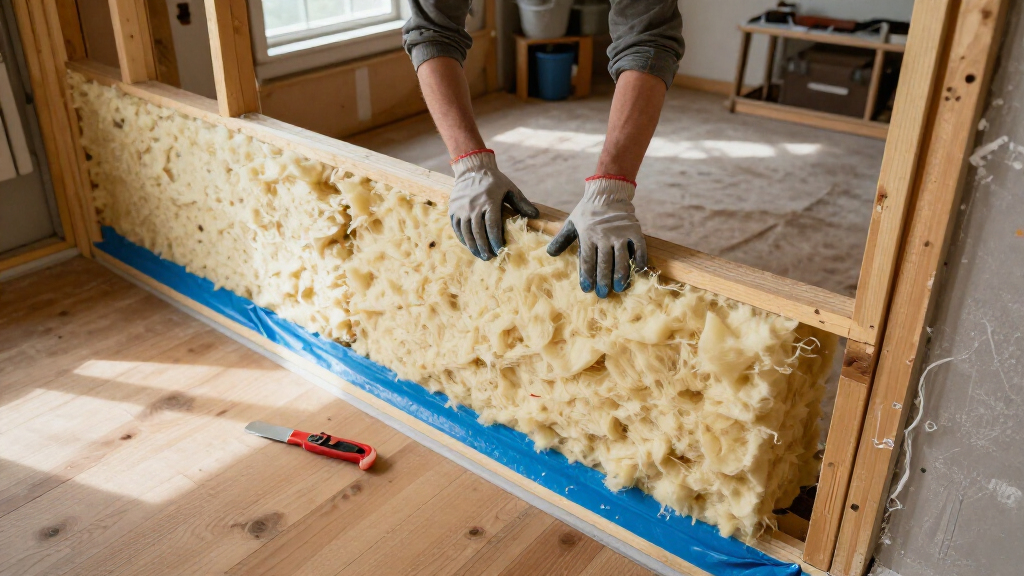
The Owens Corning R-13 Kraft-Faced Roll is my pick for an existing wall that is open for renovation and framed with standard 2×4-depth cavities. Its stated 3.5-inch thickness corresponds to that framing use, and kraft facing gives buyers a facing option built into the roll. For an exposed wall, that makes it a more direct fit than the R-19 batts, which are 6.5 inches thick and intended for deeper 2×6 framing. It is not, however, the right format for insulating through intact drywall.
Compared with Vega Bond, this is a simpler batt-style route when the cavity is already accessible: the roll can be fitted during a wall opening or construction project rather than injected through access holes. The product is described for residential or commercial walls and roofs, and it is said to help maintain indoor temperatures and control noise. Its fiberglass is described as formaldehyde-free and soft to the touch, details some buyers may value while handling and fitting material. The R-13 rating is the stated thermal value; I would not compare it with another product without also checking cavity depth and the full wall assembly.
The main planning drawback is that the listing describes coverage as one bag but does not give an area. The roll dimensions are 32 feet by 15 inches and the pack contains three rolls, yet I would verify the actual packaging and calculate the project quantity before buying. Kraft facing also means the wall assembly needs to be planned with its moisture-control requirements in mind; the product details do not establish that this facing is appropriate for every climate or wall design. In contrast, the R-19 is explicitly unfaced, so it avoids bundling a facing with the batt but requires separate moisture planning.
This is a sensible choice when the wall is open and its framing depth matches the product. It is not the strongest match for a closed wall, where Vega Bond is designed for injection, nor for deeper 2×6 framing, where the R-19 product better matches the cavity. I rank it second because it offers a clear, familiar fit for accessible 2×4 walls, while its unspecified square-foot coverage makes material planning less transparent than the R-19 listing.
Pros:- R-13 fiberglass specified for 2×4 wall installation.
- Kraft-faced design provides a facing as part of the roll.
- Described for walls and roofs in residential or commercial buildings.
- Fiberglass is described as formaldehyde-free and soft to the touch.
Cons:- The product is designed for 2×4 walls and may not fit other cavity depths.
- Coverage is listed as one bag without an area figure.
- Not designed as an injection product for finished, closed walls.
Best for: People renovating or opening 2×4 walls who want a kraft-faced fiberglass roll sized for the stated 3.5-inch cavity depth.
Not ideal for: Buyers insulating intact drywall, walls with deeper 2×6 cavities, or projects that need clearly stated square-foot coverage before purchase.
- Brand:Owens Corning
- R-value:R-13
- Material:Fiberglass
- Facing:Kraft
- Roll dimensions:32 ft. × 15 in.
- Thickness:3.5 in.
- Pack count:3 rolls
- Formaldehyde-free:Yes
Our verdict“For exposed 2×4 framing, I favor this roll over the thicker R-19 batts because its stated thickness matches the cavity rather than forcing a deeper product into a shallow wall.”
Owens Corning R-19 Unfaced Fiberglass Insulation, 77.5 sq. ft., 15 x 93 in.
When an existing wall is open and has deeper 2×6 framing, the Owens Corning R-19 batts become the stronger fiberglass match. Their 6.5-inch thickness is substantially greater than the R-13 roll’s 3.5 inches, and the stated R-19 rating gives this option the highest listed R-value in the group. That does not make it the best choice for every wall: cavity depth has to match, and a higher-rated batt is not a useful upgrade if it cannot fit properly.
Unlike the kraft-faced R-13 roll, these batts are unfaced and have no vapor barrier. That can suit a wall assembly where moisture control is handled separately, but it also means the batt itself does not provide that layer. I would treat this as a material-selection decision tied to the whole wall, not a small detail to ignore. For a closed wall that needs insulation without drywall removal, Vega Bond is the more purpose-matched option in this lineup; these batts are more relevant when framing is exposed or the retrofit gives access to the cavity.
The listing gives more useful quantity information than the R-13 product: eight batts cover 77.5 square feet, with each batt measuring 93 inches long by 15 inches wide. The description says they cut easily, recover quickly, and fit securely in framing, which can help when fitting batts around an accessible cavity layout. Sound reduction is also listed. Still, coverage figures do not remove the need to account for framing dimensions, cutoffs, and obstructions when planning a job.
I rank this third overall because its fit is narrower: it is the best fiberglass option here for deeper 2×6 wall cavities, but not a universal answer for existing walls. The R-13 roll is better aligned with 2×4 depth, and Vega Bond is better aligned with a finished wall that cannot be opened. Choose the R-19 when its thickness and unfaced design suit the actual assembly; skip it for shallow cavities or when you need a built-in facing. Its higher stated R-value is an advantage only when the wall can accommodate the batt correctly.
Pros:- R-19 thermal resistance for suitable deeper wall cavities.
- 6.5-inch thickness is intended for 2×6 framing or compatible retrofit applications.
- Eight batts provide a stated 77.5 square feet of coverage.
- Batts are described as easy to cut, quick to recover, and sound-reducing.
Cons:- Unfaced design includes no vapor barrier.
- At 6.5 inches thick, it is not suited to typical 2×4 cavities.
- Does not offer the closed-wall injection approach of the Vega Bond kit.
Best for: Buyers with open or accessible 2×6 wall cavities who want R-19 fiberglass batts and can manage moisture control separately.
Not ideal for: Owners of typical 2×4 walls, people who need a facing or vapor barrier included, and anyone insulating a closed wall without access.
- Brand:Owens Corning
- Material:Fiberglass
- R-value:R-19
- Thickness:6.5 in.
- Dimensions:93 in. long × 15 in. wide
- Coverage:77.5 sq. ft.
- Batts per bag:8
- Design:Unfaced; no vapor barrier
Our verdict“I recommend these batts over the R-13 roll only when the wall has enough depth for 6.5 inches and the project already accounts for moisture control.”
How We Picked
I ranked these products around the specific challenge in the title: adding insulation to existing walls. A batt with a strong R-value is not automatically a good retrofit choice if the wall is closed or its cavities are too shallow. I gave the most weight to installation access and wall-cavity fit, then compared the stated R-value, coverage information, facing, and the limits described for each product.
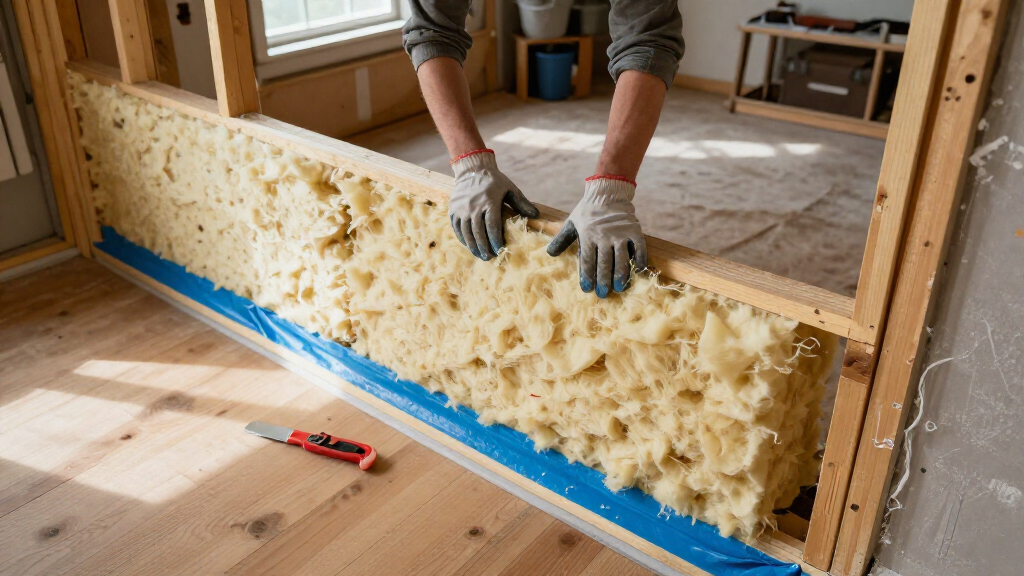
The first distinction is whether the wall is open. If drywall is already removed, fiberglass batts can be placed into exposed framing and trimmed to fit. The R-13 roll is sized for 2×4 walls, while the R-19 batts are 6.5 inches thick and intended for deeper 2×6 construction or suitable retrofit applications. If the finished wall is staying in place, the injection-foam kit has the strongest use-case match because it is designed to fill closed cavities through injection points. That advantage does not make it a universal solution: wall construction, cavity condition, access points, and application technique matter.
I also kept moisture control and planning clarity visible in the ranking. Kraft facing and an unfaced design are not interchangeable details; the R-19 product explicitly has no vapor barrier, so the rest of the wall assembly must address moisture appropriately. The R-13 listing gives dimensions and pack count but does not provide square-foot coverage, whereas the R-19 specifies 77.5 square feet per bag. I have not treated that missing R-13 area as an assumed coverage figure.
Finally, I judged the options only on the supplied product details. These descriptions do not establish compatibility with every wall type, local code requirements, or the performance of a completed wall assembly. My order reflects the products’ stated roles for existing walls—not a claim that one insulation material is best for every house. Buyers should match the product to framing depth and access, and seek qualified guidance when wall moisture or injection installation is uncertain.
| insulation for existing wall | Brand |
|---|---|
| Vega Bond Open-Cell Injection | Vega Bond |
| Owens Corning R-13 Kraft-Faced | Owens Corning |
| Owens Corning R-19 Unfaced Fib | Owens Corning |
Factors to Consider When Choosing Best Insulation For Existing Walls
I would start by identifying the wall construction and access before comparing insulation labels. A retrofit product has to suit both the cavity and the way the work can be done.Decide whether the wall can be opened
If drywall or another wall covering is already coming off, fiberglass batts or rolls can be placed into visible framing and checked as they are fitted. The R-13 roll is aimed at 2×4 walls, while the R-19 batts are deeper and intended for suitable 2×6 cavities. When the finished surface needs to stay intact, the Vega Bond injection kit is the only listed option designed for filling a closed wall cavity. It is not an all-purpose substitute for opening the wall; its description specifically limits it to injection use.
Before choosing injection, determine what is inside the cavity and whether it can accept the material. The supplied description does not confirm suitability for every wall assembly or obstruction. If you cannot establish the cavity layout, ask a qualified insulation professional to assess the project rather than assuming that an injection kit can reach and fill every space.
Match insulation thickness to framing depth
Thickness is a practical filter, not just a number on a package. The R-13 product is 3.5 inches thick and specified for 2×4 walls. The R-19 batts are 6.5 inches thick, making them a better match for deeper 2×6 framing. A batt that is too thick for its cavity should not be treated as an easy way to raise performance; the product has to fit the available space as intended.
For a wall that has unusual framing depth or layers, measure the cavity rather than relying on the home’s age or a guess based on the exterior. Existing insulation can also change the usable space. The Vega Bond product mentions an extended tube for reaching behind existing fiberglass, but that does not mean every filled or obstructed cavity is suitable for injection.
Read the R-value alongside the installation method
The R-19 batts have the highest stated R-value among these options, but they are not the overall winner for every existing wall. Their thickness and unfaced design narrow the situations where they fit. The R-13 roll provides a lower stated value with a clearer match to 2×4 framing, while Vega Bond lists R-4.4 per inch and is designed for injection into closed cavities. These ratings describe different products and formats; compare them in light of the cavity depth and intended installation rather than choosing by the largest number alone.
Insulation is only one part of the wall. Gaps, framing, air movement, and the rest of the assembly affect the result. Product descriptions alone do not establish the performance of a completed wall, so use the stated R-value as one selection input instead of a guarantee about whole-wall performance.
Plan facing and moisture control
The R-13 roll is kraft-faced, while the R-19 batts are unfaced and explicitly have no vapor barrier. That difference affects how each product fits into a wall assembly. A facing should not be assumed suitable for every climate or construction detail, and an unfaced batt does not supply a missing moisture-control layer. I would check the wall design and applicable local requirements before selecting a facing or adding a separate vapor-control product.
Moisture problems can undermine an insulation project, and the provided product details do not replace an assessment of the building. If the wall has a history of leaks, dampness, or condensation, address that condition before covering it with insulation. When the right vapor-control approach is unclear, professional advice is preferable to treating facing as a universal fix.
Check coverage and project quantity
The R-19 listing states that eight batts cover 77.5 square feet, which gives a useful starting point for estimating material. The R-13 roll listing gives its 32-foot length, 15-inch width, and three-roll pack count, but describes coverage only as one bag without an area. I would not infer an exact project coverage figure from that wording; verify the package details before planning a purchase.
For the injection kit, the stated amount is 100 cubic feet, not square feet. The area that volume can insulate depends on cavity depth and layout, so measure the spaces and calculate the needed volume rather than comparing the number directly with batt coverage. Include openings, framing, and other interruptions in the estimate, and follow the product’s directions for use.
Choose based on access, not material loyalty
Fiberglass and injection foam serve different retrofit conditions in this group. I would choose fiberglass when framing is exposed, cavity depth matches the batt, and there is a suitable plan for the facing and moisture control. I would choose injection foam only when a closed cavity needs to remain closed and the wall is appropriate for that application. The most useful selection is the one that fits the existing construction, not the material that sounds most advanced.
That distinction explains the ranking: Vega Bond leads for closed-wall access; the R-13 roll is the more direct match for exposed 2×4 framing; and the R-19 batts serve deeper 2×6 cavities. If your wall does not match one of those descriptions, do not force a product into the wrong role. Confirm dimensions and installation requirements before work begins.
Frequently Asked Questions
What is the best insulation for an existing wall that I do not want to open?
Of these three options, the Vega Bond Open-Cell Injection Foam Kit is the one designed for an existing closed wall cavity without removing drywall. Its injection format makes it the closest match for that access constraint. It is not suitable for open spraying, and the cavity still needs to be appropriate for injection. If you cannot confirm the wall’s construction or condition, get a qualified assessment before proceeding.
Can I use the R-19 batts in a 2×4 wall?
The R-19 batts are 6.5 inches thick and described for 2×6 framing or compatible retrofit applications, while the R-13 roll is 3.5 inches thick and specified for 2×4 walls. I would not choose the R-19 simply for its higher stated R-value if the cavity is too shallow. Match the insulation thickness to the measured space and follow product installation guidance.
What is the difference between the R-13 faced roll and the R-19 unfaced batts?
The R-13 roll is kraft-faced, 3.5 inches thick, and aimed at 2×4 walls. The R-19 batts are unfaced, 6.5 inches thick, and better suited to deeper 2×6 cavities. The R-19 listing states a higher R-value and a 77.5-square-foot bag coverage, while the R-13 listing does not specify square-foot coverage. The unfaced batts have no vapor barrier, so moisture control must be handled as part of the wall assembly.
Does the Vega Bond kit insulate a wall without any drilling or access?
No. The product is intended for injection into closed wall cavities, so the installation needs a way to reach those cavities. Its description says it can avoid removing drywall, not that it requires no access work. Injection locations and the condition of the cavity affect the method, and the kit is not intended for open spraying on walls or ceilings. Review the complete installation directions and confirm the wall is suitable first.
Which of these products has the clearest stated coverage?
The Owens Corning R-19 batts have the clearest area coverage in the supplied details: eight batts cover 77.5 square feet. The R-13 roll lists three rolls and dimensions but describes coverage only as one bag, without an area figure. Vega Bond lists 100 cubic feet, which is a volume rather than a wall-area figure; the area it serves varies with cavity depth. Plan each product using the measurement its listing provides.
Conclusion
My recommendation depends on what access your wall allows. For an intact wall with a suitable closed cavity, I would start with the Vega Bond injection foam kit because it is the only option here designed for that retrofit method. If the wall is open and framed for 2×4 construction, the Owens Corning R-13 Kraft-Faced Roll is the more direct dimensional match, though I would confirm its package coverage before estimating quantity. For open 2×6 framing, the Owens Corning R-19 Unfaced Batts offer the highest stated R-value in this comparison and clearer area coverage, provided the assembly has an appropriate moisture-control plan.
I would not buy any of these solely by comparing R-values. Confirm cavity depth, access, and moisture conditions first. If your wall does not fit one of the use cases above—or you are unsure what is inside a closed cavity—get the wall assessed before installing insulation. The right choice is the one that fits the existing wall and installation method, not simply the product with the biggest number.