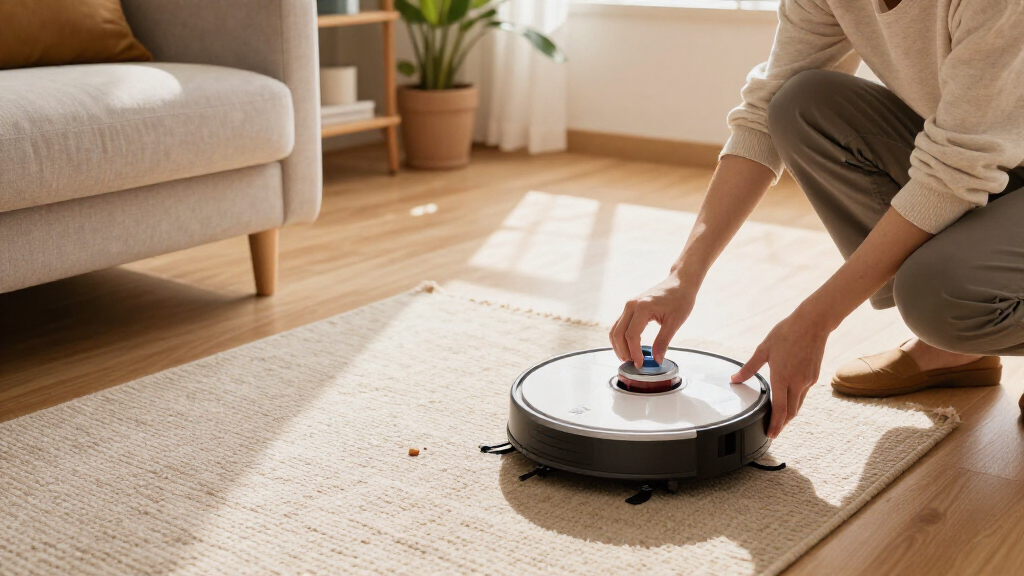
Robot vacuums with self-emptying docks reduce how often you handle collected dust, but they differ in navigation, dock design, and whether they add useful mopping. My best overall pick is the Roborock Q7 M5+, whose 10,000Pa suction and self-empty dock make it a capable vacuum-and-mop choice. The Shark AI Ultra stands out for its 60-day, bagless base, while the iRobot Roomba 105 Combo pairs an AutoEmpty dock with vacuuming and mopping. The main tradeoffs are dock capacity and upkeep, mapping and obstacle handling, and whether you need a mop at all. Read on for the full breakdown and a guide to choosing the right setup for your home.

Get home appliances delivered free with Prime
- Fast, free delivery on millions of items
- Prime Video, Amazon Music and more included
- Member-only deals all year
Complete the kit


Key Takeaways
- The Roborock Q7 M5+ is the roundup’s best overall choice, combining 10,000Pa suction with a self-empty dock and mopping capability.
- The Shark AI Ultra and Shark AI Ultra AV2501AE both highlight 60-day, bagless self-empty bases, a distinct draw for buyers who want to avoid replacement bags.
- The Shark Navigator’s 30-day dock capacity offers less time between bin emptying than the 60-day Shark AI Ultra models.
- Several combination models advertise high suction figures, but suction alone does not describe navigation, carpet pickup, mop upkeep, or how well a dock fits a household routine.
- The lineup includes dedicated vacuum models as well as vacuum-and-mop combos, so deciding whether mopping is useful should come before comparing suction claims.
| Shark AI Ultra Robot Vacuum, 60-Day Self-Emptying Base, Black, AV2511AE |  | Best for Bagless Self-Emptying | Model: AV2511AE | Base type: Bagless self-emptying base | Base capacity: Up to 60 days of dirt and debris | VIEW LATEST PRICE | See Our Full Breakdown |
| Roborock Q7 M5+ Robot Vacuum and Mop with Self-Empty Dock, 10000Pa Suction |  | Best Value Vacuum-and-Mop Pick | Model: Q7 M5+ | Product type: Robot vacuum and mop | Suction power: 10,000Pa | VIEW LATEST PRICE | See Our Full Breakdown |
| Q10 PRO Robot Vacuum and Mop with Self-Emptying Base, 8000Pa Suction |  | Best for Larger Homes | Suction power: 8,000Pa | Station capacity: 3.3L | Hands-free interval: Up to 60 days | VIEW LATEST PRICE | See Our Full Breakdown |
| Roborock Q10 S5+ Robot Vacuum and Mop, 10,000Pa Suction |  | Best for Carpet-Aware Mopping | Model: Q10 S5+ | Suction power: 10,000Pa | Self-empty interval: Up to 70 days | VIEW LATEST PRICE | See Our Full Breakdown |
| Lefant M2 Plus Robot Vacuum and Mop Combo, Black |  | Best for Multi-Floor Mapping | Model: M2 Plus | Suction power: 6,000Pa | Runtime: Up to 140 minutes | VIEW LATEST PRICE | See Our Full Breakdown |
| iRobot Roomba 105 Vac Robot Vacuum with AutoEmpty Dock |  | Best for Allergy-Conscious Buyers | Self-empty capacity: Up to 75 days | Allergen trapping: 99% of allergens as small as 0.7 microns | Suction: 70X more power-lifting suction than Roomba 600 series | VIEW LATEST PRICE | See Our Full Breakdown |
| Tikom L8000 Plus Robot Vacuum and Mop with Self-Emptying Base |  | Best for Multi-Floor Homes | Model: L8000 Plus | Maximum suction: 6000Pa | Dustbag capacity: 3L | VIEW LATEST PRICE | See Our Full Breakdown |
| Robot Vacuum and Mop with Self-Emptying Station, 6000Pa Suction, LiDAR Navigation |  | Best for Warranty Support | Suction power: 6000Pa | Self-empty capacity: Up to 90 days | Navigation: 360° LiDAR | VIEW LATEST PRICE | See Our Full Breakdown |
| Redroad R11 Robot Vacuum and Mop, 20,000Pa, 120-Day Self-Emptying, LiDAR Navigation, White |  | Best for Long Dock Intervals | Suction power: 20,000Pa | Battery capacity: 3,200mAh | Dust bag capacity: 4L | VIEW LATEST PRICE | See Our Full Breakdown |
| D13S MAX 3-in-1 Robot Vacuum with LiDAR Navigation and Self-Emptying |  | Best for Longer Cleaning Sessions | Model: D13S MAX | Suction power: 11,500Pa | Cleaning functions: Vacuum, sweep, and mop | VIEW LATEST PRICE | See Our Full Breakdown |
| Shark Navigator Robot Vacuum, 30-Day Self-Emptying Base, White, AV2110S |  | Best for Methodical Carpet Cleaning | Model: AV2110S | Navigation: LiDAR SmartPath | Self-empty base: Bagless; up to 30 days | VIEW LATEST PRICE | See Our Full Breakdown |
| Shark AI Ultra AV2501AE Robot Vacuum with XL HEPA Self-Empty Base, Bagless, 60-Day Capacity, LiDAR Navigation, Wi-Fi, Alexa Compatible, Black |  | Best for Bagless, Long-Capacity Cleaning | Model: AV2501AE | Navigation: LiDAR Precision Home Mapping with Matrix Clean Navigation | Self-empty base: Bagless; up to 60 days | VIEW LATEST PRICE | See Our Full Breakdown |
| H6 Pro 6000Pa Robot Vacuum and Mop with Self-Emptying and LiDAR Navigation |  | Best for Extended Vacuum-and-Mop Runs | Model: H6 Pro | Product type: 3-in-1 robot vacuum and mop | Suction: 6000Pa | VIEW LATEST PRICE | See Our Full Breakdown |
| iRobot Roomba 105 Combo Robot Vacuum and Mop with AutoEmpty Dock |  | Best for Carpet-Aware Mopping | Model: Roomba 105 Combo | Dock: AutoEmpty Dock; up to 75 days | Allergen bag: Traps 99% of allergens as small as 0.7 microns | VIEW LATEST PRICE | See Our Full Breakdown |
| robot vacuums with self emptying | Navigation | Model | Suction power |
|---|---|---|---|
| Shark AI Ultra Robot Vacuum | 360° LiDAR with object detection | AV2511AE | — |
| Roborock Q7 M5+ Robot Vacuum a | PreciSense LiDAR | Q7 M5+ | 10,000Pa |
| Q10 PRO Robot Vacuum and Mop w | 360° LiDAR with SLAM | — | 8,000Pa |
| Roborock Q10 S5+ Robot Vacuum | PreciSense LiDAR with multi-level mapping | Q10 S5+ | 10,000Pa |
| Lefant M2 Plus Robot Vacuum an | LiDAR with multi-floor mapping | M2 Plus | 6,000Pa |
| iRobot Roomba 105 Vac Robot Va | ClearView LiDAR | — | — |
| Tikom L8000 Plus Robot Vacuum | 360° LiDAR | L8000 Plus | — |
| Robot Vacuum and Mop with Self | 360° LiDAR | — | 6000Pa |
| Redroad R11 Robot Vacuum and M | 360° LiDAR | — | 20,000Pa |
| D13S MAX 3-in-1 Robot Vacuum w | LiDAR | D13S MAX | 11,500Pa |
| Shark Navigator Robot Vacuum | LiDAR SmartPath | AV2110S | — |
| Shark AI Ultra AV2501AE Robot | LiDAR Precision Home Mapping with Matrix Clean Navigation | AV2501AE | — |
| H6 Pro 6000Pa Robot Vacuum and | — | H6 Pro | — |
| iRobot Roomba 105 Combo Robot | ClearView LiDAR | Roomba 105 Combo | — |
More Details on Our Top Picks
Shark AI Ultra Robot Vacuum, 60-Day Self-Emptying Base, Black, AV2511AE
The Shark AI Ultra is the clearest choice here for buyers who want self-emptying without replacing dust bags. Its base holds up to 60 days of debris, while Matrix Clean makes repeated passes across the floor and LiDAR helps it follow mapped routes. That combination suits homes where predictable coverage and fewer routine bin emptyings matter more than having a mop. Compared with the Roborock Q10 S5+, Shark skips mopping and its base needs no dust bag, but it also lacks the Roborock’s carpet-aware mop lift and longer stated emptying interval. The tradeoff is a 90-minute runtime, which may mean more charging interruptions in larger homes; recharge-and-resume helps it continue afterward. Hair-prone households may value the self-cleaning brushroll, though the base still needs periodic care.
Pros:- Bagless base holds up to 60 days of debris
- Matrix Clean makes multiple passes for more deliberate floor coverage
- Self-cleaning brushroll helps reduce hair wrap
- LiDAR navigation works with recharge-and-resume cleaning
Cons:- Up to 90 minutes of runtime can limit coverage before recharging
- Does not include a mopping function
- The base still requires periodic maintenance
Best for: Pet households that want a bagless self-emptying base and mapped vacuuming across carpet and hard floors.
Not ideal for: Buyers who want one robot to vacuum and mop, or who need longer runtime for large areas in a single session.
- Model:AV2511AE
- Base type:Bagless self-emptying base
- Base capacity:Up to 60 days of dirt and debris
- Navigation:360° LiDAR with object detection
- Cleaning pattern:Matrix Clean precision grid
- Runtime:Up to 90 minutes
- Brushroll:Self-cleaning
- Controls:SharkClean app, Amazon Alexa, Google Assistant
Our verdict“Choose the Shark AI Ultra if bagless self-emptying and thorough mapped vacuuming matter more to you than mopping or longer runtime.”
Roborock Q7 M5+ Robot Vacuum and Mop with Self-Empty Dock, 10000Pa Suction
The Roborock Q7 M5+ pairs a self-emptying dock with vacuuming and basic mopping, making it a flexible pick for homes that want both functions without stepping up to the more feature-rich Q10 S5+. Its 10,000Pa suction, anti-tangle brush system, and PreciSense LiDAR address common upkeep and navigation needs, while adjustable water flow lets you tune mopping to the floor. The dock’s 2.7L dust bag is specified for up to 7–9 weeks, a shorter interval than the Q10 S5+’s stated 70 days and the Lefant M2 Plus’s 75 days. Those longer figures may appeal if reducing dock maintenance is your priority. The Q7 M5+ keeps the feature set more straightforward, but it requires 2.4GHz Wi-Fi and still needs periodic bag replacement; its mopping setup also does not list automatic mop lift.
Pros:- Combines vacuuming and mopping with adjustable water flow
- 10,000Pa suction and anti-tangle brushes suit homes with pet hair
- LiDAR mapping supports organized multi-room cleaning
- 2.7L dock bag supports up to 7–9 weeks between emptying
Cons:- App connectivity supports 2.4GHz Wi-Fi only
- Dock requires periodic dust bag maintenance
- No automatic mop-lift feature is listed
Best for: Households with mixed hard floors and carpets that want a mapped vacuum-and-mop robot with a self-emptying dock.
Not ideal for: Buyers with only 5GHz Wi-Fi or those who want automatic mop lifting when the robot reaches carpet.
- Model:Q7 M5+
- Product type:Robot vacuum and mop
- Suction power:10,000Pa
- Self-empty interval:Up to 7–9 weeks
- Dust bag capacity:2.7L
- Navigation:PreciSense LiDAR
- Brush system:JawScrapers main brush and anti-tangle side brush
- Water flow:3 settings
- Wi-Fi:2.4GHz
Our verdict“Pick the Q7 M5+ if you want strong vacuuming, basic mopping, and mapped self-emptying without the Q10 S5+’s more elaborate carpet-aware mop system.”
Q10 PRO Robot Vacuum and Mop with Self-Emptying Base, 8000Pa Suction
With a listed 150-minute runtime and recharge-and-resume operation, the Q10 PRO is suited to buyers who value longer cleaning sessions and less intervention between rooms. Its 3.3L collection station is rated for up to 60 days, while 360° LiDAR with SLAM maps routes and supports coverage of homes up to 2,000 square feet. The Roborock Q7 M5+ lists stronger suction and combines vacuuming with mopping, but the Q10 PRO’s longer stated runtime and larger station capacity are more compelling if reaching more floor area per charge is the priority. Its 8,000Pa suction and automatic carpet boost give it a solid vacuuming focus, with a HEPA filter in the listed specs. The compromise is mopping management: remove the mop holder or set no-go zones to protect carpets, and the app requires 2.4GHz Wi-Fi.
Pros:- 150-minute runtime with auto-recharge and resume
- 3.3L station is rated for up to 60 days
- LiDAR mapping supports coverage of homes up to 2,000 sq. ft.
- Automatic carpet boost increases suction on carpet
Cons:- Mop holder must be managed around carpets to avoid wetting them
- Wi-Fi connectivity supports 2.4GHz only
- 8,000Pa suction is below the 10,000Pa listed for the Roborock Q7 M5+
Best for: Owners of larger, mostly hard-floor homes who want long runtime, mapped cleaning, and a high-capacity self-emptying station.
Not ideal for: Homes with many rugs where manually removing the mop holder or configuring no-go zones would be inconvenient.
- Suction power:8,000Pa
- Station capacity:3.3L
- Hands-free interval:Up to 60 days
- Navigation:360° LiDAR with SLAM
- Runtime:Up to 150 minutes
- Coverage area:Up to 2,000 sq. ft.
- Filter:HEPA
- Connectivity:2.4GHz Wi-Fi, HomeAloT App, Alexa, Google Assistant
Our verdict“Choose the Q10 PRO for longer mapped cleaning sessions in a larger home if you can manage its mop around carpets.”
Roborock Q10 S5+ Robot Vacuum and Mop, 10,000Pa Suction
The Roborock Q10 S5+ stands out for a self-emptying robot that can mop while accounting for carpets. Its ultrasonic detection can lift the mop by 8mm and boost suction when it detects carpet, reducing the need to separate every rug from a mopping run. The sonic system scrubs at up to 3,000 vibrations per minute, and the 2.7L dust bag is rated for up to 70 days. Compared with the Roborock Q7 M5+, the Q10 S5+ adds listed carpet detection, mop lift, and structured-light obstacle avoidance, which makes its mixed-floor routine more automated. The tradeoff is setup complexity: app configuration unlocks much of that flexibility, and Wi-Fi is limited to 2.4GHz. Its dust bag also needs eventual replacement, unlike the bagless base on the Shark AI Ultra.
Pros:- Self-emptying station is rated for up to 70 days
- Ultrasonic carpet detection triggers mop lift and suction boost
- Dual anti-tangle brushes help limit hair wrap
- LiDAR mapping and ReactiveTech structured-light obstacle avoidance
Cons:- Requires periodic replacement of the dock’s dust bag
- Wi-Fi supports 2.4GHz only
- Carpet-aware features depend on app setup and configuration
Best for: Mixed-floor households that want a self-emptying vacuum and mop with automatic carpet response.
Not ideal for: Buyers who prefer a bagless dock, avoid app setup, or need a robot that connects to 5GHz Wi-Fi.
- Model:Q10 S5+
- Suction power:10,000Pa
- Self-empty interval:Up to 70 days
- Dust bag capacity:2.7L
- Mopping system:VibraRise 2.0 dual-zone sonic vibration
- Mop lift:8mm
- Carpet detection:Ultrasonic, with automatic mop lift and suction boost
- Navigation:PreciSense LiDAR with multi-level mapping
- Obstacle avoidance:ReactiveTech structured light
Our verdict“The Q10 S5+ is a strong fit for mixed floors if automatic mop lifting matters more than a bagless dock or simpler setup.”
Lefant M2 Plus Robot Vacuum and Mop Combo, Black
The Lefant M2 Plus brings multi-floor mapping and a long listed self-empty interval to buyers with homes spanning several levels. Its station holds two 2.5L dust bags and is rated for up to 75 days of dust disposal; a 140-minute runtime and LiDAR mapping add useful coverage flexibility. Carpet detection can boost vacuum suction, but mopping still calls for managing the mop holder around carpeted areas. Compared with the Roborock Q10 S5+, Lefant offers a longer stated interval between dust disposal and supports both 2.4GHz and 5GHz Wi-Fi, while Roborock lists stronger suction and an 8mm automatic mop lift. The M2 Plus is rated for hard floors, so its 6,000Pa suction and mop combo may be less suited to homes where deep carpet cleaning is the main job. Its 250ml robot dustbin also feeds a station, so the station’s bag capacity is the key maintenance advantage.
Pros:- Multi-floor LiDAR mapping with no-go zones
- Station uses two 2.5L dust bags and is rated for up to 75 days
- Supports 2.4GHz and 5GHz Wi-Fi
- Carpet detection adjusts vacuuming behavior
Cons:- Hard floors are the stated surface recommendation
- Mop holder needs management around carpets
- 6,000Pa suction is lower than the 10,000Pa listed for the Roborock Q10 S5+
Best for: Multi-level households with mostly hard floors that want floor mapping, carpet detection, and a long stated interval between dock emptying.
Not ideal for: Carpet-heavy homes or buyers who want automatic mop lifting instead of managing the mop holder near rugs.
- Model:M2 Plus
- Suction power:6,000Pa
- Runtime:Up to 140 minutes
- Navigation:LiDAR with multi-floor mapping
- Dust bag capacity:2 × 2.5L
- Robot dustbin:250ml
- Water tank:300ml
- Wi-Fi:2.4GHz and 5GHz
- Filter:HEPA
Our verdict“Pick the M2 Plus for multi-floor mapping and long dock intervals in a mostly hard-floor home where manual mop management is acceptable.”
iRobot Roomba 105 Vac Robot Vacuum with AutoEmpty Dock
Allergen-trapping disposal gives the Roomba 105 a distinct role in this group: its dock holds debris for up to 75 days and traps 99% of allergens as small as 0.7 microns. That makes it a better fit for households focused on containing dust than the Tikom L8000 Plus, whose larger 90-day capacity is the stronger choice for fewer dock changes. ClearView LiDAR maps rooms for orderly cleaning, while the three-stage system and stated 70X power-lifting suction versus the Roomba 600 series support everyday pickup across surfaces. App, voice, and onboard controls offer flexibility, though setup and operation require 2.4 GHz Wi-Fi. Bag replacements are an ongoing expense, and its self-empty interval is shorter than several alternatives here. Choose it for dust containment and established navigation features; skip it if maximizing time between bag changes matters most.
Pros:- Dock holds debris for up to 75 days and traps 99% of allergens as small as 0.7 microns
- ClearView LiDAR supports mapped, organized cleaning
- Three-stage cleaning with multi-surface and edge-sweeping brushes
- Can be controlled through the app, voice assistants, or onboard buttons
Cons:- Requires 2.4 GHz Wi-Fi for setup and operation
- Replacement dust bags add recurring upkeep
- Its stated 75-day capacity is shorter than the 90- and 120-day claims from several other picks
Best for: Households with allergy concerns that want a dock designed to trap fine dust and prefer flexible app, voice, or button controls
Not ideal for: Buyers seeking the longest stated interval between dock emptying or who cannot use a 2.4 GHz Wi-Fi network
- Self-empty capacity:Up to 75 days
- Allergen trapping:99% of allergens as small as 0.7 microns
- Suction:70X more power-lifting suction than Roomba 600 series
- Navigation:ClearView LiDAR
- Connectivity:2.4 GHz Wi-Fi
- Voice assistants:Alexa, Siri, Google Assistant
- Controls:App, voice, and onboard buttons
- Spot cleaning:Up to 5 minutes
Our verdict“Choose the Roomba 105 if dust containment and flexible controls matter more than the longest self-empty interval.”
Tikom L8000 Plus Robot Vacuum and Mop with Self-Emptying Base
The Tikom L8000 Plus is a practical match for homes where the robot needs to remember several layouts: its 360° LiDAR system stores up to five floor plans, more than the Redroad R11, which stores up to four. Its 3L base is stated to hold up to 90 days of debris, reducing how often owners deal with the dock. A 150-minute maximum runtime, plus recharge and resume, helps it cover larger areas, though that maximum is available only in gentle suction mode. The 6000Pa suction and automatic carpet boost suit routine mixed-floor cleaning, while the mop adds a light-cleaning option. Carpets need a little planning: remove the mop holder or mark carpeted areas as no-go zones to avoid wetting them. Buyers who want fewer settings may find the mapping and mop management more involved than the Roomba 105’s simpler vacuum-focused setup.
Pros:- Stores up to five floor plans with 360° LiDAR mapping
- 3L self-emptying base is stated to hold up to 90 days of debris
- Recharge and resume supports longer cleaning sessions
- Works with 2.4 GHz and 5 GHz Wi-Fi and Alexa
Cons:- Mop holder must be removed or carpet areas set as no-go zones to prevent wetting carpets
- The stated 150-minute maximum runtime applies only in gentle suction mode
- Three suction and three water-flow settings require some setup to tune cleaning
Best for: Households with multiple floors that want stored maps, scheduled cleaning, and a combined vacuum and mop
Not ideal for: Homes with carpet throughout or buyers who want to mop without removing the holder or setting carpet no-go zones
- Model:L8000 Plus
- Maximum suction:6000Pa
- Dustbag capacity:3L
- Self-emptying:Up to 90 days
- Navigation:360° LiDAR
- Multi-floor maps:Up to 5
- Maximum runtime:150 minutes
- Connectivity:2.4 GHz and 5 GHz Wi-Fi
- Voice control:Alexa compatible
Our verdict“Pick the Tikom L8000 Plus for multi-floor mapping and longer cleaning coverage if you are willing to manage its mop around carpets.”
Robot Vacuum and Mop with Self-Emptying Station, 6000Pa Suction, LiDAR Navigation
This pick pairs a familiar 6000Pa suction and 90-day self-empty claim with an unusually specific support offer: a two-year warranty and lifetime technical support. That may appeal to buyers who want recourse if setup or operation becomes difficult. Compared with the Tikom L8000 Plus, which lists five stored floor plans and a 150-minute maximum runtime, this model provides fewer details about mapping storage and lists 120 minutes of battery life. Its 360° LiDAR mapping and customizable no-go zones still help organize room-by-room cleaning, and Alexa and app controls cover common scheduling needs. The 250 ml onboard bin is small, though the dock is meant to handle routine debris collection. Mop tank capacity is unspecified, so buyers cannot judge its water coverage from the supplied details. I would choose it for the stated support terms, not for the richest capacity information.
Pros:- Includes a stated two-year warranty and lifetime technical support
- Self-emptying station is stated to support up to 90 days of hands-free cleaning
- 360° LiDAR mapping supports room routes and no-go zones
- App scheduling and Alexa voice control are available
Cons:- 120-minute battery life is shorter than the Tikom L8000 Plus’s stated 150-minute maximum
- The 250 ml onboard dustbin is small between dock emptying cycles
- Mop tank capacity is not specified
Best for: Buyers who value a clearly stated two-year warranty and lifetime technical support for a mapped vacuum-and-mop robot
Not ideal for: Owners of larger homes who need a longer listed runtime or buyers who want clear mop-tank capacity details before choosing
- Suction power:6000Pa
- Self-empty capacity:Up to 90 days
- Navigation:360° LiDAR
- Battery life:120 minutes
- Battery:Lithium-ion, 14.4V
- Dustbin capacity:250 ml
- Cleaning path width:8.88 inches
- Controls:App and Alexa voice control
- Warranty and support:2-year warranty, lifetime technical support
Our verdict“Choose this model if its stated warranty and support matter more to you than longer runtime or detailed water-tank specifications.”
The Redroad R11’s strongest case is a 4L dust bag rated for up to 120 days, the longest stated interval among these five products. For owners who want to spend less time tending the dock, that outlasts the 90-day claims for the Tikom L8000 Plus and D13S MAX. Its listed 20,000Pa suction, extendable side brush, and anti-tangle roller are aimed at debris along edges and hair-prone floors, though the suction figure alone does not establish real-world cleaning results. LiDAR stores up to four maps, and 2.4/5 GHz Wi-Fi with app and voice control supports multi-floor routines. It also vacuums, sweeps, and mops, with three water levels. Mopping is the compromise: the supplied details caution that it may struggle with heavy or stuck-on messes. Dust bags need periodic replacement, and app features depend on Wi-Fi setup.
Pros:- 4L dust bag is stated to hold up to 120 days of debris
- Stores up to four maps with 360° LiDAR navigation
- Extendable side brush and anti-tangle roller are designed for edges and pet hair
- Supports 2.4 GHz and 5 GHz Wi-Fi, app control, and Alexa or Google Home
Cons:- Mopping may not handle heavy or stuck-on messes effectively
- Replacement dust bags are required over time
- Smart features depend on Wi-Fi and app setup
Best for: Owners who want the longest stated time between self-empty dock maintenance and need mapping for up to four floors
Not ideal for: Buyers who expect robot mopping to remove stuck-on messes or prefer not to depend on app and Wi-Fi setup
- Suction power:20,000Pa
- Battery capacity:3,200mAh
- Dust bag capacity:4L
- Self-empty duration:Up to 120 days
- Navigation:360° LiDAR
- Map storage:Up to 4 maps
- Connectivity:2.4 GHz and 5 GHz Wi-Fi
- Cleaning functions:Vacuum, sweep, and mop
- Warranty:2 years
Our verdict“Choose the Redroad R11 if a long stated dock interval and multi-floor mapping matter more than strong mopping performance.”
D13S MAX 3-in-1 Robot Vacuum with LiDAR Navigation and Self-Emptying
The D13S MAX combines up to 160 minutes of runtime with a self-emptying station rated for up to 90 days, making it a sensible fit for buyers who prioritize coverage per charge. That runtime exceeds the Redroad R11’s supplied battery detail, which gives capacity but no runtime figure, and the Tikom L8000 Plus’s stated 150-minute maximum. Its 11,500Pa suction, carpet auto-boost, and LiDAR mapping with no-go zones support a more tailored routine across carpets and hard floors. Vacuuming, sweeping, and mopping in one device adds versatility, but the 240 ml dustbin and 230 ml water tank are modest, and mop pads need washing after use. The station also takes floor space. Compared with the Roomba 105, this model adds mopping and longer stated runtime, while giving up that product’s stated fine-allergen trapping detail.
Pros:- Up to 160 minutes of stated runtime
- Self-emptying station is rated for up to 90 days
- LiDAR mapping supports no-go zones and scheduled cleaning
- Carpet auto-boost and three cleaning functions cover mixed-floor routines
Cons:- 240 ml dustbin and 230 ml water tank have limited onboard capacity
- Mop pads require regular washing after use
- Self-emptying station needs additional floor space
Best for: People in larger homes who want a long stated runtime, carpet boost, and occasional mopping in one robot
Not ideal for: Buyers with little room for a dock or those who want a larger onboard tank and minimal mop-pad upkeep
- Model:D13S MAX
- Suction power:11,500Pa
- Cleaning functions:Vacuum, sweep, and mop
- Navigation:LiDAR
- Runtime:Up to 160 minutes
- Dustbin capacity:240 ml
- Water tank capacity:230 ml
- Self-empty capacity:Up to 90 days
- Special features:Carpet auto-boost, no-go zones, edge cleaning, do not disturb mode
Our verdict“Pick the D13S MAX for longer stated cleaning sessions and combined floor care if its small tanks and dock footprint suit your home.”
Shark Navigator Robot Vacuum, 30-Day Self-Emptying Base, White, AV2110S
The Shark Navigator AV2110S suits buyers who want mapped, row-by-row vacuuming and a bagless base without stepping up to the longer-capacity docks in this group. Its LiDAR SmartPath navigation organizes cleaning across carpets, rugs, and hard floors, while recharge-and-resume helps it finish larger jobs after a charging break. The base holds debris for up to 30 days, so it calls for more frequent emptying than the Shark AI Ultra AV2501AE, whose listed capacity reaches 60 days. That shorter interval may be a fair trade for households that prefer a bagless base and do not mind regular upkeep. App setup is needed for schedules and no-go zones, and object sensors can miss small obstacles. Choose it for organized vacuuming; skip it if you want mopping or longer stretches between dock maintenance.
Pros:- LiDAR SmartPath plans row-by-row cleaning
- Bagless base holds up to 30 days of debris
- Self-cleaning anti-hair-wrap brushroll is suited to pet hair
- Recharge-and-resume supports larger cleaning runs
Cons:- Base needs emptying more often than the Shark AI Ultra AV2501AE’s 60-day base
- Scheduling and no-go zones require app setup
- Sensors may miss small obstacles
Best for: Households with rugs and mixed flooring that want mapped vacuuming and a bagless self-empty base.
Not ideal for: Buyers seeking a mop function, longer than 30-day debris storage, or reliable detection of small obstacles.
- Model:AV2110S
- Navigation:LiDAR SmartPath
- Self-empty base:Bagless; up to 30 days
- Brushroll:Self-cleaning anti-hair wrap
- Floor compatibility:Carpet, rugs, hard floors
- App:SharkClean
- Voice control:Amazon Alexa, Google Voice
- Battery feature:Recharge and resume
Our verdict“Choose the Navigator if you want methodical, bagless vacuuming across mixed floors and are comfortable emptying its base about monthly.”
Shark AI Ultra AV2501AE Robot Vacuum with XL HEPA Self-Empty Base, Bagless, 60-Day Capacity, LiDAR Navigation, Wi-Fi, Alexa Compatible, Black
The Shark AI Ultra AV2501AE is the Shark pick for buyers who want a longer interval between dock emptying and a mapped clean. Its bagless base holds up to 60 days, twice the stated capacity of the Shark Navigator AV2110S, and True HEPA filtration is specified to capture 99.97% of dust and allergens down to 0.3 microns. Matrix Clean adds multi-pass coverage, which favors households wanting a more deliberate pass over the floor than a basic mapped route. The tradeoff is that the base still needs attention once full, and hands-free scheduling depends on Wi-Fi and voice setup. Compared with the mopping-capable H6 Pro, this Shark is a vacuum-focused choice. Its listed floor types are carpet and hard floor, so it may be less suited to homes that need explicit rug support or mopping.
Pros:- Bagless self-empty base holds up to 60 days of debris
- True HEPA filtration captures 99.97% of particles down to 0.3 microns
- LiDAR mapping and Matrix Clean provide methodical multi-pass coverage
- Self-cleaning brushroll and recharge-and-resume support routine upkeep
Cons:- The base still needs emptying when its capacity is reached
- App scheduling and voice control depend on Wi-Fi setup
- Does not include a mopping function
Best for: Pet-owning households that want a bagless dock, HEPA filtration, and methodical vacuuming across carpet and hard floors.
Not ideal for: Buyers who need a mop, want a disposable bag system, or prefer controls that do not rely on Wi-Fi setup.
- Model:AV2501AE
- Navigation:LiDAR Precision Home Mapping with Matrix Clean Navigation
- Self-empty base:Bagless; up to 60 days
- Filtration:True HEPA; captures 99.97% of dust and allergens down to 0.3 microns
- Brushroll:Self-cleaning
- Runtime:Up to 120 minutes
- Floor types:Carpet, hard floor
- Connectivity and voice:Wi-Fi; Amazon Alexa and Google Assistant
Our verdict“Pick the AI Ultra if longer bagless debris storage and HEPA filtration matter more to you than mopping.”
H6 Pro 6000Pa Robot Vacuum and Mop with Self-Emptying and LiDAR Navigation
The H6 Pro combines vacuuming and mopping with a stated 90 days of hands-free use from its self-emptying station, making it a fit for buyers who want both floor-care jobs in one robot. Its 6000Pa suction, 360° LiDAR, and multi-level mapping give it a broader cleaning role than the vacuum-only Shark AI Ultra AV2501AE. A 150-minute runtime and auto-recharge-and-resume help it cover larger homes, while app and voice controls allow room-specific scheduling and no-go zones. The water tank holds 310 ml, however, so larger mopping jobs may call for a refill; the dock also takes space and may need replacement dust bags. Choose it when combined cleaning and long intervals between debris disposal matter. Skip it if you want to avoid app setup or prefer a vacuum-only machine.
Pros:- Combines sweeping, vacuuming, and mopping
- Station supports up to 90 days of hands-free debris storage
- 360° LiDAR and multi-level mapping support room-based cleaning
- 150-minute runtime with auto-recharge and resume
Cons:- 310 ml water tank may need refilling during larger mopping jobs
- Station takes additional space and may require replacement dust bags
- Advanced scheduling and zones depend on app and network setup
Best for: Owners of larger multi-level homes who want one robot for scheduled vacuuming and mopping.
Not ideal for: Buyers with limited dock space, large uninterrupted mopping areas, or a preference for simpler app-free controls.
- Model:H6 Pro
- Product type:3-in-1 robot vacuum and mop
- Suction:6000Pa
- Navigation and mapping:360° LiDAR; multi-level mapping
- Self-emptying capacity:3 L; supports up to 90 days of hands-free use
- Dustbin capacity:250 ml
- Water tank capacity:310 ml
- Runtime:150 minutes
- Controls:App, Alexa, Google Assistant
Our verdict“Choose the H6 Pro if you want combined vacuuming and mopping with long debris-storage intervals and can accommodate its station.”
iRobot Roomba 105 Combo Robot Vacuum and Mop with AutoEmpty Dock
The Roomba 105 Combo is the choice here for households that want a mop function with a specific safeguard for rugs: it automatically avoids carpets while mopping. ClearView LiDAR guides navigation, while its AutoEmpty dock stores debris for up to 75 days—longer than the Shark AI Ultra AV2501AE’s stated 60 days, though the Roomba uses an allergen bag rather than a bagless base. Vacuum-only, mop-only, and combined modes let you tailor a run, and SmartScrub adds a deeper scrubbing option for hard floors. This is more versatile for mixed flooring than the vacuum-only Shark Navigator, but it requires a 2.4 GHz Wi-Fi network for setup and operation. The replaceable bags add upkeep, and the listed mopping solution is limited to compatible products.
Pros:- AutoEmpty dock stores debris for up to 75 days
- Automatically avoids carpets while mopping
- Offers vacuum-only, mop-only, and combined cleaning modes
- ClearView LiDAR and SmartScrub support mapped hard-floor care
Cons:- Dock uses replaceable allergen bags
- Requires a 2.4 GHz Wi-Fi network for setup and operation
- Mopping solution use is limited to compatible products
Best for: Homes with both rugs and hard floors where buyers want automatic carpet avoidance during mopping.
Not ideal for: Buyers who prefer a bagless dock, lack a 2.4 GHz Wi-Fi network, or want to use any mopping solution.
- Model:Roomba 105 Combo
- Dock:AutoEmpty Dock; up to 75 days
- Allergen bag:Traps 99% of allergens as small as 0.7 microns
- Navigation:ClearView LiDAR
- Cleaning modes:Vacuum only, mop only, vacuum and mop
- Mopping system:Microfiber pad with micro-pump water flow control
- Carpet handling:Automatically avoids carpets while mopping
- Voice control:Alexa, Siri, and Google Assistant-enabled devices
- Wi-Fi requirement:2.4 GHz
Our verdict“Pick the Roomba 105 Combo if carpet avoidance during mopping and multiple cleaning modes matter more than a bagless dock.”
How We Picked
I ranked these 14 robot vacuums by how well their self-emptying setup supports an everyday cleaning routine, then considered the rest of the package: navigation, vacuuming and mopping options, stated suction, and the maintenance each design may involve. I gave particular weight to clear dock details, such as stated capacity and bagless operation, because the dock is the feature that sets this roundup apart from a standard robot vacuum.
The ordering reflects the strength and clarity of each product’s stated feature set, along with how well it suits a distinct buyer. The Roborock Q7 M5+ leads for combining a self-empty dock, high stated suction, and mopping; the Shark AI Ultra models are stronger fits for shoppers who prioritize a bagless base with a long stated emptying interval. Models with less dock information or fewer clearly described distinctions rank behind those with a more identifiable fit. Suction claims alone did not determine placement, since they do not tell me how well a robot handles navigation, rugs, obstacles, or ongoing mop and dock care.
Factors to Consider When Choosing Robot Vacuums With Self Emptying
Before choosing, I would match the dock and cleaning routine to the home rather than starting with a suction number. These broader checks can help avoid paying for features that add work instead of reducing it.
Match Dock Capacity to Your Household
A longer stated interval between bin emptying can reduce routine attention, but actual frequency depends on how much debris the robot collects and how often it runs. Homes with pets, long hair, or frequent foot traffic may fill a dock sooner than a lightly used space. Check whether the interval is presented as a maximum or a typical estimate, since those describe different expectations. A large base also takes up floor space, so measure where it will sit before choosing one for a small apartment. Bagless designs avoid buying replacement bags, while bagged docks may make dust disposal easier to contain. Think about both how often you want to empty the base and how you prefer to handle what it collects.
Decide Whether Mopping Will Earn Its Keep
A combo robot can maintain hard floors between deeper cleans, but a mop attachment does not automatically replace hands-on floor washing. Consider how much hard flooring you have and whether you are willing to refill water, clean pads, and manage wet components. On a mostly carpeted floor plan, a mop feature may add cost and storage needs with little benefit. Mixed flooring calls for checking how the robot handles carpet when its mop is attached or active. A separate vacuum-focused model can be the simpler fit if dust and debris are your main concerns. Choose a combo for a real floor-cleaning routine, not just because the product lists two functions.
Look Beyond the Suction Figure
Suction figures can help compare claims within a lineup, but they cannot predict every cleaning result. Brush design, floor type, hair pickup, and navigation all affect whether debris reaches the robot’s intake. A high number is less useful if the robot repeatedly misses a room or struggles to move between rugs and hard flooring. Consider the surfaces and debris in your home, then look for clear details about brushes and cleaning modes. If the product listing gives a suction figure but little information about other parts of the cleaning system, treat the claim as only one piece of the decision. The best fit is the robot whose full setup addresses your routine.
Check Navigation Against Your Floor Plan
Navigation matters most when your home has several rooms, furniture to work around, or areas you want the robot to avoid. LiDAR is a useful navigation feature to compare, but its presence alone does not tell you how the app handles maps, room selection, or no-go zones. Look for specifics on mapping and controls before assuming that two LiDAR models behave alike. In a simple, open layout, paying extra for elaborate mapping may offer little day-to-day value. In a multiroom home, convenient room and zone controls can save more effort than a larger suction claim. Also check how the robot responds to cords, toys, and other loose objects that need attention before a run.
Count Every Maintenance Task
Self-emptying removes one recurring chore, but it does not make a robot maintenance-free. Brushes can collect hair, filters need care or replacement, and sensors and wheels benefit from periodic cleaning. Combo models add mop pads and water handling to that list. A bagless dock avoids disposable bags but still needs to be emptied and cleaned; a bagged dock needs replacement bags. Check what supplies the manufacturer expects and how easy routine access is before committing to a design. If the aim is less household upkeep, count the whole routine rather than focusing only on the dock’s capacity.
Compare Ownership Fit, Not Feature Count
More functions do not always make a robot more useful for a particular home. A vacuum-and-mop combo may be the right choice for hard floors, while a dedicated vacuum can suit a carpet-heavy layout. A bagless base may matter more to one buyer than advanced room controls matter to another. Check compatibility with the phone app or voice assistant only if you expect to use those controls; a feature you never use adds little practical value. Look for product-specific details about dock capacity, mapping, and care instead of treating similar product names as proof that their packages match. Rank your priorities first, then pay attention to the models that meet them clearly.
Frequently Asked Questions
Does a self-emptying robot vacuum make sense if I live alone?
It can, especially if you run the robot often, have shedding pets, or want to avoid emptying a small onboard bin after each cleaning. In a small, low-debris home, the dock may need less frequent attention than its advertised capacity suggests, so the convenience gain may be modest. Consider the space the base occupies and the extra parts you will maintain alongside the robot. A compact home with little debris may be better served by a simpler model if self-emptying is not solving a regular chore. The right choice depends on how often you clean and how much you value hands-off bin disposal.
Is a bagless self-emptying dock better than a bagged one?
Bagless docks avoid replacement bags, but emptying one can release dust unless the disposal process is well contained. Bagged docks add a recurring supply to keep on hand, while the bag can make collected debris easier to remove without handling it directly. If dust sensitivity is a priority, pay attention to how the dock contains debris during emptying and disposal. If avoiding disposable supplies matters most, a bagless base may be a better fit. Dock capacity and everyday handling matter alongside the bag choice.
Should I choose a vacuum-and-mop combo if I have mostly carpet?
Usually, a mop is most useful when the robot regularly cleans a meaningful area of hard flooring. On a carpet-heavy layout, you may be paying for a function that sees little use while adding pad and water care. Check how a specific model handles carpet when its mop is fitted or active, particularly if your rooms have rugs beside hard floors. A vacuum-focused robot may make the routine simpler when carpet is the main surface. For mixed flooring, compare the mop controls and carpet handling before deciding.
How should I compare self-emptying capacity claims?
Treat a stated number of days as a guide to potential dock capacity, not a promise about your home. The robot’s schedule, floor area, pets, and amount of debris all change how quickly the base fills. A longer interval can be helpful for reducing attention, but it does not indicate how well the robot cleans or how easy the dock is to maintain. Compare stated capacity alongside the disposal design and the room available for the base. If the listing does not explain its assumptions, plan for more frequent emptying than the maximum claim.
What should I prioritize for a home with pets and loose hair?
Look at the brush design, bin and dock capacity, filter care, and how easy it is to remove hair from the robot. A self-emptying dock can reduce how often you deal with collected debris, but hair can still wrap around brushes or clog parts of the system. Frequent runs may help keep shedding under control, though they also put more debris through the dock. Check for clear details about hair handling rather than relying on suction claims alone. Expect periodic brush and filter care whichever model you choose.
Conclusion
For the broadest mix of self-emptying convenience and cleaning functions, I would start with the Roborock Q7 M5+ as my best overall pick. Buyers who want a bagless base with a stated 60-day capacity should compare the Shark AI Ultra and AV2501AE; the lineup does not provide enough detail to distinguish them on that feature alone. For value, I would shortlist the Tikom L8000 Plus and other combo models by checking their dock, navigation, and care details against your needs, since the supplied information does not support a firm price-based value claim. Beginners should prioritize a clearly described dock and simple cleaning routine, making the Roomba 105 Vac a sensible vacuum-first option to investigate. For homes that want both vacuuming and mopping, consider the Roomba 105 Combo or Roborock Q7 M5+; for shoppers who specifically want a bagless base, the Shark AI Ultra models are the clearer match.
NFL season / tailgating Picks
team gear
As an affiliate, we earn on qualifying purchases.