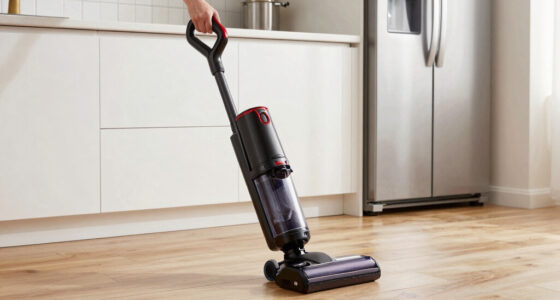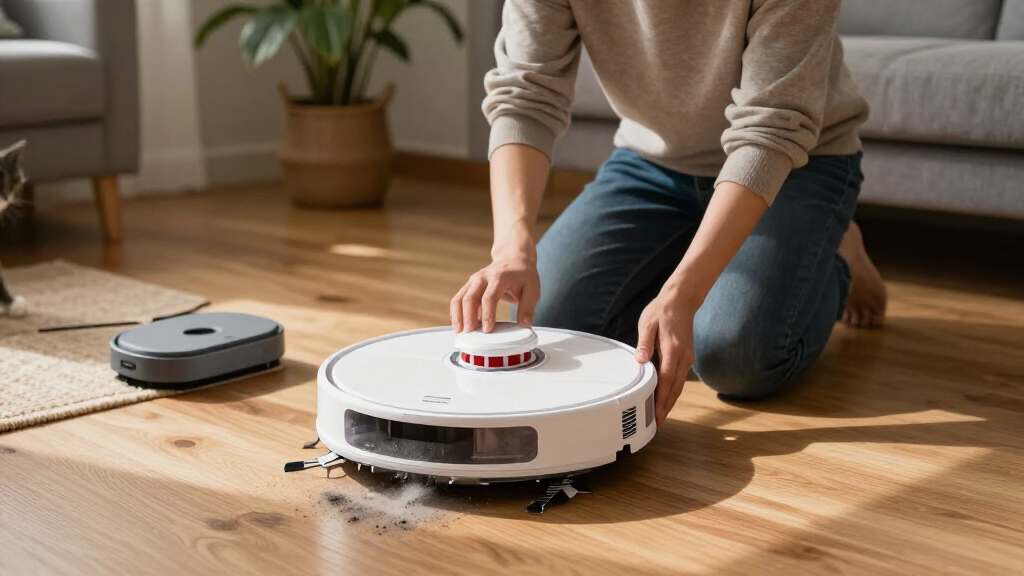
Robot vacuums with self-emptying bases reduce how often you have to handle collected dust, but they differ in navigation, filtration, and whether they can mop. My best overall pick is the Shark AI Ultra AV2511AE, a strong all-round choice from a lineup with several Shark models. The iRobot Roomba 115 Combo stands out if you want vacuuming and mopping, while the 11,500 Pa LiDAR model is worth a look if strong stated suction and mapped cleaning are your priorities. The main tradeoffs are dock capacity and upkeep versus station size, plus whether extra mop features justify more maintenance. Read on for the full breakdown and a guide to choosing a base that suits your home.

Get home appliances delivered free — and shop member deals
- Fast, free delivery on millions of items
- Access to Prime Big Deal Days deals on October 6–7
- Prime Video, Amazon Music and more included
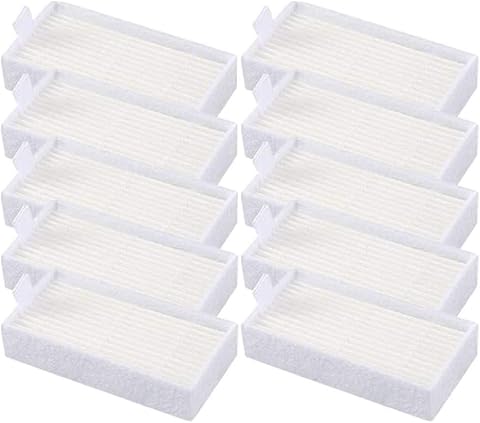
Complete the kit


Key Takeaways
- The Shark AI Ultra AV2511AE is the roundup’s best overall pick for shoppers who want a self-emptying Shark without making mopping the central requirement.
- Combo models add floor-care flexibility, not just convenience. The Roomba 115 Combo, VONKO S6Pro, ILIFE A30 Pro, and Tikom L8000 Plus bring mopping into the choice, with added pad and water-tank upkeep.
- Self-emptying does not mean maintenance-free. Dock bags or bins, filters, brushes, and mop components still need attention, and the emptying base takes up permanent floor space.
- Shark’s options are not interchangeable. The AI Ultra, HEPA-equipped AV2501AE, PowerDetect AV2820S, Navigator RV2120AE, EZ RV912S, and UR2360S suit different priorities; compare the exact model’s dock and floor-care setup.
- Two listings foreground suction figures—11,500 Pa and 8,000 Pa—but numbers alone do not settle the choice. Mapping, brush design, dock capacity, and the layout of your floors also affect everyday usefulness.
| Shark AI Ultra Robot Vacuum with 60-Day Self-Emptying Base, Black (AV2511AE) |  | Best for Pet Hair | Model: AV2511AE | Navigation: 360° LiDAR mapping | Base: Bagless self-emptying base; up to 60 days of debris | VIEW LATEST PRICE | See Our Full Breakdown |
| VONKO S6Pro Robot Vacuum and Mop with Self-Emptying Station |  | Best for Multi-Floor Homes | Model: S6Pro | Suction: Up to 8000 Pa | Navigation: LiDAR 2.0 | VIEW LATEST PRICE | See Our Full Breakdown |
| Shark AV2501AE AI Robot Vacuum with XL HEPA Self-Empty Base |  | Best for Allergy-Conscious Homes | Model: AV2501AE | Navigation: LiDAR mapping and Matrix Clean | Base: Bagless XL HEPA self-emptying base; up to 60 days of debris | VIEW LATEST PRICE | See Our Full Breakdown |
| ILIFE A30 Pro Robot Vacuum and Mop with Self-Emptying Station |  | Best for Strong Suction and Mopping | Model: A30 Pro | Maximum suction: Up to 10,000 Pa | Navigation: LiDAR | VIEW LATEST PRICE | See Our Full Breakdown |
| iRobot Roomba 115 Combo Robot Vacuum and Mop with AutoEmpty Dock |  | Best for Longer Hands-Free Emptying | Navigation: LiDAR | Dock: AutoEmpty dock with sealed 2.5 L bag | Emptying interval: Up to 90 days | VIEW LATEST PRICE | See Our Full Breakdown |
| Tikom L8000 Plus Robot Vacuum and Mop with Self-Emptying Base |  | Best for Multi-Floor Homes | Maximum suction: 6,000 Pa | Dustbag capacity: 3 liters | Navigation: 360° LiDAR | VIEW LATEST PRICE | See Our Full Breakdown |
| Shark UR2360S Ultra Robot Vacuum with Self-Empty Base |  | Best for Hair-Prone Homes | Cleaning system: Matrix Clean with multiple passes | Navigation: 360° LiDAR with precision mapping and object detection | Base: Bagless self-emptying base; holds up to 30 days of debris | VIEW LATEST PRICE | See Our Full Breakdown |
| Robot Vacuum for Pet Hair with Self-Emptying, LiDAR Navigation, and 11,500 Pa Suction |  | Best for High-Suction Pet-Hair Pickup | Suction power: 11,500 Pa | Navigation: LiDAR | Self-emptying: Yes | VIEW LATEST PRICE | See Our Full Breakdown |
| Shark PowerDetect Self-Empty Robot Vacuum, Black (AV2820S) |  | Best for Adaptive Floor Cleaning | Navigation: LiDAR and 3D object detection | Cleaning technologies: DirtDetect, FloorDetect, EdgeDetect, and NeverStuck | Base: Bagless self-emptying base with HEPA anti-allergen seal | VIEW LATEST PRICE | See Our Full Breakdown |
| iRobot Roomba 105 Robot Vacuum with AutoEmpty Dock |  | Best for Long Dock Intervals | Cleaning system: Three-stage | Navigation: LiDAR | Dock capacity: Up to 75 days of debris | VIEW LATEST PRICE | See Our Full Breakdown |
| Shark Navigator Robot Vacuum with Self-Empty Base, RV2120AE |  | Best for Hair-Prone Homes | Model: RV2120AE | Navigation: LiDAR SmartPath | Battery life: 120 minutes | VIEW LATEST PRICE | See Our Full Breakdown |
| Shark EZ Robot Vacuum with Self-Empty Base, Dark Gray (RV912S) |  | Best for Simple, Voice-Controlled Cleaning | Model: RV912S | Navigation: Row-by-row cleaning; multi-floor mapping | Battery life: 60 minutes | VIEW LATEST PRICE | See Our Full Breakdown |
| Robot Vacuum and Mop with Self-Emptying, 8000 Pa Suction for Pet Hair & Carpet |  | Best for Vacuum-and-Mop Coverage | Suction power: 8000 Pa | Battery life: 150 minutes | Navigation: LiDAR and SLAM mapping | VIEW LATEST PRICE | See Our Full Breakdown |
| robot vacuums with self-emptying base | Navigation | Battery life | Controls |
|---|---|---|---|
| Shark AI Ultra Robot Vacuum wi | 360° LiDAR mapping | — | App, Amazon Alexa, and Google Assistant |
| VONKO S6Pro Robot Vacuum and M | LiDAR 2.0 | — | — |
| Shark AV2501AE AI Robot Vacuum | LiDAR mapping and Matrix Clean | — | App, Amazon Alexa, and Google Assistant |
| ILIFE A30 Pro Robot Vacuum and | LiDAR | — | — |
| iRobot Roomba 115 Combo Robot | LiDAR | 173 minutes | — |
| Tikom L8000 Plus Robot Vacuum | 360° LiDAR | — | App and voice control; Alexa compatible |
| Shark UR2360S Ultra Robot Vacu | 360° LiDAR with precision mapping and object detection | 90 minutes | — |
| Robot Vacuum for Pet Hair with | LiDAR | Not specified | — |
| Shark PowerDetect Self-Empty R | LiDAR and 3D object detection | 110 minutes | App, buttons, and voice |
| iRobot Roomba 105 Robot Vacuum | LiDAR | 200 minutes | — |
| Shark Navigator Robot Vacuum w | LiDAR SmartPath | 120 minutes | App control |
| Shark EZ Robot Vacuum with Sel | Row-by-row cleaning; multi-floor mapping | 60 minutes | App, remote, and voice control |
| Robot Vacuum and Mop with Self | LiDAR and SLAM mapping | 150 minutes | App, button, and voice control; Alexa and Google Assistant |
More Details on Our Top Picks
Shark AI Ultra Robot Vacuum with 60-Day Self-Emptying Base, Black (AV2511AE)
The Shark AI Ultra AV2511AE makes the most sense for homes where pet hair is the main reason to automate vacuuming. Its self-cleaning brushroll is designed to handle hair across carpets and hard floors, while the bagless base holds up to 60 days of debris without requiring replacement bags. LiDAR mapping and recharge-and-resume help it manage mapped routes and continue after charging, a useful combination for routine whole-home cleaning. Compared with the Shark AV2501AE, this model emphasizes hair pickup and a self-cleaning brushroll, while the AV2501AE’s clearest distinction is its specified HEPA filtration. The tradeoff is less certainty about cleaning time: the supplied details list up to 90 minutes in one place and 120 minutes in another. I’d pick it for pet-focused cleaning, not for shoppers who need a dependable runtime figure.
Pros:- Self-cleaning brushroll is designed for pet hair on carpets and hard floors
- Bagless base holds up to 60 days of debris
- LiDAR mapping supports mapped whole-home cleaning
- App and voice controls allow scheduling and targeted cleaning
Cons:- Runtime is inconsistent across the supplied details: up to 90 minutes versus 120 minutes
- No HEPA filtration claim is provided, unlike the Shark AV2501AE
- The included package lists only one filter
Best for: Pet owners who want a bagless self-emptying base and a brushroll designed to manage hair on both carpets and hard floors.
Not ideal for: Buyers who need a clearly stated runtime to plan cleaning across a large home, or who prioritize specified HEPA filtration.
- Model:AV2511AE
- Navigation:360° LiDAR mapping
- Base:Bagless self-emptying base; up to 60 days of debris
- Brushroll:Self-cleaning
- Surfaces:Carpets and hard floors
- Runtime:Up to 90 minutes in description; 120 minutes in specifications
- Controls:App, Amazon Alexa, and Google Assistant
- Dust capacity:0.27 gallons
Our verdict“Choose the AV2511AE for pet hair and bag-free debris disposal, but favor the AV2501AE if specified HEPA filtration matters more.”
VONKO S6Pro Robot Vacuum and Mop with Self-Emptying Station
The VONKO S6Pro earns its place for homes where a robot needs to retain maps across multiple levels: its LiDAR 2.0 navigation supports up to five floor maps, and the app allows room selection and no-go zones. Its 2.5-liter station is rated for up to 60 days between manual emptying, while the stated 180-minute runtime gives it a longer listed run than the Shark AV2501AE’s 120 minutes. It also vacuums and mops, making it more versatile than that Shark, which is vacuum-only. The limits are in the mop details: the supplied information gives no tank capacity or specific mopping performance, and mopping is for hard floors rather than carpet. I’d choose it for configurable, multi-level cleaning, not for buyers seeking a well-specified mop system.
Pros:- Stores maps for up to five floors
- 2.5-liter station is rated for up to 60 days between emptying
- Up to 180 minutes of stated runtime
- Combines vacuuming and hard-floor mopping with room and no-go zone controls
Cons:- Mopping is intended for hard floors, not carpets
- No mop tank capacity or specific mopping performance details are provided
- Voice assistant compatibility is listed for Alexa only
Best for: Owners of multi-level homes who want up to five stored maps, room controls, and vacuuming plus hard-floor mopping.
Not ideal for: Buyers who need detailed mop capacity and performance information, or want to mop carpets.
- Model:S6Pro
- Suction:Up to 8000 Pa
- Navigation:LiDAR 2.0
- Map capacity:Up to 5 floors
- Self-emptying station:2.5 liters; up to 60 days between emptying
- Runtime:Up to 180 minutes
- Cleaning modes:Vacuuming and mopping
- Voice assistant:Amazon Alexa
Our verdict“Choose the S6Pro for multi-floor mapping and a longer stated runtime, but skip it if you need clear evidence about mop performance.”
Shark AV2501AE AI Robot Vacuum with XL HEPA Self-Empty Base
The Shark AV2501AE stands apart in this group through a specific filtration claim: its HEPA system captures 99.97% of dust and allergens down to 0.3 microns. That gives allergy-conscious households a clearer reason to choose it over the Shark AI Ultra AV2511AE, whose supplied details focus on pet hair and a self-cleaning brushroll instead. Both Sharks have a bagless base rated for up to 60 days and LiDAR navigation, so the choice is less about emptying frequency than filtration priorities. Matrix Clean sends the robot over areas with multiple passes, which favors thorough coverage over a simpler pass. Its tradeoffs are a stated runtime of up to 120 minutes and a listed 5.67-inch cleaning path width; buyers with expansive floor plans may prefer the VONKO S6Pro’s longer stated runtime.
Pros:- HEPA filtration captures 99.97% of dust and allergens down to 0.3 microns
- Bagless XL base holds up to 60 days of debris
- LiDAR and Matrix Clean navigation support mapped routes and multiple passes
- Recharge-and-resume and app or voice control support scheduled cleaning
Cons:- Runtime is listed at up to 120 minutes, shorter than the VONKO S6Pro’s stated 180 minutes
- No mopping function is specified
- Listed cleaning path width is 5.67 inches
Best for: Households prioritizing specified HEPA filtration alongside a self-emptying vacuum for carpet and hard floors.
Not ideal for: Buyers who want mopping, a longer stated runtime, or a bagged disposal system.
- Model:AV2501AE
- Navigation:LiDAR mapping and Matrix Clean
- Base:Bagless XL HEPA self-emptying base; up to 60 days of debris
- Filtration:HEPA; captures 99.97% of dust and allergens down to 0.3 microns
- Runtime:Up to 120 minutes
- Surfaces:Carpet and hard floor
- Cleaning path width:5.67 inches
- Controls:App, Amazon Alexa, and Google Assistant
Our verdict“Pick the AV2501AE if specified HEPA filtration matters more than mopping or a longer runtime.”
ILIFE A30 Pro Robot Vacuum and Mop with Self-Emptying Station
The ILIFE A30 Pro pairs a stated 10,000 Pa suction rating with vacuuming and mopping, making it a more feature-rich floor-care option than the vacuum-only Shark AV2501AE. Its 2.5-liter station includes five dust bags, so buyers have replacements on hand rather than relying on a bagless base like the Shark’s. LiDAR mapping, recharge-and-resume, and up to 150 minutes of runtime help it handle planned cleaning routes; app, voice, and remote controls offer several ways to start or adjust a run. The tradeoff is hands-on mop setup: the integrated 200 ml tank and mop bracket need managing, and the app works only on 2.4 GHz Wi-Fi. I’d favor it for buyers who want mopping and bagged disposal, but not those seeking a low-maintenance mop routine.
Pros:- Up to 10,000 Pa stated suction and combined vacuuming and mopping
- 2.5-liter self-emptying station includes five dust bags
- LiDAR mapping and recharge-and-resume support planned cleaning
- App, voice, and remote controls are available
Cons:- App requires 2.4 GHz Wi-Fi
- Mopping requires managing the integrated tank and mop bracket
- Up to 150 minutes of runtime is shorter than the VONKO S6Pro’s stated 180 minutes
Best for: Households wanting a vacuum-and-mop robot with strong stated suction, a bagged station, and multiple control options.
Not ideal for: People using only 5 GHz Wi-Fi or buyers who want mopping without handling a tank and mop bracket.
- Model:A30 Pro
- Maximum suction:Up to 10,000 Pa
- Navigation:LiDAR
- Self-emptying station:2.5 L; five dust bags included
- Dustbin capacity:200 ml
- Water tank capacity:200 ml
- Runtime:Up to 150 minutes
- Wi-Fi:2.4 GHz
Our verdict“Choose the A30 Pro for bagged self-emptying, strong stated suction, and mopping, provided its Wi-Fi and mop setup suit your routine.”
iRobot Roomba 115 Combo Robot Vacuum and Mop with AutoEmpty Dock
The Roomba 115 Combo is the standout here for buyers who want to empty the dock less often: its sealed 2.5-liter bag is rated for up to 90 days, compared with the up-to-60-day intervals listed for the Shark AV2501AE and VONKO S6Pro. It also combines vacuuming and mopping, uses LiDAR to map rooms, and provides No Mop Zones to help protect rugs. The washable microfiber pad offers a reusable option, while four power levels let buyers adjust cleaning. Its stated coverage is up to 900 square feet per charge, so it is less suited to larger homes than its 173-minute battery figure might suggest. Setup requires 2.4 GHz Wi-Fi, and the listed filter and brush replacement interval adds upkeep beyond changing the dock bag. Choose it for longer debris-storage intervals, not maximum coverage.
Pros:- Sealed 2.5-liter bag is rated for up to 90 days of debris disposal
- Vacuums and mops in one pass with a washable microfiber pad
- LiDAR mapping and No Mop Zones support room cleaning while protecting rugs
- Up to 173 minutes of battery life and four power levels
Cons:- Coverage is listed at up to 900 square feet per charge, limiting suitability for larger homes
- Setup requires 2.4 GHz Wi-Fi
- Filters and brushes need replacement every 3–6 months
Best for: Owners of smaller or mid-sized homes who want vacuuming and mopping with a sealed dock bag and rug-protection zones.
Not ideal for: Buyers with homes larger than the stated 900-square-foot coverage per charge, or those who want setup on 5 GHz Wi-Fi.
- Navigation:LiDAR
- Dock:AutoEmpty dock with sealed 2.5 L bag
- Emptying interval:Up to 90 days
- Cleaning modes:Vacuuming and mopping
- Coverage:Up to 900 sq ft per charge
- Battery life:173 minutes
- Mop pad:Washable microfiber
- Connectivity:2.4 GHz Wi-Fi required for setup
Our verdict“Choose the Roomba 115 Combo for a longer stated interval between dock emptying and rug-aware mopping, if its coverage fits your home.”
Tikom L8000 Plus Robot Vacuum and Mop with Self-Emptying Base
The L8000 Plus combines a 3-liter self-emptying bag with LiDAR maps for as many as five floors, making it a practical fit for homes where carrying a robot between levels is part of the routine. Its 6,000 Pa suction and carpet boost give it more stated suction than the Roomba 105, while the Roomba offers a longer listed runtime and a larger advertised dock interval. The Tikom’s vacuum-and-mop setup adds flexibility on hard floors, but the mop holder needs to come off or carpet zones need to be blocked to avoid dampening rugs. Its up-to-150-minute runtime applies to gentle suction, so heavy-duty cleaning may cover less ground per charge. Auto-recharge and resume helps it finish larger jobs.
Pros:- Self-emptying base has a 3-liter dustbag
- LiDAR can save up to five floor maps
- 6,000 Pa suction with automatic carpet boost
- Can recharge and resume cleaning
Cons:- Mop holder must be removed or carpet zones blocked to protect rugs
- The 150-minute runtime is specified for gentle suction mode
- Mopping adds setup and maintenance beyond a vacuum-only model
Best for: People in multi-level homes who want saved maps, self-emptying, and occasional mopping in one robot
Not ideal for: Homes with extensive carpet and frequent mopping, since the mop attachment needs to be removed or carpet areas excluded
- Maximum suction:6,000 Pa
- Dustbag capacity:3 liters
- Navigation:360° LiDAR
- Saved floor maps:Up to 5
- Maximum runtime:Up to 150 minutes in gentle suction mode
- Functions:Vacuuming, sweeping, and mopping
- Filter:HEPA
- Controls:App and voice control; Alexa compatible
Our verdict“Choose the L8000 Plus if you want multi-floor mapping and a self-emptying vacuum that can also mop, and skip it if you need hands-off carpet-and-mop separation.”
Shark UR2360S Ultra Robot Vacuum with Self-Empty Base
The UR2360S centers its case on hair management: its self-cleaning brushroll is designed to reduce wrap, while Matrix Clean makes multiple passes rather than relying on a single sweep. LiDAR mapping and object avoidance add a layer of navigation support, and the bagless base is listed to hold up to 30 days of debris. Compared with the Shark PowerDetect AV2820S, this model calls out the self-cleaning brushroll directly; the PowerDetect instead emphasizes automatic adjustments for debris, floor type, and edges. The UR2360S’s 90-minute battery life is shorter than the PowerDetect’s listed 110 minutes, and its renewed condition comes with a 90-day limited warranty. That makes it a more specific hair-focused pick than an all-around endurance choice.
Pros:- Self-cleaning brushroll is designed to reduce hair wrap
- Bagless self-empty base is listed to hold up to 30 days of debris
- LiDAR mapping and object detection support guided cleaning
- Works with app controls, Alexa, and Google Assistant
Cons:- Listed battery life is 90 minutes, shorter than the Shark PowerDetect AV2820S
- The robot’s listed capacity is only 0.26 quarts
- Renewed product includes a 90-day limited warranty
Best for: Pet owners or households with long hair who want a self-emptying robot with a brushroll designed to reduce tangles
Not ideal for: Large homes that need long cleaning runs or buyers who prefer a new product and a longer warranty
- Cleaning system:Matrix Clean with multiple passes
- Navigation:360° LiDAR with precision mapping and object detection
- Base:Bagless self-emptying base; holds up to 30 days of debris
- Battery life:90 minutes
- Robot capacity:0.26 quarts
- Brushroll:Self-cleaning design
- Filter:HEPA
- Warranty:90-day limited warranty
Our verdict“Pick the UR2360S for its hair-focused brushroll and bagless base, but choose a longer-running model for larger homes or longer warranty coverage.”
The headline here is 11,500 Pa suction, the highest stated figure among the products in this batch, paired with a self-emptying base and LiDAR navigation. That makes this a plausible shortlist option for pet owners focused on pulling hair and debris from floors, while the Tikom L8000 Plus offers more defined household controls: its product data specifies multi-floor maps, runtime, and app and voice functions. This pet-focused listing provides far less detail about its dock capacity, battery, brush design, or controls, so buyers cannot judge how often it will need attention or how well it handles hair tangles from the available information. I would treat the suction figure as a differentiator, not proof of a better overall cleaning system; the missing practical specs make it a higher-uncertainty choice.
Pros:- 11,500 Pa stated suction
- Self-emptying feature reduces manual dustbin emptying
- LiDAR navigation is specified
- Product is designed for pet hair
Cons:- No dustbin or base capacity is provided
- Battery life and runtime are not specified
- Brushroll details and control compatibility are not provided
Best for: Pet owners prioritizing a high stated suction figure and LiDAR navigation over detailed feature documentation
Not ideal for: Buyers who need a confirmed dock capacity, runtime, brushroll design, or specific app and voice compatibility before choosing
- Suction power:11,500 Pa
- Navigation:LiDAR
- Self-emptying:Yes
- Designed for:Pet hair
- Dustbag or base capacity:Not specified
- Battery life:Not specified
Our verdict“Consider this model if its stated suction is your priority, but favor the better-documented Tikom L8000 Plus if you need to plan around runtime, mapping, and controls.”
Shark PowerDetect Self-Empty Robot Vacuum, Black (AV2820S)
PowerDetect is the most adaptive pick in this group: DirtDetect, FloorDetect, and EdgeDetect adjust cleaning around debris, floor type, and edges, while NeverStuck technology is intended to help with obstacles and thresholds. Its bagless base has a HEPA anti-allergen seal, a useful distinction for buyers who want debris contained without replacement bags. Compared with the Shark UR2360S, which puts more emphasis on a hair-reducing brushroll and multiple-pass Matrix Clean, this model prioritizes responsive cleaning and obstacle handling. The listed 110-minute battery life is also longer than the UR2360S’s 90 minutes. However, the 0.24-quart capacity is small, and the advertised interval between base emptying can vary with household debris; some claimed pickup gains are comparisons with specific Shark models.
Pros:- Adjusts cleaning for debris, flooring, edges, and corners
- NeverStuck technology is designed to handle obstacles and thresholds
- Bagless self-emptying base has a HEPA anti-allergen seal
- 110-minute listed battery life
Cons:- Robot capacity is 0.24 quarts
- Base may need emptying sooner than the advertised interval in debris-heavy homes
- Some stated pickup and edge improvements rely on comparisons with specific Shark models
Best for: Households with mixed floor types, thresholds, and allergy concerns that value adaptive cleaning and a sealed bagless base
Not ideal for: Homes with heavy debris or frequent pet shedding where a small robot capacity and variable base-emptying interval may be inconvenient
- Navigation:LiDAR and 3D object detection
- Cleaning technologies:DirtDetect, FloorDetect, EdgeDetect, and NeverStuck
- Base:Bagless self-emptying base with HEPA anti-allergen seal
- Robot capacity:0.24 quarts
- Battery life:110 minutes
- Filter:HEPA
- Controls:App, buttons, and voice
- Power levels:3
Our verdict“Choose PowerDetect for adaptive cleaning and sealed bagless emptying, but look elsewhere if large debris capacity is your main priority.”
iRobot Roomba 105 Robot Vacuum with AutoEmpty Dock
The Roomba 105 is the strongest choice here for buyers who want to empty the base as infrequently as possible: its AutoEmpty dock is listed to hold up to 75 days of debris, longer than the Shark UR2360S’s stated 30-day interval. LiDAR mapping supports targeted room and spot cleaning, and its three-stage system is designed for both carpet and hard floors. The listed 200-minute battery life also stands out against the Shark PowerDetect’s 110 minutes, though battery figures alone do not determine how much floor a robot covers in a given home. Unlike the Tikom L8000 Plus, the Roomba is vacuum-only, so it avoids mop-related carpet setup but cannot freshen hard floors with a mop attachment. The dock uses replacement bags, and Wi-Fi is limited to 2.4 GHz.
Pros:- AutoEmpty dock is listed to hold up to 75 days of debris
- LiDAR mapping supports targeted room and spot cleaning
- Three-stage cleaning system is specified for carpet and hard floors
- Listed battery life is 200 minutes
Cons:- Dock requires replacement bags
- Wi-Fi support is limited to 2.4 GHz
- Vacuum-only design does not mop hard floors
Best for: Busy households that want long intervals between dock emptying and room-by-room vacuum scheduling
Not ideal for: Buyers who want a mop function, dual-band Wi-Fi, or a bagless self-emptying dock
- Cleaning system:Three-stage
- Navigation:LiDAR
- Dock capacity:Up to 75 days of debris
- Battery life:200 minutes
- Cleaning path width:5.8 inches
- Surfaces:Carpet and hard floor
- Filter:Cartridge
- Wi-Fi:2.4 GHz
Our verdict“Choose the Roomba 105 if long intervals between bag changes and mapped vacuuming matter more than mopping or a bagless dock.”
Shark Navigator Robot Vacuum with Self-Empty Base, RV2120AE
The Navigator suits homes where hair wrap and predictable floor coverage matter more than a long list of cleaning modes. Its LiDAR row-by-row mapping gives it a more orderly route than a basic random-pattern robot, while object detection can help it steer around obstacles. After a run, debris moves to a bagless self-emptying base, so there are no disposable dock bags to replace. Compared with the Shark EZ RV912S, this model lists 120 minutes of battery life rather than 60, making it a stronger fit for longer cleaning sessions. The tradeoff is limited control over intensity: it has only two power levels, and the advertised 60-day base capacity will depend on how much debris it collects. Choose it for routine carpet-and-hard-floor cleaning, not fine-tuned cleaning schedules.
Pros:- LiDAR-guided row-by-row cleaning maps a more systematic route across rooms.
- Object detection helps it avoid some items in its path.
- Bagless base empties the robot after cleaning and is listed to hold up to 60 days of debris.
- Brushroll is designed to resist hair wrap.
Cons:- Only two power levels limit how much users can adjust cleaning intensity.
- The stated 60-day base capacity can vary with household size and debris.
- The 0.22-quart robot dust capacity is modest between dock visits.
Best for: Households with shedding pets that want mapped cleaning, a hair-wrap-resistant brushroll, and a bagless base.
Not ideal for: Buyers who need several suction settings or want a predictable base-emptying interval regardless of household debris.
- Model:RV2120AE
- Navigation:LiDAR SmartPath
- Battery life:120 minutes
- Base:Bagless self-emptying; holds up to 60 days of dirt and debris
- Robot dust capacity:0.22 quarts
- Surfaces:Carpet and hard floors
- Controls:App control
Our verdict“Choose the Navigator if hair management, mapped coverage, and a bagless self-emptying base matter more than extensive power controls.”
Shark EZ Robot Vacuum with Self-Empty Base, Dark Gray (RV912S)
The EZ RV912S is a straightforward pick for buyers who want scheduled, mapped vacuuming and hands-off debris disposal without needing a long feature checklist. Its row-by-row cleaning and recharge-and-resume function help it cover a route in stages, while app, remote, and voice controls make it easier to start a run in different ways. The bagless base holds up to 30 days of debris, less than the Navigator RV2120AE’s stated 60-day capacity, and its listed 60-minute battery life is also shorter. That makes the Navigator a better match for larger or hairier homes needing longer sessions. The EZ’s practical tradeoffs are its non-washable filter and limited listed runtime; buyers should also expect to maintain or replace the filter rather than rinse it. It is best for routine cleaning, not maximum autonomy.
Pros:- Bagless self-empty base is listed to hold up to 30 days of debris.
- Row-by-row cleaning and recharge-and-resume support multi-stage coverage.
- App, remote, and voice controls offer several ways to operate it.
- Designed for pet hair and to capture dust, dander, and allergens.
Cons:- Listed battery life is 60 minutes, shorter than the Navigator RV2120AE’s 120 minutes.
- The filter is non-washable, adding replacement and maintenance needs.
- The stated 30-day base capacity can vary with cleaning frequency and debris.
Best for: Owners of small or mid-sized homes who want pet-hair pickup, voice control, and a bagless dock with recharge-and-resume cleaning.
Not ideal for: Buyers with large floor plans who want longer listed runtime or a washable filter for simpler upkeep.
- Model:RV912S
- Navigation:Row-by-row cleaning; multi-floor mapping
- Battery life:60 minutes
- Base:Bagless self-emptying; holds up to 30 days of debris
- Cleaning path width:5.63 inches
- Controls:App, remote, and voice control
- Voice compatibility:Google Assistant and Alexa
- Filter:Non-washable
Our verdict“Pick the EZ RV912S for accessible app or voice operation in a smaller home, but choose the Navigator for longer listed runtime and a larger stated base capacity.”
Robot Vacuum and Mop with Self-Emptying, 8000 Pa Suction for Pet Hair & Carpet
This Q10 PRO is the most feature-packed choice in this group for buyers who want one docked robot to vacuum and mop. Its 8000 Pa suction, LiDAR and SLAM mapping, and 150-minute runtime suit longer cleaning sessions, while the station’s 3.3-liter capacity reduces how often collected debris needs attention. Compared with the Shark Navigator RV2120AE, it adds mopping and lists a larger station capacity, but the Navigator’s simpler vacuum-only setup avoids mop-related carpet precautions. The Q10 PRO’s three water-flow settings give some control over hard-floor mopping, yet the mop holder must be removed or carpets placed in a no-go zone to prevent staining. It also requires 2.4 GHz Wi-Fi, which may call for router configuration. This is the choice for buyers willing to manage those limits for combined floor care.
Pros:- Combines vacuuming and mopping with three water-flow settings.
- LiDAR and SLAM mapping support mapped, efficient room coverage.
- Listed 150-minute runtime with auto-recharge and resume suits longer cleaning sessions.
- Self-emptying station has a 3.3-liter capacity.
Cons:- Mop holder must be removed or carpets placed in a no-go zone to avoid wetting carpet.
- Requires a 2.4 GHz Wi-Fi network and may need router configuration.
- Supported surfaces list low-pile carpet, limiting its stated fit for thicker carpets.
Best for: Owners of larger homes with hard floors and low-pile carpet who want mapped vacuuming, mopping, and a high-capacity self-emptying station.
Not ideal for: Buyers with carpets throughout the home who want unrestricted mop operation, or households that cannot connect the robot to 2.4 GHz Wi-Fi.
- Suction power:8000 Pa
- Battery life:150 minutes
- Navigation:LiDAR and SLAM mapping
- Self-emptying station capacity:3.3 liters
- Charging:Auto-recharge and resume
- Supported surfaces:Hardwood, tile, low-pile carpet, and ceramic
- Mopping:Three water-flow settings
- Wi-Fi:2.4 GHz
- Controls:App, button, and voice control; Alexa and Google Assistant
Our verdict“Choose the Q10 PRO if mopping and long mapped runs are worth the extra carpet and Wi-Fi setup, while the Navigator is simpler for vacuum-only cleaning.”
How We Picked
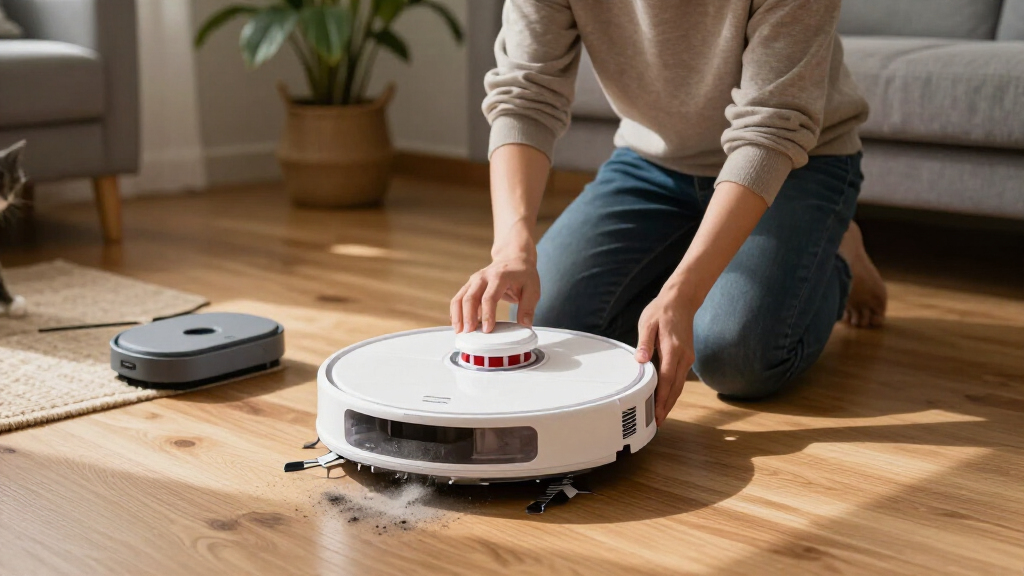
I compared the 13 listed models around the job promised by this roundup: reducing hands-on dustbin emptying without making routine cleaning harder. The ranking weighs the self-emptying setup, navigation and room coverage, vacuuming and mopping capabilities, filtration claims, likely maintenance needs, and how clearly each model fits a buyer type. I gave more weight to a balanced combination of useful features and manageable upkeep than to a single headline specification.
Models with combo functions were judged on the extra work that mopping can add as well as its convenience; suction claims were treated as one factor, not a guarantee of better cleaning. The list includes multiple Shark models and several less familiar or broadly named listings, so I distinguish them by their stated features rather than assume that similar names mean identical hardware. Since the product names alone do not establish every detail, buyers should confirm current specifications, included dock consumables, and compatibility for the exact model before choosing.
| robot vacuums with self-emptying base | Controls |
|---|---|
| Shark AI Ultra Robot Vacuum wi | App, Amazon Alexa, and Google Assistant |
| VONKO S6Pro Robot Vacuum and M | — |
| Shark AV2501AE AI Robot Vacuum | App, Amazon Alexa, and Google Assistant |
| ILIFE A30 Pro Robot Vacuum and | — |
| iRobot Roomba 115 Combo Robot | — |
| Tikom L8000 Plus Robot Vacuum | App and voice control; Alexa compatible |
| Shark UR2360S Ultra Robot Vacu | — |
| Robot Vacuum for Pet Hair with | — |
| Shark PowerDetect Self-Empty R | App, buttons, and voice |
| iRobot Roomba 105 Robot Vacuum | — |
| Shark Navigator Robot Vacuum w | App control |
| Shark EZ Robot Vacuum with Sel | App, remote, and voice control |
| Robot Vacuum and Mop with Self | App, button, and voice control; Alexa and Google Assistant |
Factors to Consider When Choosing Robot Vacuums With Self-emptying Bases
A self-emptying dock changes the routine, but it does not remove every cleaning task. I would match the station, navigation, and floor-care features to the home before comparing headline suction claims or brand names.
Treat the dock as equipment with its own footprint and upkeep
Measure the base where it will sit, including room to open its lid or remove a bag or bin. A dock that fits beside a wall may still be awkward if it blocks a doorway or cannot be reached for routine care. Check how the collection system is emptied and what replacement bags or filters the exact model requires. A larger stated capacity can reduce handling, but it does not mean the dock can be ignored indefinitely. If you have allergies, look for clear information about filtration and how dust is contained during disposal. The right station is the one you can live with day to day, not simply the one with the biggest capacity claim.
Match navigation to the shape of your home
Navigation matters most when a robot has to cover several rooms, work around furniture, or return to specific areas on a schedule. LiDAR is called out in one listing, but buyers should check whether the exact model supports saved maps, room selection, and restricted zones rather than infer those functions from the sensor name. In a simple open space, advanced mapping may matter less than reliable dock return and straightforward controls. In a home with clutter or varied room layouts, the ability to direct cleaning can reduce missed patches and repeated runs. Check how the robot handles thresholds and where it can get stuck, especially if its dock is far from the rooms it cleans. A map is useful only if it fits the way you want to manage cleaning.
Decide whether mopping earns its added chores
A vacuum-and-mop model can handle light floor maintenance, but it also introduces a water tank, mop pad, and extra cleaning steps. Confirm whether the mop function is a simple damp wipe or offers controls that suit your floor types; a combo label alone does not answer that. Carpets add another question: check how the model avoids wetting rugs or whether you must remove the mop attachment first. If you mostly want help with dust, crumbs, and pet hair, a vacuum-only robot may be easier to maintain. For hard floors with frequent light spills, a combo could be more useful even if it needs attention after each mop run. Choose based on the cleaning routine you will actually keep up with.
Read suction figures alongside brush and floor details
The 11,500 Pa and 8,000 Pa figures in this roundup provide a comparison point, not a complete measure of cleaning performance. Hair pickup also depends on the brush design, how well the robot handles edges, and whether hair wraps around parts that need manual cleaning. Carpet height, hard-floor seams, and pet litter create different demands, so think about the mess you need to collect rather than chasing the largest number. Look for details on brush access and replacement parts before committing to a model for a shedding pet. If a listing gives a suction figure but little information about navigation or brush maintenance, treat that as an incomplete picture. A balanced feature set often matters more than a single specification.
Check recurring supplies and serviceability before buying
Self-emptying bases shift some work from frequent bin emptying to occasional replacement and cleaning tasks. Check whether the dock uses disposable bags or a reusable container, then confirm the availability of compatible supplies for the specific model. Filters and brushes also wear down, and combo robots add mop pads that need washing or replacement. A less familiar listing may have attractive stated features, but unclear spare-part availability can make ownership harder later. Make a short list of the parts you will need and how often you expect to handle them based on your household. This makes the real convenience difference easier to judge than the dock feature alone.
Pay for features that solve a recurring problem
More functions can be worthwhile when they address a real need, such as room-by-room cleaning, pet-hair pickup, or routine hard-floor mopping. They are less compelling if they add setup and maintenance without changing how often you clean. Compare each model’s exact dock arrangement and included features rather than assuming that products in the same brand family work alike. A straightforward vacuum with a base may suit someone seeking less daily handling, while a combo station makes sense only if the mop will be used. Before choosing, check the product listing for the exact model number, supported controls, included accessories, and consumables. The best fit is the one that saves effort in your home, not the one with the longest feature list.
Frequently Asked Questions
Does a self-emptying base mean I can leave the robot alone for weeks?
It means you usually handle the robot’s dustbin less often, not that the whole system needs no care. The dock collection container or bag still fills, and brushes and filters can collect hair and dust. Mop models also need water and pad care after cleaning. How often you need to intervene depends on how much debris your home produces and the capacity of the specific dock. Check the manual’s care instructions and use them as a better guide than a broad claim about hands-free cleaning.
Should I choose a vacuum-only model or a vacuum-and-mop combo?
Choose a vacuum-only model if your main goal is collecting dust, crumbs, or pet hair with fewer routine steps. A combo makes more sense when you have hard floors and will use the mop function often enough to justify filling, washing, and maintaining its components. It may not replace manual mopping for stuck-on messes or detailed cleaning. Homes with carpets should also check how the robot handles rugs when a mop attachment is fitted. Compare the care routine as closely as the advertised cleaning functions.
Is a higher Pa suction figure enough reason to pick one model?
No. The 11,500 Pa and 8,000 Pa claims in this roundup are useful data points, but they do not describe navigation, brush design, edge cleaning, or how easily hair can be removed from the robot. Carpet type and the debris you need to collect also affect what matters most. Look for details on mapping and maintenance alongside suction, and check the exact model’s capabilities. If a listing emphasizes a number but leaves other practical details unclear, avoid treating that number as a full performance comparison.
How can I tell whether a self-emptying dock will fit my home?
Measure the space where the dock will sit and leave room to access its bin, lid, or bag compartment. Check the recommended clearance around the station and whether the robot has a clear route back to it from the rooms you want cleaned. A dock squeezed into a narrow gap may be difficult to maintain or may interfere with the robot’s return. Also confirm that the outlet location and floor surface suit the installation instructions. These checks can prevent a convenient feature from becoming an awkward permanent fixture.
What should I check before choosing a less familiar model or exact Shark variant?
Start with the full model number and confirm the dock type, navigation functions, and whether the listed product is vacuum-only or a combo. Names within a brand can signal different features, so do not assume that one Shark model shares another’s filtration or base setup. For less familiar listings, verify replacement bags or bins, filters, brushes, and mop pads before purchase. Check what accessories are included and whether key functions require an app or other setup. These details matter to long-term ownership as much as the headline feature list.
Conclusion
For the best overall, I would start with the Shark AI Ultra AV2511AE as the balanced pick for shoppers who want self-emptying convenience without making mopping the deciding factor. For best value, compare the Tikom L8000 Plus and ILIFE A30 Pro if you want a combo format, while checking the exact dock and replacement supplies before choosing. The best premium direction is the Shark PowerDetect AV2820S for buyers drawn to a more feature-focused Shark option, provided its current specifications match their needs. For beginners, the iRobot Roomba 105 with AutoEmpty Dock is a straightforward vacuum-and-dock choice to compare against the more feature-heavy models. For pet hair or higher stated suction, examine the 11,500 Pa LiDAR listing; for hard-floor vacuuming and mopping, compare the Roomba 115 Combo and other combo picks. I would make the final choice by checking dock fit, mapping needs, and upkeep—not by suction claims or brand name alone.
Halloween Picks
halloween
As an affiliate, we earn on qualifying purchases.