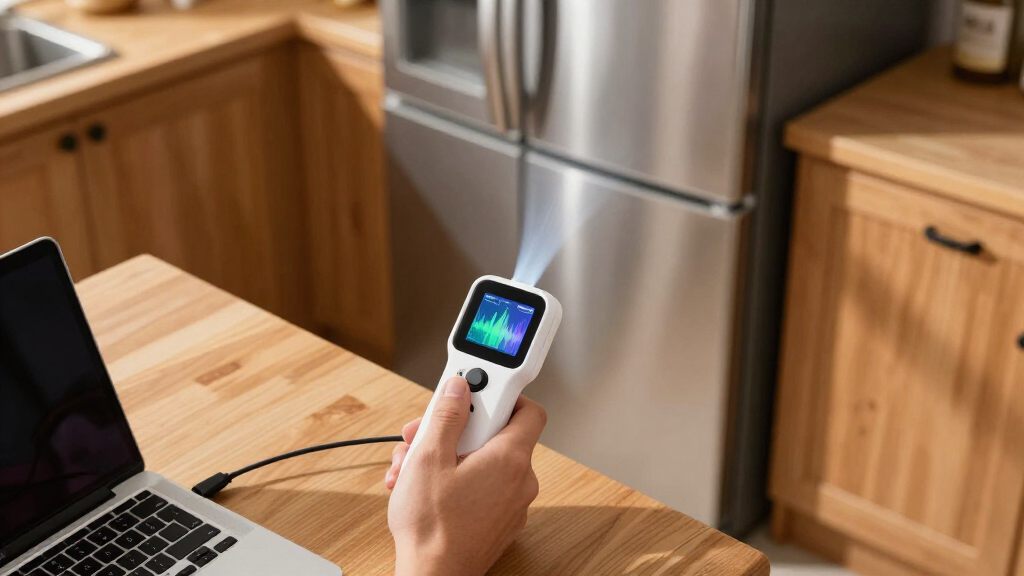

The best USB acoustic imagers pair a microphone array with visual sound mapping so technicians can locate leaks or electrical faults without relying on sound alone. My best overall pick is the FOTRIC TD2e Acoustic Imaging Camera, a practical standalone option; the Fluke ii905 stands out for industrial inspection, while the Fluke iSee II01 suits buyers who want a compact phone-connected tool. The main tradeoffs are portability versus screen size, leak-finding specialization versus broader diagnostics, and standalone operation versus dependence on a compatible phone or computer. Bundles can add useful field equipment, but they may make less sense if you already own the accessories. Read on for the full breakdown and guidance on matching a camera to your workflow.

Get home appliances delivered free with Prime
- Fast, free delivery on millions of items
- Prime Video, Amazon Music and more included
- Member-only deals all year
Complete the kit

![[Genuine] Waterdrop PF-01A Water Filter Replacement for W...](https://m.media-amazon.com/images/I/41+5tl9EiKL._SX342_SY445_QL70_FMwebp_.jpg)
Key Takeaways
The TD2e family offers the broadest set of configurations in this lineup: a standalone camera, a kit with a spare battery and case, and a bundle with a thermal camera. Choose by workflow rather than assuming the bundles improve acoustic performance.
The Fluke ii905 is the industrial-focused alternative to smaller phone-connected imagers, with a stated 2–65 kHz range and 1.6–230 ft detection range; those figures describe its stated capability, not guaranteed results in every inspection setting.
Phone-connected and pocket models prioritize carrying convenience, while dedicated cameras give the operator an integrated inspection device. Buyers should weigh everyday portability against screen, power, and compatibility needs.
Leak detection is not one uniform job. Compressed-air-focused FLIR Si1-LD models, industrial imagers, and options also identified for partial discharge serve different inspection needs, so application fit matters more than a long feature list.
Similar product names can hide meaningful differences. The TD2 and TD2e are separate listings, and the two FLIR Si1-LD versions differ by Wi-Fi availability; verify the exact model and connection requirements before buying.
| FOTRIC TD2 Industrial Acoustic Imager |  | Best Overall | Microphones: 64 MEMS digital microphones | Frequency range: 2–100 kHz | Field of view: 66° × 52° | VIEW LATEST PRICE | See Our Full Breakdown |
| Fluke ii905 Industrial Acoustic Imager, 2–65 kHz, 1.6–230 ft Detection Range |  | Best for Leak-Cost Prioritization | Frequency band: 2–65 kHz | Detection range: 1.6–230 ft | Leak analysis: LeakQ estimates leak size, rate, and cost | VIEW LATEST PRICE | See Our Full Breakdown |
| TD2e Acoustic Camera Kit with Extra Battery and Hard Case |  | Best Field Kit | Microphones: 64 MEMS digital microphones | Frequency range: 2 kHz–100 kHz | Working distance: 0.3–60 m | VIEW LATEST PRICE | See Our Full Breakdown |
| FOTRIC Manisen TD2e Ultrasonic Leak Detector & Acoustic Camera |  | Best for Vehicle and HVAC Diagnostics | Microphone array: 64+ MEMS microphones | Frequency range: 2–100 kHz | Scan distance: 1–5 m | VIEW LATEST PRICE | See Our Full Breakdown |
| FOTRIC TD2e Acoustic Imaging Camera and TK6 Thermal Imaging Camera Bundle |  | Best Dual-Mode Inspection Bundle | Acoustic frequency range: 2 kHz–100 kHz | Acoustic microphones: 64 MEMS digital microphones | Thermal resolution: 384 × 288 IR | VIEW LATEST PRICE | See Our Full Breakdown |
| HoldPeak 956D Acoustic Imaging Camera with 64 MEMS Microphones |  | Best for Long-Range Inspections | Microphone array: 64 MEMS digital microphones | Frequency range: 2 kHz–100 kHz | Detection distance: 164 ft | VIEW LATEST PRICE | See Our Full Breakdown |
| Fluke iSee II01 Acoustic Camera for Android Smartphones |  | Best Smartphone-Based Pick | Microphones: 16 MEMS | Compatible devices: Android smartphones | Power source: Battery powered | VIEW LATEST PRICE | See Our Full Breakdown |
| CRYSOUND SonoCam Pocket Acoustic Camera for Leak Detection and Partial Discharge |  | Best Compact Standalone Imager | Microphones: 64 MEMS digital microphones | Frequency range: 2 kHz–65 kHz | Optical resolution: 5 MP | VIEW LATEST PRICE | See Our Full Breakdown |
| FOTRIC TD2e Acoustic Imaging Camera |  | Best for Noisy Maintenance Areas | Microphones: 64 MEMS digital microphones | Frequency range: 2 kHz–100 kHz | Optical image resolution: 5 MP | VIEW LATEST PRICE | See Our Full Breakdown |
| GOYERRNES Acoustic Imaging Camera with 64 MEMS Array for Leak Detection |  | Best for On-Device Reporting and Long Shifts | Microphone array: 64 digital MEMS microphones | Frequency range: 2–100 kHz | Imaging speed: ≥25 FPS | VIEW LATEST PRICE | See Our Full Breakdown |
| FLIR Si1-LD Acoustic Imaging Camera for Compressed Air Leaks |  | Best for Compressed-Air Leak Cost Analysis | Model: Si1-LD | Manufacturer: FLIR Systems AS | Primary use: Detecting and quantifying compressed-air leaks | VIEW LATEST PRICE | See Our Full Breakdown |
| FLIR Si1-LD No Wi-Fi Acoustic Imaging Camera for Compressed Air Leak Detection | | Best for Offline-First Inspection Workflows | Model: Si1-LD No Wi-Fi | Manufacturer: FLIR Systems | Primary use: Compressed-air leak detection, location, and measurement | VIEW LATEST PRICE | See Our Full Breakdown |
| USB acoustic imager | Frequency range | Weight |
|---|---|---|
| FOTRIC TD2 Industrial Acoustic | 2–100 kHz | — |
| Fluke ii905 Industrial Acousti | — | — |
| TD2e Acoustic Camera Kit with | 2 kHz–100 kHz | — |
| FOTRIC Manisen TD2e Ultrasonic | 2–100 kHz | — |
| FOTRIC TD2e Acoustic Imaging C | — | — |
| HoldPeak 956D Acoustic Imaging | 2 kHz–100 kHz | 1 lb |
| Fluke iSee II01 Acoustic Camer | — | 3.84 oz |
| CRYSOUND SonoCam Pocket Acoust | 2 kHz–65 kHz | 270 g (0.595 lb) |
| FOTRIC TD2e Acoustic Imaging C | 2 kHz–100 kHz | 720 g (1.72 lb) |
| GOYERRNES Acoustic Imaging Cam | 2–100 kHz | — |
| FLIR Si1-LD Acoustic Imaging C | — | 3.2 pounds |
| FLIR Si1-LD No Wi-Fi Acoustic | — | 3.2 pounds |
More Details on Our Top Picks
FOTRIC TD2 Industrial Acoustic Imager
The FOTRIC TD2 is the most balanced standalone pick here for maintenance teams that need one instrument for several kinds of acoustic troubleshooting. Its 2–100 kHz range and 64-microphone array support searches for compressed-air and vacuum leaks, loose fasteners, and seal issues, while the 13 MP camera adds visual context to the sound map. Compared with the Fluke ii905, which emphasizes leak estimates through LeakQ, the TD2 offers a broader stated frequency span and more varied fault targets. The 3.5-inch touchscreen keeps the unit portable, but it gives less room to inspect image detail than a larger display would. I’d also verify the unit’s weight before buying: the supplied listing gives conflicting figures of 770 g and about 1.49 kg. Its stated runtime of over four hours helps keep routine field rounds moving.
Pros:- 64 MEMS microphones and a 2–100 kHz range cover a broad set of acoustic inspection tasks.
- 13 MP visual camera provides useful scene detail alongside the sound image.
- Targets compressed-air and vacuum leaks, loose fasteners, and seal issues.
- IP54 protection and stated runtime of over four hours suit field rounds.
Cons:- Conflicting listed weights make it difficult to judge carrying comfort.
- The 3.5-inch screen may feel cramped when reviewing detailed sound images.
Best for: Plant maintenance technicians who need one handheld imager for leak checks and broader equipment fault searches.
Not ideal for: Teams that need built-in leak cost estimates or a clearly confirmed, lightweight carry weight before purchase.
- Microphones:64 MEMS digital microphones
- Frequency range:2–100 kHz
- Field of view:66° × 52°
- Visual camera:13 MP
- Display:3.5-inch IPS touchscreen, 640 × 480
- Battery:5000 mAh; stated runtime over 4 hours
- Protection:IP54; 2 m drop resistance
- Listed weight:Conflicting figures: 770 g and about 1.49 kg
Our verdict“Choose the TD2 for broad, portable acoustic troubleshooting; choose the Fluke ii905 instead if leak sizing and cost estimates matter more.”
Fluke ii905 Industrial Acoustic Imager, 2–65 kHz, 1.6–230 ft Detection Range
The Fluke ii905 is the most decision-focused option in this group for facilities that need to turn leak detection into a maintenance priority. Its LeakQ mode estimates leak size, rate, and cost, giving technicians information to help rank repairs rather than simply mark where sound is coming from. The stated 1.6–230 ft detection range also suits inspections across varied working distances. Compared with the FOTRIC TD2, the ii905 has a narrower 2–65 kHz band, so the TD2 may suit teams seeking broader frequency coverage and more varied fault checks. The tradeoff is that the supplied product information does not specify camera resolution, screen size, battery life, or environmental protection, making it harder to judge fit for demanding field conditions. I’d favor it when leak reporting is the main job, not when broad equipment diagnostics are the priority.
Pros:- LeakQ estimates leak size, rate, and cost to support repair prioritization.
- Visualizes sound while scanning hoses, fittings, and connections.
- Stated detection range spans 1.6–230 ft.
- Purpose-built for faster leak inspections.
Cons:- Its 2–65 kHz frequency band is narrower than the FOTRIC TD2’s 2–100 kHz range.
- The supplied data omits battery runtime, display details, and ingress protection.
Best for: Compressed-air and industrial maintenance teams that need to rank leaks using estimated size, rate, and cost.
Not ideal for: Buyers who need documented battery runtime, ruggedness details, or a wider stated frequency band for varied fault-finding.
- Frequency band:2–65 kHz
- Detection range:1.6–230 ft
- Leak analysis:LeakQ estimates leak size, rate, and cost
- Brand:Fluke
- Model:ii905
- Part number:FLUKE-II905
- Included component:1 Industrial Acoustic Imager (II905)
Our verdict“Pick the ii905 when leak-cost estimates guide your repair queue, but favor the FOTRIC TD2 for broader stated frequency coverage and fault targets.”
TD2e Acoustic Camera Kit with Extra Battery and Hard Case
This TD2e kit earns its place for crews who value ready-to-carry equipment and backup power more than a more elaborate reporting feature set. The two batteries, charging dock, and hard case make it better prepared for longer inspection days than the FOTRIC TD2, whose supplied package lists a single battery. Its 64-microphone array covers 2 kHz–100 kHz, and the stated 0.3–60 m working distance gives buyers a useful sense of the intended inspection envelope. Multiple imaging modes and noise suppression add flexibility for different sound conditions. The tradeoff is that each battery is rated for only over three hours, so extended shifts still call for battery swaps and charging plans. Its 5 MP camera is also lower resolution than the TD2’s 13 MP camera, making the TD2 a stronger fit when visual scene detail matters most.
Pros:- Includes two replaceable batteries, a charging dock, and a hard case.
- 2–100 kHz range and 64 MEMS microphones support leak and equipment-fault searches.
- Multiple imaging modes and noise suppression adapt the display to inspection conditions.
- Stated working distance spans 0.3–60 m.
Cons:- Each battery is rated for over three hours, which may require swaps during long shifts.
- The 5 MP visual camera has lower resolution than the FOTRIC TD2’s 13 MP camera.
- The 3.5-inch display offers limited space for close image review.
Best for: Mobile maintenance crews that need spare power, a protective case, and acoustic inspection accessories in one kit.
Not ideal for: Inspectors who prioritize high-resolution visual documentation or expect a full shift from a single battery.
- Microphones:64 MEMS digital microphones
- Frequency range:2 kHz–100 kHz
- Working distance:0.3–60 m
- Field of view:58° × 45°
- Visual camera:5 MP
- Display:3.5-inch explosion-proof touchscreen
- Battery:Replaceable 3.6 V, 5000 mAh; over 3 hours per battery
- Protection:IP54; 2 m drop resistance
- Included kit items:Two batteries, charging dock, power adapter, USB Type-C cable, 32 GB TF card, tool holder, soft bag, and hard case
Our verdict“Choose this kit for a more field-ready package with backup batteries and a hard case, not for the highest-resolution visual camera.”
FOTRIC Manisen TD2e Ultrasonic Leak Detector & Acoustic Camera
The FOTRIC Manisen TD2e stands out for technicians who need to pinpoint ultrasonic leaks on vehicles and HVAC systems without taking assemblies apart. Its stated 1–5 m non-contact scan distance is a focused fit for checking A/C systems, air brakes, EVAP lines, EV battery seals, and weatherstrips. Compared with the TD2e field kit, this listing centers more clearly on shop and vehicle diagnostics, while the kit provides two batteries and a hard case for mobile rounds. The Manisen’s 64+ MEMS array and 2–100 kHz range support broad ultrasonic scanning, but the supplied information does not list battery runtime, screen resolution, or ingress protection. Its color sound map also takes practice to interpret, so new users may need time to distinguish relevant leak signatures from surrounding noise. I’d choose it for targeted, non-contact diagnosis rather than as a fully documented all-day field package.
Pros:- Non-contact scanning supports inspection around high-pressure systems and EV components.
- 64+ MEMS microphones and a 2–100 kHz range capture ultrasonic leak signals.
- Listed use cases include A/C systems, air brakes, EVAP lines, and EV battery seals.
- Color sound mapping helps pinpoint a source without relying only on sound by ear.
Cons:- Interpreting acoustic images requires some training and practice.
- The supplied specifications do not state runtime, display resolution, or ingress protection.
- The stated 1–5 m scan distance is more limited than the TD2e kit’s 0.3–60 m working-distance range.
Best for: Automotive, HVAC, and EV technicians checking seals, air systems, and pressure-related leaks without disassembly.
Not ideal for: Buyers who need documented battery runtime, ruggedness ratings, or a supplied hard case and spare battery.
- Microphone array:64+ MEMS microphones
- Frequency range:2–100 kHz
- Scan distance:1–5 m
- Viewfinder:LCD screen
- Included accessories:32 GB TF card, acoustic camera, cable, charging dock, and power adapter
- Warranty:12 months
- Brand and model:FOTRIC Manisen TD2e
Our verdict“Choose the Manisen TD2e for non-contact vehicle and HVAC leak diagnosis, but select the TD2e kit if spare batteries and field protection matter more.”
FOTRIC TD2e Acoustic Imaging Camera and TK6 Thermal Imaging Camera Bundle
This FOTRIC TD2e and TK6 bundle is the clear choice here for teams that want acoustic and thermal evidence from the same inspection visit. The TD2e maps ultrasonic leaks and vibration issues across 2–100 kHz; the TK6 adds a 384 × 288 thermal image for checking temperature anomalies. That makes the bundle more versatile than the standalone FOTRIC TD2 or Fluke ii905, but it also means carrying and maintaining two instruments rather than one. Both cameras have 3.5-inch touchscreens and 5 MP visual cameras, while their stated runtimes differ: over three hours for the acoustic unit and over four for the thermal unit. The TK6’s manual focus adds a hands-on step, and the TD2e may need a battery change during long rounds. I’d choose the pair when both sound and heat are routine inspection clues, not for leak-only work.
Pros:- Combines acoustic leak and vibration imaging with thermal anomaly inspection.
- TD2e covers 2 kHz–100 kHz with 64 MEMS digital microphones.
- TK6 provides 384 × 288 thermal resolution and a stated measurement range of -20°C to 550°C.
- Both handheld cameras have 3.5-inch touchscreens and 5 MP visual cameras.
Cons:- Two instruments add bulk and complexity compared with the standalone TD2 and ii905.
- TD2e runtime is listed as over three hours, which may require charging during extended rounds.
- The TK6 requires manual focus.
Best for: Industrial, HVAC, electrical, and manufacturing inspectors who regularly need acoustic leak checks and thermal anomaly scans.
Not ideal for: Leak-only teams that want one lightweight instrument, or inspectors who prefer thermal cameras with automatic focus.
- Acoustic frequency range:2 kHz–100 kHz
- Acoustic microphones:64 MEMS digital microphones
- Thermal resolution:384 × 288 IR
- Thermal refresh rate:30 Hz
- Thermal sensitivity:40 mK
- Thermal measurement range:-20°C to 550°C
- Display and visual cameras:3.5-inch touchscreen and 5 MP visual camera on each unit
- Operating time:TD2e: over 3 hours; TK6: over 4 hours
- Protection:TD2e: IP54 and 2 m drop resistance
Our verdict“Choose this bundle when acoustic and thermal checks both belong in your inspection workflow; skip it if you only need to locate leaks.”
HoldPeak 956D Acoustic Imaging Camera with 64 MEMS Microphones
The HoldPeak 956D is a fit for maintenance teams that need to locate suspected leaks from a distance rather than approach equipment closely. Its stated 164-foot detection distance and 2 kHz–100 kHz range support inspections across audible and ultrasonic signals, while wireless transfer can simplify sharing findings with a crew. Compared with the FOTRIC TD2e, it lists dual 5000 mAh batteries instead of a single 5000 mAh battery, a potentially useful advantage for extended field work. The tradeoff is the 3.5-inch display, which offers less viewing space than the CRYSOUND SonoCam Pocket’s 4.3-inch screen and may be harder to read outdoors. Its industrial controls and inspection workflow may also take new users time to learn.
Pros:- Stated detection distance of up to 164 feet supports inspections from farther away.
- 2 kHz–100 kHz range covers audible and ultrasonic signals.
- Bluetooth, Wi-Fi, and USB offer several routes for moving inspection data.
- Dual 5000 mAh batteries are suited to longer field sessions.
Cons:- The 3.5-inch display is smaller than the CRYSOUND SonoCam Pocket’s 4.3-inch screen.
- Specialized industrial operation may be challenging for first-time acoustic imager users.
Best for: Industrial maintenance teams inspecting leaks in large facilities where keeping distance from suspected sources matters.
Not ideal for: New or occasional users who want a larger, easier-to-read screen and a simple setup for quick inspections.
- Microphone array:64 MEMS digital microphones
- Frequency range:2 kHz–100 kHz
- Detection distance:164 ft
- Display:3.5 inches
- Battery:Dual 5000 mAh rechargeable batteries
- Connectivity:Bluetooth, Wi-Fi, USB
- Weight:1 lb
Our verdict“Choose the HoldPeak 956D if long-range leak checks and dual batteries matter more than a larger display or beginner-friendly operation.”
Fluke iSee II01 Acoustic Camera for Android Smartphones
The Fluke iSee II01 takes a different route from standalone imagers: it connects acoustic inspection to an Android smartphone, making it a compact option for teams already equipped with compatible phones. Its 16 MEMS microphones and stated leak-detection purpose suit compressed-air and gas checks, while the included quick reference guide and soft case make the package easier to carry and set up. Compared with the 64-microphone CRYSOUND SonoCam Pocket or FOTRIC TD2e, this is a lighter, phone-dependent tool rather than a self-contained camera with its own display. That tradeoff can reduce the amount of dedicated equipment to carry, but buyers must supply a compatible Android device and accept fewer published technical details, including no stated frequency range or detection distance.
Pros:- Uses an Android smartphone as the companion device, reducing the need for a separate camera display.
- Designed to help locate compressed-air and gas leaks.
- Lightweight at 3.84 ounces and supplied with a soft case.
- Includes a quick reference guide and a two-year warranty.
Cons:- Works with Android smartphones only.
- The listed 16-microphone array is smaller than the 64-microphone arrays in the CRYSOUND and FOTRIC options.
- Product data does not state a frequency range or detection distance.
Best for: Maintenance technicians who already carry an Android smartphone and want a compact acoustic leak-detection accessory.
Not ideal for: iPhone users or teams that need a standalone display, a published frequency range, or clearly specified inspection distance.
- Microphones:16 MEMS
- Compatible devices:Android smartphones
- Power source:Battery powered
- Weight:3.84 oz
- Dimensions:3.74 × 3.15 × 1.38 in
- Included components:Acoustic camera, soft case, quick reference guide, warranty card
- Warranty:2 years
Our verdict“Pick the Fluke iSee II01 if you want a light Android-based leak-detection accessory and do not need a standalone imager.”
CRYSOUND SonoCam Pocket Acoustic Camera for Leak Detection and Partial Discharge
The CRYSOUND SonoCam Pocket pairs a compact body with a built-in 4.3-inch screen, making it a practical middle ground between phone-dependent accessories and larger industrial cameras. Its 64 MEMS microphones overlay a live acoustic heatmap on a 5 MP optical image, so operators can see the likely source alongside the scene. The 0.3–120 m inspection range is broad on paper, though its 2 kHz–65 kHz frequency range does not extend as high as the HoldPeak 956D or FOTRIC TD2e, both listed to 100 kHz. Internal 32 GB storage and IP54 protection add field utility; images and reports can move to a mobile device over Wi-Fi or hotspot. That reporting path requires a phone and the Acoustic Link app, unlike a workflow centered on on-device reporting.
Pros:- Compact 270 g body is suited to portable field inspections.
- Live acoustic heatmap overlays a 5 MP optical image.
- Built-in 4.3-inch screen and 32 GB storage support standalone use.
- IP54 water resistance and 1.5 m drop resistance add protection for field work.
Cons:- Its 2 kHz–65 kHz range is narrower than the 100 kHz ceiling listed for the HoldPeak 956D and FOTRIC TD2e.
- Wireless report transfer requires a mobile device and the Acoustic Link app.
Best for: Field technicians who want a compact standalone imager with a larger screen, onboard storage, and mobile reporting.
Not ideal for: Teams whose inspections require signals above 65 kHz or who want to transfer reports without a mobile device and app.
- Microphones:64 MEMS digital microphones
- Frequency range:2 kHz–65 kHz
- Optical resolution:5 MP
- Screen:4.3 inches
- Weight:270 g (0.595 lb)
- Internal storage:32 GB
- Protection:IP54; 1.5 m drop resistance
- Inspection distance:0.3–120 m
Our verdict“Choose the SonoCam Pocket if portability and a built-in viewing screen matter more than a wider ultrasonic frequency range.”
FOTRIC TD2e Acoustic Imaging Camera
The FOTRIC TD2e makes the most sense when inspections span more than leaks: its stated uses include compressed-air and vacuum leaks, abnormal equipment vibrations, and noise sources in vehicles or appliances. Beamforming and noise reduction are aimed at helping operators pick out sound sources in noisy settings, while a 64-microphone array covers 2 kHz–100 kHz. Compared with the CRYSOUND SonoCam Pocket, the TD2e has a smaller 3.5-inch screen and a heavier 720 g body, but its higher stated frequency ceiling may suit inspections targeting higher-frequency ultrasound. Its 5000 mAh battery is listed for just over three hours, a limitation beside the HoldPeak 956D’s dual-battery setup and the GOYERRNES camera’s stated 6–8 hours. Connectivity and data-export details are not provided.
Pros:- 64 MEMS microphones and a 2 kHz–100 kHz range support broad acoustic inspection.
- Beamforming and noise reduction are intended to help separate sources in noisy environments.
- Detects leaks as well as abnormal vibration and noise sources.
- IP54 body and 2 m drop resistance support field use.
Cons:- Listed battery life is just over three hours, shorter than the GOYERRNES camera’s stated 6–8 hours.
- At 720 g, it is heavier than the 270 g CRYSOUND SonoCam Pocket.
- Product data does not specify connectivity or data-export options.
Best for: Maintenance technicians investigating leaks, vibration, and equipment noise in industrial or other acoustically busy spaces.
Not ideal for: Teams planning long shifts between charges or requiring confirmed wireless and report-export workflows.
- Microphones:64 MEMS digital microphones
- Frequency range:2 kHz–100 kHz
- Optical image resolution:5 MP
- Display:3.5-inch IPS touchscreen, 640 × 480
- Weight:720 g (1.72 lb)
- Battery:5000 mAh rechargeable lithium-ion
- Battery life:3+ hours
- Protection:IP54; 2 m drop resistance
Our verdict“Choose the FOTRIC TD2e for varied acoustic troubleshooting in noisy work areas, but not for long shifts without charging or confirmed data export.”
GOYERRNES Acoustic Imaging Camera with 64 MEMS Array for Leak Detection
The GOYERRNES acoustic camera is the strongest match here for teams that want inspection findings turned into records without relying solely on a phone workflow. Its stated on-device PDF report generation, leak-rate and estimated-loss display, and storage expandable to 512 GB give maintenance crews several ways to document and retain results. The 64-microphone array covers 2–100 kHz, matching the FOTRIC TD2e’s listed frequency span, while a 12 MP visible camera exceeds the 5 MP optical resolution listed for the TD2e and CRYSOUND SonoCam Pocket. Its stated 6–8-hour runtime and removable dual batteries also suit longer rounds better than the TD2e’s 3+ hours. The compromise is a likely learning curve, and the supplied product data gives no independent reliability evidence.
Pros:- On-device PDF report generation supports maintenance recordkeeping.
- Displays real-time leak rates and estimated losses.
- Removable dual 5000 mAh batteries are rated for 6–8 hours of runtime.
- Wi-Fi, Bluetooth, USB Type-C, FTP, and expandable storage support flexible data handling.
Cons:- Specialized inspection and reporting features may take new users time to learn.
- No long-term reliability evidence is included in the supplied product information.
- Its 3.5-inch display is smaller than the CRYSOUND SonoCam Pocket’s 4.3-inch screen.
Best for: Industrial maintenance teams that need longer inspection sessions, on-device PDF records, and flexible data export.
Not ideal for: First-time users seeking a simple plug-and-play tool or buyers who prioritize documented long-term reliability over extensive reporting features.
- Microphone array:64 digital MEMS microphones
- Frequency range:2–100 kHz
- Imaging speed:≥25 FPS
- Visible camera:12 MP
- Positioning accuracy:≤1 cm at 1 m/40 kHz
- Detection range:Up to 164 ft (50 m)
- Battery runtime:6–8 hours; dual 5000 mAh removable batteries
- Storage and connectivity:8 GB internal; expandable to 512 GB via TF card; dual-band Wi-Fi, Bluetooth, USB Type-C, FTP
Our verdict“Pick the GOYERRNES if on-device reports, expandable storage, and extended runtime outweigh a learning curve and limited reliability information.”
FLIR Si1-LD Acoustic Imaging Camera for Compressed Air Leaks
The FLIR Si1-LD is the more suitable pick for maintenance teams that need to find compressed-air leaks and turn findings into repair priorities. It overlays ultrasonic data on a digital image and reports leak size and estimated cost in real time, giving technicians a clearer basis for deciding what to fix first. Its stated minimum detectable leak rate of 0.01 l/min at 2.5 m supports inspection from a practical working distance, including in loud industrial settings. Compared with the Fluke ii905, this model’s supplied details emphasize leak quantification and reporting rather than a stated frequency range. The one-handed, 3.2-pound design may also make routine rounds easier, though it is still a dedicated industrial instrument. Its main limitation is scope: it is built specifically for compressed-air leak inspection, not general acoustic fault work.
Pros:- Locates leaks in loud industrial environments
- Displays leak size and cost analysis on camera
- Detects leaks as small as 0.01 l/min at 2.5 m
- Supports offline image editing and reporting with FLIR software and cloud tools
Cons:- Purpose-built for compressed-air leak inspection rather than broader acoustic diagnostics
- Requires separate software or cloud workflow for more detailed editing and reporting
Best for: Plant maintenance and energy-efficiency teams that inspect compressed-air systems and need leak cost estimates alongside visual documentation.
Not ideal for: Buyers seeking one acoustic imager for varied tasks such as partial-discharge detection or broader equipment diagnostics, since this model is specified for compressed-air leaks.
- Model:Si1-LD
- Manufacturer:FLIR Systems AS
- Primary use:Detecting and quantifying compressed-air leaks
- Minimum detectable leak rate:0.01 l/min at 2.5 m (8.2 ft)
- Dimensions:6.57 x 7.22 x 10.85 inches
- Weight:3.2 pounds
- Batteries:2 lithium-ion batteries included
Our verdict“Choose the Si1-LD if compressed-air leak prioritization and cost reporting matter more than a general-purpose acoustic imager.”
FLIR Si1-LD No Wi-Fi Acoustic Imaging Camera for Compressed Air Leak Detection
This no-Wi-Fi FLIR Si1-LD fits facilities where wireless connectivity is restricted or unnecessary. It retains the core leak-finding strengths of the standard Si1-LD: a high-sensitivity MEMS microphone array, on-camera leak size and cost analysis, and a stated detection threshold of 0.01 l/min from 2.5 m. That makes it a focused alternative to broader options such as the FOTRIC TD2 Industrial Acoustic Imager, while the FLIR’s listed workflow centers on compressed-air leak measurement. The shared 3.2-pound weight and one-handed operation suit technicians carrying out repeated inspections. The defining compromise is data handling: without Wi-Fi, transferring results relies on USB or memory stick, which can add steps when reports need to reach a remote team quickly. Choose it for a controlled offline workflow, not wireless convenience.
Pros:- Detects leaks down to 0.01 l/min from 2.5 m
- Shows leak size and cost analysis on camera
- MEMS microphone array supports inspection in loud industrial environments
- Lightweight 3.2-pound body supports one-handed operation
Cons:- No Wi-Fi; transferring inspection data requires USB or memory stick
- Designed specifically for compressed-air leak detection
- Physical file transfer can slow collaboration with off-site teams
Best for: Maintenance teams in secure or connectivity-restricted plants that need on-camera compressed-air leak measurements and can transfer files by USB or memory stick.
Not ideal for: Technicians who need wireless sharing from the inspection site or buyers looking for a single imager for multiple acoustic diagnostic tasks.
- Model:Si1-LD No Wi-Fi
- Manufacturer:FLIR Systems
- Primary use:Compressed-air leak detection, location, and measurement
- Minimum detectable leak rate:0.01 l/min from 2.5 m (8.2 ft)
- Connectivity:No Wi-Fi; USB or memory stick transfer
- Dimensions:6.57 x 7.22 x 10.85 inches
- Weight:3.2 pounds
- Batteries:2 lithium-ion batteries included
- Release date:March 26, 2025
Our verdict“Pick this version when offline data handling is a requirement and wireless transfer is not worth the workflow tradeoff.”
How We Picked
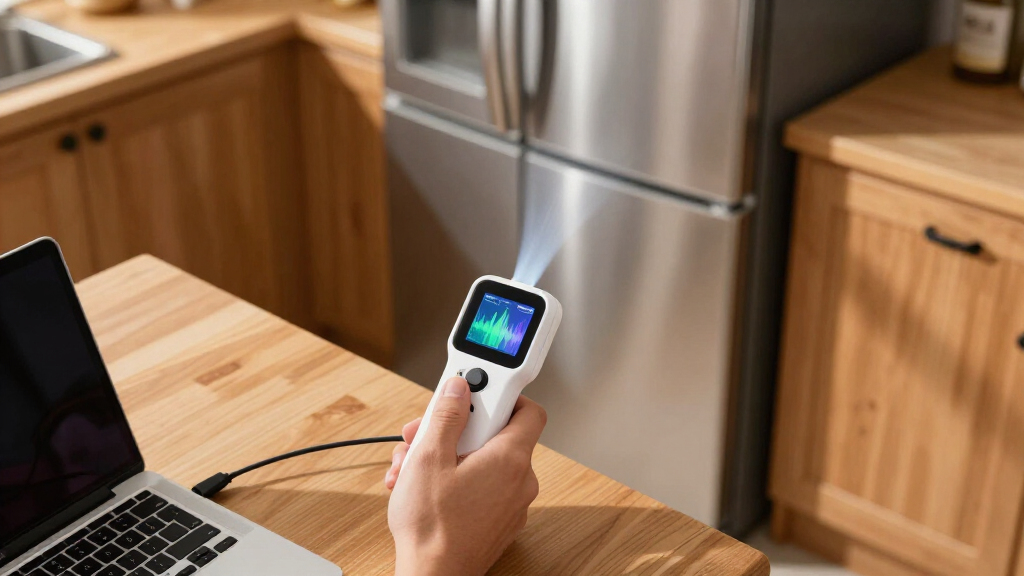
I ranked these cameras by how clearly their stated use, operating format, and included equipment match real inspection tasks. The main criteria were acoustic imaging capability, application fit for leaks or other industrial faults, ease of carrying and operating, and whether the product works as a standalone tool or relies on a phone or other equipment. I also treated named accessories and connectivity differences as practical value factors, rather than assuming that a bundle or a larger feature list automatically makes a camera better.
The order favors options with a clear role and useful balance for a broad range of buyers, followed by products better suited to specific workflows. The FOTRIC TD2e earns the overall position for its straightforward standalone role within a family that also offers useful kit choices; the Fluke ii905 ranks highly for buyers seeking an industrial inspection tool. Specialist, phone-connected, and less fully specified options appear later because they fit narrower needs or leave more questions for buyers to resolve. I do not treat stated detection ranges as promises of performance in every environment.
Factors to Consider When Choosing Best USB Acoustic Imagers
Before choosing a model, pin down the inspection job and the way you will collect and share findings. These choices often matter more than the number of microphones or the product’s place in a list: a tool built around compressed-air leaks may be a poor match for a team inspecting electrical equipment, and a pocket device may be inconvenient for long shifts.
Match the Imager to the Fault You Need to Find
Start with the sound sources you expect to inspect: compressed-air leaks, vacuum leaks, partial discharge, or a wider mix of industrial noise. A model described for a specific task can make sense when that task dominates your workload, while a broader industrial imager may suit a maintenance team that handles varied sites. Do not treat “acoustic camera” as proof that every device detects every fault equally well. Ask the seller or manufacturer about supported inspection modes and any application limits that matter to your equipment. If your work spans several fault types, prioritize a tool whose stated use matches the most demanding task, rather than buying around occasional secondary use.
Check the Whole Connection and Data Workflow
“USB” in a product search does not tell you whether the camera connects directly to a computer, needs a phone, or operates on its own. Before ordering, verify the required host device, operating-system compatibility, cable or adapter needs, and whether the inspection app is available to your team. Think past the scan itself: confirm how images are saved, named, exported, and added to work orders. A phone-dependent imager can be convenient for a technician already carrying a supported handset, but a dedicated screen may be easier to standardize across a crew. A connection mismatch can turn a compact tool into a device that is rarely used.
Read Detection Specifications as Conditions, Not Guarantees
Frequency range and detection-distance claims help describe a tool, but they do not predict the result for every leak. Background noise, airflow, target size, distance, access, and operator technique can change what the camera can locate. Compare published specifications only when they refer to the same kind of test and the same task. For a demanding inspection route, ask for application notes or a demonstration using a comparable fault and working distance. Avoid choosing a camera solely because one stated range appears larger; practical suitability depends on the conditions you face.
Choose Portability for the Length and Style of Your Inspections
A pocket camera is appealing for quick checks and technicians who move between many locations, but a small form factor may not suit extended inspections or jobs that need a dedicated viewing setup. Larger standalone imagers can be easier to use as self-contained field tools, though they take up more room and may add carrying weight. Consider whether you will scan overhead equipment, work in confined spaces, or wear gloves. Check battery arrangements and charging plans if the workday includes long rounds; an extra battery is useful only if it fits your actual downtime and charging routine. The best size is the one your team will comfortably bring to the job.
Pay for the Kit You Will Actually Use
Bundles can add a spare battery, hard case, or another imaging device, but those extras do not necessarily improve acoustic detection. A case can protect equipment in a shared service vehicle, while a spare battery can reduce interruptions on long routes. A thermal-camera bundle may be worthwhile when your workflow already calls for both acoustic and thermal checks; otherwise, it can add gear your team does not need. Compare the included items with equipment you already own and check that accessories are compatible with the exact model. Avoid paying for a package based on its item count alone.
Plan for Team Use, Reporting, and Support
For a shared instrument, usability includes more than an easy first scan. Consider whether multiple technicians can learn the controls, whether reports fit your maintenance process, and whether files can be shared without workarounds. Ask about training, software access, updates, warranty terms, and service arrangements before committing a team to a platform. A less expensive or more compact device may be a sensible fit for occasional checks, while repeated inspections can justify a more established workflow and support plan. If connectivity is restricted at your site, confirm whether the camera can complete the required job without Wi-Fi or cloud access.
Frequently Asked Questions
Do USB acoustic imagers work without a smartphone or computer?
Some acoustic imagers are designed as standalone cameras, while others depend on a compatible phone or host device. Check the exact model’s operating instructions rather than relying on “USB” in the listing title. A phone-connected unit may be handy if your team already uses supported devices, but it adds compatibility and battery questions. A standalone camera can simplify field setup, though it may be larger to carry. Confirm how the unit stores and exports inspection files before deciding.
Can one acoustic imager locate both compressed-air leaks and partial discharge?
Do not assume that a camera suited to one fault type covers another equally well. Product descriptions in this lineup name different applications, including compressed-air leak detection and partial discharge, and those tasks may call for different capabilities or workflows. Check the manufacturer’s supported uses for the exact model and ask what conditions or accessories are required. If your maintenance program covers both, compare each device against both tasks rather than buying from a single headline claim. A demonstration on representative equipment can help resolve uncertainty.
Is a larger stated detection range always better?
No. A published range is useful context, but real detection depends on the source, surrounding noise, access, and inspection technique. A long-distance claim may not reflect the small or obstructed leak you need to find inside a busy plant. Compare specifications only when the testing conditions and target type are clear. Ask for application guidance tied to your inspection distance and environment. The right camera is the one that fits your work, not simply the one with the largest number.
Should I choose an acoustic-camera bundle or buy the camera by itself?
Choose a bundle when its extras solve a problem you already have, such as protecting gear in transit or keeping inspections running between charges. The TD2e listings show how packages can differ: one adds a battery and hard case, while another pairs acoustic and thermal imaging. Those additions do not automatically change acoustic imaging performance. Check what is included, confirm model compatibility, and compare the package with your existing kit. If you will not use the extras, the standalone camera may be the cleaner fit.
How do I choose between a pocket camera and a dedicated industrial imager?
Think about how often you inspect, how long each round lasts, and whether you need a self-contained device. A pocket model such as the phone-connected Fluke iSee II01 may suit quick checks and a technician who values a small carry load. A dedicated industrial imager is a better starting point when the camera will serve as a regular inspection tool or must fit a more formal field workflow. Verify phone compatibility, battery arrangements, reporting needs, and site connectivity before choosing. If several technicians will share the equipment, prioritize a workflow they can use consistently.
Conclusion
For a balanced standalone choice, I recommend the FOTRIC TD2e Acoustic Imaging Camera as best overall; choose the Fluke ii905 instead if an industrial-focused tool and its stated detection specifications better match your inspection route. For value, my pick is the TD2e Acoustic Camera Kit with Extra Battery and Hard Case when those field accessories are genuinely useful. Beginners who already have a compatible Android phone may find the Fluke iSee II01 the easiest format to carry and start with, while buyers seeking a premium, named industrial brand should compare the Fluke and FLIR options against their specific task and support needs. For specialist needs, consider the CRYSOUND SonoCam Pocket for its stated leak-detection and partial-discharge applications, or the FLIR Si1-LD for compressed-air leak work; select the no-Wi-Fi version only if that connectivity restriction suits your site. Match the exact model, connection method, and application to your workflow before making the final choice.