
TL;DR

Get home appliances delivered free with Prime
- Fast, free delivery on millions of items
- Prime Video, Amazon Music and more included
- Member-only deals all year
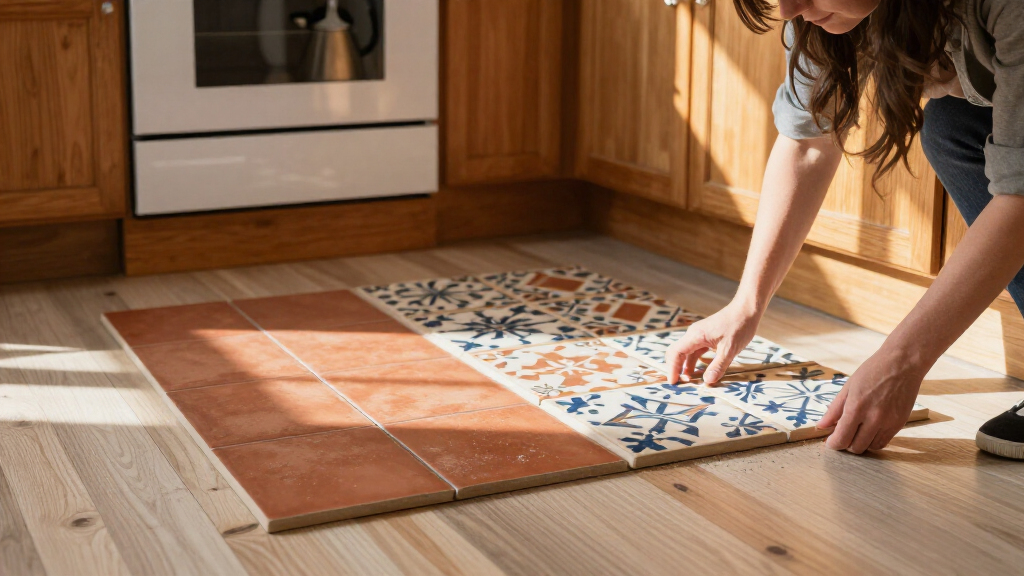
A Livingetc design report argues that colorful kitchen floors can serve as a stronger design feature than a conventional accent wall. It illustrates the idea with projects using red linoleum and pink poured concrete; the examples show designers’ choices, not evidence that colored floors work better for every kitchen.
Livingetc’s design report makes the case for treating a kitchen floor as a major color feature rather than a neutral backdrop, using projects with red linoleum and pink poured concrete as examples. The report presents the approach as a design option that can give a room added warmth and identity; it does not establish that accent floors outperform accent walls generally.
The report describes kitchen flooring as a decision often made primarily for practicality, with wood or neutral stone used as a supporting surface. Its central design argument is that a floor can carry color and character across a large part of the room, changing the overall effect without adding a brightly colored wall. The examples are individual design projects, not a survey or controlled comparison.
One project by Gisbert Poeppler uses neon-red linoleum, drawing on Steinholzestrich, a historic flooring finish found in buildings in the former German Democratic Republic, including the Bauhaus building. Poeppler says the design references that history while aiming for a contemporary, welcoming atmosphere. The kitchen also includes a blue-painted ceiling, creating a composition of strong primary colors.
A second example, designed by Material Works Architecture, uses pink poured-concrete flooring in a kitchen extension with exposed timber beams and raw plaster walls. Architect Dickon Hayward says the team wanted a contrasting color and additional warmth. In this project, the floor is intended to stand out against a largely neutral palette, while its smooth finish contrasts with the more textured materials around it.
A Color Statement Underfoot
The design idea matters to homeowners planning a kitchen because flooring occupies a substantial, continuous surface and is usually selected early for durability, maintenance and cost. The report invites readers to weigh its visual role alongside those practical demands, rather than treating the floor as background after cabinetry, counters and hardware have been chosen.
Color underfoot may also affect the room’s perceived mood. Poeppler describes red linoleum as adding warmth to a space with limited natural light, while Hayward presents pink concrete as a softer counterpoint to industrial materials. Those are the designers’ readings of their own projects, not universal results: the effect will depend on lighting, surrounding finishes, room size and personal preference.
Unlike a wall treatment, flooring takes direct wear and can be costly or disruptive to replace. A vivid finish may therefore be a more permanent commitment than paint. Readers considering the approach need to balance the visual payoff described in the report against the material’s suitability for kitchen use, upkeep requirements and installation costs.
colorful kitchen linoleum flooring
As an affiliate, we earn on qualifying purchases.
As an affiliate, we earn on qualifying purchases.
From Neutral Surface to Design Feature
The report frames the trend against kitchens where neutral floors are commonly chosen as a practical base. Its “sixth wall” phrase is a design metaphor: it asks readers to consider the floor as another visible plane in the room, alongside the walls and ceiling. The source does not claim that colored floors are new, nor does it provide sales figures or evidence of a broad shift in homeowner behavior.
The two detailed projects take different routes. Poeppler adapts a historically referenced finish using red linoleum, while Material Works Architecture uses poured concrete in pale pink. In the first, the floor is part of a deliberately colorful room; in the second, it provides the main accent against timber and plaster. Both examples support the report’s argument that color can be introduced at floor level without relying on a feature wall.
The source material also begins a third example, titled “Minty-Fresh Foundations,” describing jade glass accessories that visually connect with a kitchen floor. However, the supplied excerpt ends before providing the project’s floor material, designer attribution or further details, so those particulars cannot be confirmed here.
““With the red linoleum, we wanted to reference this history while translating it into a contemporary and welcoming atmosphere.””
— Gisbert Poeppler, on the red linoleum project
pink poured concrete kitchen floor
As an affiliate, we earn on qualifying purchases.
As an affiliate, we earn on qualifying purchases.
Limits of the Design Examples
The article presents designer commentary and selected interiors, but the supplied source does not include comparative data showing whether accent floors are more effective, popular or cost-efficient than accent walls. “Work much better” is therefore a headline-level opinion, not a measured finding in the material provided.
Practical details are also absent. The excerpt does not give product specifications, installation costs, cleaning guidance, long-term wear results or information about how the surfaces handle spills and heavy use. It is not clear whether the pictured finishes are suitable for every household or kitchen layout. The third project’s description is incomplete in the supplied text, and the source excerpt contains no publication date.
red linoleum flooring for kitchens
As an affiliate, we earn on qualifying purchases.
As an affiliate, we earn on qualifying purchases.
What Homeowners Should Check
For readers considering a colorful floor, the next step is to compare samples with the kitchen’s actual light, cabinetry, counters and wall finishes. The report’s examples suggest evaluating the whole palette rather than choosing a floor color in isolation. Homeowners should also check the specific material’s care instructions, expected durability, installation requirements and replacement costs with the manufacturer or installer.
No policy change, product launch or follow-up announcement is described in the source. The report’s proposal remains a design consideration: whether to make the floor a focal point depends on the room, budget, maintenance needs and the homeowner’s taste.
As an affiliate, we earn on qualifying purchases.
Key Questions
What does the report mean by an “accent floor”?
It means using a noticeable floor color or finish as a major design feature rather than treating flooring only as a neutral backdrop. The report’s examples include red linoleum and pink poured concrete.
Does the report prove accent floors work better than accent walls?
No. Livingetc presents a design argument and selected residential examples, but the source provides no comparative study or measurement showing that floors are generally more effective than accent walls.
Who designed the red kitchen floor?
Gisbert Poeppler designed the example using neon-red linoleum. The report says the finish references Steinholzestrich, a historic flooring style associated with buildings in the former German Democratic Republic, including the Bauhaus building.
What is the pink kitchen floor made of?
The Material Works Architecture example uses pink poured concrete. Architect Dickon Hayward says it was chosen to add a contrasting color and warmth alongside timber and raw plaster.
What practical information does the source provide?
The supplied report excerpt focuses on appearance and design intent. It does not provide costs, maintenance instructions, product specifications or long-term wear data, so homeowners would need to check those details for the particular flooring material.
Source: rss
Fall yard work Picks
leaf blowers
As an affiliate, we earn on qualifying purchases.