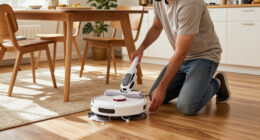
For most garage floors that need a broad, cement-based refresh, I’d start with Akona Polymer-Modified Concrete Resurfacer, which is the clearest fit here for resurfacing concrete rather than coating or spot repair. 2110 Heavy-Duty Epoxy Concrete Floor Patch and Resurfacer and Abatron Abocrete stand out for repair-focused jobs, while the KILZ Over Armor products favor textured coating over a traditional cement resurfacer. The main tradeoff is whether your floor needs a new cementitious surface, targeted repairs, or a colored protective coating; those are different jobs, and the product names can blur the line. Surface preparation and compatibility also matter as much as the chosen material. Continue reading for my breakdown of where each option fits and what to check before buying.

Get home appliances delivered free with Prime
- Fast, free delivery on millions of items
- Prime Video, Amazon Music and more included
- Member-only deals all year
Complete the kit


Key Takeaways
- Akona is the most direct match for buyers seeking a polymer-modified cement resurfacer rather than a paint-like coating or small repair kit.
- The epoxy products serve repair needs, not necessarily whole-floor renewal: 2110 is positioned as a heavy-duty patch and resurfacer, while Abocrete is a self-leveling repair kit.
- KILZ Over Armor prioritizes texture and coating; its deck-oriented labeling makes intended use and garage-floor suitability worth confirming before application.
- KILZ 1-Part Epoxy is a coating option, not a substitute for filling structural damage, so it makes more sense on a sound floor than on one with deep defects.
- Coverage scale and floor condition separate the picks: a 25-pound resurfacer is better suited to broader surface work than a quart-scale repair kit, while neither removes the need for careful preparation.
| KILZ Over Armor Textured Deck Resurfacer, Slate Gray, 1 Gallon |  | Best for Camouflaging Surface Wear | Brand: KILZ | Color: Slate Gray | Container size: 1 gallon | VIEW ON AMAZON | See Our Full Breakdown |
| 2110 Heavy-Duty Epoxy Concrete Floor Patch and Resurfacer |  | Best for Heavy Vehicle and Shop Loads | System components: Resin, hardener, and aggregate | Application thickness: 1/8–1/4 inch | Coverage: Approximately 21.54 square feet per 5-gallon unit at specified thickness | VIEW ON AMAZON | See Our Full Breakdown |
| EAresty Epoxy Colored Sand Floor Coating, Self-Leveling, Platinum Cloud Gray |  | Best for a Decorative Gloss Finish | Brand: EAresty | Product type: Epoxy floor coating | Color: Platinum Cloud Gray | VIEW ON AMAZON | See Our Full Breakdown |
| KILZ 1-Part Epoxy Concrete & Garage Floor Paint, Slate Gray, 1 Gallon |  | Best Overall for Routine Residential Garage Floors | Color: Slate Gray | Volume: 1 gallon | Application: Interior and exterior | VIEW ON AMAZON | See Our Full Breakdown |
| KILZ Over Armor Textured Solid Coating Resurfacer, Gun Metal Gray, 1 Gallon |  | Best for Textured Outdoor Garage Approaches | Brand: KILZ | Color: Gun Metal Gray | Container size: 1 gallon | VIEW ON AMAZON | See Our Full Breakdown |
| Akona Polymer-Modified Concrete Resurfacer, 25 lb |  | Best for Thin, Broad-Area Resurfacing | Brand: Akona | Weight: 25 lb | Material: Cement-based, polymer-modified | VIEW ON AMAZON | See Our Full Breakdown |
| Abatron Abocrete Self-Leveling Concrete Epoxy Repair Kit, Light Gray, 1.25 Quarts |  | Best for Deep, High-Exposure Repairs | Brand: Abatron | Model: PTY603 | Volume: 1.25 quarts (40 fluid ounces) | VIEW ON AMAZON | See Our Full Breakdown |
| concrete resurfacer for garage floor | Color | Brand | Coverage |
|---|---|---|---|
| KILZ Over Armor Textured Deck | Slate Gray | KILZ | Approximately 75 square feet with two coats |
| 2110 Heavy-Duty Epoxy Concrete | — | — | Approximately 21.54 square feet per 5-gallon unit at specified thickness |
| EAresty Epoxy Colored Sand Flo | Platinum Cloud Gray | EAresty | Approximately 6.5 square feet per kilogram per coat |
| KILZ 1-Part Epoxy Concrete & G | Slate Gray | — | — |
| KILZ Over Armor Textured Solid | Gun Metal Gray | KILZ | Approximately 75 square feet with two coats |
| Akona Polymer-Modified Concret | Gray | Akona | — |
| Abatron Abocrete Self-Leveling | Light gray | Abatron | — |
More Details on Our Top Picks
KILZ Over Armor Textured Deck Resurfacer, Slate Gray, 1 Gallon
I’d choose this textured acrylic resurfacer when a garage floor has shallow cracks and cosmetic wear, but still needs a coating suited to exterior exposure. Its stated crack-filling ability reaches up to 1/4 inch, and the slip-resistant finish offers more grip than the satin surface of KILZ 1-Part Epoxy Concrete & Garage Floor Paint. That texture is useful for damp entry areas, though it may be harder to clean than a smoother garage coating. Coverage is also limited: one gallon handles about 75 square feet with two coats, far less than KILZ’s epoxy paint on a smooth slab. I’d rank it as a surface-concealing option, not a heavy-duty repair system like 2110 Heavy-Duty Epoxy Concrete Floor Patch and Resurfacer. Larger damage must be repaired separately, and the surface needs proper preparation.
Pros:- Fills cracks up to 1/4 inch and conceals some surface imperfections.
- Works on properly prepared concrete as well as wood and composite.
- Textured finish adds slip resistance for exposed areas.
Cons:- One gallon covers only about 75 square feet with two coats.
- Large cracks and damaged areas need separate repair before coating.
- Textured finish may be less convenient to clean than KILZ 1-Part Epoxy Concrete & Garage Floor Paint.
Best for: Garage owners with a small, weather-exposed concrete area who want to disguise shallow cracks and add a textured, slip-resistant surface.
Not ideal for: Owners coating a large garage or seeking a smooth, easy-to-clean finish; its two-coat coverage is limited, and the texture differs from conventional garage-floor paint.
- Brand:KILZ
- Color:Slate Gray
- Container size:1 gallon
- Paint type:Acrylic
- Compatible surfaces:Wood, composite, and concrete
- Finish:Textured, slip-resistant
- Maximum crack fill:Up to 1/4 inch
- Coverage:Approximately 75 square feet with two coats
- Dry time:6 hours
Our verdict“Choose this for a small, weather-exposed garage surface where crack concealment and traction matter more than broad coverage or a smooth finish.”
2110 Heavy-Duty Epoxy Concrete Floor Patch and Resurfacer
For a garage that sees rolling equipment, heavy vehicles, or repeated impact, I’d put 2110 Heavy-Duty Epoxy Concrete Floor Patch and Resurfacer ahead of the decorative and residential coatings here. Its resin, hardener, and aggregate system is designed to repair pits, spalling, cracks, and holes while resurfacing the floor, with an application thickness of 1/8–1/4 inch. That makes it a more repair-focused choice than KILZ 1-Part Epoxy Concrete & Garage Floor Paint, which is a thinner residential coating rather than a patching resurfacer. The tradeoff is demanding timing: at 70°F, working time is only 30–40 minutes, so mixing and placement need planning. It also takes 2–7 days to fully cure for heavy traffic. I’d favor it for substantial damage and load resistance, not a quick weekend refresh.
Pros:- Repairs cracks, holes, pits, and spalling while resurfacing worn concrete.
- Designed for vehicular loads and heavy foot traffic.
- Offers impact and abrasion resistance for tools and rolling equipment.
Cons:- Has a 30–40 minute pot life at 70°F, leaving little time once mixed.
- Full cure for heavy traffic can take 2–7 days.
- Coverage is approximately 21.54 square feet per 5-gallon unit at the specified thickness.
Best for: Garage workshops, vehicle bays, or owners repairing pitted and spalled concrete that must handle heavy traffic and dropped tools.
Not ideal for: DIYers who need a long working window or must return a vehicle to the garage quickly; its pot life is short and heavy-traffic cure can take up to seven days.
- System components:Resin, hardener, and aggregate
- Application thickness:1/8–1/4 inch
- Coverage:Approximately 21.54 square feet per 5-gallon unit at specified thickness
- Pot life:30–40 minutes at 70°F
- Recoat time:7–8 hours
- Light foot traffic:14–16 hours
- Full cure for heavy traffic:2–7 days
Our verdict“Pick this epoxy system for damaged garage concrete under heavy loads if you can manage fast application and a longer cure period.”
EAresty Epoxy Colored Sand Floor Coating, Self-Leveling, Platinum Cloud Gray
I’d consider EAresty when the garage floor’s appearance matters as much as adding a protective coating. Its self-leveling epoxy is intended to create a high-gloss, speckled finish, a more decorative result than the plain slate-gray finish of KILZ 1-Part Epoxy Concrete & Garage Floor Paint. The formula is also described as resisting routine scuffs and abrasion, but it is not presented as a deep-crack or spall repair system like 2110 Heavy-Duty Epoxy Concrete Floor Patch and Resurfacer. That distinction matters: choose EAresty for a prepared, sound surface, not as a substitute for patching substantial damage. Coverage is listed at about 6.5 square feet per kilogram per coat, and actual use varies with surface and application thickness. I’d rank it for buyers seeking a distinctive indoor or outdoor finish who are comfortable prioritizing appearance over a clearly documented heavy-load repair role.
Pros:- Creates a high-gloss, speckled, marble-inspired appearance.
- Self-leveling formula is designed to spread evenly on prepared surfaces.
- Designed to resist scuffs, abrasion, and routine wear.
- Listed for compatible indoor and outdoor flooring projects.
Cons:- Requires a properly prepared surface and is not a substitute for repairing major concrete damage.
- Coverage varies with surface condition and application thickness.
- Its decorative finish is a different priority from the heavy-load repair focus of 2110 Heavy-Duty Epoxy Concrete Floor Patch and Resurfacer.
Best for: Garage owners with sound, properly prepared concrete who want a glossy, speckled decorative coating rather than a plain painted appearance.
Not ideal for: Buyers repairing deep cracks, spalling, or heavily damaged concrete, or those who need clearly specified vehicle-load performance.
- Brand:EAresty
- Product type:Epoxy floor coating
- Color:Platinum Cloud Gray
- Finish:High-gloss
- Size:352.73 oz, pack of 1
- Coverage:Approximately 6.5 square feet per kilogram per coat
- Compatible surfaces:Concrete, cement, tile, and wood
- Use:Interior and exterior
Our verdict“Choose EAresty for a prepared garage floor where a glossy, speckled look is the priority, not deep concrete repair.”
KILZ 1-Part Epoxy Concrete & Garage Floor Paint, Slate Gray, 1 Gallon
For a typical residential garage with sound concrete, I’d start with KILZ 1-Part Epoxy Concrete & Garage Floor Paint. It is a water-based coating rather than a thick resurfacing compound, but its resistance to hot tire pickup, scuffing, cracking, peeling, and fading fits the everyday demands of a home garage. Coverage is also much broader than either KILZ Over Armor resurfacer: about 300–400 square feet per gallon on smooth concrete, or 200–300 on rough surfaces. The satin finish is easier to pair with a conventional garage-floor look than EAresty’s glossy speckled effect. The limitation is scope: it is for residential use, not forklift traffic, and it is not recommended where hydrostatic pressure affects the slab. Since it does not fill damage like 2110 Heavy-Duty Epoxy Concrete Floor Patch and Resurfacer, I’d repair significant defects first.
Pros:- Resists hot tire pickup, scuffing, cracking, peeling, and fading.
- Covers about 300–400 square feet per gallon on smooth surfaces.
- Roller- or brush-applied, with soap-and-water cleanup.
- Suitable for residential horizontal surfaces indoors or outdoors.
Cons:- Limited to residential use and unsuitable for forklift traffic.
- Not recommended for vertical surfaces or areas exposed to hydrostatic pressure.
- Does not provide the crack and spall repair function of 2110 Heavy-Duty Epoxy Concrete Floor Patch and Resurfacer.
Best for: Homeowners coating a sound indoor or outdoor residential garage floor who want broad coverage and resistance to hot tires and routine scuffs.
Not ideal for: Commercial garage operators, spaces with forklift traffic, or slabs exposed to hydrostatic pressure; it is also not a repair compound for major cracks or spalling.
- Color:Slate Gray
- Volume:1 gallon
- Application:Interior and exterior
- Coverage on smooth surfaces:300–400 square feet per gallon
- Coverage on rough surfaces:200–300 square feet per gallon
- VOC:Low-VOC
- Cleanup:Soap and water
- Surface restriction:Not recommended for vertical surfaces or areas exposed to hydrostatic pressure
Our verdict“Choose this for a sound residential garage slab when broad coverage and hot-tire resistance matter more than filling concrete damage.”
KILZ Over Armor Textured Solid Coating Resurfacer, Gun Metal Gray, 1 Gallon
This KILZ Over Armor version makes the most sense when the garage floor or approach is exposed to weather and needs a solid Gun Metal Gray coating that hides minor surface flaws. Like the Slate Gray Over Armor Deck Resurfacer, it fills cracks up to 1/4 inch and gives concrete a textured, slip-resistant surface. Its exterior, moisture- and weather-resistant positioning is a better fit for an exposed threshold or outdoor parking area than KILZ 1-Part Epoxy Concrete & Garage Floor Paint, which is the stronger fit for a broad, conventional residential floor coating. Coverage remains modest at about 75 square feet with two coats, and the texture is not ideal for buyers who want a smooth surface for sweeping. Larger cracks and damaged sections still need separate filling, so this is a cosmetic resurfacer, not a heavy-duty patch system.
Pros:- Fills cracks up to 1/4 inch and conceals surface imperfections.
- Textured, slip-resistant finish suits exposed outdoor areas.
- Compatible with properly prepared concrete, wood, and composite.
- Designed to resist moisture and weather exposure.
Cons:- Covers approximately 75 square feet per gallon with two coats.
- Large cracks and damaged areas require separate repair.
- Textured finish is less suited to buyers wanting a smooth, easy-to-sweep garage floor.
Best for: Owners coating a small, exposed garage approach or outdoor concrete area who want a weather-resistant, textured finish in Gun Metal Gray.
Not ideal for: Buyers covering a full-size garage economically or seeking a smooth interior floor; its two-coat coverage is limited and the textured surface may collect debris.
- Brand:KILZ
- Color:Gun Metal Gray
- Container size:1 gallon
- Paint type:Acrylic
- Compatible surfaces:Wood, composite, and concrete
- Use:Exterior
- Coverage:Approximately 75 square feet with two coats
- Maximum crack filling:Up to 1/4 inch
- Dry time:6 hours
Our verdict“Choose this for a small, weather-exposed garage approach where texture and surface concealment matter more than smoothness or broad coverage.”
Akona Polymer-Modified Concrete Resurfacer, 25 lb
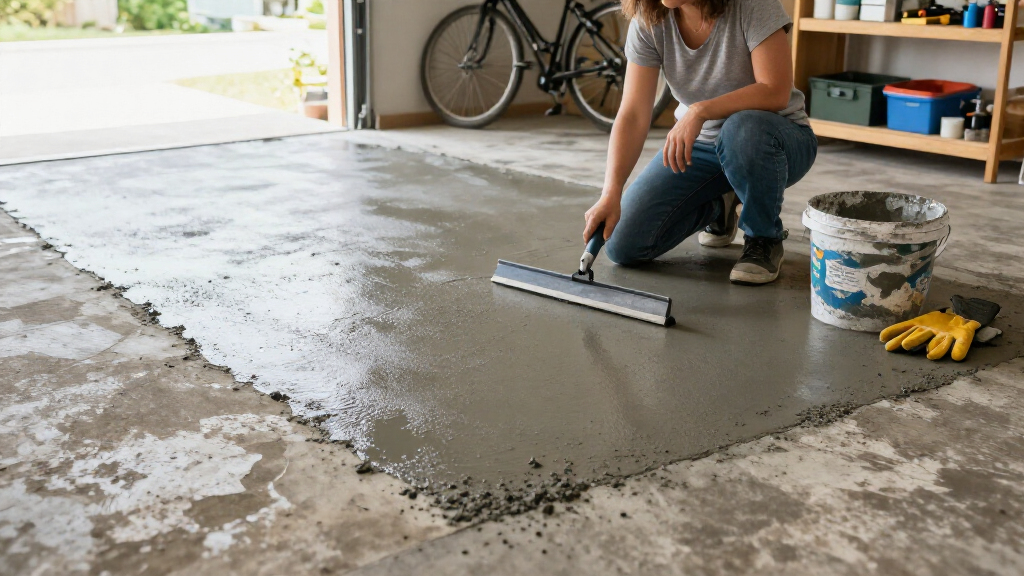
For a garage floor with widespread surface wear but no need for deep filling, Akona’s thin cement overlay is the more suitable resurfacing choice than the Abatron Abocrete kit. Its ⅛–¼-inch application range is designed to renew a broad concrete surface, while Abocrete is better suited to cracks, pits, and localized damage that call for a thicker repair. Akona works indoors and outdoors, so the same product can serve a garage, driveway, or deck. Light foot traffic is allowed after an average of 4–6 hours, useful when the area cannot stay closed for long. The tradeoff is that this is not a deep-patch solution: damage beyond its limited overlay thickness needs separate repair. It also requires a squeegee, so it is less appealing for buyers seeking a simple paint-on coating like KILZ 1-Part Epoxy Concrete & Garage Floor Paint.
Pros:- Suitable for indoor and outdoor concrete, including garages, driveways, and decks
- Thin ⅛–¼-inch overlay can renew broad areas without a thicker build
- Allows light foot traffic after an average of 4–6 hours
- Polymer-modified, cement-based formulation is made for concrete resurfacing
Cons:- Limited to a ⅛–¼-inch application thickness, so deeper damage needs separate repair
- Requires a squeegee for application
- Powder form requires mixing before use
Best for: Garage owners resurfacing a broad, worn concrete slab with shallow surface damage who can apply a thin overlay with a squeegee.
Not ideal for: Buyers needing to fill deep cracks or substantial pits, or anyone who wants a simple paint-on garage floor finish without squeegee application.
- Brand:Akona
- Weight:25 lb
- Material:Cement-based, polymer-modified
- Form:Powder
- Application thickness:⅛–¼ in. (3–6 mm)
- Application method:Squeegee-applied
- Foot traffic:Light foot traffic after 4–6 hours on average
- Use:Indoor and outdoor concrete
- Color:Gray
Our verdict“Choose Akona for broad, shallow concrete wear when you want a thin cement resurfacing layer and can manage squeegee application.”
Abatron Abocrete Self-Leveling Concrete Epoxy Repair Kit, Light Gray, 1.25 Quarts
Abocrete earns a different place from Akona: I’d choose it for cracks, pits, and worn spots that need filling, rather than for applying a thin layer across an entire garage floor. The kit’s self-leveling, shrink-free epoxy can be applied in any thickness, making it more adaptable to deeper damage than Akona’s ⅛–¼-inch cement overlay. Its resistance to oils, chemicals, and salt water also suits concrete exposed to vehicle fluids or harsh conditions; that is a more repair-focused proposition than KILZ 1-Part Epoxy Concrete & Garage Floor Paint, which is a coating rather than a void-filling kit. Abocrete includes Part A, Part B, sand, and mixing products, but the 1.25-quart volume points to repairs, not economical coverage of a full garage slab. The 32-pound listed weight may also make handling less convenient.
Pros:- Self-leveling formula fills cracks, voids, and surface damage
- Shrink-free and suitable for application at any thickness
- Resists salt water, oils, and chemicals
- Kit includes Part A, Part B, sand, and mixing products
Cons:- The 1.25-quart volume is better suited to repairs than full-floor resurfacing
- Listed item weight of 32 pounds may make handling less convenient
- Designed for concrete and other rigid surfaces, not flexible materials
Best for: Garage owners repairing deep cracks, pits, or localized concrete damage where oil, chemicals, salt water, or heavy vehicle traffic are concerns.
Not ideal for: Buyers resurfacing an entire garage floor with a thin, broad-area overlay, or those who need a lightweight, ready-to-apply product for flexible surfaces.
- Brand:Abatron
- Model:PTY603
- Volume:1.25 quarts (40 fluid ounces)
- Item weight:32 pounds
- Form:Liquid
- Color:Light gray
- Application features:Self-leveling, shrink-free
- Resistance:Salt water, oils, and chemicals
- Included components:Abocrete Part A, Part B, sand, and mixing products
Our verdict“Choose Abocrete for durable, localized garage-floor repairs, but pick Akona or a floor coating for broad-area resurfacing.”
How We Picked
I ranked these products by how closely their stated function matches a garage-floor resurfacing job, then by the type and scale of work they appear suited to address. A polymer-modified cement resurfacer ranks ahead for broad surface renewal; epoxy patch and self-leveling repair products rank higher for localized defects; coatings rank lower for this specific search because they primarily add a finish rather than replace damaged concrete. I also weighed practical factors buyers can verify before purchase: package size, application format, surface texture, intended use, and whether the product is presented as a coating, patch, or resurfacer.
This list includes products with meaningfully different jobs, so the order is not a claim that one material is always better. I favor closer category fit and wider potential use for a typical garage-floor refresh, while giving repair kits credit where localized damage is the main concern. Product labels and technical data sheets should guide final selection, especially for permitted substrates, thickness limits, coverage, cure schedule, vehicle traffic, and exposure to moisture or chemicals. I do not treat a coating as a structural repair or assume that a product labeled for decks is suitable for a garage without manufacturer confirmation.
| concrete resurfacer for garage floor | Brand | Color | Coverage |
|---|---|---|---|
| KILZ Over Armor Textured Deck | KILZ | Slate Gray | Approximately 75 square feet with two coats |
| 2110 Heavy-Duty Epoxy Concrete | — | — | Approximately 21.54 square feet per 5-gallon unit at specified thickness |
| EAresty Epoxy Colored Sand Flo | EAresty | Platinum Cloud Gray | Approximately 6.5 square feet per kilogram per coat |
| KILZ 1-Part Epoxy Concrete & G | — | Slate Gray | — |
| KILZ Over Armor Textured Solid | KILZ | Gun Metal Gray | Approximately 75 square feet with two coats |
| Akona Polymer-Modified Concret | Akona | Gray | — |
| Abatron Abocrete Self-Leveling | Abatron | Light gray | — |
Factors to Consider When Choosing Concrete Resurfacer For Garage Floor
Before choosing a material, I’d define the job by the floor’s condition and the finish you want. These products span cement resurfacing, epoxy repair, and floor coating, so choosing by the word “resurfacer” alone can lead to a mismatch.
1. Decide Whether the Floor Needs Resurfacing, Repair, or Coating
A worn but mostly continuous slab may suit a cement-based resurfacer, while isolated pits or cracks may call for a repair compound. A coating can change color and add a finished surface, but it will not correct a weak or uneven slab by itself. Map the damage before shopping: note its depth, whether edges are crumbling, and how much of the floor is affected. A common mistake is to cover active cracks or loose concrete and expect the top layer to hold. If damage appears structural or continues to spread, address its cause before applying a cosmetic layer. Matching the product’s stated job to the floor often matters more than choosing the most durable-sounding label.
2. Check Substrate Compatibility and Moisture
Garage slabs may have old paint, sealers, oil contamination, or moisture moving through the concrete, and any of these can interfere with adhesion. Check the product instructions for approved substrates and required removal of previous coatings. A clean-looking surface is not necessarily ready: oil can remain in pores, and old sealers may repel new material. Moisture testing is especially useful when the floor has a history of dampness or water intrusion. If the manufacturer sets limits for moisture, temperature, or concrete age, treat those as selection constraints rather than optional tips. Applying a new layer over an incompatible surface can lead to peeling or debonding even when the material itself suits the intended repair.
3. Match Package Size and Application Scale to the Job
Package size can indicate the scale a product is meant to address, but it does not tell the whole story; actual coverage varies with surface texture, thickness, and waste. Compare the stated coverage at the thickness you need, not just the container weight or volume. Small epoxy kits can be convenient for a few defects but inefficient for an entire garage. A larger cementitious package may suit broader work, yet it also requires planning for mixing, placement, and cleanup. Buying too little can leave a visible boundary or force a rushed return to the store; buying too much may create avoidable waste once mixed products have limited working time. Measure the repair area and use the manufacturer’s coverage guidance before ordering.
4. Choose Texture and Finish for Garage Use
Texture affects traction, cleaning, and how the floor feels underfoot. A textured coating may help create a less slick finish, but rougher surfaces can collect dirt and make sweeping harder. A smoother self-leveling material can produce a more even appearance, though it is not automatically the right finish for every garage or every damaged slab. Think about water, snow, dust, and the way tires enter the space. Also check whether a product is intended for vehicle traffic and whether a separate topcoat is recommended. A sample patch can reveal color, texture, and adhesion behavior before you commit to a full floor.
5. Plan for Preparation, Working Time, and Curing
Resurfacing is a preparation-heavy job: loose concrete, dirt, and contaminants need attention before application. Read the full instructions before mixing, since some products require specific tools, batch sizes, or a narrow working window. A material that looks simple to spread can become difficult if the floor is larger than one person can finish within its open time. Plan the application around weather and garage access, and keep vehicles off the surface for the full period the manufacturer specifies. Rushing cleanup or using the floor before it has cured can spoil an otherwise suitable product choice. For first-time DIY work, favor instructions and application steps you can complete consistently over a more complicated system with features you may not need.
6. Pay More Only for a Benefit Your Floor Needs
Premium positioning is useful only when it brings a relevant benefit, such as a repair formulation suited to a particular defect or a finish designed for the traffic your garage sees. A more specialized epoxy kit may be excessive for broad, shallow wear, while a general coating may fall short on deep damage. Compare the complete system: primer, patch material, topcoat, tools, and any surface preparation products can change the total project effort. Check whether the manufacturer calls for a companion product rather than assuming one container does every job. For a sound slab needing a refreshed appearance, a straightforward coating may be enough; for a deteriorated surface, spending on preparation and the right repair material is often more sensible than paying for decorative features.
Frequently Asked Questions
Can I use a garage-floor coating to fix cracked or pitted concrete?
A coating can cover or change the appearance of a sound surface, but it generally should not be treated as a repair for deep cracks, loose edges, or significant pits. Fill defects with a compatible repair material first, following the coating maker’s preparation directions. If a crack is moving or repeatedly reopening, a surface layer may fail along the same line. Check whether the coating and repair compound are approved for use together. For extensive damage, identify the cause before choosing a cosmetic finish.
Is a polymer-modified cement resurfacer or an epoxy repair product better for a whole garage?
That depends on whether the goal is broad surface renewal or focused defect repair. A cement resurfacer is the more direct category match when a large area needs a fresh cementitious surface, while epoxy repair products may be better suited to targeted damage or a specified repair task. Compare permitted application thickness, coverage, substrate requirements, and traffic limitations on the product data sheets. Do not assume a product called a “resurfacer” is intended for every full-floor application. If the floor has both widespread wear and isolated deep defects, the job may require separate repair and resurfacing steps.
Should I choose a textured product for a garage that gets wet?
Texture can affect traction, but the label alone does not establish how a finished floor will perform when wet. Check the manufacturer’s claims and application instructions, and consider how the texture affects cleaning and dirt buildup. Drainage, footwear, contaminants, and the floor’s slope also influence slip risk. A rough finish may be harder to sweep, while a smoother surface can be easier to clean but may not suit your traction preference. When practical, test a small area and review the product’s use limitations before coating the full garage.
How do I know whether an old garage-floor sealer must be removed?
Start with the resurfacer or coating instructions, which should state whether sealed, painted, or previously coated concrete is an acceptable substrate. If compatibility is unclear, contact the manufacturer rather than relying on appearance alone. A small adhesion test can help reveal a problem, but it does not replace required preparation or technical guidance. Old sealers, paint, oil, and weak surface layers may prevent bonding. Removing incompatible material before application is usually safer than covering it and hoping the new layer adheres.
Can I park a vehicle on the floor as soon as it feels dry?
No. A surface can feel dry before it has cured enough for vehicle traffic, and tire pressure or turning can damage a young coating or repair. Follow the product’s stated cure schedule for foot traffic and vehicle use separately. Temperature, humidity, layer thickness, and ventilation may affect the timing, so use the instructions for your actual conditions. Keep vehicles, tools, and stored items off the floor until the specified interval has passed. If timing is unclear, ask the manufacturer before putting the garage back into service.
Conclusion
For a broad cement-based refresh, I’d choose Akona Polymer-Modified Concrete Resurfacer as the best overall and the best value-oriented starting point in this lineup, while checking coverage and application limits against the job. For a premium, repair-focused choice, compare 2110 Heavy-Duty Epoxy Concrete Floor Patch and Resurfacer with Abatron Abocrete based on the defect and the manufacturer’s intended use; neither should be mistaken for a default whole-floor coating. Beginners working with a sound slab may find KILZ 1-Part Epoxy easier to evaluate as a coating, but it is not a fix for substantial concrete damage. For a textured finish, consider the KILZ Over Armor options only after confirming garage-floor suitability. Choose by the work your floor needs: resurface broad wear, repair localized defects, and coat sound concrete.