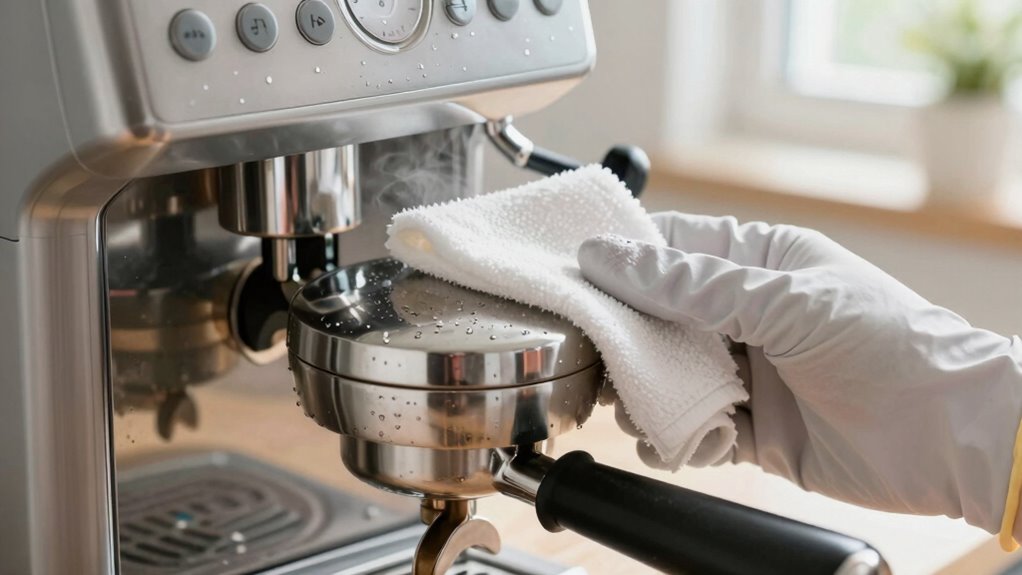

To clean your coffee maker the right way, you should clean it every 3-4 weeks, especially with daily use. Use natural solutions like vinegar or lemon juice to descale and remove mineral buildup, and regularly rinse all removable parts. Keep an eye out for signs of mold, odors, or dull flavor, and address blockages promptly. Following proper cleaning and maintenance methods will keep your machine running smoothly and guarantee great-tasting coffee every time—there’s more to discover if you keep going.

Get home appliances delivered free — and shop member deals
- Fast, free delivery on millions of items
- Access to Prime Big Deal Days deals on October 6–7
- Prime Video, Amazon Music and more included
Key Takeaways
- Regularly clean the water reservoir, brew basket, and removable parts with warm, soapy water.
- Descale the machine monthly using vinegar or specialized descaling solutions to remove mineral buildup.
- Follow manufacturer instructions for deep cleaning cycles and use eco-friendly cleaning agents.
- Wipe down exterior surfaces and focus on corners where residues tend to hide.
- Address any odors, stains, or blockages promptly to maintain optimal performance and flavor.
As an affiliate, we earn on qualifying purchases.
How Often Should You Clean Your Coffee Maker?
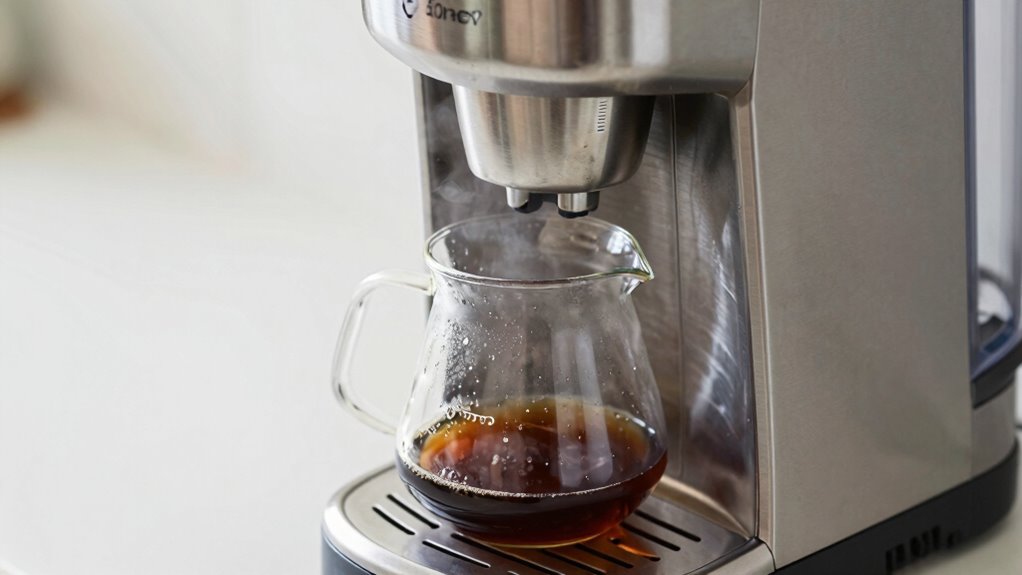
You should clean your coffee maker regularly to keep it functioning properly and guarantee your coffee tastes fresh. How often you clean it impacts both the coffee flavor and brewing temperature. If you let mineral buildup or old coffee residues accumulate, the brewing temperature may drop, leading to weak, under-extracted coffee. Typically, cleaning your machine every three to four weeks is ideal, especially if you brew daily. For households with hard water, more frequent cleaning is necessary to prevent scale buildup. Regular descaling helps maintain consistent brewing temperature, ensuring your coffee flavor stays rich and full-bodied. Using a clean machine also reduces the risk of unpleasant tastes or odors, keeping your coffee enjoyable every time. Proper cleaning habits are key to brewing delicious coffee consistently. Additionally, maintaining your equipment’s contrast ratio can help ensure that your brewing process remains precise and effective. Regularly checking your water quality can also help identify when more frequent cleaning is necessary to prevent mineral deposits from affecting performance. Incorporating descaling routines into your maintenance schedule can further extend the lifespan of your coffee maker and improve its overall efficiency. Being aware of your water hardness levels can help you determine the ideal cleaning frequency for your specific water supply. Ensuring proper cleaning techniques is essential for maintaining the longevity and optimal performance of your coffee maker.
As an affiliate, we earn on qualifying purchases.
Signs Your Coffee Maker Needs a Good Cleaning

Over time, your coffee maker can develop signs that it’s due for a thorough cleaning. If you notice the coffee flavor has become dull or bitter, it’s a clear indicator buildup is affecting taste. Additionally, you might see mineral deposits or mold around the water reservoir or basket. Regular maintenance is essential to prevent these issues from escalating. Staying aware of common appliance issues can help you identify problems early before they cause further damage. Ignoring these signs can lead to performance decline, which makes your machine less efficient and could potentially cause breakdowns. These signs suggest your machine’s cleaning needs aren’t just about taste—they impact its longevity. Regular cleaning keeps your coffee flavorful and ensures your machine functions smoothly longer. Preventive care is a key part of maintaining your appliance, helping to avoid costly repairs or replacement. Being mindful of filter and water quality can also prolong the life of your coffee maker and improve the taste of your brew. Ignoring these cues can lead to costly repairs or replacement, so stay attentive and clean when needed.
water reservoir cleaning brush for coffee maker
As an affiliate, we earn on qualifying purchases.
As an affiliate, we earn on qualifying purchases.
How to Deep Clean Your Coffee Maker in Easy Steps

Regularly spotting the signs that your coffee maker needs cleaning is a good start, but a thorough deep clean guarantees it stays in top shape. To do this, start by descaling with a vinegar solution to remove mineral buildup, which affects brewing temperature. Next, clean the coffee bean hopper and filter basket thoroughly. Use a soft brush to reach crevices and guarantee no residue remains. Here’s a quick guide:
| Step | Action | Tips |
|---|---|---|
| 1 | Descale with vinegar | Run a vinegar-water mix through brewing cycle |
| 2 | Clean removable parts | Wash with warm, soapy water |
| 3 | Wipe exterior | Use a damp cloth |
| 4 | Check brewing temperature | Guarantee proper heat for ideal extraction |
| 5 | Rinse thoroughly | Run plain water to clear vinegar |
Deep cleaning keeps your coffee bean flavor pure and maintains consistent brewing temperature. Performing regular cleaning routines can extend the lifespan of your coffee maker and ensure every cup tastes fresh. Additionally, understanding the signs of mineral buildup can help you identify when a deep clean is necessary before brewing quality is affected.
eco-friendly coffee maker cleaner
As an affiliate, we earn on qualifying purchases.
As an affiliate, we earn on qualifying purchases.
Best Cleaning Products and Natural Methods for Your Coffee Machine
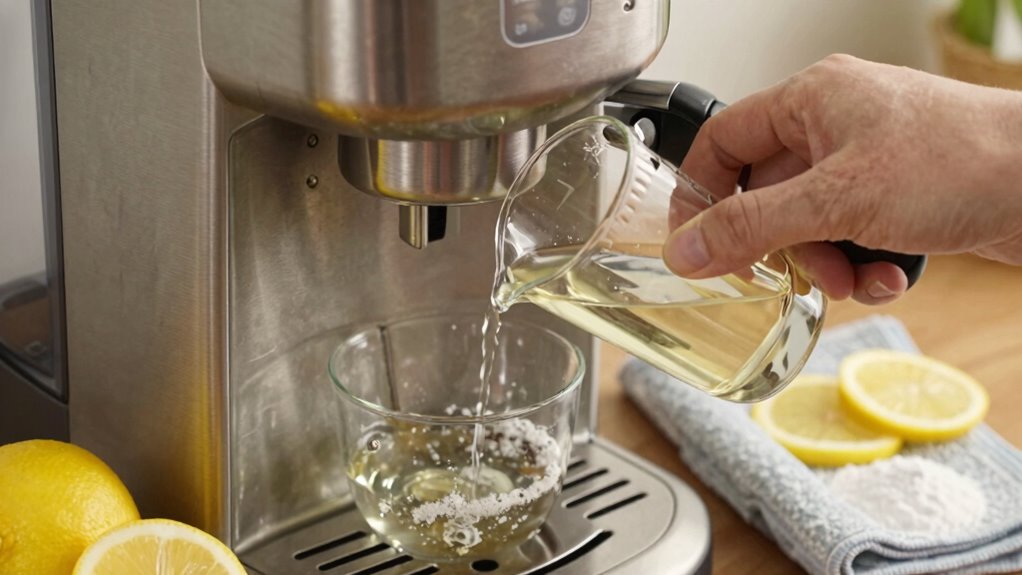
Choosing the right cleaning products can make a significant difference in maintaining your coffee machine’s performance and flavor. For natural methods, vinegar is your go-to for descaling, while baking soda works well for odors. Commercial descaling solutions are effective, but look for eco-friendly options. When cleaning your coffee grinder, use rice or rice flour to remove residue, and regularly clean your coffee bean storage to prevent mold and stale beans. Additionally, considering airless paint spraying tips can inspire you to approach maintenance with precision and care, ensuring your equipment stays in top condition. Proper equipment maintenance can extend the life of your coffee maker and improve your brewing experience. Regularly inspecting and cleaning water reservoirs helps prevent mineral buildup, ensuring consistent water quality for each brew. Incorporating preventive maintenance practices and understanding the synthetic lubricants used in your appliances can further enhance their longevity and performance.
How to Descale Your Coffee Maker and Remove Mineral Buildup

Mineral buildup, especially from hard water, can clog your coffee maker and affect the taste of your brew. To descale, fill the water reservoir with equal parts white vinegar and water. Run a brewing cycle, then stop halfway and let it sit for 30 minutes. Afterward, run two more cycles with plain water to rinse thoroughly. Regular descaling keeps your machine running smoothly and preserves flavor. Additionally, using cleaning routines regularly can prevent buildup and extend the lifespan of your appliance. Being aware of water quality and its impact on your machine can help you choose the best maintenance practices. Proper maintenance also involves recognizing clogging issues early to avoid costly repairs and ensure consistent performance.
Cleaning Removable Parts: Filters, Carafes, and Reservoirs
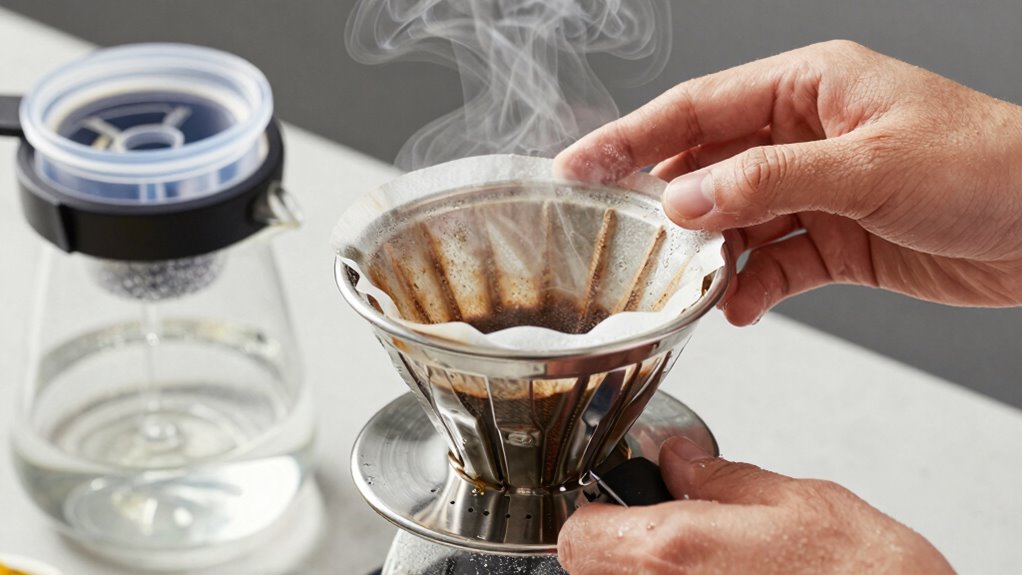
To keep your coffee tasting great, you need to regularly clean the removable parts like filters, carafes, and reservoirs. You should remove and wash each item thoroughly to eliminate built-up grime and coffee oils. Doing so guarantees your machine functions properly and your coffee stays fresh. Regular maintenance of your appliance components can also extend the lifespan of your coffee maker. Using accurate measurement tools can help ensure your cleaning routines are effective and thorough. Incorporating proper cleaning techniques can further improve the longevity and performance of your machine. Additionally, understanding the best cleaning practices specific to your model can optimize your maintenance routine. Being aware of manufacturer recommendations can help prevent damage and ensure safe cleaning.
Removing and Washing Filters
Have you ever wondered how to keep your coffee maker tasting fresh? Regularly removing and washing filters is key. Start by taking out the filter and rinsing it under warm water to remove coffee oils and residue. If your filter looks worn or clogged, consider filter replacement to maintain ideal brewing. Establish a cleaning schedule—ideally weekly—to prevent buildup. When washing, use mild soap and a soft brush to scrub away stubborn deposits. Remember, a clean filter ensures better-tasting coffee and prolongs your machine’s life. Keep an eye on filter condition and replace it as needed. Staying consistent with these steps guarantees fresh flavor and smooth operation every time you brew.
Cleaning Carafes and Reservoirs
Cleaning carafes and reservoirs is essential for maintaining your coffee maker’s performance and ensuring each brew tastes fresh. Regularly washing the carafe prevents residue buildup that can affect flavor and brewing temperature. Since coffee bean storage influences the oils and residue that can settle in the reservoir, it’s important to rinse it thoroughly after use. Use warm, soapy water to scrub the carafe and reservoir, paying attention to corners where residue may hide. For stubborn stains, a mixture of vinegar and water works well. Keeping these parts clean helps your coffee maker maintain ideal brewing temperature, which is critical for extracting the best flavor. Proper cleaning not only prolongs the life of your machine but also guarantees a delicious, fresh cup every time.
Tips to Keep Your Coffee Maker Mold-Free and Bacteria-Free
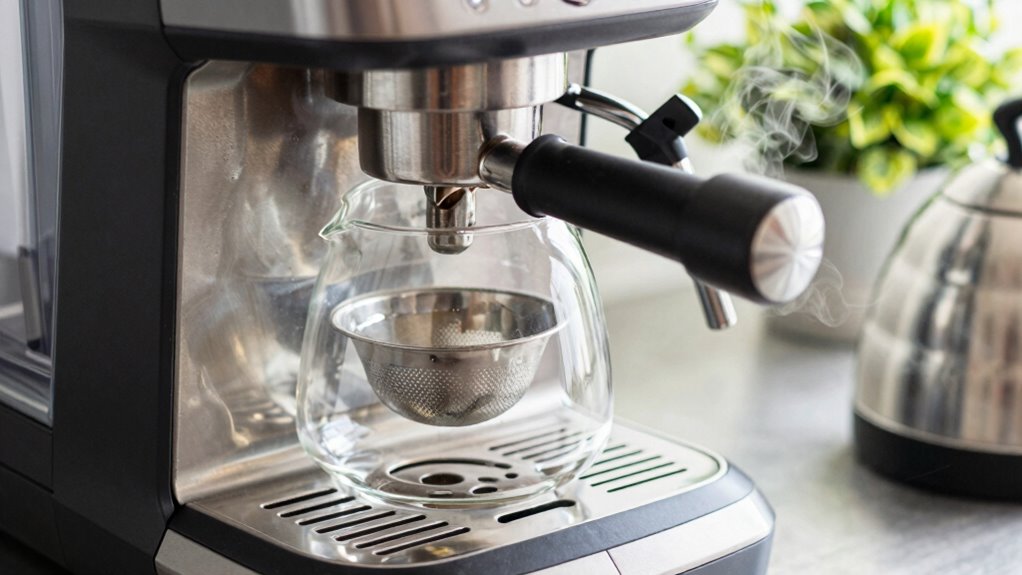
To keep your coffee maker mold-free and bacteria-free, regular descaling is essential to remove mineral buildup. Using natural cleaning solutions like vinegar or lemon juice can effectively sanitize without harsh chemicals. Incorporating these tips into your routine helps guarantee your coffee stays fresh and safe to enjoy.
Regularly Descale Your Machine
Regular descaling is essential to keep your coffee maker functioning properly and to prevent mold and bacteria buildup. Over time, mineral deposits can hinder coffee brewing and affect machine calibration. To avoid this, descale your machine regularly, especially if you notice slower brewing or bitter taste.
- Use a descaling solution or vinegar, following your machine’s instructions.
- Run a brew cycle with the solution, then rinse thoroughly.
- Clean removable parts for thorough sanitation.
- Perform a water-only cycle afterward to clear residual solution.
Descaling improves coffee flavor and maintains peak performance, ensuring your coffee maker brews at the right temperature and pressure. Regular maintenance prevents buildup, prolonging your machine’s lifespan and keeping every cup fresh and safe.
Use Natural Cleaning Solutions
Natural cleaning solutions are an effective way to keep your coffee maker free from mold and bacteria without relying on harsh chemicals. You can use vinegar or baking soda, which are safe and eco-friendly. These solutions break down mineral buildup and eliminate germs, just like how a coffee plant’s natural oils can fight off mold. Remember, the quality of your coffee depends on how well you clean your machine. Since coffee bean roasting releases oils that can harbor bacteria, using natural cleaners helps keep these oils in check. Regularly rinsing with vinegar or baking soda helps prevent mold growth and keeps your coffee tasting fresh. By choosing natural solutions, you protect both your health and the environment while maintaining a clean, safe coffee maker.
Why Your Coffee Tastes Off and How to Fix It

If your coffee doesn’t taste quite right, it’s often due to buildup or lingering residues that affect flavor. These residues can alter the coffee flavor and disrupt the brewing temperature, leading to a dull or bitter taste. To fix this, start by cleaning your machine thoroughly.
- Check for mineral deposits and descale regularly
- Make sure the brewing temperature stays within the ideal range
- Use fresh, filtered water for better flavor
- Clean the coffee basket and carafe frequently
Long-Term Maintenance Tips for a Fresh Brew Every Time
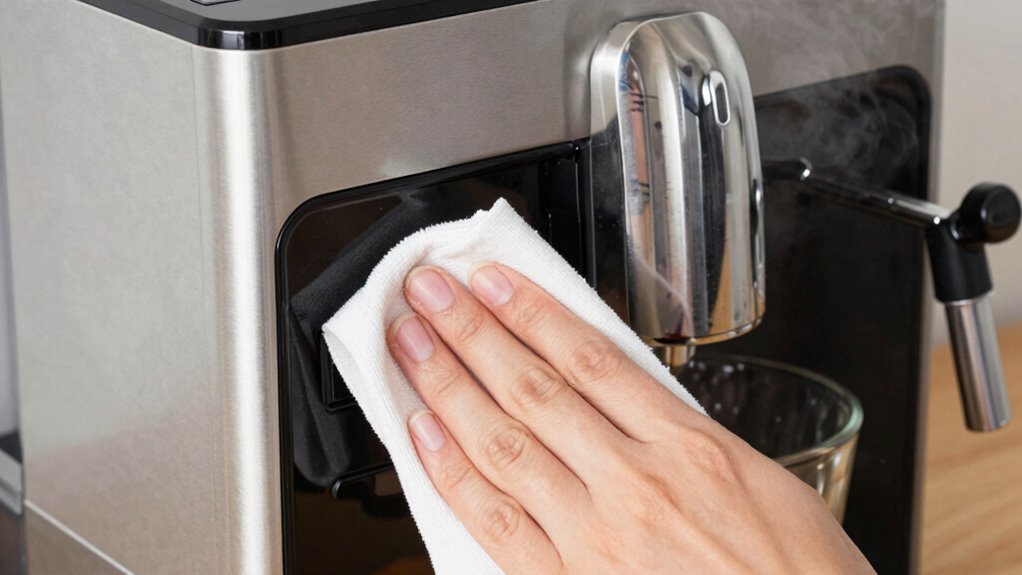
Maintaining your coffee maker regularly is key to guaranteeing every brew tastes fresh and vibrant. Consistent cleaning and mindful adjustments help preserve flavor, especially when choosing different coffee bean varieties. Use fresh, filtered water and keep the brewing temperature ideal—around 195-205°F—to extract the best flavor without bitterness.
| Tip | Benefit |
|---|---|
| Regular descaling | Prevents mineral buildup, prolongs machine life |
| Store coffee beans properly | Maintains freshness and flavor |
| Monitor brewing temperature | Ensures balanced extraction for rich taste |
When to Call a Professional for Coffee Maker Repairs or Deep Cleaning

If your coffee maker keeps malfunctioning despite cleaning, it’s time to get professional help. Unusual odors or stubborn stains that won’t go away are signs you should seek expert assistance. Also, don’t ignore frequent or severe blockages—they can indicate bigger issues needing a technician’s attention.
Persistent Malfunctions Require Attention
Ever wonder when persistent coffee maker problems signal that it’s time to call in a professional? If you’ve tried cleaning myths or DIY repairs without success, it’s a sign to seek expert help. Common issues like inconsistent brewing, strange noises, or electrical problems often require professional attention. Don’t ignore warning signs that your machine isn’t functioning properly, as delaying repairs can cause further damage.
Consider calling a professional if:
- The coffee maker still brews weak or unevenly
- It emits unusual sounds despite cleaning efforts
- The machine won’t turn on or keeps shutting off
- You’ve exhausted DIY solutions without improvement
Persistent malfunctions indicate deeper issues that need expert diagnosis, saving you time, money, and frustration in the long run.
Unusual Odors or Stains
Persistent malfunctions can be a clear sign that your coffee maker needs more than just routine cleaning. Unusual odors, like a sour or burnt smell, often indicate mold buildup or bacteria that cleaning can’t fully eliminate. Similarly, stubborn stains on the carafe or inside the brewing chamber may signal mineral deposits or mold that require professional attention. If cleaning with vinegar or descaling agents doesn’t remove these odors or stains, it’s time to call in a specialist. Ignoring these signs can lead to health risks or further damage to your machine. Deep cleaning or repairs might be necessary to restore proper function and guarantee safe, flavorful coffee. When in doubt, consulting a professional saves you time and prevents potential complications.
Frequent or Severe Blockages
Frequent or severe blockages in your coffee maker often indicate a deeper issue that simple cleaning can’t resolve. If you notice persistent clogs despite regular blockage prevention, it’s time to contemplate professional help. These blockages can stem from mineral buildup or internal damage that cleaning frequency alone can’t fix. When to call a professional:
- Coffee brews very slowly or not at all despite regular descaling
- You experience frequent blockages even after thorough cleaning
- The machine makes unusual noises or leaks during operation
- Simple maintenance doesn’t improve water flow or brewing time
Addressing these issues promptly can prevent further damage and ensure your coffee maker functions smoothly. Don’t ignore severe or recurring blockages—professional repairs or deep cleaning may be necessary to restore performance and maintain proper blockage prevention.
Frequently Asked Questions
Can I Use Vinegar or Lemon Juice for Descaling My Coffee Maker?
Yes, you can use vinegar or lemon juice as alternative cleaning agents for natural descaling methods. These acids effectively break down mineral buildup in your coffee maker. To do this, fill the water reservoir with equal parts vinegar or lemon juice and water. Run a brew cycle, then follow with a water-only cycle to rinse thoroughly. These natural descaling methods are safe, affordable, and environmentally friendly options.
How Do I Clean a Coffee Maker With Built-In Grinder?
Think of your coffee maker with a built-in grinder as a finely-tuned orchestra. To keep it harmonious, start with coffee grinder maintenance—use a brush to remove grounds and oils. Next, run a brew cycle with water and a descaling solution to clean the water reservoir. This helps prevent buildup, ensuring your machine stays fresh and your coffee tastes perfect every time.
Is It Safe to Use Commercial Cleaning Tablets in My Coffee Machine?
Yes, using commercial cleaning tablets is safe for your coffee maker if you follow the manufacturer’s instructions. Regular cleaning frequency, typically once a month, helps prevent buildup. Make certain to use the right cleaning tools, like a soft cloth or brush, to avoid damaging parts. Always rinse thoroughly after using cleaning tablets to guarantee no residue affects your coffee’s taste. Proper maintenance keeps your machine functioning well and safe to use.
How Do I Prevent Mold Growth in My Coffee Maker?
To prevent mold growth in your coffee maker, you should regularly clean and dry all parts, especially the water reservoir and filter basket. Use a mixture of vinegar and water for deep cleaning, and guarantee you run a rinse cycle afterward. Good coffee machine maintenance also includes leaving the door open after use to air out and inspecting for mold spots. Consistent upkeep keeps your machine hygienic and mold-free.
Can I Use a Dishwasher to Clean Removable Parts?
Yes, you can use a dishwasher to clean removable parts if they’re dishwasher-compatible. Check your coffee maker’s manual or labels to guarantee they’re dishwasher safe. Remove the parts carefully and place them in the dishwasher’s top rack for thorough cleaning. This method helps eliminate residue and mold, keeping your coffee maker hygienic. Just make sure to dry all parts completely before reassembling to prevent mold growth.
Conclusion
Keeping your coffee maker clean isn’t just about great-tasting brews; it also extends its lifespan and prevents health issues. While some may worry about the effort involved, regular maintenance is quick and straightforward with the right methods. Think of it as an investment in better coffee and long-term savings. With a little routine, you’ll enjoy fresh, flavorful coffee every time—so don’t skip the cleaning. Your taste buds (and appliance) will thank you!
Cold & flu season Picks
humidifiers
As an affiliate, we earn on qualifying purchases.