
TL;DR
Ancient construction materials, such as Roman concrete and Egyptian bricks, continue to be remarkably durable today. Researchers are studying these materials to improve modern building practices and sustainability.
Recent scientific analyses confirm that certain ancient building materials, such as Roman concrete and Egyptian bricks, have endured for thousands of years with minimal deterioration, challenging assumptions about modern material durability.
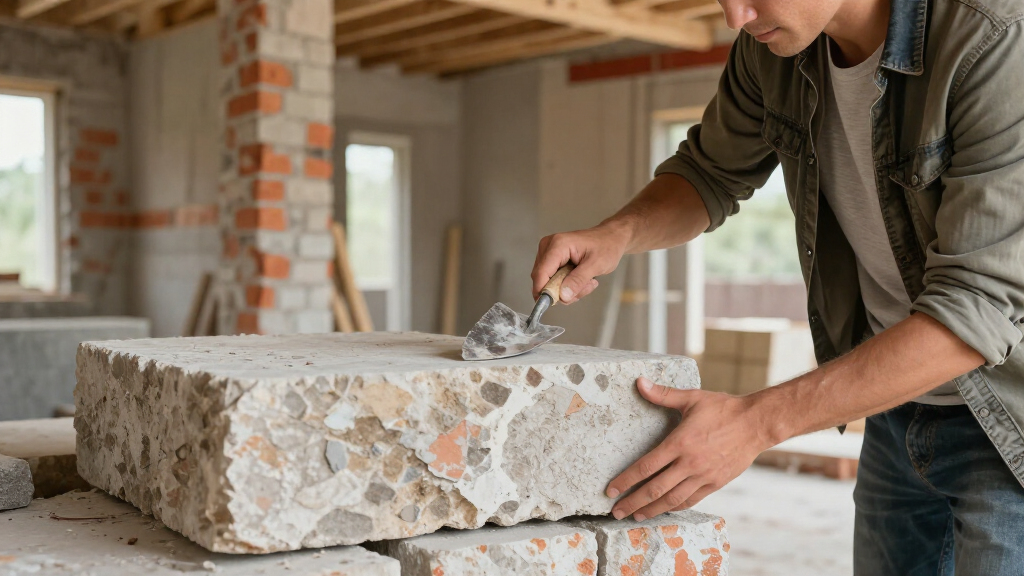
Researchers have identified that specific ancient materials possess chemical and structural properties that contribute to their longevity. For example, Roman concrete, made with volcanic ash, forms resilient bonds that resist cracking and environmental damage. Similarly, Egyptian mud bricks, crafted from locally sourced clay and straw, have withstood centuries of weathering in desert climates.
Studies published in 2024, including those by the University of California and the University of Cairo, have analyzed these materials using advanced microscopy and chemical testing, confirming their exceptional durability. These findings are prompting architects and engineers to reconsider traditional techniques and materials for sustainable construction today.
Implications of Ancient Materials for Modern Construction
This discovery highlights the potential for incorporating ancient materials and techniques into modern building practices, offering sustainable and long-lasting alternatives. It could lead to reduced reliance on synthetic materials, lower environmental impact, and buildings that require less maintenance over time.
Moreover, understanding the chemistry behind these ancient materials may inspire innovations in developing new, eco-friendly construction products that mimic their durability and resilience. This research underscores the importance of historical knowledge in advancing sustainable architecture.
As an affiliate, we earn on qualifying purchases.
Historical Use and Modern Rediscovery of Ancient Building Techniques
Ancient civilizations such as the Romans, Egyptians, and Chinese developed construction techniques that have lasted for millennia. Roman concrete, for example, was used in iconic structures like the Pantheon and aqueducts, which still stand today. For centuries, modern construction shifted toward industrial materials like steel and concrete, often with shorter lifespans.
Recent decades have seen a renewed interest in these ancient materials, driven by sustainability concerns and the desire for durable infrastructure. Advances in scientific analysis have allowed researchers to decode the composition and formation processes of these ancient materials, leading to new insights into their longevity and potential applications.
“The chemical stability of volcanic ash in Roman concrete is a key factor in its durability, providing insights into creating longer-lasting modern materials.”
— Dr. Maria Lopez, Materials Scientist at the University of California
As an affiliate, we earn on qualifying purchases.
Unanswered Questions About Ancient Material Replication
While studies confirm the durability of ancient materials, it remains unclear how easily these techniques can be adapted for large-scale modern construction. Researchers are still investigating the feasibility, cost, and environmental impact of scaling up ancient methods.
Additionally, the long-term performance of some ancient materials in different climates and under modern load conditions requires further testing.
sustainable construction materials
As an affiliate, we earn on qualifying purchases.
As an affiliate, we earn on qualifying purchases.
Future Research and Practical Applications in Construction
Researchers plan to conduct pilot projects incorporating ancient materials into contemporary buildings to evaluate their performance. Further studies aim to optimize these materials for modern use, focusing on scalability, safety, and environmental benefits.
Architects and engineers are also exploring hybrid approaches that combine ancient techniques with modern technology to develop sustainable, durable structures. Policy makers may consider revising building codes to incorporate lessons from history.
As an affiliate, we earn on qualifying purchases.
Key Questions
Can ancient building materials be used in modern construction?
Yes, recent research shows that some ancient materials, like Roman concrete and Egyptian bricks, have properties suitable for modern use, but further testing is needed to assess scalability and safety.
What makes Roman concrete so durable?
Roman concrete contains volcanic ash, which reacts with seawater over time to form resilient compounds, giving it exceptional longevity and resistance to cracking.
Are ancient materials environmentally friendly?
Many ancient materials are made from natural, locally sourced ingredients, which can reduce the environmental footprint compared to some modern synthetic materials.
What challenges exist in adopting ancient techniques today?
Challenges include scaling production, ensuring compliance with safety standards, and adapting ancient methods to meet modern building codes and climate conditions.
Will this research change building practices soon?
While promising, widespread adoption will require further research, pilot projects, and potential updates to construction regulations, which may take several years.
Source: rss