If your De’Longhi Magnifica Evo espresso machine’s grinder is making unusual noise, it can affect your coffee quality and indicate an underlying issue. Fortunately, many common causes are easy to diagnose and fix with simple steps. This guide provides practical, safe solutions to reduce grinder noise and keep your machine running smoothly.

Get home appliances delivered free with Prime
- Fast, free delivery on millions of items
- Prime Video, Amazon Music and more included
- Member-only deals all year
Before attempting any repairs, ensure your machine is unplugged and cooled down to avoid injury or damage. Follow each step carefully and consult the troubleshooting tips for best results.
Key Takeaways
| Identifying Noise Causes | Grinding noise may stem from debris, misalignment, or wear. |
| Regular Maintenance | Cleaning and descaling can significantly reduce noise levels. |
| Proper Settings | Adjusting grind size and dose can help minimize grinding noise. |
| When to Replace Parts | Worn burrs or damaged components may require replacement. |
Step 1: Turn Off and Unplug the Machine
Always disconnect your espresso machine from power before inspecting or servicing it. Wait at least 10 minutes for internal parts to cool down.
Step 2: Remove and Clean the Grinder
- Open the front access panel or hopper area as per your model’s instructions.
- Carefully remove the bean container and burr assembly.
- Use a soft brush or a vacuum to clear out any coffee grounds or debris lodged in the burrs or grinder chamber.
- Reassemble securely, ensuring all parts are correctly aligned.
Step 3: Check and Adjust Grind Settings
Locate the grind setting dial—decreasing the grind size (making it coarser) can reduce noise and improve grinding efficiency. Experiment with small adjustments and test the noise level after each change.
Step 4: Descale and Maintain the Machine
Mineral buildup can cause grinding issues. Use a descaling solution like De’Longhi EcoDecalk to remove limescale. Follow the descaler instructions carefully, and run a cleaning cycle to ensure smooth operation.
Step 5: Inspect for Worn or Damaged Parts
If noise persists after cleaning and adjusting, inspect the burrs for signs of wear or damage. Worn burrs often produce excessive noise and may need replacing. Consult your user manual or contact a service center for part replacement.
The Products in This Guide
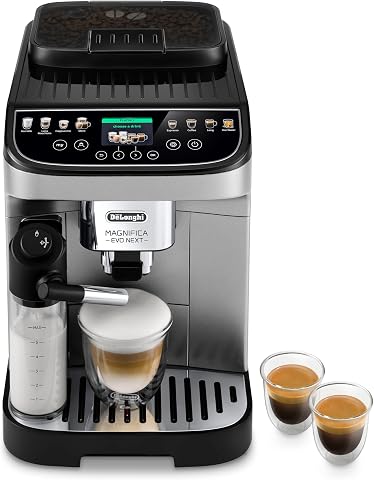
De’Longhi Magnifica Evo Next Fully Automatic Espresso Ma
- ✔ Power: 1450W
- ✔ Dimensions: 12 x 16 x 15 inches
- ✔ Weight: 22 pounds

De’Longhi Replacement Water Filter
- ✔ Filter Life: Up to 2 months
- ✔ Material: Activated carbon and ion exchange resin
- ✔ Compatibility: De’Longhi espresso machines
De’Longhi Magnifica Evo Next Fully Automatic Espresso Ma
The De’Longhi Magnifica Evo Next offers a fully automatic experience with a built-in conical burr grinder featuring 13 settings. It’s designed for consistent, high-quality espresso and milk-based drinks, making it a popular choice for home baristas.
Pros:
- Multiple grind settings
- Automatic cleaning functions
- Versatile drink options
- Compact design
Cons:
- Grinder noise can increase with wear
- Requires regular maintenance
- Burr replacement may be needed over time
Best for: Home users seeking a versatile, automated espresso machine
Not ideal for: Users preferring manual control or quieter operation
Bottom line: A highly capable espresso machine with customizable coffee options, requiring routine cleaning for optimal performance.
De’Longhi Replacement Water Filter
Using a water filter like the De’Longhi Replacement Water Filter helps prevent mineral buildup and enhances the longevity of your espresso machine while improving coffee flavor.
Pros:
- Improves water quality
- Reduces mineral deposits
- Easy to install
- Maintains machine efficiency
Cons:
- Needs replacement periodically
- Additional cost
- Limited to compatible models
Best for: Maintaining water quality and machine performance
Not ideal for: If your machine is not compatible or not due for filter change
Bottom line: A simple accessory that ensures cleaner water and better-tasting coffee, prolonging your machine’s lifespan.
Frequently Asked Questions
Why is my De’Longhi grinder making loud noises?
Loud grinding noises often result from debris buildup, misaligned burrs, or worn parts. Regular cleaning and adjustments can usually fix this issue.
Can I fix grinder noise myself?
Yes, most fixes involve cleaning the burrs, adjusting the grind settings, or replacing worn parts. Always unplug the machine and follow safety precautions.
How often should I descale my machine?
Descaling frequency depends on water hardness and usage, but typically every 2-3 months helps prevent mineral buildup and maintains performance.
When should I replace the burrs?
If you notice persistent noise, uneven grind size, or a decline in coffee quality, it may be time to replace the burrs. Consult your manual or service provider.
Keep Your Espresso Quiet and Delicious
Addressing grinder noise on your De’Longhi espresso machine is straightforward with regular cleaning, proper adjustments, and timely part replacements. Routine maintenance not only reduces noise but also ensures your machine brews consistently perfect coffee. With a little attention, you can enjoy quiet mornings and delicious espresso every time.
Affiliate disclosure: As an Amazon Associate we earn from qualifying purchases. Prices and availability are accurate as of the time of publishing.
Fall yard work Picks
leaf blowers
As an affiliate, we earn on qualifying purchases.