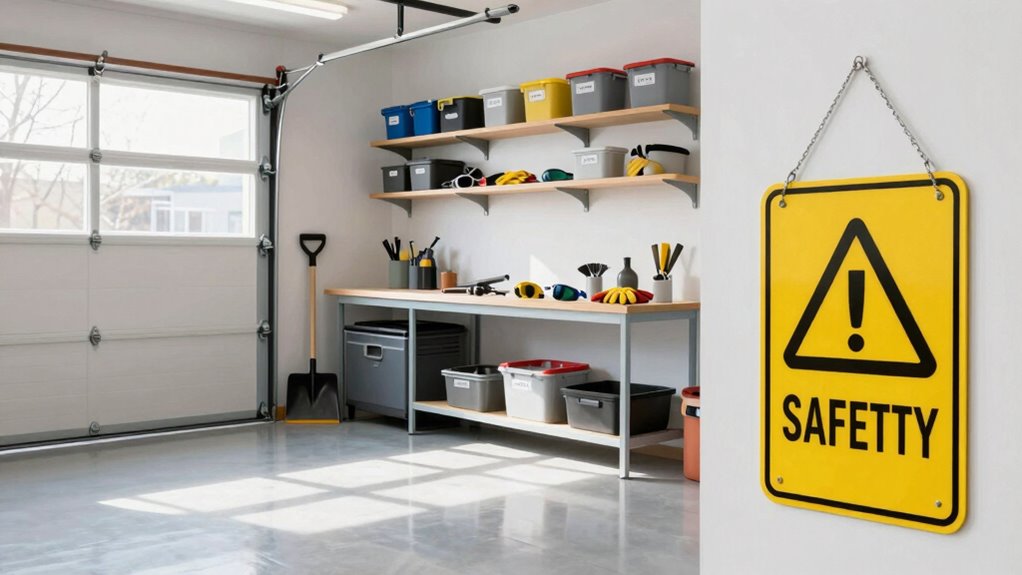

A garage safety checklist for every season helps you stay organized, secure, and hazard-free all year. You should regularly inspect and maintain your garage, store chemicals safely, and keep tools properly stored. Pay special attention to seasonal needs like snow removal and weatherproofing in winter, or managing heat and humidity in summer. Ensuring good lighting, ventilation, and security measures is essential. Keep your space safe year-round—continue to explore these tips for a safer, more efficient garage.

Get home appliances delivered free with Prime
- Fast, free delivery on millions of items
- Prime Video, Amazon Music and more included
- Member-only deals all year
Key Takeaways
- Regularly inspect and maintain electrical systems, lighting, and safety features throughout all seasons.
- Properly store chemicals, tools, and seasonal equipment to prevent accidents and environmental hazards.
- Conduct seasonal checks on garage doors, weatherproofing, and ventilation to ensure safety and functionality.
- Keep walkways clear of snow, ice, debris, and clutter to prevent slips and falls year-round.
- Upgrade security measures like locks and cameras, and trim vegetation to enhance safety in every season.
As an affiliate, we earn on qualifying purchases.
Why Garage Safety Matters Year-Round
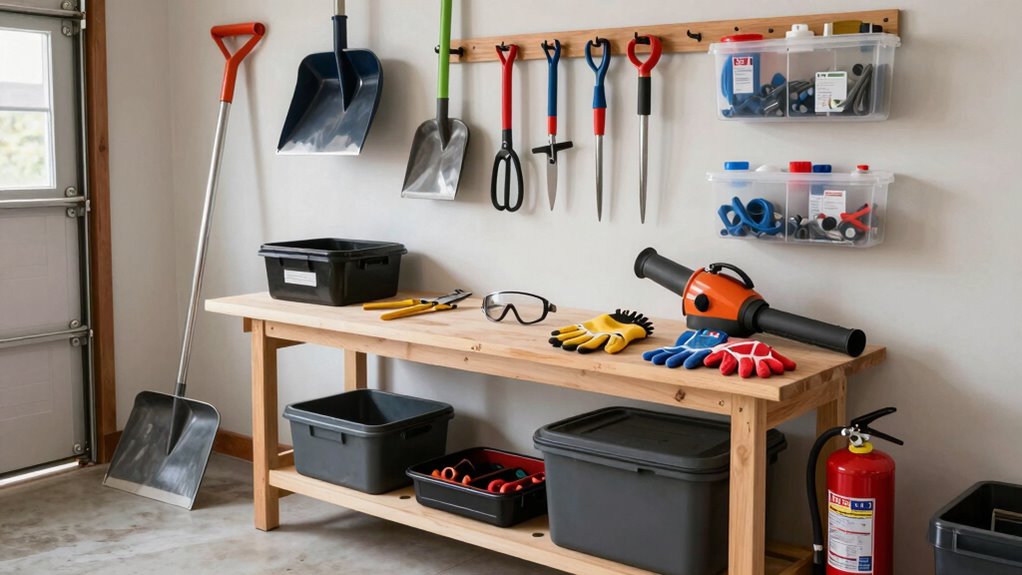
Your garage is a hub of activity year-round, making safety a top priority no matter the season. Proper garage organization helps prevent accidents by reducing clutter and ensuring tools and equipment are stored safely. When everything has its place, you minimize the risk of trips, falls, and injuries. Fire prevention is equally important; keeping flammable materials away from heat sources and ensuring electrical wiring is up to code can prevent dangerous fires. Regularly inspecting your garage for hazards and maintaining clear pathways also enhances safety. Staying vigilant throughout the year means you’re prepared for emergencies and can enjoy your garage without worry. Implementing digital safety concepts can further help monitor and improve your garage safety practices over time. Additionally, understanding how to identify and control hazardous materials in your garage can significantly reduce the risk of accidents and health issues. Incorporating risk assessment strategies into your routine can help you proactively address potential dangers before they become serious. Regularly checking your electrical wiring and outlets, especially when using extension cords, can prevent electrical fires and overloads. Conducting periodic safety audits can help you stay ahead of potential hazards and keep your garage a secure space.
garage chemical storage containers
As an affiliate, we earn on qualifying purchases.
As an affiliate, we earn on qualifying purchases.
How to Store Chemicals Safely in Your Garage
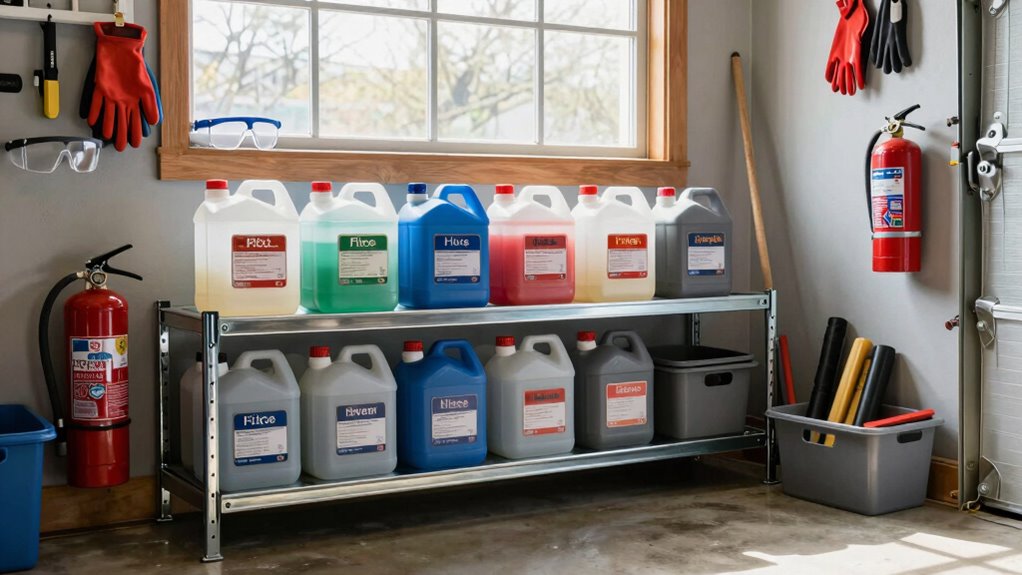
To keep your garage safe, store chemicals in proper containers that won’t leak or break. Make sure they’re placed securely so they won’t tip over, and choose well-ventilated areas to prevent fumes from building up. Taking these steps helps protect you and your family from potential hazards. Additionally, household guides can provide helpful tips on proper chemical storage and safety precautions. Incorporating eco-friendly natural pools ideas can also inspire safer and more sustainable outdoor storage solutions that blend with your backyard environment. Understanding psychological safety can further enhance how you organize and maintain your space to reduce stress and accidental mishaps. To make your safety routine even easier, consider trying a free online tool to quickly check and adjust your storage practices for optimal safety. Proper gear care and organization can also contribute to a safer and more efficient garage environment.
Proper Container Storage
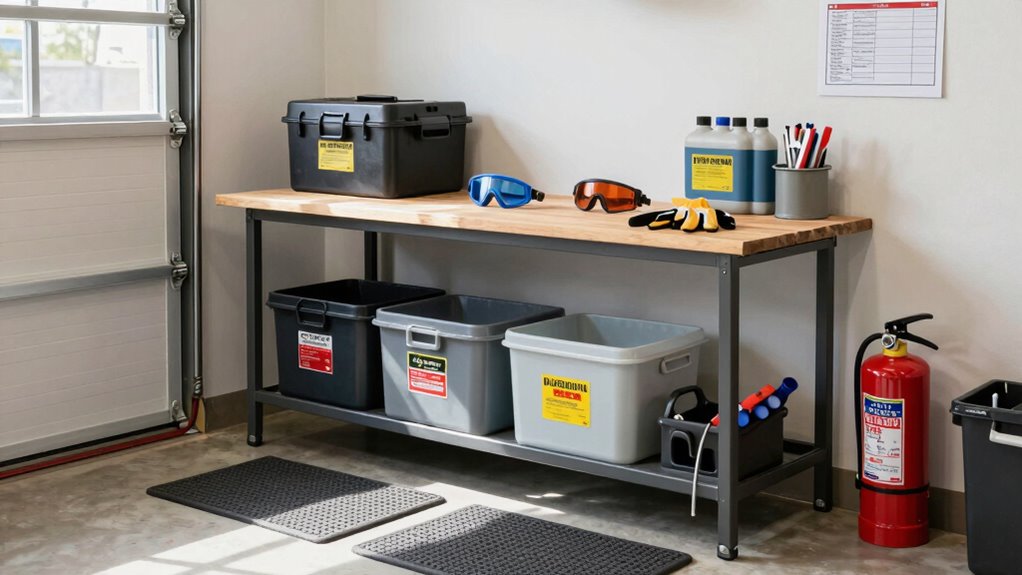
Proper container storage is essential for maintaining a safe garage environment. You want to prioritize container organization to prevent accidents and spills. Use clear, labeled storage containers to easily identify chemicals and other hazardous materials. Keep these containers in a designated area, away from heat sources and direct sunlight, to avoid degradation or leaks. Confirm lids are tightly sealed before storing to prevent fumes and contamination. Regularly check containers for cracks or corrosion, replacing damaged ones immediately. Stacking containers neatly not only saves space but also reduces the risk of falling or tipping. Proper storage safety practices can further help you create a secure environment. Additionally, understanding the importance of resale value for certain items can guide you in deciding which materials to keep or discard, ensuring your garage remains organized and safe. Maintaining proper ventilation is also crucial to disperse any potentially harmful fumes and prevent buildup. Ensuring proper water management in your garage can help prevent moisture buildup that may lead to corrosion or mold, further protecting stored chemicals. Proper ventilation can also mitigate the effects of indoor air quality issues related to stored chemicals.
Secure Chemical Placement
Storing chemicals securely in your garage helps prevent accidents and exposure hazards. To guarantee safe chemical storage, always keep chemicals in clearly labeled, tightly sealed containers. Use containers made of durable, chemical-resistant materials to prevent leaks or spills. Store chemicals upright on sturdy shelves, away from heat sources and direct sunlight, to maintain container safety. Keep hazardous substances separate from other items, especially food or personal belongings. Regularly inspect containers for cracks, corrosion, or leaks, and replace damaged ones immediately. Use secondary containment trays if needed to contain spills. Proper placement and container safety reduce the risk of accidental mixing or exposure. Additionally, understanding hazardous material handling and proper storage techniques can help you implement better storage practices. Maintaining awareness of cloud service vulnerabilities can also highlight the importance of safeguarding critical information and supplies. Being aware of the history of pinball machines can also provide insights into the importance of safety and regulation in recreational equipment. Incorporating cultural artifacts like Indonesian masks into your decor can serve as a reminder to prioritize safety and tradition in your space. By following these steps, you’ll keep your garage safer for everyone and avoid costly accidents.
Ventilated Storage Areas
Ensuring your garage has adequate ventilation is essential for safely storing chemicals. Proper airflow prevents fumes from building up, reducing health risks and fire hazards. Use ventilated storage areas or install vents to enhance air circulation. Store chemicals in sturdy, clearly labeled storage bins designed for chemical containment, and keep them away from pests that might damage containers or cause contamination. Avoid storing chemicals in sealed, airtight containers that can trap fumes. Regularly check and clean storage areas to prevent buildup of hazardous vapors. Additionally, place pest control products in separate, secure locations to prevent accidental mixing or spills. Good ventilation practices combined with organized storage help maintain a safer garage environment, protecting you and your household from potential chemical hazards. Incorporating regional flavor insights can also help you understand best practices based on your area’s climate and environment. Properly managing chemical storage safety is crucial for minimizing risks associated with stored chemicals in your garage, especially in ventilated storage areas. Proper airflow management is essential for reducing the accumulation of fumes and maintaining a safe storage environment.
garage lighting and security cameras
As an affiliate, we earn on qualifying purchases.
As an affiliate, we earn on qualifying purchases.
How to Keep Garage Doors Safe in Every Season
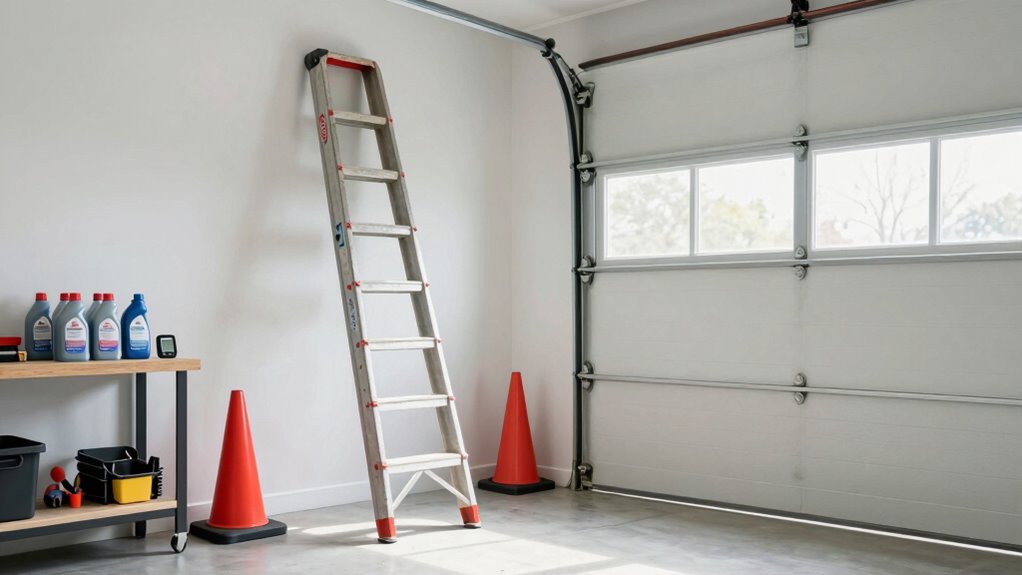
Garage doors face different challenges throughout the year, so it’s essential to adjust your maintenance routine accordingly. Regular garage door lubrication keeps moving parts smooth, preventing wear caused by seasonal temperature changes. In warmer months, check for signs of rust or corrosion and apply lubricant as needed. During extreme heat or cold, verify weatherstripping is intact to maintain proper seasonal weatherproofing. This helps keep debris out and prevents moisture buildup, which can cause damage. Inspect the tracks for debris or misalignment, and tighten any loose hardware. By staying proactive with lubrication and seasonal weatherproofing, you reduce the risk of breakdowns and extend the lifespan of your garage door, ensuring safe and reliable operation year-round.
garage weatherproofing and insulation kits
As an affiliate, we earn on qualifying purchases.
As an affiliate, we earn on qualifying purchases.
Winter Garage Safety Tips: Prevent Ice and Snow Hazards
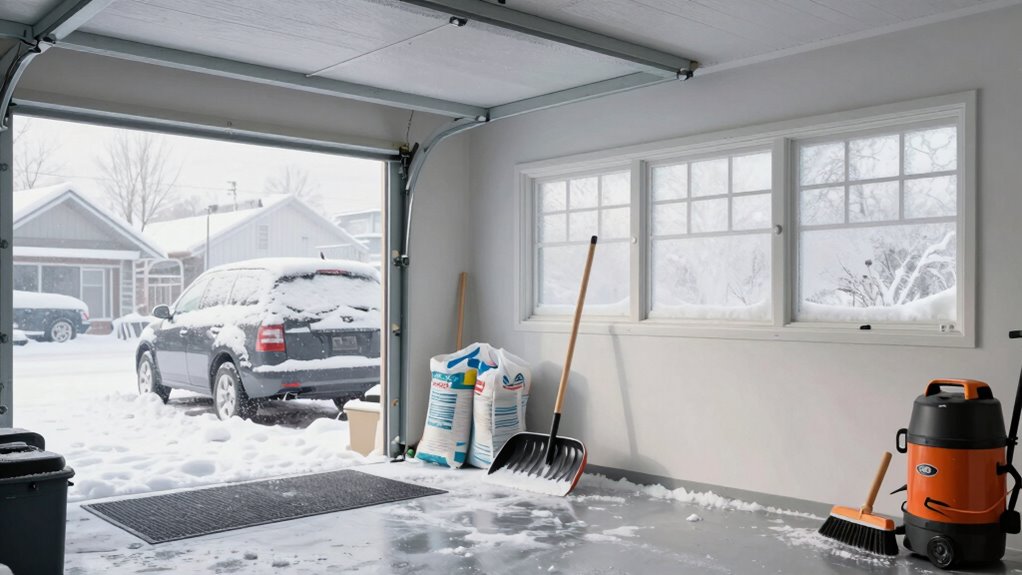
Winter weather can create dangerous ice and snow buildup around your garage, increasing the risk of slips, falls, and damage to your door. To stay safe, regularly perform ice removal and clear snow accumulation from your driveway and garage entrance. Use salt or ice melt to prevent ice formation and guarantee pathways are safe. Keep a snow shovel nearby for quick removal during storms.
| Tip | Why It Matters | How to Do It |
|---|---|---|
| Ice removal | Prevents slips | Use salt or ice melt |
| Snow accumulation | Keeps pathways clear | Shovel regularly |
| Garage door safety | Avoid damage | Clear snow from door tracks |
Taking these steps minimizes hazards and keeps your garage safe during winter.
Summer Garage Safety Tips: Managing Heat and Humidity
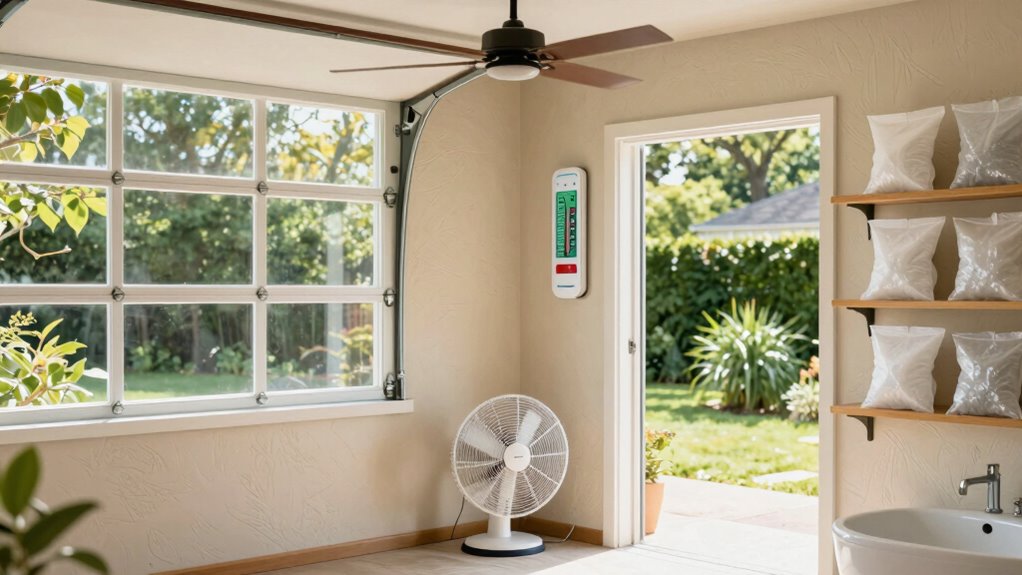
As temperatures rise, managing heat and humidity in your garage becomes essential to protect your belongings and maintain a safe environment. Effective heat management prevents equipment from overheating and reduces the risk of fire hazards. Ventilate your garage by opening windows or installing exhaust fans to promote air circulation. Humidity control is equally important, as excess moisture can cause rust, mold, and damage to stored items. Use dehumidifiers or silica gel packs to reduce moisture levels. Keep electrical wiring and appliances away from damp areas to prevent electrical issues. Regularly monitor temperature and humidity levels with a hygrometer. By taking these steps, you create a safer, more stable environment that preserves your tools and prevents summer-related hazards.
How to Keep Your Garage Organized to Prevent Accidents
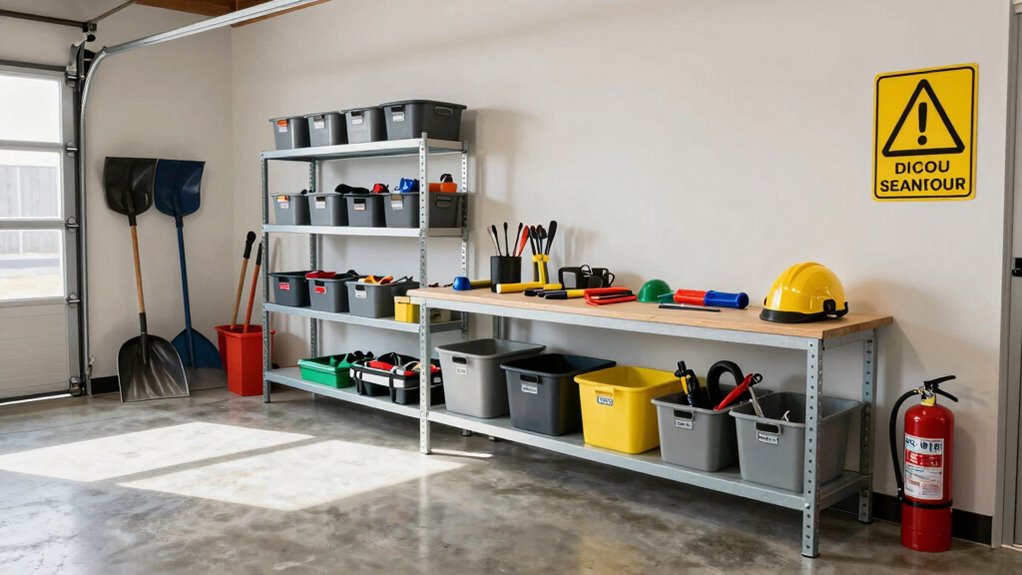
Keeping your garage organized is essential for preventing accidents and ensuring safety. Proper garage organization reduces clutter, making tools and equipment easily accessible while minimizing trip hazards. Use effective storage solutions like shelves, hooks, and bins to keep items off the floor. Categorize your belongings to streamline retrieval and prevent dangerous stacking. Consider the table below for smart storage ideas:
| Item Type | Storage Solution | Safety Tip |
|---|---|---|
| Heavy tools | Wall-mounted hooks | Keep low for easy access |
| Small parts | Clear bins | Label for quick identification |
| Seasonal gear | Overhead racks | Store out of the way when not in use |
| Chemicals | Locked cabinets | Keep away from children |
Implementing these strategies keeps your garage safe and organized year-round.
Maintaining Lighting and Ventilation for Safety All Year
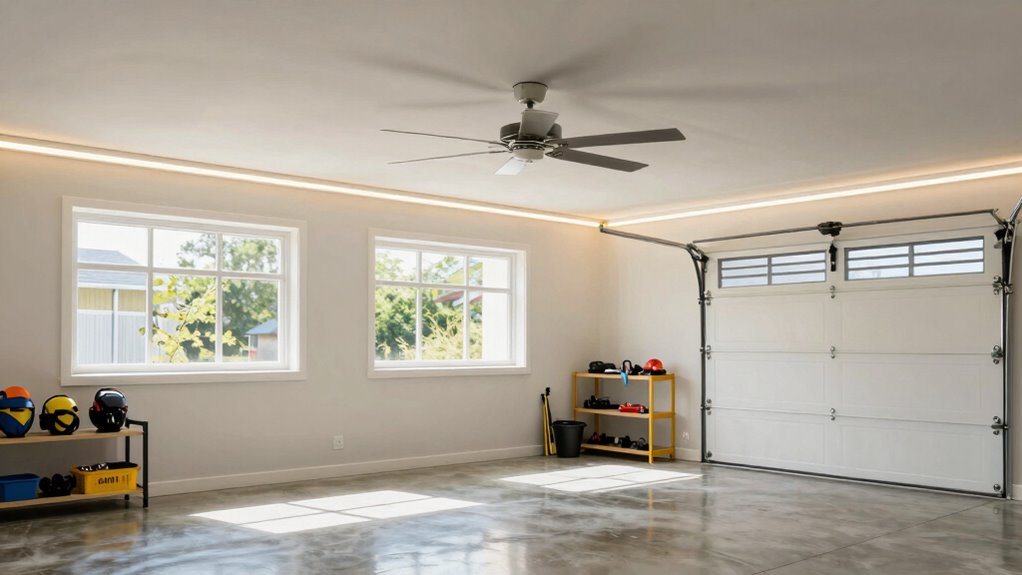
To keep your garage safe year-round, focus on proper lighting placement so everything is clearly visible, even in corners. Regularly check your ventilation to guarantee fresh air circulates and avoids buildup of fumes or moisture. Make sure nothing blocks your lights or vents, so they work effectively whenever you need them.
Proper Lighting Placement
Proper lighting placement is essential for maintaining a safe garage environment throughout the year. You should install bright, energy-efficient LED lighting fixtures in key areas, guaranteeing no dark corners where accidents could happen. Position these lights overhead and along the sides to provide even illumination. Incorporate motion sensors to automatically turn lights on when you enter, saving energy and enhancing safety. Place sensors near workbenches, entry points, and storage areas for quick visibility. Avoid placing lights directly over workspaces that could cause glare. Regularly check that all fixtures are functioning properly and replace any dim or flickering bulbs immediately. Proper placement of LED lighting and motion sensors ensures you have clear visibility, reduces the risk of slips or trips, and keeps your garage safe year-round.
Regular Ventilation Checks
Regular ventilation checks are essential for maintaining a safe and healthy garage environment throughout the year. Good airflow improves air quality and helps prevent musty odors, mold, and lingering fumes. Regularly inspect vents and exhaust fans to guarantee they’re unobstructed and functioning properly. Proper ventilation also aids pest control by reducing humidity and dampness that attract insects and rodents. Consider adding or upgrading vents if air feels stale or stuffy. Keep an eye out for blockages like leaves or debris. Use the following table for quick ideas:
| Action | Benefit |
|---|---|
| Clean vents regularly | Improve air quality and airflow |
| Check for blockages | Prevent pests and maintain ventilation |
| Use exhaust fans | Remove fumes and moisture |
Avoiding Light Blockages
Ensuring your garage remains well-lit and ventilated helps improve safety and prevents accidents. Light blockages can occur when clutter or poorly planned storage organization obstructs windows or light fixtures. To prevent this:
- Regularly check your lighting setup, ensuring bulbs are working and fixtures are free of dust or debris.
- Keep pathways clear by organizing stored items, especially near windows and vents, to maximize natural light and airflow.
- Use transparent storage containers and wall-mounted shelves to reduce clutter and maintain clear sightlines to light sources.
Garage Tool Safety Tips for Every Season
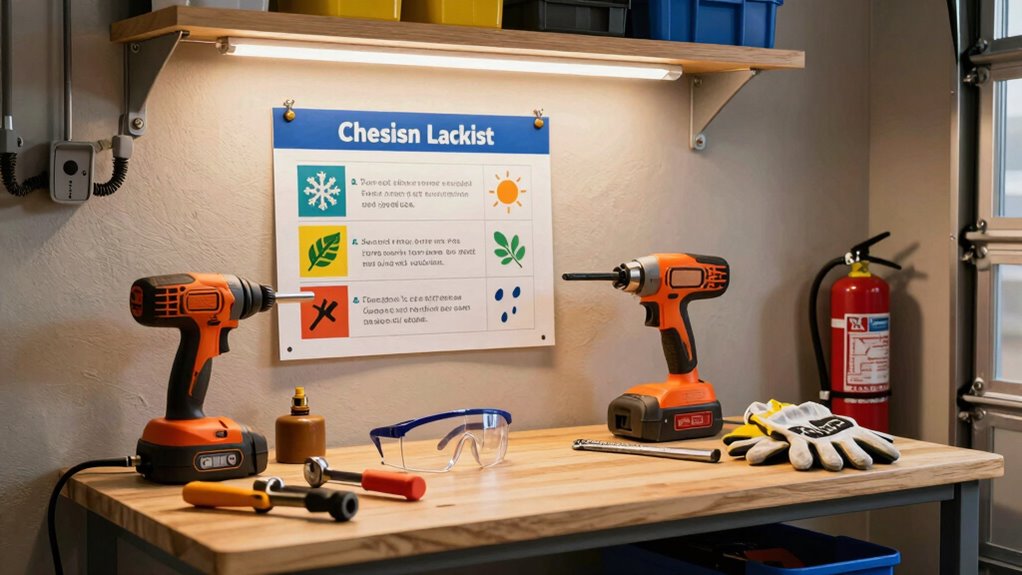
No matter the season, handling garage tools safely is essential to prevent accidents and injuries. Always inspect your tools before use, ensuring they’re in good condition. Proper garage door maintenance is critical; check for loose or broken parts that could cause malfunctions. When storing tools, keep them organized in designated areas to avoid tripping hazards. Use storage cabinets or wall hooks to keep sharp or heavy tools out of reach and off the floor. Wear appropriate safety gear, such as gloves and goggles, when operating power tools. During colder months, avoid using frozen or rusted tools. In warmer seasons, stay hydrated and take breaks to prevent fatigue. Following these tips helps reduce risks and keeps your garage safe year-round.
Regularly Review and Update Your Garage Safety Checklist
You should regularly review and update your garage safety checklist to keep it effective. Schedule routine inspections and make adjustments for seasonal changes to address new hazards. Staying proactive helps guarantee your garage remains a safe space year-round.
Schedule Routine Inspections
Regularly reviewing and updating your garage safety checklist guarantees it stays effective and relevant as conditions change. Schedule routine inspections to maintain garage security and pest prevention. During these checks:
- Verify that locks and security systems work properly, ensuring your garage remains secure.
- Inspect for signs of pests, like droppings or gnaw marks, and take steps to eliminate entry points.
- Examine electrical wiring, outlets, and stored chemicals to prevent fire hazards.
Adjust for Seasonal Changes
As the seasons change, so do the risks and conditions in your garage. You need to regularly review and update your garage safety checklist to stay ahead. During colder months, make certain your garage remains well-ventilated to prevent mold and moisture buildup. Keep garage cleanliness a priority by removing clutter that could hide pests or create fire hazards. In spring and summer, check for pest prevention, sealing cracks and gaps where insects or rodents might enter. Adjust your safety measures based on seasonal tools and equipment, like snow shovels or garden supplies. Staying proactive helps you identify new hazards, maintain a safe environment, and keep pests at bay. Regular updates ensure your garage remains safe and functional year-round.
Simple Steps to Keep Your Garage Safe and Secure Year-Round
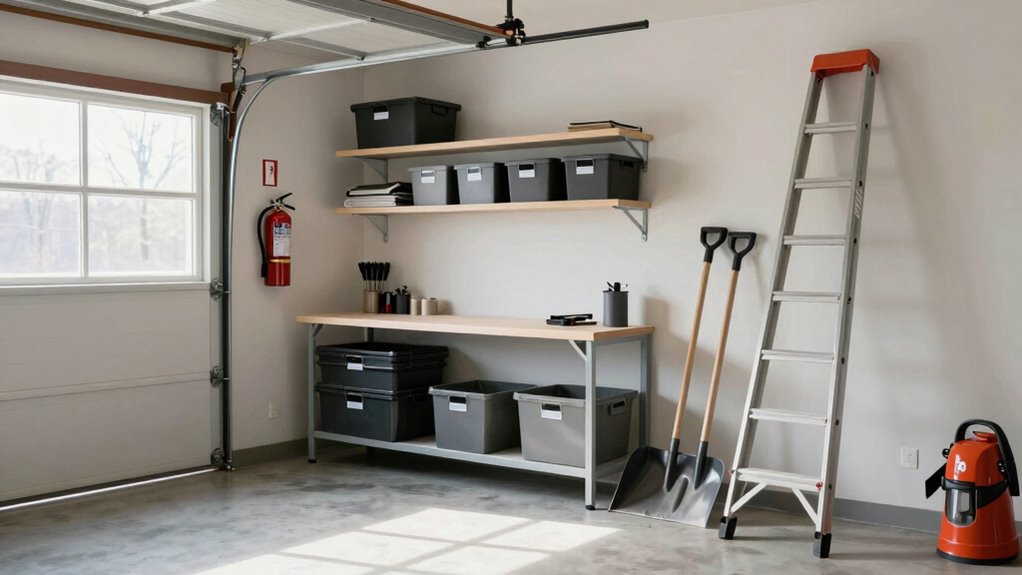
Maintaining a safe and secure garage throughout the year requires consistent attention to detail and proactive measures. To guarantee safety, follow these simple steps:
Consistent upkeep and proactive measures are key to keeping your garage safe and secure year-round.
- Regularly inspect and update your garage decor to eliminate clutter and improve visibility, reducing trip hazards.
- Keep your landscaping ideas in check by trimming overgrown bushes or trees near the garage to prevent unwanted access and improve security.
- Install sturdy locks on doors and windows, and consider security cameras for extra peace of mind.
Frequently Asked Questions
How Often Should I Inspect My Garage for Safety Hazards?
You should inspect your garage for safety hazards at least once a month. During each check, focus on garage organization to prevent tripping hazards and guarantee pathways are clear. Look for lighting improvements to eliminate dark spots that could cause accidents. Regular inspections help you spot potential issues early, like loose shelves or faulty wiring, so you can fix them promptly, keeping your garage safe and functional year-round.
What Safety Gear Should I Use When Working in the Garage?
When working in your garage, always wear personal protective equipment like gloves, safety goggles, and a dust mask to protect against hazards. Make certain proper ventilation by opening windows or using fans, especially when handling chemicals or fumes. These safety measures reduce risks of injury or inhalation of harmful substances. Prioritize your safety with the right gear and good airflow, making your garage workspace safer and more comfortable.
Are There Specific Fire Safety Measures for Garages?
Yes, there are specific fire safety measures you should follow in your garage. You need to guarantee a fire extinguisher is easily accessible and properly placed, ideally near exits and potential fire hazards. Prioritize electrical safety by inspecting cords and outlets regularly, avoiding overloads, and unplugging tools when not in use. Keep flammable materials stored safely, and install smoke detectors for added protection. These steps help prevent garage fires effectively.
How Can I Childproof My Garage Year-Round?
To childproof your garage year-round, install child locks on cabinets and doors containing hazardous items, and keep dangerous tools out of reach. Use safety signage to remind everyone of potential risks and reinforce safety rules. Regularly check locks and signage to make certain they’re in good condition. Keep a clear, uncluttered space, and always supervise children when they’re in the garage to prevent accidents.
What Are Common Garage Safety Mistakes to Avoid?
You should avoid common garage safety mistakes like neglecting hazardous chemicals and clutter management. Store chemicals properly in labeled, sealed containers and keep them away from children and heat sources. Regularly tidy up your garage to prevent tripping hazards and ensure pathways are clear. Don’t leave tools or heavy items on high shelves where they could fall. By staying vigilant about these issues, you markedly reduce the risk of accidents.
Conclusion
Keeping your garage safe all year might seem like a tall order, but with these simple steps, you’re well on your way. Regularly review your safety checklist, store chemicals properly, and stay vigilant with maintenance—just like a seasoned knight guarding their castle. Remember, safety isn’t a one-time quest but an ongoing adventure. Stay proactive, adapt to the seasons, and your garage will remain a secure, cozy haven for all your gear and gadgets.
NFL season / tailgating Picks
team gear
As an affiliate, we earn on qualifying purchases.