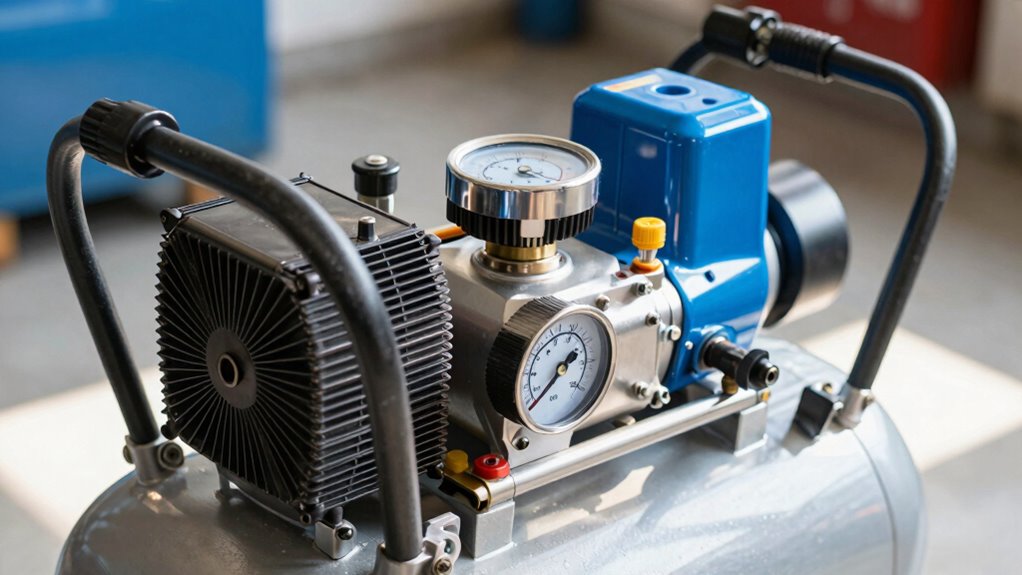

To select the right air compressor CFM with no guesswork, first check your tools’ specifications for their required CFM and match that with your compressor’s rating at the correct pressure. Avoid overshooting or undershooting, as both can cause tools to underperform or wear out faster. Select a durable model from a trusted brand, and maintain it regularly. Keep learning how to accurately determine your needs to guarantee ideal tool performance and efficiency.
Key Takeaways
- Determine each tool’s specific CFM requirements from manufacturer specifications to ensure proper airflow.
- Match the compressor’s CFM rating at the correct pressure to your tools’ needs for optimal performance.
- Avoid oversizing or undersizing CFM to prevent energy waste, tool damage, or underperformance.
- Use the highest CFM demand among multiple tools as your baseline for selecting a compressor.
- Choose a durable, reputable compressor with adjustable CFM settings for flexibility and long-term reliability.

Heavy Duty in-LINE Compressed AIR Pressure Regulator for AIR Compressor, 7 to 215 PSI Adjustable, HIGH Flow Rate, Wall Bracket and Gauge Included (1/2" NPT, 130 CFM)
250 PSI MAX INPUT PRESSURE, 215 MAX OUTPUT PRESSURE, WALL MOUNTING BRACKET & GAUGE INCLUDED.
As an affiliate, we earn on qualifying purchases.
As an affiliate, we earn on qualifying purchases.
Why Choosing the Right CFM Is Critical for Your Air Tools
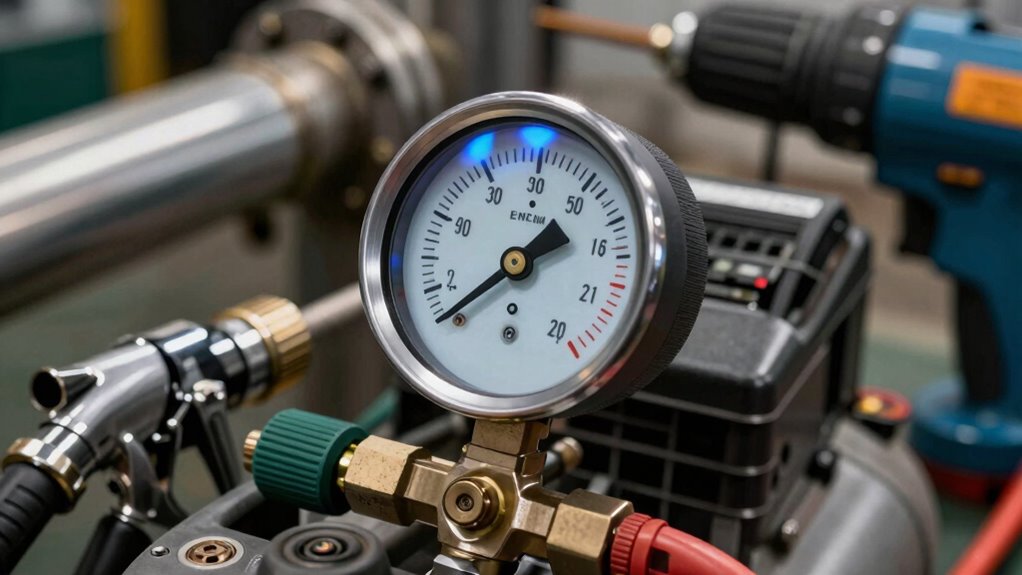
Choosing the right CFM (cubic feet per minute) for your air compressor is essential because it directly affects how well your air tools perform. When you select the correct CFM, you guarantee consistent airflow, which leads to better tool operation and prevents interruptions. Proper compressor maintenance becomes easier when your CFM matches your tools’ needs, helping to keep air quality high by reducing moisture and contaminants. If the CFM is too low, your tools may sputter or lose power, causing frustration and potential damage. Additionally, selecting the appropriate CFM can help prevent airflow restrictions that reduce efficiency. Conversely, an oversized compressor can waste energy and increase wear. By choosing the right CFM, you optimize your equipment’s lifespan, maintain high air quality, and keep your compressor running efficiently. Additionally, understanding CFM capacity can help you select an energy-efficient model that meets your specific workload. Knowing how airflow requirements relate to your tools can also prevent unnecessary strain on your compressor, ensuring reliable operation over time.

VEVOR 10.6 CFM Heavy Duty Air Compressor, 30s Fast Inflation | Dual-Cylinder Portable Tire Inflator, 12V 150PSI Offroad Air Pump with Adapters for Trucks Car SUV 4 x 4 Vehicle RV
30S Lightning-Fast Inflation: Get back on the road in a flash with VEVOR dual-cylinder tire inflator. With upgraded…
As an affiliate, we earn on qualifying purchases.
As an affiliate, we earn on qualifying purchases.
How to Determine Your Air Tool’s CFM Needs
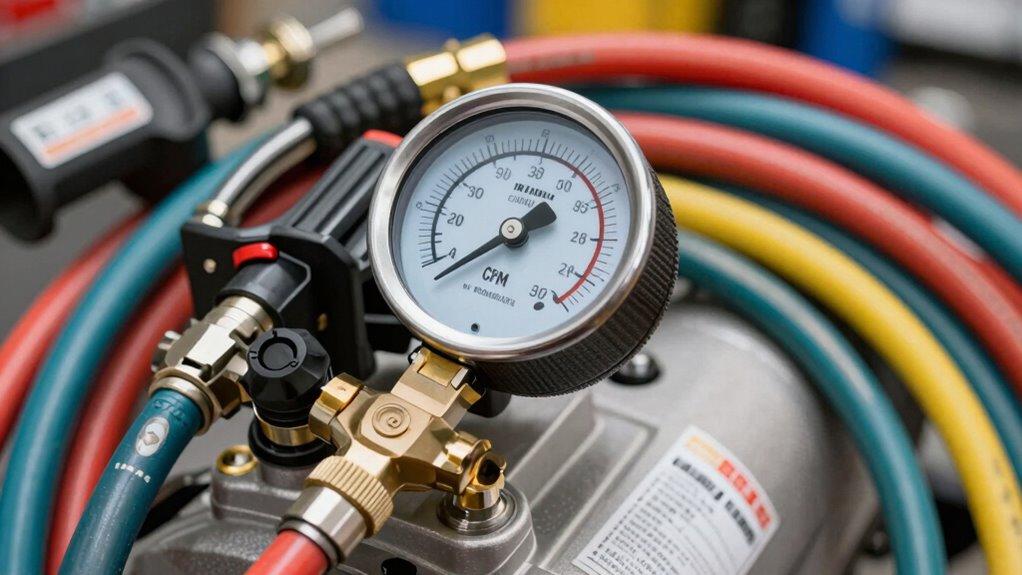
To determine your air tool’s CFM needs, start by checking the manufacturer’s specifications, which are usually listed on the tool itself or in the user manual. Look for the recommended air pressure and CFM requirements to confirm compatibility. Keep in mind that tool compatibility depends on matching your compressor’s CFM at the right air pressure; if your compressor provides less CFM than needed, your tool may underperform or stall. Conversely, oversupplying CFM isn’t necessary and can waste energy. Measure your tools’ needs carefully, and remember that the highest CFM requirement among your tools will guide your compressor choice. Accurately evaluating these needs guarantees smooth operation and prevents issues caused by insufficient airflow or mismatched specifications.
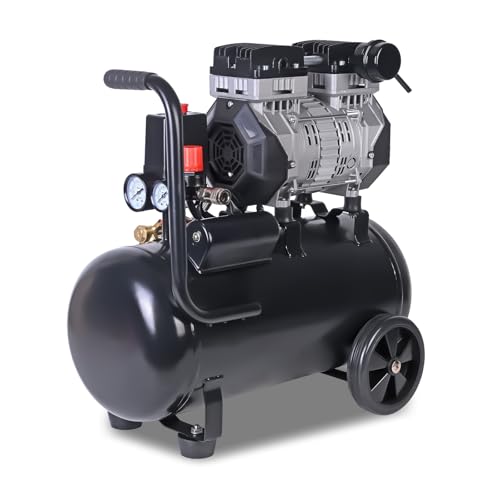
AAIN 6.3 Gallon Air Compressor | 1.5 HP 5.5-6 CFM Displacement Oil-Free Electric Compressor Tank with Max. 116PSI Pressure | 70dB Ultra Quiet for Tire Inflation, Air Blowing, Woodwork Nailing
【High Efficiency & Fast Inflation】A A IN air compressor features a 1.5HP oil-free induction motor and twin-cylinder design,…
As an affiliate, we earn on qualifying purchases.
As an affiliate, we earn on qualifying purchases.
What CFM Ratings Mean and How They Affect Performance
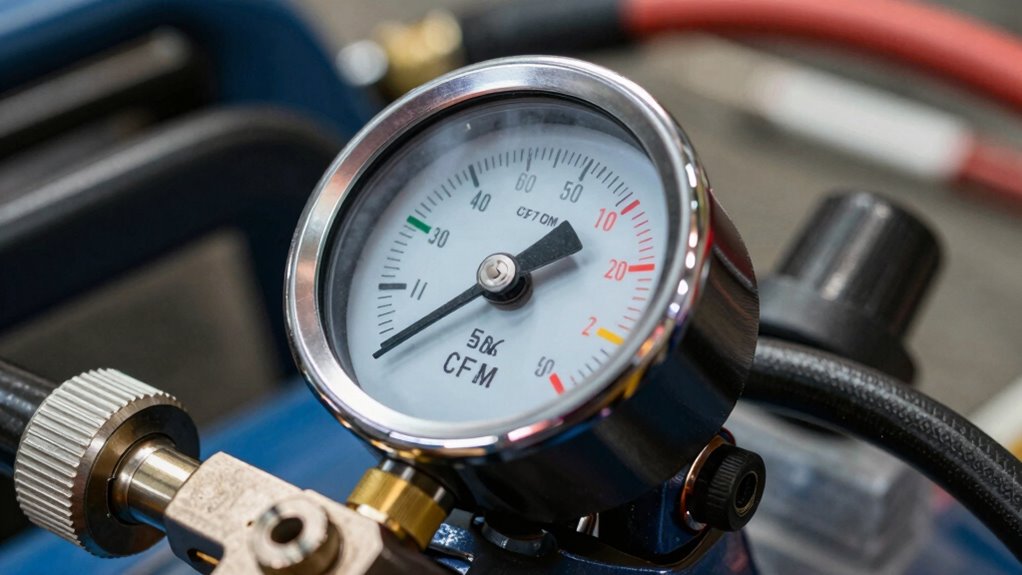
Understanding what CFM ratings mean is essential because they directly influence your air compressor’s performance. CFM, or cubic feet per minute, measures how much air the compressor can deliver at a specific pressure. Higher CFM ratings typically mean better air compressor efficiency, allowing you to power more demanding tools without lag. It’s important to match the CFM rating with your tool’s requirements to prevent underperformance or overworking the compressor. Additionally, a properly rated CFM can help reduce noise, as a compressor operating smoothly at the right capacity tends to run more quietly. Keep in mind that exceeding your needs won’t improve performance but may increase energy consumption and noise. Understanding these ratings helps you select a compressor that balances power, efficiency, and noise reduction effectively. properly rated CFM ensures optimal operation and longevity of your tools and compressor. Selecting a compressor with the right air delivery capacity is crucial for maintaining consistent tool performance and avoiding unnecessary wear.

Craftsman Air Compressors 6 Gallon Portable Pancake Air Compressor,Oil Free Max 150 Psi 1.0HP 2.6 CFM@90PSI Electric Air Compressor Shop Air Compressor, CMXECXA02106410
6 GALLON CRAFTSMAN AIR TOOL: 6 Gallon pancake style electric air compressor. 120V 1.0 HP, perfect for home,…
As an affiliate, we earn on qualifying purchases.
As an affiliate, we earn on qualifying purchases.
Tips to Pick a CFM That Lasts
Selecting a CFM that lasts means more than just matching your current tool needs. To maximize air compressor efficiency over time, consider future demands and durability. Focus on models with sturdy construction and reliable components, which reduce the need for frequent repairs. Regular maintenance tips, like checking filters and draining moisture, keep the compressor running smoothly. Additionally, choose a unit with adjustable CFM settings to adapt to different tasks. Keep these tips in mind:
- Opt for quality brands with proven longevity
- Regularly inspect and replace worn parts
- Keep the compressor clean and well-lubricated
- Monitor pressure levels to prevent strain
- Schedule routine maintenance checks
- Be aware of accessibility features that can support ease of use and maintenance. Incorporating features like user-friendly controls can also make routine upkeep more straightforward and less time-consuming. Understanding air compressor specifications can help you select a model that aligns with your long-term needs. These practices guarantee your compressor remains efficient and lasts longer, saving you money and downtime.
Mistakes to Avoid When Selecting CFM
Choosing the wrong CFM when you buy an air compressor can lead to poor performance, wasted energy, and frequent breakdowns. One common mistake is ignoring your air compressor capacity needs, which affects how well it handles your tools. You might select a unit with too little CFM, causing tools to run slowly or stop working altogether. Conversely, overshooting your requirements wastes energy and increases costs. Tool compatibility is also vital; using a compressor with incompatible CFM ratings can damage tools or reduce their lifespan. Always match the compressor’s CFM to the demands of your tools, and avoid assuming a higher CFM always means better performance. Additionally, understanding the importance of air compressor capacity helps ensure you select the right unit for your needs. Accurate assessment guarantees reliable operation, energy efficiency, and avoids costly mistakes down the line. Being aware of ear wax odor or other odors can also indicate the need for proper maintenance, ensuring your equipment stays in optimal condition. Properly sizing your compressor based on tool demand ensures you don’t experience unnecessary wear or inefficiencies.
Frequently Asked Questions
How Does Compressor CFM Impact Energy Efficiency?
Compressor CFM directly impacts your energy efficiency by ensuring airflow consistency and matching your needs. When CFM aligns with your equipment’s demands, the compressor operates smoothly, reducing unnecessary energy use. If CFM is too high or too low, it strains the system, wasting power. Properly selecting the right compressor capacity helps you maintain ideal airflow, saving energy and cutting costs over time.
Can a Higher CFM Compressor Damage Smaller Tools?
A higher CFM compressor can potentially damage smaller tools if you don’t regulate the airflow properly. Excessive airflow might cause air leaks or tool malfunctions, increasing air compressor noise and wear. To prevent this, use appropriate regulators and check your tools’ specifications regularly. Proper maintenance frequency keeps everything running smoothly, reducing risks. Always match your compressor’s CFM to your tools’ needs to avoid damage and guarantee efficient operation.
How Often Should I Upgrade My Air Compressor CFM?
You should consider upgrading your air compressor CFM every 3 to 5 years, especially if your projects demand higher airflow. Regular maintenance schedules help extend its lifespan, but if you notice performance drops or increased energy costs—by up to 20%—it’s time to upgrade. Staying current with your compressor’s capacity prevents potential damage and minimizes costly repairs, ensuring efficiency and safety during your work.
Is CFM More Important Than PSI for Tool Performance?
CFM is more important than PSI for tool performance because it determines how much air your tools receive consistently, especially during prolonged use. While PSI relates to air pressure, it doesn’t guarantee enough airflow if your compressor size and CFM aren’t adequate. For maximum performance, guarantee your compressor supplies the right CFM to match your tools’ requirements and provides stable air pressure for efficient operation.
Do Portable Compressors Have Different CFM Considerations?
Ever wondered if portable compressors demand different CFM considerations? They do, mainly because of their portable advantages and mobility considerations. You need to guarantee the compressor provides enough CFM to power your tools efficiently on the go, without sacrificing performance. Since portability often means smaller tanks and different airflow needs, focus on matching the CFM to your tools’ requirements, so you get reliable performance wherever your projects take you.
Conclusion
Choosing the right CFM is like finding the perfect key for your toolbox—it unlocks smooth, efficient performance without the frustration of mismatched gear. By understanding your tools’ needs and avoiding common pitfalls, you set yourself up for success. Remember, a well-chosen compressor isn’t just a purchase; it’s the backbone of your projects, making your work flow like a well-oiled machine. Make the right call, and watch your craftsmanship flourish.