TL;DR

Get home appliances delivered free with Prime
- Fast, free delivery on millions of items
- Prime Video, Amazon Music and more included
- Member-only deals all year
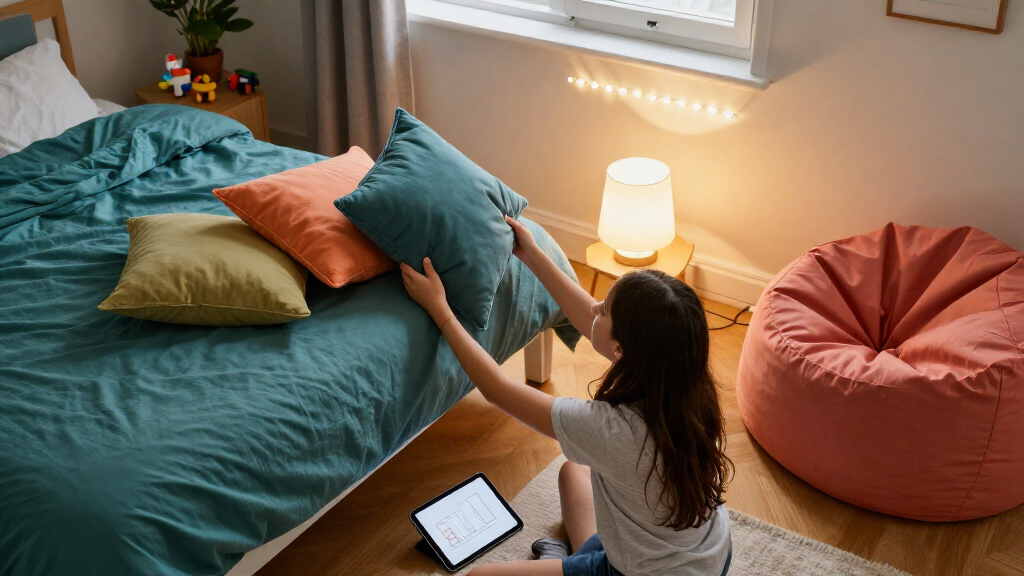
House Beautiful published a room-design report built around an 11-year-old’s reactions to furnishings and decor. The child favored practical storage, adaptable pieces, smaller rugs and comfortable shapes, but the article does not establish that these preferences represent Gen Alpha as a whole.
House Beautiful published a room-design report in which an 11-year-old reacted to furnishings and decor that might suit Gen Alpha, offering a child’s perspective on comfort, storage and appearance. The responses provide a set of individual design preferences, not evidence that all children in the generation share them.
The child assessed a range of items, including rugs, a nightstand, a chair, lighting, seating, shoe storage, a pen holder and bookshelves. Their comments repeatedly weighed how an object looks against whether it would be useful in a bedroom or study space.
For rugs, the child preferred a small, distinctive option that could sit beside a bed or under a chair, rather than making the entire room follow one pattern. A more subdued rug was also described as suitable for covering a larger area. On seating, the child said a rounded shape should look comfortable without resembling a cartoon or marshmallow.
Storage and flexibility came up across several reactions. The child liked a nightstand with a large surface for belongings and a shoe organizer that could also hold towels or school supplies. A decorative pen holder was praised for combining decoration and storage, while a bookshelf was preferred when it felt like a regular shelf rather than a large display. The child also liked lighting that could change color, comparing it with adjustable LED strips.
Practicality Shapes the Room
The report offers a small but useful reminder for adults choosing furniture for children: a room’s occupant may care as much about where things go and how a piece can be reused as about its appearance. The child’s comments connect design choices to daily routines, from keeping jewelry and school supplies organized to making room for personal items on a nightstand.
That perspective can inform conversations between children and parents, designers or retailers. Rather than assuming that a child wants a highly themed room, adults can ask which pieces feel comfortable, which colors are easy to live with, and whether storage fits changing needs. The report does not test purchasing behavior or measure how widely these preferences are shared, so its value is illustrative rather than representative.
small accent rug for bedroom bedside
As an affiliate, we earn on qualifying purchases.
As an affiliate, we earn on qualifying purchases.
A Child Evaluates Specific Pieces
The supplied House Beautiful report is framed as an interview-style design exercise: an 11-year-old was shown products or design options and asked to respond. The comments are tied to particular objects, rather than presented as the results of a survey or a formal study of children’s tastes.
That distinction matters when interpreting the generational framing. Gen Alpha is the audience named in the report’s headline, but the available source material does not describe a broader sample, research method or demographic comparison. The child’s remarks can show how one young person evaluates the pictured options; they cannot establish a generation-wide design standard.
““Smaller rugs can be unique, so the whole room doesn’t have to be just one pattern.””
— The 11-year-old quoted by House Beautiful, discussing a rug
bedroom nightstand with large tabletop and storage
As an affiliate, we earn on qualifying purchases.
As an affiliate, we earn on qualifying purchases.
One Child, Not a Generational Survey
The material supplied does not state when the report was published, how the products were selected, or whether the child saw physical items, photographs or another presentation. It also does not identify the child beyond their age or provide details about their room, location or household.
Most importantly, the report offers no sample beyond the one child described. It is not clear whether other children would make the same choices, or how preferences might vary by age, budget, culture or available space. The reactions should be read as one child’s opinions, not verified findings about Gen Alpha overall.
rounded comfortable accent chair for bedroom
As an affiliate, we earn on qualifying purchases.
As an affiliate, we earn on qualifying purchases.
How Families Can Apply the Feedback
The supplied report does not announce a follow-up study, product launch or next research milestone. For readers using the ideas at home, the practical next step is to ask the child who will use the room what matters to them, then assess each choice for comfort, storage and flexibility.
That approach can keep the design process grounded in the room’s real needs. A rug might be chosen as an accent or for broader floor coverage; a storage unit could be selected for more than one use; and adjustable lighting may offer options as tastes change. These are applications of the child’s comments, not recommendations formally tested by the report.
color changing LED strip lights for bedroom
As an affiliate, we earn on qualifying purchases.
As an affiliate, we earn on qualifying purchases.
Key Questions
What did the 11-year-old say about designing a room?
The child favored comfortable shapes, useful surface area, flexible storage and decor that could work in different parts of a room. They also liked smaller rugs as a way to add a pattern without covering the whole space.
Does the report show what all Gen Alpha children want?
No. The supplied material reports one 11-year-old’s reactions and does not describe a larger survey or representative study. It cannot establish preferences for the generation as a whole.
What kinds of products did the child evaluate?
The comments covered rugs, a nightstand, a chair, lighting, seating, shoe storage, a pen holder and bookshelves. The child considered both how the pieces looked and how they might be used.
What remains unknown about the report?
The supplied source does not give the publication date, the selection process for products, the child’s background or the method used to show the items. It also provides no comparison with other children’s opinions.
Source: rss
Fall yard work Picks
leaf blowers
As an affiliate, we earn on qualifying purchases.